Can I Visit My Friends' Apartment in New York?
A direct answer on whether you can visit a friend's apartment in New York, covering building access rules, doormen and buzzers, overnight stays, and how to get there.
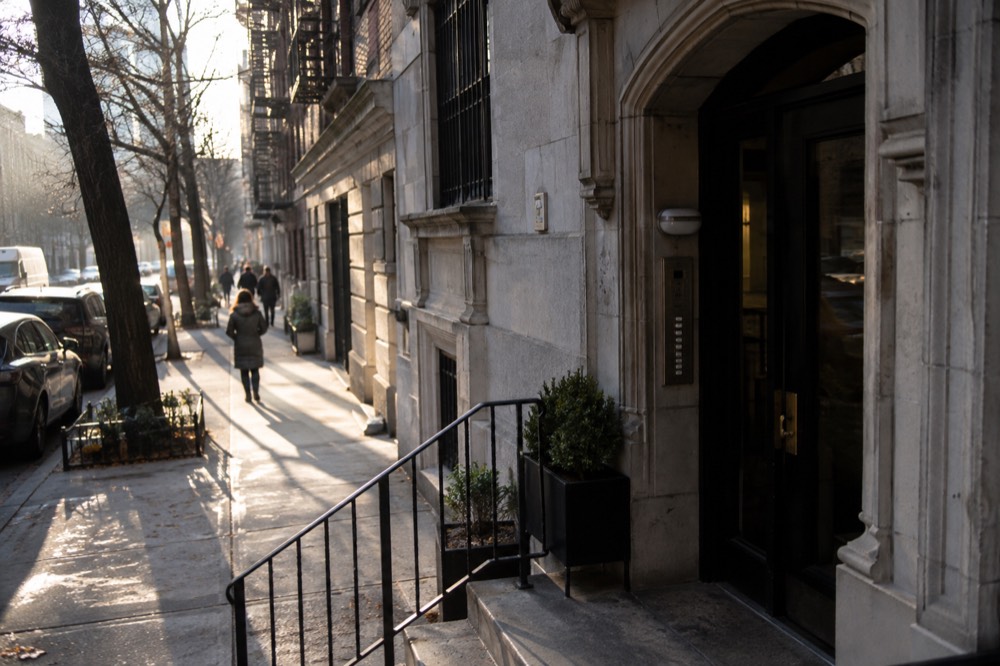
New York has roughly 3.7 million homes squeezed into five boroughs, and a large share of them are apartments in buildings with their own front-door politics. So the short answer to whether you can visit a friend's apartment is yes, and New Yorkers have guests all the time. The part that catches visitors out is not permission from the city. It is the lobby: whether the door is buzzed open from upstairs, whether a doorman wants a name in advance, and whether your friend's lease says anything about how long guests can stay.
Can I Visit My Friends' Apartment in New York?
Yes, you can visit a friend's apartment in New York. Nothing in city law prevents a resident from having guests, and there is no visitor permit, registration or fee involved. What decides how the visit works is the building itself: walk-up apartments with buzzers are usually the easiest, doorman buildings ask for your name in advance, and buildings with key fobs or locked side doors may require your friend to come down and let you in personally.
The experience differs enormously by building type, and it is worth knowing which one you are walking into before you arrive.
In a classic walk-up, the kind with five or six floors, no elevator and a panel of doorbells beside the locked front door, the routine is simple. You press the buzzer for your friend's apartment, they press a button upstairs, and the front door unlocks with a loud clunk. If the buzzer is broken, which happens, you call or text and they come down. Nobody in these buildings is tracking guests.
Doorman buildings, common in Midtown, the Upper East Side, the Upper West Side and the newer towers of Long Island City and Downtown Brooklyn, work differently. The doorman is the front door. Your friend should give the desk your name ahead of time, or you state the apartment number at the desk and the doorman calls up to confirm. It takes thirty seconds when your friend has warned the desk, and a small awkward pause when they have not.
Buildings with electronic key fobs but no staff sit in between. Some leave the lobby door open during the day. Some do not, and your friend has to physically come down, because the fob system has no buzzer. If you are visiting for the first time, ask your friend which of these three worlds you are walking into, and plan to arrive together if it is the third.
None of this is unique to New York, but the density is. In most American cities a visit means parking in a driveway. Here it means a subway ride, a lobby and an elevator, and the small rituals that come with them.
How Do Doormen and Building Rules Affect Visiting?
Most New York apartment buildings allow guests freely, but the mechanics differ: doorman buildings typically expect your friend to register your name with the front desk before you arrive, buzzer-equipped walk-ups let you announce yourself from the street, and fob-only buildings may require your friend to come down in person. None of these steps involves a fee, a form or any limit on ordinary social visits. They are access logistics, not permission.
A few practical points make the whole thing smoother.
First, the name. If your friend lives in a doorman building, text them your full name before you head over, and ask them to pass it to the desk. Doormen see hundreds of faces a day and a name on a list is the difference between a nod and a phone call. If your name is on the list, you walk straight to the elevator.
Second, timing. Front desks change shifts, usually in the afternoon, and a name given to the morning doorman may not reach the evening one. Arriving within a few hours of when your friend notified the desk is the safest approach. If your visit slips to another day, ask them to mention it again.
Third, packages and deliveries. If you are bringing something bulky, a suitcase, a cake from a Brooklyn bakery, a case of wine, do not assume you can carry it up unchallenged. Doorman buildings are generally fine with it, but some large residential towers route deliveries through a package room. Your friend will know their building's habit.
Fourth, the lease question, which matters more for your friend than for you. Many New York leases include a guest clause: visits are fine, but a guest who effectively moves in for an extended period can trigger a lease issue, because the landlord may treat it as an unauthorized occupant. A weekend visit is never a problem. A month on the couch can be. That burden falls on your friend to manage, but a good guest asks about it rather than assuming.
If you are visiting New York partly to see a friend and partly to see the city itself, it is worth comparing the sightseeing passes before you arrive. The New York CityPASS guide on this site breaks down what the five-attraction bundle covers, and the full things-to-do roundup covers everything else you might slot around your visit.
Can I Stay Overnight or for a Week at My Friend's Apartment?
Overnight visits are normal and unrestricted in practice. Extended stays are where New York gets strict: the city's short-term rental rules heavily limit paid, brief stays in apartments, and the major booking platforms stopped listing most New York apartments for short rentals as a result. Staying with a friend for free is a different matter from paying to stay, and a genuine guest visiting a resident who is present is not the target of those rules.
The distinction that matters is money and occupancy.
If you are a guest of your friend, sleeping on the couch or in the spare room, paying nothing, and your friend is there, you are simply a guest. New York does not regulate social visits. This is what people mean when they say you can visit: come over, stay the weekend, join for dinner, all fine.
The rules tighten around paying guests. New York's short-term rental law is among the strictest in the country, and after it took effect the big booking platforms removed most whole-apartment listings in the city. The law exists to protect the residential housing stock from being converted into de facto hotels, and it is enforced against hosts who charge for short stays, not against friends hosting friends.
There are grey zones worth being honest about. If you are staying for several weeks, if you are chipping in rent, or if your friend is away and you are house-sitting, the situation is no longer a simple social visit. Long-term guests can raise lease questions in any building, and a house-sitter staying in an empty apartment may fall outside what the building or the lease expects. The right move is a quick conversation between your friend and their landlord or management company before the stay, not after.
For a short visit, none of this should worry you. The pattern that works: free stay, host present, ordinary length. The pattern that attracts scrutiny: payment, absence of the resident, and a listing. You are almost certainly in the first category.
What Is the Best Way to Get to Your Friend's Neighborhood?
The subway is almost always the right answer, at $3.00 per ride with contactless payment, and a rolling weekly cap of $35 means a week of visits and sightseeing stops charging you after enough taps. The MetroCard no longer exists as a purchasable product: since 1 January 2026 the MTA sells and refills none, so you tap a credit card, debit card, phone or an OMNY card instead.
If your last visit to New York predates 2026, forget what you remember about buying a MetroCard at a machine. That product is gone. The system is now OMNY, the MTA's contactless payment layer, and it works with any card or device you already carry. Other pages covering the same trip are gathered on New York City Travel Guide.
| Item | Value | What it means for a visitor |
|---|---|---|
| Single subway or local bus ride | $3.00 | Tap in with any contactless card or phone |
| OMNY weekly cap | $35 | After enough paid rides in a rolling 7-day window, further rides are free |
| Express bus | $7.25 | Only worth it for specific outer-borough routes |
| Free transfer | One within 2 hours | Subway to bus, bus to subway, bus to bus |
| Children under 44 inches | Free, up to three per adult | Families visiting friends pay nothing for short kids |
| MetroCard | No longer sold or refilled | Do not plan around buying one |
The cap deserves a word because it changes how a week of visiting feels. The seven days start with your first tap, not on a Monday, and the cap counts rides on the same card or device. Tap the same physical card every time. If you alternate between your phone and the plastic card in your wallet, the system sees two travellers and neither earns the cap.
Getting to the door is usually the easy half of the trip. The harder half is the last block. New York addresses can be disorienting: avenues run one way, streets run the other, and numbering resets at Fifth Avenue, which is the east-west dividing line for street addresses in Manhattan. If your friend says "I'm at 3rd and 11th," confirm which is the avenue and which is the street before you set out, because 3rd Avenue and 11th Street is a different corner from 11th Avenue and 3rd Street, and both exist.
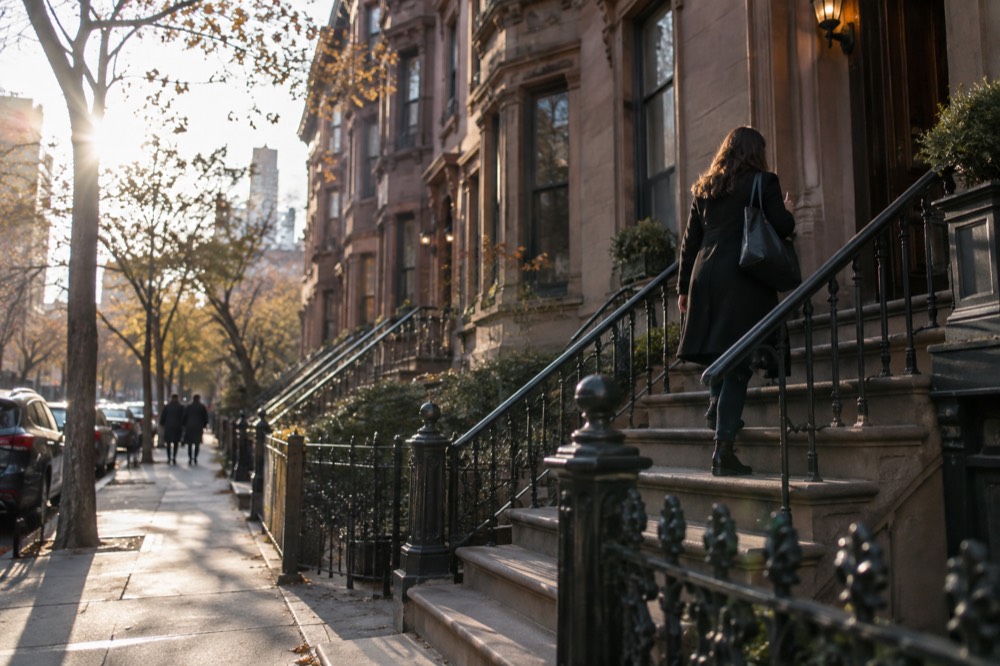
For a deeper grounding in the system before your trip, the New York subway guide on this site covers lines, fares and the OMNY cap in full, and the OMNY explainer covers the payment side specifically.
What Should a Good Guest Know Before Visiting?
A good guest in a New York apartment arrives with three things sorted: how they are getting in, when they are leaving, and what the building expects of them. Apartments here are smaller than most visitors anticipate, neighbors share walls and ceilings, and buildings run on unwritten rules about noise, deliveries and common space. None of it is complicated, but a visitor who ignores it makes life harder for the friend who invited them.
A short list of the things that matter.
Noise carries. In a pre-war building with plaster walls, in a converted loft, in a modern tower with thin floors, your 11pm conversation on the fire escape or in the stairwell is somebody's bedroom wall. New York apartments sit on top of and beside strangers, and quiet hours are a real social contract, not a suggestion.
Space is finite. A one-bedroom in Manhattan may be smaller than your garage at home. Bring one bag, not three, and ask before you spread out. If you are staying more than a night or two, offering to take your friend out for a meal is the standard currency of gratitude, and it gets you out of a small apartment, which everyone appreciates by day three.
Pets and smoking are building questions, not personal ones. Many buildings ban smoking outright, and a guest's dog that is fine in your friend's apartment may not be fine with the landlord or the lease. Ask before you bring an animal.
The stoop or the roof is not automatically yours. Roof access in particular is often technically prohibited even in buildings where residents use it, and bringing a guest up there can create a genuine problem if the building has been warned before. Follow your friend's lead on which informal spaces are actually informal.
And a small thing that is actually a big thing: take your shoes off if the apartment is carpeted, and do not prop the front door. A propped lobby door in a doorman building is a security incident, and in a walk-up it lets in whoever is walking by. New Yorkers close doors behind them on instinct. Join them.
Should You Build Sightseeing Around the Visit?
If you are traveling to New York mainly to see a friend, the strongest itinerary mixes their neighborhood with the classic sights, and a pass can pay off when the classic sights dominate the list. The New York CityPASS bundles five attractions, including the Empire State Building and the Statue of Liberty ferry, and it is valid for nine consecutive days, which fits a week-long visit built around a friend's work schedule.
The honest framing: a pass only wins if you will actually use all five choices. If your week is mostly hanging out in your friend's neighborhood with one big sightseeing day, buy individual tickets instead. If you are doing the full first-timer circuit while they are at work, the arithmetic flips.
One pairing that suits a visiting guest well: SUMMIT One Vanderbilt sits directly next to Grand Central, so a morning at the mirrored observation decks slots neatly before or after meeting a friend who works in Midtown. The timed-entry system means you can book a morning slot and be at their desk by lunch.
For the evenings, a food tour is a good way to give your friend a night out in their own city, and the Chinatown and Little Italy walk covers six tastings across two downtown neighborhoods that many residents never explore properly. It runs about three hours and the stops add up to a real meal, so it works as dinner plus entertainment in one booking.
Between the observation decks, the food walks and the harbor cruises, a week built around a friend's schedule can absorb far more of the city than most visitors expect. The trick is to book the timed-entry sights in advance and leave the neighborhood wandering loose, since the best parts of a visit are usually the unplanned ones.
Common Questions About Visiting a Friend's Apartment in New York
Most questions about visiting a friend's apartment in New York come down to four answers: yes, social visits are unrestricted; yes, overnight stays are normal; the building's front-door system decides the logistics; and the subway at $3.00 a ride with a $35 weekly cap is how you get there. The short-stay rules that restrict paid rentals do not apply to a genuine guest staying with a present resident for free.
Can I visit my friends' apartment in new york?
Yes. New York does not restrict social guests in any way, and there is no registration or fee. The only logistics are the building's own: a buzzer in a walk-up, a name at the doorman's desk, or your friend coming down in a fob-only building.
Do I need to show ID to enter a friend's building?
Usually not. Some doorman buildings ask visitors to sign in at the desk with a name and the apartment number, and a handful of high-security residential towers ask for photo ID, but there is no city requirement. If your building visit involves a desk, arriving with your name already registered avoids any friction.
Can I stay overnight at my friend's apartment?
Yes. Overnight guests are a normal part of apartment life in New York and nothing in city law regulates them. The short-term rental rules that made headlines target hosts charging for brief paid stays, not friends hosting friends for free.
How long can I stay as a guest?
There is no fixed legal number for social guests, but leases commonly include guest clauses, and a stay that starts to look like moving in can create a lease problem for your friend. A weekend or a week is ordinary. Several weeks is worth a conversation between your friend and their landlord first.
What if my friend's building has no buzzer?
Text when you arrive and your friend comes down. In fob-only buildings with no intercom, that is simply how it works, and residents do it every day. It is not a sign you are unwelcome, it is a sign the building was built or renovated without an intercom system.
Should I tip the doorman when visiting a friend?
As a guest, no. Doormen are tipped by residents, traditionally around the December holidays, not by visitors arriving for dinner. A friendly greeting and your friend's apartment number are all the interaction requires.
The visit itself is the easy part. New York's apartment buildings are full of guests on any given evening, and the city's reputation for closed doors mostly belongs to the locked lobby, not to the people inside it. Sort out how the door opens, tap the same card on every subway ride, and bring your friend a reason to leave the apartment for an evening. The rest of the visit takes care of itself.