How Do I Look Up Court Cases in New York for Free?
A practical, sourced guide to looking up New York court cases for free: the state's online search tools, what records actually show, and how to watch a case in person while visiting the city.
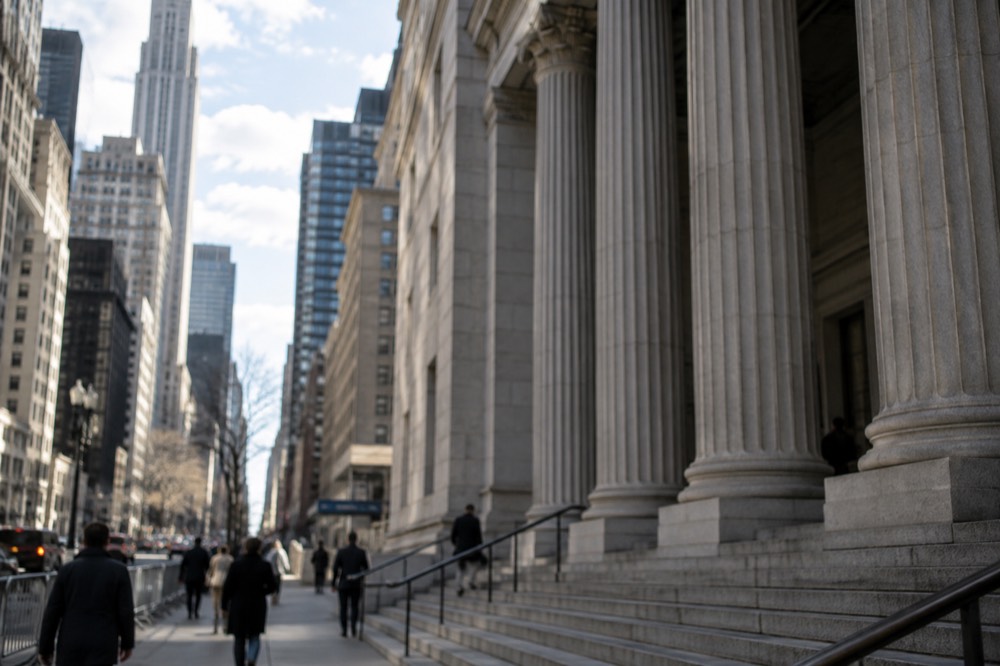
New York's court system runs one of the largest free public records operations in the United States, and almost nobody who visits the city realizes it. The state's own portal, run through the Unified Court System at nycourts.gov, lets anyone search case information without paying a cent, no account and no subscription required. The catch is knowing which tool answers which question, because a criminal docket, a divorce file and a small-claims case each live in different places, and some of what a case file contains never reaches the internet at all.
This page walks through the free lookup routes in order of ease, then covers the part most guides skip: walking into a New York courtroom yourself. Oral arguments and trials in the state and federal courts are generally open to the public, and sitting in on one is one of the more unusual free things to do in a city that can otherwise drain a wallet fast.
How Do I Look Up Court Cases in New York for Free?
The fastest free route is the New York State Unified Court System's own search tools at nycourts.gov, which publish case information for criminal, civil and family court matters at no charge. You search by name, case number or attorney, and results show the parties, the court, the judge and the docket of scheduled events. Federal cases are searched separately through the federal courts' own public terminals, also free on site.
Start with the state system, because that is where the overwhelming majority of New York cases live. The Unified Court System publishes a case search that covers Supreme Court civil matters, criminal dockets, family court, housing court and town and village courts across all of New York State, not just the five boroughs. You do not need an account, and there is no per-search fee, which distinguishes New York from plenty of states that push searchers toward paid third-party record sites.
A word of warning about those third-party sites. Search the web for New York court records and you will be greeted with a wall of commercial services offering "instant background checks" for a fee. Everything those sites sell for state case information is, in its basic form, available free through the courts' own tools. Some of them simply repackage the public docket and charge for the convenience. If a site demands payment before showing you anything at all, close the tab and go to the source.
What the free search gives you is docket information: who the parties are, which court and judge the case sits before, what has been filed, and what hearings or trials are scheduled. That is usually enough to answer "what happened to this case" and "when is the next appearance." What it does not automatically give you is the underlying documents themselves, which is where the picture gets more complicated and more interesting.
Which Free Tools Answer Which Kind of Case?
New York splits its free lookup tools by case type, and using the wrong one is the most common reason a search comes back empty. Civil Supreme Court cases, including divorces and lawsuits over money, sit in the civil case search. Criminal prosecutions are searched through the criminal docket tools. Family, housing and town courts each have their own screens, and federal cases are entirely separate.
The practical breakdown looks like this:
| What you are looking for | Free tool to use | What it shows |
|---|---|---|
| A lawsuit, divorce or other civil matter in NY Supreme Court | The state courts' civil case search at nycourts.gov | Parties, judge, docket entries, scheduled appearances |
| A criminal prosecution in a NY criminal court | The state courts' criminal case lookup | Charges, appearances, court dates, case status |
| Landlord-tenant or housing matters | The housing court search for the relevant county | Docket information for the case |
| A federal case, including major white-collar prosecutions | Public access terminals at the federal courthouse, plus the federal PACER service on site | Filings, docket, judge, scheduling |
| A case you plan to watch in person | The courts' daily calendars, or simply the courtroom calendar posted at the courthouse | Which courtroom, which judge, what time |
Two habits make the search go smoothly. First, have something specific to enter: a party's full name, a case index number or an attorney's name. The search works best with an exact case number, which usually follows a recognizable New York format of year, county code and sequence. Second, know the county. New York City alone is five counties, and a case filed in Brooklyn sits in Kings County records while a Manhattan case sits in New York County. Picking the wrong county is the second most common reason a search returns nothing.
Federal cases deserve their own note. The big federal prosecutions that make the news, in the courthouses around Foley Square and elsewhere, are federal matters, and the state's free search will never find them. The federal system's own electronic records service charges for remote access, but the public terminals inside the courthouses are free to use, and courtroom oral arguments are open to anyone who walks in subject to security screening.
If your interest in a court case is tied to a visit to Lower Manhattan, the cluster of state and federal courthouses around Foley Square sits a few minutes' walk from the Financial District's better-known landmarks. The free Financial District and Wall Street walking tour on GuruWalk passes through the same streets, and the courthouse square itself is one of the quieter, more dignified corners of the neighborhood.
What Can You Actually See for Free, and What Stays Hidden?
Free New York case lookups show docket information, meaning the parties, the court, the judge, the filings list and the schedule. What they do not show is everything. Sealed cases, many family court records, grand jury proceedings, and identifying details of crime victims and juveniles are withheld by law. Documents in older cases may never have been scanned, and some filings are only viewable at a courthouse terminal.
The line between public and sealed is drawn by statute and court rule, not by clerk discretion, and it is worth understanding before you assume a missing record means a cover-up. Family court matters in New York are largely confidential, for instance, which surprises people who expect every case file to work like a criminal docket. Grand jury proceedings are secret by long-standing rule. Sealed criminal cases, which include many matters resolved in favor of the defendant, will not appear in a public search at all.
Then there is the age problem. New York's courts have been digitizing aggressively, but a case from decades ago may exist only on paper in a basement records room. For those, the free route is a records request to the specific court, or a visit in person to the county clerk's office, where the case index books for old matters are open to the public. The county clerk's office in New York County, at 60 Centre Street, is itself a piece of Beaux-Arts civic architecture worth seeing even if you never file a request.
One more distinction that trips people up: case information and case documents are different products of the same system. The docket, the schedule and the party names are the free, easily searched layer. The actual pleadings, decisions and exhibits are a layer deeper, and access to some of them, particularly in the federal system, is structured around courthouse terminals rather than open web search. Free does not always mean convenient, but it does mean free.
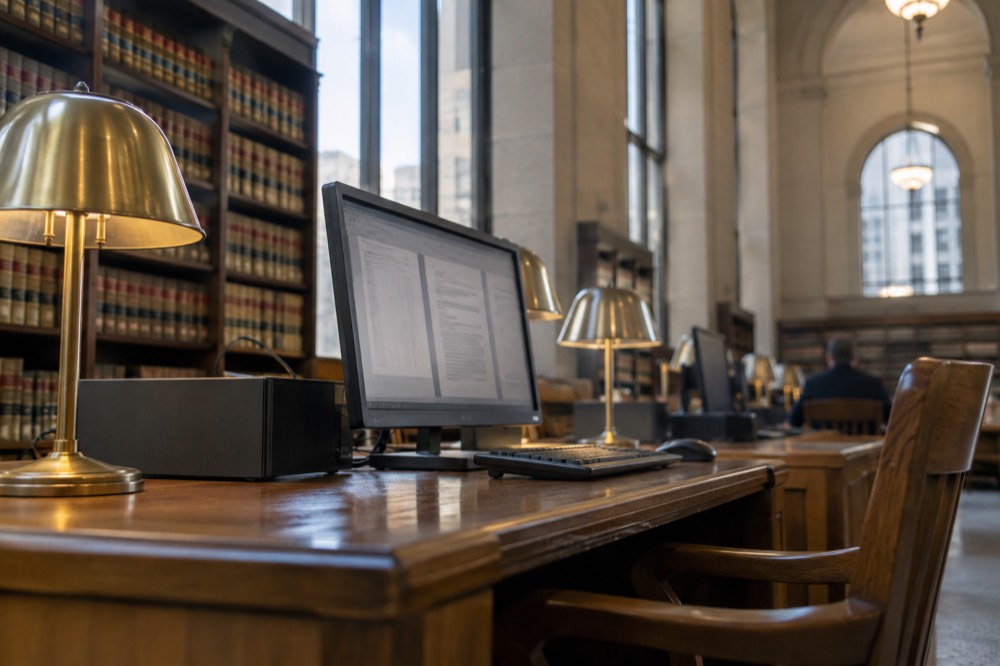
Can You Walk Into a New York Courtroom and Watch a Case?
Yes, and it costs nothing. Courtrooms across New York are open to the public as a matter of principle, and an adult visitor can walk into an oral argument, a trial or a sentencing, pass through security screening, and sit for as long as they like. No ticket, no reservation, no connection to the case. Photography and recording are prohibited, phones go through the scanner, and the judge's rules apply to everyone.
This is the part of the subject that turns a records question into a travel question, and it is a genuinely underrated free activity. The appellate courts that hear oral arguments in Manhattan schedule argument calendars in advance, and a morning spent listening to sharp lawyers argue a real appeal is closer to theater than most of what plays on Broadway, though the dress code is stricter and the ending is not scripted. The federal courts around Foley Square host arguments in major commercial and public-interest cases on a regular basis, and the courtrooms, several of them Depression-era showpieces, are worth the visit on their own. The wider set of guides lives on New York City Travel Guide.
Practical rules matter here. Arrive early, because security lines back up mid-morning, and check the court's posted calendar the day before, since schedules shift when a case settles. Business attire is not required for spectators, but quiet is. If a session is closed, which happens for certain sealed matters and some juvenile proceedings, the door will say so, and that is the end of it. Otherwise, walk in, take a seat in the gallery, and stay as long as the argument holds your interest.
For a visitor building a day around it, the courthouse cluster pairs naturally with the rest of Lower Manhattan. The 9/11 Memorial and Museum guide covers the site a short walk west, and the harbor is close enough that a morning in court and an afternoon on the water is a realistic combination. The broader rundown of options lives on the things to do in NYC page.
What About Divorce, Property and Other Personal Records?
Divorce records in New York are a special case: the docket information is searchable, but the actual divorce file is sealed to everyone except the parties and their attorneys, a rule that has applied to matrimonial cases for decades. Property records are the opposite, free and open, though they live with the city and county recording offices rather than the courts. Probate records in Surrogate's Court are generally public and searchable.
The divorce rule surprises people most. New York sealed its divorce files generations ago, when the state's strict divorce laws made the records radioactive, and the seal has stayed even as the laws relaxed. If you are searching for your own divorce record, the route is through the court directly with identification. If you are searching for someone else's, the free public layer gives you the fact that the case existed and its basic docket, and nothing more.
Property records are the friendliest corner of New York public records. The city's register of property transactions for the boroughs is searchable online at no charge, and deed and mortgage records for the rest of the state sit with the individual county clerks. Old deeds can settle boundary questions, reveal what your grandparents paid for a house, or simply satisfy curiosity about a building's chain of owners. None of it requires a court case search at all, though disputes over property sometimes generate civil cases that do.
Genealogy researchers should know that Surrogate's Court estate files, old naturalization petitions and name-change records are among the richest free historical documents New York holds. The city's municipal archives and the courts' older indexes overlap here, and a serious family-history project can spend days in these records without paying a search fee. Copies may cost money, but looking is free, and in several of these collections the indexes are online.
How Do You Look Up a Federal Case in New York Without Paying?
Federal cases in the Southern and Eastern Districts of New York, the two districts covering Manhattan, Brooklyn, Queens, the Bronx and Staten Island, are searched through the federal courts' own electronic docket system, which charges for remote access but is free at public terminals inside the courthouses. Argument calendars are posted free online. The fully free route is to go to the courthouse and use the terminal.
This is the one corner of the subject where free and convenient genuinely part ways. The federal system's electronic records service bills remote users for pages of docket text, a structure that has drawn criticism for years, and third-party sites that promise free federal case searches are usually reselling a limited slice of the same data. But walk into the federal courthouses in Lower Manhattan or Brooklyn, and the public terminals give you the same docket access with no fee. Bring photo identification for building entry, leave the camera behind, and expect an airport-style screening.
The free online layer for federal cases is thinner but real. The courts post their calendars and the day's courtroom schedule publicly, and major filings in high-profile cases are often distributed by the parties themselves or reported in detail by the press. For most casual purposes, whether a case exists, which judge has it, and when the next hearing is, the free information is sufficient without ever touching a paid search.
If you are visiting New York and want to see federal court in action, the argument calendars are posted in advance, and the courtrooms around Foley Square hear some of the most consequential commercial and public-interest litigation in the country. A morning in the gallery costs exactly nothing, which, in a neighborhood where a sandwich can run into double digits, is not a small thing.
Is a Courthouse Visit Worth Adding to a New York Trip?
For many visitors, yes, and not only for law enthusiasts. New York's major courthouses are among the city's most impressive public buildings, several of them sit in the architecturally rich Foley Square and Civic Center area of Lower Manhattan, and watching a live appellate argument is a free experience unavailable in most cities at any price. A short visit folds easily into a day that already includes the Financial District, the harbor or the Brooklyn Bridge.
Think of it as civic sightseeing. The New York County Courthouse at 60 Centre Street, the Thurgood Marshall United States Courthouse a block away, and the surrounding Civic Center blocks form a concentrated dose of monumental architecture that most walking tours pass without explaining. The courtrooms inside several of these buildings, with their wood paneling, murals and Depression-era craftsmanship, are open to the public whenever court is in session, which means the interior sightseeing is free by design, not by oversight.
If you are building a full Lower Manhattan day, the geometry works in your favor. The courthouse cluster sits between City Hall and the Brooklyn Bridge approach on one side and the Financial District on the other, and the harbor ferries depart from Battery Park a short walk south. A morning argument session, lunch in Chinatown, and an afternoon on the water is a coherent and mostly inexpensive day, and the Chinatown and Little Italy walking tour covers the lunch leg of that route in detail.
The one thing to check before you go is the calendar. Court schedules are published in advance, and an empty courtroom is a long walk for nothing. Look up the argument calendar for the court you plan to visit the day before, note the courtroom number, and build the rest of the day around a firm start time rather than hoping for the best.
Common Questions About Looking Up New York Court Cases for Free
Most questions about free New York case lookups come down to four things: which search tool matches the case type, what the free layer does and does not show, how the federal system differs from the state system, and whether you can watch a case in person. The state courts' free searches cover civil, criminal, family, housing and local court dockets; sealed records stay sealed; federal dockets are free at courthouse terminals; and courtrooms are open to the public at no charge.
How do I look up court cases in New York for free?
Use the New York State Unified Court System's free search tools at nycourts.gov. Search by party name, case index number or attorney, and pick the correct county and case type. Civil, criminal, family, housing and town court dockets are searchable at no charge. Federal cases are separate and are searched through the federal courts' public terminals, which are free to use inside the courthouses.
Can I read the actual court documents online for free?
Sometimes. Docket information, meaning parties, judge, filings list and schedule, is the free searchable layer. The underlying documents are hit or miss: some filings are published free, others are only viewable at a courthouse terminal, and sealed files, including New York divorce records, are not viewable by the public at all.
Are New York divorce records public?
No. New York divorce files are sealed to everyone except the parties and their attorneys. The fact that a matrimonial case exists and its basic docket may appear in a search, but the contents of the file are not open to the public. Parties seeking their own records apply to the court with identification.
Can I sit in on a trial as a tourist?
Yes. New York courtrooms are open to the public, and spectators can watch trials, oral arguments and sentencings at no cost. You pass through security screening, phones and cameras stay put away, and you sit quietly in the gallery. Check the court's posted calendar first so you arrive on a day when arguments are scheduled.
Why does my search return nothing?
Usually one of three reasons: the wrong county was selected, the wrong case-type tool was used, or the case is sealed or confidential. New York City alone spans five counties, and a Brooklyn case will not appear under a New York County search. Sealed criminal matters and most family court records never appear in public search at all.
Do the paid record websites have more than the free official search?
For basic New York state case information, no. The commercial sites largely repackage the same public docket data and charge for convenience. The official court search is free, current and authoritative. The only place a paid service adds anything is federal dockets, and even there the courthouse terminals provide free access on site.
The free public record is one of the quiet perks of a city that markets its paid attractions hard. A docket search costs nothing, a courtroom gallery seat costs nothing, and the buildings that house the courts are free architecture in a city where observation decks and museums take their toll on a budget. Look up the case, check the calendar, and bring photo identification for the door.