Is It Better to Stay in Times Square or Midtown? An NYC Hotel Area Guide
A direct, sourced comparison of staying in Times Square versus the wider Midtown area of Manhattan: noise, walkability, transit, prices and who each suits.
Is It Better to Stay in Times Square or Midtown? An NYC Hotel Area Guide
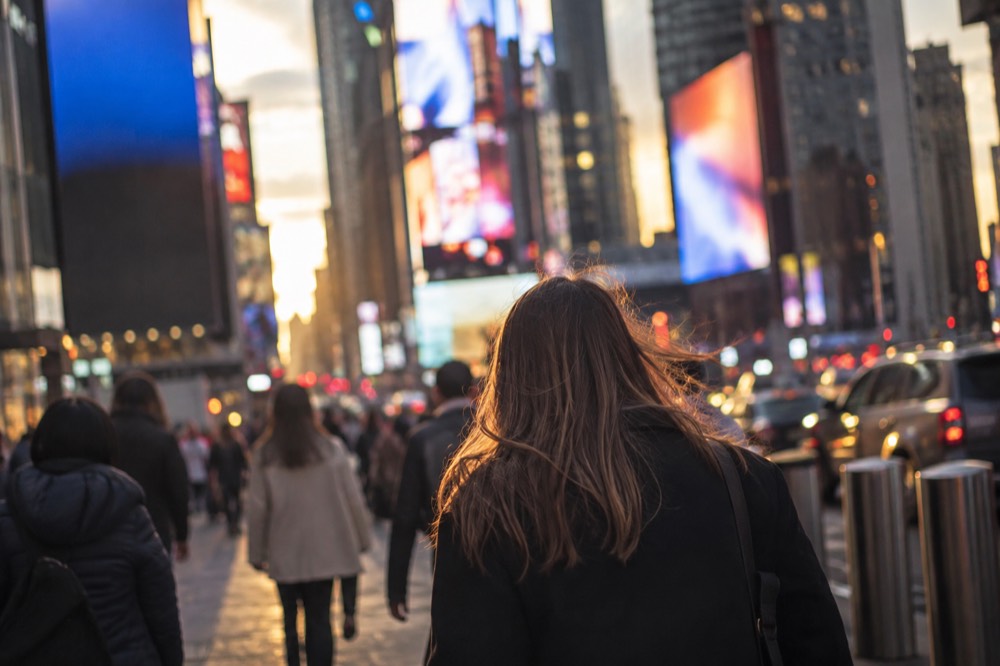
Times Square is not an alternative to Midtown. It sits inside it, a roughly ten-block wedge of Theater District streets between 42nd and 47th, and every hotel "in Times Square" is also a hotel in Midtown. The question travelers are really asking is narrower: should you sleep in the bright, loud core, or a ten to fifteen minute walk away in one of Midtown's quieter pockets, around Murray Hill, the Garment District or the blocks east of Grand Central?
The honest answer favors the quieter pockets for most visitors. Times Square hotels charge a premium for an address you will visit anyway, because everyone does, and the noise does not fully stop when the billboards dim. Midtown outside the square gives you the same subway access, often a lower rate, and an actual night of sleep. The exceptions are travelers arriving late, leaving early, or with kids who want the lights outside the window.
That is the short version. The rest of this page is the full comparison: what each area is like at 2am, what the transit connections really are, what you can walk to from each, and who each area genuinely suits. Everything here draws on verified fare data, MTA ridership figures and the current Broadway discount system, not on hotel marketing copy.
Is It Better to Stay in Times Square or Midtown?
For most visitors, a hotel in Midtown but outside Times Square itself is the better choice. You keep the same subway access and walkability, pay a similar or lower rate, and avoid the noise, crowds and chain-restaurant pricing of the square. Times Square wins only for travelers who want the lights on their doorstep, are arriving or departing at odd hours, or want maximum theater proximity. Midtown is the district; Times Square is one loud corner of it.
The geography matters more than most guides explain. Midtown runs roughly from 34th Street up to 59th Street, between the East River and the Hudson. Times Square occupies the blocks around Broadway and 7th Avenue from 42nd to 47th Street. When a booking site labels a hotel "Midtown," it might mean Murray Hill on the quiet east side, the Garment District near Penn Station, or the Theater District a block off the lights. "Times Square" on a listing means you will hear the square.
A useful rule of thumb: every address within a ten minute walk of 42nd Street and 7th Avenue is "Times Square adjacent," and the noise gradient falls off fast. One block east or west of Broadway is noticeably calmer. Three blocks away, around 9th Avenue or Lexington Avenue, you are in ordinary city streets with ordinary city noise, which in New York still means something, but it means sleep is possible with the window shut.
The premium you pay in the square is for the address, not the room. The same hotel chain often runs a property in the square and another five blocks east, and the difference in nightly rate between the two can fund a Broadway ticket. This site does not quote hotel rates, because they change daily and depend heavily on dates, but the pattern holds across the market: the closer to the lights, the more you pay for the same bed.
One more framing worth knowing before you book anything: Times Sq-42 St is the busiest subway station complex in the entire system. In 2025 it handled 61,203,303 riders, 71% more than Grand Central-42 St at 35,764,931. That cuts both ways. Superb connections, and crowds at the turnstiles that never thin out the way they do elsewhere.
If you want to understand the area before committing to a hotel in it, a free orientation walk costs nothing but the tip. The Times Square, Grand Central and Rockefeller tour on GuruWalk is a tip-based walk run by CityShuffles that links the billboards with Grand Central's concourse, exactly the two poles of the Midtown hotel zone. Note that CityShuffles runs several of the free walks on this platform, so the choice of operators is narrower than it looks.
What Are Nights Actually Like in Each Area?
Times Square does not go quiet. The billboards run to midnight, street performers and crowd noise continue well past that, and the sanitation and delivery cycles start around 4am, so the street-level noise floor rarely drops. Midtown outside the square is a normal business district: busy by day, much quieter after the office crowd leaves, with noise concentrated on avenues rather than side streets. Request a high floor or an interior room in either area.
The specific mechanics matter. Times Square's lights are not decorative, they are the product: the illuminated billboards are required to stay on, and the pedestrian plaza fills every night of the week, not just weekends. If your room faces the square, blackout curtains help with light but do nothing for street noise. Ask for a room facing away from Broadway, or on a high floor, and check recent guest reviews for noise complaints specifically, since they vary enormously by room within the same building.
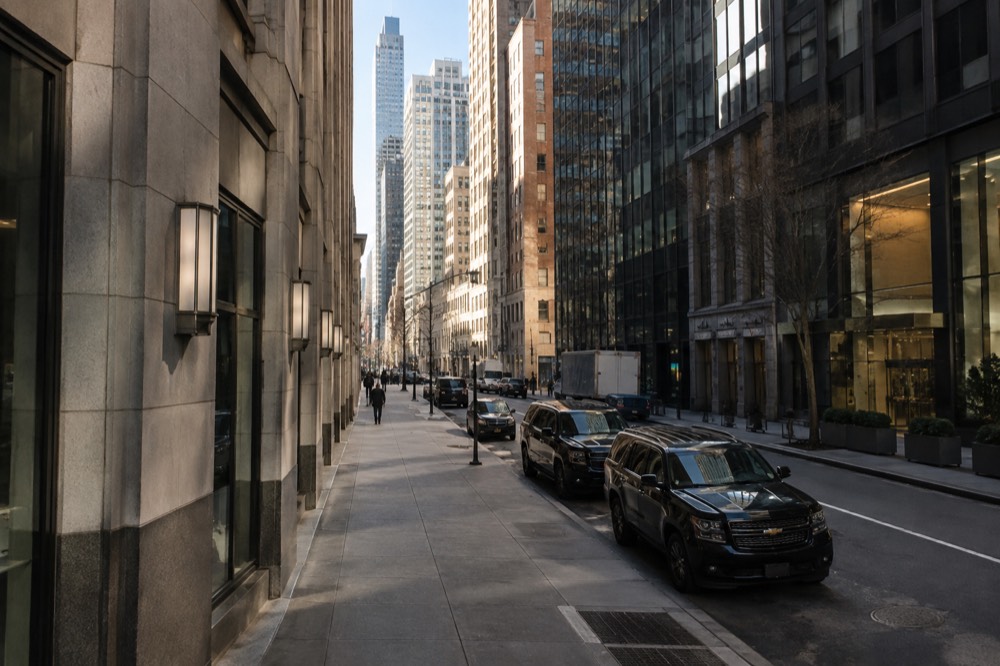
Midtown's quieter pockets behave differently. Murray Hill and the blocks around Lexington Avenue in the 30s and 40s empty out after the workday. The Garment District near Penn Station has a nightlife hum on 9th Avenue but is calm on the side streets. The area around Grand Central goes quiet surprisingly early, because it is office space rather than entertainment space. The trade-off is that some Midtown pockets feel deserted by 10pm, and dinner options thin out, where Times Square never lacks for somewhere open.
Sleep quality, in practice, ranks the options like this: Midtown side street first, Midtown avenue-facing second, Times Square interior room third, Times Square window facing the square last. That last category is the one where the photos look magical and the reviews say "earplugs."
For the evenings you spend awake, the square does deliver something real. The NYC Sunset & Harbor Lights Cruise leaves from Midtown West, a short walk from either area, and the Theater District's show schedule sits directly on Times Square's doorstep. If you plan to see Broadway shows on multiple nights, the walk home from the theater is five minutes from a Times Square hotel and twenty from Murray Hill. That is a genuine, if small, quality-of-life difference.
Which Area Is Better for First-Time Visitors?
Midtown outside the square, comfortably. First-timers overestimate how much time they will spend in Times Square, typically one evening, and underestimate how much of the city sits beyond walking range of it. A Midtown base puts you within a 15-minute walk of Grand Central, Bryant Park, the Empire State Building and Rockefeller Center, with the same subway lines, and you will pass through Times Square anyway because almost every itinerary does.
The first-day logic is simple. New York's most-visited cluster of attractions is Midtown itself: the Empire State Building, Top of the Rock, SUMMIT One Vanderbilt, MoMA, Grand Central and Bryant Park all sit between 34th and 59th Streets. A hotel anywhere in that band puts most of the classic first-day list on foot. Times Square is one stop on that list, and you will see it whether or not you sleep in it.
Transit access is near-identical and that is the point. Times Sq-42 St is the system's busiest hub, but Grand Central, at the east end of the same corridor, is a major hub too, and Penn Station anchors the west side. Wherever you land in Midtown, you are within a few blocks of an express station. The practical difference between the areas is not the trains, it is the ten minutes of sidewalk between your lobby and the turnstile, and at Times Square that sidewalk is a slow-moving crowd every evening.
The money question for first-timers usually resolves around passes, and this is where a Midtown base quietly wins on arithmetic. The New York CityPASS bundles five attractions for $149 adult and $129 child, valid over 9 consecutive days, against a combined box-office value CityPASS puts at $307.04. Four of its headline attractions, the Empire State Building, Top of the Rock, SUMMIT One Vanderbilt's neighborhood, and the Statue of Liberty ferry departure point, are easiest to reach from a Midtown base. Staying in the middle of that cluster saves you the daily commute from downtown or Brooklyn.
Before you commit to any pass, compare it against what you actually plan to do. The full breakdown, including how CityPASS stacks up against the other passes and when it fails to pay off, is in the guide to the New York CityPASS, and the broader decision framework is in things to do in NYC.
Is Midtown or Times Square Better for Getting Around?
Effectively a tie, with an edge to whichever sits closest to an express stop. Times Sq-42 St offers the most lines in one place, the 1, 2, 3, 7, N, Q, R, W and the shuttle, but it is also the most crowded station in the system. Grand Central and Penn Station give Midtown visitors comparable reach with less turnstile stress.
The fare is the same everywhere: $3.00 a ride, capped automatically at $35 per 7 days with OMNY.
The fare system deserves one paragraph because most guides still get it wrong. The MetroCard is retired: as of 1 January 2026 the MTA no longer sells or refills them, and the old 7-day unlimited no longer exists. The replacement is automatic. Tap the same credit card, debit card, phone or OMNY card every ride and once you hit $35 in a 7-day rolling window, further subway and local bus rides are free. There is no pass to buy and no decision to make, but the cap only works if you tap the same card or device every single time. Mixing your phone and the plastic card in your pocket breaks the cap silently.
For airport access, both areas connect well. From Midtown, the E train runs toward JFK via the AirTrain connection, and Penn Station carries the LIRR and NJ Transit, including the Newark Airport route. The full run-down, including the free Q70 bus that makes LaGuardia the cheapest airport arrival in the city at $3.00 total, is in the guide to getting around NYC.
One Midtown-specific note: because so many lines converge here, service changes hit harder. Weekend track work frequently reroutes lines through the 42nd Street corridor, and the MTA posts alerts in advance. Check the MTA app or the NYC subway guide the night before any early-morning departure.
Where Should Families and Light Sleepers Stay?
Midtown outside Times Square, with children especially. Light sleepers should avoid any room facing the square outright, and families get more usable space for the same money a few blocks east or west. The practical pick is a hotel in the 40s between Lexington and 9th Avenue, close enough to walk to the theaters in fifteen minutes, far enough that the noise drops to ordinary city levels. Kids love visiting Times Square for an evening; few love sleeping in it.
Families should weigh one genuine Times Square advantage: the walk-home factor after a show. If you are seeing The Lion King at the Minskoff, which sits directly on the square, or Wicked at the Gershwin a block north, ending the night five minutes from your lobby with tired children beats a twenty-minute walk. For a single big theater night, that convenience is real. For a week-long stay, the quieter room wins more nights than it loses.
Light sleepers have a harder decision only if the hotel is already booked. If you are committed to a Times Square property, the mitigation stack is: high floor, interior-facing room, and earplugs as backup. If you are still choosing, spend the same money in Murray Hill or the Garment District and the problem disappears.
Budget travelers should note the one structural advantage Times Square retains: it has the largest concentration of rooms in the city, from hostel-style beds to full-service towers, so last-minute availability is better there than anywhere. When the city fills up, the square is where the leftover rooms are. The trade is price and noise, but a bed in Times Square beats no bed in Murray Hill. For stretching a tight budget further, see the NYC on a budget guide.
What Can You Walk to from Each Area?
From Times Square: the theaters, the TKTS booth, Madame Tussauds-scale attractions, and a 10-minute walk to Bryant Park. From the wider Midtown: Grand Central, the New York Public Library, MoMA, Rockefeller Center, the Empire State Building, SUMMIT One Vanderbilt and the High Line's northern end, all within roughly 15 minutes on foot. Midtown's walkable list is simply longer, and Times Square's list is a subset of it plus the theater doors.
| Attraction | Walk from Times Square core | Walk from Murray Hill / east Midtown |
|---|---|---|
| Broadway theaters (majority) | 1-8 minutes | 15-25 minutes |
| TKTS booth, Duffy Square | On the doorstep | 20 minutes |
| Bryant Park and NYPL | 10 minutes | 10 minutes |
| Grand Central Terminal | 15 minutes | 5-10 minutes |
| SUMMIT One Vanderbilt | 14 minutes | 5 minutes |
| Rockefeller Center and Top of the Rock | 8 minutes | 15 minutes |
| Empire State Building | 12 minutes | 12-15 minutes |
| MoMA | 10 minutes | 15 minutes |
| High Line (northern end) | 20 minutes | 25-30 minutes |
The pattern in that table is the whole argument in miniature. East Midtown trades theater proximity for Grand Central, SUMMIT and the Library; the square trades everything else for the theaters. Neither pocket is far from anything, because Midtown is compact, but your five-minute list differs.
Two walkable experiences deserve special mention. SUMMIT One Vanderbilt, with tickets from $47.91, sits directly next to Grand Central, so an east-side hotel puts the mirror rooms and the glass ledges at the bottom of your street. And the free orientation walks mentioned earlier cover both ends of the district, so your first morning can be spent learning the geography rather than decoding a subway map.
For evening planning, the TKTS system rewards a Times Square stay in one narrow case: you decide day-of what to see. The Duffy Square booth sells same-day seats at 20-50% off, plus an $8 per-ticket fee, and there is a second booth at Lincoln Center for shows on the west side. The mechanics, and whether queuing suits you at all, are covered in the TKTS booth guide.
Common Questions About Staying in Times Square or Midtown
Most readers ask a handful of practical follow-ups: whether Times Square hotels are safe, whether the noise is really that bad, whether Midtown is boring at night, which subway lines serve each area, and whether the price gap justifies the walk.
The short answers: both areas are among the most policed and camera-covered blocks in the city, the noise is real but manageable with the right room, Midtown quiets rather than empties, the subway access is near-identical, and the price gap usually favors Midtown.
Is it better to stay in times square or midtown?
For most travelers, Midtown outside the immediate square. You get the same subway access, a similar or better rate, a quieter night's sleep, and you will walk through Times Square anyway since nearly every itinerary passes through it. Times Square suits visitors who want the lights on the doorstep, are seeing multiple shows, or need maximum last-minute availability.
Is Times Square too loud for a hotel?
Facing the square, usually yes. The billboards and crowds run late and the street noise floor stays high. Interior-facing and high-floor rooms are manageable, and one block off Broadway the noise drops sharply. Read recent reviews for your specific room category, not the hotel in general.
Is Midtown boring at night?
Quieter, not empty. Murray Hill and the Garment District thin out after the office crowd leaves, and dinner options narrow, but 9th Avenue in the 40s and 50s keeps a real neighborhood restaurant scene. Theater District crowds stay out late a few blocks west.
Is it safe to stay in Times Square?
Yes, by any reasonable comparison. Times Square is one of the most heavily policed and camera-monitored public spaces in the United States, and the surrounding Midtown blocks share that profile. Normal city precautions apply, but the area does not require special safety planning. The broader picture is in the guide to whether NYC is safe.
Which subway station is better, Times Square or Grand Central?
Times Sq-42 St has more lines, the 1, 2, 3, 7, N, Q, R, W and the shuttle, but it is the busiest station in the system, 61,203,303 riders in 2025 against Grand Central's 35,764,931. Grand Central is calmer and serves the east-side hotel zone. Both connect you to the whole city within a transfer or two.
Do I still need a MetroCard if I stay in Midtown?
No. The MTA stopped selling and refilling MetroCards on 1 January 2026. Tap a contactless card or phone with OMNY instead: $3.00 per ride, capped automatically at $35 across a rolling 7-day window, with no pass to buy. Use the same card or device every time or the cap resets silently.
The final word is a practical one. Book the neighborhood that matches your worst hour in the city, not your best. If your worst hour is 11pm after a show with tired legs, the square earns its premium. If it is 2am with a window facing Broadway, a quieter Midtown pocket is worth every extra block of walking, and this site's New York City Travel Guide covers each neighborhood in depth if you want to widen the comparison beyond Midtown entirely.