Is Little Italy in New York Worth Visiting?
An honest answer on whether Little Italy in New York is worth your time, what the neighborhood actually offers on Mulberry Street, and which tours make the visit worthwhile.
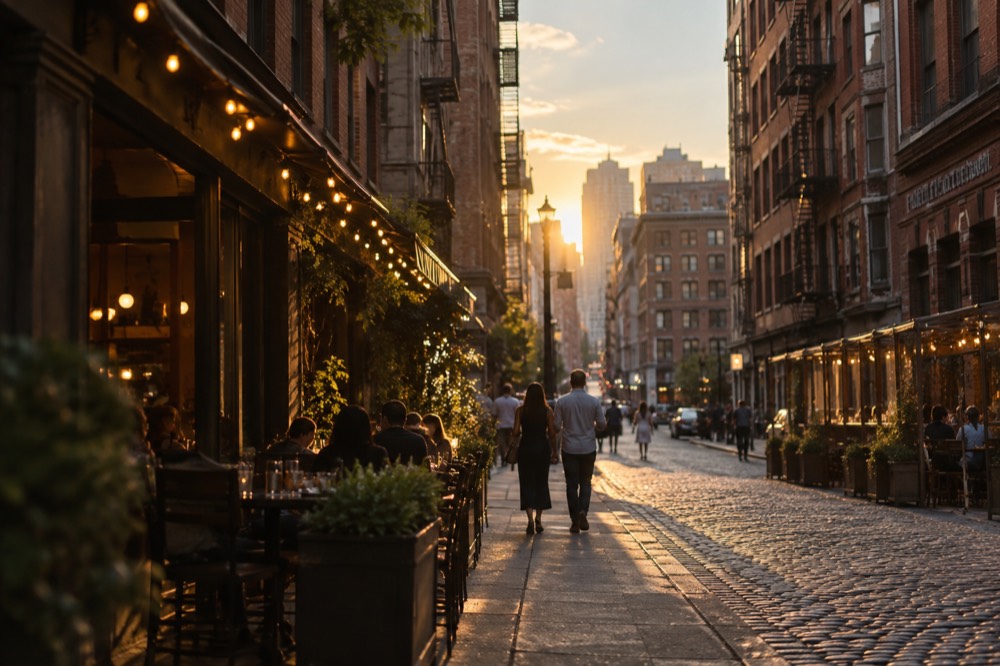
Little Italy in New York covers a few short blocks of Mulberry Street and the lanes around it, squeezed between Chinatown to the south and SoHo to the west. That is the whole neighborhood now. Anyone expecting the sprawling Italian district of early twentieth-century photographs will be surprised within five minutes of arriving, because Chinatown has absorbed most of the old streets and the tourist core that remains is compact, loud and unapologetically aimed at visitors. Whether that is worth your time is a fair question, and this page answers it directly, with the tradeoffs laid out plainly. The short version: yes, with the right expectations and the right route, and no if you plan to spend a full day there.
Is Little Italy in New York Worth Visiting?
Yes, for most visitors Little Italy is worth visiting, but as a one- to two-hour stop paired with Chinatown and SoHo rather than a destination in its own right. The neighborhood is genuinely small, a strip of Mulberry Street with restaurants, bakeries and old storefronts, so the honest plan is to walk it, eat in it, and move on.
Travelers who pair it with a guided walk or food tour get more from it than those who arrive with no context.
The case against Little Italy is easy to state. The district is a remnant. Decades of expansion by Chinatown, which now surrounds it on almost every side, reduced the Italian community to a core of a few blocks, and the businesses on Mulberry Street largely serve tourists. Prices at the restaurants nearest the main drag run higher than equivalent food a few blocks away in Chinatown proper, and the souvenir shops are exactly what you would expect.
The case for it is also easy to state. The blocks that remain are walkable, photogenic and dense with food, and they sit inside one of the best sightseeing clusters in Manhattan. Within fifteen minutes on foot you can reach Chinatown's markets, SoHo's cast-iron architecture, the courthouses of Centre Street and the Brooklyn Bridge approach. Very few corners of the city pack that much into so little ground. Treating Little Italy as one course of a larger downtown meal, rather than the whole meal, is the difference between a worthwhile stop and a disappointing one.
A guided visit changes the math considerably. The three options above each cover Little Italy with a different emphasis, food, history or a free tip-based walk, and each one folds the neighborhood into the surrounding blocks so you never run out of things to see. More detail on each appears further down this page.
How Small Is Little Italy, Really?
Little Italy today is roughly the stretch of Mulberry Street between Canal Street and Houston Street, with a few side lanes, and a determined walker can cross the tourist core in under ten minutes. Chinatown surrounds it on the south and east, SoHo sits to the west, and the boundary between the two immigrant neighborhoods has shifted steadily toward Mulberry over decades. This is a neighborhood you visit for a meal or a walk, not a day.
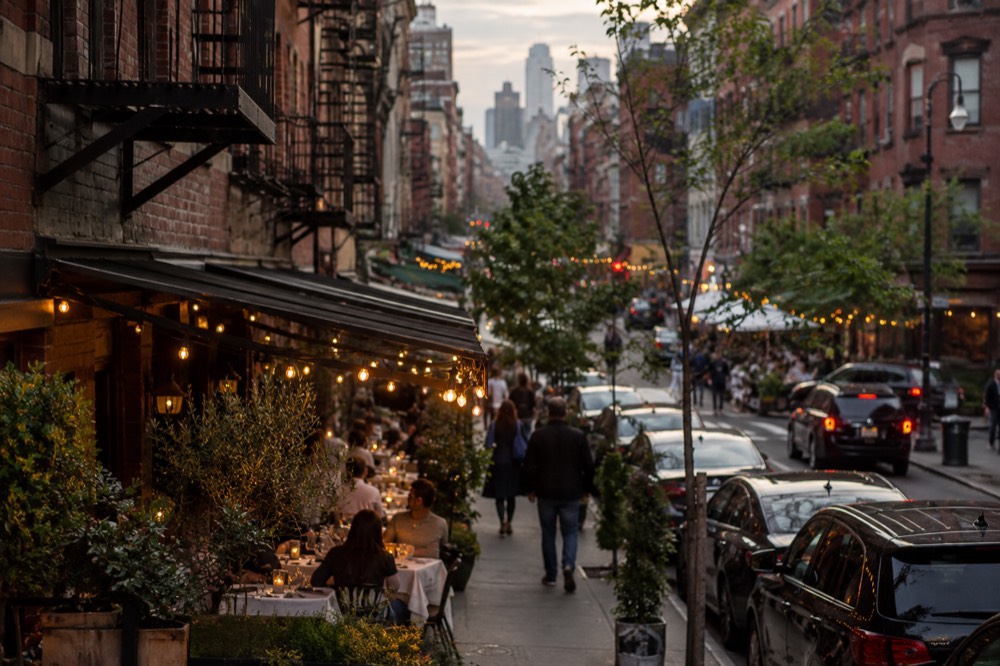
The practical consequence of the size is that your plan matters more than your interest. Arriving at random, walking Mulberry Street, photographing the awnings and leaving, most visitors report the stop feeling thin, because it is thin as a standalone sight. There is no single landmark to queue for, no museum, no observation deck. What there is: restaurants with red-sauce menus, old bakeries selling cannoli and pastries, and a street atmosphere that is at its best in the evening when the string lights are on and the tables spill onto the sidewalk.
Pairing the stop with its neighbors is the fix. Chinatown begins almost at the corner of Mulberry and Canal, and the transition is abrupt in a way that is itself worth seeing: Italian flags and checkered tablecloths give way, within a block, to Chinese signage and produce stalls. SoHo's cast-iron storefronts start a few minutes west. A loop that takes in all three is a genuinely good two-to-three-hour walk, and it is exactly the loop the best tours in the area run.
There is also a timing angle worth knowing. The Feast of San Gennaro, the neighborhood's annual street festival, takes over Mulberry Street for days each September, and it is the one stretch of the year when Little Italy genuinely feels like a destination rather than a stop. Outside that window, the quieter play is a weeknight evening, when the tables are out, the tour groups have thinned and the bakeries have time to fill your cannolo properly rather than handing you one that has been sitting in the case since morning.
If you are deciding how this stop fits into a bigger trip, the things to do in NYC page lays out how downtown fits with the rest of the city, and our Little Italy neighborhood guide goes deeper on the streets and the food stops.
What You Actually Get on Mulberry Street
What you get on Mulberry Street is a compact strip of Italian restaurants, old-school bakeries and cafés, most of them family-branded and aimed squarely at visitors, plus a street scene that peaks in the evening. The food is the main draw: red-sauce pasta, cannoli filled to order, espresso at a sidewalk table. It is tourist-facing and priced accordingly, so pick your stops with care and you will eat well.
The honest eating advice is to separate the street into two categories. The restaurants on the main drag with hosts working the door are the tourist tier: convenient, atmospheric, and more expensive than the food strictly warrants. The bakeries and smaller spots a block off the drag are where the neighborhood still earns its reputation, and cannoli filled at the counter rather than in advance is the single most reliable order on the street. A guide who knows which doors to walk through saves you the trial and error, which is one reason the food tours here review so strongly.
For most visitors the strongest version of a Little Italy visit is the one where the eating is the point. The Chinatown and Little Italy food tour runs six tastings across both neighborhoods in about three hours, and the stops add up to a real meal: dumplings on the Chinatown side, cannoli and more on the Little Italy side, with the stories of both districts woven between the bites. It suits hungry visitors far better than a self-guided wander, because the fixed stops remove the guesswork from a street where the guesswork is expensive.
If food is not your focus, the history-and-architecture route is the alternative. The SoHo, Little Italy and Chinatown walking tour covers all three neighborhoods in about two hours, heavy on the cast-iron facades of SoHo, the old Mulberry Street blocks and the immigration stories behind each enclave, and light on food. It is a strong first-day orientation to downtown Manhattan before you explore it on your own, and it costs less than a restaurant lunch on the main drag.
Little Italy or Chinatown: Which Deserves Your Time?
If you only have time for one, Chinatown is the bigger, more working neighborhood and the better standalone visit, while Little Italy is the better place to sit down and eat a leisurely meal. The honest answer is that the question is mostly artificial, because the two sit against each other and a good visit does both in one walk. Chinatown gives you markets, energy and range; Little Italy gives you a table and a cannoli.
The comparison in practical terms:
| Factor | Little Italy | Chinatown |
|---|---|---|
| Size | A few blocks around Mulberry Street | Dozens of blocks, and still growing northward |
| Main draw | Restaurants, bakeries, evening street scene | Food markets, dumpling spots, shopping, temples |
| Time needed | 1-2 hours | Half a day, easily |
| Best time of day | Evening, when the lights and tables come out | Morning for the markets, any time for food |
| Tourist pricing | High on the main drag | Moderate, and lower a few blocks from Canal |
| Best paired with | Chinatown, SoHo | Little Italy, SoHo, the Brooklyn Bridge |
The two-neighborhood pairing is why the guided options in this area are built the way they are. Every strong tour here treats Little Italy and Chinatown as one route, because walking only one of them means turning back at Canal Street with the better half of the walk unexplored. Our Chinatown guide covers the other side of the boundary in detail.
One more thing worth saying plainly: the pairing is not just efficient, it is the whole point of the geography. The two neighborhoods are a living record of successive waves of immigration on the same few blocks of Manhattan, Italian storefronts giving way to Chinese ones street by street, and walking the boundary with someone who can explain what you are looking at turns a short stroll into the most legible history lesson in downtown. On your own, you see a nice street. With context, you see how New York actually absorbed its newcomers, block by block, over a century and a half.
Best Tours of Little Italy and the Blocks Around It
The best tours of Little Italy are the ones that route it together with Chinatown and SoHo: a three-hour food tour with six tastings, a two-hour history-and-architecture walk, and a free tip-based walk on GuruWalk that links all three neighborhoods. All three review well, all three cover the same core streets, and the right pick depends on whether you want food, facts or a low-cost orientation.
Here is how the three compare:
| Tour | Style | Duration | Price basis | Rating |
|---|---|---|---|---|
| Chinatown & Little Italy food tour, 6 dishes | Guided food walk | About 3 hours | Paid, per person | 4.9 from 3,358 reviews |
| SoHo, Little Italy & Chinatown walking tour | Guided history walk | About 2 hours | Paid, per person | 4.9 from 3,315 reviews |
| The SoHo, Little Italy, Chinatown Tour (GuruWalk) | Free, pay-what-you-want walk | About 2 hours | Tip the guide what you choose | 4.88 from 545 reviews |
The free option deserves a plain explanation, because "free walking tour" invites skepticism. It runs on GuruWalk, a platform for tip-based tours led by independent guides: you reserve a spot, walk the route, and pay the guide whatever you think the walk was worth at the end. One honesty note specific to New York: six of the ten free walks this site lists in the city belong to a single operator, CityShuffles, so do not imagine a wide field of competing free-walk companies here. The route itself is a good one, linking SoHo's cast-iron blocks with Little Italy's old streets and Chinatown's busy lanes, with a guide explaining how each enclave formed and who settled there.
Whichever of the three you choose, book the earliest slot of the day you can. The downtown blocks are at their most pleasant before the afternoon crowds arrive, and the food tour in particular benefits from a morning start, when the Chinatown markets are at their liveliest and the bakeries on the Little Italy side are pulling fresh pastry out of the ovens rather than selling down the afternoon's stock.
How to Get to Little Italy and What It Costs
The cheapest and fastest way to reach Little Italy is the subway to Canal Street, served by the 6, N, Q, R, W, J and Z trains, which puts you a block from Mulberry Street for a $3.00 fare. A single subway ride costs $3.00 with OMNY, and heavy sightseeing weeks cap automatically at $35, so a multi-neighborhood day of walking costs very little in transit. Budget the visit around food, not transport.
The fare details matter more than most guides admit, because the old advice about buying a weekly transit pass is now wrong. The MetroCard was retired: as of 1 January 2026 the MTA no longer sells or refills them, and the weekly value comes instead from automatic OMNY fare capping at $35, confirmed on the MTA's own fares page. There is no pass to buy and no decision to make. Tap the same card or phone every ride, and once your taps add up to $35 inside seven days, the rest of that period is free. One caution: the cap only counts a single card or device, so a couple sharing one phone's wallet each need their own to earn their own free rides.
What the visit itself costs is almost entirely a food question. A cannolo and an espresso at a bakery is a few dollars. A full dinner on the Mulberry Street drag is priced for tourists and will run well above what the same meal costs deeper in Chinatown. A food tour, at six tastings that add up to a meal, replaces lunch or dinner outright, which is why many visitors find it better value than a restaurant picked blind on the main strip.
Walking in from elsewhere downtown costs nothing at all, and that is the option most visitors should take. The Brooklyn Bridge's Manhattan entrance is roughly fifteen to twenty minutes away on foot, the 9/11 Memorial a few minutes beyond that, and SoHo begins almost at Mulberry Street's western end. A sensible downtown day strings several of these together without ever swiping a fare, and the New York City Travel Guide homepage lays out the full set of options for building that kind of day.
If a guided visit is the version of Little Italy that appeals, these are the three picks worth your money, or in one case your tip.
Common Questions About Visiting Little Italy in New York
The questions visitors ask most about Little Italy are about its size, whether it is a tourist trap, how it compares to Chinatown, when to go and how long to spend. The short answers: it is a few blocks, parts of the main drag are tourist-priced but the bakeries hold up, it pairs naturally with Chinatown, evenings are the best time, and one to two hours is enough unless a tour or a long meal is on the plan.
Is little italy in new york worth visiting?
Yes, for most visitors, as a one- to two-hour stop paired with Chinatown and SoHo rather than a full-day destination. The neighborhood is small, but the eating is good, the evening street scene is one of the better ones downtown, and the surrounding blocks are among the most walkable in Manhattan. Visitors who take a food tour or guided walk get noticeably more from it than those who wander in cold.
Is Little Italy in New York a tourist trap?
Parts of it are tourist-facing, honestly. The restaurants on the Mulberry Street drag with hosts working the door are priced for visitors, and the souvenir shops are what they are. But the bakeries and smaller food spots still deliver, and the street itself is genuinely pleasant in the evening. Treat it as an atmospheric place to eat rather than an authentic untouched neighborhood and the trap feeling mostly disappears.
How long should I spend in Little Italy?
One to two hours if you are walking it on your own, which is enough to stroll Mulberry Street, stop at a bakery and sit for a coffee. Add an hour or two if you are taking a food tour, which runs about three hours and covers Chinatown as well. A full day in Little Italy alone is not a realistic plan, because the neighborhood is only a few blocks.
Is Little Italy or Chinatown better for food?
They do different jobs. Chinatown is better for range and value: markets, dumplings, bakeries and regional cooking at lower prices. Little Italy is better for a sit-down meal and dessert: red-sauce pasta, cannoli filled to order and espresso at a sidewalk table. The best plan is both, in one walk, and that is exactly how the strongest tours in the area route it.
What is the closest subway station to Little Italy?
Canal Street, served by the 6, N, Q, R, W, J and Z trains, sits about a block from the heart of Mulberry Street. A single ride is $3.00 with OMNY, and there is no transit pass to buy any more: the weekly $35 fare cap applies automatically to your taps. Spring Street on the 6 and E trains is a quieter alternative if you are arriving from SoHo.
Can you walk from Little Italy to the Brooklyn Bridge?
Yes, and it is a flat, easy walk of roughly fifteen to twenty minutes down Centre Street and through the Civic Center area to the bridge's Manhattan-side entrance. That makes Little Italy a natural stop on a downtown loop that ends with the bridge walk, and several guided tours in the area build exactly that combination into their routes.
The verdict, stated plainly one last time: Little Italy earns its place on a New York itinerary as part of a downtown walk, not as a headline attraction. Go in the evening, eat at a bakery rather than a barker's restaurant, cross into Chinatown the moment Mulberry Street runs out, and the visit pays for itself in cannoli and skyline-adjacent street life. Skip the pairing and go expecting a district the size of the old photographs, and you will be back at your hotel within the hour wondering what all the fuss was about.