Is New York a Good Place to Go with Kids?
A direct, sourced answer on whether New York is a good place to go with kids, covering attractions, costs, transit, where to stay and the honest downsides.
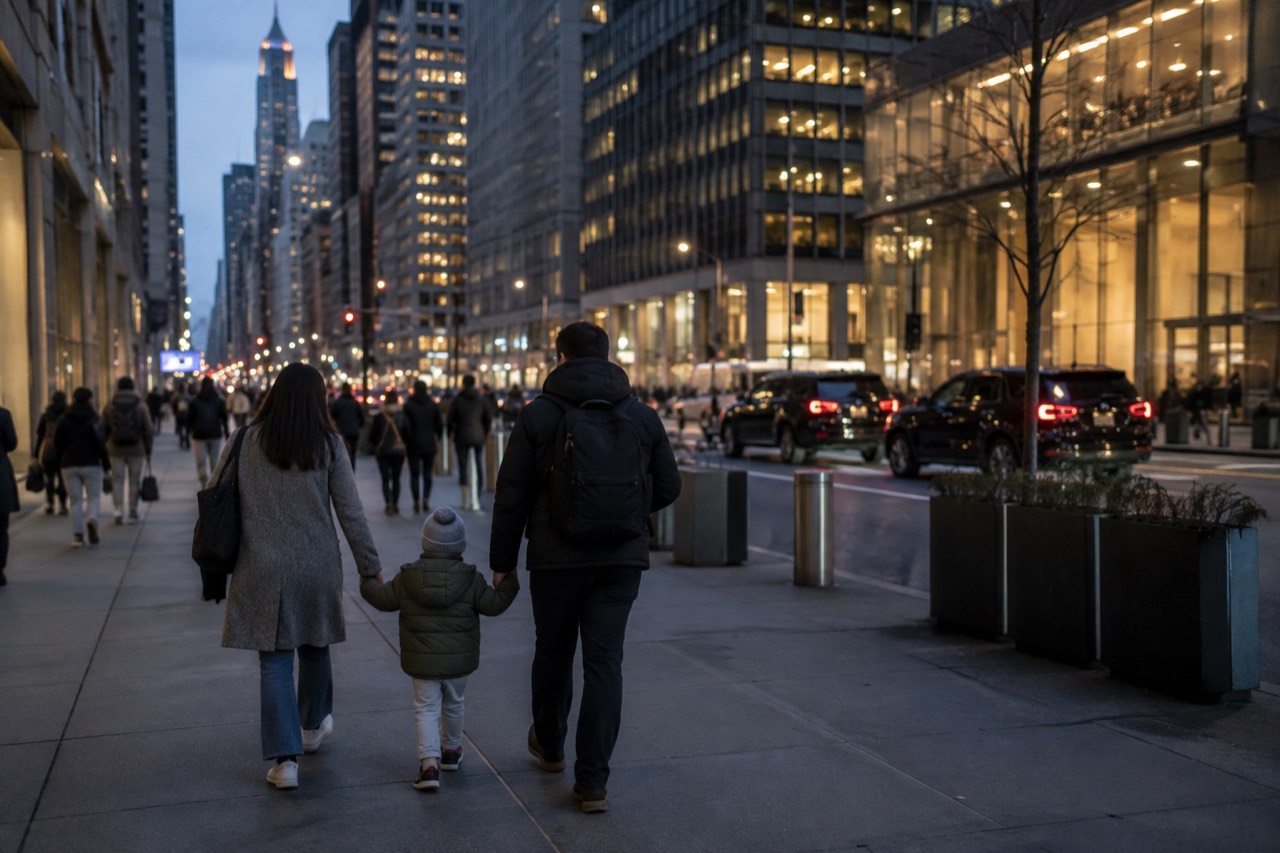
New York welcomed 65 million visitors in 2025, and a large share of them arrived with children in tow. The city rewards that decision more than most people expect, and it also punishes bad planning harder than almost anywhere else in the United States. A family that books a hotel in the right neighborhood, buys the right tickets in advance and learns the subway before day one will have one of the best trips of their lives. A family that wings it will spend a fortune standing in lines.
This page answers the question directly, then gets specific: which attractions actually work with children, what a family trip really costs, how to move a six-year-old across a city of 8 million people, and the downsides the brochure version of New York leaves out. Everything here is drawn from verified figures, official fare tables and the actual prices families pay at the door.
Is New York Actually a Good Place to Go with Kids?
Yes, New York is one of the best big cities in the world for children, provided you plan around their age and stamina rather than your own wishlist. Kids under ten get the most out of Central Park, the ferry, the dinosaur halls and the observation decks, and all of those are either free or genuinely worth their price.
The city is safe by big-city standards, the transit is stroller-manageable once you know the rules, and the density means no attraction is more than a short ride from the next one.
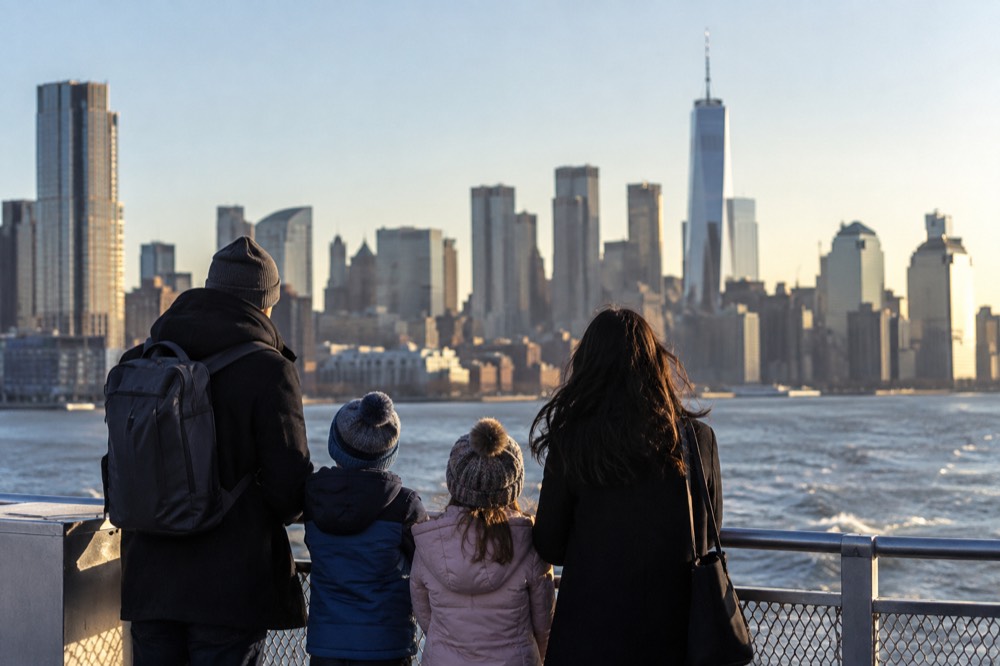
The reason New York works for families is the same reason it works for everyone: everything is close. In a single morning a family can ride a ferry past the Statue of Liberty, walk a waterfront promenade and be standing in a museum by lunch. No other American city packs that much into walkable distance, and none of it requires a car, which removes the single worst variable of traveling with children in most of the country.
Age matters more here than anywhere else. Toddlers and preschoolers are happiest with the playgrounds, the carousel, the zoo and the ferry, most of which cost little or nothing. School-age children can handle the museums, the observation decks and a Broadway show, and they are old enough to be genuinely awed by the skyline. Teenagers need almost no accommodation at all: New York is the most teenager-friendly city in America once you hand them a transit fare and a slice budget.
The starting point for most families is the master list on things to do in NYC, and the family-specific picks on things to do in NYC with kids. Between those two pages you can assemble a week without guessing.
One planning note before the detail: the single most common mistake families make is booking too many paid attractions per day. Two is realistic with children, three is a stretch. New York's free layer, the parks, the ferries, the plazas, is strong enough that a good itinerary does not need to be expensive every hour of the day.
Which New York Attractions Genuinely Work with Children?
The reliable winners are the American Museum of Natural History, the Staten Island Ferry, Central Park, the Statue of Liberty ferry and the observation decks, in roughly that order for most ages. The dinosaur halls and the whale alone justify the museum, the ferry to the statue is a boat ride with a landmark attached, and the decks deliver the skyline moment children remember for years.
Broadway works from around age six upward, and The Lion King is the safest first show in town.
The American Museum of Natural History is the anchor. Dinosaur halls, the great blue whale suspended overhead, the planetarium: children do not need to be museum kids to be gripped by it, and the building is big enough that a family can spend a full day without repeating a gallery. New York State residents pay what they wish for general admission with ID, and everyone else pays a fixed price, so check the ticketing options before assuming the cheapest route. A family ticket product bundling the museum with its add-ons exists and is worth comparing against plain admission if you plan to see a giant-screen film or a space show.
The Statue of Liberty is the other essential. The official ferry from Battery Park is the only operator authorized to land on Liberty Island, and every ticket includes both islands, both museums and the audio tours. Adult grounds tickets run $26.00 at the official terminals, with children 4-12 at $17.00 and under 4 free, and the ride itself is half the fun for a child. Beware the lookalike harbor cruises that circle the islands and never land; some charge more than the real ferry and leave families staring at the statue from a deck.
For families stacking several big sights, the pass question is worth doing the arithmetic on. New York CityPASS covers a choice of five attractions from a menu of eleven, including the Empire State Building, the American Museum of Natural History, Top of the Rock and the official Statue of Liberty ferry, at $149.00 for adults and $129.00 for children 6-17, valid over nine consecutive days. The menu prices it publishes add up to $307.04 at the box office for the adult set, so the saving is real, but only if your family genuinely uses all five.
Here is how the headline family attractions compare on price and fit:
| Attraction | Adult price | Child price | Best age | Notes |
|---|---|---|---|---|
| American Museum of Natural History | Fixed admission, NY State residents pay what they wish | Reduced child rates | 4+ | Planetarium and films cost extra |
| Statue of Liberty and Ellis Island ferry | $26.00 | $17.00 (4-12), under 4 free | 4+ | Only authorized ferry lands on the island |
| Staten Island Ferry | Free | Free | All | 25-minute ride, skyline views, no island stop |
| Central Park (playgrounds, carousel, zoo) | Free grounds, paid zoo and carousel | Reduced zoo rates | All | Zoo is small and manageable |
| Observation decks (Empire State, Top of the Rock, Edge, SUMMIT) | From around $34-$48, dynamic by date | Varies by deck | 6+ | Timed entry, book ahead |
| Broadway (The Lion King) | From $144 | Varies by seat | 6+ | Roughly 2.5 hours with intermission |
The Intrepid Museum deserves a mention for any child who likes machines: an aircraft carrier parked on the Hudson at Pier 86, with jets on the flight deck, a space shuttle prototype and a submarine you can walk through. Adult admission is $38.00, children 5-12 are $28.00, and kids 4 and under enter free. It is the kind of place that defeats short attention spans for the better part of a day.
The observation decks split families less by price than by temperament. SUMMIT One Vanderbilt, next to Grand Central, is the playful one, with mirror rooms and glass ledges that turn the visit into a game, and tickets start from $47.91. Edge at Hudson Yards has the glass floor for steady nerves. For a first visit with children, pick one deck and spend the saved money on ice cream.
How Much Does a Family Trip to New York Cost?
Transit is the cheapest part of a New York trip and the part most families overpay for: the fare is $3.00 per subway or local bus ride, OMNY caps a week at $35 automatically, and children under 44 inches tall ride free with a fare-paying adult. Attractions are the flexible line, since the free layer of parks, ferries and plazas is strong enough to fill half of each day at no cost.
The expensive mistakes are avoidable: lookalike harbor cruises, same-day deck tickets and unplanned taxis.
Transit is the cheapest part of a New York trip and the part most families overpay for. The fare is $3.00 per subway or local bus ride, and OMNY caps a week of rides at $35 automatically, with no pass to buy, as long as everyone taps the same card or device every time. Children up to 44 inches tall ride free with a paying adult, up to three children per adult, which means many families only pay for the grown-ups.
Food is where budgets drift. The honest range for a family eating a mix of slices, bagels, diners and one nicer sit-down meal varies widely by neighborhood and appetite, and the tourist corridor prices everything at a premium. New York's cheap-eats layer is genuinely excellent, and a dollar-slice-and-pretzel day is not a hardship, it is a feature. Set a daily food budget before the trip and hold the line on it.
Attraction spending is the line worth a table:
| Spending pattern | What it looks like | Cost drivers |
|---|---|---|
| Budget day | Staten Island Ferry, Central Park, playgrounds, slices, one paid small attraction | Almost nothing beyond food and one ticket |
| Mid-range day | One big museum or deck, one ferry or zoo, mix of cheap and sit-down food | Two adult tickets at full price, children reduced |
| Full sightseeing day | Two paid attractions, plus a Broadway-scale ticket pushes the day far higher | Show tickets dominate the total |
Broadway is the big-ticket item. The Lion King starts from $144 per person, and a family of four at that level is a serious evening out. The discount routes are real: TKTS sells same-day tickets at 20-50% off with an $8 per-ticket service fee, and digital lotteries typically price wins in the $30-$50 range. Both take flexibility that children complicate, so treat a show as the one planned splurge rather than a nightly habit.
How Do You Get Around New York with Kids?
The subway is the answer, and it is better with children than its reputation suggests: $3.00 a ride, a $35 automatic weekly cap, free transfers within two hours, and children under 44 inches tall ride free. The real rules are to avoid rush hour with a stroller, use the OMNY tap rather than hunting for a pass that no longer exists, and take the Staten Island Ferry at least once because it is free and children love boats.
Taxis and rideshares exist but are the expensive exception, not the plan. The MetroCard retirement in January 2026 actually made family transit simpler. There is nothing to buy in advance and nothing to lose: each person taps a contactless card or phone at the turnstile, rides cost $3.00 each, and once one person's taps total $35 in a rolling seven-day window the rest of that period is free for them. The catch is consistency, since mixing a phone and a plastic card breaks the cap silently, so give every family member one card and stick to it. Everything else covered here is indexed on New York City Travel Guide.
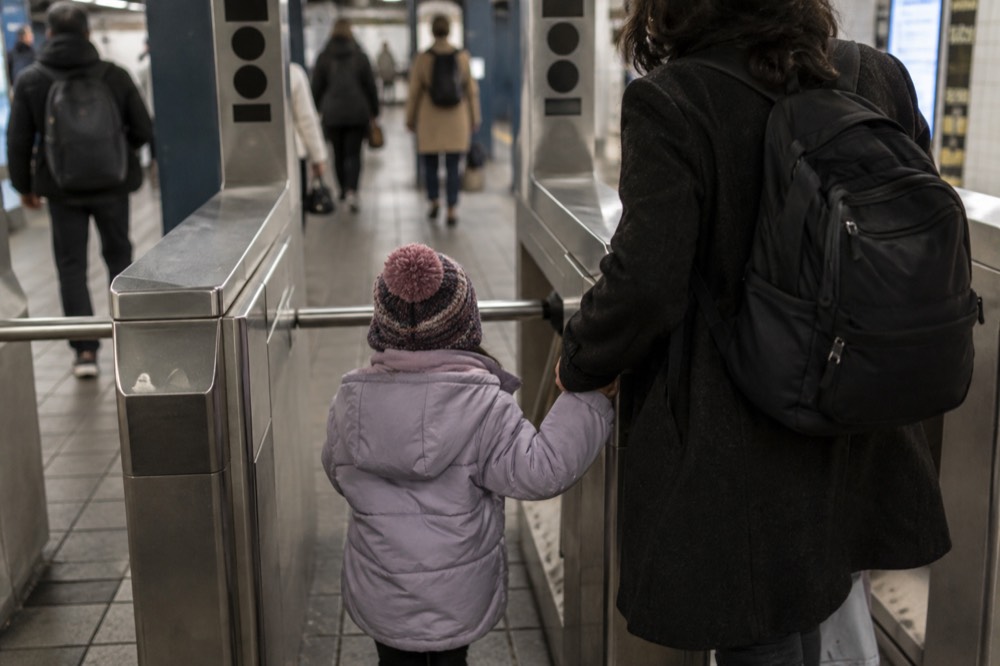
Strollers are workable with tactics. Not every station has elevators, so the working method is to check accessibility before committing to a route, favor stations you already know work, and be ready to carry the stroller up stairs at least once a day. Rush hour, roughly 8-9:30am and 5-6:30pm, is the wrong time for a stroller on a crowded train; shift sightseeing to start after 10am and the system becomes pleasant.
Walking is the other transport, and New York rewards it. Blocks are short, sidewalks are wide, and a walk across the Brooklyn Bridge with children is both a transit moment and the day's highlight. The free walking tours of NYC and the bridge itself cost nothing beyond shoe leather, and the Brooklyn Bridge guide covers the crossing direction that ends near ice cream rather than near traffic.
Where Should a Family Stay, and When?
Midtown works best for first-time families because it puts the subway connections, Central Park's southern end and the Theater District within walking distance, while the Upper West Side is the calmer, better-value alternative with the museum row and the park at the doorstep.
On timing, late spring and early fall are the sweet spots: warm without the July humidity, which is the wettest month of the year at 4.60 inches of rain in Central Park, and outside the December peak when hotel prices spike around the holidays.
Late May through June and September through October give families the best ratio of good weather to manageable crowds. The official Central Park climate normals hold a surprise for summer planners: July is the wettest month of the year, averaging 4.60 inches of precipitation, ahead of August at 4.56 and June at 4.54. Summer trips still work, but they need indoor backups, and the American Museum of Natural History is exactly that.
Winter is underrated for families who pack correctly. February is both the snowiest month, averaging 10.1 inches against January's 8.8, and the driest, so the city is cold but often bright, and the holiday-season crowds have gone. The December window between Thanksgiving and New Year is magical and expensive in equal measure; families who want the Christmas version of New York should book the hotel months ahead and accept the premium.
Neighborhood choice, in brief:
| Base | Best for | Trade-off |
|---|---|---|
| Midtown | First visits, shows, subway access | Loudest, least charm, hotel rooms run small |
| Upper West Side | Museum days, park mornings, families who want a neighborhood feel | Longer rides downtown |
| Upper East Side | Museum Mile, quieter streets | Fewer dining options late |
| Brooklyn (Park Slope, Dumbo) | Space per dollar, playgrounds, the bridge | Commute time into Manhattan |
What Are the Honest Downsides of New York with Kids?
The real costs are sensory and logistical, not safety: the noise and crowding wear children down faster than the walking does, hotel rooms are small for the price, and the temptation to over-schedule turns day two into a meltdown. The families who enjoy the city are the ones who build in downtime, pick one anchor attraction per day and treat the playground stops as part of the trip rather than a failure of planning.
Noise is the first thing children notice and the thing parents underestimate. Sirens, crowds, construction: the city runs at a volume that adults have learned to filter and children have not. The countermeasure is geography, since Central Park, the Brooklyn waterfront and the residential boroughs give families a genuinely quiet hour whenever the day needs one.
Over-scheduling is the self-inflicted wound. New York's density makes four attractions a day look feasible on a map, and it is, if your goal is miserable children. Two anchors, one of them big, plus food and a park, is a full and happy day. The families who report the best trips are consistently the ones who planned less and wandered more.
Cost drift is the third. Small expenses, bottled water, snacks, a taxi when feet hurt, compound fast, and the tourist corridor prices everything at a premium. The defenses are boring and effective: buy attraction tickets online in advance, eat one neighborhood meal a day away from the sightseeing core, and set the taxi rule before the trip rather than during it.
Common Questions About Taking Kids to New York
Most family questions come down to four things: whether the city is safe, whether it is affordable, which ages it suits best, and how to keep children moving and fed without chaos. The short answers are yes, yes with planning, all of them with different itineraries, and the subway plus a slice budget. The details below cover the questions parents actually ask.
is new york a good place to go with kids?
Yes. New York is one of the best big cities in the world for children: dense, walkable, packed with world-class museums, a huge park at its center, free ferries and a transit system that children ride cheaply or free. The caveats are planning, cost control and building in downtime, not safety or a lack of things to do.
What is the best age to take kids to New York?
School age, roughly 6-12, is the sweet spot: old enough for the museums, the observation decks and a Broadway show, young enough to be awed by all of it. Toddlers still enjoy the park, the ferry and the zoo, and teenagers need almost no accommodation at all.
Is New York safe for families?
Yes, by big-city standards. The practical safety issues for families are traffic, crowds and keeping track of children in busy places, not violent crime. The standard advice applies: hold hands at crossings, agree a meeting point in large spaces, and keep the visit planned around main corridors after dark.
Do kids pay for the subway in New York?
Children under 44 inches tall ride the subway and local buses free with a fare-paying adult, up to three children per adult. Everyone else pays $3.00 per ride, capped automatically at $35 per rolling week with OMNY.
How many days does a family need in New York?
Four to five days covers the essential family circuit without rushing: the museum, the statue ferry, Central Park, one observation deck, the Brooklyn Bridge and a show. Three days works if you cut the deck or the show; a week lets you add Brooklyn and a relaxed pace.
Is the New York CityPASS worth it for families?
It can be, if your family will genuinely visit five of the eleven attractions on its menu within nine days. At $149.00 adult and $129.00 for children 6-17 against a published $307.04 adult box-office total, the arithmetic favors busy itineraries and punishes loose ones. Compare it against pay-as-you-go before committing.
The honest summary: New York is not merely workable with children, it is one of the cities where being a child, wide-eyed on a ferry, under a whale, at the top of a tower, is the entire point of the place. Plan for two anchors a day, tap the same card every ride, and let the park do the rest.