Is the Financial District in New York Worth Visiting?
A direct, sourced answer on whether the Financial District in New York is worth visiting, covering the 9/11 Memorial, Wall Street, the harbor, transport costs and how much time to give it.
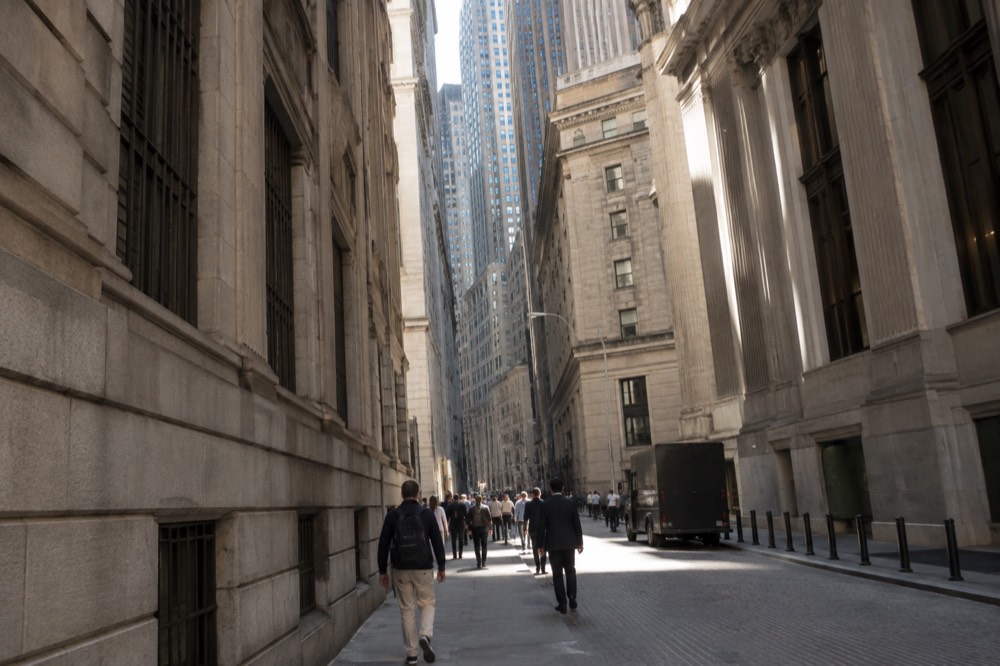
The Financial District sits at the southern tip of Manhattan, and it concentrates more per square block than almost anywhere in the city: the 9/11 Memorial, Wall Street itself, the ferry piers for the Statue of Liberty, the Staten Island Ferry terminal, and the tallest observation deck in the Western Hemisphere. The plaza at the World Trade Center is free to walk, daily from 8:00 to 20:00. The museum beneath it costs $36 for an adult. Everything else in the neighborhood sorts into those two columns too, free ground and paid depth, which is why the honest answer to whether it is worth visiting depends almost entirely on how much of it you plan to do.
What Makes the Financial District Worth Visiting?
The Financial District earns its place because it stacks a national memorial, the most famous street in American finance, the departure point for the Statue of Liberty ferry, and a major observation deck into a walkable area of roughly a dozen blocks. No other New York neighborhood gives you that density. One focused morning covers the memorial plaza, Wall Street, the Charging Bull and the harborfront without a single subway ride between them.
That density is the practical case. The emotional case is the 9/11 Memorial, which is unlike anything else in the city and should be described plainly: it is a memorial at the site of a mass killing, two reflecting pools set into the footprints of the towers, open free to anyone. The museum beneath the pools holds the exhibition space, and timed tickets cost $36 for an adult at the box office, with reduced rates for teenagers and children. The plaza asks nothing, the museum asks for time and composure.
Around it, the neighborhood works as a regular place. Weekdays it is a sea of suits moving fast at 8:30am and gone by 7pm. Evenings and weekends it empties out, which surprises first-time visitors: the Financial District is quieter at night than almost any other Manhattan tourist zone, and hotel rates there often reflect that. If your priority is sightseeing rather than nightlife, that emptiness is a feature.
For orientation, the free walks on GuruWalk are a genuine option here. The Financial District, Wall Street and 9/11 Memorial free tour covers Wall Street, the New York Stock Exchange and the memorial, ending near the waterfront, and you pay the guide what you think the walk was worth. A paid alternative with more depth on the money itself is the Wall Street Insider Tour with a Finance Professional, which is led by someone who has actually worked in the markets rather than a general sightseeing guide.
Is the Financial District in New York Worth Visiting?
Yes, for most first-time visitors the Financial District is worth visiting, and it is close to non-negotiable if your trip includes the 9/11 Memorial, the Statue of Liberty ferry or One World Observatory, because all three sit inside it. It also works on a budget: the memorial plaza, Wall Street, the Charging Bull, Federal Hall's exterior and the harborfront parks cost nothing at all.
It is skippable only for travelers with no interest in finance, history or the skyline.
The clearest way to decide is to look at what the neighborhood actually contains and price it out. Here is the honest ledger.
| Financial District sight | What it is | Cost |
|---|---|---|
| 9/11 Memorial plaza | The two reflecting pools at the World Trade Center | Free, daily 8:00-20:00 |
| 9/11 Memorial & Museum | The exhibition space beneath the pools | $36 adult box office; free-admission tickets released Mondays at 07:00 ET |
| Wall Street and the NYSE exterior | The canyon itself; the exchange floor is not open to the public | Free |
| Charging Bull and Fearless Girl | Bronze statues at Broadway and Morris Street | Free |
| One World Observatory | Observation deck 102 floors above the neighborhood | From $39-$44, dynamic timed pricing |
| Statue of Liberty ferry | Official departure from Battery Park | $26.00 adult general admission, ferry and both islands included |
| The Oculus | The World Trade Center transportation hub and its retail space | Free to walk through |
| Battery Park and Castle Clinton | Waterfront park; Castle Clinton houses the official ferry ticket booth | Free to enter |
Notice how much of that column on the right says free. The Financial District has a reputation as a money neighborhood, and it is, but the visitor experience is one of the cheapest half-days in Manhattan if you let it be. The two big spends, the museum and the observatory, are both optional, and the ferry is a destination ticket rather than a neighborhood cost.
The one thing this desk would push back on is treating the district as a drive-by. Bus tours unload at the bull for ten minutes and roll on, and those visitors see a statue and a crowd. The neighborhood rewards the opposite approach: a slow loop on foot, a sit by the pools, and a ferry afterward. If you are planning the wider trip, our things to do in NYC overview places the Financial District in context against the other big sightseeing zones.
What Are the Top Things to Do in the Financial District?
The ranked core of a Financial District visit is the 9/11 Memorial plaza first, Wall Street and the Stock Exchange exterior second, the Charging Bull third, the Oculus fourth, and the Battery Park waterfront fifth, with One World Observatory added if you want the view. In that order the walk runs naturally from the World Trade Center down to the harbor with almost no backtracking.
Allow two hours at a stroll, half a day with the museum, a full day with the observatory and the ferry.
Start at the World Trade Center. The memorial plaza is the reason many people come to this neighborhood at all, and it deserves more than a photo stop. The two pools sit in the tower footprints, with the names of the victims cut into the bronze parapets. It is free, open daily from 8:00 to 20:00, and there is no ticket and no queue for the plaza itself. The museum is a separate decision: it is a demanding, somber two hours, and visitors with young children or limited time often choose the plaza alone. That is a legitimate choice, not a failure.
From the plaza, the Oculus is steps away. It is the neighborhood's transportation hub, all white ribs and light, and you can walk through it for free on your way anywhere. It also functions as a shopping arcade, which feels jarring until you realize the whole district rebuilt itself around exactly that mix of transit, commerce and memory.
Walk east on Fulton Street and you land in the heart of the old financial core. Wall Street is a physical canyon, narrow and dark at the bottom, and the New York Stock Exchange building anchors it. The trading floor is not open to public tours, so the exterior is the experience, along with Federal Hall nearby, the columned building where George Washington took the presidential oath. The Charging Bull sits a few blocks south at Broadway and Morris Street, and it draws a permanent scrum of photographers. Go early if you want the shot without a stranger's elbow in it.
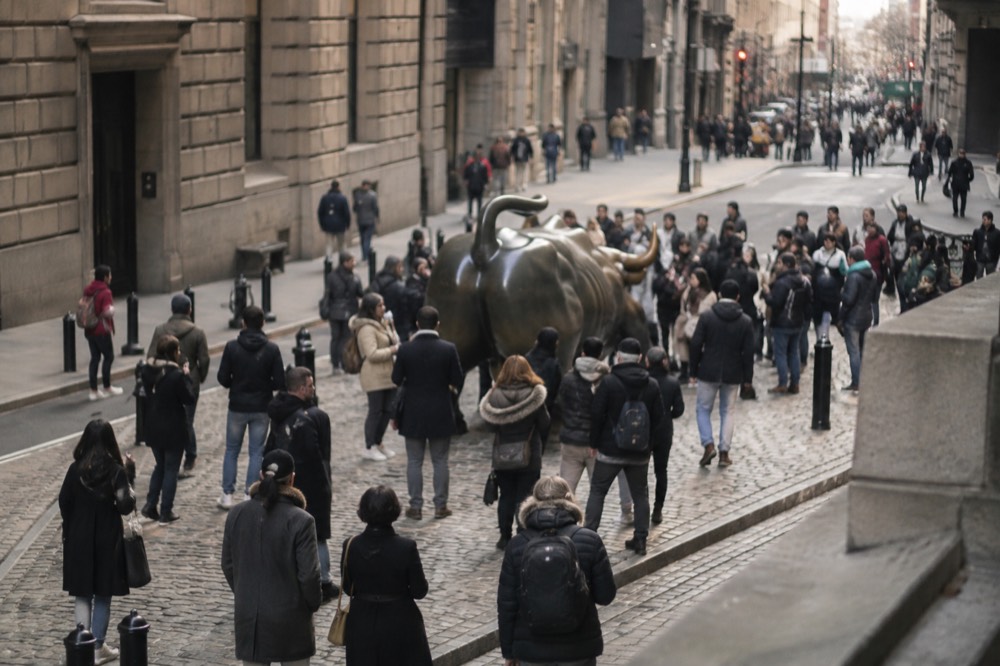
Finish at the water. Battery Park runs the whole southern edge of the neighborhood, with the harbor in front of you and the Statue of Liberty in the distance. Castle Clinton, the old fort in the park, houses an official ticket booth for the Statue City Cruises ferry, the only operator authorized by the National Park Service to land at Liberty and Ellis Islands. Adult general admission is $26.00 and covers the round-trip ferry, both islands and both museums. Be aware that plenty of lookalike cruise operators sell boat trips that circle the islands and never land, some charging more than the real ferry, so check what you are actually buying.
If you want the neighborhood explained rather than just seen, the free GuruWalk options are strong here, and one honest note: several of the free New York walks on GuruWalk, including the Wall Street FiDi route, are run by the same operator, CityShuffles, so do not expect a wide choice of independent free-walk companies. The depth option is the paid insider tour, where a guide who worked in finance explains what actually happens inside the exchanges.
How Much Time Should You Spend in the Financial District?
Two hours covers the outdoor core: the memorial plaza, Wall Street, the bull and the waterfront. Half a day adds the 9/11 Memorial Museum, which most visitors rate as two hours inside. A full day is only necessary if you stack the museum, One World Observatory and the Statue of Liberty ferry, and the ferry alone takes three to five hours.
Anything less than two hours is a drive-by, and you will leave having seen a statue and a crowd but not the district.
The common mistake is under-budgeting the museum. It is not a quick circuit. The exhibition descends through the foundations of the towers, and the material is heavy enough that many visitors need to sit down partway through. Booking a timed slot in advance locks your entry window and skips the ticket line on Fulton Street, which matters on busy days. Everything else covered here is indexed on New York City Travel Guide.
The second mistake is the opposite: giving the district a full day without the ferry or the observatory and running out of things. The outdoor core is compact. If you are not adding a paid anchor, two relaxed hours in the morning, before the crowds at the bull build up, is the right size.
Here is how the time actually breaks down.
| Itinerary shape | What it includes | Realistic time |
|---|---|---|
| Quick loop | Memorial plaza, Wall Street, bull, Battery Park | 2 hours |
| Half day | Quick loop plus the 9/11 Memorial Museum | 4-5 hours |
| Full sightseeing day | Half day plus One World Observatory | 6-7 hours |
| The full stack | Everything above plus the Liberty and Ellis Islands ferry | 9-11 hours |
| Guided morning | Free or paid walking tour plus the plaza at your own pace | 3-4 hours |
How Do You Get to the Financial District?
The subway is the right answer for almost everyone: a single ride costs $3.00 with OMNY, and numerous lines stop in or on the edge of the district, including the 2, 3, 4, 5, A, C, J, Z, R and W. From Midtown the trip takes roughly 20 to 30 minutes.
The fare is tap-to-pay with a credit card, debit card, phone or an OMNY card, and there is no pass to buy, because the $35 weekly cap applies automatically after twelve paid rides in a seven-day window.
That last sentence is the single most out-of-date thing in most competing guides. The MetroCard era is over.
Taxis and rideshares work too, but Lower Manhattan's street grid at the southern tip is a funnel, and rush hour can make a Midtown cab ride longer than the train. Walking down is also realistic for the energetic: down Broadway or along the river, it is a long but interesting hike from Midtown, and many visitors walk one way and ride back.
The district's own transport role matters as well. This is the neighborhood where you change from sightseeing to departure: the Staten Island Ferry terminal sits on the South Ferry edge, and the Battery Park ferry piers serve the Statue of Liberty. The World Trade Center hub underneath the Oculus connects the subway with the PATH train to New Jersey. If you are staying in Jersey City or Hoboken, the Financial District is your easiest entry into Manhattan.
For the wider picture on fares, transfers and the OMNY cap, see our New York subway guide.
When Is the Best Time to Visit the Financial District?
Early weekday mornings, roughly 8:00 to 10:00, are the best time to walk the Financial District, because the light is good, the bull is merely busy rather than mobbed, and the neighborhood is at its most alive with the working crowd. Weekends are the emptiest and quietest, with the smallest tourist crowds at the statues but many restaurants and shops closed.
Avoid midday if you dislike crowds, and note that the memorial plaza is open 8:00 to 20:00 daily, so evening visits work well.
The weekday-morning choice comes with a caveat worth knowing. New York's subway ridership has recovered on weekends but not on weekdays: average weekend ridership in 2025 ran at 88 percent of pre-pandemic levels while weekday ridership sat at 73 percent. What that means for you is that the weekday morning Financial District is a genuine working district, dense and fast, while the weekend version is a quiet tourist zone with room to breathe. Neither is wrong, they are different products.
Weather matters less here than in most of the city, because the core loop is short and the museum and the Oculus are indoors. The one real exposure is the waterfront stretch through Battery Park, which catches the harbor wind hard in winter. If the sky looks doubtful, do the outdoor core first and keep the museum as the shelter.
Seasonally, the district is a year-round performer. Summer mornings before the heat, and December evenings when the area around the World Trade Center lights up, are the two peak experiences. The observatory is the rainy-day fallback, and the ferry is best booked for a clear day since the whole point is the view from the water.
If you are leaning toward a guided introduction to the district, this is the moment to compare the honest options side by side.
The free walks on GuruWalk cost nothing up front and you tip the guide at the end, which suits travelers who want orientation before exploring solo. The paid insider tour suits visitors who specifically want the mechanics of Wall Street explained by someone who has worked in the industry. And the second free option, the Wall Street FiDi route on GuruWalk, is a solid alternative slot if the timing of the first does not fit your day. Book whichever matches your schedule, then spend the rest of the morning walking the loop yourself.
Common Questions About the Financial District in New York
The Financial District is worth visiting for the large majority of travelers: it holds the 9/11 Memorial, Wall Street, the Statue of Liberty ferry departure and One World Observatory in a compact walkable area, and most of its outdoor sights are free. Two hours sees the core, half a day with the museum is the sweet spot.
The district is quiet at night, the subway reaches it in under thirty minutes from Midtown for $3.00, and the only real mistake is treating it as a ten-minute bus stop rather than a morning.
Is the Financial District in New York worth visiting?
Yes. It concentrates the 9/11 Memorial, Wall Street, the Charging Bull, the official Statue of Liberty ferry departure and One World Observatory into a walkable area, and the outdoor sights are free. Two hours covers the core loop, half a day covers it properly with the museum.
How much does it cost to visit the Financial District?
Nothing at all if you stick to the outdoors: the memorial plaza, Wall Street, the bull and Battery Park are free. The 9/11 Memorial Museum is $36 for an adult, One World Observatory starts from $39-$44 with dynamic pricing, and the Statue of Liberty ferry is $26.00 adult general admission including both islands.
Can you visit the 9/11 Memorial for free?
Yes. The memorial plaza with the two reflecting pools is free and open daily from 8:00 to 20:00, no ticket required. The museum beneath it is separate and costs $36 adult at the box office, though a limited number of free-admission tickets are released on the website each Monday at 07:00 ET.
Is the Financial District safe for tourists?
Yes, it is one of the most heavily trafficked and policed areas of the city, busy with office workers on weekdays and quiet on weekends. Normal city precautions apply, particularly around your phone near crowded tourist spots like the Charging Bull, but there is nothing about this neighborhood that warrants special concern.
What is the best way to see Wall Street?
Walk it yourself in the early morning, or take a guided tour if you want the stories. The New York Stock Exchange floor is not open to the public, so the experience is the street and its architecture. A finance-professional-led tour adds the mechanics behind what happens inside the buildings, which a self-guided walk cannot.
Can you walk from the Financial District to the Brooklyn Bridge?
Yes, easily. The bridge's pedestrian entrance is on the edge of the district, and the walk from the World Trade Center to the bridge approach takes about fifteen minutes at a normal pace. Crossing to Brooklyn and back, with photos, adds roughly an hour, and many visitors pair the two in one downtown morning.
One last practical note: the Financial District rewards an early start more than almost any other part of the city. The bull is photogenic at 8:30am and a scrum by noon, the memorial pools are at their most peaceful in the first hour after opening, and the ferry lines at Castle Clinton only grow through the morning. Start at the top of the neighborhood and work down to the water, and the district will feel like it was worth every minute, which, per this desk's accounting, it is.