Is There Free Street Parking in New York City?
A direct, sourced answer on whether free street parking exists in New York City, where to look for it, and why most visitors should leave the car at home.
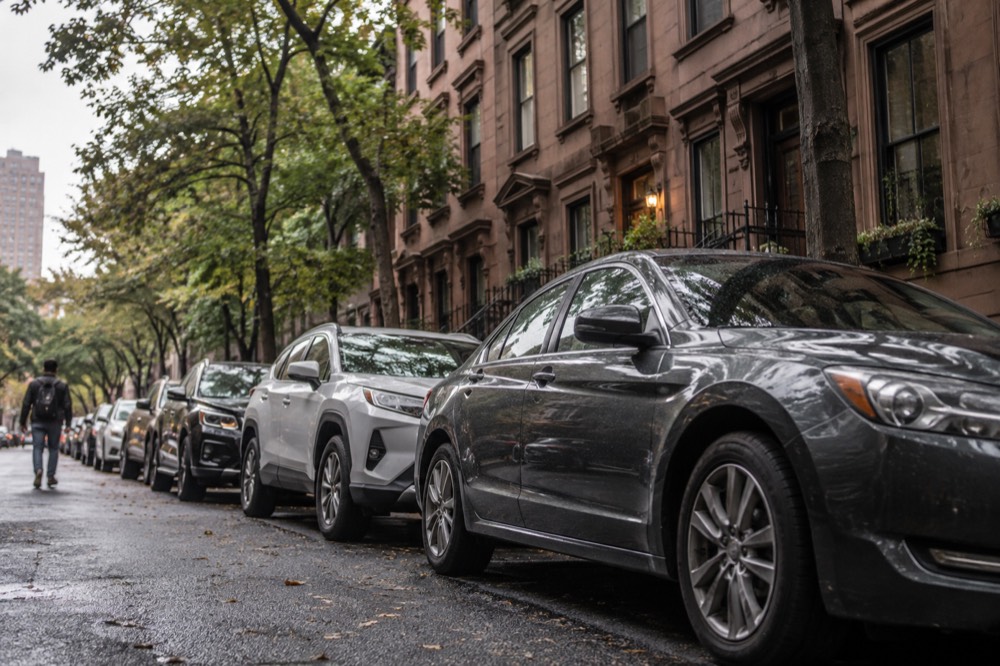
Yes, free street parking exists in New York City. It exists in the outer boroughs, on residential side streets, and on many blocks of Manhattan outside the metered core. What does not exist is a reliable supply of it anywhere near Midtown, Lower Manhattan or the attractions that bring people to the city in the first place. Free curb space in New York is real, scarce, and governed by rules that change from block to block.
That is the honest answer, and it comes with a caveat worth stating up front. The question most visitors are really asking is whether they can drive into the city, park for nothing, and walk to the sights. That version of the answer is closer to no. This page explains where free street parking genuinely exists, what rules attach to it, and why the subway beats the car for almost every visitor, a case the numbers make on their own.
Is There Free Street Parking in New York City?
Yes, free street parking exists in New York City, on residential blocks in the Bronx, Brooklyn, Queens and Staten Island, and on side streets in Upper Manhattan and parts of the other boroughs. Manhattan's central business district is overwhelmingly metered, and Midtown and Lower Manhattan are effectively a paid zone. Free spots exist there, but they turn over fast and are hard to find at any hour a visitor would use them.
The distinction that matters is between the city and Manhattan. New York City is five boroughs, and most of its land area is residential streets where parking is unmetered. Manhattan is where the tourists go, and Manhattan's core is metered, ticketed and patrolled with an intensity that surprises drivers from smaller cities. A visitor who finds free street parking in, say, Bay Ridge in Brooklyn or Astoria in Queens has genuinely found free parking, but they have found it a subway ride away from the Empire State Building, not outside it.
Free does not mean unregulated, either. An unmetered block in New York still carries street cleaning rules, hydrant clearances, bus stop zones, and a host of signposted restrictions that vary from one corner to the next. The classic visitor mistake is treating an empty stretch of curb as an invitation. In this city the empty curb is often empty because parking there is illegal, and the ticket arrives on the windshield faster than most people believe.
The practical framing is this: if your plan requires free street parking within walking distance of a major attraction, the plan is already broken. If your plan is to park in an outer-borough neighborhood and ride the subway in, free parking becomes plausible again, and the fare math is heavily in your favor. A single subway ride costs $3.00, and the fare system caps itself, which no parking arrangement in Manhattan does.
Where Free Street Parking Actually Exists in New York City
The reliable free street parking in New York City sits in the residential neighborhoods of the outer boroughs and in Upper Manhattan, well north of the metered Midtown core. Neighborhoods in Queens, Brooklyn, the Bronx and Staten Island have long stretches of unmetered curb. In Manhattan itself, free spots cluster above the central business district, and the further south you drive, the more every inch of curb carries a meter, a permit rule or a loading zone.
Think in tiers. The first tier is the outer-borough residential street, genuinely free, genuinely available, and genuinely far from the sights. The second tier is Upper Manhattan, free on many blocks but competitive, because the people who live there are also competing for it. The third tier is everything south of Central Park in Manhattan, where free curb space is functionally a rumor. A driver who circles a Midtown block at 8pm looking for a free spot is not parking, they are sightseeing in a car.
| Tier | Where | Realistic for a visitor? |
|---|---|---|
| Outer-borough residential streets | Queens, Brooklyn, the Bronx, Staten Island | Yes, as a park-and-ride near a subway station |
| Upper Manhattan side streets | North of the metered core | Possible, but competitive with residents |
| Manhattan south of Central Park | Midtown, Lower Manhattan | Effectively no; metered, permitted and full |
For a visitor, the workable play is the park-and-ride. Choose a neighborhood in Brooklyn or Queens near a subway station, find a legal unmetered spot on a residential block, and leave the car for the day. This works best midweek, outside the evening rush, and it depends on reading the signs carefully, which is the subject of the next section. It is not a guarantee. It is a plan with better odds than driving into Midtown.
One more thing worth saying plainly: the attractions that anchor a first visit, the Empire State Building, Top of the Rock, the Statue of Liberty ferry, the major museums, are all served directly by the subway. The money page of things to do in NYC is built around that fact. Nothing on a classic New York itinerary requires a car, and several destinations, the High Line and Times Square among them, are actively worse with one.
What Alternate-Side Parking Rules Mean for Visitors
New York City suspends parking on most residential blocks for street cleaning, typically one or two days per week, and a car parked on the wrong side at the wrong time gets a ticket. For visitors this cuts two ways: the rules shrink the pool of legal free parking, and they also create the twice-weekly curbside shuffle locals know well, when one side of the street empties out and spots briefly open.
Alternate-side parking is the single most important rule on any unmetered New York block, and it is the one drivers from out of town have never heard of. Each side of the street has a posted window, often ninety minutes to two hours long, when parking is banned so the mechanical sweepers can pass. Miss the window, and the ticket follows. Time it right, and you can watch an entire block empty and refill in the space of a morning.
For a visitor parking for the day, the rule matters less than for a resident leaving a car for a week. If you park on a residential street and your stay crosses the posted cleaning window, you either move the car or accept the fine. If you are parked for a few hours between windows, the rule costs you nothing. The only way to know is to read the sign at the specific spot, because the schedule changes block by block and there is no citywide pattern a guide could print that would survive contact with a real curb.
The other signposted traps are simpler but more expensive. Never park within fifteen feet of a hydrant, a rule enforced without mercy and without any paint on the curb to warn you. Never block a crosswalk, a bus stop or a driveway. And treat any sign mentioning a permit, a commercial plate or a loading zone as a hard no. New York's signage is dense, but it is not dishonest. What the sign says, the ticket follows.
Is Parking Free on Sundays or at Night in New York City?
Metered parking in New York City is not enforced around the clock, and hours vary by meter and by borough, with many meters going dark overnight and on Sundays. That means a spot that costs money at noon can be free at night. But the relief is partial: alternate-side rules, hydrant clearances and other restrictions apply regardless of the meter, and in the Midtown core, demand keeps free night curb space nearly as scarce as daytime space.
The night-and-weekend angle is where free parking in Manhattan becomes semi-plausible rather than fictional. When the meters stop, the curb is technically free, and office workers who filled the daytime spaces have gone home. The catch is that everyone else has noticed the same thing, and the blocks near hotels, restaurants and theaters fill quickly. A driver arriving at 9pm in the Theater District is competing with every other car that had the same idea. The full index of guides sits on New York City Travel Guide.
The honest advice is to treat off-hours meter rules as a bonus rather than a plan. If you are already in the city with a car and find a dark meter after dinner, take it and read the sign twice about when enforcement resumes. If you are deciding whether to drive in for an evening specifically because parking might be free, the subway still wins. A round trip for two people on the subway costs $12.00 in total fares, which is less than a single hour at many Manhattan garages, and the OMNY system caps a week of rides automatically.
Why the Subway Beats the Car in New York City
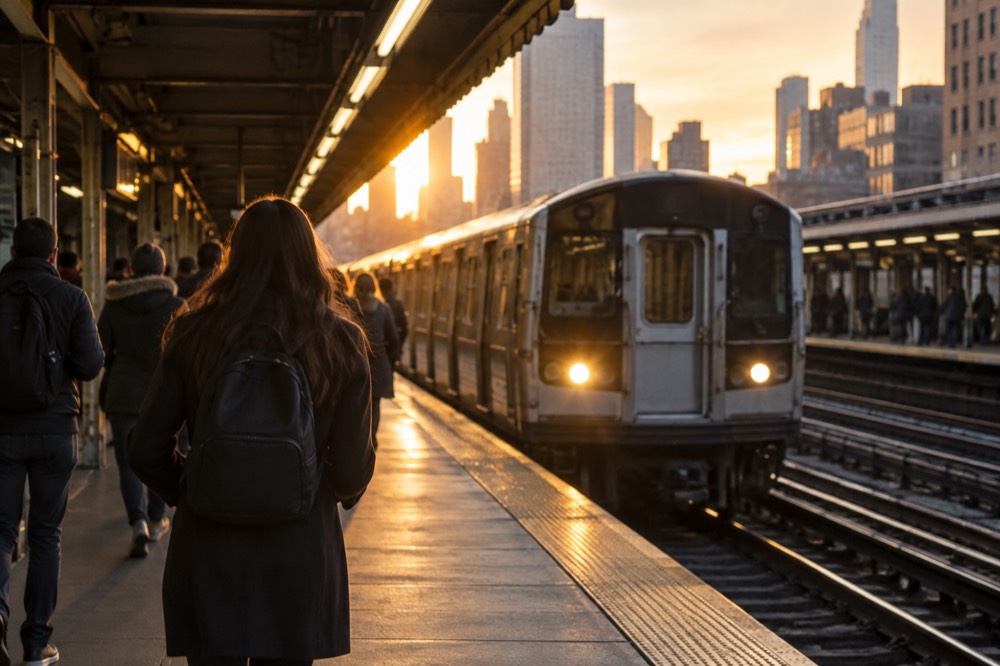
A single subway ride in New York City costs $3.00, and the OMNY system caps a week of subway and local bus rides at $35 automatically, with no pass to buy and no decision to make. Against that, driving brings garage fees, ticket risk, tolls and time spent circling. For any itinerary built around Manhattan attractions, the subway is faster, dramatically cheaper, and immune to the parking rules that consume the rest of this page.
The comparison is not close, and it is worth spelling out because so many visitors arrive with a car out of habit rather than need. The five boroughs are stitched together by a 24-hour subway system that stops within a short walk of essentially every attraction on this site. The guide to getting around NYC covers the network in detail, and the short version is that the trains run all night and the fare system now rewards you for simply tapping.
| Option | What it costs | What it risks |
|---|---|---|
| Subway, single ride | $3.00 per person | Nothing beyond the fare |
| Subway, a full week | Capped at $35 per person automatically | Nothing beyond the fare |
| Free street parking | $0 in fees | Ticket from a misread sign, plus circling time |
| Manhattan garage | Some of the highest rates in the country | Rate changes with demand |
The parking side of the ledger never stops accumulating. Even when street parking is free, the driver pays in time: the circling, the sign reading, the walk from wherever the spot turned out to be. Garages in the Midtown core charge some of the highest rates in the country, and the rates move with demand. Add the risk of a street cleaning ticket on a misread sign, and the car becomes the most expensive and least reliable item in a New York budget. The breakdown of what a trip to NYC costs makes the same point from the other direction: transport is one of the few line items where New York is genuinely cheap, if you use the trains.
There is one exception worth naming. Travelers whose real question is whether to bring a car for a day trip out of the city, to the Hudson Valley or the Hamptons or the outlets, have a different calculation, and that is covered below. But for the city itself, the answer does not bend: park outside, ride in, or skip the car entirely.
Should You Rent a Car for a Day Trip from New York City?
Renting a car in New York City makes sense only for day trips beyond the reach of the commuter rail network, such as the Hudson Valley, the Hamptons or the Woodbury Common outlets, and even then the car should be picked up on the morning of the trip, not kept for the whole stay. For anything within the five boroughs, a car is a liability, and organized coach tours handle the popular day trips without any driving at all.
The pattern that works is to structure the trip around the city's strengths. Spend the days in New York on the subway, spend nothing on parking, and if a day trip calls, either join an organized tour or rent from a location in Manhattan on the morning you leave and return the car the same evening. That way the car exists only for the hours it is useful, and it never sits on a New York street accumulating tickets.
The organized-tour option deserves more credit than it usually gets. Day trips to the Hudson Valley, the Hamptons, the outlets and Washington DC all run as coach tours out of Manhattan, and the coach solves the parking question entirely by never asking it. The trade is time on a bus and a fixed schedule, which suits some travelers and infuriates others. The day trips from NYC guide lays out the options with the trade-offs for each.
What does not work is the compromise many visitors attempt: bringing or renting a car for the whole stay "just in case." The case never arrives, and the car spends the week costing money in a garage or risking tickets on a side street while its owner rides the subway anyway. If the phrase "just in case" is doing the work in your itinerary, delete the car.
Common Questions About Free Street Parking in New York City
Visitors ask a handful of practical follow-ups: whether free parking exists at all, whether Sundays and nights are different, whether the outer boroughs are a realistic park-and-ride option, and whether the car is worth bringing for day trips. The consistent answers are: free street parking is real but scarce where tourists go, off-peak meter rules help at the margins, park-and-ride works with careful sign reading, and the subway beats the car for everything inside the five boroughs.
Is there free street parking in New York City?
Yes, on residential blocks in the outer boroughs and in Upper Manhattan, though almost none of it sits near Midtown or the major attractions. Free spots exist, but they are scarce, governed by street cleaning schedules, and competitive at any hour a visitor would realistically use them.
Can I park for free in Manhattan at night?
Sometimes. Meters in New York do not run around the clock, and many stop overnight and on Sundays, so a metered spot can become free after enforcement hours. The relief is partial, because hydrant, bus stop and street cleaning rules apply at all hours, and demand near hotels and theaters keeps desirable blocks full even at night.
Is parking in an outer borough and taking the subway a good plan?
It can be, and it is the only version of free street parking that works reliably for a visitor. Choose a residential neighborhood in Brooklyn or Queens near a subway station, read the street cleaning signs carefully, and expect to walk a few blocks. A round-trip subway fare for the day costs far less than any Manhattan garage.
What is alternate-side parking?
New York suspends parking on one side of most residential streets for street cleaning, usually once or twice a week, for a window posted on signs at the curb. A car parked there during the window gets ticketed. The schedule varies block by block, so the sign at your specific spot is the only authority worth trusting.
Do I need a car for day trips from New York City?
Only for destinations beyond the commuter rail network, and even then organized coach tours cover the popular routes, including the Hudson Valley, the Hamptons and the Woodbury Common outlets, without any driving. Inside the five boroughs a car costs more in parking and tickets than it saves in any conceivable scenario.
Is it cheaper to drive in New York than take the subway?
No, and it is not close. A subway ride costs $3.00 and a week of rides caps automatically at $35 per person through OMNY. A single day of Manhattan garage parking costs multiples of that, before tolls, fuel and the risk of a street cleaning ticket.
The closing thought is the one the whole page supports: free street parking in New York City is not a myth, it is a trade. You can have it, in exchange for distance, timing and sign-reading diligence. What you cannot have is free curb space outside the sights, because the eight million people who live here already compete for every inch of it. Bring the car only if the car has a job beyond the city, and let the $3.00 train do the rest.