What Is Anthony Bourdain's Favorite Restaurant in New York City?
A direct, sourced answer on Anthony Bourdain's favorite New York City restaurants, from Les Halles to Katz's Delicatessen, plus how to eat like him today.
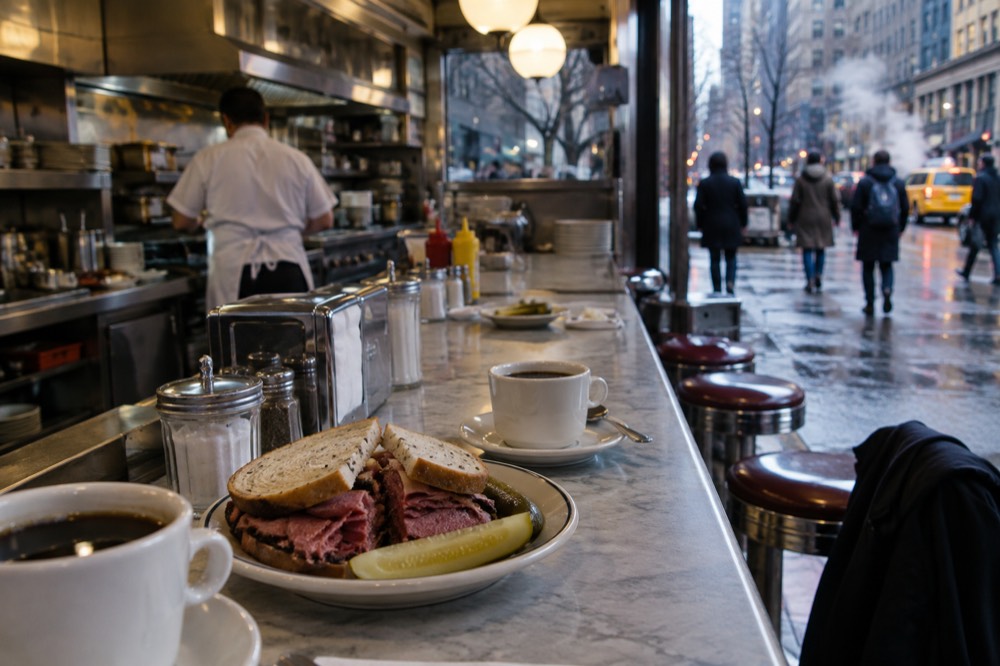
Anthony Bourdain wrote about food all over the world, but the city he kept returning to in interviews, essays and television segments was New York, where he spent his working life as a chef. He was famously suspicious of the phrase "favorite restaurant." Ask him directly and he would usually dodge the question, then name a handful of places that shared one thing: none of them were trendy. His answers, repeated across years of interviews and his own books, clustered around a French bistro he helped run and a set of old-school New York institutions, from a pastrami palace on Houston Street to a sturgeon specialist on the Upper West Side.
What Was Anthony Bourdain's Favorite Restaurant in New York City?
Anthony Bourdain never crowned one single favorite restaurant in New York City, but the closest thing to an answer is Les Halles, the French bistro on Park Avenue South where he worked as executive chef and which he treated as his home kitchen for years. Beyond Les Halles, the places he praised most consistently were old-school spots: Katz's Delicatessen, Barney Greengrass, Keens Steakhouse, and the oyster bars and noodle shops of downtown Manhattan, chosen for honesty rather than glamour.
That answer needs unpacking, because Bourdain's whole public persona was built on distrusting hype. He did not keep a list of best restaurants the way a critic does. What he kept was a set of places he considered real: kitchens that respected their ingredients, rooms that had not been redecorated to chase a trend, and food made by people who cared more about the plate than the scene around it.
Les Halles was special to him for a simple reason. It was where he worked. His breakout book, "Kitchen Confidential," is set largely in that bistro's kitchen, and the brasserie's meat-and-potatoes French cooking shaped his taste for the rest of his life. He described the restaurant as the place where he felt most himself, a working chef's bistro rather than a celebrity destination.
The other names came up repeatedly in his interviews and essays. Katz's Delicatessen on the Lower East Side, whose pastrami he ranked among the great foods of the world. Barney Greengrass, the century-old appetizing store on Amsterdam Avenue, whose sturgeon and scrambled eggs he treated as a private ritual. Keens Steakhouse, the mutton-chop palace near Herald Square, which he defended as the last of a certain kind of New York. And a rotating cast of Chinatown noodle shops, downtown dives and outer-borough spots that changed depending on the year he was asked.
Where Did Bourdain Actually Eat in New York?
Bourdain's New York eating map ran from Park Avenue South, where Les Halles anchored his working life, down through the Lower East Side and Chinatown, with regular stops at Katz's Delicatessen for pastrami and Barney Greengrass on the Upper West Side for sturgeon and eggs. He gravitated toward diners, delis, old steakhouses and noodle shops, and openly disliked the velvet-rope restaurant culture of his hometown.
The geography matters. Bourdain's Manhattan was not the Manhattan of tasting menus. He lived downtown for most of his adult life, and his recommendations skewed toward the neighborhoods he could walk to: the Lower East Side, Chinatown, Little Italy's shrinking old blocks, and the East Village. When he wanted a proper meal in Midtown, the choice was usually Keens or the Grand Central Oyster Bar, institutions with history baked into the walls.
His affection for Katz's Delicatessen was one of his most repeated positions. He considered the pastrami there a benchmark, the kind of food that needed no improvement and got none. He made the same case for Barney Greengrass, the appetizing store founded over a century ago, where the menu has barely changed because the regulars would not allow it. These were not discoveries he was claiming credit for. He knew every food writer in the city had praised them. His point was that they deserved it.
He was equally consistent about what he avoided. In essay after essay he mocked restaurants that existed to be seen in, hotel rooftops with thirty-dollar cocktails, and any place where the music was louder than the food. His ideal New York meal cost less than a Broadway ticket and left no room for pretension.
If you want to eat the downtown half of his map with a guide handling the route, a Chinatown and Little Italy food tour covers six tastings in the exact neighborhoods he haunted, dumplings through cannoli, and the tour pairs well with a morning at Katz's beforehand.
The Classic Spots Bourdain Kept Coming Back To
The restaurants Bourdain praised most in New York were Les Halles, Katz's Delicatessen, Barney Greengrass, Keens Steakhouse and the Grand Central Oyster Bar, all long-running institutions serving food that predates the age of the celebrity chef. He valued them for permanence: menus that did not chase trends, rooms that looked the same for decades, and cooks who did one thing extremely well rather than everything adequately.
Here is the short list, with what each place is known for and why it fit his taste.
| Restaurant | Neighborhood | Known for | Why it fit Bourdain |
|---|---|---|---|
| Les Halles | Park Avenue South, NoMad | French bistro classics, steak frites, frisée aux lardons | His home kitchen and the setting of "Kitchen Confidential" |
| Katz's Delicatessen | Lower East Side | Pastrami on rye, hot dogs | He ranked the pastrami among the world's great foods |
| Barney Greengrass | Upper West Side | Sturgeon, scrambled eggs with onions, lox | A century-old ritual, unchanged and unglamorous |
| Keens Steakhouse | Midtown, near Herald Square | The mutton chop, dry-aged steak | Old New York atmosphere he defended against modernization |
| Grand Central Oyster Bar | Grand Central Terminal | Raw oysters, pan roasts | A landmark room where the food outlived every trend |
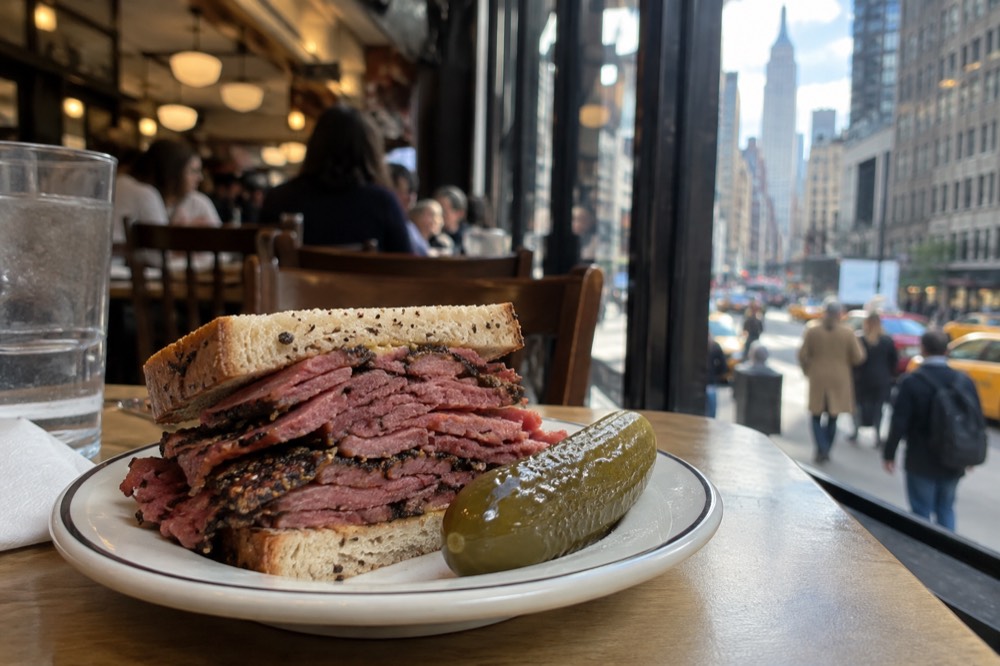
Two things unite that table. Every restaurant on it is old by American standards, and every one of them serves food you could describe in a sentence. Bourdain believed that was a feature. A menu that needs a paragraph of explanation, he argued, usually has something to hide.
He also kept a second tier of places he mentioned less often but always warmly: the pork buns and noodle shops of Chinatown, the diners where he ate late-service meals after kitchen shifts, and the classic red-sauce Italian rooms that survived in the corners of Little Italy. Those are harder to pin to a single address, because he named different ones in different years, but the category never changed. Cheap, honest, open late.
The Chinatown half of that second tier deserves its own note, because Bourdain treated it as a working pantry rather than a sightseeing stop. He talked about dumpling rooms and hand-pulled noodle counters the way other writers talk about temples: with reverence, and with strong opinions about which ones had slipped. His rule of thumb, which he repeated in interviews, was to trust the room with the shortest menu and the most customers who looked like regulars. That rule still serves a visitor well in Chinatown today, where the best kitchens often have the least signage.
For a fuller picture of the downtown food landscape he was eating in, our guide to the best restaurants in NYC covers the current scene, and the Chinatown neighborhood guide goes deeper on the blocks he loved for dumplings and noodles.
Did Bourdain Prefer Fancy Restaurants in New York?
No. Bourdain's stated taste in New York ran deliberately unfancy: diners, delis, brasseries and street-level ethnic kitchens beat tasting menus in his public comments almost every time. He did not hate fine dining on principle, he respected great technique, but he believed New York's best eating happened in rooms without tablecloths, and he spent his career saying so to anyone who asked.
This position made him unusual among food celebrities, and he knew it. Where other television hosts chased the newest opening, Bourdain filmed segments in Vietnam noodle shops and New Jersey greasy spoons and treated them as equals of any three-star kitchen. The logic was consistent: the quality of the food, not the price of the room, was the only measure that counted. Other pages covering the same trip are gathered on New York City Travel Guide.
In New York specifically, that meant he was more likely to send a visitor to a slice joint than to a chef's table. He praised the humble pizza slice as one of the city's great contributions to eating, and he defended the bagel, properly boiled and baked, against the national versions he considered imitations. His essays on these subjects read like a local defending home turf, which is exactly what he was.
He reserved particular scorn for restaurants that existed mainly to be photographed. Hotel lounges with celebrity chefs who never cooked, menus written to be posted online, rooms designed for people who order by pointing at what someone else is having. His argument was not that those places were bad for you, it was that they were bad for the city, crowding out the kitchens that made New York worth eating in.
There was a class dimension to his argument that he never hid. Bourdain had spent decades standing at the line, and he never forgot that the people who cook New York's best food are usually working people, many of them immigrants, doing long hours for thin margins. When he praised a Chinatown dumpling room or a taqueria in an outer borough, he was praising the labor as much as the flavor. Fancy rooms, in his telling, too often hid that labor behind a maître d'. The honest ones put it on display through a kitchen door left open on purpose.
The honest summary: if Bourdain was your guide, you would eat pastrami, sturgeon, steak frites, oysters and dumplings, and you would spend less than most people spend on one tasting menu.
Can You Still Eat Like Bourdain in New York Today?
Partly. Les Halles, the bistro most closely tied to Bourdain, has closed, so the single most Bourdain restaurant in New York no longer exists. But nearly everything else he praised is still operating: Katz's Delicatessen, Barney Greengrass, Keens Steakhouse and the Grand Central Oyster Bar all remain open, and the Chinatown and Lower East Side neighborhoods he ate through are still full of the cheap, honest kitchens he preferred.
That survival rate is remarkable and worth appreciating. New York's restaurant turnover is famously brutal, yet the institutions on Bourdain's list were built to last and did. A visitor today can order the same pastrami sandwich he praised, eat the same sturgeon and eggs at the same counter under the same fluorescent lights, and sit in the same steakhouse under the same ceiling of clay pipes.
What has changed is the surrounding city. The downtown he lived in has gentrified block by block, and some of the dives and late-night diners he mentioned in older interviews are gone. That is the nature of New York, and he said so himself more than once: the city he loved was already a series of overlapping pasts, each one half-disappeared.
The practical version of eating like Bourdain today is a route rather than a reservation. Start at Katz's on Houston Street when it opens, before the line builds. Walk east through Chinatown for dumplings and noodles, the cheaper and less decorated the room the better. Save Keens for an evening, order the mutton chop, and do not skip the oyster bar at Grand Central if you are passing through the terminal anyway. None of it requires booking weeks ahead, which is precisely the point.
Timing matters more than most guides admit. Katz's is at its calmest in the first hour after opening and at its worst in the middle of the day, when the tourist wave arrives. Barney Greengrass is a breakfast and lunch room, not a dinner destination, so slot it before noon. Keens takes reservations and fills its dining rooms in the evening, so book a few days out for a weekend table. The oyster bar at Grand Central is at its best mid-afternoon, between the commuter rushes, when you can hear the person across the counter. Bourdain's own habit, by every account he gave, was to eat at off hours, when the kitchen had time to care.
A guided option covers the downtown leg: the Greenwich Village food tour runs six tastings through the neighborhood where Bourdain spent his early cooking years, from slices to old bakeries.
How to Walk Bourdain's New York in One Day
A one-day Bourdain route through New York runs from Katz's Delicatessen on the Lower East Side, through the dumpling rooms of Chinatown, across to Greenwich Village for slices and old bakeries, and ends with a steak at Keens or oysters at Grand Central. It costs a fraction of a tasting menu, uses the subway between neighborhoods, and rewards walking over cabs, exactly as he would have done it.
The transit part is easy now, and easier than it was in his kitchen years. The single subway fare is $3.00, tapped with OMNY on your phone or card, and rides cap automatically at $35 in a rolling seven-day window, so a heavy day of hopping between neighborhoods stops adding cost once you hit the cap. One caution from the current fare rules: tap the same card or device every time, because mixing a phone with a plastic card breaks the cap silently.
For the route itself, pair the day with our broader things to do in NYC planning page, which slots a food day into a full itinerary. And if you would rather have a local steer the downtown half, a guided food tour of these neighborhoods handles the route-finding while you do the eating.
Common Questions About Bourdain's Favorite New York Restaurants
The short version of everything above: Bourdain's closest thing to a favorite New York restaurant was Les Halles, the bistro where he cooked, and his most-praised eating spots were Katz's Delicatessen, Barney Greengrass, Keens Steakhouse and the Grand Central Oyster Bar, all still open except Les Halles. He favored cheap, old, unpretentious food over fine dining, and the questions below cover the details people ask most.
What is Anthony Bourdain's favorite restaurant in New York City?
He never named one single favorite, but the closest answer is Les Halles, the French bistro on Park Avenue South where he was executive chef and which he wrote about at length in "Kitchen Confidential." Beyond that, the places he praised most consistently were Katz's Delicatessen, Barney Greengrass, Keens Steakhouse and the Grand Central Oyster Bar.
Is Les Halles still open?
No. The Park Avenue South location that Bourdain was associated with has closed. It survives in his books and television appearances, but a visitor cannot eat there today. The good news is that nearly every other restaurant he praised in New York is still operating.
What did Bourdain order at Katz's Delicatessen?
Pastrami on rye. He considered Katz's pastrami among the great foods of the world and said so repeatedly in interviews and essays. The sandwich is still the thing to order there, and the counter still cuts it to order in front of you.
Did Bourdain like fine dining in New York?
He respected skilled cooking wherever he found it, but his stated preference ran to diners, delis, brasseries and neighborhood kitchens. He was openly critical of restaurants built around scene and status rather than food, and he spent much of his career arguing that New York's best eating was cheap and old rather than expensive and new.
Where did Bourdain eat in Chinatown?
He praised Chinatown's noodle shops and dumpling rooms as a category rather than championing one address, and he named different spots in different years. The neighborhood remains the best place in the city for the kind of cheap, honest cooking he preferred, and a guided food walk through Chinatown and Little Italy covers it well.
Can you still eat at the restaurants Bourdain loved?
Mostly, yes. Katz's Delicatessen, Barney Greengrass, Keens Steakhouse and the Grand Central Oyster Bar are all still open and serving essentially the same food he praised. Les Halles is the one significant loss. A day spent hitting the surviving four is entirely doable by subway.
The last word goes to the spirit of the list rather than the list itself. Bourdain's favorite restaurants were never really about the restaurants. They were about eating like someone who lives here: no reservations needed, no photos required, and a preference for the room where the food is the only thing anyone is showing off. That New York is still findable, one pastrami sandwich at a time.