What Is the Last Day of School for Kids in New York?
A direct answer on when New York City public schools finish for the year, why the date moves, and how families should plan a trip around the NYC school calendar.
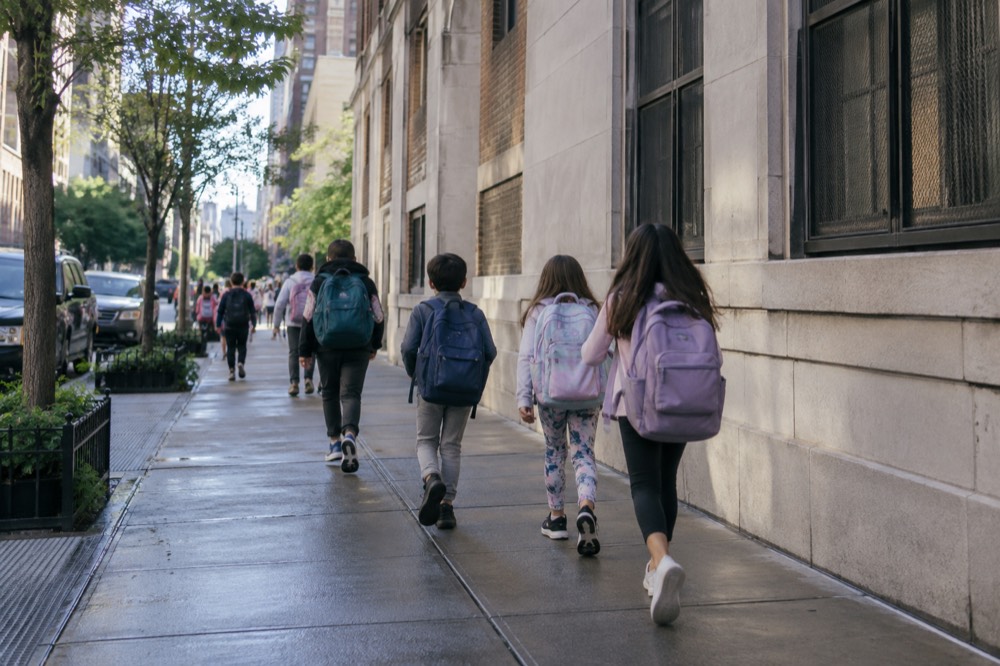
New York City runs the largest public school system in the United States, with more than a million students spread across the five boroughs, and the whole apparatus stops for summer on a single announced date. That date is not a fixed holiday like the Fourth of July. It is set each year by the New York City Department of Education and published in the official school calendar, and it lands in late June. Families trying to book a trip around it need to know how the calendar is built and why the final day can move.
What Is the Last Day of School for Kids in New York?
The last day of school for New York City public school kids falls in late June, on a date the Department of Education sets and publishes each year in its official calendar. There is no permanent fixed day, because the calendar is rebuilt annually around state testing, holidays and any emergency closures. The Department of Education posts the full calendar, including the final instructional day, on its website, and that page is the authoritative source for the exact date.
The honest answer is that the date changes, and it changes for reasons worth understanding. The Department of Education publishes a calendar for each school year well before it begins, and that document lists every holiday, conference day and the last day of instruction. Parents in the city plan camps, family visits and vacations around it. Anyone booking travel around the school year's end should read that calendar directly rather than relying on a blog post, including this one, because the date is genuinely year-specific.
What can be said with confidence is the shape of the year. The New York City school year starts in early September, pauses for a long list of holidays and recesses, and finishes in late June after the state's June examination period. High school students often finish earlier than elementary students, because their final days are tied to examinations rather than classroom instruction.
For travelers, the practical point is this: the last week of June is a hinge. Before it, museums and attractions run at their school-term pace. After it, the summer family season begins in earnest.
Who Sets the New York City School Calendar?
The New York City school calendar is set by the New York City Department of Education, working within state requirements for a minimum number of instructional days. State education law fixes how many days schools must hold, and the city's department distributes those days across a September-to-June year, slotting in holidays, recesses and conference days. The resulting calendar applies to public schools in all five boroughs.
This is worth spelling out because New York is layered. Public schools in the city answer to the city's Department of Education, the largest district in the country. Private and parochial schools set their own calendars, which usually track the public one closely but not exactly. Suburban districts in Westchester, Long Island and New Jersey each publish their own, and their final days can differ from the city's by a week or more.
So the question "what is the last day of school for kids in New York" has two honest answers depending on which kids you mean. For public school students in the five boroughs, the date comes from the city's calendar. For a child at a private school in Manhattan or a public school in Scarsdale, the date comes from a different document. The city calendar is the one most people mean, and it is the one that shapes crowds at the city's attractions.
A few structural facts hold every year. The year always ends in late June. The final stretch always follows the June Regents examination period for high schools. And the calendar always includes a summer break long enough that the city's family attractions visibly change character in early July. The city's own tourism machinery notices this too: hotel rates, attraction queues and show-ticket availability all shift within days of the school year closing, because a million local families suddenly have open calendars and free weekday mornings.
Why the Last Day Moves from Year to Year
The last day of school moves because the school year is built from a fixed budget of instructional days that must be spent before summer, and several things can shift where the final day lands. Winter storms that close schools can force makeups, state examination schedules constrain the final weeks, and the placement of holidays changes how many days remain in June. Each year's calendar is a fresh calculation.
The moving parts are easiest to see in a table.
| Factor | What it is | How it affects the last day |
|---|---|---|
| State instructional-day minimum | New York State requires a set number of teaching days per year | The year cannot end until the days are spent, so closures push the end later |
| Snow and emergency closures | Days lost to storms or other emergencies | Can shorten recesses or extend the year depending on how the calendar was built |
| June Regents exams | State examinations for high school students, held in June | High schoolers often finish on an exam schedule rather than a classroom schedule |
| Holiday placement | Where legal holidays and recesses fall in a given year | Changes the number of instructional days left in June |
| Calendar publication | The Department of Education publishes the year's calendar in advance | The published calendar, not tradition, sets the exact final day |
The Regents effect deserves a line of explanation. New York State high school students take Regents examinations in June, and those exams sit in a fixed window near the end of the year. For older kids, the "last day of school" is often effectively the last exam day, which can be earlier or later than the last classroom day for their younger siblings. A family with a high schooler and a third grader may be coordinating two different end-of-year dates.
Snow days are the other classic mover. A brutal February can force the Department of Education to adjust, and the adjustments ripple into June. This is exactly why a date quoted in an old article, or remembered from a friend's trip three years back, cannot be trusted for planning. The calendar is a living document, published in advance but built from arithmetic that starts in September and only resolves in spring.
What the Final Weeks of the New York School Year Look Like
The last weeks of the New York City school year are a distinct phase rather than a sudden stop. Elementary and middle school students spend late June on final activities, class events and half-days in some years, while high school students sit Regents examinations. Attendance still counts, classrooms stay open, and school buildings remain busy right up to the announced final day.
That quiet window is one of the more useful facts in this whole article. The gap between the end of the school year for local kids and the arrival of out-of-town families in full force is short, and it exists. Late June, while New York's own schoolchildren are finishing up, is a calmer time at major attractions than mid-July. Families from out of state whose own schools end in May or early June can exploit that gap. Everything else covered here is indexed on New York City Travel Guide.
The other pattern worth knowing is that the city's own summer programs start almost immediately. The Department of Education and the city's parks and recreation agencies run summer programming that begins within days of the school year ending, so the city does not empty of children when school stops. It fills with them, in different places. Public pools open on a summer schedule, library branches run summer reading programs, and the parks fill with day camps by the second week of July. The children do not leave; they just redistribute.
Planning a Family Trip Around the New York School Calendar
To plan a family trip around the New York school calendar, pull the current year's calendar from the Department of Education, treat the final week of June as the hinge point, and aim for either the quiet stretch just before the local school year ends or the weeks after it for full summer programming. Book timed-entry attractions in advance for July and August, when family crowds peak.
The timing decision is really a choice between two different cities. Before the local last day of school, New York's attractions run at school-term volume: weekday mornings at the big museums are quieter, and the observation decks have more same-day availability. After it, timed-entry attractions run closer to capacity, and advance booking stops being optional.
Weather is part of the calculation too, and the official record runs against intuition. July is the wettest month in Central Park by the 1991-2020 NOAA normals, averaging 4.60 inches of precipitation, ahead of August at 4.56 and June at 4.54. Families packing for a New York summer should plan for rain regardless of the month, and build one or two indoor days into the itinerary. Museums, which are covered in the site's guide to museums in NYC, are the natural insurance policy.
For a family doing the classic sightseeing circuit, a multi-attraction pass deserves a look at exactly this decision moment. The New York CityPASS bundles a choice of five attractions from an eleven-attraction menu, valid over nine consecutive days, and the heavy hitters on the list, including the Empire State Building, Top of the Rock and the official Statue of Liberty ferry, are precisely the sights a first family visit targets. Check availability
Getting Around New York with Kids Once School Is Out
Getting around New York with kids in summer is cheapest and fastest by subway, and the fare rules reward knowing the details. A single subway or local bus ride costs $3.00, up to three children under 44 inches tall ride free with a fare-paying adult, and the automatic OMNY weekly cap of $35 means an adult tapping the same card all week never pays more than that in a rolling seven-day period.
The MetroCard retirement matters here, because older family travel guides still tell parents to buy a seven-day unlimited card on arrival. As of 1 January 2026 the MTA no longer sells or refills MetroCards at all. The weekly value now comes from OMNY fare capping, which applies automatically when you tap the same card or phone every time. Mixing a phone and a plastic card breaks the cap silently, so each adult in a family should pick one device and stick to it.
The fare facts families actually need:
| Fare item | Price | Note |
|---|---|---|
| Single subway or local bus ride | $3.00 | Applies to subway, local, limited, rush and Select Bus Service |
| Children under 44 inches | Free | Up to three children per fare-paying adult, subway and local bus |
| OMNY weekly cap | $35 | Automatic, rolling 7-day window, same card or device required |
| Express bus | $7.25 | Not covered by the $35 cap; a $67 cap covers express riders |
| Reduced fare (eligible seniors and disabled riders) | $1.50 | Subway and local bus, any time of day |
Subway ridership in 2025 also tells families something about crowding that contradicts the old advice about avoiding weekday rush hour. Average weekend subway ridership in 2025 ran at 88 percent of 2019 levels while weekday ridership recovered only to 73 percent. The weekend trains, not the weekday ones, are the ones running fullest relative to normal. Plan museum mornings early regardless of the day.
One practical note for parents of small children: the free-ride rule is height-based, not age-based. A tall five-year-old pays; a short seven-year-old does not. Measure before you travel if you are budgeting fares for a family of four, because the difference between two paying children and two free ones is real money across a week of rides.
What to Do with Kids in New York After the Last Day of School
Once school is out, New York fills with family options across all five boroughs, from the flagship attractions of Manhattan to beaches, boardwalks and neighborhood parks in the outer boroughs. The classic circuit, observation decks, the Statue of Liberty ferry, Central Park and a food tour or two, works for most ages, while older kids respond well to Chinatown, the High Line and Harlem. Timed-entry attractions need advance booking in July and August.
The site's money page, things to do in NYC, is the full menu, and the things to do in NYC with kids guide narrows it for families. A few picks suit the school's-out moment especially well. SUMMIT One Vanderbilt, next to Grand Central, is the playful deck: mirrored rooms and glass ledges that photograph well with teenagers, with timed tickets keeping the flow moving.
For a family that wants one organized outing that doubles as lunch, the Chinatown and Little Italy food tour covers six tastings in a three-hour walk, which adds up to a real meal, and the stops sit close together, a mercy in summer heat. Arrive hungry and skip lunch beforehand. The walk also doubles as a first-day orientation to downtown Manhattan, since the route threads three neighborhoods that sit within a few walkable blocks of each other.
Free options hold the itinerary together on a budget. The Staten Island Ferry costs nothing and delivers a harbor view of the Statue of Liberty, the 9/11 Memorial plaza is free and open daily, and the High Line is a walkable elevated park that costs nothing to enter. A family can build an entire low-spend day around those three and still feel like they saw New York.
Common Questions About the Last Day of School for Kids in New York
The questions families ask most about the New York school year's end cluster around the exact date, the difference between public and private calendars, and how to plan travel around it. The answers all point back to one habit: read the Department of Education's current-year calendar rather than any fixed date, because the final instructional day is recalculated annually and the official calendar is the only reliable source.
What is the last day of school for kids in New York?
The last day falls in late June, on a date the New York City Department of Education sets and publishes in its official calendar for each school year. The exact day changes from year to year, so check the current calendar on schools.nyc.gov rather than relying on last year's date.
Do New York private schools end on the same day as public schools?
Not necessarily. Private and parochial schools in the city set their own calendars, which usually track the public calendar closely but can differ by days or a week. If your plans depend on a specific private school's schedule, that school's own published calendar is the source to check.
Why does the last day of school change every year in New York City?
The school year is built from a state-mandated budget of instructional days. Winter closures, the placement of holidays and the June Regents examination window all shift where the final day lands, so the Department of Education recalculates and republishes the calendar each year.
Do high school students finish on the same day as elementary students?
Often not. High school students sit state Regents examinations in June, and their year effectively ends on an examination schedule. Younger students finish on the calendar's final instructional day, which can be later.
Is late June a good time to visit New York with kids?
It is one of the better windows. Local schools are still in session during late June, so major attractions run below their full summer volume, while the weather is warm and the full family season has not started. Book timed-entry attractions ahead for July and August, when crowds peak.
What should families know about getting around New York in summer?
Use the subway. A ride costs $3.00, children under 44 inches ride free, and the automatic OMNY weekly cap of $35 means no pass needs buying. The MetroCard is retired as of 1 January 2026, so any guide telling you to buy a 7-day unlimited card is out of date.
The last day of school in New York is a moving date set by a moving process, and the families who plan best around it are the ones who treat the official calendar as the source of truth and book their attraction tickets around it. Pull the calendar, mark the final week of June, and let the quiet stretch before the city's own children empty out work in your favor.