Empire State Building Tickets: Prices, Options and How to Book
Empire State Building tickets start from $44 for the 86th floor observatory, with a $5 booking charge per transaction, and the price moves with the date and time slot you pick. Here is what each ticket actually covers, what the extras cost, and how to time a visit.
Short answer
Empire State Building tickets for the 86th floor observatory start from $44 for adults, plus a $5 booking charge per transaction, with children aged 6 to 12 paying from $38. The 86th and 102nd floor combo starts from $79. All tickets are dynamically priced by date and time, so a sunset slot in July costs far more than a Tuesday morning in February.
The Empire State Building sells its observatory tickets on a sliding scale, and almost nobody who books for the first time realizes that. The from price is $44 for the 86th floor, but a prime sunset slot in summer can cost dramatically more than a 10am weekday entry in February, and the building publishes its hours and pricing calendar on esbnyc.com rather than a single flat rate. There is also a $5 booking charge per transaction when you buy online. Get the slot right and the view is one of the best in the city; get it wrong and you queue.
This page covers the ticket tiers, what each one includes, the second-floor museum most visitors walk straight past, the hours, and how the building compares with the other four observation decks in Manhattan. It runs on the same research and live-listing checks as the rest of this New York City Travel Guide site, and every figure below is traceable to the operator or to official published pricing.
How Much Do Empire State Building Tickets Cost?
Empire State Building tickets start from $44 for an adult 86th floor observatory ticket, with children 6 to 12 from $38, plus a $5 booking charge per transaction when you buy online. The 86th plus 102nd floor combo starts from $79. Every ticket is dynamically priced by date and time slot, so the from price is the cheapest entry in the calendar, not a flat rate; a sunset slot in peak summer can cost roughly double a weekday winter morning.
The pricing model matters more here than at almost any other New York attraction. Unlike the Statue of Liberty ferry, which charges a flat $26.00 adult fare year-round, the Empire State Building treats its observatories like an airline treats seats. Entry at 8:30am on a Wednesday in February sits near the bottom of the range. Entry an hour before sunset on a Saturday in July sits at the top. Booking early in the day, on a weekday, outside the school holidays is the single most reliable way to pay the from price rather than the peak price.
The $5 booking charge is per transaction, not per ticket, so a family of four buying in one order pays it once. It applies to online purchases through the operator's own site and through resellers. The charge is why the "from $44" headline and the amount you actually pay at checkout rarely match exactly.
Here is the ticket structure at a glance:
| Ticket | Adult from | Child 6-12 from | What it covers |
|---|---|---|---|
| 86th floor observatory | $44 | $38 | Open-air deck, full wraparound views, plus the second-floor exhibits |
| 86th + 102nd floor combo | $79 | from $74 | Both observatories, the 102nd floor being enclosed behind glass |
| AM/PM Experience | $75.12 | see listing | 86th floor, the museum experience, and a same-night second visit |
The AM/PM Experience figure in that table comes from the CityPASS box-office table, which publishes $75.12 as the full box-office adult price for the package that includes a bonus same-night re-entry. It is the version of the ticket that ships inside the New York CityPASS bundle, and it is genuinely useful if you want daylight and night views in one ticket rather than two visits on two days.
The second-floor museum experience is included with every observatory ticket, not sold separately. Most visitors rush past it on the way to the elevators, which is a mistake: the galleries walk you through the building's construction during the Depression and its decades as a broadcast tower, and it is the part of the visit that does not depend on the weather.
Which Empire State Building Ticket Should You Buy?
Buy the 86th floor ticket unless you have a specific reason to pay for the 102nd, because the 86th floor is the open-air deck and the view most people picture when they book. The 102nd floor is enclosed behind glass, smaller, and adds roughly $35 to the from price. If you want the classic wind-in-your-face photographs, or you are visiting in good weather, the 86th floor alone is the honest recommendation for most visitors.
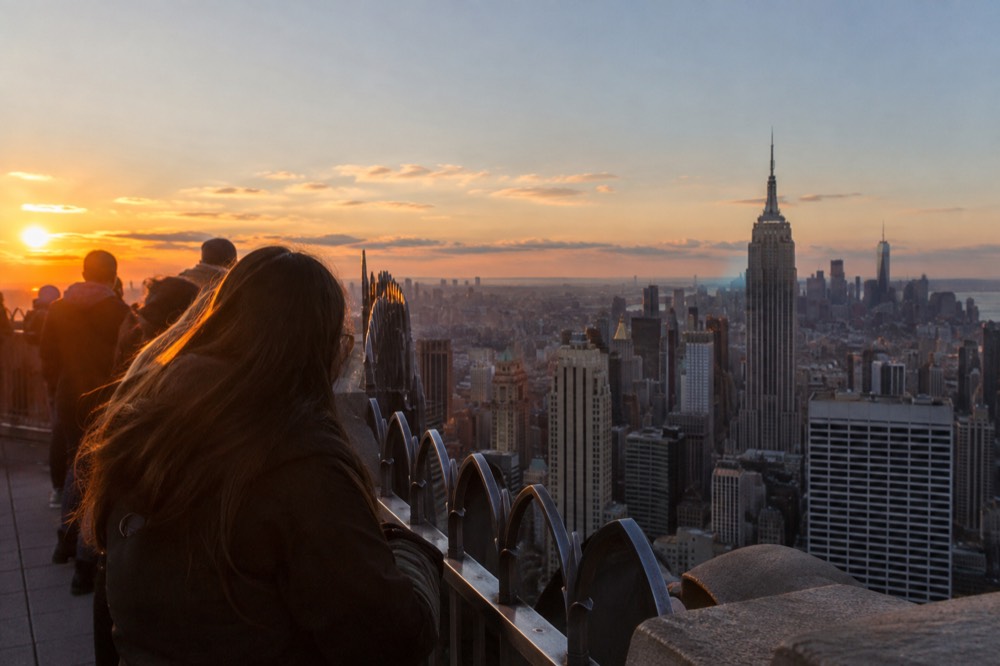
The 86th floor deck wraps all the way around the building. You can walk the full circuit, look uptown toward Central Park, downtown toward the harbor, and east and west across the rivers, all in open air behind a tall safety fence. It is the deck that appears in essentially every photograph of the Empire State Building experience.
The 102nd floor is a different product. It sits in the narrow section of the tower, behind fixed glass, in a much smaller space. On a clear day the added height is real but modest; on any day with glare or fingerprints on the glass, photographs are harder than on the open deck. People who love the 102nd floor tend to love it for the intimacy and the sense of being in the spire rather than on it. People who expected a dramatically better view often feel short-changed.
The AM/PM Experience splits the difference for a certain kind of visitor. You go up during the day, come down, do something else, and return the same night with the same ticket. New York after dark from the 86th floor is a genuinely different view, with the street grid lit up in both directions, and if your schedule allows a same-day double visit it works out cheaper than buying two separate entries at peak times.
A quick decision guide:
| If you want... | Buy this | Why |
|---|---|---|
| The classic open-air view, best value | 86th floor from $44 | The full wraparound deck, all the photos |
| To stand in the spire, enclosed | 86th + 102th combo from $79 | Added height, glass-view only |
| Day and night in one ticket | AM/PM Experience | Same-night re-entry included |
| Several attractions on one trip | New York CityPASS | ESB AM/PM plus four more choices |
If you are stacking the Empire State Building together with other heavy hitters, the pass maths changes the answer. The New York CityPASS, which is covered in detail on our New York CityPASS savings breakdown, bundles the ESB AM/PM Experience with four other choices from an eleven-attraction menu over nine consecutive days, and the adult pass runs $149 against a $307.04 combined box-office price. That only wins if you use all five tickets, so check the menu against your actual wishlist first.
What Time Does the Empire State Building Open and When Should You Go?
The Empire State Building is open 365 days a year, with recent published hours of 10:00 to 23:00, with the entry door closing at 22:00, though hours vary by date so you should check the live listing before you plan. The quietest slots are the first hour after opening and the last two before the door closes. The most crowded, and the most expensive, is the hour before sunset in the summer months.
Those specific hours come from the operator's published calendar for early autumn 2026, and the key word is calendar: like the pricing, the hours flex by season. In peak summer the building has historically opened earlier and closed at or near midnight; in the depths of winter it can run a shorter day. Because entry is timed, your ticket is for a slot, not for the day, so the closing time on your date is what matters, not a general rule.
Timing your visit is a trade between crowd, light and price. The early slot wins on crowds: the elevator queues are shortest in the first hour, and you can move freely around the deck rather than waiting for a gap at the rail. The late slot wins on atmosphere: the city lights come on, the queues thin after the sunset wave clears, and the last entries of the night are often the calmest of the whole day. The sunset slot wins on nothing except the view itself, which is admittedly spectacular, and you pay for it in both money and elbow room.
One structural point that helps: because the AM/PM ticket allows a same-night return, the savviest move for photographers is to enter in the late afternoon, watch sunset from the deck, come down for dinner, and go back up after dark on the same ticket. You get golden hour, blue hour and night in one purchase.
| Time slot | Crowds | Price | Best for |
|---|---|---|---|
| Opening hour | Lowest | Cheapest | Photographers, families, anyone who hates queues |
| Midday | Moderate | Mid | Fitting the deck between other plans |
| Pre-sunset | Highest | Highest | The view, if you accept the squeeze |
| Final two hours | Low | Mid | Night skyline, relaxed pace |
Do You Need to Book Empire State Building Tickets in Advance?
Yes, book in advance, because entry is timed and the popular slots, especially sunset and holiday weekends, sell out ahead of the day. Booking online fixes your price and your time before you arrive, and it is the only practical way to get the cheapest from rates, which sit in the weekday morning slots. Same-day tickets at the box office do exist, but you pay posted pricing and queue with everyone else.
The timed-entry system is the reason advance booking matters more here than at, say, the Staten Island Ferry, where you simply show up. The building admits a controlled flow of visitors per slot. When a slot fills, it is gone from the calendar, and the sunset slots in July and the days around Thanksgiving and Christmas fill first. In the quietest weeks of February you can sometimes buy on the day without pain, but that is a bet, not a plan.
Booking ahead also matters for the transaction charge maths. Whether you buy through the operator's own site or through a reseller listing, the $5 booking charge applies per transaction, so consolidating a group into one order beats buying individually.
The operator's live listing carries the current calendar, the slot availability and the dynamic pricing for each entry time, and most bookings can be cancelled or changed up to 24 hours beforehand, which makes early booking close to risk-free. You can check dates and lock a slot on the Empire State Building observatory and museum ticket listing and Check availability before you commit to a date.
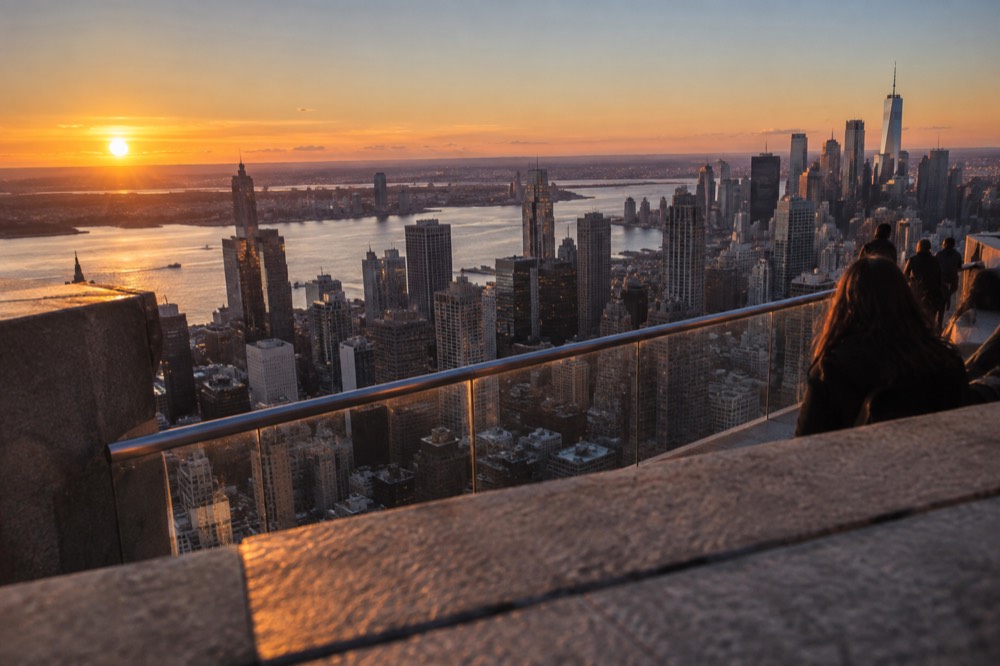
Is the Empire State Building Worth It Compared with Other Observation Decks?
The Empire State Building is worth it if you want the historic building itself in the experience, the open-air 86th floor deck, and a Midtown location steps from Herald Square and Koreatown. It is not the newest deck, it is not the highest, and its glass-free open-air rail is exactly what some visitors love and others find less comfortable than the fully enclosed modern decks like SUMMIT One Vanderbilt next to Grand Central.
New York currently has five major observation decks, and they are not interchangeable. The Empire State Building and Top of the Rock are the two classic Midtown decks, and the practical difference between them is what is in your photograph: from the Empire State Building you see the skyline without the Empire State Building in it, while Top of the Rock gives you the Empire State Building itself framed against Midtown, plus a direct sightline up Central Park. We break that comparison down properly in Empire State Building vs Top of the Rock.
The newer decks compete on spectacle. SUMMIT One Vanderbilt, which sits directly across from Grand Central, sells an experience built around mirrored rooms, glass ledges and an art installation as much as a view, and it carries the largest review volume of any deck in the city. Edge at Hudson Yards cantilevers out from the side of a tower with a glass floor. One World Observatory, downtown at the World Trade Center, is the tallest and frames the harbor rather than Midtown.
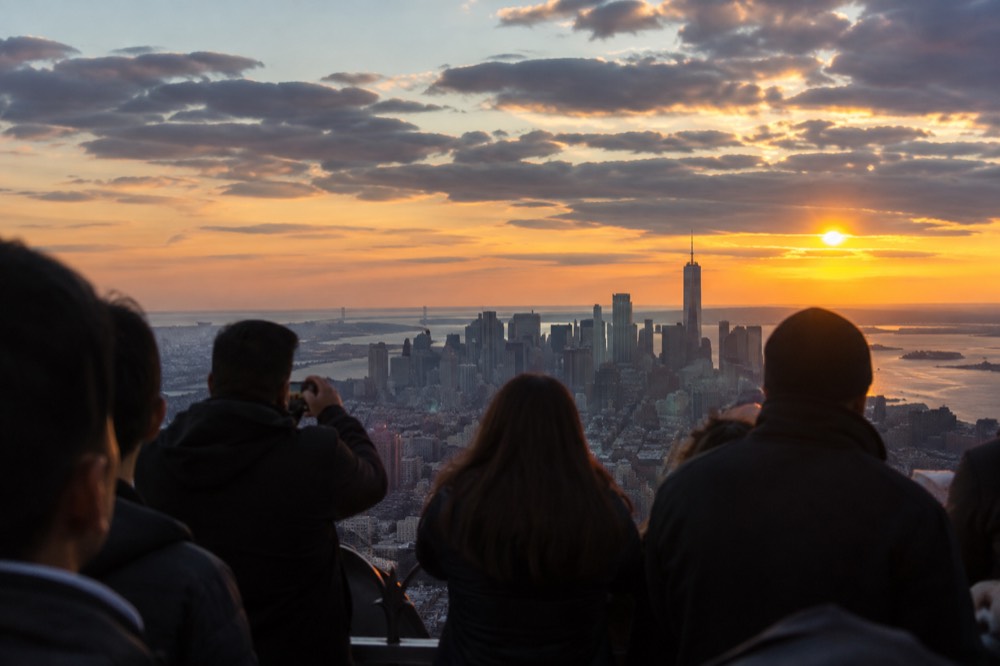
| Deck | Location | From price (adult) | Character |
|---|---|---|---|
| Empire State Building | Midtown South, 34th St | from $44 + $5 booking charge | Historic, open-air 86th floor |
| Top of the Rock | Rockefeller Center | from $42 | Classic deck, ESB in the frame, park view |
| SUMMIT One Vanderbilt | Grand Central / Midtown | from $44 + $3 processing | Mirror rooms, glass ledges, modern |
| Edge | Hudson Yards | from $34-$45 + $2 per ticket | Cantilevered, glass floor, highest outdoor platform in the Western Hemisphere |
| One World Observatory | World Trade Center | from $39-$44 + $3.50 | Tallest deck, harbor and downtown views |
The honest summary: if your trip has room for one deck and you care most about the photograph of Manhattan with the Empire State Building in it, go to Top of the Rock. If you care most about standing on the Empire State Building itself, in open air, in the building your grandparents' generation called the Eighth Wonder of the World, buy the 86th floor ticket here and do not overthink it. The full field, including hours and access notes for each, is in our complete guide to NYC observation decks.
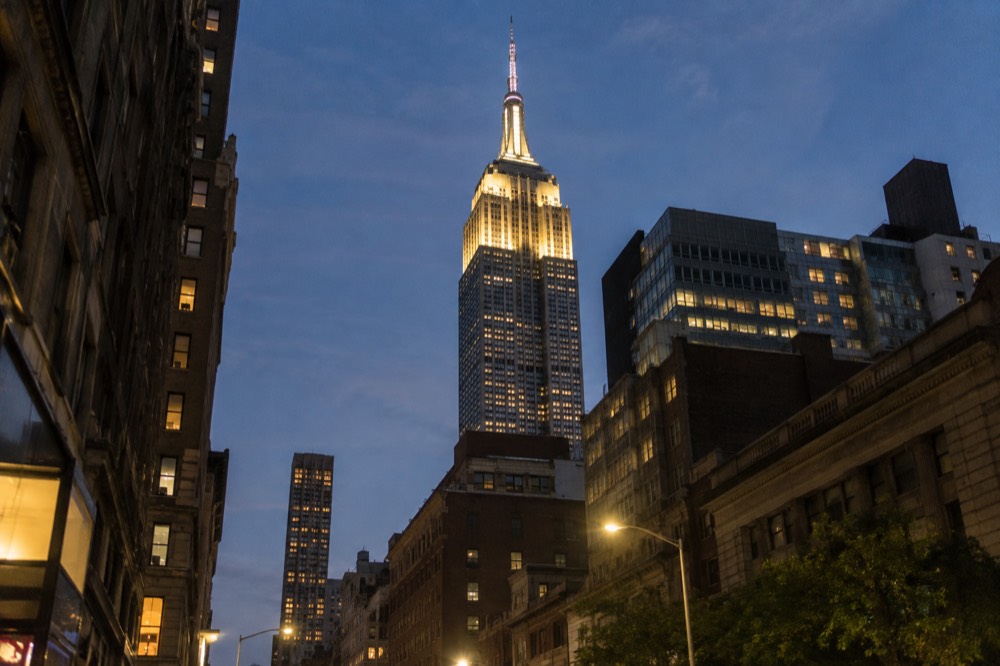
What Is Included with an Empire State Building Ticket?
Every Empire State Building observatory ticket includes the 86th floor open-air deck, the second-floor museum experience, and access to the Art Deco lobby with its gilded ceiling. The 102nd floor is the only major add-on, sold as a combo with the 86th. Food and drink are not included, and there is no guided tour in the standard ticket, though the exhibits are self-paced with plenty of signage and audio content.
The second-floor experience is the most underused part of the ticket. It takes you through the building's construction, its role as a mooring mast for airships that never quite worked, and its decades as a broadcast antenna, before you ever reach the elevators. Visitors who budget fifteen minutes for it consistently report it as a highlight; visitors who sprint past it to the deck are the ones who feel the ticket was over quickly.
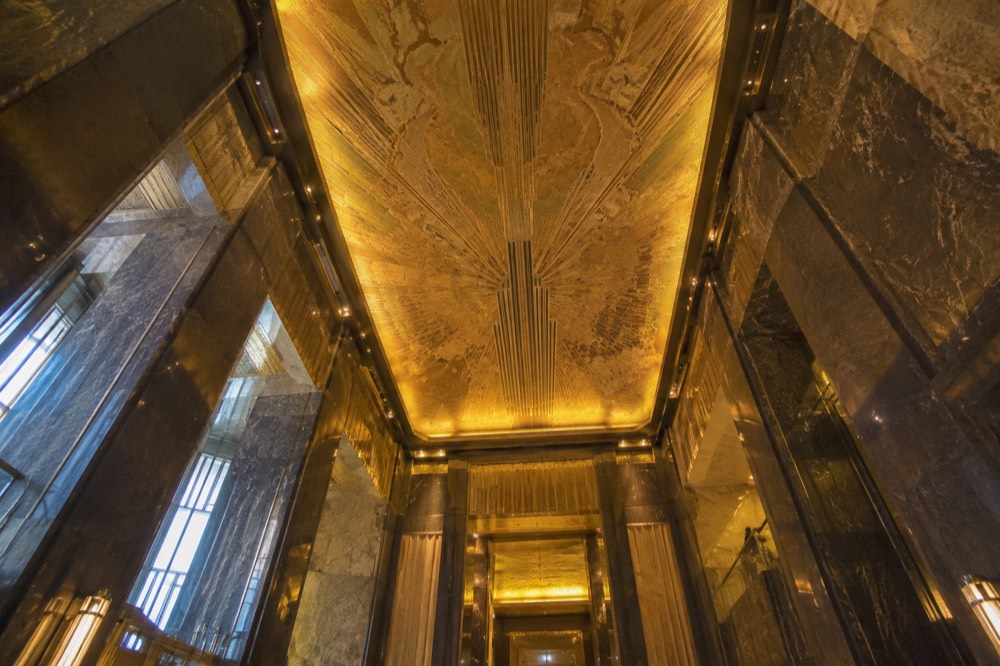
The lobby itself is worth a slow look. The gilded ceiling mural was restored and revealed to the public early in the building's modern era, after spending decades hidden beneath paint and a dropped ceiling, and it is one of the finest Art Deco interiors in the city. It costs nothing extra and takes five minutes.
What is not included: drinks on the 86th floor, which are sold at a kiosk at deck prices, and anything at the restaurants on the ground floor. There is also no coat check for large bags, and the building applies standard attraction security screening, so travel light. If you are planning a wider trip, our page on what to pack for NYC covers the layers question, which matters a lot on an open-air deck in any season except high summer.
How Long Does a Visit to the Empire State Building Take?
Most visitors spend between 90 minutes and two hours inside the Empire State Building, of which roughly 45 minutes to an hour is on the 86th floor deck itself, split between the museum exhibits, the elevator queues and the deck circuit. At sunset or on a holiday weekend, add 30 to 60 minutes of queueing. The 102nd floor combo adds around 20 to 30 minutes including the additional elevator transfer.
The time budget people get wrong is the queue. Even with a timed ticket, you pass through security screening, the exhibit galleries and a bank of elevators, and at peak times each stage has a line. Booking an early slot compresses all of this; booking sunset stretches it. If your itinerary has a hard stop afterward, a show curtain or a dinner reservation, pad your Empire State Building window generously rather than tightly.
The second thing people get wrong is leaving too fast. The deck changes minute by minute near sunset and after dark. If your slot is late afternoon, the patient move is to watch the light change for thirty minutes rather than shooting one lap and descending. The city switches on district by district, and the moment the grid lights up is worth waiting for.
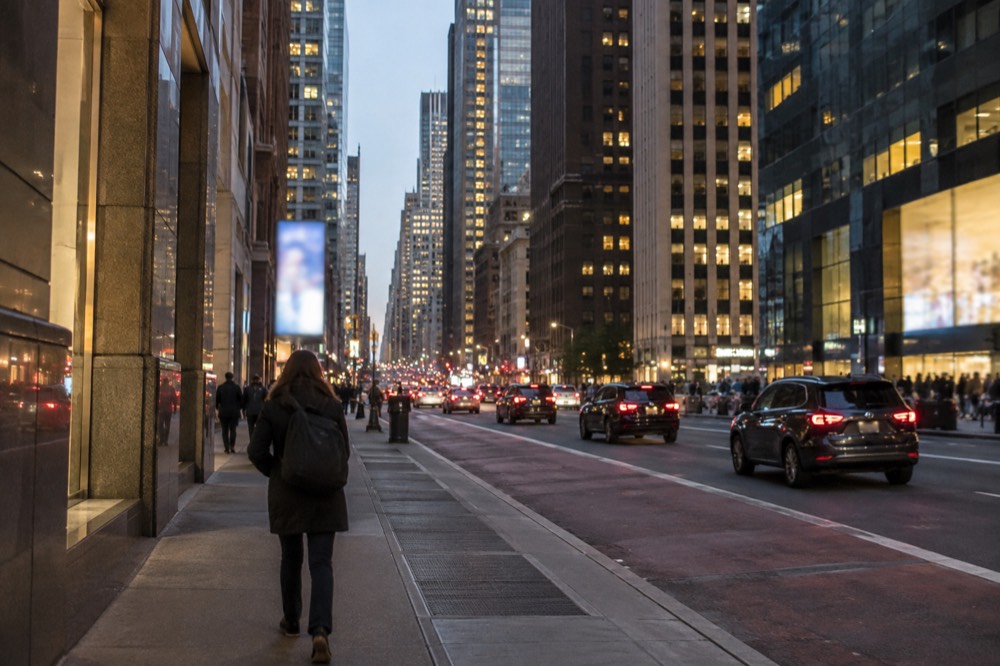
A realistic timing plan:
| Stage | Typical time | Peak time |
|---|---|---|
| Security and lobby | 10 min | 20 min |
| Second-floor exhibits | 15-20 min | 15-20 min |
| Elevators to 86th floor | 10 min | 25 min |
| On the deck | 30-45 min | 45-60 min |
| Optional 102nd floor | 20-30 min | 30 min |
Getting to the Empire State Building
The Empire State Building sits at 20 W 34th Street between Fifth and Sixth Avenues, and the subway is the right way to reach it: the B, D, F, M, N, Q, R and W trains all stop within a few blocks at 34 St-Herald Sq. A single subway ride is $3.00, and if you tap the same card or device all week your fares cap automatically at $35 over seven days.
One thing that catches returning visitors: the fare system changed. The MetroCard is retired, and as of 1 January 2026 the MTA no longer sells or refills them at all. You tap in with OMNY, which means a contactless credit or debit card, a mobile wallet, or an OMNY card. There is no pass to buy and no arithmetic to do, because the $35 weekly cap applies by itself after twelve paid rides on the same card or device. The one rule that matters: tap the same physical card or the same phone every time, because mixing them silently breaks the cap. Our OMNY and fare guide covers the details.
The building's Midtown South location puts it at the hinge of several neighborhoods: Koreatown is directly across 32nd Street, Herald Square and Macy's flagship are one block west, and NoMad's restaurant row stretches south. That makes the ESB easy to fold into a day that also covers the Flatiron District and Koreatown or the New York Public Library and Bryant Park, ten minutes' walk north.
Walking works for most of Midtown. From Times Square it is a flat fifteen-minute walk down 34th Street. From Grand Central, twenty minutes across town, or one stop on the 7 to Times Square and a transfer. From Penn Station, it is barely ten minutes on foot, which makes the deck an easy bookend to an arrival or departure day, covered in more depth on our page on things to do in NYC.
Money-Saving Tips for Empire State Building Tickets
The three reliable ways to save on Empire State Building tickets are to book a weekday morning slot, where the from price of $44 lives, to fold the visit into the New York CityPASS if you are visiting four other included attractions anyway, and to visit the free observation alternatives the city offers, which cost nothing but your time. There is no student discount on observatory tickets, no senior rate, and no free hour like the museums run.
Start with the slot. Dynamic pricing means the calendar itself is the discount. A 10am Wednesday entry in February sits at or near the floor price; the same deck at sunset in July costs roughly double. If your dates are flexible at all, moving the visit off a weekend and away from sunset is the single biggest saving available, and it comes with shorter queues as a bonus.
Then check the pass maths honestly. The CityPASS adult price is $149 for five attractions from an eleven-attraction menu, valid nine consecutive days, and it includes the Empire State Building's AM/PM Experience valued at $75.12 at the box office. If the other four choices on your list are on the menu, decks like Top of the Rock, the 9/11 Memorial & Museum, and the Statue of Liberty ferry among them, the pass wins comfortably. If they are not, it does not, and no marketing claim changes that. The full pass comparison runs the numbers against the other products on the market.
| Saving method | What you save | Catch |
|---|---|---|
| Weekday morning slot | Dynamic pricing floor | You get daytime light, not sunset |
| New York CityPASS | Up to $158.04 vs combined box office on the full menu | Only if you use all five choices |
| Second-floor exhibits + lobby | Included with any ticket | Most visitors skip them |
| Free skyline views instead | $44+ | No deck, no elevation |
Finally, the free alternatives are real. The Staten Island Ferry costs nothing and crosses the harbor with the skyline in view both ways. The Brooklyn Heights promenade gives you the Manhattan skyline, Empire State Building included, from across the water. Neither is an observation deck, but if the budget is tight, both deliver the postcard for the price of a subway ride. Our free things to do in NYC page lists the full set.
Common Questions About Empire State Building Tickets
Empire State Building ticket questions cluster around four things: the real price after fees, whether the 102nd floor is worth the upgrade, how the timed entry works, and whether a pass beats a standalone ticket. The answers below are short and sourced, and each one links back to the fuller explanation higher up the page where it exists.
How much do Empire State Building tickets cost?
Adult 86th floor tickets start from $44, with children 6 to 12 from $38, plus a $5 booking charge per transaction. The 86th and 102nd floor combo starts from $79. Prices are dynamic, moving with the date and time slot, so the from price reflects the cheapest weekday morning slots rather than a flat rate.
Is the 102nd floor of the Empire State Building worth it?
For most visitors, no. The 102nd floor is enclosed behind glass, smaller, and adds roughly $35 to the from price. The 86th floor is the open-air deck with the classic views. Choose the 102nd only if you specifically want to stand inside the spire or the weather makes an open deck unappealing.
Do I need to book Empire State Building tickets in advance?
Yes. Entry is timed, and sunset slots plus holiday weekends sell out ahead of the day. Booking online also locks your price and slot, and most bookings can be cancelled up to 24 hours beforehand, so early booking carries little risk.
What time does the Empire State Building open?
The building is open 365 days a year. Recent published hours run 10:00 to 23:00 with the entry door closing at 22:00, but hours vary by date, so check the live listing for your specific day before you plan.
Is the Empire State Building included in the New York CityPASS?
Yes. The CityPASS includes the Empire State Building AM/PM Experience, valued at $75.12 at the box office, alongside four other choices from an eleven-attraction menu. The adult pass costs $149 and is valid nine consecutive days, so it only pays off if you use all five tickets.
How long should I spend at the Empire State Building?
Plan for 90 minutes to two hours, including the second-floor exhibits and the elevator queues, with about 45 minutes on the deck itself. At sunset or on a holiday weekend, add 30 to 60 minutes. The 102nd floor combo adds another 20 to 30 minutes.
The last word on planning: pick your slot before you pick your ticket. Once you know whether you want a quiet morning, a sunset, or a same-day double visit, the tier choice mostly makes itself, and the price you pay will be the one the calendar says, not the one the brochure implied.