Staten Island Ferry: The Free Ride with a Statue of Liberty View
The Staten Island Ferry is the only free boat ride in New York Harbor, and it passes close enough to the Statue of Liberty for a decent photo. Here is what the crossing actually involves, and when it is worth your time.
Short answer
The Staten Island Ferry is free, runs between Whitehall Terminal in Lower Manhattan and St. George Terminal on Staten Island, and offers skyline and Statue of Liberty views from the water. It is a commuter service, not a tour, but for the price it is one of the best sightseeing rides in New York.
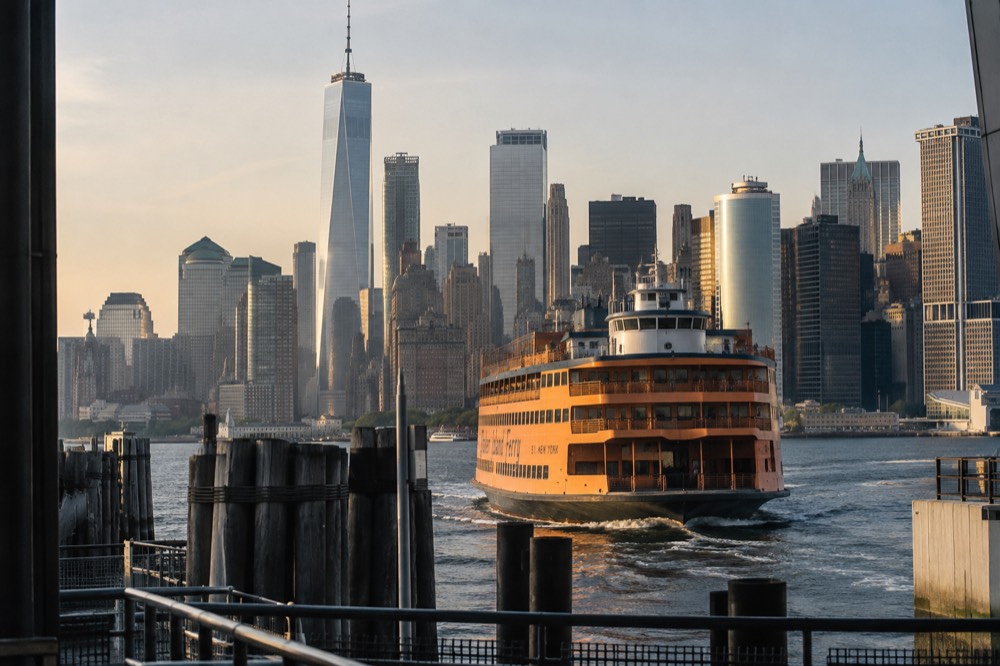
Two things surprise first-time riders about the Staten Island Ferry. The first is the price: nothing, for anyone, in either direction. The second is the view, which is genuinely good, because the route crosses Upper Bay within sight of the Statue of Liberty, the Brooklyn Bridge and the whole Lower Manhattan skyline. Commuters who ride it twice a day stopped noticing decades ago. Visitors cram the starboard rail on the outbound leg for exactly one reason, and this guide covers how to do it well: where to board, when to go, what you actually see, and the honest comparison with the paid boats that stop at Liberty Island. For the wider picture of the city's sights, start with our things to do in NYC page and work back to this.
Is the Staten Island Ferry Really Free?
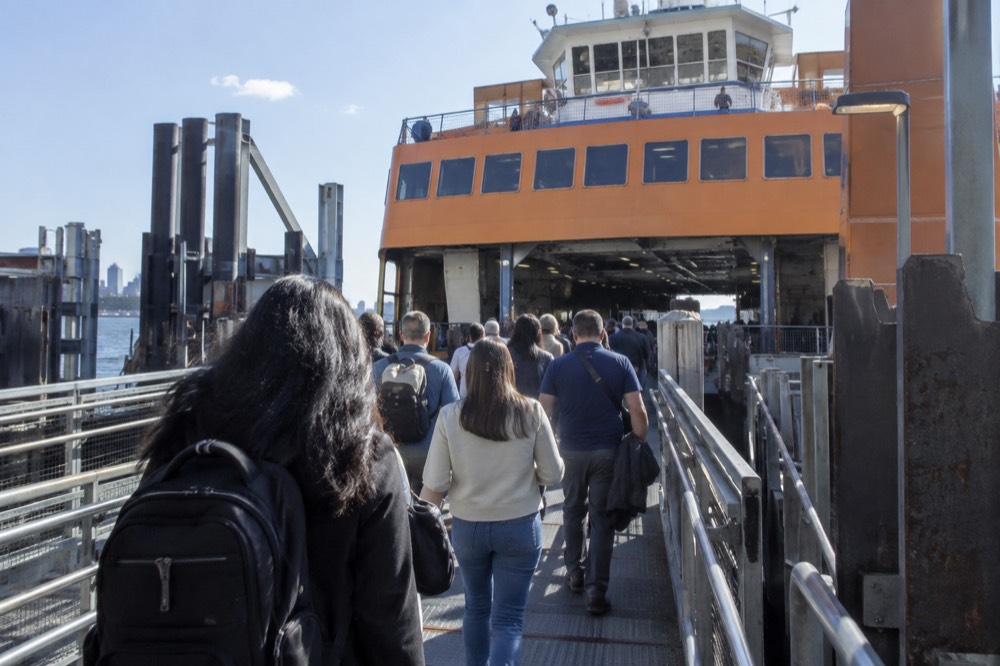
Yes, the Staten Island Ferry costs nothing to ride, in either direction, with no ticket, no reservation and no fare to tap. It is a public transit service run by New York City's Department of Transportation, not a sightseeing company, and the fare was abolished decades ago. You simply walk into Whitehall Terminal in Lower Manhattan, wait for the next boat, and board. There is no catch, no hidden charge and no requirement to ride it back.
That last point matters, because the internet is full of half-truths about it. You do not have to get off on Staten Island and ride back. Plenty of visitors do exactly that, since the terminal turnaround is quick and the Manhattan-bound leg gives you the skyline head-on rather than behind you. But if your only goal is the harbor crossing, you can treat the round trip as optional.
The service is a lifeline for Staten Islanders going to work, which shapes the experience. At rush hour the decks fill with people reading phones and ignoring one of the great free views in the United States. Mid-morning and mid-afternoon, the crowd thins and the tourists take over the rails. Bikes are allowed, and the boats have indoor seating, outdoor decks at the stern and on the sides, and space to stand along the railings on the upper level.
The city's Department of Transportation runs the service, and the current route, terminals and operating details are published on the official Staten Island Ferry page at nyc.gov. That is the page to check for service alerts before you go, because maintenance work and weather occasionally change boarding arrangements.
Because the fare is zero, nothing about this ride needs booking. That also means nothing about it needs a pass. CityPASS, the Explorer Pass and the other New York passes do not cover the Staten Island Ferry, because there is nothing to cover. If you are weighing whether a pass makes sense for the rest of your trip, our New York CityPASS guide breaks down the maths against box-office prices.
Where Does the Staten Island Ferry Leave from, and How Do You Get There?
The Manhattan departure point is Whitehall Terminal, at the southern tip of Manhattan near Battery Park, and the Staten Island end is St. George Terminal. Several subway stations sit within a short walk of Whitehall, and the terminal itself is a large, covered building with seating, restrooms and food concessions, so waiting for the next boat is comfortable in any weather. The ferry runs day and night, every day of the year, on a frequent schedule.
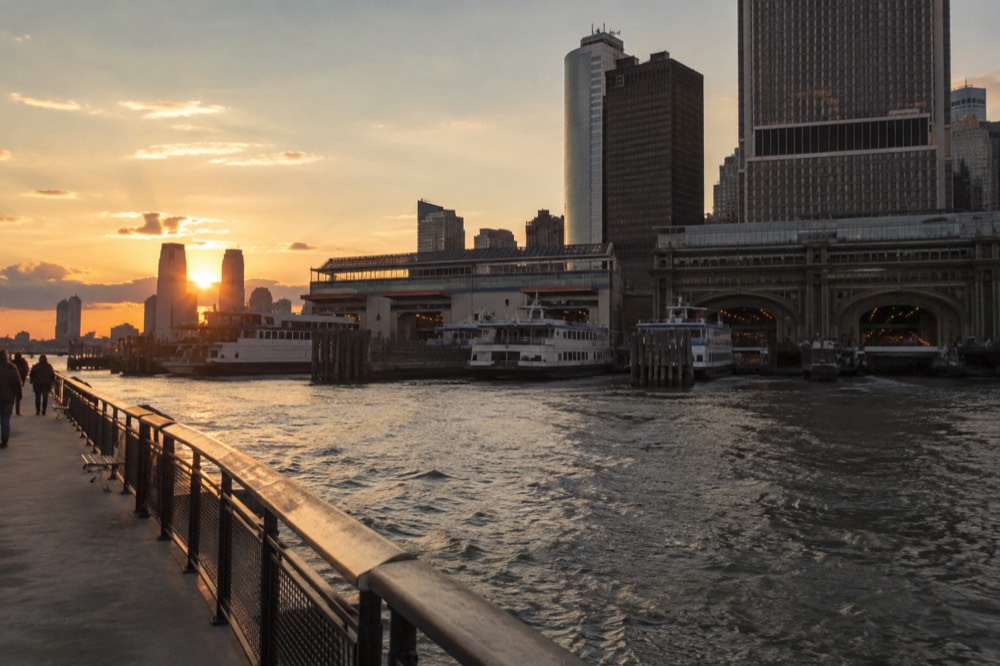
Whitehall Terminal sits at South Ferry, the very bottom of Manhattan. That location is convenient twice over: it is steps from Battery Park, where the Liberty Island ferries leave, and it is a short walk from the Financial District's other sights, including the Brooklyn Bridge approach and the waterfront promenade. If you are building a Lower Manhattan morning, the sequence of Battery Park, a ferry round trip and a walk north through the Financial District works without any backtracking.
The subway is the honest answer for getting there, as it is for almost everything in this city, and there is one piece of fare news that most guides still get wrong. The MetroCard was retired: as of 1 January 2026 the MTA no longer sells or refills them at all. You tap instead, with a contactless card or phone, and the fare system caps itself automatically at $35 in any rolling seven-day window for subway and local bus rides. There is no pass to buy and no decision to make. Our OMNY guide covers the details, including the traps, such as the fact that mixing your phone and your plastic card breaks the cap silently.
On the Staten Island side, St. George Terminal is not a scenic destination in itself, but it is the gateway to a few worthwhile things, covered further down this page. Most visitors who ride out for the views simply walk through the terminal, look around, and board the next boat back. The turnaround is shorter than you might expect if the boats are running to schedule.
Since you are already at the foot of Manhattan, this is also the natural decision point for the paid harbor options. If you have decided that sailing past the statue is not enough and you want to land on Liberty Island itself, these are the boats that do it:
Both of these run from the same corner of Lower Manhattan, so the choice between a free crossing and a paid island visit can genuinely be made on the day, standing at Battery Park.
What Do You Actually See from the Staten Island Ferry?
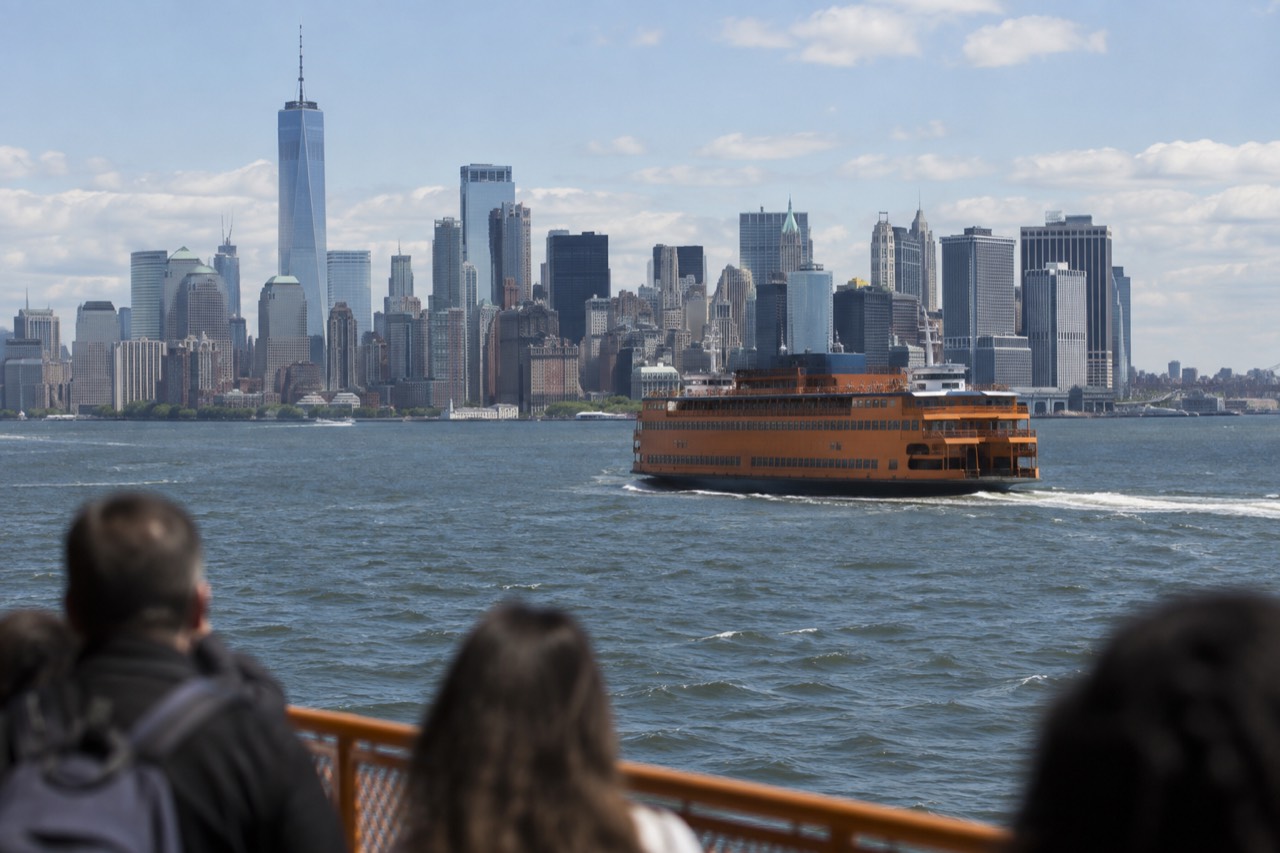
The Staten Island Ferry crosses Upper Bay on a route that passes Liberty Island and Ellis Island off to the west, giving you the Statue of Liberty, the harbor islands, Governor's Island to the east, and the full Lower Manhattan skyline behind you on the outbound leg. The return trip reverses the view: the skyline opens up head-on, with the Brooklyn Bridge and the Manhattan Bridge framed to the north as you approach Manhattan.

It is worth being precise about the statue, because the marketing of harbor cruises blurs it. The ferry does not circle Liberty Island. It passes at harbor width, close enough for a clear photo with any phone or camera, but you are looking at the statue across several hundred yards of open water. If standing underneath it, walking the grounds or entering the museum matters to you, this ride does not do that. The only ferry that lands on Liberty Island is the official Statue City Cruises service, which our Statue of Liberty tickets guide covers in full.
What the free ferry gives you instead is scale. The outbound leg puts the entire Lower Manhattan wall of glass behind you, One WTC included, and the harbor opens out with the Verrazzano-Narrows Bridge spanning the distance to your right as you approach Staten Island. Container ships, tugboats and the occasional cruise liner share the bay. At sunset the Manhattan-bound approach is one of the best free views in the city, and at night the skyline reflects off the water.
For visitors whose main goal is statue photos from the water without the island stop, a dedicated cruise is the middle option. The Circle Line Statue of Liberty Super Express cruise makes a close pass for photos in under an hour:
The honest summary: the free ferry gets you roughly eighty percent of the harbor experience for zero dollars. The paid options buy the remaining twenty percent, which is either landing on the island or pausing close alongside it.
How Does the Staten Island Ferry Compare with the Statue of Liberty Ferry?
The two services are different products that happen to share a harbor. The Staten Island Ferry is a free commuter crossing that passes the statue at distance. The official Statue City Cruises ferry is the only operator authorized by the National Park Service to land at Liberty Island and Ellis Island, and its cheapest adult ticket, at $26.00 with fees and taxes included, covers the round trip plus both islands' grounds and museums.

That $26.00 figure is worth pausing on, because it is one of the better-value tickets in the city and it is often obscured by resellers. The official ferry tiers, with the National Park Service's prices for adults, children and seniors, look like this:
| Tier | Adult 13+ | Child 4-12 | Senior 62+ | What it includes |
|---|---|---|---|---|
| General / Reserve | $26.00 | $17.00 | $23.00 | Both islands' grounds, both museums, round-trip ferry, audio tours |
| Pedestal Reserve | $26.30 | $17.30 | $23.30 | Above, plus the statue's pedestal |
| Crown Reserve | $26.30 | $17.30 | $23.30 | Above, plus the crown, name-bearing ticket, photo ID required |
| Ellis Island Hard Hat Tour | +$55 | n/a | n/a | South-side hospital complex, ages 13+ only |
Two facts in that table surprise people. The crown costs thirty cents more than the plain grounds ticket: the barrier to the crown is not money but availability, since crown tickets are name-bearing, capped at four per household and are reported to sell out months ahead. And every tier, even the cheapest, includes both the Statue of Liberty Museum and the Ellis Island National Museum of Immigration, plus audio tours on both islands. A warning that belongs here: numerous lookalike sightseeing cruises circle the islands and never land, and some charge more than the real ferry. A visitor who buys one of those cannot set foot on Liberty Island.
So the comparison comes down to a simple table of intent:
| You want | Best option | Cost |
|---|---|---|
| A free harbor crossing and skyline photos | Staten Island Ferry | $0 |
| To stand on Liberty Island and Ellis Island | Official Statue City Cruises ferry | From $26.00 adult |
| To enter the statue's pedestal or crown | Official ferry, reserved in advance | $26.30 adult, crown scarce |
| A close photo pass without landing | Harbor cruise from a sightseeing operator | Paid, varies by operator |
| Statue, Ellis Island and a museum with a guide | Guided islands tour with reserved ferry | Paid, varies by operator |
If you are undecided on the day, ride the free ferry first. It costs an hour and nothing else, and it will tell you whether seeing the statue at harbor distance satisfies your curiosity or sharpens it.
When Is the Best Time to Ride the Staten Island Ferry?
The best time to ride the Staten Island Ferry for views is around sunset on the Manhattan-bound leg, when the skyline is lit and the water carries the color. Mid-morning to mid-afternoon on a weekday gives you the emptiest decks, since commuters thin out after rush hour. Avoid the weekday peaks in both directions if you want rail space, because the boats fill with people who ride this route to work.
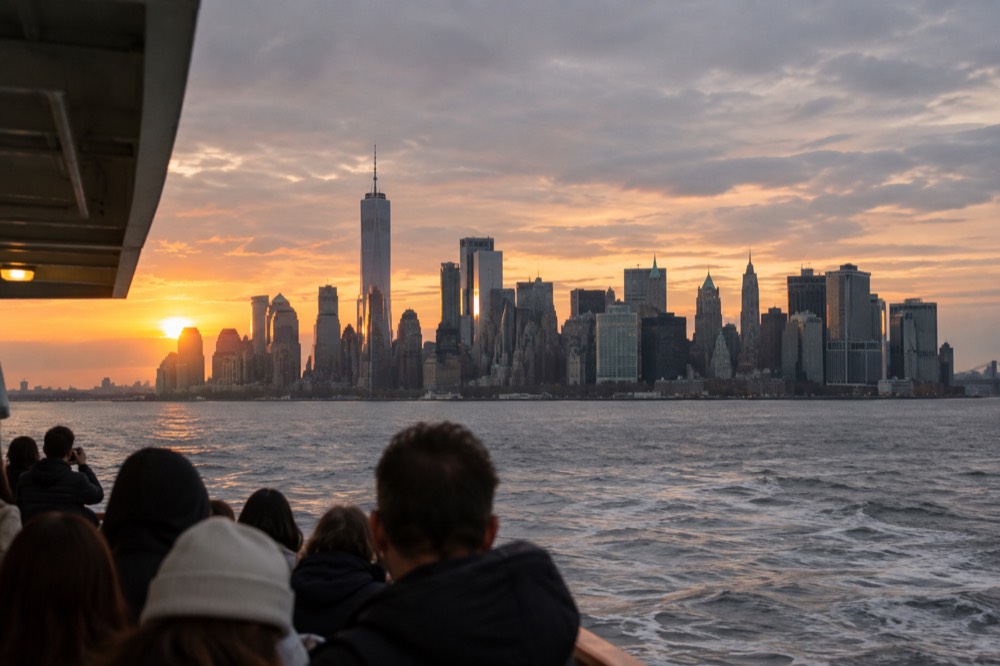
There is a seasonal angle worth knowing too, and it runs against intuition. July, not a spring or autumn month, is New York's wettest month in the official Central Park climate normals, averaging 4.60 inches of precipitation, with June and August close behind. Summer visitors planning a golden-hour crossing should build in a weather fallback more seriously than they might expect. February, by contrast, is both the snowiest and the driest month by those same normals, and a cold, clear February afternoon on the water, wrapped up properly, can deliver the sharpest visibility of the year.
Ridership patterns also matter for comfort. Weekend trains and boats in New York are now, relative to normal, busier than weekday ones: hybrid work hollowed out the weekday commute while weekend leisure travel came back stronger, and the MTA's own 2025 figures show weekend bus ridership now exceeding weekday bus ridership outright. The same shape applies to tourist-crowded services. A Saturday afternoon ferry will have more visitors on the rails than a Tuesday at 11am, even though the Tuesday has fewer commuters.
The weather picture, month by month, looks like this for planning a crossing:
| Month | Avg high °F | Avg low °F | Precipitation (in) | Snowfall (in) |
|---|---|---|---|---|
| January | 39.5 | 27.9 | 3.64 | 8.8 |
| February | 42.2 | 29.5 | 3.19 | 10.1 |
| April | 61.8 | 45.5 | 4.09 | 0.4 |
| July | 84.9 | 70.1 | 4.60 | 0.0 |
| October | 64.5 | 51.4 | 4.38 | 0.1 |
The full monthly table sits in our NYC weather by month guide, along with what each month means for the rest of a trip. The short version for the ferry: there is no dry season in New York, the spread from driest to wettest month is only about 1.4 inches, so check the forecast rather than the calendar.
For an evening on the water with a drink in hand rather than a commuter deck, a sunset cruise is the paid alternative:
The practical rule for the free ride: check the sky, aim for the golden hour on the return leg, and if the weather turns, the indoor cabin still gives you the skyline through the windows.
What Is There to Do on the Staten Island Side?
St. George Terminal itself is a transit hub more than an attraction, but the area around it rewards a short stay: a waterfront promenade with skyline views, a minor-league baseball stadium within walking distance, and the Staten Island Ferry's own museum-scale exhibits inside the terminal. Most day visitors spend between twenty minutes and an hour on the Staten Island side before boarding back, and that is a perfectly good plan.
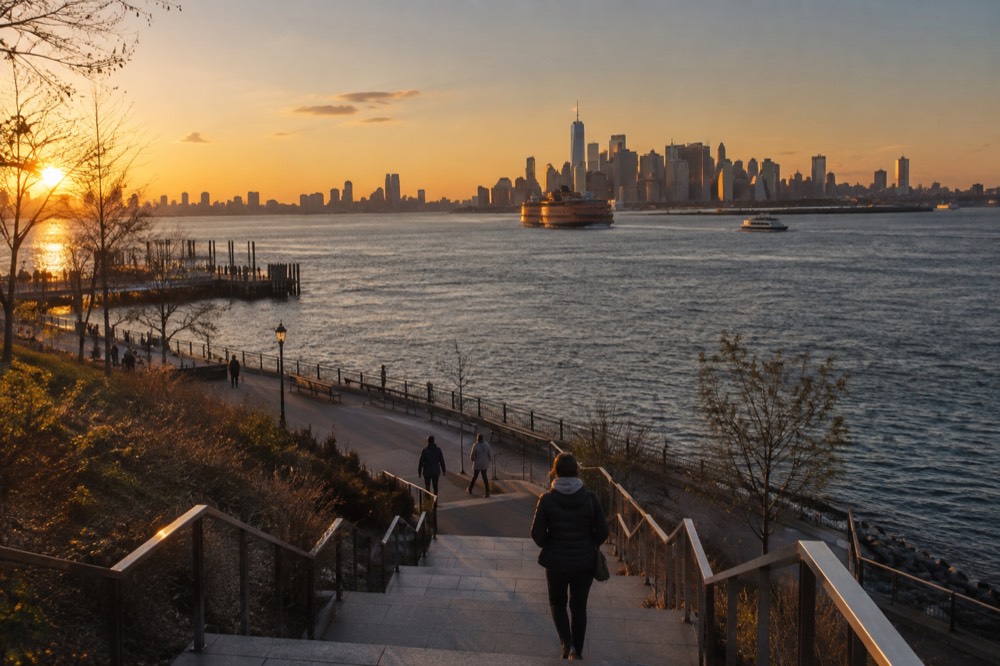
The walkable option from the terminal is the north shore waterfront, where the promenade faces back across the bay at Lower Manhattan. On a clear day the skyline from this angle, spread wide with the harbor in the foreground, is a different photograph from anything you get in Manhattan, and it is free for the price of the boat you already rode. The immediate terminal area has food options and restrooms, which makes the turnaround comfortable even with a family in tow.
The honest caveat: Staten Island is the borough most visitors see least of, and a ferry round trip is not a visit to Staten Island in any meaningful sense. The borough's better-known destinations, from the Snug Harbor cultural center to the Greenbelt's woods, need a car or a bus and a half-day of intent. If that is not your trip, do not feel bad about turning straight around. The crossing is the attraction.
One planning note if you are combining the ferry with the rest of a Lower Manhattan day: the boat's timing is generous but not instant, and the round trip with a short look-around on the Staten Island side will eat a chunk of any morning. Pair it with Battery Park and either the statue ferries or the Financial District, and you have a coherent waterfront day that never requires you to travel uptown.
Common Questions About the Staten Island Ferry
The Staten Island Ferry is free, boards at Whitehall Terminal in Manhattan and St. George Terminal on Staten Island, runs around the clock every day, and passes the Statue of Liberty and Ellis Island at harbor distance. It requires no ticket and no reservation. It does not land at Liberty Island; only the official Statue City Cruises ferry does that, from $26.00 for adults with both islands' museums included.
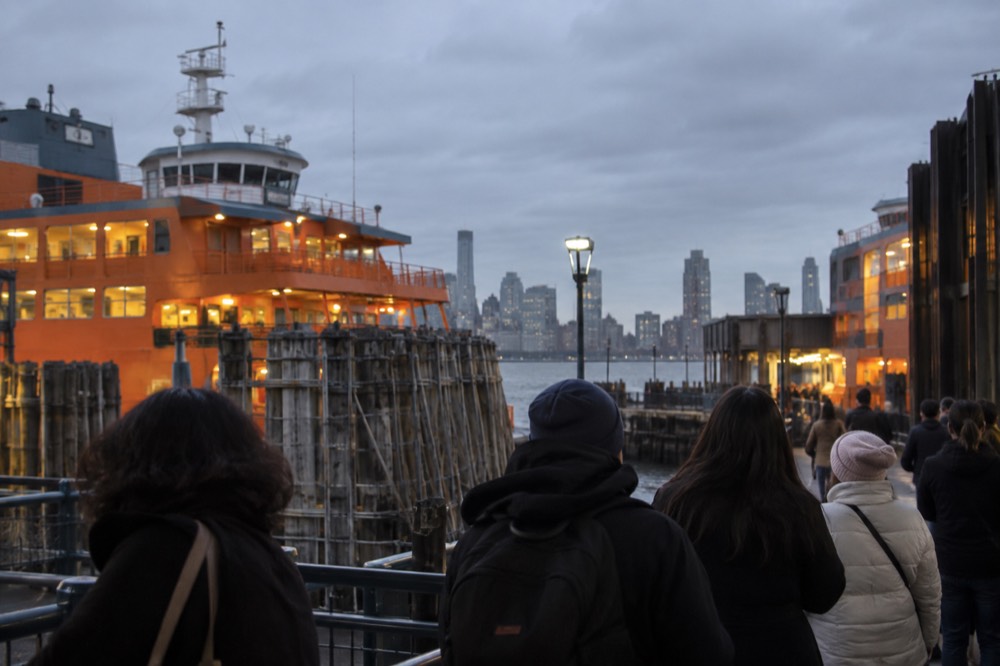
Is the Staten Island Ferry really free?
Yes. There is no fare in either direction, no ticket and no reservation. It is a public transit service operated by the city's Department of Transportation, and the fare was abolished decades ago.
Do you need a ticket or reservation for the Staten Island Ferry?
No. You walk into the terminal and board the next departing boat. Nothing is scanned, tapped or checked, in either direction.
Does the Staten Island Ferry stop at the Statue of Liberty?
No. The ferry passes Liberty Island and Ellis Island at harbor distance, close enough for photos but without stopping. The only operator authorized to land at the islands is Statue City Cruises, the official National Park Service ferry, with adult tickets from $26.00 including both islands' grounds and museums.
Can you see the Statue of Liberty from the Staten Island Ferry?
Yes, clearly. The route crosses Upper Bay within sight of the statue, and the starboard side of the outbound boat is where the photographers gather. Bring a phone or camera with any zoom and you will get a good shot.
Do you have to get off the ferry on Staten Island?
No. Many riders stay aboard or turn around quickly at St. George Terminal. The round trip is the standard tourist move, since the Manhattan-bound leg gives you the skyline head-on.
What is the best time of day to ride the Staten Island Ferry?
Near sunset on the Manhattan-bound leg for the light, or mid-morning to mid-afternoon on a weekday for the emptiest decks. Avoid weekday rush hours if you want a spot at the rail.
The free crossing is one of those rare New York experiences that costs nothing and still delivers, which is why locals keep recommending it decades after the fare disappeared. If the ride leaves you wanting more of the harbor, the boats that actually stop at the islands leave from the same corner of Manhattan:
Whichever you choose, ride the free ferry at least once. As the team at New York City Travel Guide keeps finding, the best things in this city are not always the ones with a ticket booth.