Whitney Museum of American Art: Tickets, Hours, Free Nights and What to Expect
The Whitney Museum of American Art sits at the southern end of the High Line in the Meatpacking District, and it is one of the few major New York museums where anyone 25 or under walks in free, every single day.
Short answer
Whitney Museum adult admission is $30, with seniors and students at $24. Anyone aged 25 or under enters free every day. The museum is also free for everyone on Friday nights from 17:00 to 22:00 and all day on the second Sunday of each month. It is closed Tuesdays.
New York has five world-class art museums within a few miles of each other, and most visitors spend their entire museum budget on three of them: the Met, MoMA and the American Museum of Natural History. The Whitney Museum of American Art is the one they skip, which is a mistake for a specific reason. It is the only museum in that group where a 24-year-old walks in free every day of the week, and one of very few that hands out free evening admission to absolutely everyone, every Friday.
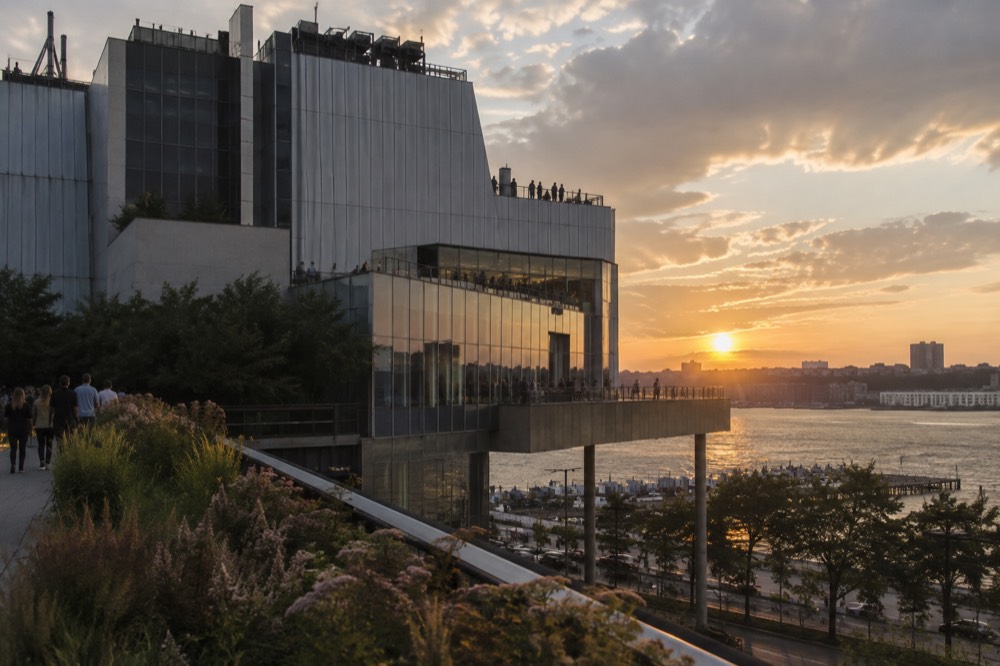
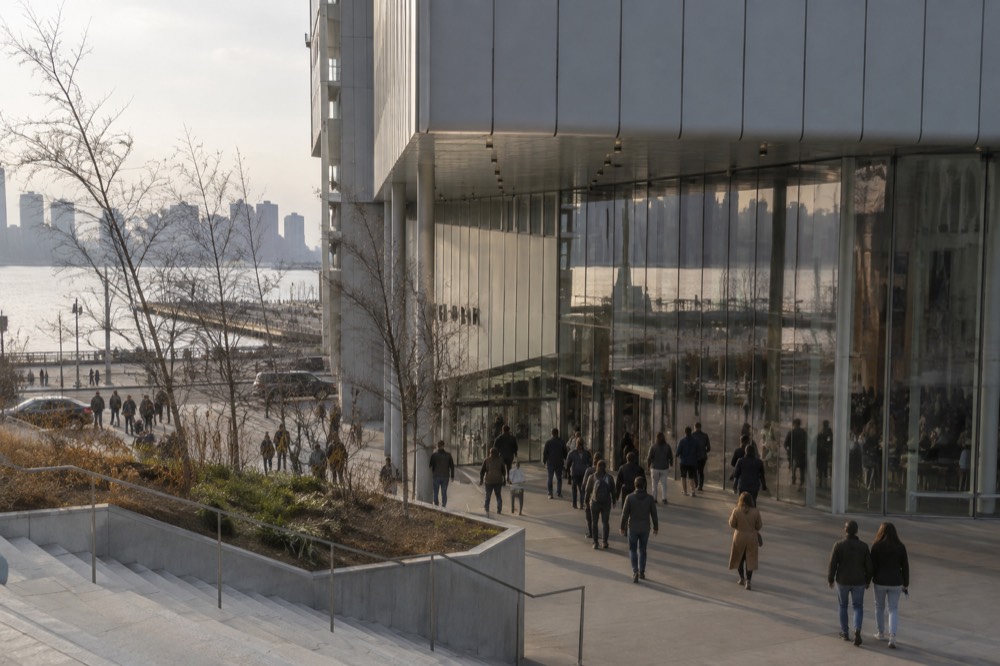
The building itself is half the attraction. The Renzo Piano-designed structure sits between the High Line and the Hudson River in the Meatpacking District, and its outdoor sculpture terraces stare straight down the river toward the Statue of Liberty. This guide covers what a visit actually involves: what tickets cost, when the museum is free, what is inside, how to get there, and whether it deserves a slot in a crowded itinerary. If you are building a wider plan, start with the things to do in NYC overview and work the museum in around it.
What Is the Whitney Museum of American Art?
The Whitney is New York's museum dedicated entirely to American art, from the turn of the twentieth century to the present, housed in a Renzo Piano building at 99 Gansevoort Street in the Meatpacking District. It runs the famous Whitney Biennial and is best known for Edward Hopper, whose career the museum championed early. It is not a universal collection like the Met's, and it does not try to be: the Whitney tells one country's story through its artists.
The museum was founded by Gertrude Vanderbilt Whitney, a sculptor and patron who assembled one of the largest collections of American art in existence and offered the whole thing, with money attached, to the Metropolitan Museum of Art. The Met declined. She opened her own museum instead, in Greenwich Village, and for decades the Whitney lived on the Upper East Side in a Marcel Breuer building before moving downtown to its current home, the move that put it at the foot of the High Line. The Breuer building now hosts Frick Collection exhibitions while the Frick's own building is renovated.
That downtown move is what changed the visit. The old Upper East Side location felt like a detour. The current building sits directly beneath the southern end of the High Line, steps from Chelsea Market and the Hudson River waterfront, which makes the Whitney the easiest major museum in Manhattan to fold into a walking day. Its terraces, which alternate with indoor galleries on the upper floors, put the Hudson and the Jersey City skyline into the visit itself.
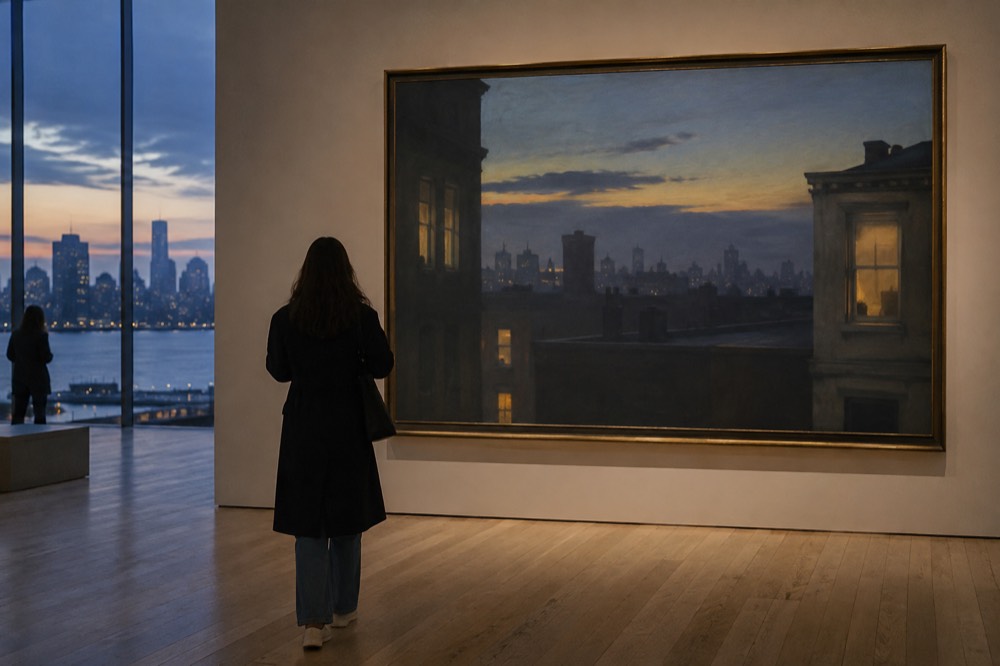
The museum's identity is anchored in a few names. Edward Hopper, whose cityscapes and diners define a certain vision of American loneliness, is a Whitney pillar. So are Georgia O'Keeffe, Alexander Calder, Jasper Johns and a long roster of artists the museum collected before the market agreed with the choice. The Biennial, held in even-numbered years, remains the most argued-about art exhibition in the United States, a survey of contemporary American art that reliably provokes critics, protesters and long queues.
How Much Do Whitney Museum Tickets Cost?
A standard adult Whitney ticket costs $30, seniors and students pay $24, and anyone aged 25 or under enters free every day the museum is open. Children and teenagers benefit most, but the under-25 rule is unusually generous among New York museums: most peers cut free entry off at 12, 16 or 18. There is no separate fee for special exhibitions at the Whitney; general admission covers everything on view that day.
Prices are simple enough that the comparison table does most of the work.
| Ticket type | Price |
|---|---|
| Adult | $30 |
| Senior (65+) and student | $24 |
| Age 25 and under | Free, every day |
| Free Friday nights (17:00-22:00, everyone) | Free, timed ticket recommended |
| Free Second Sundays (all day, everyone) | Free, timed ticket required |
Two things about the $30 figure deserve emphasis. First, unlike the Metropolitan Museum of Art, where a $30 adult ticket is fixed and mandatory for out-of-state visitors with pay-what-you-wish reserved for New York State residents and NY/NJ/CT students, the Whitney's discount structure runs on age and time slots rather than residency. A visitor from anywhere in the world who is 25 or under pays nothing, any day. Second, the ticket includes all special exhibitions. The Whitney does not run a two-tier system where the headline show costs extra, which some New York museums do.
Booking ahead is worth it on weekends and during the Biennial, when timed slots for popular afternoons can go. The skip-the-line ticket sold through the operator's live listing covers the same general admission and spares you the ticket desk queue on Gansevoort Street. Availability and current timed rates show on the live listing before you commit.
If the Whitney is one stop on a museum-heavy itinerary, it pays to think about the other tickets at the same time. The Empire State Building's ticket bundles the 86th floor observatory with the museum experience on the 2nd floor, and the American Museum of Natural History sells a Super Saver that adds the planetarium and giant-screen films to general admission. Stacking those with the Whitney is a common pattern for a first trip, and booking each in advance keeps the day's timing locked.
When Is the Whitney Museum Free?
The Whitney is free every Friday night from 17:00 to 22:00, open to everyone with advance reservation recommended, and free all day on the second Sunday of each month, with timed tickets required. In addition, anyone aged 25 or under enters free every single day. Free Friday night tickets are capacity-limited and can run out, so reserve ahead rather than counting on walking up.
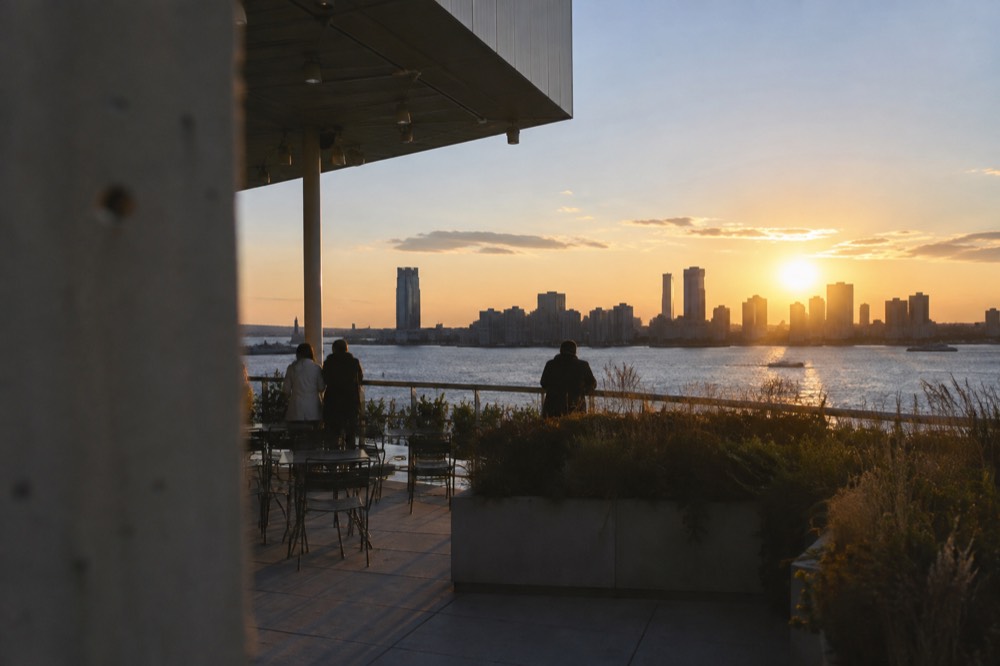
The Friday night window is the museum's signature offer, and it turns a Whitney visit into an evening plan. The galleries stay open until 22:00 on Fridays, the terraces catch the sunset over the Hudson, and the crowd skews younger because half of it walked in on the under-25 rule. Arrive at the start of the window if you want quiet galleries; arrive at 19:00 or later if you want the social version.
| Free window | Who qualifies | Conditions |
|---|---|---|
| Every day | Ages 25 and under | Timed ticket or Anytime Pass, free at booking |
| Friday nights, 17:00-22:00 | Everyone | Advance tickets recommended, capacity limited |
| Second Sunday of each month, all day | Everyone | Timed tickets required, capacity limited |
The Second Sundays program is the less-known of the two and often the better deal: a full day of free admission rather than an evening scramble, though timed tickets are required and do get claimed. Check the museum's own visit page for the current month's release, because ticket release timing can change.
For travelers comparing a whole museum-heavy itinerary, the Whitney's free windows stack up well against its peers. The Guggenheim's pay-what-you-wish window runs just 90 minutes, Tuesday and Sunday afternoons. The Whitney is the only museum of that tier offering free evenings to literally everyone, and the under-25 rule stands alone in the city.
A timed ticket removes the one risk in the free plan: showing up to a full evening. The operator's live listing shows remaining slots and the current cancellation terms.
What Are the Whitney's Opening Hours?
The Whitney is open Monday, Wednesday, Thursday, Saturday and Sunday from 10:30 to 18:00, and Friday from 10:30 to 22:00. It is closed every Tuesday, plus Thanksgiving and Christmas Day. The last Friday entry for the free evening window is well before the 22:00 close, so book a timed slot that leaves you at least 90 minutes inside.
Hours are stable week to week, which makes planning easy, but the Tuesday closure catches people who build itineraries around the Meatpacking District's market days. If Tuesday is your free day, walk the High Line and save the museum for another afternoon.
| Day | Hours |
|---|---|
| Monday | 10:30-18:00 |
| Tuesday | Closed |
| Wednesday | 10:30-18:00 |
| Thursday | 10:30-18:00 |
| Friday | 10:30-22:00 |
| Saturday | 10:30-18:00 |
| Sunday | 10:30-18:00 |
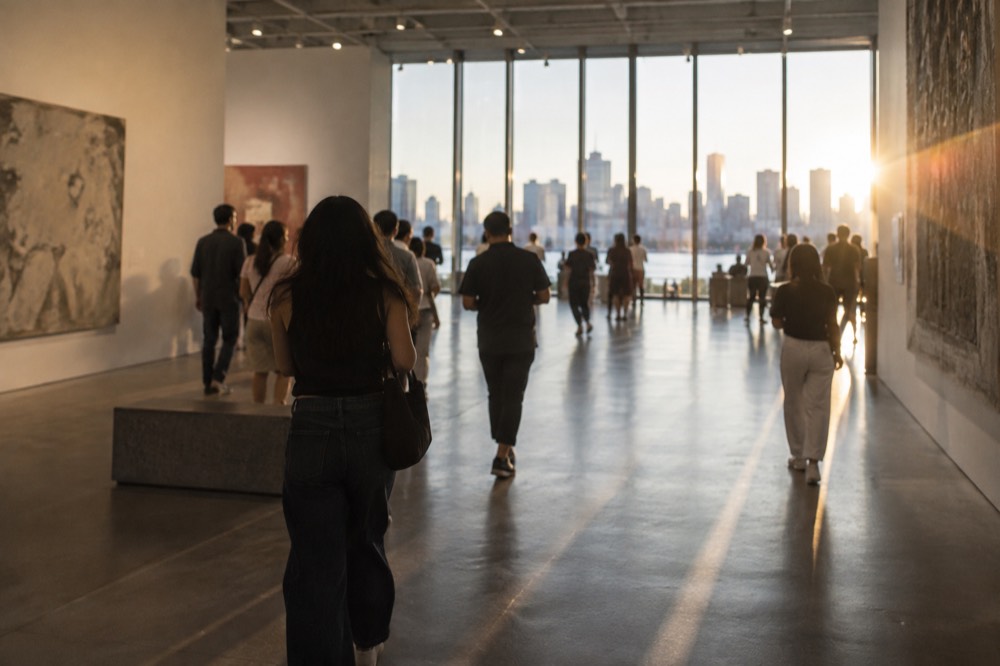
The Friday late opening rewards planning. The sunset hour from the museum's terraces is one of the better free views of the Hudson in the neighborhood, and it changes with the season: in July the sun sets well after 20:00, so a 19:00 entry gives you daylight galleries and a golden terrace; in December it is dark by 17:00 and the terraces become a lights-over-the-river experience.
Arriving at opening time on a weekday is the reliable quiet play. School groups tend to arrive mid-morning and clear out by early afternoon, and weekend afternoons are the busiest window, especially when a Biennial or a headline exhibition is running. Check the museum's own site before you go, since holiday weeks can shift the schedule.
What Will You Actually See Inside the Whitney?
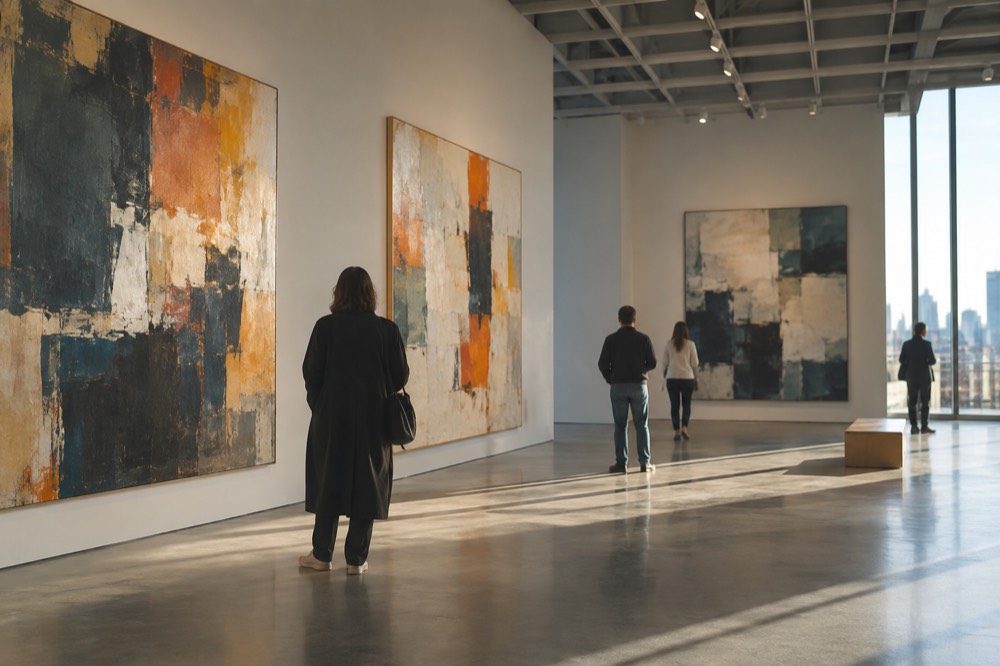
The Whitney's collection runs from roughly 1900 to the present, and the strongest reasons to go are the Edward Hopper holdings, the Georgia O'Keeffe and Calder works, the outdoor sculpture terraces with Hudson views, and whatever contemporary exhibition is on the top floors. Expect roughly two to three hours for a full visit, with the terraces doing half the work of making the building memorable. The museum is not huge; that is a feature on a crowded itinerary.
The permanent collection galleries rotate, which means the Whitney you see this year will not be the Whitney of two years ago. But a few anchors recur. Hopper's paintings of lighthouses, empty rooms and late-night diners are the museum's emotional core, collected during his lifetime when few institutions took American realism seriously. Calder's mobiles and wire sculptures, O'Keeffe's studies, and a deep bench of Ashcan School and early modernist work fill out the earlier floors. Postwar and contemporary galleries carry Johns, Rauschenberg, Warhol and onward into living artists.
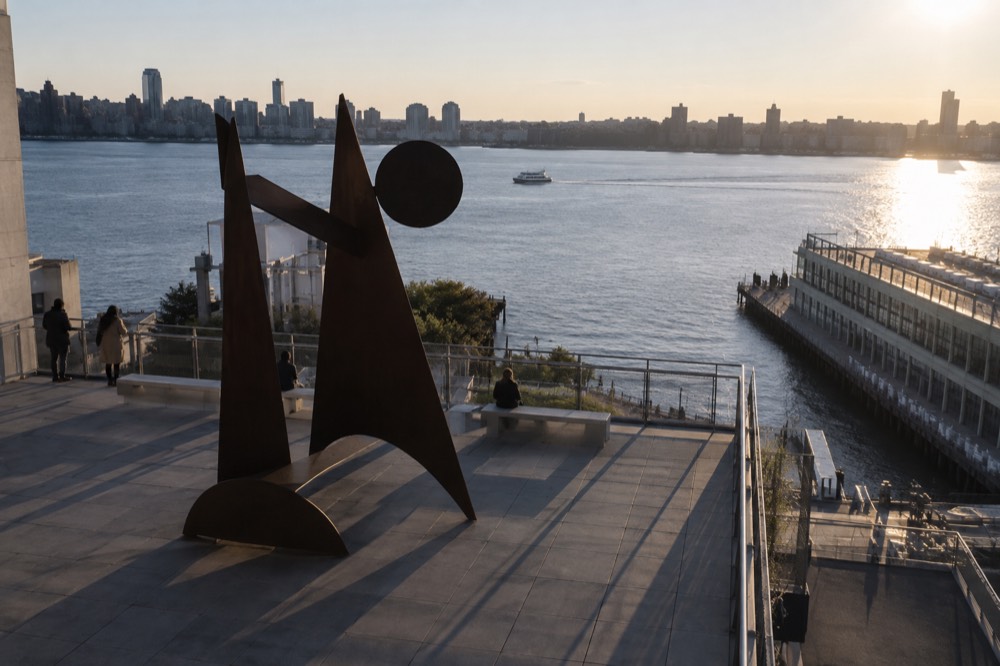
The terraces deserve their own paragraph because many visitors rate them above the art. Stacked between the gallery floors on the building's west side, they face the Hudson River, and they hold rotating sculpture installations. From the upper terraces you look down on the High Line's gardens, across the river to New Jersey, and south toward the harbor. On a clear evening this is one of the best free-with-admission views in Manhattan west of Midtown, and the best views in NYC conversation rarely mentions it because it is not an observation deck.
The Whitney Biennial, held in even-numbered years, is a different kind of visit. It fills the museum with new work by living American artists, generates national press coverage, and divides opinion loudly. If your trip falls in a Biennial spring, book timed tickets early and expect crowds. If you would rather see the permanent collection at its calmest, aim for an odd-numbered year.
One more practical note: the building handles crowds better than its reputation suggests. The galleries are arranged as a single winding route down from the top floors, so the standard move is to take the elevator up first and walk down through the collection, ending at the ground-floor restaurant and the High Line exit.
How Do You Get to the Whitney Museum?
The Whitney sits at 99 Gansevoort Street in the Meatpacking District, at the southern end of the High Line, with the closest subway stops at 14 St-8 Av on the L, and 14 St on the 1, 2 and 3 trains, both a short walk away. The A, C and E at 14 St-8 Av also work. Most visitors arrive on foot along the High Line from the north, descending directly into the museum.
Subway access is genuinely good, which is not true of every Meatpacking destination. From Midtown, the L from 14 St-Union Sq or the 1/2/3 from Times Sq-42 St puts you within a few blocks. From Brooklyn, the L is the natural line. Cycling is a real option too: the Hudson River Greenway runs behind the museum, and Citi Bike docks cluster around Gansevoort Street.
Fare-wise, the current system is tap-and-go: OMNY takes a contactless card or phone at $3.00 a ride, and once you hit $35 in rides inside seven days on the same card or device, the rest of that window is free. The old 7-day unlimited MetroCard is gone; the MTA stopped selling and refilling MetroCards as of 1 January 2026. The cap applies automatically, with no pass to buy, as long as you tap the same card or device every time.
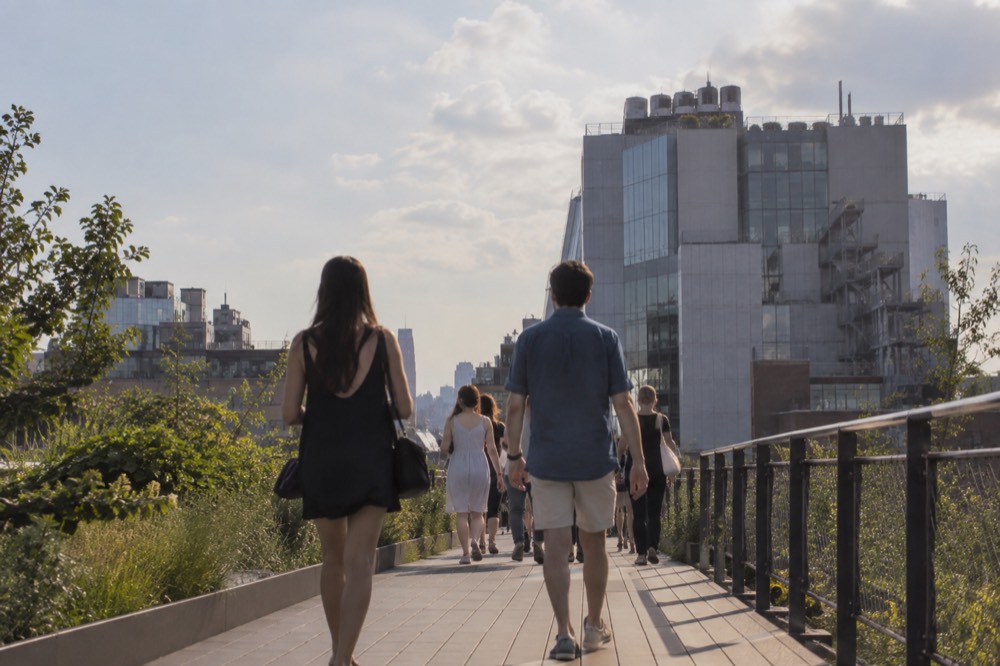
The walking arrival is the one to plan for. The High Line ends practically at the museum's door, and the classic pairing is Chelsea Market or the High Line's northern blocks in the late morning, a slow walk south along the elevated park, and a Whitney entry in the mid-afternoon. Done in that order, you get the Meatpacking District, the park and the museum as one continuous route with almost no street-level walking between them.
Driving is the wrong answer here. Gansevoort Street parking is scarce and expensive, and the neighborhood is dense enough that a car adds time rather than saving it. The subway, the L above all, was built for exactly this trip.
What Is the Best Time to Visit the Whitney?
The best time to visit the Whitney is a weekday at the 10:30 opening, when galleries are quietest, or a Friday evening from 17:00, when entry is free and the terraces catch the sunset. Avoid Saturday and Sunday afternoons during the Biennial or a headline exhibition, and remember the museum is closed Tuesdays. Late fall through winter is the quiet season overall.
Season matters less here than at outdoor attractions, because the museum is indoors, but it still shapes the visit. Summer weekends bring the biggest Meatpacking District crowds, and the free Friday window fills fastest from June through August. Weekday mornings in January and February, by contrast, are close to private, and February is statistically both the snowiest and the driest month in Central Park's climate record, which is to say a February museum day is a plan that rarely gets rained off.
The Biennial calendar is the single biggest crowd variable. Even-numbered years mean a full museum of new contemporary work and record attendance from spring through summer. Odd-numbered years mean calmer galleries and the permanent collection given more room.
| When | What to expect |
|---|---|
| Weekday, 10:30 opening | Quietest galleries, terraces nearly empty |
| Friday 17:00-22:00 | Free entry for everyone, lively, sunset terraces |
| Weekend afternoons | Busiest window, book timed tickets ahead |
| Biennial season (even years) | Crowds and press coverage, book early |
| Tuesday | Closed, plan the High Line instead |
If you are choosing between a free Friday and a paid quiet morning, decide what the visit is for. Seeing the Hoppers and the collection with room to breathe argues for the weekday opening. Adding an evening out to your trip, with a drink in the Meatpacking District afterward, argues for Friday night. Both cost the same if you are under 26.
Is the Whitney Museum Worth Visiting?
For most visitors, yes, with one condition: the Whitney earns its place if American art, contemporary art or the Hopper collection means something to you, or if you are already walking the High Line and the museum is literally on your route. It is less worth it as a standalone pilgrimage if your interest is general sightseeing, because at $30 for two to three hours it competes directly with bigger, broader museums.
The honest comparison is against the alternatives. The Met and MoMA each offer vastly more range for comparable money, and a first-time visitor with one museum slot should probably pick one of them. The Whitney's case rests on three things they cannot match: the under-25 free rule, the free Friday nights, and a building whose setting, terraces included, is itself worth the ticket. It is also the shortest big-museum visit in Manhattan, which matters on day four of a trip when feet are failing.
For families it is an unusually easy yes. Anyone 25 or under is free, the museum's scale means a visit fits inside a child's attention span, and the elevators, terraces and river views give restless kids something that is not a painting. The museums in NYC lineup has better dinosaur halls and bigger names, but few entries are this affordable for a family with teenagers.
For art lovers the question answers itself. There is no better Hopper collection on public display anywhere, and the Biennial remains the definitive survey of American contemporary art, love it or argue with it. The museum's collecting history, backing American artists when European art was the prestige purchase, gives the galleries a coherence that bigger museums lack. Visitors pairing the museum with an observatory the same day often split them, museum first, deck at sunset, and the Empire State's combined ticket covers both the 86th floor and the museum experience downstairs.
The natural-history crowd gets a similar trade-off. The American Museum of Natural History's Super Saver ticket adds the planetarium and giant-screen films to general admission, a full-day proposition uptown, while the Whitney is a two-to-three-hour downtown stop. Different trips, different animals, sometimes both.
One last framing tip. The Whitney pairs naturally with the High Line, Chelsea Market and the Hudson waterfront as a single half-day, and that combined walk is one of the best-value outings in Manhattan because two of its three components cost nothing. Booking your ticket in advance locks the timing; the listing shows current availability and free cancellation terms.
Common Questions About the Whitney Museum
The questions visitors ask most about the Whitney concern price, free entry, hours, luggage rules and how long a visit takes. The short answers: $30 adult, free for anyone 25 or under, free Friday nights for everyone, closed Tuesdays, and two to three hours covers the full building. The details below fill in the rest.
How much are Whitney Museum tickets?
Adult admission is $30, seniors and students $24, and anyone aged 25 or under enters free every day. Children under that age cutoff are covered by the same free rule. Tickets include all special exhibitions on view that day.
When is the Whitney Museum free?
Free for everyone on Friday nights from 17:00 to 22:00, and free all day on the second Sunday of each month, with timed tickets required for the Sunday program and recommended for Friday. Additionally, anyone aged 25 or under enters free every day the museum is open.
How long does a Whitney Museum visit take?
Plan on two to three hours. The standard route starts at the top floor and works down through the collection and the outdoor terraces. Visitors with a specific interest in Hopper or the current exhibition can spend a half day.
Is the Whitney Museum worth it compared to the Met or MoMA?
For a first-time visitor with a single museum slot, the Met or MoMA offers more range for similar money. The Whitney wins on American art depth, the Hopper collection, the under-25 free rule, free Friday nights, and its Meatpacking District setting at the foot of the High Line.
Can you bring bags or backpacks into the Whitney?
Large bags and backpacks generally need to be checked, and the museum, like most New York museums, restricts large items in the galleries. Travelers with luggage should use a bag-storage service before arriving, since the Meatpacking District has no left-luggage facility at the museum itself.
Is the Whitney Museum accessible?
Yes. The building has elevators serving all gallery floors and terraces, and the museum offers accessible entry from street level. Check the museum's own visit page for current accessibility services before you go.
Whatever you decide, do not leave the Whitney out simply because the bigger names crowd it off the list. A museum that hands free evening entry to every visitor and free daily entry to a quarter of the population, in a building this good, has earned its slot. This guide is part of New York City Travel Guide's attractions coverage, updated against the museum's own published prices and policies.