Sleepy Hollow NY: The Route, the Stops and How Much of the Day It Really Takes
Sleepy Hollow sits about 30 miles north of Manhattan on the east bank of the Hudson, a village that trades almost entirely on one ghost story and delivers a genuinely good autumn day out.
Short answer
Sleepy Hollow NY is a small Hudson River village in Westchester County, roughly an hour north of Manhattan by train from Grand Central to nearby Tarrytown. It is best known as the setting of Washington Irving's The Legend of Sleepy Hollow, and it leans hard into the Headless Horseman lore each October. Most visitors do it as a day trip: the cemetery, the Old Dutch Church, the riverfront and, if the season is right, the Halloween programming.
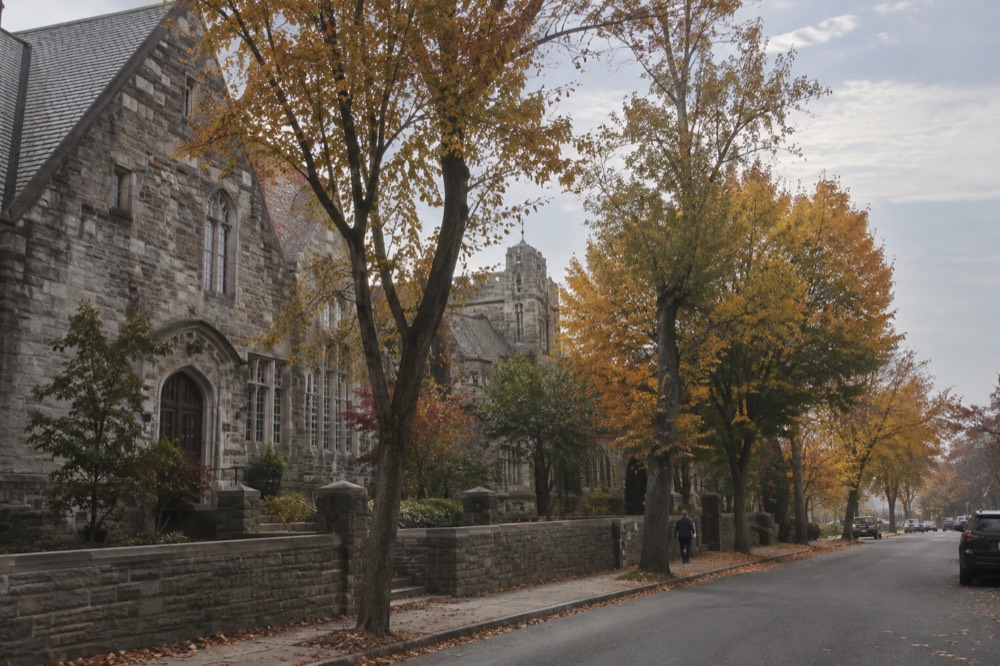
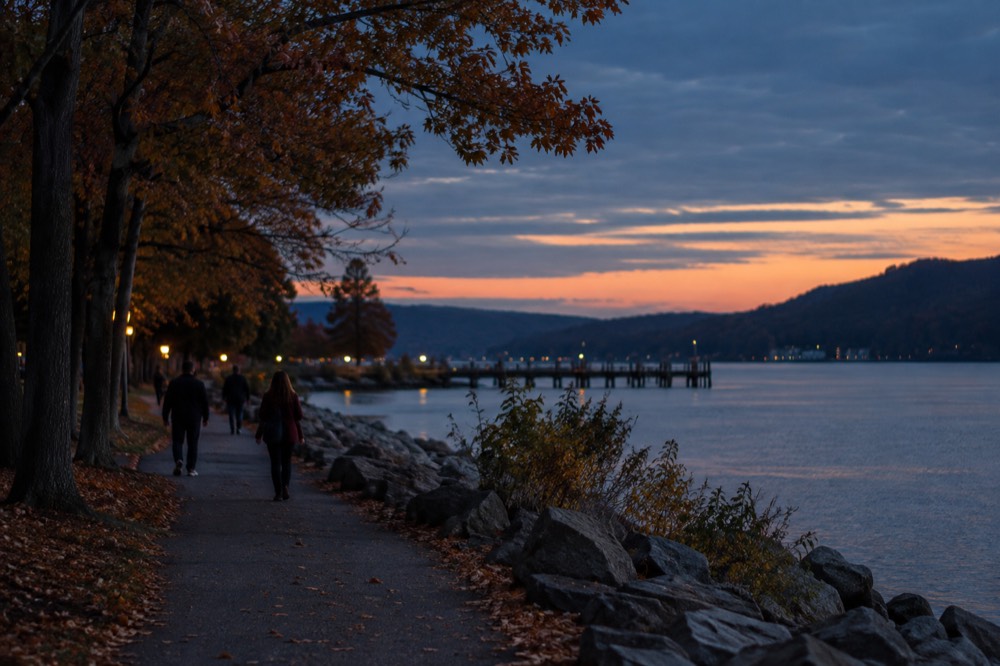
Sleepy Hollow sits about 30 miles north of Manhattan on the east bank of the Hudson, a village of roughly ten thousand people that trades almost entirely on one ghost story. Washington Irving set The Legend of Sleepy Hollow here, and each October the place leans into the Headless Horseman with the commitment of a town that knows exactly what its audience wants. The rest of the year it is a quieter proposition: a famous cemetery, an old Dutch church, river views and the leaf color that makes the Hudson Valley worth the ride in the fall.
Most visitors treat it as a day trip, and that is the right call. You can reach the area by Metro-North's Hudson Line from Grand Central to Tarrytown, the neighboring station village, and walk or take a short cab ride into Sleepy Hollow proper. The question is rarely whether the trip is worth it. The question is how much of your day it eats, and whether you want to organize it yourself or hand the logistics to a guided tour. This page works through both.
Where Is Sleepy Hollow NY and Why Do People Go?
Sleepy Hollow is a village in Westchester County, New York, on the east bank of the Hudson River about 30 miles north of Midtown Manhattan. It shares a border and a train station area with Tarrytown, and the whole visit centers on a compact historic district you can walk in an afternoon.
People go for the Washington Irving connection, the cemetery that bears the village's name, the Old Dutch Church, and the October Halloween season, which is the single busiest time to visit.
The name is the draw, and the name is earned. Washington Irving lived in the area late in his life at Sunnyside, his cottage a short distance south in Tarrytown, and his 1820 story made this stretch of the Hudson permanently famous. The legend itself is a slight thing, a schoolmaster named Ichabod Crane, a headless rider, a dark road. But the village has spent two centuries building an identity on it, and in October that identity pays off: decorated streets, seasonal tours and events, and crowds that would surprise anyone expecting a sleepy village in the literal sense.
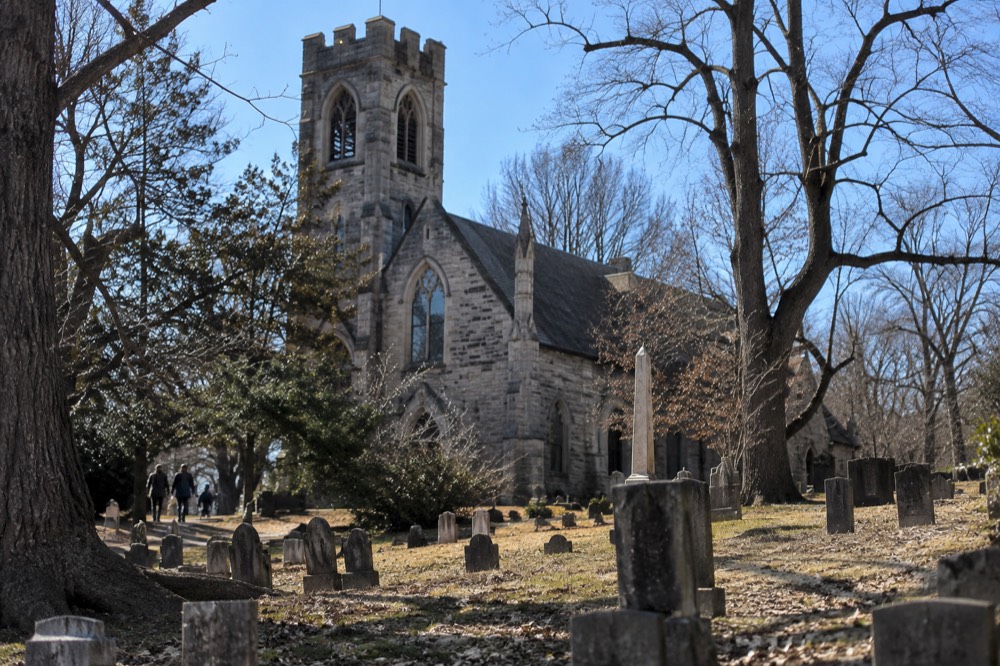
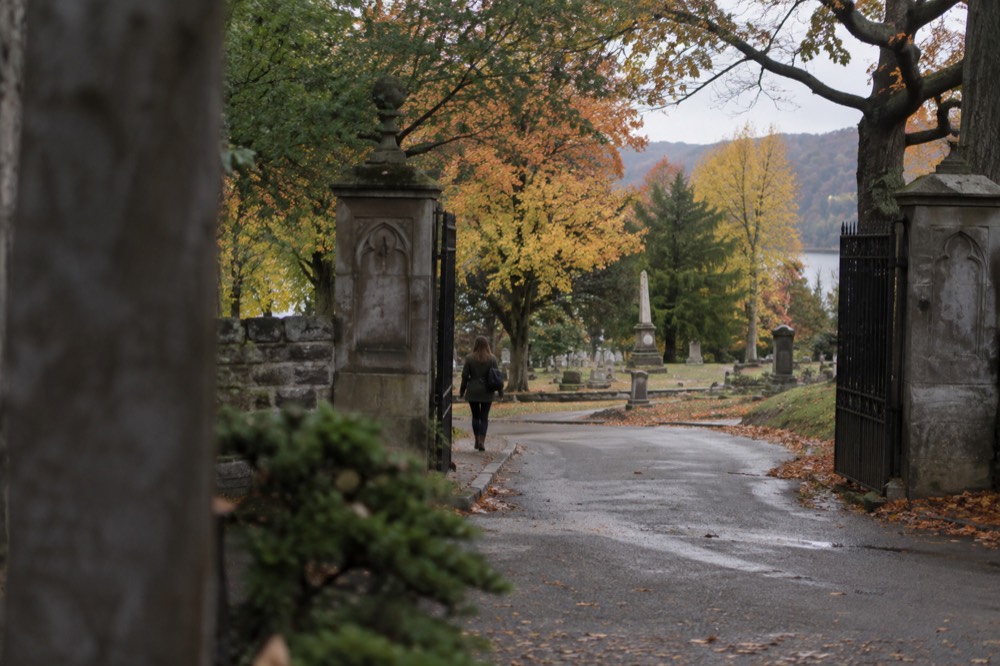
Off-season the pitch is different and, arguably, better. The same streets in March are quiet. The cemetery is open year-round and it is one of the most atmospheric burying grounds in the country, rolling and wooded, with famous residents including Irving himself. Combine it with a river walk, lunch in Tarrytown and maybe one of the grand Hudson estates nearby and you have a full day without a single pumpkin.
For broader planning, our things to do in NYC guide covers the city end, and the Hudson Valley from NYC guide places Sleepy Hollow in the wider region.
How Do You Get from Manhattan to Sleepy Hollow?
The simplest car-free route is Metro-North's Hudson Line from Grand Central Terminal to Tarrytown, a ride of roughly an hour, followed by a taxi, local bus or a longish walk to the Sleepy Hollow sights. Drivers take the Saw Mill River Parkway or I-87 and should expect 45 minutes to well over an hour depending on Manhattan traffic and the time of day.
The guided option eliminates both decisions: a coach picks you up in Manhattan and handles the whole loop, including stops well beyond the village itself.
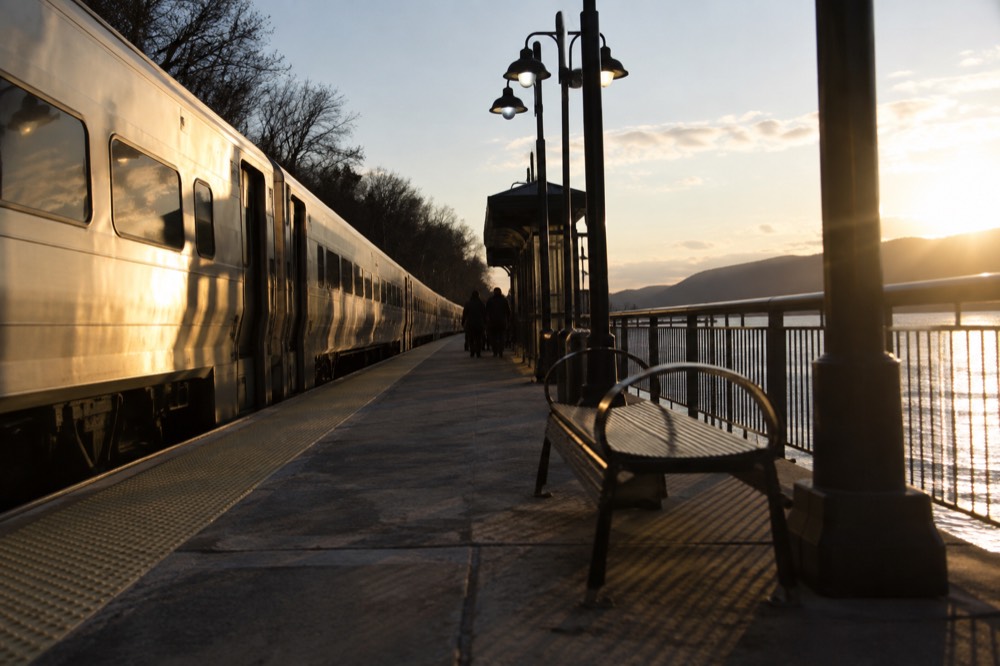
The train is the budget answer and, for most travelers, the best one. Grand Central is the departure point, and the Hudson Line runs along the river's edge for much of the journey, so sit on the left side heading north for the water views. Tarrytown is the station you want; from there the cemetery main gate is a short cab ride, or a walk of around 30 to 40 minutes if the weather is good and you do not mind the sidewalk time. Check the MTA's own schedules before you travel, because weekend service patterns differ from weekday ones.
Driving gives you flexibility to add the estates and river towns, and parking in the villages is manageable outside peak October weekends. But the honest arithmetic is brutal: a rental car for a single day trip out of Manhattan costs more than two train tickets, and the city's traffic is the worst part of the journey in both directions. This site's standing advice holds: do not rent a car for the city, and only consider one for a day trip like this if you are stringing together several Hudson Valley stops that trains serve badly.
The guided tour is the third way, and for many visitors it is the one that makes sense. The Hudson Valley tour with Sleepy Hollow and Walkway Over Hudson runs seven hours, is rated 4.8 from 31 reviews, and starts from $135 per person. It pairs the village with the Walkway Over the Hudson, the elevated pedestrian bridge at Poughkeepsie more than an hour further north, which is the kind of pairing that only makes sense with someone else doing the driving.
What Are the Actual Stops in Sleepy Hollow?
The core stops are Sleepy Hollow Cemetery, the Old Dutch Church of Sleepy Hollow next to it, the Philipsburg Manor historic site on the riverfront, and the village's Main Street stretch, all within a compact walkable area. Add the Rockefeller estate Kykuit and Washington Irving's Sunnyside in neighboring Tarrytown if you have a full day, and the riverside parks for the view. Realistically you can see the core in half a day and the fuller set in a whole one.
The cemetery is the headline. It is large, wooded and genuinely atmospheric, with Washington Irving's grave among the most visited plots in American literature. The Old Dutch Church beside it dates to the seventeenth century and is the church of the legend itself; the setting Irving described is this ground. Check opening arrangements before you go, because access to the church interior and any guided cemetery walks vary by season.
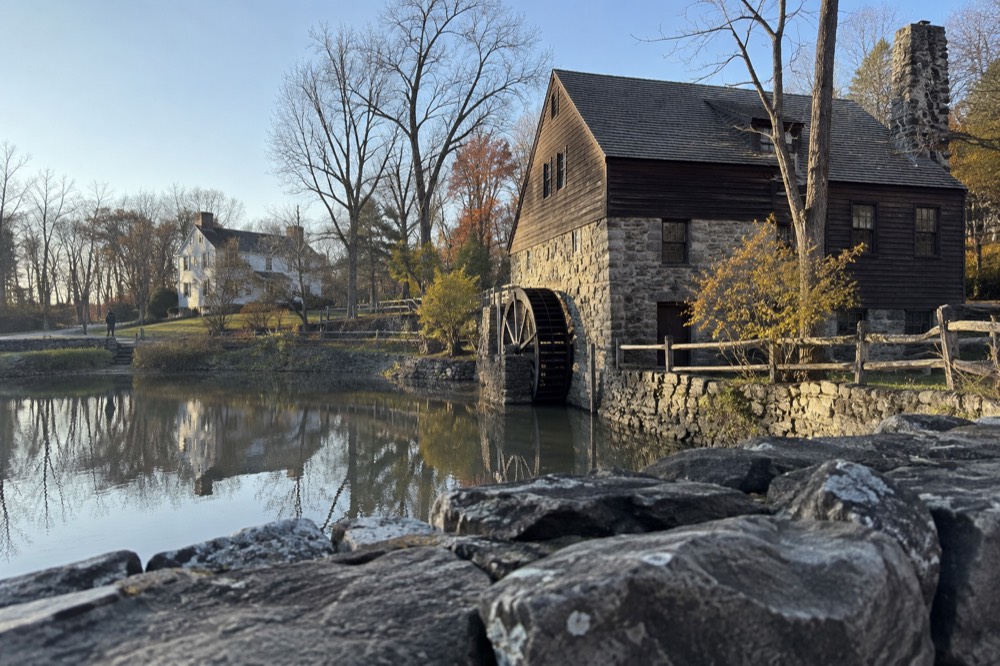
Philipsburg Manor, a short walk toward the river, is a historic site centered on a working mill and manor from the colonial period, run with costumed interpretation. It is the village's most substantive non-cemetery attraction and a good stop for families. Kykuit, the Rockefeller house on the hill above the village, requires advance booking and is usually visited by tour only, so if it is on your list, reserve before you commit to a date. Sunnyside, Irving's own home, is in Tarrytown proper and closes out the literary thread nicely.
Beyond the village, the wider day can absorb the Tarrytown riverfront, the Lighthouse at Sleepy Hollow (Kingland Point Park), and the drive north along Route 9 toward the estates. The guided tour route extends much further, adding the Walkway Over the Hudson, one of the longest elevated pedestrian bridges in the world, which turns a village visit into a proper Hudson Valley loop.
A quick comparison of the main stops, with honest notes on timing:
| Stop | What it is | Time needed | Note |
|---|---|---|---|
| Sleepy Hollow Cemetery | Large historic burying ground, Washington Irving's grave | 1-2 hours | Walking routes vary; guided walks in season |
| Old Dutch Church | 17th-century church of the legend | 15-30 minutes | Interior access limited; check ahead |
| Philipsburg Manor | Colonial mill and manor historic site | 1-1.5 hours | Good family stop; seasonal programming |
| Kykuit (Rockefeller estate) | Hilltop mansion and gardens above the village | 2-3 hours | Tour-only; advance booking essential |
| Sunnyside (Tarrytown) | Washington Irving's home | 1-1.5 hours | Seasonal opening; check before going |
| Walkway Over the Hudson | Elevated pedestrian bridge at Poughkeepsie | 1-2 hours | Only realistic with a car or guided tour |
The honest summary: the cemetery and church alone justify the trip for most visitors, Philipsburg Manor deepens it, and Kykuit is the standout if you can book it.
Is Sleepy Hollow Worth It Outside October?
Yes, though the experience changes completely. October delivers the full Halloween production, the biggest crowds and the best reason to book anything in advance, while the quieter months trade spectacle for space: the cemetery in bare November or snowy February is arguably more true to the story than any pumpkin display. Late spring through early summer is the soft spot for combining the village with river towns and estates without October's congestion.
The seasonal logic matters for planning. If the Headless Horseman season is your reason for going, accept the trade: everything is livelier, seasonal events run, and you should expect crowds at the cemetery and on Tarrytown's streets, especially on October weekends. Book any estate tours and restaurant tables well ahead. The guided day tour runs year-round and leans on the folklore angle hardest in autumn, when the tour's Headless Horseman framing lands best.

If you would rather avoid crowds, the rest of the year is generous. The Hudson Valley's fall color is the region's famous season, and our NYC in the fall guide covers the timing logic for the whole area, but spring brings the estates' gardens into their own and winter empties the cemetery out. One weather point worth knowing before you plan any New York trip by folk wisdom: in Central Park's official climate record, July is the wettest month of the year, ahead of August and June, while February is both the snowiest and the driest month. Summer visitors expecting dry days and winter visitors bracing for January blizzards have it backwards.
For when to go generally, the best time to visit NYC guide has the month-by-month picture, and the same logic extends up the Hudson with a couple of weeks' lag in the leaf color.
How Much Does a Sleepy Hollow Day Trip Cost?
A car-free independent day, with a round-trip Metro-North fare, cemetery time, lunch and nothing ticketed, is a cheap day out by New York standards, well under $100 per person. The guided tour route runs from $135 per person for the seven-hour Hudson Valley tour covering Sleepy Hollow and the Walkway Over the Hudson, rated 4.8 from 31 reviews.
Add estate admissions if you go independent, and a full day with Kykuit can exceed the guided price without the guide.
The two models price differently. Independent travel spends on the train, food and any admissions you choose; you control the total. The guided tour spends once, up front, and covers transport, guide and the walking stops, with meals generally your own. The comparison below uses the tour's live-listing price and treats independent items as planning ranges, because estate and cemetery admission pricing varies by season and program; always confirm current prices on the operators' own sites. The rest of the planning pages sit on New York City Travel Guide.
| Item | Guided tour day | Independent day |
|---|---|---|
| Transport from Manhattan | Included in tour price | Metro-North round trip, off-peak fares apply |
| Guided commentary | Included | Optional cemetery walking tour, seasonal fee |
| Sleepy Hollow stops | Covered on the route | Cemetery, church, Main Street walkable free or low cost |
| Walkway Over the Hudson | Included | Not realistic without a car |
| Meals | Usually your own expense | Your own expense |
| Estimating from | $135 per person (tour listing) | Roughly $50-$100+ depending on admissions and lunch |
Two honest caveats. First, the train fare changes with peak and off-peak timing, so check the MTA's fare page for your specific travel window rather than trusting a number printed in a guide. Second, October weekends raise everything: some seasonal events carry separate ticket prices, and they sell.
What Does the Guided Sleepy Hollow Tour Actually Include?
The tour is a seven-hour coach loop out of Manhattan that pairs Sleepy Hollow with the Walkway Over the Hudson, the elevated pedestrian bridge at Poughkeepsie. It is rated 4.8 from 31 reviews and starts from $135 per person, covering transport and a guide, with stops that typically include riverside towns and time to browse and eat.
It suits travelers who want the folklore, the bridge and the valley scenery without renting a car or planning three legs of a journey.
The pairing is the tour's real logic. Sleepy Hollow and the Walkway Over the Hudson are more than an hour apart by road, and neither is awkward individually but the combination is genuinely hard to do yourself without a car. The coach absorbs the distance while the guide carries the storytelling, which matters here more than at most destinations: the Headless Horseman lore, the Hudson Valley's history and the story of the bridge itself are the content, and a self-guided version of this day is mostly a long drive with good views.
For families and folklore fans it is a strong fit, and the tour's own listing positions it exactly that way. For travelers who want to linger in the cemetery for hours or book Kykuit at their own pace, the independent route wins; no guided loop can match a self-planned day for depth on a single site.
How Does Sleepy Hollow Compare with Other Day Trips from NYC?
Sleepy Hollow is the closest thing New York has to a literary day trip, and it competes on atmosphere rather than scale. Against the region's other standard day trips it is shorter-haul than Washington DC or Philadelphia, cheaper than the Hamptons, and more compact than the shopping-focused outlets run. For a first Hudson Valley outing it is the easiest introduction: one train, one village, one famous story.
The comparison below uses the live-listing prices for the guided versions of each trip. Note the pattern: the DC and Philadelphia full-day tour is a 15-hour commitment at $189 from, while the Sleepy Hollow loop is seven hours and closer to the city. The CityPASS figure is included because many travelers pair a day trip with a city sightseeing block, and the pass prices five attractions at $149 adult, valid over nine consecutive days.
| Day trip from NYC | Duration | Guided price from | Best for |
|---|---|---|---|
| Sleepy Hollow and Walkway Over the Hudson | 7 hours | $135 per person | Folklore, fall color, easiest Hudson outing |
| Washington DC and Philadelphia full day | 15 hours | $189 per person | Two cities, big-ticket landmarks, long day |
| Hamptons, Sag Harbor and outlets | 14 hours | $161 per person | Ocean villages, no car needed |
| Woodbury Common outlets | 1 day | $55 per person | Shopping only |
| Niagara Falls in a day | 19 hours | $69 per person | A must-see falls, at the cost of the whole day |
The wider day trips from NYC guide covers the full menu, and the same logic applies across all of them: match the trip to your energy, not the brochure. A 15-hour two-city day and a seven-hour folklore loop are different products wearing the same "day trip" label.
Can You Do Sleepy Hollow and the Walkway Over the Hudson in One Day?
Yes, but only by car or on a guided tour, because the two are more than an hour apart by road and the Walkway sits at Poughkeepsie, far up the river. Doing both independently by train in a single day is technically possible and practically miserable: the rail legs stack up, and you would spend most of your day watching the Hudson go by from a window.
The guided tour exists precisely to make this pairing work, which is why its route reads the way it does.
The Walkway Over the Hudson is a former railroad bridge turned pedestrian park, one of the longest elevated pedestrian bridges in the world, spanning the river at Poughkeepsie. The views from the deck run up and down the valley, and on a clear fall day it is one of the best vantage points in the region. As a standalone destination it pairs naturally with the restaurants and walkable blocks of Poughkeepsie and Highland on either end.
The honest planning question is whether the bridge matters to you. If Sleepy Hollow's cemetery and lore are your whole reason for going, an independent Tarrytown day is simpler and cheaper. If you want the Hudson Valley as a single big day, folklore plus a river crossing plus scenery, the guided loop is the efficient answer and the price difference over the train-and-cab version buys you the second half of the day.
What Should You Pack and How Should You Time the Day?
Pack for walking and for the season, and time your day around two clocks: the train schedule and the cemetery's hours. Comfortable shoes matter more here than at most day-trip destinations, because the cemetery is hilly and the guided route adds the bridge walk. Leave Manhattan in the morning, give the village the middle of the day, and keep October plans loose on weekends, when crowds slow everything down.
Start times for the guided tour are fixed by the operator, so check the listing when you book.
The practical items are unglamorous. Layers, because the river valley runs cooler than Midtown in every season and the bridge deck is exposed to wind. Water and a snack, because the stretch between Tarrytown's restaurants and the cemetery's gates is longer than it looks on a map. A camera or a charged phone goes without saying. And for October, a rain option: our what to pack for NYC guide covers the general kit, and the same rules apply an hour north with a couple of degrees shaved off.

Timing the independent day: an off-peak morning train out of Grand Central puts you in Tarrytown before lunch, which leaves the afternoon for the cemetery and the village before an evening ride back. That is the comfortable version. The compressed version, a midday arrival, still works for the cemetery alone, but you will feel the station-to-village walk at the end of it. On the guided tour the timing is decided for you, which is either the point or the problem depending on your temperament.
Should You Book Sleepy Hollow Tours in Advance?
For the guided day trip, booking ahead is the right default, because the tour runs on a fixed coach with limited seats and autumn dates are the ones that fill first. For the village itself, nothing needs advance booking outside October, with one exception: Kykuit, the Rockefeller estate, is visited by reserved tour only and is the single Sleepy Hollow-area attraction where procrastination genuinely costs you the visit.
Free cancellation terms vary by listing, so check them when you book rather than assuming.
The advance-booking logic on this site is consistent everywhere: book the things that are capacity-limited and date-specific, walk up to the rest. The Hudson Valley tour with Sleepy Hollow is capacity-limited by its coach. Kykuit is capacity-limited by its tour structure. The cemetery, the church grounds and Main Street are not capacity-limited at all, and a spontaneous autumn Saturday works fine as long as you accept the company.
One more planning note for the wider trip: if Sleepy Hollow is one block of a longer New York stay, it is worth checking whether a sightseeing pass covers your city days before you buy individual tickets. Our New York CityPASS guide works through the math, and the pass bundles five attractions, including the Empire State Building and the official Statue of Liberty ferry, at $149 adult over nine consecutive days.
Common Questions About Sleepy Hollow NY
The questions below are the ones travelers actually ask before making this trip: how far it is, whether you need a car, what the famous things are, and whether the village justifies the journey outside the Halloween season. The short version of all five answers is that Sleepy Hollow is an easy hour from Manhattan, entirely doable without a car, anchored by a genuinely famous cemetery and church, and worth visiting at any time of year, with October as the peak and the most crowded expression of it.
How far is Sleepy Hollow NY from Manhattan?
Roughly 30 miles north of Midtown Manhattan, on the east bank of the Hudson River in Westchester County. By train from Grand Central to Tarrytown the ride is about an hour; by car it runs from around 45 minutes in light traffic to well over an hour at peak times.
Can you visit Sleepy Hollow without a car?
Yes. Metro-North's Hudson Line from Grand Central to Tarrytown is the standard route, followed by a short taxi or local bus ride, or a walk of 30 to 40 minutes, to the cemetery and village sights. The core area is compact and walkable once you are there.
What is Sleepy Hollow famous for?
It is the setting of Washington Irving's The Legend of Sleepy Hollow, the 1820 story of Ichabod Crane and the Headless Horseman. Irving is buried in Sleepy Hollow Cemetery, and the Old Dutch Church beside it is the church of the legend. The village leans into the lore hardest each October.
Is October the only good time to visit Sleepy Hollow?
No. October is the peak, with the fullest Halloween programming and the biggest crowds, but the fall color extends through the season, and the quieter months suit the cemetery's atmosphere well. Spring works for the estates' gardens, and winter empties the village out.
Is the guided Sleepy Hollow tour worth it?
It depends on your itinerary. If you want Sleepy Hollow alone, the train is cheaper and simple. If you want the village plus the Walkway Over the Hudson, more than an hour upriver, the guided tour is the practical way to do both in one day, with the folklore and history carried by a guide rather than a guidebook.
How long do you need in Sleepy Hollow?
Half a day covers the cemetery, the Old Dutch Church and the village core. A full day adds Philipsburg Manor or the Kykuit estate, and time in neighboring Tarrytown. The guided loop, which extends to the Walkway Over the Hudson, runs seven hours door to door.
The last word on planning: Sleepy Hollow rewards a decision made early. The tour dates, the Kykuit reservations and the October weekends all favor travelers who book before the leaves turn, and the same week of hesitation that costs you a coach seat in October costs you nothing at all in March. Pick your season, pick your route, and let the village do the rest.