Best Pizza in NYC: Where to Eat and How to Choose
New York runs on pizza the way other cities run on buses: constantly, everywhere, and with strong opinions about the right way to do it. This guide separates the styles, maps the neighborhoods worth eating in, and tells you what a slice, a pie and a food tour actually cost.
Short answer
The best pizza in NYC depends on the style you want: thin, foldable Neapolitan-American slices at neighborhood counters, coal-oven pies in Manhattan and Brooklyn, or certified Neapolitan round pies from wood-fired ovens. Chinatown, Little Italy, Greenwich Village and Brooklyn each hold their own landmarks, and a guided food tour is the fastest way to taste several in one walk.
New York runs on pizza the way other cities run on buses: constantly, everywhere, and with ferocious local opinion about the correct way to do it. The city holds thousands of pizzerias across the five boroughs, from steam-window slice counters that sell one piece at a time to sit-down rooms with coal ovens that have not changed their method in generations. That range is the point. A visitor who asks for "the best pizza in NYC" is really asking several questions at once: which style, which borough, how much walking, and how much waiting.
This guide answers those in order. It covers the styles and how to tell them apart, the neighborhoods that anchor each one, what a slice and a pie actually cost, and whether a guided food walk earns its price. Where a figure matters, it comes from verified research or from live operator listings on this site. Where a number changes by the day, the guide says so instead of printing something stale.
What Makes NYC Pizza Different from Everywhere Else?
New York pizza is defined by three distinct traditions rather than one: the thin, foldable Neapolitan-American slice sold by the piece at neighborhood counters, the large coal-oven pies associated with Manhattan and Brooklyn's oldest pizzerias, and modern certified Neapolitan round pies cooked fast in wood-fired ovens. Thin crust is the common thread, but the styles differ in oven type, cheese, dough water content and cooking speed. Knowing which one you want is most of the battle.
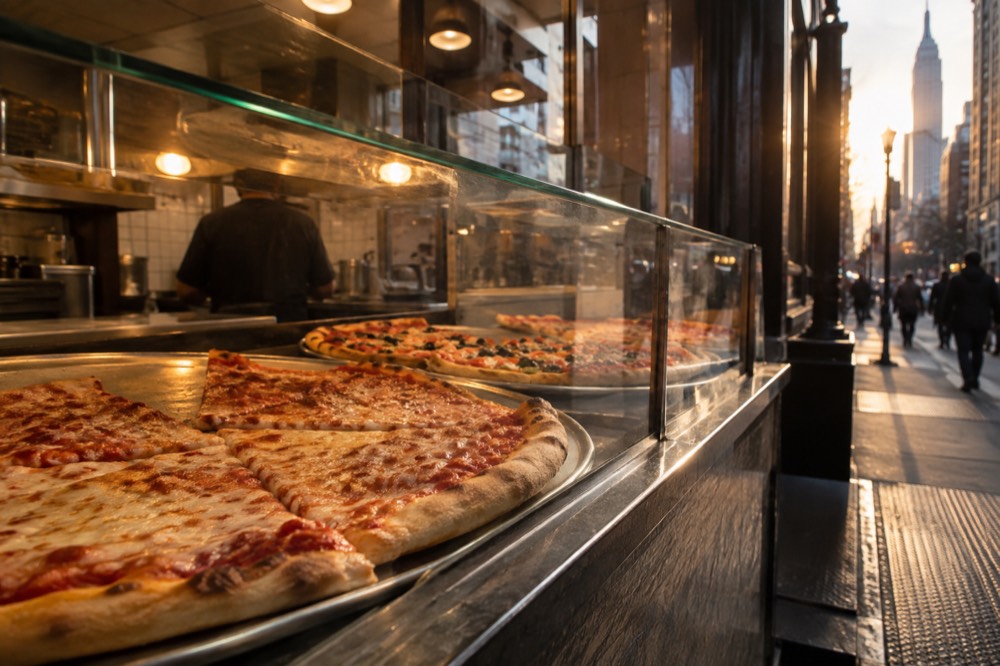
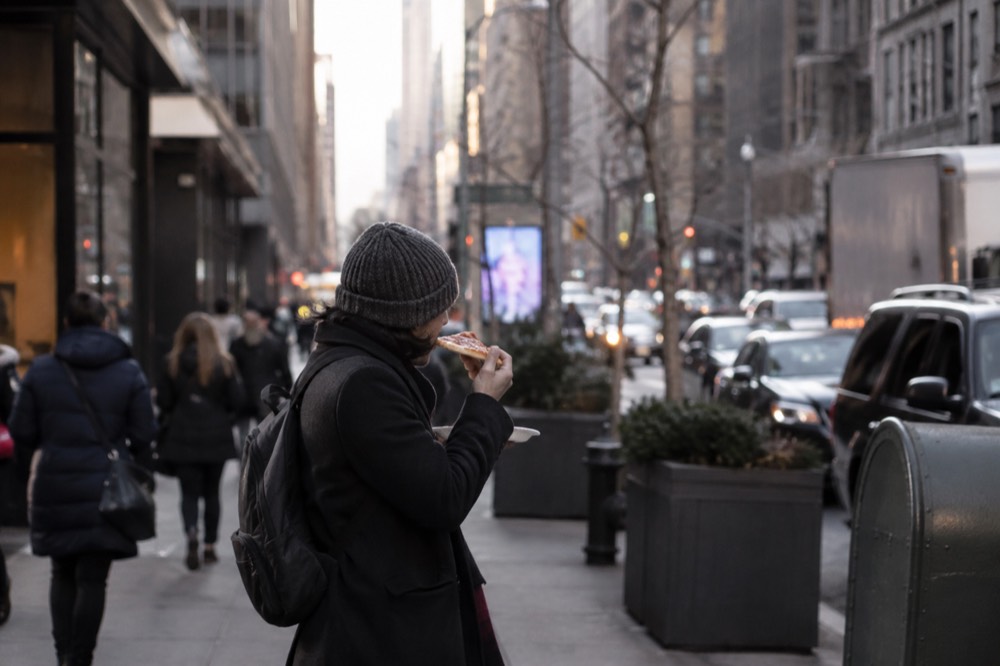
The slice is the city's native format. It is sold from a glass counter, reheated to order, and eaten folded lengthwise, often standing up or on the move. The crust is thin but structured, with enough chew to hold a fold without cracking. This is the pizza most New Yorkers mean when they say "a slice," and it is the format you will find within a few blocks of almost anywhere in the city.
The coal-oven pie is the older tradition. Coal ovens run far hotter than home ovens and give a large, thin pie a charred, slightly smoky base that gas and electric ovens cannot reproduce. These pies are sold whole, not by the slice, and the rooms that serve them tend to be sit-down affairs with table service and a line out the door at peak hours. Manhattan's oldest pizzerias and several Brooklyn landmarks work this way.
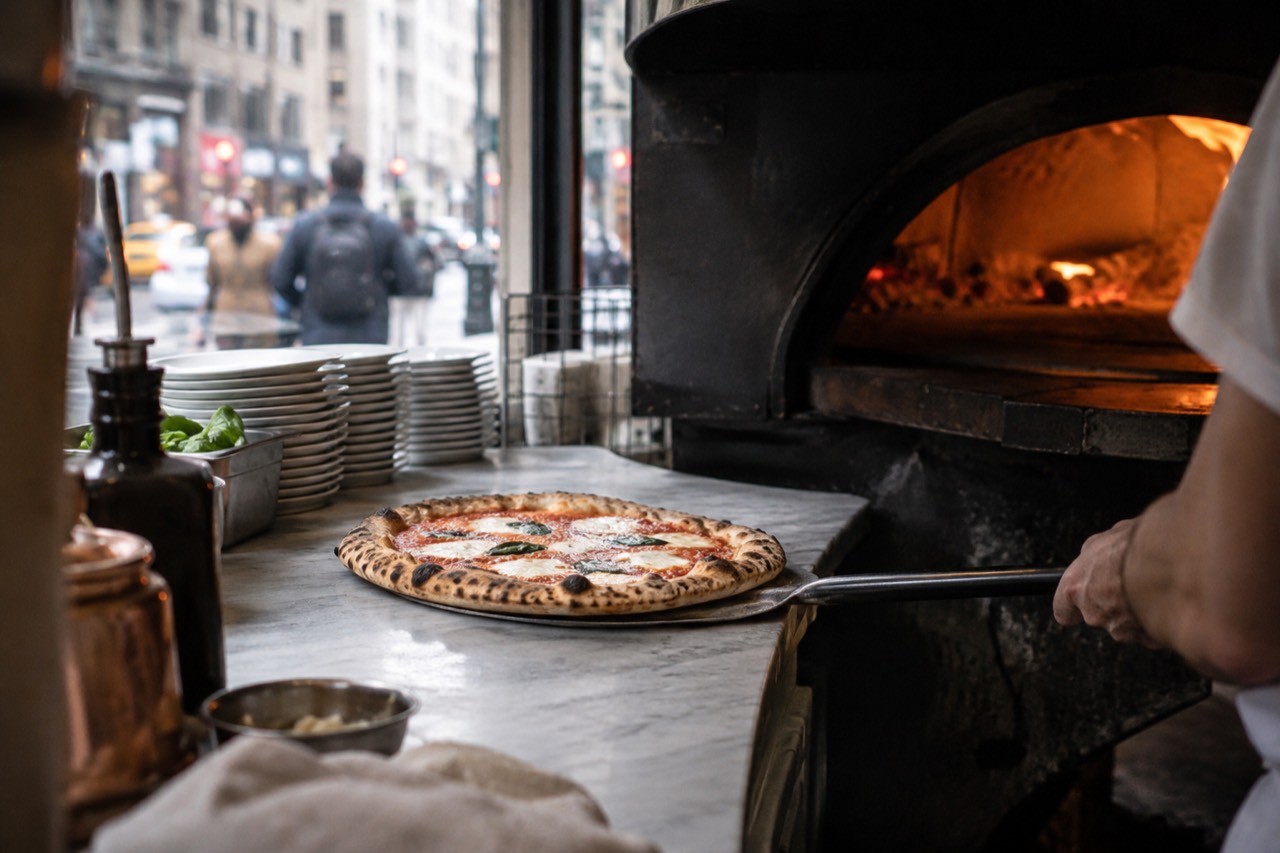
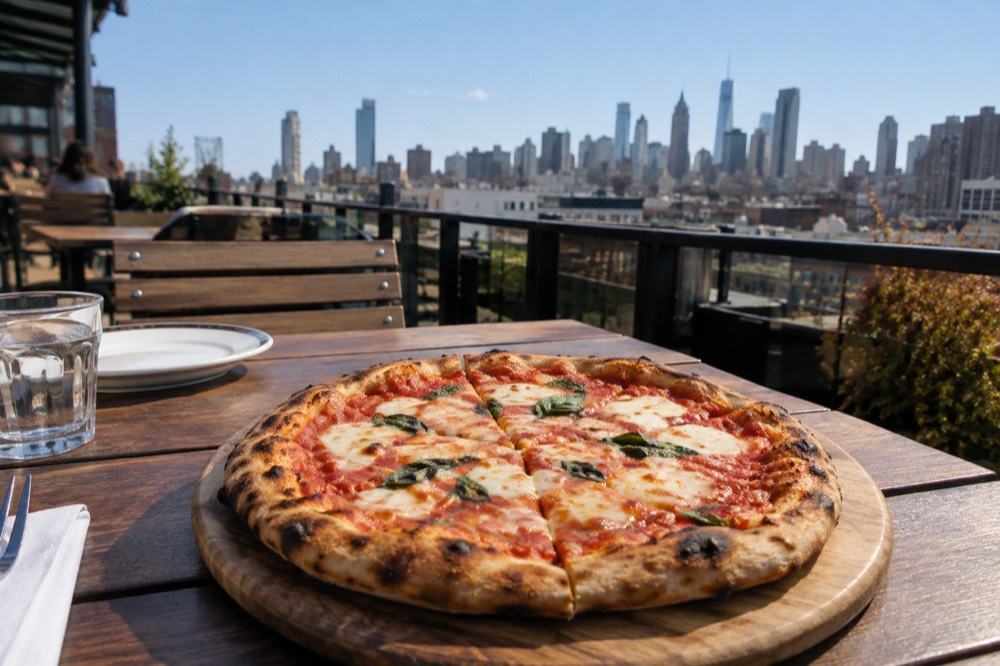
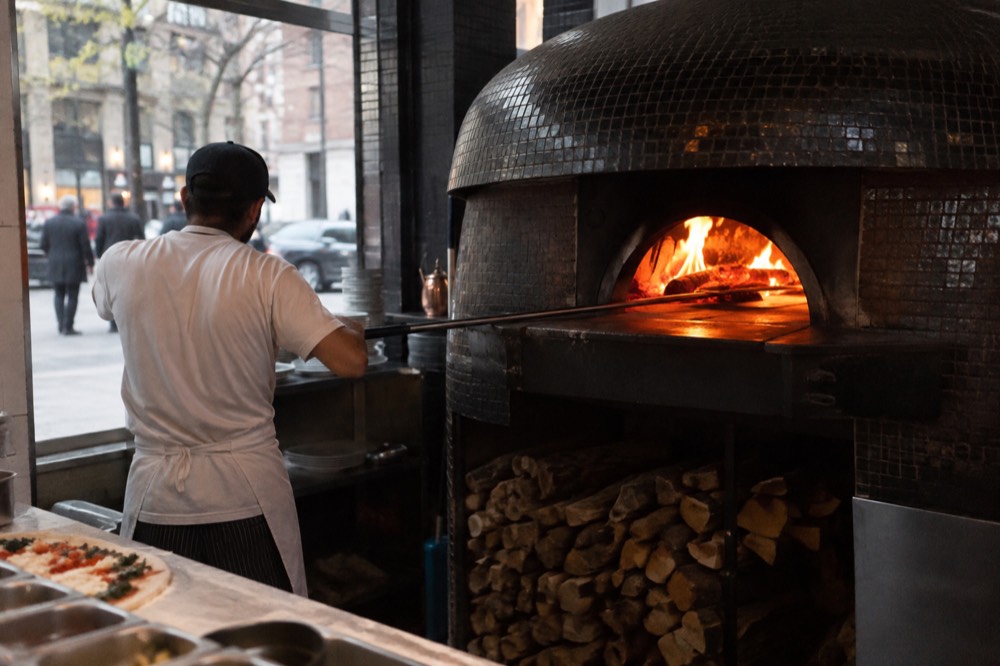
The newest arrival is the certified Neapolitan style: a small, soft-centered round pie cooked in a wood-fired oven in about ninety seconds, with a wet dough, fresh mozzarella and a puffy, blistered rim. It has outposts across Manhattan and Brooklyn. It is a knife-and-fork pie, not a fold-and-walk one, and fans of the slice sometimes find it too soft in the middle. Both are correct; they are simply different foods.
| Style | How it is sold | Oven | How you eat it |
|---|---|---|---|
| NY slice | By the piece, reheated | Gas deck oven | Folded, standing or walking |
| Coal-oven pie | Whole pies, table service | Coal, very high heat | Seated, knife and fork optional |
| Neapolitan (certified) | Whole round pies | Wood-fired, ~90 seconds | Seated, knife and fork |
| Sicilian / square | By the square slice | Rectangular pan | Thick base, fork optional |
The square, pan-cooked Sicilian slice deserves a mention too, because it is having a revival. Thick, airy bases with a fried bottom crust, often topped with sauce and cheese in reverse order, have spread from Brooklyn and Staten Island bakeries into Manhattan. If your image of New York pizza is entirely thin and floppy, the squares will surprise you.
One more distinction matters for planning: express versus destination. A slice counter is an express meal, useful because it is everywhere and fast. A coal-oven or Neapolitan room is a destination meal: you travel to it, you queue for it, and you sit down. Mixing one of each into a trip is the pattern most visitors end up happiest with.
Where Is the Best Pizza in NYC, Neighborhood by Neighborhood?
The classic pizza geography of New York clusters in a few walkable zones: Greenwich Village for the old slice counters, Little Italy and Nolita for the historic coal-oven rooms, Chinatown for cheap, fast slices, and Brooklyn's Carroll Gardens and DUMBO for the landmark pies. Each area rewards a different plan: the Village suits a walking crawl, Brooklyn suits a dedicated meal, and the downtown blocks chain together easily.
Greenwich Village is the slice's spiritual home. The neighborhood's narrow blocks hold counters that have served single slices for generations, and the surrounding lanes make a self-guided crawl easy: buy a slice, walk two blocks, repeat. The Village also carries one of the best-reviewed food walks on this site, a Greenwich Village food tour route with six tastings at neighborhood institutions, if you would rather have a local steer the route than trust your own map-reading between stops.
Little Italy and Nolita hold the older, sit-down tradition. Mulberry Street's tourist stretch is loud and variable, but the blocks just east of it hold serious rooms, and the boundary with Chinatown means a ten-minute walk can take you from a white-tablecloth pie to a counter slice to a dumpling stop. That density is exactly why guided walks cluster here: the Chinatown and Little Italy food tour on this site strings six tastings through both neighborhoods in one three-hour loop, which is a sensible structure for a first visit.
Brooklyn is the other pole. Carroll Gardens and Boerum Hill hold coal and wood-oven rooms that New Yorkers will queue an hour for on weekends, and the walk between them passes brownstone blocks worth the trip on their own. DUMBO adds a waterfront option where the pie comes with the Manhattan Bridge in the background. If you are already crossing the bridge on foot, the Brooklyn Bridge and Dumbo walking tour is one way to arrive with a guide who knows the route, though the neighborhood is easy enough on your own.
| Area | Style it is known for | Best plan | Pairs with |
|---|---|---|---|
| Greenwich Village | Classic NY slice counters | Walking crawl | Washington Square Park |
| Little Italy / Nolita | Historic coal-oven pies | Seated meal | Chinatown afterward |
| Chinatown | Fast, cheap slices | Grab-and-go between stops | Little Italy next door |
| Carroll Gardens, Brooklyn | Coal and wood landmark pies | Dedicated trip, expect a line | Brownstone walking |
| DUMBO | Waterfront sit-down pie | Lunch with a view | Brooklyn Bridge walk |
SoHo and the Lower East Side sit between these zones and hold a dense mix of all three styles, plus the newer square-slice shops. The blocks are walkable and the subway coverage is good, so a downtown day can realistically take in a Village slice at lunch and a sit-down pie in the evening without repeating yourself. For a broader sense of what else downtown offers, the things to do in NYC page maps the full sightseeing circuit.
Chelsea adds a different angle. The High Line's southern end sits next to Chelsea Market, and the Chelsea Market and High Line food tour pairs elevated-park walking with tastings from the market's stalls. It is not a pizza-only walk, but it suits a rainy afternoon because the market half is indoors, and it covers a neighborhood most pizza itineraries skip.
Is a Pizza Food Tour in NYC Worth It?
A pizza-focused food tour in NYC is worth it when you want to taste several neighborhoods' best stops in one guided walk without doing the research or routing yourself; the three food tours on this site run from $83 to $99 per person, last around three hours, and carry ratings between 4.9 and 5.0. It is not worth it if you already know exactly which pizzeria you want, since a tour spreads its budget across six stops.
The honest case for a tour is time and context. The Chinatown and Little Italy walk costs from $99 per person, runs three hours, and holds a 4.9 rating from 3,358 reviews on its listing. The Greenwich Village version runs from $97, also three hours, and carries a 5.0 rating from 1,902 reviews. The Chelsea Market and High Line walk starts at $83 with a 4.9 rating from 965 reviews. Those are strong numbers for a food product, and the reviews are the operator's own customers, not this site's opinion.
| Tour | Area | Duration | From (per person) | Rating | Reviews |
|---|---|---|---|---|---|
| Chinatown & Little Italy, 6 dishes | Chinatown / Little Italy | 3 hours | $99 | 4.9 | 3,358 |
| Greenwich Village, 6 dishes | Greenwich Village | 3 hours | $97 | 5.0 | 1,902 |
| Chelsea Market & High Line | Chelsea / High Line | 3 hours | $83 | 4.9 | 965 |

The case against is simple: six tastings make a full meal, so a tour replaces your dinner rather than adding to it, and the stops are fixed. Picky eaters and travelers with dietary restrictions should check the listing's inclusions before booking. If your heart is set on one specific coal-oven room and its hour-long line, no guided walk substitutes for that. The tour is for the visitor who wants the map drawn for them.
The Chinatown and Little Italy walk deserves its solo highlight because it is the one most directly relevant to a pizza plan: both neighborhoods sit inside the classic downtown pizza geography, and the walk's six stops make a real meal out of blocks you would probably be visiting anyway.
How Much Does Pizza in NYC Cost?
A plain cheese slice at a neighborhood counter typically costs a few dollars, a whole plain pie at a slice shop runs in the low-to-mid tens, and a whole pie at a destination coal-oven or Neapolitan room costs more, with toppings adding to every tier. Guided food tours run $83-$99 per person. Because slice prices move with rent and ingredients, treat these as planning ranges and check the counter.
The slice is the budget anchor. It remains one of the cheapest prepared meals in a city where almost nothing else is, and the price gap between a corner slice and a sit-down pie is large enough to shape a whole day's food budget. A family of four can eat slices for the price of one destination pie, which is why locals treat the two formats as different meals entirely rather than cheap and expensive versions of the same one.
| Meal | Typical planning range (per person) | Notes |
|---|---|---|
| Plain cheese slice | A few dollars | Reheated to order at the counter |
| Whole plain pie, slice shop | Low-to-mid tens | Feeds two to three, cheaper per slice |
| Whole pie, coal-oven or Neapolitan room | Higher | Table service, expect a line at peak |
| Toppings | Adds per item | Specialty pies cost more |
| Guided food tour | $83-$99 | Six tastings, a full meal |
Two practical notes keep the budget honest. First, the famous rooms sell out or close early: a destination pizzeria that stops serving when the dough runs out is common, so an early dinner beats a 9pm arrival for the most popular spots. Second, delivery apps add fees that a walk-in counter does not, and in a city where the subway fare is $3.00 a ride with an automatic $35 weekly OMNY cap for frequent travelers, walking to the pizzeria is often the cheapest part of the whole meal.
If you are stacking food spending across a whole trip, the how much does a trip to NYC cost page breaks down the full budget, and the best bagels in NYC guide covers the city's other native handheld food if you want to alternate. Pizza and bagels between them can carry a surprisingly large share of a New York food week without ever repeating a venue.
When Should You Go: Lines, Timing and the Slice Schedule?
The best time to eat at a destination pizzeria in NYC is early: an off-peak weekday dinner or a late lunch beats the weekend evening queue, which at the most famous rooms can stretch to an hour or more. Slice counters have no line problem at all, which is their whole advantage, and they run continuously from late morning until late night.
Weekends are the pressure point. Saturday evening in Carroll Gardens or on a downtown block with a famous oven means joining everyone else who read the same recommendations. Weekday lunch and the hour right after opening are the reliable windows, and a rainy day suppresses lines better than any reservation system. New York's weather also matters more than visitors expect: July is statistically the city's wettest month in the official Central Park climate normals, so a summer pizza crawl needs an indoor fallback, and winter queues move faster but you will be standing in the cold.

The counter slice runs on a different clock. Slice shops serve continuously through the day and deep into the night, which makes them the natural late-evening meal after a Broadway show or a long museum day. No planning is required beyond knowing that quality varies block to block, and that a shop with steady local traffic usually turns over slices fast enough that you are eating a fresh reheat rather than a stale one.
For the destination rooms, a little logistics goes a long way. Check the pizzeria's own site or listing for current hours before you travel, since opening hours and dough limits shift. Pair the meal with the neighborhood: a Village crawl fits a free afternoon, a Brooklyn pie fits a day built around the bridge walk, and a downtown sit-down pie fits the evening after a Lower Manhattan sightseeing morning. The New York City Travel Guide homepage maps the full sightseeing picture if you are building the whole trip around meals like this one.
If the timing question is really a weather question, the Chelsea Market walk is the one to reach for: the market half of its route is indoors, so a forecast that washes out a Village crawl or a bridge walk still leaves you eating well.
Common Questions About the Best Pizza in NYC
The questions visitors ask most about pizza in New York cluster on four points: which style to choose, whether the famous rooms are worth the wait, how the slice economy works, and whether a guided food tour beats going solo. The short answers: pick the style before the venue, go early to beat the queues, treat slices and sit-down pies as different meals with different budgets, and take a tour when you want several neighborhoods covered in one walk. The details below expand each one.
What makes NYC pizza different?
Three traditions define it: the thin, foldable slice sold by the piece at neighborhood counters, the large coal-oven pies from the city's oldest rooms, and modern certified Neapolitan round pies cooked in wood-fired ovens. Thin crust is the common thread, but the ovens, the dough and the eating style differ enough that they are effectively different foods.
Where is the best pizza in NYC?
Greenwich Village for classic slice counters, Little Italy and Nolita for historic coal-oven pies, Chinatown for fast and cheap slices, and Brooklyn's Carroll Gardens and DUMBO for the destination rooms. Each area rewards a different plan: a walking crawl in the Village, a dedicated seated meal in Brooklyn.
How much does pizza cost in NYC?
A plain slice costs a few dollars, a whole pie at a slice shop runs in the low-to-mid tens, and destination rooms charge more, with toppings adding to every tier. Guided food tours run $83-$99 per person and include six tastings that amount to a full meal. Prices move with rent and ingredients, so treat these as planning ranges and check the counter.
Is a pizza food tour in NYC worth it?
Yes, if you want several neighborhoods' best stops covered in one three-hour walk with a local steering the route. The three food tours on this site cost from $83 to $99, hold ratings between 4.9 and 5.0, and include six tastings each. Skip the tour if you already have one specific pizzeria in mind, since no walk substitutes for that dedicated queue.
When should you go to avoid lines at famous pizzerias?
Go early: an off-peak weekday dinner or a late lunch beats the weekend evening queue, which can stretch to an hour or more at the most famous rooms. Slice counters have no line problem and serve continuously from late morning until late night, so they are the reliable fallback at any hour.
Slice or whole pie: which should you order?
Order a slice when you are walking, eating on a budget, or sampling several shops in a crawl. Order a whole pie at a destination coal-oven or Neapolitan room, where pies are not sold by the piece and the meal is meant to be seated. Mixing one of each across a trip is the pattern most visitors end up happiest with.
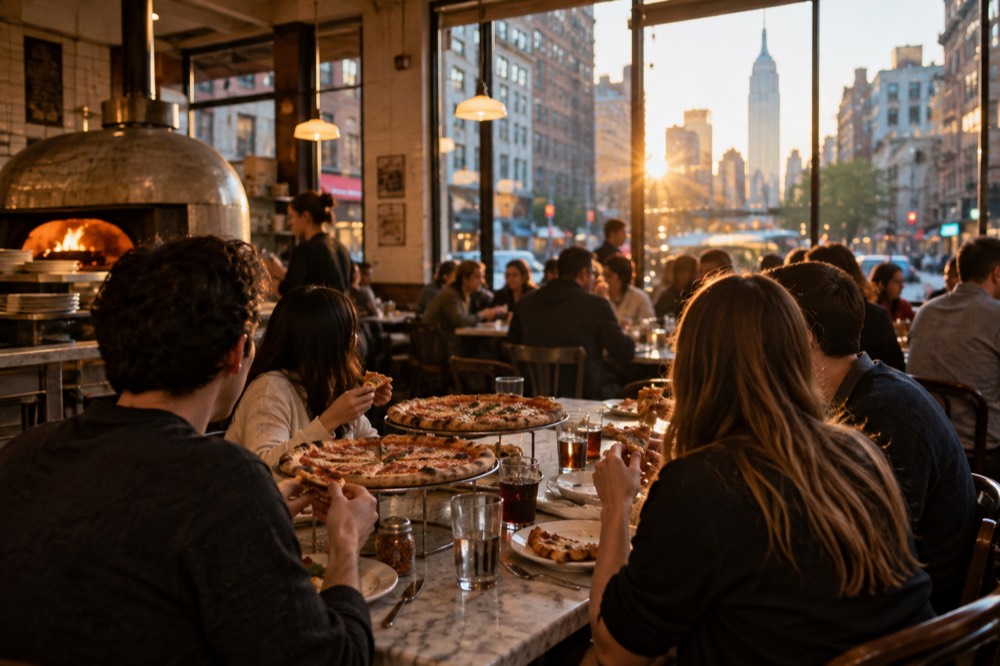
One last planning note that pays for itself: build the pizza day around the neighborhood rather than the pizzeria. The best meals in this city tend to happen when the pie is the anchor and the blocks around it are the reason you were already there. A Village crawl before a Washington Square evening, a Brooklyn pie at the end of a bridge walk, a Chinatown slice wedged between dumpling stops: those are the days the pizza actually tastes like New York.