Cheap Broadway Tickets: Every Legit Way to Pay Less in New York
Broadway list prices scare people off, but the discount machinery is real and public. Here is how TKTS, lotteries, rush and timing actually work, and what each method costs.

Short answer
The cheapest legitimate Broadway tickets come from TKTS (up to 50% off same-day), digital lotteries (roughly $30-$50), and rush/standing room (commonly $30-$50, set per show). Every method has a catch: TKTS is same-day only, lotteries are luck, and rush means arriving early or being young enough to qualify.
A ticket to a hit Broadway musical can list well over a hundred dollars at face value, and that number is the reason plenty of visitors write off the whole Theater District as unaffordable before they arrive. The reality is that New York runs one of the most developed discount ecosystems in live entertainment, and almost none of it requires luck or connections. TKTS sells discounted seats for same-day performances at a physical booth in Times Square. Digital lotteries give away seats for a few dollars to entrants who win. Rush tickets reward people willing to show up early. Standing room exists for sold-out hits.
This guide walks through each method honestly: what it costs, what the catch is, and who it suits. It also covers timing, seat selection and the shows on this site you can book directly, so you can compare a guaranteed seat against a gamble. For the wider sightseeing picture, start with things to do in NYC and work backward to your theater night.

How Much Do Broadway Tickets Cost in New York?
Face value for a hit Broadway musical varies widely by show, seat and night. The three long-running hits bookable through this site start at roughly $71 for MJ, $100 for Wicked and $144 for The Lion King per person, and those are floor prices, not what a premium Saturday orchestra seat costs. There is no single Broadway price: each show sets its own tiers, and prices move with demand.
Those starting figures come from live booking listings, which is also the honest way to treat any Broadway price: it moves. A Tuesday rear-meadow seat and a Saturday orchestra seat for the same show are different products. What stays stable is the shape of the market. Musicals with big brand recognition, The Lion King being the classic case, hold their list prices high because demand never sleeps. Shows in their second or third year, or playing in smaller houses, discount more readily.
The practical consequence: if your heart is set on one specific hit on one specific night, budget the list price and treat anything cheaper as a bonus. If you are flexible on which show you see, the discount methods below will reliably cut your cost, sometimes by half.
| Show (bookable here) | Running time | Listing rating | From price, per person |
|---|---|---|---|
| MJ the Musical | about 2h 30m | 4.8 | from $71.27 |
| Wicked | about 2h 45m | 4.8 | from $99.61 |
| The Lion King | about 2h 30m | 4.8 | from $144 |
Compare those floors against the discount channels and you can see where the value sits. A lottery win at a hit show can undercut even the cheapest listed seat by half or more. TKTS on a strong week can put a $120 musical at $60-something plus the booth's service fee.
What Is TKTS and How Does It Save You Money?
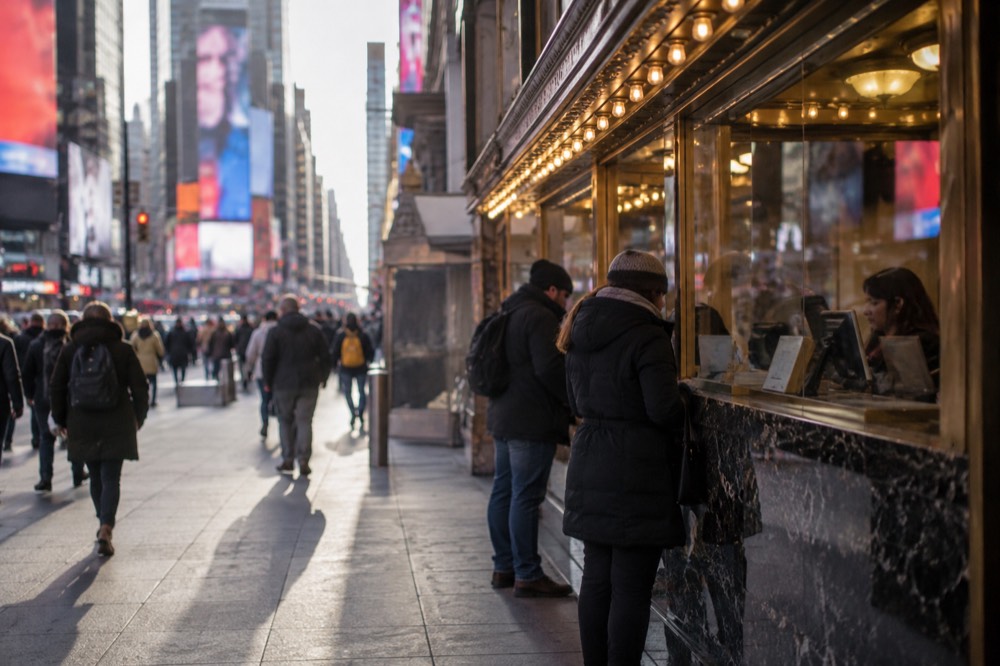
TKTS is the official discount booth run by TDF, selling same-day Broadway and Off-Broadway tickets at 20% to 50% off face value, plus a flat $8 service fee per ticket. It operates from Duffy Square in Times Square and from the David Rubenstein Atrium at Lincoln Center. Every ticket sold there is discounted; the percentage is set by each show each day.
The catch is that inventory is same-day only, plus next-day matinees, and you buy in person.
The booth is the single most reliable discount in the city because it is not a scalper or a resale scheme. TDF is the theater nonprofit that runs it, and the $8 fee funds its access programmes. Shows release unsold inventory to TKTS on the day of performance, which means the selection reflects real demand: rainy Tuesdays bring a long board of options, holiday Saturdays bring a short one.
Two things people still get wrong. First, there is no downtown TKTS booth: older guides send people to a South Street Seaport location that no longer exists. Second, the TKTS app shows live booth inventory but does not sell advance tickets beyond the same-day and next-day-matinee window. If you want to know what is on the board before walking over, check the live inventory online rather than trusting a printed list, because hours vary by day and by booth, and Lincoln Center runs the more limited schedule of the two.
Strategy is simple. Go early in the week, go in bad weather, and go with two or three acceptable shows rather than one must. The line moves fast, and the discount is real: up to half off, on seats the shows could not sell at full price. Our dedicated TKTS booth guide covers the mechanics, the lines and the timing in more depth.
If TKTS does not have your show, or you want a specific seat rather than whatever the booth has left, booking ahead through a listing is the alternative. The three hits above are the ones most visitors ask about, and their from-prices are visible before you commit.

How Do Broadway Ticket Lotteries Work?
Broadway lotteries give entrants the chance to buy a small number of heavily discounted seats, typically for roughly $30 to $50, for popular shows. You enter online, usually a day or a few days ahead and sometimes day-of, and winners are notified by email or text shortly before the performance. The main platforms are Broadway Direct and Lucky Seat, plus lotteries on shows' own websites. The catch is arithmetic: entry is free, so thousands enter and most lose.
The lottery is the cheapest legitimate route to the best seats in the house. Shows reserve a handful of seats, often good ones, and sell them to winners at a fixed low price. The winning price varies by show; the $30-$50 range is typical, not a rule. Because entry costs nothing, the rational move is to enter every lottery for every show you would actually attend, every day you are in the city, and treat a win as a pleasant surprise rather than a plan.
Mechanically: you enter on the platform or the show's site, sometimes the day before, sometimes days ahead, sometimes the morning of. Winners get a notification with a tight window to claim and pay. If you win and cannot go, do not claim the seat, because no-shows can get you barred from future lotteries on that platform.
The lottery suits a particular traveler: someone flexible on which show they see, happy to decide their evening at 4pm, and willing to lose repeatedly. It does not suit a once-in-a-decade trip where one specific show is the point. For that, book the seat.
A guaranteed seat for a hit musical is the opposite of the lottery: you pay the listing price, you pick your date and tier, and you stop thinking about it. For many visitors, one booked night plus a week of lottery entries is the right mix.
What Are Rush and Standing Room Tickets?
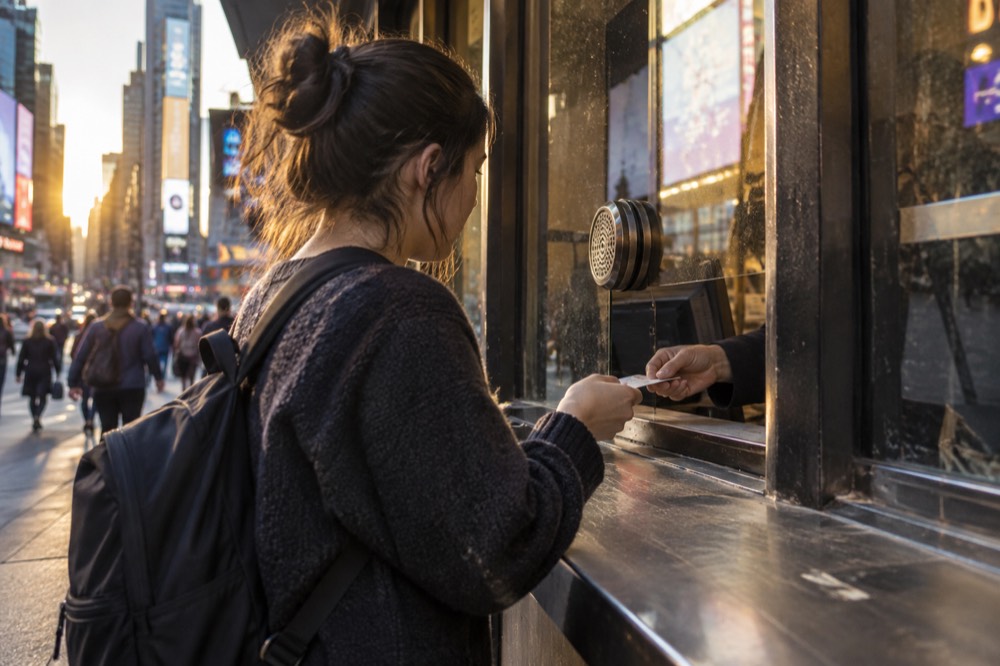
Rush tickets are discounted seats sold on the day of performance, commonly in the $30-$50 range and sometimes pay-what-you-can, usually at the box office and often limited to one or two per person. Standing room is a cheap spot behind the last row at sold-out performances, sold only when the show has no seats left.
Both are set per show, with no standardized Broadway-wide scheme, and eligibility rules vary, with some rush restricted by age or student status.
Rush is the method for people who are willing to trade time and legwork for price. The classic pattern is a queue at the box office when it opens, a limited number of tickets at a fixed low price, first come first served. Some shows run general rush anyone can queue for; others restrict it to students or to people under a certain age. The rules live on each show's official site, and they change, so check the specific production rather than a roundup.
Standing room is rarer and more specific. It appears mainly at sold-out hits, the shows where seats simply do not go spare, and it lets the theater sell the space behind the last row to people who accept standing for two and a half hours. For a musical you are desperate to see, standing beats not seeing it, and the price reflects the inconvenience.
The honest comparison: rush and standing room are the cheapest methods after lotteries, but they demand the most from you, an early arrival, a queue, and a real chance of walking away empty. TKTS costs a bit more and nearly always has something. Booking costs the most and guarantees everything.
| Method | Typical price | When you buy | Main catch |
|---|---|---|---|
| TKTS | 20-50% off face, plus $8 fee | Same-day, in person | Limited board, no advance sales |
| Digital lottery | roughly $30-$50 | Enter days or hours ahead | Most entrants lose |
| Rush | commonly $30-$50, sometimes less | Day-of, at the box office | Queue early; eligibility rules vary |
| Standing room | lowest cash price | Day-of, sold-out shows only | You stand for the whole show |
| Booking a listing | from $71-$144+ for the big hits | Any time | Pays full market price |
When Is the Cheapest Time to See a Broadway Show?
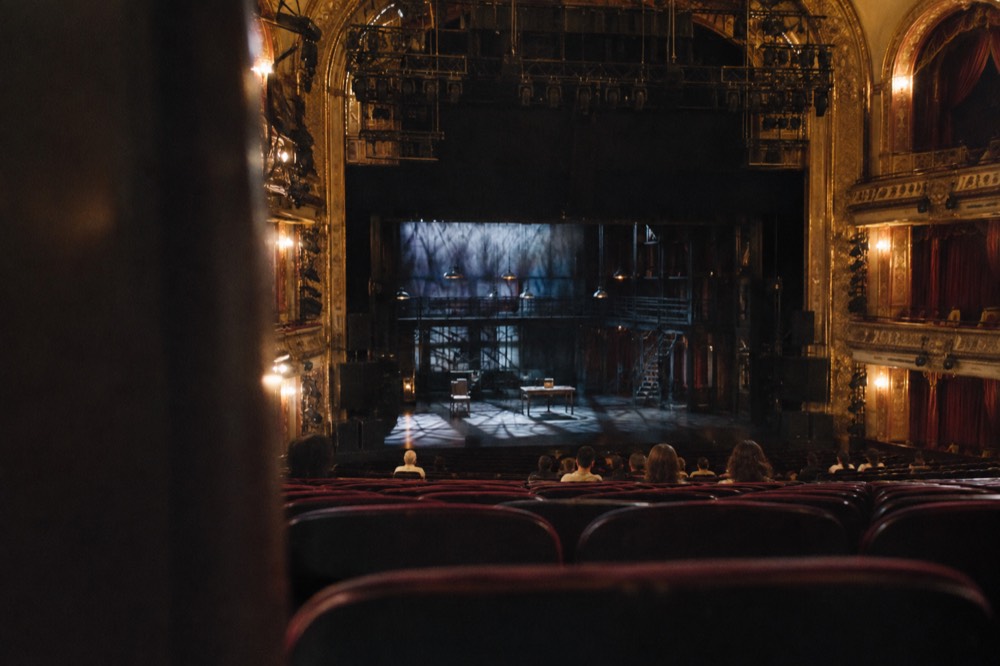
Tuesday, Wednesday and Thursday evenings and midweek matinees are the cheapest times to see Broadway, because demand dips when the weekend crowds are absent. January and February, late August and September, and any stretch of genuinely bad weather are the softest windows of the year. Holiday weeks invert everything: Christmas and New Year are the most expensive, most crowded periods on the Broadway calendar.
The pattern is boringly economic. Broadway sells out on Saturday nights, so it has no reason to discount them. Midweek, the same theaters hold empty seats, and empty seats earn nothing once curtain time passes, so shows push them to TKTS, lotteries and promotions. If your dates are flexible, shifting a theater night from Saturday to Wednesday can be worth more than any discount method.
Seasonality works the same way. Post-holiday January and February are the classic bargain months. Late summer, after the family-tour wave recedes and before the fall openings, is another soft patch. July and August also carry a practical note for planners: July is statistically New York's wettest month, averaging 4.60 inches of rain in Central Park against the 30-year normals, and rain is TKTS's best friend, because a wet evening empties the booth's board of competition.
| Window | Demand | What it means for ticket prices |
|---|---|---|
| Tuesday-Thursday evenings | Lowest weekly demand | Best TKTS boards, fullest lottery and rush options |
| Midweek matinees | Low | Discounts appear; family shows soften less |
| Friday and Sunday | Moderate | Some discounts remain, thinner boards |
| Saturday evenings | Peak weekly | Little to no discounting |
| Christmas and New Year weeks | Peak seasonal | Highest prices, smallest discount inventory |
| January-February, late August-September | Soft seasonal | Longest TKTS boards, steepest promotions |
One more timing lever: the preview period. Shows in previews, before official opening night, often price lower because the production is still adjusting. You take a small risk that a number is being reworked, in exchange for a cheaper ticket to the same show.

Which Broadway Seats Are Cheapest, and Are They Worth It?
The cheapest seats in any Broadway house are the rear mezzanine, the extreme sides of the orchestra, and anything the theater labels partial view or obstructed view, and they can cost a fraction of the orchestra center price. Rear mezzanine is usually the best value in musical houses, because musicals are staged for the whole room and distance costs less than angle.
Extreme side orchestra can be a genuine trap: a seat that looks close on the map may spend the show staring at a curtain edge.
Every Broadway theater is a different shape, which is why seat advice has to be general. But the broad rules hold. For big musicals with spectacle, The Lion King being the standard example, height helps: the puppetry and stage pictures read better from the mezzanine than from row Z of the orchestra. For intimate plays and smaller musicals, closeness matters more than height.
Partial-view seats deserve a specific word. Theaters sell them honestly, marked as obstructed, at a discount. For a show you know and love, they are a fine bargain. For a first-time visit to a spectacle-heavy production, they can mean missing the reason you bought the ticket. Read what the listing says is obstructed before you buy.
The cheapest strategy that still guarantees a good night: pick the show first, then take the best midweek rear-mezzanine seat you can find at a discount, rather than the worst orchestra seat at face value. A center rear mezzanine beats a side orchestra at the same price almost every time in a musical house.

How Do You Combine Discount Methods Into a Plan?
The strongest approach stacks methods: enter every lottery for shows you would genuinely attend, hold TKTS as the midweek fallback, book ahead only for the one night you refuse to miss, and leave rush and standing room for the young, the flexible and the stubborn. Decide before you arrive which show is your non-negotiable, because that decision determines whether you are a buyer or a gambler. Everything else adjusts around that one choice.
Work it as a decision tree. If a specific hit on a specific date is the point of the trip, book it now through the listing and stop optimizing; the from-price on a show like MJ, under the cost of many premium dinners, is already the cheap version of that night. If you want a Broadway night but any good show will do, run lotteries daily and walk to TKTS on your preferred evening. If you are traveling on a very thin budget and have energy to spend, add rush queues to the rotation.
Families should bias toward booking. Lotteries and rush are built around singles and pairs, not a party of four needing adjacent seats. TKTS can serve a family, but the board decides what is available, and midweek gives you the best odds of four seats together to something worth seeing.
Solo travelers and students get the best of this ecosystem. One person can enter every lottery, join any rush queue, and take any single seat TKTS happens to have, which is often the discounted seat a party could not use. If that is you, plan two theater nights: one gambled and one booked.
For the booked night, these three are the perennial questions, and their listings show dates, tiers and current pricing side by side. If you want a wider view of what is actually worth your evening, our best Broadway shows guide ranks the field, and this site's theater coverage sits alongside the full New York City Travel Guide itinerary planning.
MJ the Musical is the value pick of the three headline hits: a from-price under $80, a 4.8 listing rating, and a jukebox score most audiences arrive already knowing. It suits the booked-night slot for travelers who want a big, polished production without the top-tier price tag.
The Lion King is the one families most often refuse to compromise on, which is exactly why its from-price sits highest of the three. If it is your non-negotiable night, book it, because the discount channels rarely touch it.
Wicked lands between the two: a long-running spectacle with a from-price near $100 and the widest appeal of almost anything on the street. Midweek, it is the classic TKTS target.
Common Questions About Cheap Broadway Tickets in New York
Cheap Broadway tickets are real and obtainable through five channels: the TKTS booth at 20-50% off same-day, digital lotteries at roughly $30-$50, rush tickets commonly $30-$50, standing room at sold-out shows, and simple timing, midweek and off-season. None of these are scams, all are run by the theaters or the official nonprofit booth, and the only price you should refuse to pay is a marked-up one from a street reseller near the theater.
Is TKTS the cheapest way to get Broadway tickets?
Usually not the absolute cheapest, but the most reliable. Lotteries and rush can cost less, roughly $30-$50, but you may get nothing. TKTS charges 20-50% off face value plus a flat $8 fee per ticket, and on a midweek evening it almost always has something worth seeing.
Can you buy cheap Broadway tickets in advance?
Not through TKTS, which sells same-day performances plus next-day matinees only. Lotteries are entered in advance but you only pay if you win. For a guaranteed advance seat, book through a listing and compare the from-price against what you might save by gambling on the day.
What day of the week are Broadway tickets cheapest?
Tuesday through Thursday. Weekend evenings sell out at full price, so shows have no reason to discount them. Midweek, the same seats go spare and land at TKTS, in lotteries and in promotions. A Wednesday seat can cost half its Saturday twin.
Are lottery Broadway tickets good seats?
Often, yes. Shows reserve a small block, sometimes well-located, and sell it to winners at a fixed low price. The seats vary by show and date, but the lottery exists to fill the house with enthusiastic audiences, not to dump the worst corners of the balcony.
Is it safe to buy Broadway tickets from a reseller outside the theater?
No. Buy from the box office, the show's official site, the TKTS booth, or a reputable booking listing. Street resellers near the Theater District sell marked-up tickets, sometimes invalid ones, and the marked-up price is exactly the opposite of what this guide is about.
How much should I budget for a Broadway show in New York?
For a booked seat at a hit musical, plan from roughly $70 to $144 per person depending on the show, and more for premium weekend orchestra seats. For a discounted night, plan $30-$60 per person through TKTS, a lottery win or rush, accepting that the last two are not guaranteed.