Tipping in NYC: A Practical Guide to Who Gets What
New York is a tipping city, and the tablet screen with three suggested percentages is now part of almost every counter transaction. Here is what is actually expected, service by service.
Short answer
Tip 18-20% at table-service restaurants and bars, a dollar or two per drink at a busy bar, 15-20% on taxi and rideshare fares, and a few dollars per bag for hotel staff. Counter-service screens often ask for a tip, but it is optional there. Tour guides and free-walk guides depend on tips entirely.
The tablet turns toward you, three percentages glowing, a custom button hiding at the bottom. In most of the world that screen would be a curiosity. In New York it is a transaction you will repeat five times a day, and getting the local norms wrong in either direction, over-tipping every counter or stiffing a server who lives on the gratuity, costs real money and real goodwill. This page lays out the numbers service by service, separates the tips that are genuinely expected from the screens that are merely asking, and flags the handful of situations where the honest answer is that no tip is needed at all. It is part of the wider practical coverage at New York City Travel Guide, alongside our money and transport pages.
How Much Should You Tip at NYC Restaurants?
At a table-service restaurant in New York, the expected tip is 18-20% of the pre-tax subtotal, with 15% signalling dissatisfaction rather than generosity and 20% or more the standard for good service. Servers are paid a tipped minimum wage well below the standard rate and rely on the gratuity to reach a living income, so a tip is not optional in a sit-down place.
If the bill already includes a service charge, check it before adding more.
The mechanics matter as much as the percentage. Tip on the pre-tax amount, not the total with tax, though plenty of locals round up and do not fuss over the difference. If you are paying cash, leave the bills in the folder or on the table. If you are paying by card, the terminal will prompt you; the suggested percentages there are calculated by the restaurant's software and sometimes include tax, so glance at the math rather than tapping the middle button on faith.
A few situations trip up visitors. Large groups often find an automatic gratuity added to the bill, commonly around 18% for parties of six or more, and it should be printed as a line item. If it is there, you have already tipped. If service was genuinely poor, the New York move is not a zero tip but a quiet word with the manager, and a reduced tip if you feel it is warranted. Walking out leaving nothing is read as an accusation, not a review.
| Situation | Typical tip | Notes |
|---|---|---|
| Table service, good | 18-20% of pre-tax subtotal | The baseline almost everywhere |
| Table service, excellent | 20-25% | Common at nicer spots and with large parties |
| Table service, poor | 10-15% | Signal dissatisfaction, do not skip entirely |
| Automatic gratuity on the bill | Nothing extra | Check the line items before adding |
| Buffet with drink refills | 10-15% | Less service, but someone is still clearing plates |
| Counter service, no table | Optional | The screen asks, but no one is waiting on you |
For a sense of what you are tipping on, our best restaurants in NYC page maps the dining landscape from dollar slices to tasting menus, and the tip scales with the bill either way.
What About Bars, Cafes and Counter Service?
At a bar, tip a dollar or two per drink in cash or on the card, or 15-20% if you are running a tab, and bartenders in New York rely on that per-drink gratuity the same way servers rely on percentages. At coffee shops, bakeries and takeout counters, the tip screen is optional: nobody behind the counter is working for tips, and skipping the prompt is completely normal. A coin jar contribution is a courtesy, not a duty.
The per-drink rule is the one to internalize. A dollar per beer or simple cocktail, two dollars for anything involving a shaker and fresh citrus, is the standard at a standing bar. If you open a tab and close it at the end of the night, the terminal will offer percentages, and 15-20% of the tab is the local norm. Cocktails in this city are not cheap, so on a long tab that math adds up; some regulars tip cash per drink and skip the terminal prompt entirely, which the bartender prefers anyway.
Counter service is where the etiquette genuinely changed. The square tablet with the rotating screen arrived a decade ago and turned every pastry purchase into a micro-decision. The honest rule: at a place where you order at a counter, collect your own food and bus your own table, the tip prompt is optional and a large share of customers skip it. Tapping zero is not rude. If someone carried your food to a table, or the cafe is the kind of place with real table service, that is a different transaction and 15-20% applies.
One exception worth knowing: food halls and market stalls sit in between. Vendors at places like Chelsea Market handle enormous volume and often pool tips among the kitchen staff, so a small tip there, a dollar or two, or 10% on a larger order, is appreciated without being obligatory. If you want the question answered for you with tastings included, a guided walk like the Chelsea Market and High Line food tour handles both the route and the vendor etiquette in one go.
How Much Do You Tip Taxi Drivers and Rideshares in NYC?
For taxis, tip 15-20% of the fare, or round up to the nearest few dollars on short rides, and the credit card screen in the back of every yellow cab will offer percentages. For rideshares, 15-20% through the app is the norm, and drivers keep the full amount. Airport runs and long trips deserve the same percentage, since the driver is occupied for the whole stretch. Tipping on a taxi is expected, not a bonus.
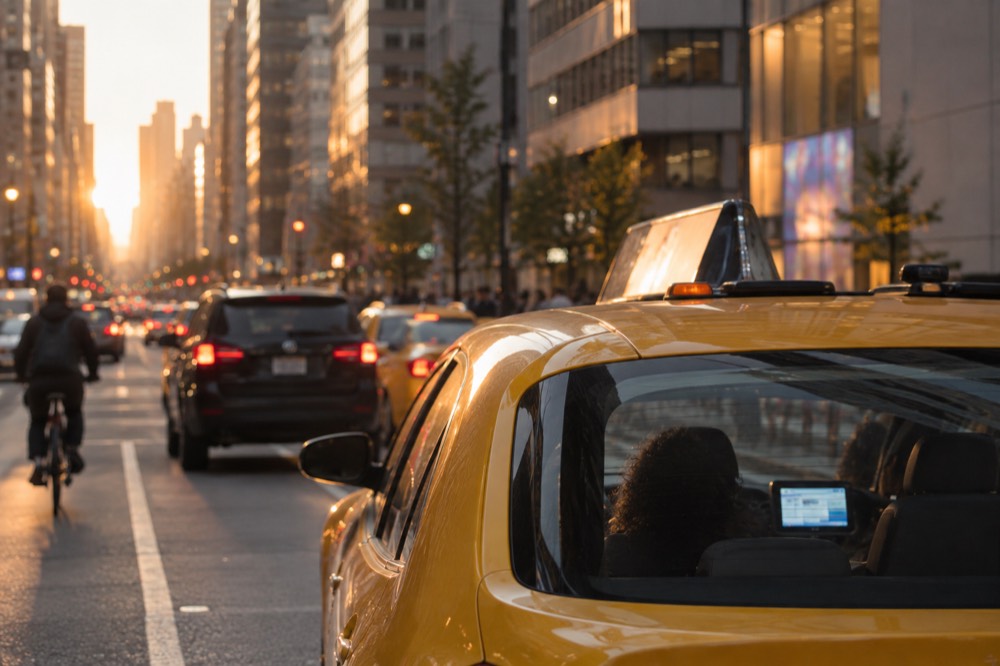
The yellow cab screen defaults to 20-25-30% these days, which is higher than the local norm. Fifteen to twenty percent is standard; tap the custom button if the presets feel steep on a long fare. Cash tips are equally welcome. If the driver helps with heavy luggage at the curb, add a dollar or two per bag on top of the percentage. Tolls and bridge crossings are part of the metered fare, not the tip base, so do not feel obliged to tip on the toll portion.
Rideshare tipping is quieter because it happens after you have already left the car. The same 15-20% applies, and because the app nudges you immediately, most people do tip. A five-star rating is not a substitute. For black-car services and pre-booked airport transfers, a gratuity of 15-20% is customary unless the quote you received already states that a service charge or gratuity is included, in which case the price you paid is the whole price.
The bigger money decision in New York is usually not the tip, it is whether to take a car at all. A single subway ride is $3.00, and the MTA's automatic weekly fare cap means heavy users of the subway and local buses pay no more than $35 in any rolling seven-day period, with no pass to buy and nothing to tap differently. Two or three car trips a day at Manhattan taxi rates will dwarf both numbers. Our how to get around NYC page works through the full comparison.
| Transport | Typical tip | Notes |
|---|---|---|
| Yellow taxi | 15-20%, or round up | Card screen presets run higher than the norm |
| Rideshare (app) | 15-20% | Added in the app after the ride |
| Black car / airport transfer | 15-20% | Skip if the quote already includes gratuity |
| Subway, bus, ferry | Nothing | No tipping on public transport, ever |
| Car service doorman hailing a cab | $1-2 | A courtesy for the assist |
If you are weighing a private airport transfer against the train, the JFK to Manhattan guide breaks down the rail option, where the AirTrain adds $8.75 on top of the subway fare, against door-to-door service where the tip is part of the driver's income.
What Do You Tip Hotel Staff in New York?
Tip housekeeping $3-5 per night, left daily rather than at checkout so the person who actually cleaned your room receives it, and give the bellhop or porter $1-2 per bag, with a $5 floor for awkward or heavy luggage. The concierge earns nothing for directions and restaurant suggestions, but $10-20 for scoring a hard reservation or special tickets is the custom. Valet parking attendants get $2-5 each time the car comes back.
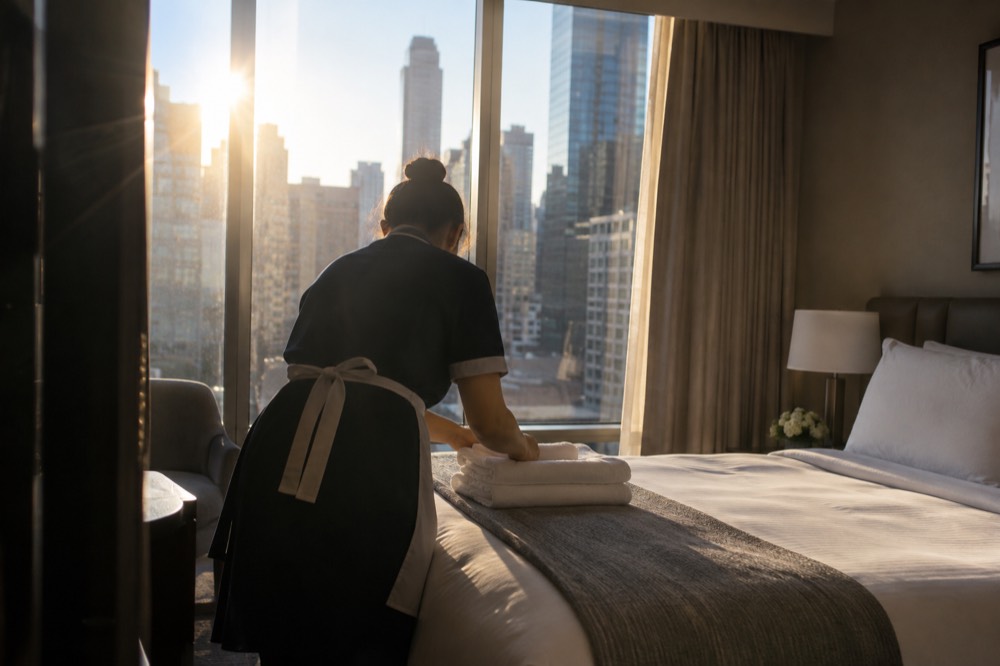
Housekeeping is the line item most travelers skip, and it is the one hotel workers mention most often. The daily-cash-on-the-pillow habit exists because room assignments rotate; a single envelope at the end of a five-night stay may land in the wrong hands. Five dollars a night is a solid standard in a mid-range Manhattan hotel, more at a luxury property. There is no obligation, but in a city where hotel rates are already punishing, the housekeeper's wage assumes it.
The doorman hailing you a cab in the rain, the porter wrestling a suitcase built for a month into a sixth-floor walkup, the front desk agent who magically found a room when your flight landed at midnight: each of these is a small cash moment, a dollar or two at a time, five for real effort. None of it is contractual. All of it is noticed. A concierge who simply points you toward a good bagel shop has done their job and needs nothing; one who gets you into a sold-out show has done something else entirely.
| Hotel role | Typical tip | When |
|---|---|---|
| Housekeeping | $3-5 per night | Daily, in cash, in the room |
| Bellhop / porter | $1-2 per bag, $5 minimum | On delivery of bags |
| Doorman (cab hail) | $1-2 | Especially in bad weather |
| Concierge | $10-20 | Only for a real favor, not directions |
| Valet | $2-5 | Each time the car is retrieved |
| Room service | Check the bill | Often an automatic service charge |
Room service deserves one warning: many Manhattan hotels add an automatic service charge plus a delivery fee to the tray, and the two together can approach 25% of the food cost before you add anything. Read the slip before signing.
How Much Do You Tip Tour Guides in NYC?
Tip a paid tour guide 15-20% of the tour price, in cash at the end, and more for exceptional small-group guiding. For free or pay-what-you-want walking tours, the tip is the entire business model: $15-25 per person is a fair contribution for a solid two or three hour walk, and the guide receives nothing from the booking otherwise. A guide who was flat or rushed still earns something, but the scale is yours.
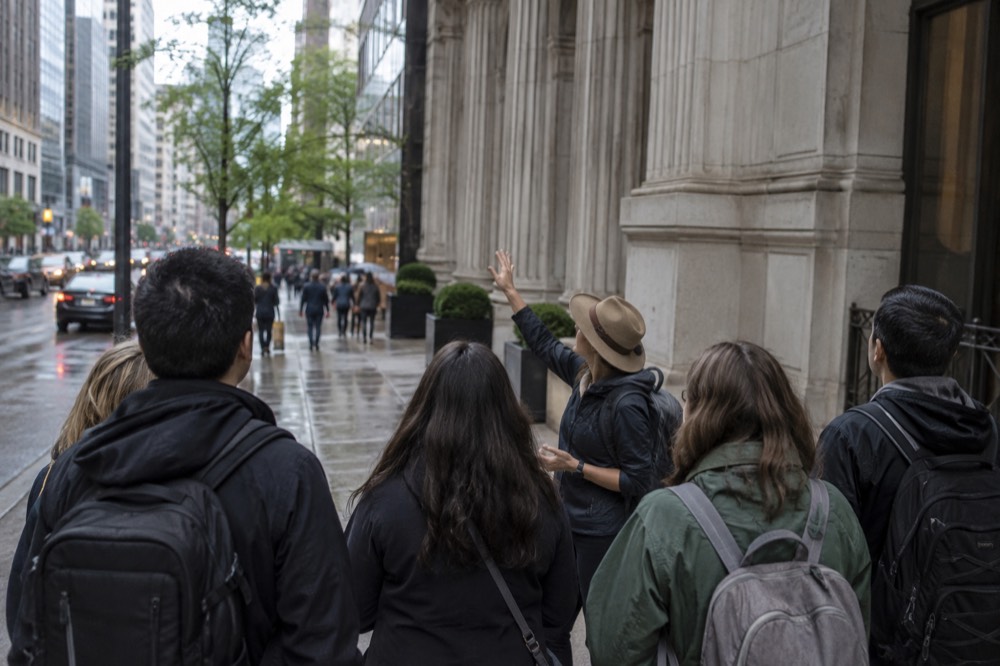
The distinction between paid and free tours is the whole ballgame. On a paid group walk or a museum tour, the operator pays the guide a wage and the tip is a genuine gratuity, the same 15-20% logic as a restaurant. On a free walk, the word free describes the booking, not the transaction. The guide works for whatever the group gives at the end, so arriving with no cash and tapping a card on nothing is the one genuinely rude move in New York tipping culture. These walks are booked per-head to manage group size, so a reservation you skip also costs the guide a seat.
The free-walk scene here runs on GuruWalk, where independent guides offer pay-what-you-want routes across Manhattan and Brooklyn, from Wall Street and the 9/11 Memorial to the Brooklyn Bridge at sunset. One honest caveat: a large share of the New York walks on that platform belong to a single operator, so do not picture a marketplace of dozens of rival outfits. The quality is real, the choice is narrower than it looks.
Paid tours are different. A guided food walk through Chinatown and Little Italy builds the tip calculus into the day: six tastings that add up to a meal, a guide who steers the route, and a gratuity at the end for the person who did the steering.
Observation decks and plain attraction tickets are the no-tip zone. The person scanning your ticket at SUMMIT One Vanderbilt or the Empire State Building is not working for tips, and the screens, where they exist, are suggestions rather than expectations.
Do You Tip for Haircuts, Spas and Personal Services?
Tip your barber or hairstylist 15-20% of the bill in cash or on the card, and at walk-in barbershops in New York, cash in the jar or directly to the cutter is the norm. For massages, facials and spa treatments, 15-20% is standard and many spas add a suggested gratuity line to the checkout slip. Nail salons, waxing and threading all follow the same 15-20% range, given directly to the person who did the work.
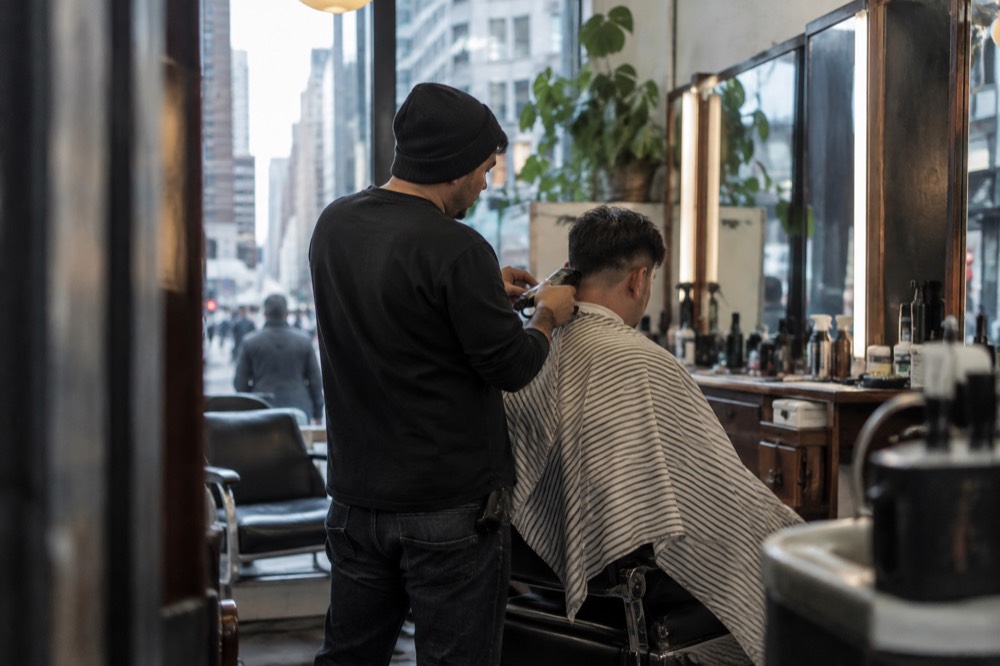
The personal-service economy in New York is enormous, and nearly all of it is tipped labor. The person who cut your hair is often renting the chair, meaning the sticker price splits with the shop before they see a cent, which is why the cash tip handed over directly is appreciated beyond its amount. A shampoo assistant or a spa attendant who fetched you tea and robes is tipped separately, a few dollars, and the front desk can tell you how the house splits things if you ask.
Delivery deserves its own line, because New Yorkers order in constantly. For food delivery, $3-5 for a typical order, more in bad weather or for heavy multiple-bag orders, is the working standard. Percentage logic applies loosely, 10-15% on a big order, but the floor matters more than the percentage, since the rider making a four-block run in the sleet is doing the same work as one carrying a feast. Grocery and package couriers are a judgment call, a dollar or two in weather is a kindness, and nothing is expected.
| Personal service | Typical tip | Notes |
|---|---|---|
| Haircut, barber | 15-20% | Cash direct to the cutter where possible |
| Shampoo / assistant | $2-5 | Separate from the stylist's tip |
| Massage, facial, spa | 15-20% | Often a gratuity line on the slip |
| Nails, waxing, threading | 15-20% | Given to the person who did the work |
| Food delivery | $3-5 minimum | More for weather, weight or distance |
| Grocery / package courier | $1-2, optional | Weather tips are a kindness |
Do You Still Tip If the Service Was Bad?
Yes, in most cases, but less. In a New York restaurant a tip below 15% is the established signal for poor service, and leaving nothing is reserved for genuine misconduct, because the server's wage structure assumes the gratuity. For services where the tip is a genuine bonus, rideshares, deliveries, salons, you have full latitude. For free walking tours, the tip is the price, so pay something even if the guide was mediocre, and simply adjust the amount.
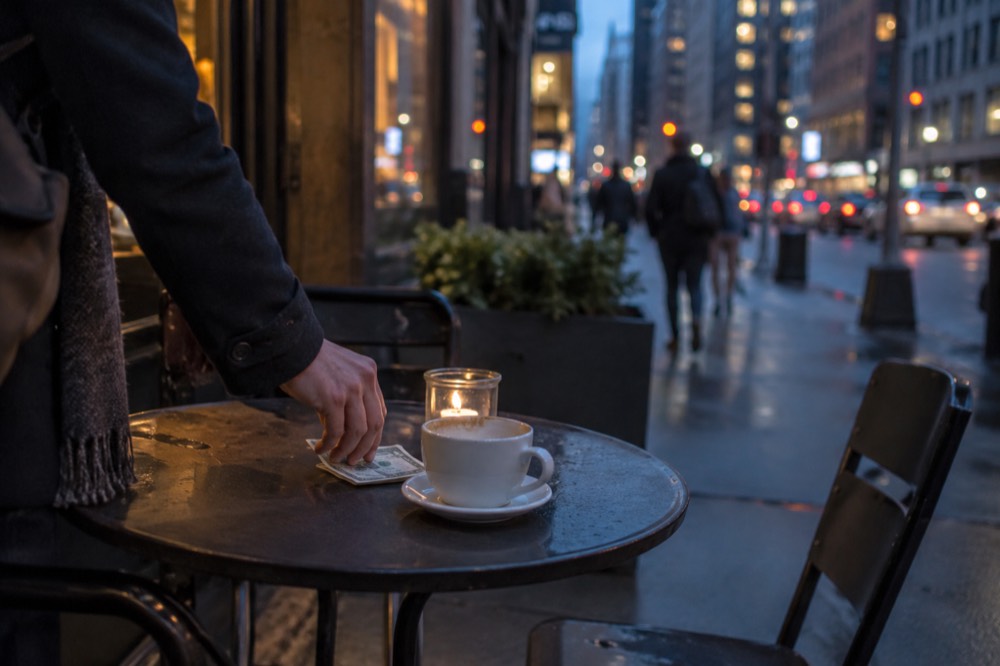
The distinction that matters is who depends on the money. A server, a bartender, a free-tour guide: these people are paid as though the tip exists, so withholding it entirely takes wages, not a bonus. A rideshare driver, a courier, a salon where prices are set at market rates: the tip is discretionary and the scale is yours. When service is bad in the first group, reduce rather than eliminate, and if the problem is the kitchen or a missing dish rather than the person, say so, because the server often has no control over what came out of the pass.
There is also the over-tipping trap. Visitors from less-tipped cultures sometimes respond to anxiety by tipping 25% everywhere, including counter screens, and the result is a vacation budget quietly bleeding twenty dollars a day. The percentages on this page are the local norm, not a floor to exceed. New Yorkers tip well precisely because the norms are clear, and clear norms cut both ways.
If you are doing the classic first-visit circuit, observation decks, the ferry to Liberty Island, a museum or two, a pass can simplify the money side of the trip. The New York CityPASS bundles five attractions at a fixed price, valid across nine consecutive days, so the only cash decisions left are the ones this page covers.
The same logic applies to the rest of the classic circuit. Decks, museums and ferry tickets are fixed prices with no gratuity attached, which is why bundling them ahead of time works so well for budgeting: you know the sightseeing cost before you land, and the only cash you need day to day is the tipping money this guide has already accounted for.
Common Questions About Tipping in NYC
The questions below cover the edge cases travelers ask about most: whether the tablet screen at a counter obligates you, what to do with an automatic service charge, whether tour and hotel tips are cash-only, and how much a free walking tour really costs.
The short version of every answer is that New York tipping is a real wage system, not a politeness ritual, so the people who depend on it should get it and the screens that merely ask can be answered with a polite skip.
Is tipping mandatory in New York?
Legally, no, except where a restaurant prints a mandatory service charge for large groups. Socially, at any table-service restaurant, bar, taxi or paid tour, it is treated as part of the price, because tipped staff are paid a lower minimum wage on the assumption the gratuity arrives. Counter-service screens are the exception: optional in fact and in custom.
Do I tip on the tax?
The convention is to tip on the pre-tax subtotal, and 18-20% of that figure is the standard. Card terminals sometimes calculate their preset buttons on the post-tax total, so if the suggested tips look high, use the custom button and do the pre-tax math yourself.
What if the bill already includes a service charge?
Read the line items. If the bill says service charge or gratuity included, the tip has been added and you owe nothing more, though many diners round up a little for excellent service. A plain delivery fee or a facility charge is not a gratuity and does not go to the server.
Should I tip in cash or on the card?
Both work, and card tips are fully normal in restaurants and taxis. Cash is preferred in three specific places: housekeeping, who may not see card tips until payday if at all, free-walking-tour guides, who collect on the spot, and barbershops, where the cutter often keeps cash directly.
How much should I tip on a free walking tour?
Treat the tip as the ticket price. For a two to three hour walk, $15-25 per person is a fair contribution for a good guide, and $10 is the floor for an average one. Book the spot, show up with cash, and pay what the walk was worth at the end.
Do I tip at observation decks and attractions?
No. Ticket scanners, security staff and elevator operators at decks and museums are not tipped positions, and there is no expectation at the door. If a tablet screen appears at a gift shop counter, it is the same optional counter-service prompt as anywhere else.
The last practical note: carry small bills. A stack of ones and fives solves the housekeeping envelope, the cab round-up, the porter and the free-tour contribution in one wallet, and it removes the awkward card-terminal pause from half your transactions. New York rewards travelers who move fast, and nothing moves faster than exact cash at the door.