Rainy Day Activities in NYC: What to Do When the Weather Turns
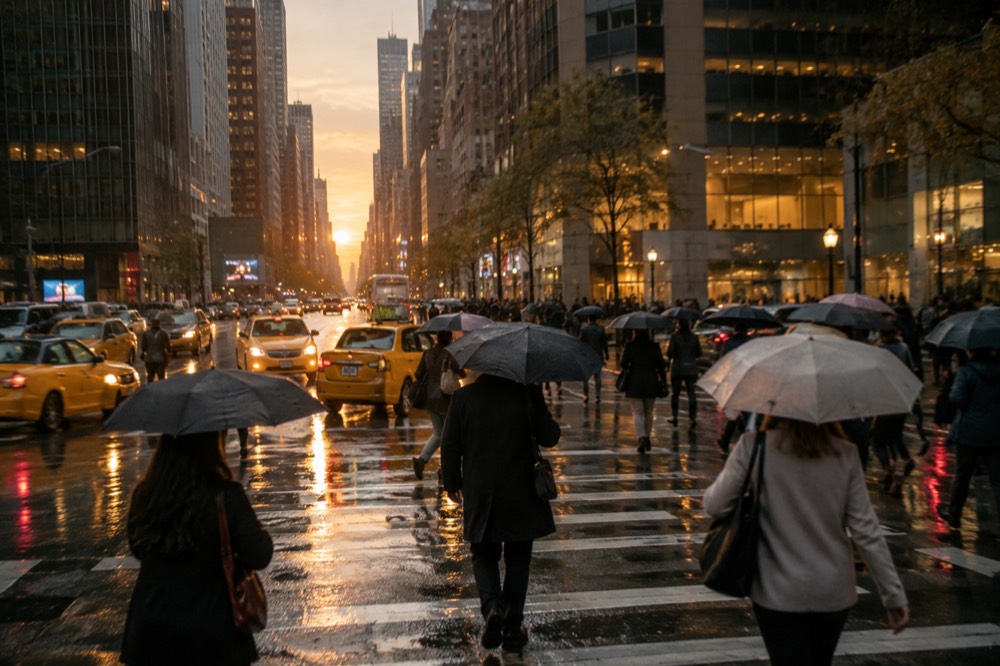
Rain in New York City closes exactly one category of activity, the outdoor one, and leaves more than enough indoors to fill a day. The honest problem is not shortage of options but pacing: a rainy afternoon rewards a plan built around the time you actually have.
Short answer
The best rainy day activities in NYC are its museums, observation decks, Broadway shows and covered food halls, all connected by a subway system that runs underground. Prioritize one anchor attraction, such as the Metropolitan Museum of Art or the Empire State Building, then fill the gaps with smaller indoor stops within a short walk or one train ride.
Rain in New York City closes exactly one category of activity, the outdoor one, and leaves more than enough indoors to fill a day. The honest problem is not shortage of options but pacing: a rainy afternoon rewards a plan built around the time you actually have.
New York's official climate record makes one thing clear: rain here is normal, not exceptional. July, the month most visitors assume is dry summer glory, is actually the wettest of the year in Central Park, averaging 4.60 inches of precipitation against January's 3.64. If your trip lands between June and September, a rained-out block of hours is closer to a statistical certainty than bad luck. Plan for it the way you plan for security lines at JFK.
What follows is a working rainy day plan, built around anchor attractions with real indoor depth, the quick hits that work when you only have two hours, and the transport reality of moving between them without standing in the wet. For the full picture of what the city offers in every kind of weather, start with our things to do in NYC overview.
What Can You Actually Do in NYC When It Rains?
A rainy day in New York can be filled entirely indoors with museums, observation decks, Broadway shows, covered food halls, library reading rooms and aquarium halls, all connected by an underground subway. The city's indoor attractions are not consolation prizes; the Metropolitan Museum of Art, MoMA and the 9/11 Memorial & Museum are among the best of their kind anywhere, and a wet day is simply the day to do them properly.
The mistake most visitors make is treating a rainy day as a broken version of a sunny plan. It is not. The queue at the Empire State Building is worse between 10am and noon regardless of weather, the Met's galleries take a full day if you let them, and Broadway curtains rise at 8pm come drizzle or downpour. Rain does not cancel the city. It reshuffles the priorities.
The second mistake is geographic. A rainy plan should minimize time at street level, which means clustering. Chelsea Market, the High Line's covered sections and the Whitney Museum sit within a few blocks of each other. Grand Central Terminal, the NYPL and Bryant Park's cafés cluster around 42nd Street. The Met, the Guggenheim and the Frick line Museum Mile. Build your day around one cluster and you stay dry by design rather than by luck.
Which Museums Are Worth a Whole Rainy Day?
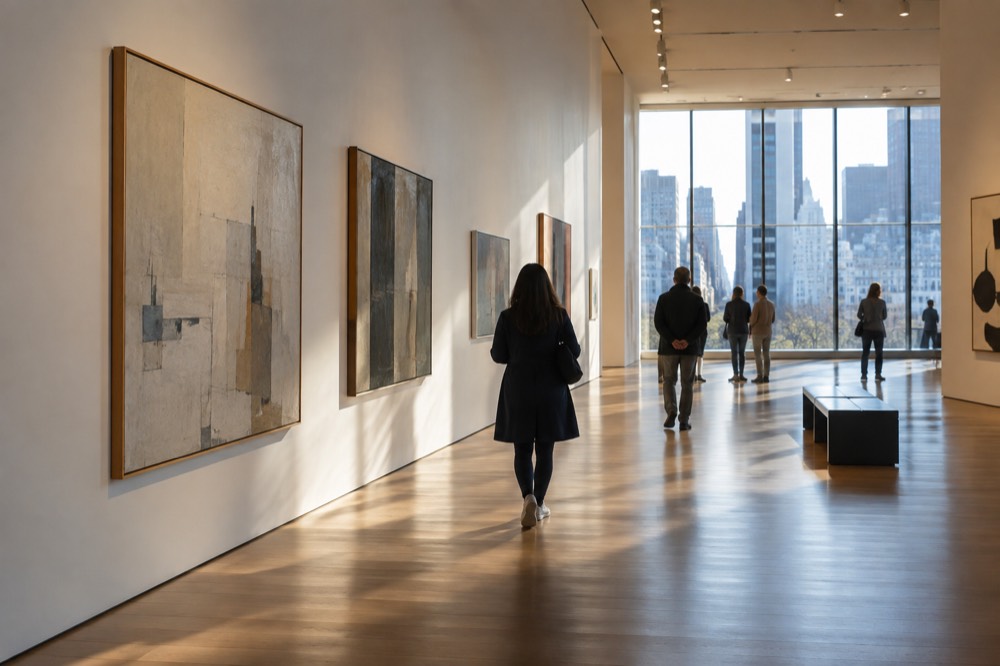
The Metropolitan Museum of Art is the only New York museum that absorbs a full rainy day, with two million square feet of galleries covering Egyptian temples through European painting, and its $30 adult ticket covers The Met Cloisters on the same day. MoMA and the American Museum of Natural History each justify four to five hours, while the 9/11 Memorial & Museum, the Tenement Museum and the Intrepid are half-day experiences best booked with a fixed entry time.
Start with the numbers, because they shape the decision. A single Met ticket covers the Fifth Avenue building and The Met Cloisters, in upper Manhattan, for the same day, which is one of the least-known value facts in the city. Admission is $30 for adults, $22 for seniors and $17 for students, free for children 12 and under. Pay-what-you-wish applies only to New York State residents and to students from New York, New Jersey and Connecticut, and even then you must pay something, a minimum of one cent per ticket. Out-of-state and international visitors pay the fixed price.
One honest caveat: the Met is open, but a long list of galleries is not. The American Wing, parts of the European Paintings galleries, the Cantor Roof Garden and substantial sections of Modern and Contemporary Art are closed for renovation, with the Ancient West Asia galleries scheduled to reopen in 2027. Before you plan a rainy day around a specific wing, check the museum's own gallery closures page.
| Museum | Adult admission | Time needed | Best rainy day fit |
|---|---|---|---|
| Metropolitan Museum of Art | $30 | Full day | The anchor: go early, stay until legs give out |
| MoMA | $30 | 3-5 hours | Midtown pairing with Rockefeller Center |
| American Museum of Natural History | Fixed price for non-NY residents; pay-what-you-wish for NY State residents with ID | 3-5 hours | Best with kids; dinosaur halls and planetarium |
| 9/11 Memorial & Museum | $36 | 2-3 hours | Lower Manhattan anchor; book a timed slot |
| Intrepid Museum | $38; NYC residents get 50% off | 2-3 hours | Aircraft carrier, space shuttle, submarine, all indoors |
| Guggenheim | $30 standard; $16 during exhibition changeover | 2 hours | The spiral ramp is the attraction |
MoMA deserves its own note because its free window is widely misreported. UNIQLO-sponsored free admission on Friday evenings, 5:30pm to 8:30pm, is for New York State residents only, with proof, and advance reservation required. Visitors from elsewhere pay $30. The permanent collection, from Van Gogh's Starry Night through the design floors and the sculpture garden, rewards a slow afternoon, and the building sits within a ten-minute walk of Rockefeller Center, which makes it the natural first half of a Midtown rainy day. Our full MoMA ticket guide covers the details.
The Guggenheim runs pay-what-you-wish on Tuesdays and Sundays from 4:00pm to 5:30pm, with a suggested $10 and a $1 minimum, and those slots sell out, so book ahead. During exhibition changeover periods the standard adult rate drops to $16, a genuinely good deal for Frank Lloyd Wright's building even with fewer galleries open.
The 9/11 Memorial & Museum should be described plainly: it is an exhibition space below the two reflecting pools, at the site where nearly three thousand people were killed. It is a place for careful attention, not a weather filler. If it is on your list, a timed ticket, from $25 on the booking page, locks your entry window. The memorial plaza itself, the outdoor pools, is free and open daily 8am to 8pm, and Free Admission Monday tickets are released on the website each Monday at 7:00am ET, first come first served. For context on planning a visit, our 9/11 Memorial and Museum guide covers entry options.
Observation Decks: Does Rain Ruin the View?
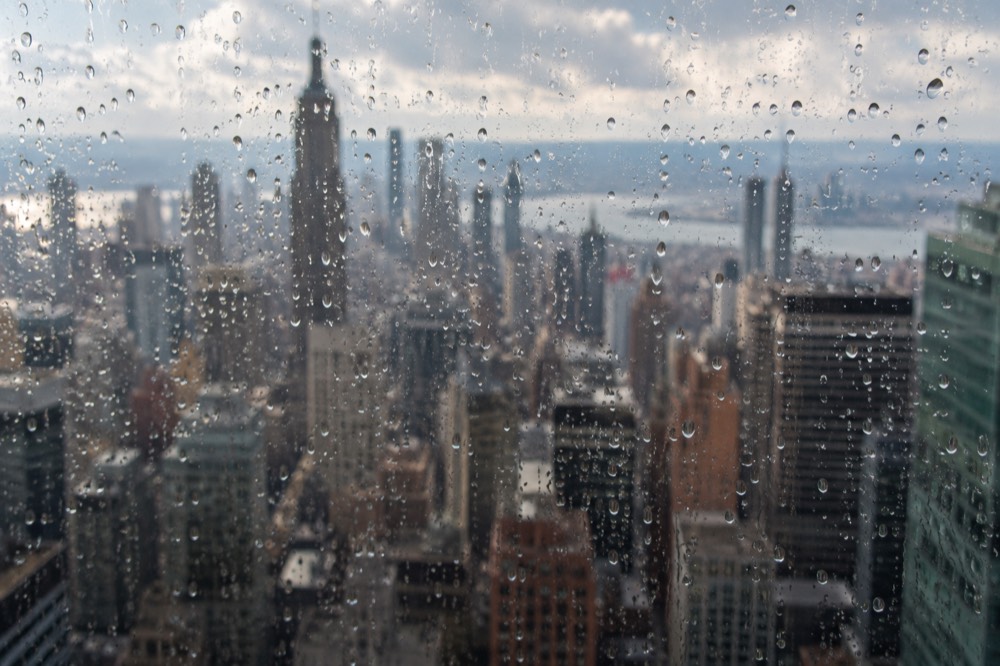
Rain does not ruin an observation deck visit, but it changes which one is worth it. All five major decks are enclosed, so you stay dry, and low cloud, mist and rain can add atmosphere or erase the view, so the honest strategy is to book a flexible or timed ticket close to your visit window rather than committing weeks ahead. The deck experience itself, the ride up, the exhibits, the enclosed galleries, is fully indoors at every one.
The practical reality is that New York rain is often patchy rather than all-day. A deck ticket bought for a slot two hours out, on a day of showers, is a reasonable bet. A deck ticket bought a month in advance for a fixed hour is a coin toss. The Empire State Building, Top of the Rock and SUMMIT One Vanderbilt all use timed entry, which means you choose your slot when booking, and same-day or next-day slots are usually available outside peak holiday weeks.
The Empire State Building is the classic rainy-day pick for a structural reason: the 86th floor deck is open-air, but the whole approach, the second-floor museum and the queue management are inside, and the building's deck-and-museum ticket pairs the view with a real exhibition on the building's history. Adult admission starts from $44 plus a $5 booking charge per transaction, with timed entry. The museum half rewards lingering, which is exactly what a rainy day gives you.
| Deck | Starting adult price | Indoor share | Rainy day verdict |
|---|---|---|---|
| Empire State Building | from $44 + $5 booking fee | Museum and queues indoors; 86th floor open-air | Best all-weather package |
| Top of the Rock | from $42 | Enclosed waiting areas; deck partly sheltered | Frames the Empire State Building itself |
| SUMMIT One Vanderbilt | from $44 + $3 per order | Mirror rooms fully enclosed; balconies outdoor | Best when rain is light; the mirrors work in any weather |
| Edge | from $34-$45 + $2 per ticket | Indoor sections; glass floor outdoors | The lean-out thrill needs decent weather |
| One World Observatory | from $39-$44 + $3.50 fee | Fully enclosed, floor-to-ceiling glass | Best pure rain option; the view is through glass anyway |
One World Observatory is the fully enclosed choice, 102 floors above Lower Manhattan with floor-to-ceiling glass, which means the rain is something you watch rather than stand in. It also sits at the World Trade Center, steps from the 9/11 Memorial plaza and the museum, which makes it the natural cap to a Lower Manhattan rainy afternoon. One scheduling quirk: on September 11 it opens at noon rather than 9am.
Broadway and Live Shows on a Wet Evening
A rainy evening is the best possible evening for Broadway, because a show consumes two to three dry, seated, entertaining hours, and New York has more live theater than any city on earth. The savings options are real and specific: the TKTS booths sell same-day tickets at 20-50% off face value with an $8 per-ticket service fee, and digital lotteries typically award seats in the $30-$50 range for those willing to gamble on timing.
The TKTS booths operate at two locations only: Times Square, on Duffy Square at W 47th Street between Broadway and 7th Avenue, and Lincoln Center, in the David Rubenstein Atrium at 61 W 62nd Street. There is no downtown booth and no Brooklyn booth, despite what older guides say. The booths sell same-day performances plus next-day matinees, every ticket is discounted, and the percentage is set by each show each day. Booth hours vary by day and location, so check tdf.org for live inventory rather than trusting a printed timetable.
Digital lotteries are the other honest route to cheap seats. Broadway Direct and Lucky Seat are the main platforms, plus show-run lotteries on official sites. Entries typically open a day or several days ahead, sometimes day-of, and winners are notified by email or text shortly before the performance. Winning prices run roughly $30-$50 but vary widely by show, and nothing about a lottery is guaranteed, so treat it as a bonus rather than a plan.
For a guaranteed seat on a specific rainy night, booking ahead is the sane move, and the big family-friendly titles are the reliable picks. MJ the Musical is a strong choice for fans of the songbook: roughly two and a half hours, seats assigned at booking, from $71.27 on the live listing. The Lion King and Wicked both play in the Theater District and suit first-time theatergoers. Our best Broadway shows guide compares the current field.
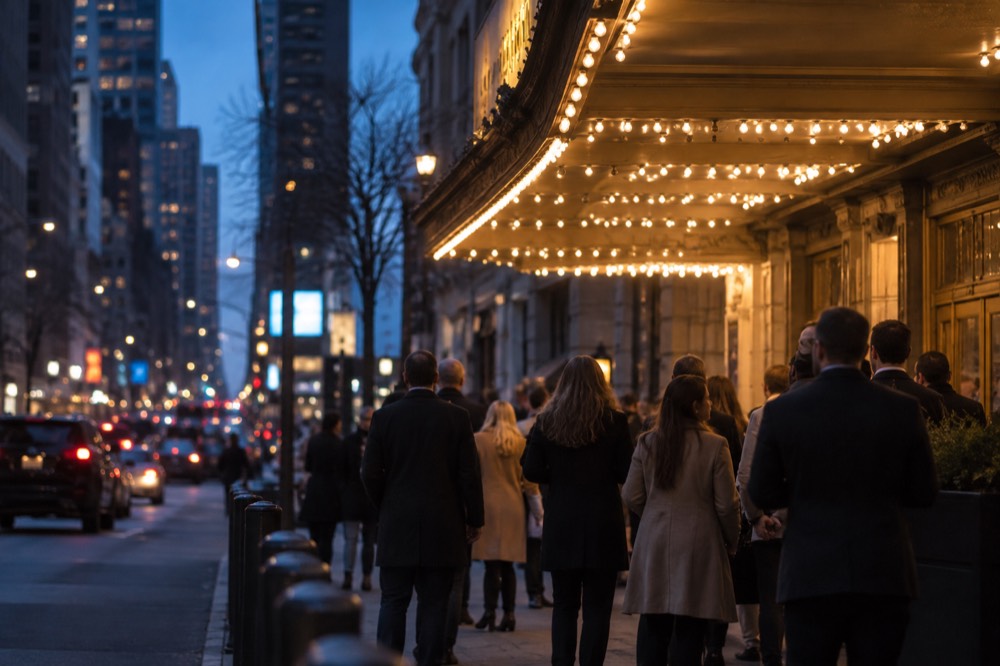
For a shorter, cheaper live option, the Museum of Broadway in Times Square is a self-paced, one-to-two-hour indoor visit devoted to the street's history, with costumes, playbills and set pieces, from $44. Comedy is the other budget night out: Midtown stand-up showcases start around $20, with rotating lineups and a two-drink minimum that is standard for the room.
Rainy Day Activities in NYC with Kids
The best rainy day activities in NYC with kids are the American Museum of Natural History, whose dinosaur halls and planetarium justify a whole day, the Intrepid Sea, Air & Space Museum, where children can walk through an aircraft carrier and a submarine, and the Children's Museum or the Bronx Zoo's indoor exhibits for younger ones. Children 12 and under enter the Met free, and up to three children under 44 inches ride the subway free with a fare-paying adult.
The American Museum of Natural History is the default answer for a reason. The dinosaur halls, the great blue whale and the Hayden Planetarium give children a full day of things to actually look at, and the ticketed add-ons, giant-screen films and special exhibitions, are worth bundling if the weather has washed out everything else. General admission is pay-what-you-wish for New York State residents with ID; everyone else pays a fixed price, and the exact adult figure should be checked on the museum's own ticketing page before you go, since published figures conflict between sources.
The Intrepid, moored at Pier 86 on the Hudson, is the machine-lover's answer: a flight deck of jets and helicopters, a space shuttle prototype, and the Growler, a guided missile submarine you can walk through, from $38, with NYC residents getting 50% off every day. It is mostly outdoors on the deck, though, so pick it for light rain rather than a downpour. For a fuller set of family options that work in any weather, see our things to do in NYC with kids guide.
| Activity | Price signal | Age fit | Weather exposure |
|---|---|---|---|
| American Museum of Natural History | Fixed for visitors; PWYW for NY State residents | 4+ | Fully indoors |
| Intrepid Museum | From $38; NYC residents 50% off | 6+ | Deck is outdoors, hangar decks indoors |
| Museum of Broadway | From $44 | 8+ | Fully indoors |
| Staten Island Ferry | Free | All | Deck outdoor, cabin indoor |
| Grand Central + NYPL exploring | Free | All | Fully indoors |
The Staten Island Ferry deserves a mention here with an honest caveat: the crossing is free and the cabin is enclosed, so on a rainy day with older kids it works as a cheap harbor sightseeing run, Manhattan skyline receding through rain-streaked windows. It is a 25-minute crossing each way, and the view on a heavy-rain day may be mostly fog, so check the sky before committing an hour round trip.
Indoor Food Experiences: Markets and Food Halls
New York's rainy day food answer is Chelsea Market, an enclosed block-long food hall in the Meatpacking District, paired with the indoor sections of Grand Central's dining concourse and the city's guided food tours, three of which run rain or shine through Chinatown, Little Italy and Greenwich Village. A food tour is one of the few activities that is better in light rain, because the streets empty out and the six tasting stops add up to a full meal.
Chelsea Market is the anchor: dozens of vendors under one roof, from lobster rolls to tacos to doughnuts, with enough seating that a wet afternoon does not mean eating standing up. It also sits at the southern end of the High Line, and while the elevated park is open-air, the market itself is the rainy half of that pairing, which is why a food tour combining both works so well on uncertain days.
The Chinatown and Little Italy tour covers different ground: six tastings, from dumplings to cannoli, in two adjacent neighborhoods whose stops sit close together, which matters when the rain is steady. Greenwich Village is the third route, six stops at neighborhood institutions, doubling as a primer on the area's music and bohemia past. All three run roughly three hours and all are walking tours, so bring the umbrella and waterproof shoes.
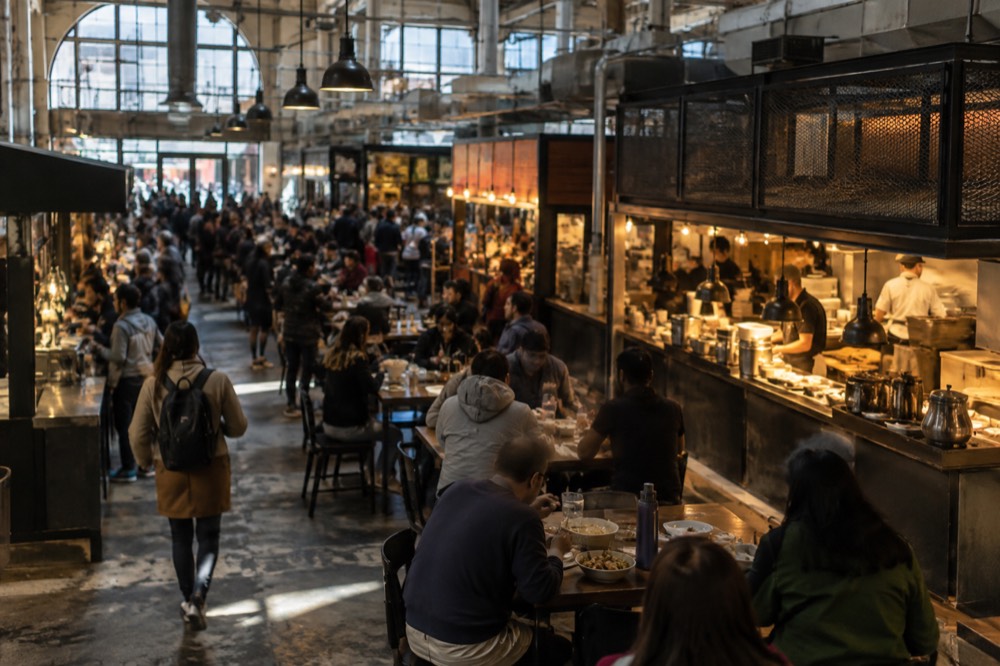
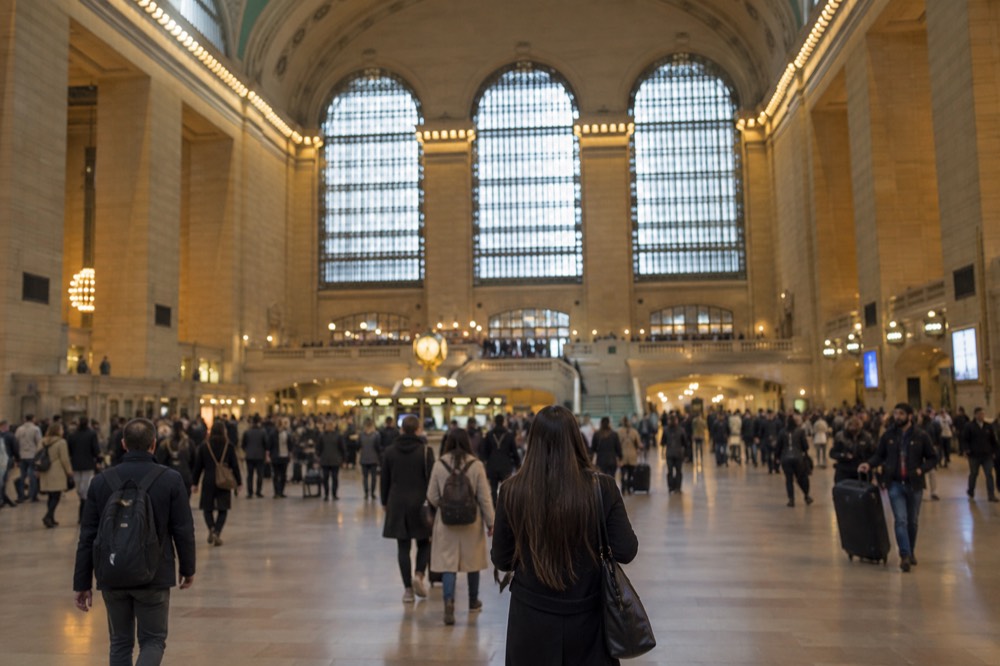
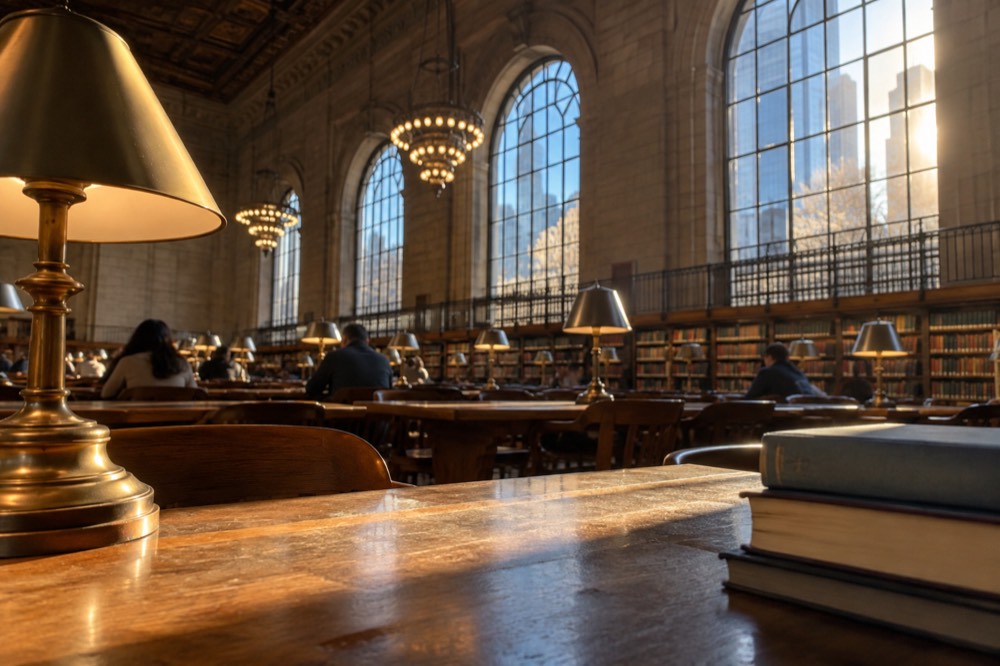
If you would rather graze on your own, Grand Central Terminal's dining concourse sits below the main concourse, and the terminal itself is worth the trip regardless: the celestial ceiling, the whispering gallery and the grand hall give you a landmark visit folded into lunch. The NYPL's Rose Main Reading Room, a few blocks west, is the other free indoor masterpiece, open to visitors as well as readers.
How Do You Get Around New York in the Rain?
You get around rainy New York almost entirely underground, on the subway, tapping a contactless card or phone through OMNY at $3.00 a ride with an automatic $35 weekly cap; the 7-day unlimited MetroCard no longer exists, since the MTA stopped selling and refilling MetroCards on 1 January 2026. The cap applies automatically with no pass to buy, as long as you tap the same card or device every time, and children under 44 inches ride free.
This is the single fact most guides get wrong, because most were written before the change. The old advice, buy a 7-day unlimited when you land, now sends you to a product that is not sold. The replacement is simpler: tap the same credit card, debit card or phone at every turnstile and the MTA's system caps your weekly spending at $35 for subway and local bus rides, after which the rest of that seven-day period is free. The seven days start with your first tap, a rolling window rather than a calendar week.
The trap is consistency. If you tap your phone on the way to the museum and the plastic card in your pocket on the way back, the system sees two separate payers and neither earns the cap. Group travel follows the same rule: each person needs their own card or device, because transfers and group taps do not count toward a single cap.
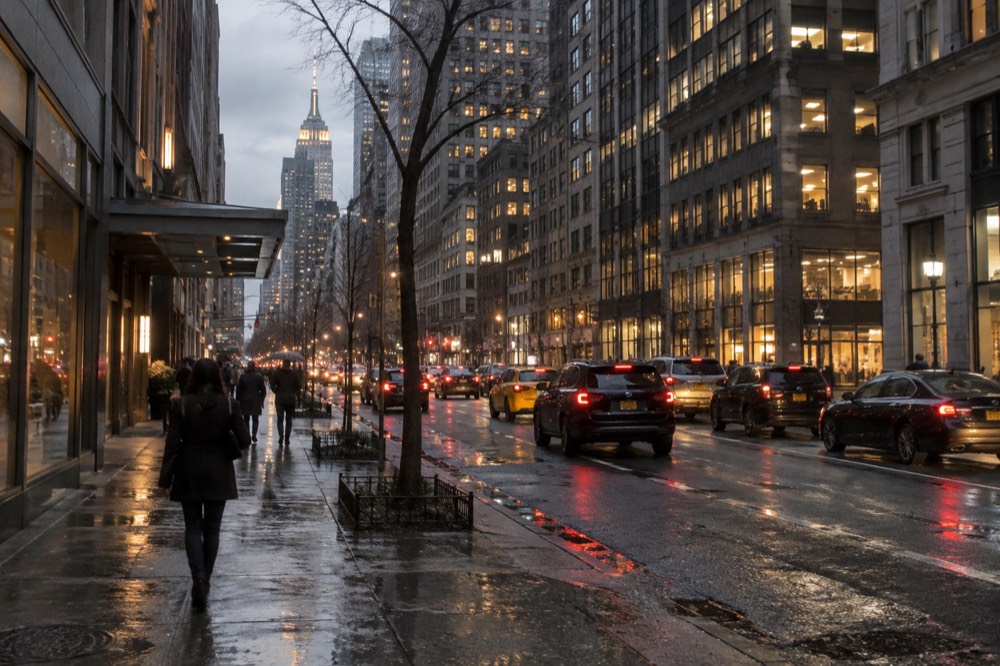
Practical rain advice is short. Carry the umbrella inside-out-proof kind or a compact one, because subway stairs and turnstiles punish golf umbrellas. Wet platform floors are slippery, so slow down on the stairs. And accept that a five-minute walk between the station and your destination is the only exposure a well-planned rainy day requires.
Free and Cheap Rainy Day Options in NYC
The best free rainy day activities in NYC are the NYPL's Rose Main Reading Room, Grand Central Terminal, the Staten Island Ferry's enclosed cabins, the 9/11 Memorial plaza, and the free-admission windows at several museums, including Whitney Friday nights 5pm to 10pm, MoMA Friday evenings for New York State residents, and the Guggenheim's Tuesday and Sunday pay-what-you-wish hour from 4pm to 5:30pm. None of these require more than a subway fare to reach.
The Whitney's free windows are unusually generous: Friday nights 5pm to 10pm are open to everyone, and the second Sunday of every month is free all day, with timed tickets required for both and capacity limited. The museum sits at the southern end of the High Line in the Meatpacking District, so a rainy Friday can pair Whitney galleries with Chelsea Market, one indoor block apart.
The 9/11 Memorial & Museum's Free Admission Mondays are open to everyone, with tickets released each Monday at 7:00am ET on the website, first come first served. The museum's regular adult admission is $36, so this is one of the larger single savings in the city if your plans are flexible and you are awake and online at seven.
| Free or cheap option | Cost | Catch |
|---|---|---|
| Whitney Friday nights, 5-10pm | Free, everyone | Timed ticket, capacity limited |
| Whitney second Sundays | Free, everyone | Timed ticket, monthly only |
| MoMA Friday evenings | Free, NY State residents only | Proof of residency, reserve ahead |
| Guggenheim Tue/Sun 4-5:30pm | Pay-what-you-wish, $1 minimum | Sells out; book ahead |
| 9/11 Museum Free Mondays | Free, everyone | Released Mondays 7am ET, first come first served |
| Staten Island Ferry | Free | 25 minutes each way, weather-dependent views |
| NYPL Rose Main Reading Room | Free | Quiet-zone rules apply |
Grand Central and the NYPL are the zero-effort options, the kind you can decide on twenty minutes before doing. The terminal's main concourse is one of the great indoor rooms in America, the whispering gallery near the Oyster Bar works in any weather, and the library's reading room two blocks away is its equal in a different register. Neither requires a ticket, a reservation or more than a train ride.
A Three-Hour Window vs a Whole Washed-Out Day
For a three-hour rainy window, pick one anchor: a museum wing, an observation deck or Chelsea Market, all doable in under three hours door to door. For a whole washed-out day, stack three anchors across three neighborhoods, morning museum, midday food hall, evening show, connected by short subway rides, and buy a CityPASS if you will use at least four of its five attractions within its nine-day validity.
The pacing question is where most rainy days go wrong. Visitors either treat the rain as an obstacle and hide in the hotel, or overcorrect and schedule four attractions across three boroughs, spending the day wet and rushing. The table below matches rainy day lengths to honest plans, and it slots neatly into a longer stay: our 3 days in NYC itinerary shows where a washout day fits a full trip.
| Time you have | Realistic plan | Neighborhood |
|---|---|---|
| 2 hours | One museum wing, or the Museum of Broadway, or Grand Central plus the NYPL | Midtown |
| 3-4 hours | MoMA plus Rockefeller Center, or the Guggenheim plus Café Sabarsky | Midtown or Upper East Side |
| Half day | The Met's open galleries, or the 9/11 Museum plus One World Observatory | Upper East Side or Lower Manhattan |
| Full day | Morning museum, lunch in a food hall, afternoon deck or second museum, evening show | Two or three clusters |
If a full day is genuinely rained out and you plan to see several of the city's paid anchors, the CityPASS maths changes. The pass costs $149 adult and $129 for children 6-17, covers your choice of five attractions from an eleven-attraction menu, and runs nine consecutive days from first use. Its heavy hitters, the Empire State Building, Top of the Rock, the Statue of Liberty ferry, the 9/11 Museum and Edge, are exactly the indoor-and-covered anchors a rainy itinerary is built from. It pays off only if you use all five tickets, so it suits the packed trip, not the loose one.
One last planning note. New York rain is frequently a half-day event, and the forecast is worth checking twice, once the night before and once in the morning. A morning of steady rain often clears by mid-afternoon, which is when the deck ticket you deferred buying becomes the best decision of the day.
Common Questions About Rainy Day Activities in NYC
The most common rainy day questions about New York are whether observation decks are worth it in rain, whether the Statue of Liberty ferry runs in bad weather, what is free indoors, and whether a CityPASS makes sense for a washout. The short answers: enclosed decks like One World work fine, the ferry runs in rain but the island experience degrades, several museums have free windows with conditions, and a pass only pays if you will use every ticket.
Is New York worth visiting when it rains?
Yes, with adjusted expectations. The city's strongest attractions, its museums, theaters, food halls and enclosed decks, are indoors, and the subway connects them without street-level exposure. What rain genuinely cancels is the outdoor layer: Central Park picnics, the High Line at length, long walking routes and bridge crossings. New York received 65 million visitors in 2025, and a meaningful share of them saw rain.
What is the best museum for a rainy day in NYC?
The Metropolitan Museum of Art for a full day, MoMA for a half day in Midtown, and the American Museum of Natural History if children are in the group. The Met's $30 ticket also covers The Met Cloisters the same day, though a long list of galleries is currently closed for renovation, so check the closures page before planning around a specific wing.
Do observation decks operate in the rain?
Yes, all of them. One World Observatory is fully enclosed with floor-to-ceiling glass, making it the best pure rain choice. The Empire State Building's 86th floor deck is open-air, so heavy rain degrades the experience even though the approach and museum are indoors. Book timed tickets close to your visit window rather than days ahead when the forecast is uncertain.
What can you do in NYC on a rainy day for free?
The NYPL's Rose Main Reading Room, Grand Central Terminal, the Staten Island Ferry's enclosed cabins and the 9/11 Memorial plaza are all free. Museum free windows include Whitney Friday nights from 5pm, the Whitney's free second Sundays, MoMA Friday evenings for New York State residents with proof, and the Guggenheim's pay-what-you-wish hour on Tuesdays and Sundays from 4pm to 5:30pm.
Is the subway hard to use in the rain?
No. The system is underground, stations are entered quickly, and a tap of a contactless card or phone through OMNY costs $3.00 with an automatic $35 weekly cap. The main hazards are slippery platform stairs and crowded entrances at peak times. Children under 44 inches tall ride free with a fare-paying adult.
Does the Statue of Liberty ferry run when it rains?
Generally yes, in normal rain. The official Statue City Cruises ferry runs in inclement weather and only suspends service in genuinely severe conditions. The trade-off is experiential rather than operational: the harbor crossing is exposed on deck, and Liberty Island itself has almost no shelter, so a rainy visit trades comfort for thinner crowds. Adult grounds-and-museums admission is $26.00.
For more ways to fill a New York itinerary in any weather, browse the full NYC tours catalogue, and let New York City Travel Guide handle the rest of the planning.