Can You Just Walk Into the Empire State Building?
A direct, sourced answer to whether you can just walk into the Empire State Building: ticket rules, security, hours, prices and what a walk-up visit actually looks like.
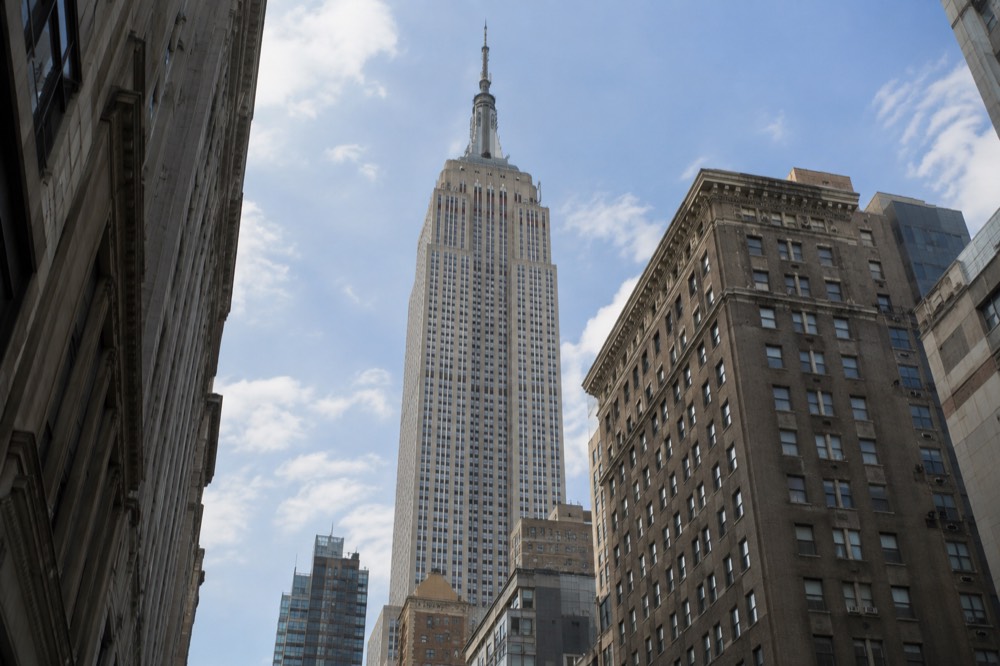
The Empire State Building's front doors on 5th Avenue open onto a landmarked Art Deco lobby that anyone can enter, free, during opening hours. That is where "just walking in" stops. The 86th floor observation deck, the 102nd floor deck and the second-floor museum all require a ticket, every ticket is timed entry, and every visitor passes through an airport-style security screen regardless of how they bought admission. A visitor who shows up with no booking can still get up top in most cases, but they will pay at the box office, wait in whatever line exists that day, and take whatever time slots are left.
The distinction matters more than most guides admit. Adult deck admission starts from $44 online plus a $5 booking charge per transaction, while the box office price for the full AM/PM Experience runs $75.12 including tax. Same building, same view, materially different process. This page answers the question plainly, then covers the details: what the ticket actually includes, how security works, when the doors close, and whether walking in without a plan is ever the right move.
Can You Just Walk Into the Empire State Building?
Yes, you can walk into the Empire State Building without a ticket, but only as far as the lobby, which is free and open to the public during building hours. The observation decks and the museum are ticketed attractions with timed entry, and every visitor passes through mandatory security screening. Walk-up tickets are sold at the box office, so "just walking in" is possible, but you will pay more and accept whatever entry slots remain.
The lobby itself is worth the stop even for visitors with no intention of going up. The ceiling murals and marble interiors were restored to their original appearance, and the building treats the space as a public room rather than a gated attraction. Street-level access is genuinely free.
Going up is a different transaction. The building runs timed entry for all observatory products, which means your ticket carries a specific arrival window. Pre-booked visitors join the line for their slot; walk-up visitors buy at the box office first, then join whatever window they were assigned. On a quiet weekday morning in winter that might cost you fifteen extra minutes. On a summer Saturday or a holiday week, the difference between a reserved slot and a walk-up purchase can be an hour or more of standing in line.
There is a middle case worth naming: visitors who arrive intending to buy at the box office sometimes find that same-day online slots, bought on a phone from the lobby, are cheaper than the counter price and still available for a window an hour out. The online price starts from $44 for adults plus the $5 booking charge per transaction, while the box office figure for the AM/PM Experience is $75.12 including tax. Checking the live listing from the lobby before approaching the counter is a habit that saves real money.
The one thing that is never possible is skipping security. Every person entering the observatory areas, regardless of ticket type, goes through screening. There is no "quick look" exception, no guest-list entry and no way to buy your way around the line.
Do You Need a Ticket to Go Up the Empire State Building?
Yes, a ticket is required for every observatory product, and every ticket is for a timed entry window. There is no free access to the 86th or 102nd floor decks under any circumstances, and no general admission that lets you wander up at will. The cheapest adult option is the 86th floor deck from $44 online plus a $5 booking charge per transaction; the 86th plus 102nd floor combination starts from $79.
The product lineup is simple once you see it laid out. The core ticket is the 86th floor observation deck, the open-air promenade that appears in virtually every photograph of the building. Above it sits the 102nd floor, a fully enclosed deck reached by a second elevator, sold either as an add-on or as a combination ticket from $79. Below the decks, on the second floor, sits the building's museum experience, a series of galleries covering the construction of the tower, the building's engineering and its decades as a broadcast tower, which is bundled into the AM/PM Experience rather than sold separately as a standalone item.
| Product | What it covers | Adult price | Notes |
|---|---|---|---|
| 86th floor deck | Open-air observatory, 86th floor | From $44 online, plus $5 booking charge per transaction | Timed entry; the core product |
| 86th + 102nd floor | Both decks | From $79 online, plus booking charge | 102nd floor is enclosed, glassed-in |
| AM/PM Experience (box office) | 86th floor deck, 2nd floor museum, bonus same-night re-entry | $75.12 including tax | The CityPASS-published box office figure |
| Lobby only | Ground-floor Art Deco lobby | Free | Open during building hours; no deck access |
The same-night re-entry point deserves a sentence of explanation, because it is the feature most walk-up buyers never realize they are choosing against. The AM/PM Experience includes a bonus same-night return, which is how photographers catch the deck in daylight and again after dark on a single ticket. A standard single-slot ticket does not include that.
Pricing at the decks is dynamic, like nearly every observation deck in New York. The "from" figures are the lowest published adult starting prices, and the actual number on any given date moves with demand, weather and time of day. Sunset slots carry the highest prices and sell out first. A visitor flexible enough to take a 9am or a 10pm window will consistently pay less than one who insists on golden hour.
For visitors whose itinerary includes several of the city's major attractions, the ticket price also feeds into the pass maths. The New York CityPASS lists the Empire State Building's AM/PM Experience among its choices, with a published box-office value of $75.12, and the adult pass costs $149 for five attractions over nine consecutive days. A visitor planning the Empire State Building, Top of the Rock and the Statue of Liberty ferry in one trip is already most of the way to the pass paying for itself.
What Are the Empire State Building's Hours and When Can You Actually Enter?
The Empire State Building is open 365 days a year, and in the current published schedule, running 8 September to 4 October 2026, the observatory operates 10:00 to 23:00 with the entry door closing at 22:00. Hours vary by date and season, so the posted window on the day you visit is the one that governs. Late evening is a real option: the deck runs until 11pm.
The 365-days-a-year claim is worth taking literally. The building does not close for holidays, which makes it one of the few major New York attractions that is reliably open on Thanksgiving and Christmas days, subject to the posted hours for those dates. Visitors with holiday-week itineraries that keep knocking out museums and tours should note the deck as the reliable constant.
The entry-door cutoff matters more than the closing time. A ticket for a 22:00 window gets you in; arriving at 22:15 does not, even though the deck itself stays open until 23:00. Visitors cutting a day tight, coming from a Broadway matinee or a late dinner, should book the slot they can actually make rather than the slot they hope to make.
Crowd shape through the day follows a pattern regulars know well. The queue at the Empire State Building is worst between 10am and noon, when tour groups and first-thing visitors stack up. The late evening, after 21:00, is the quietest window on most days, and it comes with the skyline lit up, which for many visitors is the better view anyway. Midweek mornings beat weekends at every point in the year.
Weather is the other variable. The 86th floor deck is open-air, and in high wind or storms sections of the promenade can close on short notice. The 102nd floor is enclosed, which makes it the safer buy on a doubtful-weather day, though the glass limits the photography. There is no refund mechanism for a cloudy sunset, so visitors whose entire purpose is the view should watch the forecast and pick their day, not just their hour.
How Does Security Work at the Empire State Building?
Every visitor to the observatory passes through airport-style security screening, including bag checks and metal detection, before reaching the elevators, and there are no exceptions for ticket type, time of day or how the ticket was bought. On peak days the security queue alone can take twenty to thirty minutes, so it must be budgeted into any timed arrival window. Large bags and suitcases are not permitted.
The screening is run like a small airport checkpoint. Bags go on an X-ray belt, people walk through a detector, and staff pull anything suspicious for a hand check. The practical implication for visitors is the same as at any airport: empty your pockets of metal, keep the camera bag simple, and do not bring anything you would not take through JFK.
The luggage rule is the one that catches arriving visitors. Travelers heading straight from a hotel checkout, or trying to slot the deck between checkout and an evening flight, regularly arrive with roller bags and are turned away from the observatory line. The building is a working office tower, not a museum with a cloakroom, and there is no storage for large items. The honest advice is to visit the deck before checkout or after check-in, when the bags are off your hands.
Prohibited items follow the standard pattern: weapons of any kind, glass bottles, alcohol, tripods and drones. Compact cameras and phones are fine and are the reason the deck exists for many visitors. Food is discouraged on the promenade, though water bottles generally pass screening.
Timed-entry windows are enforced with some flexibility, but not unlimited. Arriving fifteen minutes before your slot is ideal; arriving thirty minutes late may mean rebooking to the next available window at staff discretion. Because the security queue sits between the street and the elevators, the slot you booked is best treated as the time you join the security line, not the time you step onto the deck.
Is It Cheaper to Buy Empire State Building Tickets Online or at the Door?
Online is cheaper in every published comparison: the 86th floor deck starts from $44 online plus a $5 booking charge per transaction, while the box office price for the AM/PM Experience, which bundles the deck with the museum and same-night re-entry, is $75.12 including tax.
The two figures are not perfectly comparable because the box office product is the richer bundle, but the pattern holds: buying at the counter costs more and leaves you with whatever slots remain.
The pricing structure rewards visitors who commit in advance. Online sales open the full calendar of timed slots, carry the lowest starting prices, and let you choose the window that suits your day rather than the window that suits the queue. The box office exists, works, and will sell you a ticket on the day, but it is the expensive path and the inflexible one.
The booking charge is per transaction, not per ticket, which matters for families and groups. A party of four buying online pays one $5 charge on the order, not four. That is a small but real difference from the per-ticket processing fees charged by some of the other decks in the city.
The discount-ticket ecosystem offers a second route for flexible visitors. The TKTS booth system run by TDF sells same-day and next-day-matinee Broadway tickets, not observation deck tickets, so it does not apply here. What does apply is the pass market. The New York CityPASS, at $149 adult for five attractions over nine consecutive days, includes the Empire State Building's AM/PM Experience among its choices with a published box-office value of $75.12, alongside options including Top of the Rock, the Statue of Liberty ferry and the 9/11 Memorial & Museum. Visitors whose plans include three or more of the pass attractions come out clearly ahead.
The third route is the free-information route: the building's own ticketing site publishes the live calendar of slots and prices, and checking it costs nothing. Visitors who check availability before arriving, even an hour before, consistently do better than visitors who do not.
What Is at the Top, and Is the 102nd Floor Worth the Extra Cost?
The 86th floor is an open-air promenade wrapping the building on all four sides, with the skyline, Central Park, the rivers and the harbor all visible from the rail; the 102nd floor is a smaller, fully enclosed glass room higher up, sold as an add-on or a combination ticket from $79. For most visitors the 86th floor is the right purchase. The 102nd floor suits visitors who want the height number, protection from weather, or a quieter room.
The open-air difference is the whole decision. On the 86th floor you feel the wind, hear the city and shoot through the rail, which is why it is the deck photographers choose. On the 102nd floor you look through sealed glass, which mutes the experience and adds reflections, in exchange for an enclosed room on a higher floor. On a calm clear evening the 86th wins outright. In February wind or an August downpour, the enclosed option is the one that still delivers a view.
The second-floor museum is included in the AM/PM Experience and is a better stop than its "add-on" reputation suggests. The galleries walk through the building's construction, the race to build the world's tallest tower, and the decades of broadcast history since. Visitors who arrive early for their slot can use the waiting time there rather than in line, which is the practical way to fold it into a visit.
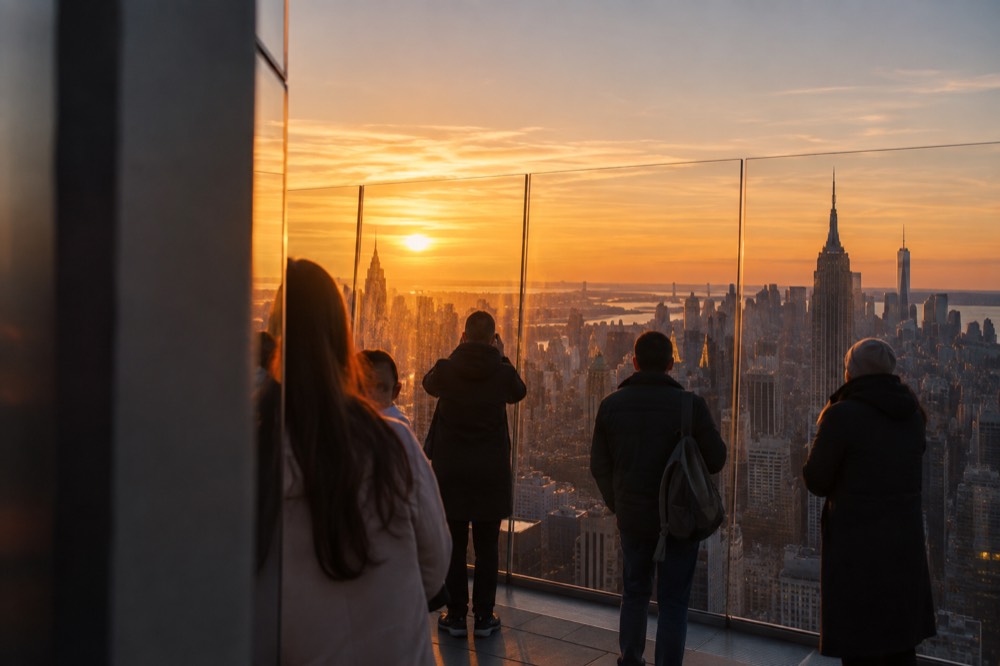
The honest comparison for the extra spend is not 86th versus 102nd within this building. It is this building versus the other decks. Top of the Rock, from $42, puts the Empire State Building itself in your frame alongside Central Park. SUMMIT One Vanderbilt, from $44 for ages 13 and up plus a $3 processing fee per order, sells a mirrored-room art experience as much as a view. A visitor choosing between decks should read the comparison before paying twice for the same skyline. The dedicated guide to Empire State Building tickets on this site breaks the full decision down.
What Should You Know Before You Just Show Up?
Walk-up visits work, but they work best with three adjustments: check the live slot calendar before leaving your hotel, arrive before 10am or after 8pm to dodge the worst queues, and carry nothing larger than a day bag because there is no luggage storage. The lobby is free and worth ten minutes on its own. Sunset is the most expensive and most crowded window; the hour before closing is the quietest bargain.
Timing advice compresses into a short list. The queue at the Empire State Building is worst between 10am and noon, and the building's own published hours in the current schedule run 10:00 to 23:00 with entry closing at 22:00. That makes the first slot of the day and the last two slots of the evening the two natural targets. The first slot means no line behind you; the late slots mean a shorter line and the lit skyline.
Weather cuts both ways. July is New York's wettest month by the official Central Park normals, averaging 4.60 inches of precipitation, ahead of August and June, so summer visitors planning an open-air deck should hold the date loosely rather than the hour tightly. February averages more snow than January, 10.1 inches against 8.8, and the winter wind on an open promenade is a real factor at 86 stories. The enclosed 102nd floor is the winter-weather hedge.
The money question compresses too. If the Empire State Building is one of five or more major attractions on your itinerary, run the CityPASS maths before buying anything individually, because the pass includes the AM/PM Experience at a published box-office value of $75.12 against a $149 adult pass price covering five attractions over nine days. If the deck is a one-off splurge, buy online from $44 plus the $5 transaction charge and skip the box office entirely. The wider things to do in NYC roundup on this site is the place to see how the deck fits a full itinerary.
One last practical note: the building sits above one of the busiest subway complexes in the world. The 34 St-Herald Sq station, serving the B, D, F, M, N, Q, R and W trains, sits a block away. Visitors coming from anywhere in Manhattan or the outer boroughs have no reason to take a car, and with the subway fare at $3.00 a ride and OMNY capping weekly spending at $35 automatically, the ride to the building is the cheapest part of the whole visit.
Common Questions About Walking Into the Empire State Building
The short answers: the lobby is free, the decks are ticketed, security applies to everyone, online buying beats the box office, and the building is open 365 days a year with hours that vary by date. The details below cover the questions visitors ask most often before deciding whether to book ahead or just show up.
Can you just walk into the Empire State Building?
You can walk into the lobby for free during building hours, but the observation decks and museum require tickets with timed entry. Walk-up tickets are sold at the box office, though buying online before arrival is cheaper and gives you a choice of time slots.
Can you enter the Empire State Building without a ticket?
Only the ground-floor lobby is open without a ticket. The 86th floor deck, the 102nd floor deck and the second-floor museum experience all require paid admission, and every ticket is for a specific timed entry window.
How much does it cost to go up the Empire State Building?
Adult 86th floor admission starts from $44 online plus a $5 booking charge per transaction. The 86th plus 102nd floor combination starts from $79. The box office AM/PM Experience, which adds the museum and same-night re-entry, is $75.12 including tax.
Is there a security check at the Empire State Building?
Yes. Every visitor to the observatory passes through airport-style screening with bag checks and metal detectors, regardless of how they bought their ticket. Large bags and suitcases are not permitted, and there is no luggage storage.
What time does the Empire State Building close?
In the current published schedule, 8 September to 4 October 2026, the observatory runs 10:00 to 23:00 with the entry door closing at 22:00. Hours vary by date, so check the official hours page for the day you plan to visit. The building is open 365 days a year.
Is it better to buy Empire State Building tickets in advance?
Yes. Online prices start lower than the box office, timed slots let you skip the ticket-purchase line, and you can pick an off-peak window. The queue at the Empire State Building is worst between 10am and noon, so advance booking lets you steer around it.
The long and short of it: the doors are open, the lobby costs nothing, and the view costs money. A visitor who books a slot online, arrives outside the mid-morning crush and travels light will spend less and wait less than one who genuinely just walks in. The walk-up route exists and works, but it is the expensive version of the same visit. This page is part of the New York City Travel Guide coverage of the city's observation decks and ticketing, and it is written to be checked against the building's own published hours and prices on the day you go.