Is a Rainy Day in New York Worth Watching?
A direct, sourced answer to whether a rainy day in New York is worth it, with museum free windows, Broadway discount routes, observation deck advice and a rainy-day plan that works.
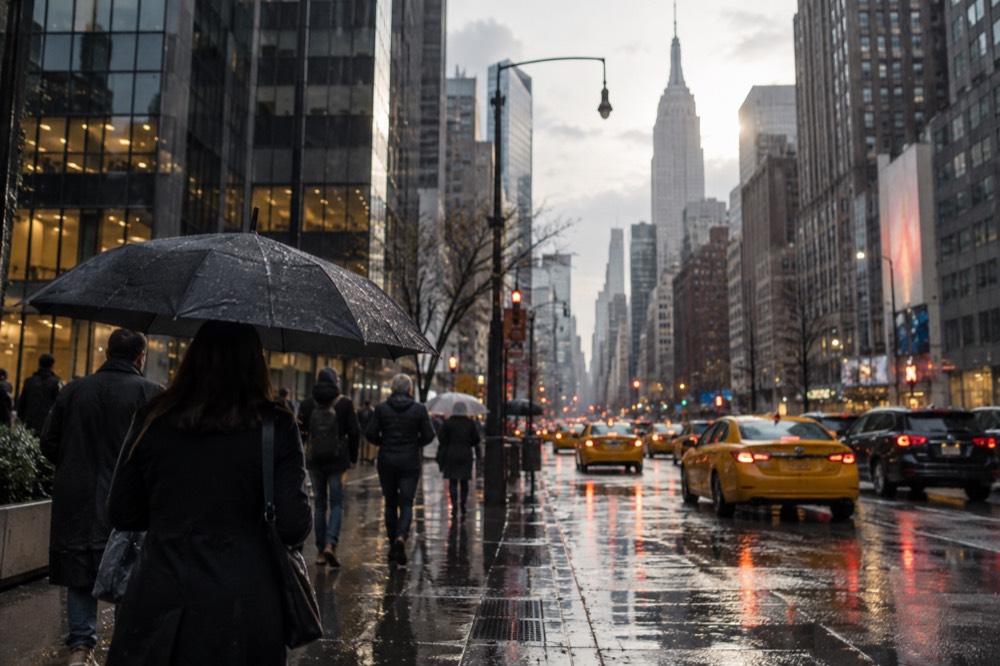
The wettest month in Central Park is not a winter month. It is July, with an average of 4.60 inches of precipitation, ahead of August at 4.56 and June at 4.54. Those figures come straight from the NOAA 1991-2020 climate normals for the Central Park station, and they upend the assumption most travelers arrive with: that summer is the safe bet and winter is the gamble. New York has no dry season at all. The spread between the driest month, February at 3.19 inches, and the wettest, July, is about 1.4 inches, which means rain can find you in any month.
So the question is not how to avoid a rainy day in New York. It is what the day is worth once the rain arrives. The honest answer, backed by the city's own pricing and free-admission windows, is that a wet day in New York is often the day visitors finally do the indoor things they had been postponing, and several of those things are cheaper or better than their fair-weather equivalents. This page lays out exactly what a rainy day buys you, what it ruins, and how to plan one without wasting it.
Is a Rainy Day in New York Worth Watching?
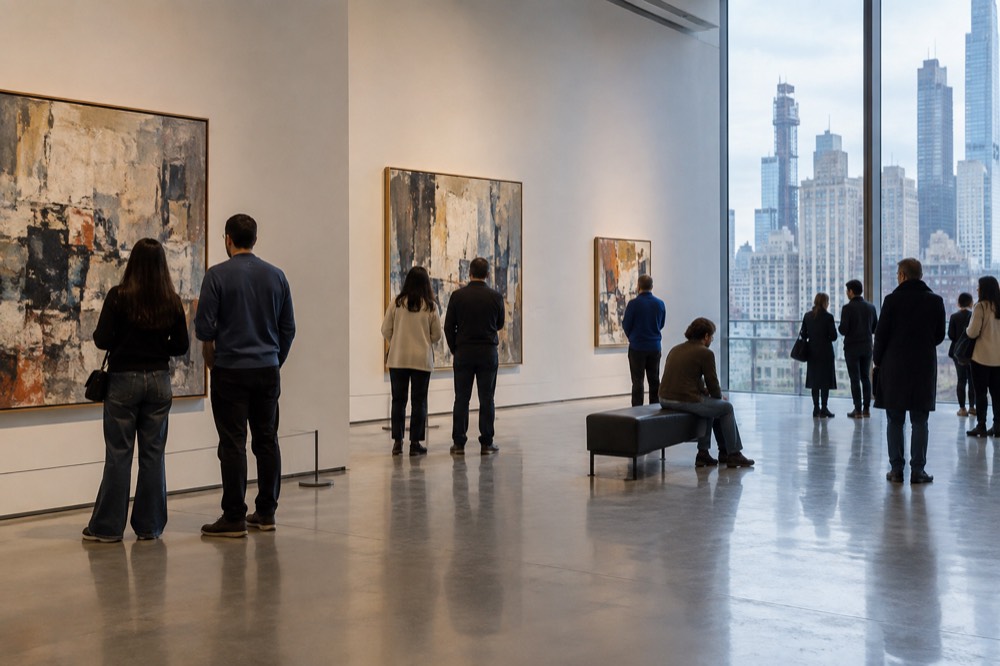
Yes, a rainy day in New York is worth it, and often better than a fair-weather day for the city's indoor attractions. New York's museums, Broadway houses, observation decks above the cloud line and food halls form the densest indoor concentration of things to do in the United States, and rain is the nudge that pushes visitors into them. The day is only wasted if you plan nothing.
The case starts with arithmetic. A single subway fare is $3.00, and one OMNY tap starts a rolling 7-day cap at $35, so moving between museums, a theater and a deck costs a visitor almost nothing in transport. The Met's adult admission is $30 and covers both Met Fifth Avenue and The Met Cloisters on the same day. MoMA is $30. The Whitney is $30, with free entry for anyone 25 and under. A rainy day can absorb six hours of world-class indoor time for less than the price of a mediocre dinner, and none of it depends on the sky.
The counter-case is real too. Rain softens a walking tour, makes the Brooklyn Bridge promenade slippery, and turns an unplanned afternoon into three hours of hotel-room ceiling inspection. But that outcome is a planning failure, not a weather verdict. The sections below take each rainy-day option in turn, with the actual prices and free windows attached, so the decision is made on numbers rather than mood.
For visitors who want the wet-weather classics locked in before the forecast turns, these are the three products that earn their keep on a rainy New York day:
The Empire State Building pairs an observation deck with an indoor museum experience, so half the visit happens regardless of the weather. MJ the Musical turns a wet evening into a Broadway evening. And the CityPASS bundles five attractions, most of them indoors, into one ticket that spreads across nine consecutive days, which is exactly the flexibility a rain-disrupted itinerary needs.
What Can You Actually Do Indoors in New York When It Rains?
A rainy New York day can be filled entirely indoors with museums, a Broadway or Off-Broadway show, an observation deck above the weather, a food hall, a grand library, a comedy club or a gospel concert, nearly all reachable by a $3.00 subway ride. The trick is to pick one indoor cluster and stay in it, rather than crossing the city repeatedly with wet shoes.
Start with the clusters, because rain punishes distance more than it punishes anything else. Museum Mile puts the Metropolitan Museum of Art, the Guggenheim and the Whitney within a short stretch of Fifth Avenue, though the Whitney sits downtown at the southern end of the High Line, so pair it with Chelsea Market instead. Midtown stacks MoMA, the Museum of Broadway, the New York Public Library's main building and Grand Central Terminal into a walkable rectangle, and every one of those is an indoor destination in its own right.
The food halls matter more on a rainy day than visitors expect. Chelsea Market keeps its entire first floor under cover, and the market half of a food tour there is indoors, which makes it a legitimate storm plan rather than a consolation prize. Grand Central's concourse, the whispering gallery and the food hall below it can absorb an hour of any weather. The Oculus at the World Trade Center is another covered landmark worth crossing for, and it connects to the mall below.
The theater is the highest-value rainy-evening answer. A show runs roughly two and a half to three hours, it is completely indifferent to the weather, and the discount routes, TKTS and digital lotteries, work the same in rain as in sun. TKTS sells same-day seats at up to 50% off face value with an $8 per-ticket service fee, and the booths operate at Times Square and Lincoln Center. Digital lotteries through Broadway Direct and Lucky Seat typically award seats in the $30-$50 range. Rain does not change any of that. It just changes how good the idea feels.
If the forecast has already turned and the day needs a spine, the Empire State Building ticket is the single booking that solves the most weather scenarios at once:
The deck gives you the skyline when the clouds break, and the museum portion gives you the building's history when they do not. Timed entry means you pick the slot around the rain rather than around a queue.
Which Museums Are Worth a Rainy Day in New York?
The best rainy-day museums in New York are the Metropolitan Museum of Art at $30 adult admission, MoMA at $30, the American Museum of Natural History, the Guggenheim at $30 standard, and the Whitney at $30, and several have free or pay-what-you-wish windows. MoMA's free Friday evenings are for New York State residents only, the Guggenheim runs pay-what-you-wish on Tuesday and Sunday afternoons, and the Whitney is free on Friday nights for everyone.
The Met deserves the first slot on any wet day, with one correction that matters. The Met is not pay-what-you-wish for tourists. Adult admission is a fixed, mandatory $30, with seniors at $22 and students at $17, and children 12 and under enter free. Pay-what-you-wish applies only to New York State residents and to students from New York, New Jersey and Connecticut, and even then you must pay something, with proof of residency asked at entry. What the ticket does cover is generous: the same ticket includes both Met Fifth Avenue and The Met Cloisters on the same day, which is a two-location rainy plan in one purchase. Check the museum's gallery closures page before targeting a specific wing, because a long list of galleries, including the roof garden and parts of the modern and contemporary galleries, are closed during ongoing renovation work.
MoMA's structure rewards planning. Standard adult admission is $30, and the famous free Friday evenings, 17:30 to 20:30, are reserved for New York State residents with proof, so out-of-town visitors should not build a plan around them. The permanent collection, from Van Gogh's Starry Night onward, plus the sculpture garden, comfortably fills a rainy afternoon. The American Museum of Natural History keeps general admission pay-what-you-wish for New York State residents with ID, while everyone else pays a fixed price, and its dinosaur halls and planetarium are the classic family answer to a washed-out day.
The Guggenheim and the Whitney round out the list with the two most useful free windows in the city. The Guggenheim charges $30 standard, with a reduced $16 adult rate during exhibition changeover periods, and runs pay-what-you-wish on Tuesdays and Sundays from 16:00 to 17:30, suggested $10, minimum $1, with advance reservation recommended because it sells out. The Whitney is $30 standard, free every day for anyone 25 and under, free on Friday nights from 17:00 to 22:00 for everyone, and free all day on the second Sunday of each month. A visitor with a flexible schedule can build an entire rainy weekend around those windows.
| Museum | Adult admission | Free or discounted window | Who it is for |
|---|---|---|---|
| Metropolitan Museum of Art | $30 fixed, mandatory | None for out-of-state visitors; NY State residents and NY/NJ/CT students pay what they wish | The full-day rainy plan, includes The Cloisters same day |
| MoMA | $30 | Free Friday evenings, NY State residents only, proof required | Modern art and the sculpture garden |
| Guggenheim | $30 standard, $16 during changeover | Pay-what-you-wish Tue and Sun 16:00-17:30, $1 minimum | The spiral building and modern collection |
| Whitney | $30, free under 26 | Free Friday nights for everyone; free second Sundays | American art, pairs with the High Line |
| American Museum of Natural History | Fixed price for out-of-state visitors | Pay-what-you-wish general admission for NY State residents | Families, dinosaurs, planetarium |
One honest caveat about the museum route: rain drives locals indoors too. A wet Saturday puts everyone at the Met at once. The fix is timing, not avoidance. Museum crowds thin after 15:00 on weekdays, and the Whitney and Guggenheim free windows are crowded by definition. If the day is a washout from dawn, pick one major museum for the morning and a theater ticket for the evening, and let the rain fill the gap in between with a food hall.
Is Broadway the Best Rainy-Day Plan in New York?
Broadway is arguably the single best rainy-evening plan in New York, because a two-and-a-half-hour performance is completely indifferent to the weather and the discount routes work in rain exactly as they do in sunshine. TKTS sells same-day seats at up to 50% off and digital lotteries typically award $30-$50 seats.
The main cost is planning: TKTS sells same-day tickets only, with an $8 per-ticket fee, and lottery entries close hours before curtain.
The mechanics matter more here than the weather does. The TKTS booths operate at Times Square's Duffy Square and at Lincoln Center, and every ticket sold there is discounted, with each show setting its own percentage day by day. There is no downtown booth, despite what older guides say. Inventory covers same-day performances plus next-day matinees, and the live inventory board is viewable online before you walk to the booth, so a rainy plan can be built from a hotel room. Digital lotteries through Broadway Direct and Lucky Seat, plus shows' own lotteries, typically award seats in the $30-$50 range, with winners notified shortly before the performance.
For a guaranteed seat without the lottery gamble, a booked ticket is the straightforward route, and a jukebox musical with major choreography is the reliable wet-night choice. MJ the Musical, staged in the Theater District, traces Michael Jackson's rise through the songs that defined him, and it suits anyone who wants a big, polished, loud night indoors:
The show runs about two and a half hours with an intermission, which is the right length for a rainy evening: long enough to feel like the night was not lost to the weather, short enough that the subway ride home is still painless.
Beyond Broadway itself, the Theater District holds two more wet-weather options worth naming. The Museum of Broadway, a self-paced museum devoted to the street's history, sits right in Times Square and fills a spare hour or two between the matinee and dinner. And stand-up comedy showcases run nightly in Midtown rooms, cheap, loose and indoors, with rotating lineups and a two-drink minimum to budget for. A rainy Thursday can legitimately run museum, dinner, show, comedy, all within ten blocks.
| Broadway discount route | Typical saving | Catch | Best for |
|---|---|---|---|
| TKTS booth | Up to 50% off face value, $8 fee per ticket | Same-day and next-day matinees only | Decisive visitors near Times Square or Lincoln Center |
| Digital lottery | Seats typically $30-$50 | Enter ahead, winners notified late | Flexible travelers on a budget |
| Rush and standing room | Commonly $30-$50, set per show | Sold-out hits only for standing room | Solo travelers willing to gamble |
| Booked ticket | Full price | None | Anyone who wants a guaranteed seat and show choice |
Does Rain Ruin the Observation Decks in New York?
Rain does not automatically ruin an observation deck visit, because the outcome depends on whether the deck sits above, inside or below the cloud layer, and on the re-entry rules attached to the ticket. The Empire State Building's flagship experience includes same-night re-entry, so a visitor who goes up into fog can come back after the weather clears. Low cloud is the dealbreaker; light rain with high cloud can leave the view intact.
The physics first. New York's five major decks sit at different heights, and a rainy day often leaves a cloud ceiling somewhere between them. A low overcast puts every deck inside grey nothing. A high ceiling can leave the skyline visible below the rain, and the towers poking through cloud are a genuinely striking sight. The honest advice is to look at the ceiling, not the radar: if the cloud base is clearly above the Midtown rooftops, the view is probably still there.
The Empire State Building is the deck built for bad-weather bets. Its AM/PM Experience includes bonus same-night re-entry, so a visitor who ascends into drizzle can return in the evening if the sky clears. The building's companion museum experience is indoors, which makes the ticket half weatherproof by design:
The other decks deserve a rain-day caution rather than a ban. SUMMIT One Vanderbilt's mirrored rooms are substantially indoor experiences, and its glass-ledge photo installations work in weather, though the skyline view behind them does not. Edge's outdoor skywalk and glass floor lose most of their point in rain. One World Observatory is fully enclosed and frames the harbor through glass, so it functions in rain but cannot promise the view. All of these use dynamic timed pricing and sell dated slots, so check the operator's cancellation terms before betting a wet afternoon on one.
A pass can hedge the deck question. The New York CityPASS bundles five attractions from an eleven-attraction menu, valid over nine consecutive days, and the menu includes the Empire State Building, Top of the Rock, the Statue of Liberty ferry, the 9/11 Memorial & Museum and several museums. A rainy week that scatters your plans across nine days is exactly what the pass is shaped for, and the reservations are handled through the pass's own app.
What Should You Skip on a Rainy Day in New York?
Skip the walking-dependent and water-dependent plans on a rainy New York day: the Brooklyn Bridge promenade, harbor cruises, the High Line, bike rentals and any itinerary built on long uncovered walks between sights. The Staten Island Ferry still runs and is still free, but its payoff is the outdoor view, so rain converts it from a highlight into a commute. Central Park in steady rain is a mud experience, not a lost one.
The bridge deserves the clearest warning. The Brooklyn Bridge's wooden promenade boardwalk becomes slick in rain, the walk offers no shelter for its full length, and the famous Dumbo photo spot at Washington Street is an open-air queue. Save it for a dry morning. The same logic applies to the High Line, which is an elevated park with almost no cover, and to Circle Line's harbor cruises, whose whole product is standing on an open deck. The 50-minute express statue cruise is a bad-weather mismatch: no island landing, all deck.
Central Park is more nuanced. Steady rain empties the lawns and turns them to mud, but the park's guided walking tours still run, Bethesda Terrace is partially sheltered, and the park's value in rain is mostly that you have it to yourself. The honest framing is that rain converts the park from a destination into a shortcut. Do not plan the day around it.
Two things survive rain better than visitors expect. The Staten Island Ferry runs in rain and costs nothing, but treat it as transport rather than sightseeing on a grey day. And the 9/11 Memorial plaza remains open and free in rain, with the museum beneath it fully indoors, a timed ticket costing $36 at the box office with free-admission Mondays released online at 07:00 ET. It sits at the site of a mass killing, so it deserves a plain description rather than a sales pitch: the plaza is free and open daily, the museum below tells the story, and rain changes neither.
| Plan | Rain verdict | Why |
|---|---|---|
| Museums | Do it | Fully indoors, dense, several free windows |
| Broadway evening | Do it | Weather-indifferent, discount routes unchanged |
| Empire State deck plus museum | Bet with re-entry | Same-night re-entry hedges the weather |
| Brooklyn Bridge walk | Skip | Slick boardwalk, no shelter, no payoff in grey |
| Harbor and statue cruises | Skip | The product is the open deck |
| High Line | Skip | Elevated, uncovered |
| Central Park | Downgrade | Mud and empty lawns; tours still run |
| Staten Island Ferry | Optional | Free and running, but the view is the point |
For anyone whose whole itinerary feels threatened by a wet forecast, the broader rainy day activities in New York guide expands this into a full day-by-day plan, and the master things to do in NYC page sorts every option in the city by neighborhood and category. As this New York City Travel Guide has argued throughout, the weather is a routing problem, not a cancellation.
When a whole trip rather than a single day sits under a grey forecast, the same three bookings that rescue one afternoon rescue a week: a deck with re-entry rights, a guaranteed theater seat, and a pass that spreads five attractions across nine days so the rain can rearrange your schedule without voiding it.
Common Questions About Rainy Days in New York
Rainy days in New York raise the same handful of practical questions: whether attractions close, whether the subway floods, what a family does all day indoors, whether tickets can be moved, and whether the observation decks are worth the money in bad weather.
The short answers are that major attractions almost never close for rain, the subway runs through almost all weather, families have the strongest indoor options of any visitor group, timed tickets follow each operator's own terms, and the decks are a bet best placed with a re-entry option. The details below cover each one.
Is a rainy day in New York worth watching?
Yes. Rain in New York is a routing problem, not a lost day. The city's museums, Broadway theaters, observation decks with indoor components, food halls and library interiors form one of the densest indoor attraction sets anywhere, and several of them, the Guggenheim's pay-what-you-wish afternoons, the Whitney's free Friday nights, free-admission Mondays at the 9/11 museum, cost little or nothing. Visitors who plan one indoor cluster and one evening show consistently report the rainy day as a highlight rather than a washout.
Do New York attractions close when it rains?
Almost never. Museums, theaters and observation decks are indoor businesses and operate in rain as normal. The exceptions are the outdoor products: harbor cruises may alter routes in rough weather, and walking tours run but are wetter than their brochures suggest. The Met and other museums do close on certain fixed days, the Met is closed Wednesdays, so check the day of the week before planning, not the forecast.
Does the New York subway run in heavy rain?
Yes, through nearly all weather. The system runs 24 hours a day and rain is a normal operating condition. A $3.00 fare covers a ride, and the $35 weekly OMNY cap applies automatically with no pass to buy. The practical rain advice is about the street, not the system: station entrances and stairs get slick, and a folded umbrella that drips onto the floor of a crowded car will not make you friends.
What is the best rainy-day plan for families in New York?
The American Museum of Natural History is the anchor: dinosaur halls, the whale and the planetarium fill a full day under one roof, and children under 44 inches tall ride the subway free with a fare-paying adult. Pair it with a matinee, The Lion King suits kids and adults in roughly equal measure, or the Intrepid Museum's aircraft carrier and space shuttle prototype on the Hudson. Chelsea Market works as the lunch stop, since the entire first floor is under cover.
Can you reschedule observation deck tickets if the weather is bad?
It depends on the operator, and the terms are on each listing before you pay. The Empire State Building's AM/PM Experience includes same-night re-entry, which is the most weather-friendly structure in the city. Other decks sell dated timed slots with their own change policies, so read the terms at booking rather than assuming flexibility. The cheapest hedge is booking a deck for late in your trip, so a washout still leaves days to retry.
Is Broadway cheaper on a rainy day?
No, weather does not move Broadway prices, but the discount routes are fully available regardless. TKTS sells same-day seats at up to 50% off face value with an $8 per-ticket fee, and digital lotteries typically award $30-$50 seats. A rainy day can even help at the booth, because fair-weather visitors are out walking and the queue is shorter. The shows themselves never discount for rain.
The last word on the wet-day question is a planning one. New York's rainy-day inventory is deep enough that the weather should decide your route, not your verdict. Pick a cluster, book one thing, let the subway handle the distance, and the rain becomes the reason you finally saw the Met or caught the show, rather than the reason you saw neither.