Is It Better to Stay Near Central Park or Times Square in New York City?
A direct, sourced comparison of staying near Central Park versus Times Square in New York: atmosphere, transit, walkability, price shape and who each base suits.
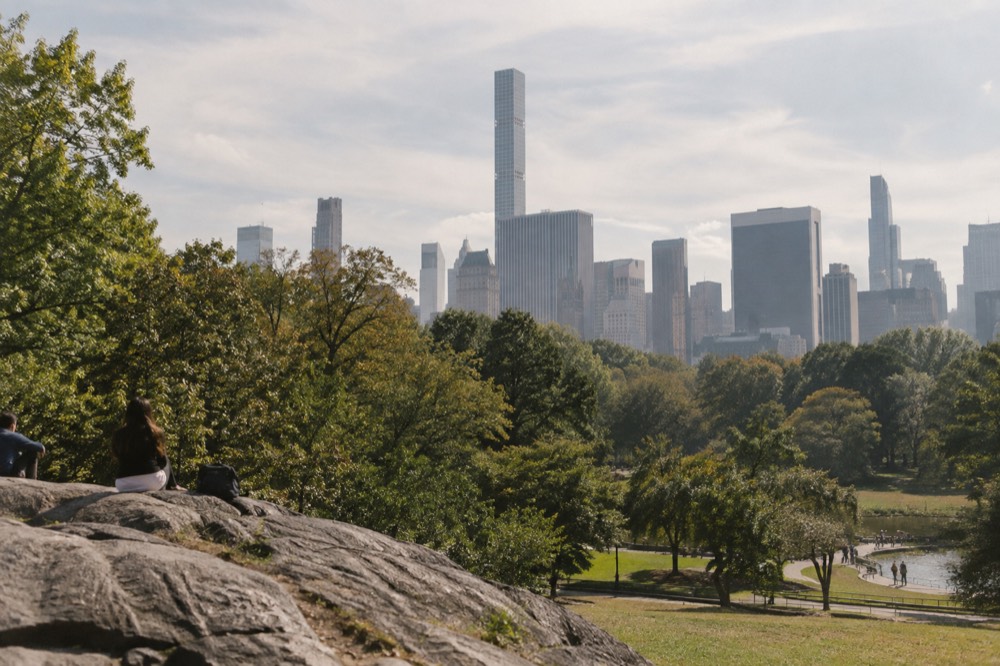
The distance between the southern end of Central Park and the heart of Times Square is roughly a mile and a half along 7th Avenue. Fifteen minutes on foot, two on the N, Q or R train. Yet the question of which base to choose shapes an entire trip: where you eat breakfast, how early you start each morning, and how much of the city you see on legs versus underground.
Is It Better to Stay Near Central Park or Times Square?
For most first-time visitors, Times Square wins on logistics and Central Park wins on quality of life, so the honest answer depends on what you plan to do after dark. Stay near Times Square if you are seeing Broadway shows and want every subway line within one block. Stay near Central Park if you want quiet nights, morning runs and the museums, and you do not mind a ten to fifteen minute train ride to the theater district.
The trade is real, and it is worth stating plainly rather than hedging. Times Square sits on top of the busiest subway complex in the entire system. In 2025, Times Sq-42 St recorded 61,203,303 riders, according to MTA ridership data, which is 71% more than Grand Central-42 St and far ahead of any other station in the city. Practically every line in Midtown passes through or beside it. From a hotel near the square you can reach Lower Manhattan, Brooklyn, the museums and both major rail terminals without a transfer more often than not.
Central Park's edges, by contrast, are served by fewer lines: the 1, 2, 3 along the park's western side, the B and C along Central Park West, and the 4, 5, 6 along Lexington Avenue on the Upper East Side. None of those stations approach the connectivity of Times Sq-42 St. What you get instead is a neighborhood that empties of office workers at 6pm and stays genuinely residential, which is exactly what some travelers want after a loud day of sightseeing and exactly what others find boring.
There is a third consideration that most comparisons skip: neither area is a monolith. "Near Central Park" can mean the Upper West Side, the Upper East Side, or the thin, expensive strip of Midtown directly south of the park. "Near Times Square" can mean the Theater District proper, the calmer blocks of Hell's Kitchen to the west, or the noisier stretches right on 42nd Street. The block matters as much as the neighborhood.
What Is Each Area Actually Like at Street Level?
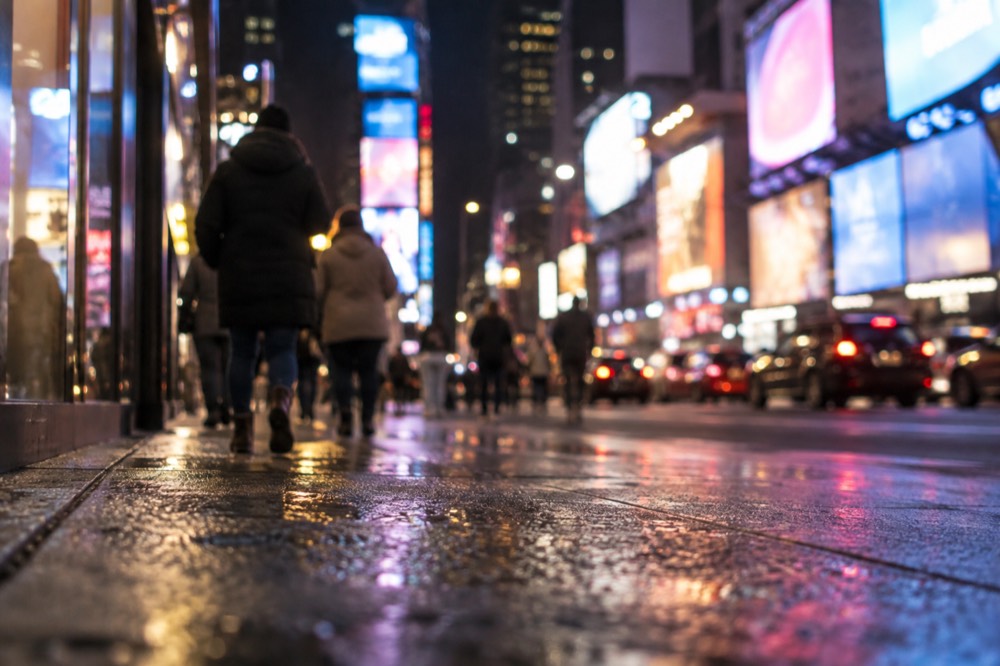
Times Square is a 24-hour spectacle that never dims: crowds, costumed characters, ticket sellers and light so bright it erases the difference between 9pm and 3am. The blocks around Central Park are the opposite: tree-lined residential streets, brownstones and pre-war apartment buildings, with the park itself functioning as the neighborhood's front yard. Neither is a neutral backdrop, and light sleepers should weigh that heavily.
Around Times Square, the noise is not an exaggeration. The billboards are required by zoning to stay lit, and the pedestrian plazas draw enormous crowds every evening. Hotels on the side streets a block or two off the square, especially west toward 9th Avenue in Hell's Kitchen, are noticeably calmer than those facing Broadway or 7th Avenue directly. Ask for a room facing away from the avenue, and expect to hear it anyway on lower floors.
The park's edges flip that completely. The Upper West Side around Columbus Avenue and Amsterdam Avenue is full of restaurants, cafes and bookshops that serve actual residents. The Upper East Side is quieter still, more formal, and closer to Museum Mile: the Metropolitan Museum of Art, the Guggenheim and the Frick all sit on or near Fifth Avenue. If your days revolve around museums and the park, basing yourself there removes a daily commute that Midtown-based visitors make every morning.
One Met ticket detail worth knowing if museums drive your choice: general admission at the Metropolitan Museum of Art is $30 for adults, $22 for seniors and $17 for students, and one ticket covers both Met Fifth Avenue and The Met Cloisters on the same day. Pay-what-you-wish applies only to New York State residents and to students from New York, New Jersey and Connecticut, and even then you must pay something. Out-of-state visitors pay the fixed price.
If the park is your base, a guided walk early in your trip pays for itself in orientation. The Central Park Guided Walking Tour covers Bethesda Terrace, the Mall and Bow Bridge in two hours, and the park's loops genuinely confuse people who try to navigate them alone.
Which Base Is Cheaper for Hotels in New York?
Neither area is cheap, but the price shapes differ: Times Square hotels price for location and theater demand, while park-adjacent hotels spread across a wider range, from modest Upper West Side rooms to some of the most expensive addresses in the city. What you should compare is value per night, not headline rate, because room sizes near the park are often larger for similar money.
Hotel nightly rates move with dates, events and demand, so this site does not quote them; check the live rate for your dates before judging either area. What can be said honestly is structural. Times Square's hotel stock skews toward large chains built for tour groups and theatergoers, which means efficient but compact rooms and heavy lobby traffic at check-out time. The park-side neighborhoods include those same chains plus a deep inventory of smaller properties, residential-style hotels and apartment buildings converted decades ago, where a room can feel meaningfully bigger.
The demand patterns differ too. Times Square rates spike hard around Broadway premieres, holiday weeks and the stretch from Thanksgiving through New Year's Eve. The park areas feel those same holiday waves, since Rockefeller Center's tree draws crowds up to the park's southern edge, but weekday business travel fills Midtown hotels year-round in a way the residential Upper West Side does not match. A Sunday-to-Thursday stay near the park can price surprisingly well.
One cost that is identical from either base: getting around. A subway ride is $3.00, and the fare system no longer sells any unlimited MetroCard. As of 1 January 2026 the MTA no longer sells or refills MetroCards at all; the weekly value now comes from automatic OMNY fare capping at $35, applied when you tap the same card or device for subway and local bus rides. There is nothing to buy in advance and nothing to lose in a jacket pocket.
| Factor | Stay near Central Park | Stay near Times Square |
|---|---|---|
| Atmosphere | Residential, green, quiet at night | Loud, bright, crowded around the clock |
| Best subway access | 1, 2, 3 / B, C on the west; 4, 5, 6 on the east | Nearly every line, busiest station complex in the system |
| Closest major sights | The Met, AMNH, Guggenheim, the park itself | Broadway theaters, Rockefeller Center, observation decks |
| Evening character | Restaurants and cafes, early wind-down | Shows, bars, crowds until late |
| Typical walk to the other area | 15-25 minutes | 15-25 minutes |
| Best suited to | Museum-goers, families, runners, light sleepers | Theatergoers, first-timers, short stays, night owls |
How Does Getting Around Differ from Each Base?
From Times Square you rarely plan transit, because the station beneath it connects to almost everything; from Central Park's edges you plan a little more, since the west side runs on the 1, 2, 3 and B, C and the east side on the 4, 5, 6. Either way the fare is the same $3.00 ride with a $35 weekly OMNY cap, and cabs across Midtown rarely justify themselves.
The practical difference shows up on specific trips. Going from the Upper West Side to the Statue of Liberty ferries at Battery Park means the 1 train downtown, roughly thirty minutes, or the 2 or 3 express if timing is kind. From Times Square the same trip is the 1 or the 2/3 from the same complex, a few minutes shorter but with more stairs and crowds. Going to Brooklyn, whether DUMBO or Williamsburg, is simpler from Times Square, where the N, Q, R and the 2, 3 hand you direct rides.
Where the park bases win is the trip you make most: the park itself, and Museum Mile. An Upper East Side base puts the Metropolitan Museum of Art, the Guggenheim and the Frick within a short walk, and the Central Park Zoo and the southern park entrances close by. An Upper West Side base does the same for the American Museum of Natural History, which sits directly across the street from the park at 79th Street.
The Staten Island Ferry terminal, the Brooklyn Bridge and the 9/11 Memorial are all downtown, and neither base has an advantage for them; both are a straightforward express ride away. The honest summary is that Times Square saves you five to ten minutes on most cross-town trips, and the park areas give you a better morning and evening in exchange.
For a free orientation to Midtown's landmarks, there is a tip-based walk on GuruWalk that pairs Times Square with Grand Central, covering the celestial ceiling and the whispering gallery along the way. Six of the ten New York walks listed on GuruWalk belong to a single operator, CityShuffles, so the free-walk menu here is narrower than the platform's overall listing suggests.
Who Should Stay Near Central Park?
Families, museum-first travelers, runners and anyone who sleeps lightly should base themselves near Central Park. The park gives children somewhere to burn energy that no Midtown block can match, Museum Mile and the Natural History museum sit on the park's edges, and the residential streets mean sirens and crowds fade by evening instead of amplifying.
The family case is the strongest. Beyond the playgrounds and the zoo, the park's paths are flat, car-free and easy to supervise children on, and the surrounding neighborhoods have the everyday infrastructure families need: diners with booths, pharmacies, bakeries that open early. Midtown's hotels put you closer to the theaters, but they do not put you near a lawn. The full index of guides sits on New York City Travel Guide.
Museum-goers should do the arithmetic honestly. If your list is the Met, the Guggenheim, the Whitney, the American Museum of Natural History and MoMA, four of those five sit at or near the park. MoMA is the Midtown one, a short ride or a pleasant walk down Fifth or Sixth Avenue from the park's southeast corner. Basing near the park converts your heaviest days into walkable ones.
The runner's case needs no elaboration beyond this: the park's six-mile loop is the most famous run in the world, and staying beside it means you are on the bridle path before breakfast without a subway ride in running shoes. Light sleepers should still pick their block carefully, since avenues carry traffic all night, but side streets near the park are among the quietest sleeps in Manhattan.
Who Should Stay Near Times Square?
Theatergoers, first-time visitors on short stays, and anyone prioritizing observation decks and Broadway should stay near Times Square. The theaters are a walk away, the Empire State Building, Top of the Rock and SUMMIT One Vanderbilt all sit within a short radius, and the station beneath the square connects to nearly every line, which matters most when you only have two or three days.
The theater case decides itself. If you have tickets to two or three shows, a hotel within walking distance of the Theater District removes the post-show calculus entirely: no checking when the last train runs, no standing in a taxi line at 10:45pm, just a five-minute walk back to your room. That convenience is what the area's hotels price for, and for a theater-heavy itinerary it is worth paying.
Short stays tilt the same way. On a two-night trip, transit friction compounds: every ten minutes saved twice a day is an hour of your weekend. Times Sq-42 St's connectivity means a trip to the Brooklyn Bridge, the Statue of Liberty ferry at Battery Park and an evening show can all start within a block of your lobby. The money page of things to do in NYC is built around exactly that kind of compressed itinerary.
The observation decks cluster around Midtown too. The Empire State Building is a ten-minute walk south, Top of the Rock is at Rockefeller Center directly up 6th Avenue, and SUMMIT One Vanderbilt sits beside Grand Central, one stop away. One World Observatory is the downtown exception. Deck pricing is dynamic, but the shapes are known: the Empire State Building starts from $44 plus a $5 booking charge, Top of the Rock from $42, and if you plan to stack several big attractions, the New York CityPASS at $149 for five attractions over nine consecutive days is worth comparing against individual tickets.
What Do Locals Say About the Two Areas?
Locals mostly avoid Times Square as a place to spend time, but that is not the same question as where to sleep: plenty of residents live within walking distance of it, in Hell's Kitchen and Clinton to the west. The park-side neighborhoods are genuinely local in a way Midtown is not, with schools, dry cleaners and corner delis serving residents, and that texture is what many visitors mean when they say a trip felt like real New York.
The honest version of the locals' verdict is directional, not absolute. Nobody hangs out in Times Square for fun on a Saturday, and the restaurants immediately around the square are the city's weakest concentration of tourist traps. But the westward blocks of Hell's Kitchen, five to ten minutes' walk, hold one of the better restaurant rows in Manhattan on 9th Avenue, and a hotel there gives you the square's transit without the square's noise.
The park-side neighborhoods deliver the opposite texture. The Upper West Side's Amsterdam and Columbus avenues are lined with places that survive on repeat customers, which is the only market test that matters. The Upper East Side runs quieter and more traditional. If your evenings are for dinner and an early night rather than a show, that texture is the point.
One seasonal note that surprises people planning summer trips: July is actually New York's wettest month, averaging 4.60 inches of precipitation in Central Park against August's 4.56, per NOAA's 1991-2020 normals. And February out-snows January, 10.1 inches to 8.8, while also being the driest month overall. A park-based trip is weather-exposed in a way a Midtown-based one is not, so pack for rain in summer rather than hoping around it.
Where Should You Actually Book in New York?
Split the difference if neither extreme fits: Hell's Kitchen west of Times Square gives you the square's transit with residential streets, and the blocks just south of the park around Columbus Circle give you park access with Midtown's connectivity. For a first trip of three days or fewer, lean Times Square; for a week or a family stay, lean park-side and accept one short train ride to the theaters.
The compromise zones deserve more attention than they get. Columbus Circle sits at the park's southwest corner with the A, B, C, D and 1 trains, which is arguably the best-connected park-adjacent location in the city: a ten-minute ride to Times Square and a five-minute walk into the park. Hotels around it price at a premium, but the position is genuinely both worlds.
Hell's Kitchen, west of 8th Avenue, inverts the trick: Times Square's station within a short walk, restaurant rows on 9th Avenue, and side streets that go quiet after the theater crowds head home. It is the answer most often given to visitors who ask for "Times Square but not like that."
For a longer stay, the park side compounds its advantages. A week near the park means a daily routine that includes green space, museums within reach and dinners in places you would return to, with the theater district a single express ride away on the nights you need it. A week in the Theater District means a nightly negotiation with crowds that most people tire of by day four. The Central Park guide and the Times Square guide both break down what to do once you have picked a side.
Common Questions About Staying Near Central Park or Times Square
The short answers repeat themselves for good reason: Times Square for transit and theaters, Central Park for quiet, families and museums, Hell's Kitchen or Columbus Circle if you want both. The questions below cover the specifics people actually ask, including safety, walking times and whether the park side means being stranded at night.
Is it better to stay near central park or times square?
It depends on your evenings and your mornings. Choose Times Square if Broadway shows, observation decks and maximum subway connectivity matter most, especially on a short stay. Choose Central Park if you want quiet nights, green mornings, museums within walking distance and a residential neighborhood around your hotel.
Is Times Square too noisy to sleep near?
The square itself, yes, on low floors facing an avenue. One block west toward 9th Avenue in Hell's Kitchen, or on a high floor facing a side street, the noise drops sharply. Ask for a room away from the avenue when you book, and bring earplugs as a backstop.
Can you walk from Central Park to Times Square?
Yes. The southern end of the park to the heart of Times Square is roughly a mile and a half, about fifteen to twenty minutes at a normal pace, straight down 7th Avenue. The N, Q or R trains cover it in two minutes if the weather turns.
Is it safe to stay near Times Square at night?
Times Square is one of the most heavily policed and populated places in the city at every hour, and the crowd rarely thins enough for anyone to feel alone. The standard big-city cautions apply to belongings in dense crowds, as they would anywhere.
Which side is better for families with kids?
The park side, in most cases. The park itself gives children open space, playgrounds and the zoo, and the Upper West Side's restaurants and shops are built for residents, which tends to mean booths, high chairs and early dinners. The theaters are a short ride away on show nights.
Do I need a subway pass for either area?
No pass exists any more. A ride is $3.00, and if you tap the same card or phone for subway and local bus rides, the MTA's OMNY system caps your fares at $35 over a rolling seven-day period automatically. Just tap the same device every time.