What Is the Best Art Museum to Visit in New York City?
A direct, sourced answer to which art museum is the best in New York City: the Metropolitan Museum of Art, and when MoMA, the Guggenheim or the Whitney are the better pick.
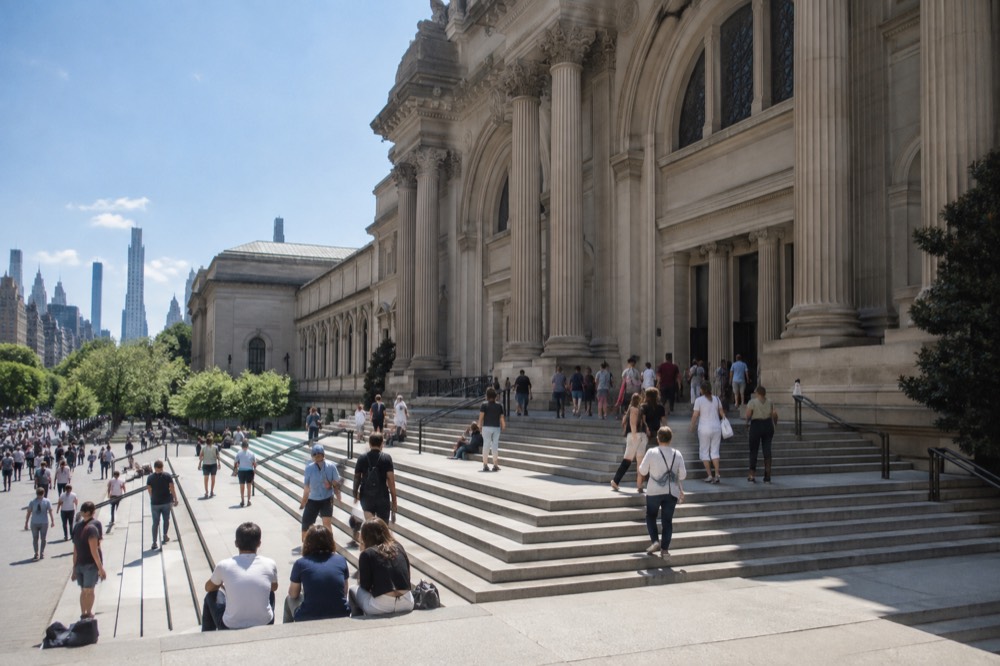
The Metropolitan Museum of Art holds more than a million objects spanning millennia, and a single adult ticket, at $30, covers both its Fifth Avenue building and The Met Cloisters on the same day. No other art museum in New York City comes close to that scope. That is the short answer, and it is the answer backed by attendance, by breadth of collection, and by the plain arithmetic of what a visitor gets for the admission price.
The longer answer depends on what you actually want to see. If your heart is set on Van Gogh's Starry Night and modern design, the Museum of Modern Art is the better target, and it costs the same $30 at the door. If you want architecture as half the experience, the Guggenheim's spiral ramp competes with its collection. If American art is your interest, the Whitney in the Meatpacking District is the specialist. And if you were told to visit the American Museum of Natural History, that is a superb museum, but it is not an art museum, and mixing the two up wastes a day.
This page walks through each of them with real admission figures, the free and pay-what-you-wish windows most guides get wrong, and the pairings that turn a museum visit into a full day. The figures come from the museums' own ticketing pages and from verified box-office data, and where a number is genuinely in dispute, this page says so rather than guessing.
What Is the Best Art Museum to Visit in New York City?
The Metropolitan Museum of Art is the best art museum in New York City for most visitors. Adult admission is a fixed $30, seniors pay $22 and students $17, children 12 and under enter free, and one ticket covers both the Fifth Avenue building and The Met Cloisters on the same day. No other art museum in the city matches its range, from Egyptian temples to European painting, and its two-location policy effectively doubles the visit.
The case for the Met is arithmetic as much as taste. The collection spans millennia and every continent, which means a visitor with no particular agenda will find something that grips them, whether that is the Temple of Dendur, the armor court, or the European paintings galleries. A specialist museum rewards a specialist visitor; the Met rewards everyone else. It also holds the city's deepest bench of works that people travel specifically to see.
The honest caveats matter too. The museum is closed on Wednesdays, plus Thanksgiving, 25 December, 1 January and the first Monday in May. And it is currently in the middle of a long renovation programme: a substantial list of galleries is closed in whole or in part, including much of the American Wing, the Costume Institute, the Cantor Roof Garden, and large stretches of Modern and Contemporary Art. The museum publishes the full list on its own gallery closures page, and anyone going for a specific wing should check it before booking. The museum is open and very much worth visiting; it is simply not firing on every cylinder right now.
For a deeper orientation before you go, see our full Metropolitan Museum of Art tickets guide, and for how a museum day fits the rest of a trip, the things to do in NYC page has the wider itinerary.
Why the Met's Admission Rules Trip Up So Many Visitors
Pay-what-you-wish at the Met applies only to New York State residents and to students from New York, New Jersey and Connecticut, and even for them it means paying something, with a one-cent minimum per ticket. Everyone else, which means nearly every tourist, pays the fixed $30 adult admission. Buying pay-what-you-wish online requires a New York State billing address, and New Jersey and Connecticut students must buy in person with valid student ID.
This is the single most misstated fact in New York travel writing. Dozens of guides still describe the Met as pay-what-you-wish for everyone. It has not been for years. The museum changed to a fixed mandatory admission for out-of-state visitors in 2018, and the policy has not softened since. Proof of eligibility is checked: a New York State driver's licence or ID card, IDNYC, a bill with a New York State address, a student ID, or a New York library card.
The part of the ticket almost nobody mentions is the best part. Every ticket includes exhibitions and same-day entry to both Met locations, meaning Fifth Avenue and The Met Cloisters, the medieval branch in Upper Manhattan's Fort Tryon Park. The Cloisters is the quieter, stranger, arguably more magical of the two, and a determined visitor can do both in one day. The hours differ by location and by day: the Fifth Avenue building runs 10:00-17:00 Sunday, Monday, Tuesday and Thursday, and until 21:00 on Friday and Saturday.
| Art museum | Adult admission | Key free or reduced window | Who qualifies |
|---|---|---|---|
| Metropolitan Museum of Art | $30 ($22 seniors, $17 students) | Pay-what-you-wish, any day | NY State residents and NY/NJ/CT students only, proof required |
| Museum of Modern Art (MoMA) | $30 ($22 seniors, $17 students) | Free Friday nights, 17:30-20:30 | New York State residents only, reserved in advance, proof required |
| Guggenheim Museum | $30 ($16 during exhibition changeover) | Pay-what-you-wish Tuesdays and Sundays, 16:00-17:30 | Everyone, $1 minimum, reservation recommended |
| Whitney Museum of American Art | $30 ($24 seniors and students) | Free Friday nights 17:00-22:00, and free Second Sundays | Everyone for both; also free daily for anyone 25 and under |
| Brooklyn Museum | Suggested admission | Check the museum's own site for current policy | Varies by programme |
Note the pattern in that table: the two most famous "free museum nights" in New York are not open to tourists. MoMA's free Friday evenings, funded by UNIQLO, are reserved for New York State residents with proof, and tickets must be reserved in advance. The Whitney is the exception worth knowing about, its Friday-night free hours are genuinely open to everyone, as are its Second Sundays. For the full landscape of free and reduced admission across the city, see free museums in NYC.
When MoMA Is the Better Art Museum in New York City
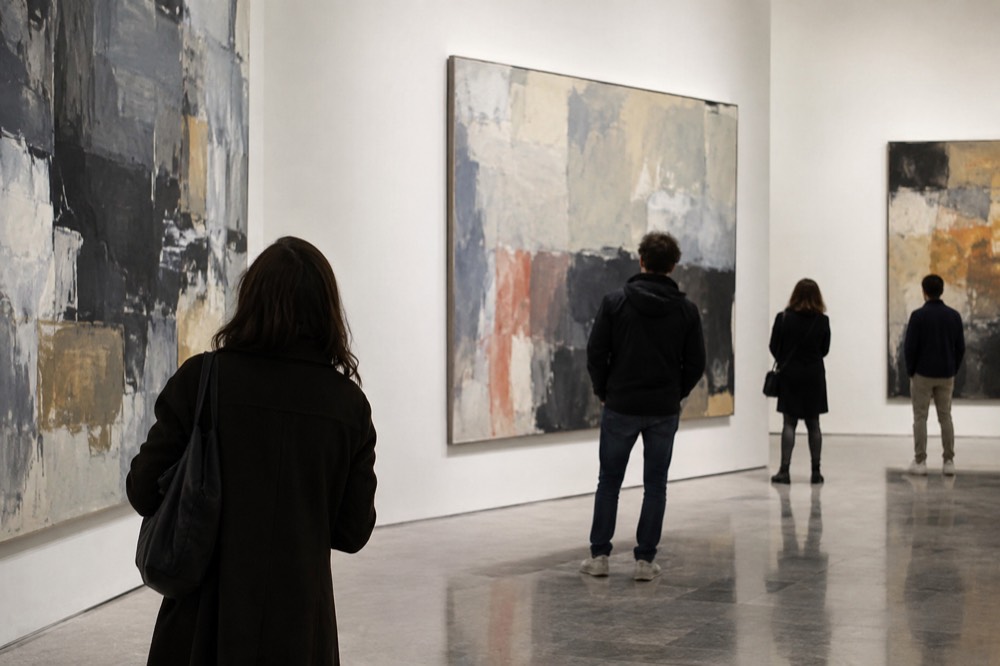
The Museum of Modern Art is the better pick when modern and contemporary art is what you came for. Its $30 adult admission covers the permanent collection from Van Gogh's Starry Night through the design galleries and the sculpture garden, and it sits in Midtown within walking distance of Rockefeller Center, so it pairs naturally with an observation deck visit. Visitors 16 and under enter free.
MoMA is the specialist answer to the Met's generalist one. Where the Met gives you five millennia, MoMA gives you the modern era with unmatched depth: Starry Night, Picasso, Matisse, Warhol, and a design collection that treats chairs and typefaces as seriously as paintings. If your mental image of "art museum" is that roster of names rather than temples and tapestries, MoMA is your museum and the Met is the day trip.
The practicalities favor it for short visits too. It is open daily 10:30-17:30, with extended hours to 20:30 on Fridays, and closed only Thanksgiving and Christmas. The location is the real advantage: MoMA sits between Fifth and Sixth Avenue in Midtown, a few minutes' walk from Rockefeller Center, Top of the Rock, and the Theater District. A morning in the galleries and an evening at the top of the city is one of the most efficient full days in Midtown.
The one thing to skip is queuing. The ticket desk lines outside can swallow half an hour on a busy day, and skip-the-line entry removes that entirely. The MoMA entry ticket on this site covers the details, and you can Check availability for timed entry before you go.
What About the Guggenheim and the Whitney?
The Guggenheim and the Whitney are both excellent, but neither is the city's best art museum. The Guggenheim charges $30 standard, dropping to $16 during exhibition changeover periods, and runs pay-what-you-wish on Tuesdays and Sundays from 16:00 to 17:30 with a $1 minimum. The Whitney charges $30, admits anyone 25 and under free every day, and opens free Friday nights from 17:00 to 22:00 to everyone.
The Guggenheim is half artwork, half architecture. Frank Lloyd Wright's spiral ramp on Fifth Avenue is itself the most famous exhibit, and the collection of modern and contemporary work inside it is strong rather than encyclopedic. Two things catch visitors out. First, the price genuinely moves: the reduced $16 rate applies while galleries are being changed over, so the figure in force on your date depends on the exhibition calendar, and the museum's own site is the place to confirm which one you will pay. Second, the pay-what-you-wish window is narrow, two ninety-minute slots a week, and it sells out; advance reservation is strongly recommended and a limited number of on-site tickets exists.
The Whitney is the city's dedicated museum of American art, in a Meatpacking District building with Hudson River views from its terraces. Its admission policy is the most generous of the major museums in one specific way: anyone 25 or under gets in free every day, a policy corroborated by the child price of $0.00 published in the CityPASS box-office table. Its free Friday nights, 17:00 to 22:00, are open to everyone, not just New Yorkers, which makes it the best free evening option among the city's big art museums for a visitor from out of town. It is closed Tuesdays.
The Whitney also has a location trick worth exploiting: it sits at the southern end of the High Line, so a visit slots naturally into a walk along the elevated park and the Chelsea Gallery district beyond it. The Guggenheim, meanwhile, anchors Museum Mile on the Upper East Side, within a short walk of the Met itself, which makes the two a plausible, if ambitious, same-day pairing.
Is the American Museum of Natural History an Art Museum?
No. The American Museum of Natural History is a science and natural history museum, not an art museum, and it belongs on a different list. It is an outstanding museum with dinosaur halls, the great whale and the Hayden Planetarium, but a visitor choosing the best art museum should compare the Met, MoMA, the Guggenheim and the Whitney, not this one.
The distinction matters practically, not just semantically. The natural history museum's pricing structure is different in kind from the art museums: general admission is pay-what-you-wish for New York State residents with ID, while everyone else pays a fixed price, and the museum's ticketing page states this plainly. The exact adult figure for a plain general admission ticket is currently in dispute between sources, so this page will not print one; the all-inclusive ticket that adds special exhibitions, giant-screen films and the planetarium costs more, and the CityPASS box-office table lists $43 for that level. Check the museum's own ticketing site for the number in force on your date.
What is not in dispute is the experience. The dinosaur halls alone justify a visit for families, and the museum sits directly across Central Park from the Met, on the Upper West Side. A determined visitor can do the Met in the morning, walk through the park, and finish at the natural history museum in the afternoon, though that is a lot of museum for one day and most people should pick one.
For the full picture, see our American Museum of Natural History tickets guide.
Should You Book a Guided Museum Tour or Go Alone?
A guided tour is worth it at the Met and skippable at the smaller museums. The Met's scale defeats most first-time visitors, and a guided highlights walk solves the routing problem in two to three hours; at MoMA, the Guggenheim and the Whitney, the buildings are small enough that the audio guides and wall text do the job. Anyone with a deeper interest in a collection should still go alone.
The honest framing is this: the Met is genuinely hard to do well. It is a quarter-mile long, its highlights are scattered across two million square feet, and the floor plan confuses people who have lived in New York for decades. A guide who routes you from the Egyptian wing to the European paintings without backtracking is not a luxury there, it is a time multiplier. The trade-off is depth: a highlights tour shows you the marquee rooms and moves on, which suits a first visit and frustrates a specialist.
At the smaller museums the math reverses. MoMA can be absorbed in two unhurried hours with its own audio guide. The Guggenheim's ramp is self-explanatory, you walk down it. The Whitney's collection rewards reading the wall text at your own pace. Save the guided-tour budget for the Met and spend the difference on a second museum.
One more planning note: the Met's guided group tours on this site use skip-the-line entry, which matters most in summer and on holiday weekends when the Fifth Avenue ticket queues are longest. Midweek mornings in the off-season, the line is short and the tour's value is mostly the routing, not the entry.
How to Pair an Art Museum with the Rest of Your Day
The best pairings use geography, not ambition. MoMA pairs with Rockefeller Center and an observation deck in Midtown; the Whitney pairs with the High Line and Chelsea; the Guggenheim pairs with the Met on Museum Mile; and the Met pairs with Central Park, which it borders. Trying to combine museums in opposite corners of the city is the single most common itinerary mistake in New York.
Start with the Upper East Side pairing, because it is the strongest. The Met and the Guggenheim sit on Fifth Avenue fifteen minutes apart on foot, with Central Park between them and Museum Mile's smaller institutions in between. A morning at the Met, a walk through the park, and an afternoon at the Guggenheim is a full and varied day that never requires a subway. The Met's Friday and Saturday late hours, until 21:00, mean the order can flip in summer.
Midtown is the second natural cluster. MoMA in Midtown, Rockefeller Center two blocks north, and the Empire State Building a ten-minute walk south. The Empire State's own ticket bundles its 86th floor open-air deck with a museum experience on the building's history, which rewards the same kind of visitor who lingers in galleries rather than snapping and leaving. Timed entry means you pick your slot when booking, so the deck can be slotted after the museum closes.
The downtown pairing is the most pleasant walk of the three. The Whitney sits at the southern terminus of the High Line; the elevated park runs north through Chelsea past Hudson Yards, where the Edge observation deck cantilevers off the side of the development. A museum morning, a mile of elevated park, and a deck at sunset is about as good as a New York day gets, and it needs no planning beyond a timed ticket for the deck.
Common Questions About the Best Art Museum in New York City
The five most-asked questions about choosing an art museum in New York City concern the Met's dominance, whether it is really pay-what-you-wish, which museum is best for modern art, which is best for families, and how many museums can fit in one day. The answers below are short, sourced, and honest about the trade-offs, including the one question where the honest answer is that no single museum wins.
what is the best art museum to visit in new york city?
The Metropolitan Museum of Art. Adult admission is $30, one ticket covers both the Fifth Avenue building and The Met Cloisters on the same day, and no other art museum in the city matches its range across millennia. Choose MoMA instead if modern art is your specific interest, or the Whitney for American art.
Is the Met really pay-what-you-wish?
Only for New York State residents and students from New York, New Jersey and Connecticut, with proof. Everyone else pays the fixed $30 adult admission. Even eligible visitors must pay something, with a one-cent minimum per ticket, and online pay-what-you-wish purchases require a New York State billing address.
Which New York art museum is best for modern art?
The Museum of Modern Art. Its collection runs from Van Gogh's Starry Night through Picasso, Matisse and Warhol, plus a major design collection and the sculpture garden. Adult admission is $30, visitors 16 and under are free, and it is open daily until 17:30, Fridays until 20:30.
Which art museum is best for families with kids?
The Met, with the American Museum of Natural History as the science alternative. Children 12 and under enter the Met free, the armor court and the Temple of Dendur hold kids' attention, and the Central Park location means an exit into a playground. At MoMA, visitors 16 and under are free.
Can you visit two art museums in one day in New York?
Yes, if you pair by geography. The Met and the Guggenheim sit fifteen minutes apart on Fifth Avenue, and the Met runs until 21:00 on Fridays and Saturdays. MoMA and the Whitney are far apart; splitting them in one day means most of your time goes to the subway rather than the art.
Are any New York art museums free in the evening?
The Whitney's free Friday nights, 17:00 to 22:00, are open to everyone, as are its free Second Sundays. MoMA's famous free Friday evenings are for New York State residents only, with proof and advance reservation. The Guggenheim runs pay-what-you-wish, $1 minimum, on Tuesdays and Sundays from 16:00 to 17:30.
The final word, then: name the Met when someone asks for the best art museum in New York City, and mean it. But ask them what they want to see first, because the honest answer to that question is what turns a good museum day into the right one. For everything else the city holds, start with the New York City Travel Guide homepage and plan outward from there.