MoMA Tickets: Prices, Free Nights and What a Visit Actually Gets You
MoMA charges $30 for adults, and the famous free Friday nights are open only to New York State residents. Here is what a ticket actually buys, what it does not, and how to fit the museum into a New York trip without wasting half a day in a queue.
Short answer
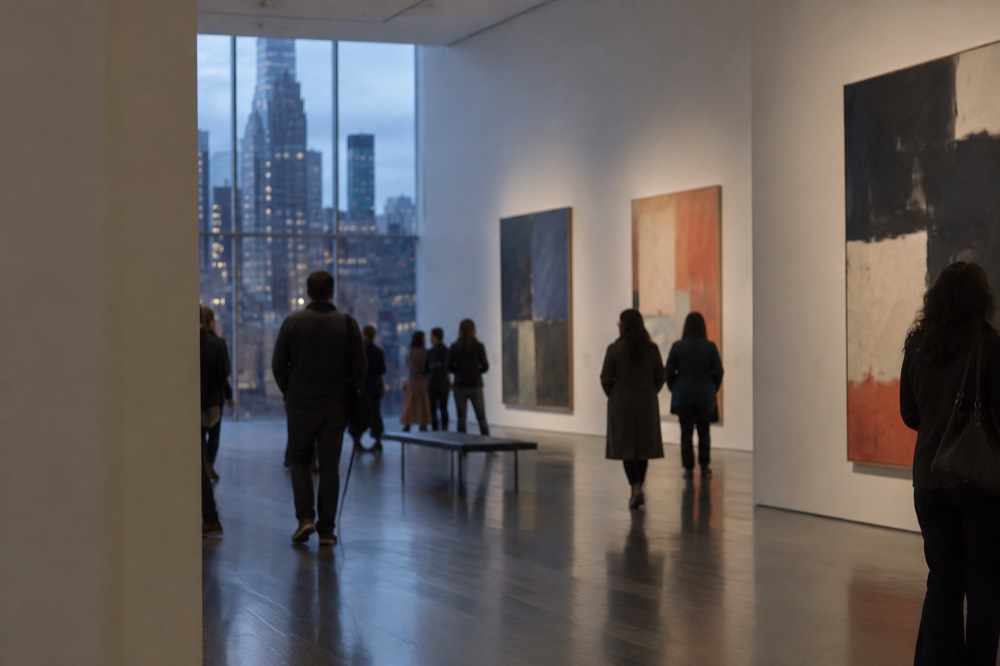
MoMA tickets cost $30 for adults, $22 for seniors 65 and over and visitors with disabilities, and $17 for students. Everyone 16 and under enters free. Free Friday evenings apply only to New York State residents with proof of residency, not to tourists. The museum is open daily from 10:30am to 5:30pm and stays open until 8:30pm on Fridays.
The Museum of Modern Art sits between 5th and 6th Avenues in Midtown Manhattan, wedged between office towers, and it holds the single most recognizable painting in the United States: Van Gogh's Starry Night. The queue at the ticket desk on a summer morning can stretch past the sculpture garden gate. The price of walking in is $30, and one of the most repeated "money-saving tips" about New York, the free Friday night, does not apply to most people reading a travel guide, because it is reserved for New York State residents. This page lays out what a MoMA ticket costs, what it covers, when the museum is quiet, and how the math works against a city pass. It is part of the wider New York City Travel Guide coverage of the city's museums and attractions.
How Much Do MoMA Tickets Cost?
A MoMA ticket costs $30 for adults, $22 for seniors aged 65 and over and for visitors with disabilities, and $17 for students. Children and teenagers 16 and under enter free, with no ticket needed. There is no pay-what-you-wish option for out-of-state visitors at any time of day, and the prices are the same whether you buy at the desk or in advance. The ticket covers the entire permanent collection and all included exhibitions.
Those are the standard admission figures published by the museum. Unlike the Metropolitan Museum of Art, whose pay-what-you-wish policy at least extends to a defined group of local residents and students, MoMA's discount structure is narrow: age-based concessions, a student rate, and the free-under-17 rule. A family of two adults and two teenagers pays $60, since the teenagers walk in free. That is worth knowing before you budget, because the under-17 threshold at MoMA is more generous than at several other New York museums, where the child cutoff sits at 12.
| Ticket type | Price | Notes |
|---|---|---|
| Adult | $30 | Standard admission |
| Senior 65+ | $22 | |
| Visitor with a disability | $22 | Care partner enters free |
| Student | $17 | Valid student ID |
| Age 16 and under | Free | No ticket required |
| Members | Free | Membership has its own tier structure |
One thing the ticket does not include: nothing. That is the short version. General admission covers the permanent collection, the rotating special exhibitions that are not separately ticketed, film screenings that are included with admission on the museum's schedule, and the sculpture garden. There is no separate "exhibition upgrade" of the kind the American Museum of Natural History sells for its planetarium. What you see on the wall is what your $30 bought.
What Does a MoMA Ticket Actually Get You Into?
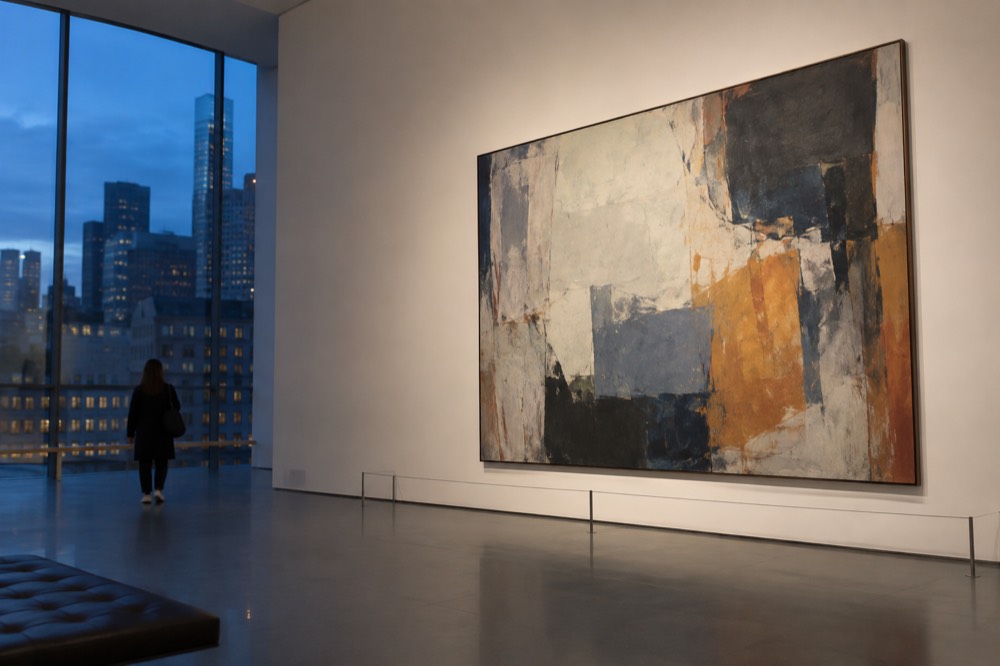
One MoMA ticket covers the full permanent collection across six floors of galleries, the included special exhibitions, film screenings scheduled as part of admission, and the Abby Aldrich Rockefeller Sculpture Garden, which you can re-enter from the galleries without showing your ticket again. The collection runs from late 19th-century painting through contemporary installation art, and the headline works, Starry Night, Les Demoiselles d'Avignon and The Persistence of Memory, all hang in the permanent galleries.
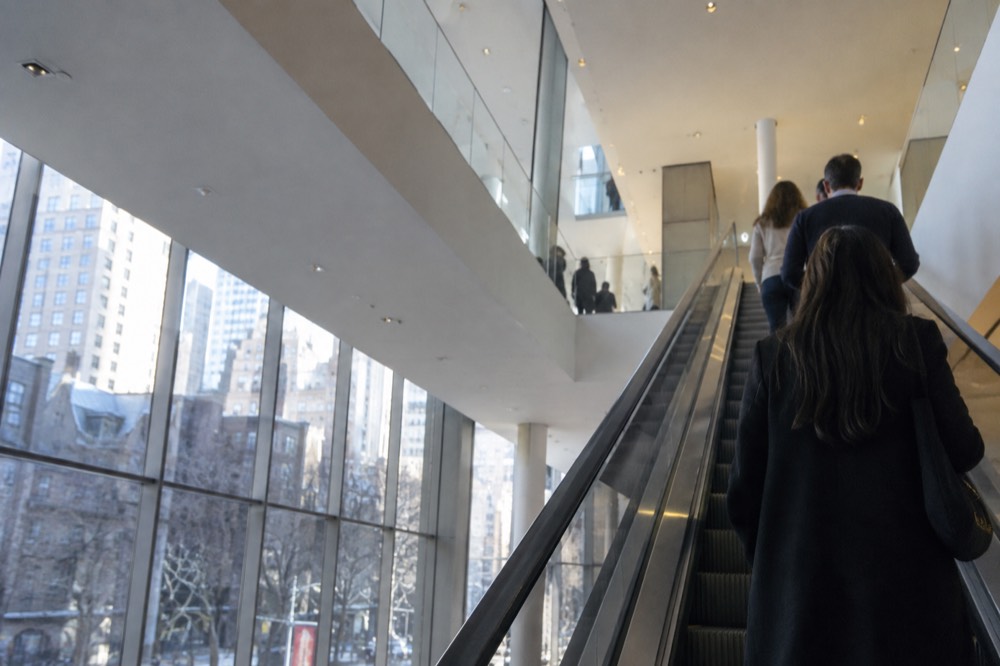
The layout rewards a plan. Most visitors enter on the street level, take the escalators up, and work downward, which is the right instinct: the collection is broadly chronological, with the 19th-century and early modern masterworks on the fifth floor and contemporary work below. Starry Night lives on the fifth floor, and it draws a crowd all day. The sculpture garden on the first floor is the museum's reset button, an open-air space with benches that most rushed visitors skip and nearly everyone who finds it regrets skipping.
Film is the underrated inclusion. MoMA runs a full screening programme, and many screenings are included with admission, so a rainy afternoon can become two paintings floors plus a film without paying anything extra. Check the museum's calendar for the days you are in town; the schedule changes weekly.
For visitors who would rather not queue at the desk at all, there is a skip-the-line entry ticket that covers the permanent collection from Starry Night through the design galleries and the sculpture garden, and the museum sits within walking distance of Rockefeller Center, which makes it a natural pairing with a same-day observation deck visit. If you are stacking several headline attractions into one trip, the wider selection on the things to do in NYC page covers how the pieces fit together.
Is the Skip-the-Line MoMA Ticket Worth Buying?
For most visitors, yes, because the ticket desk line is the single biggest time sink at MoMA, and a pre-booked entry lets you walk directly to the gallery escalators. The price is the same as desk admission, so the only thing you are trading for the queue is the flexibility of deciding on the day. Anyone visiting in summer, on a weekend, or on a rainy day should book ahead.
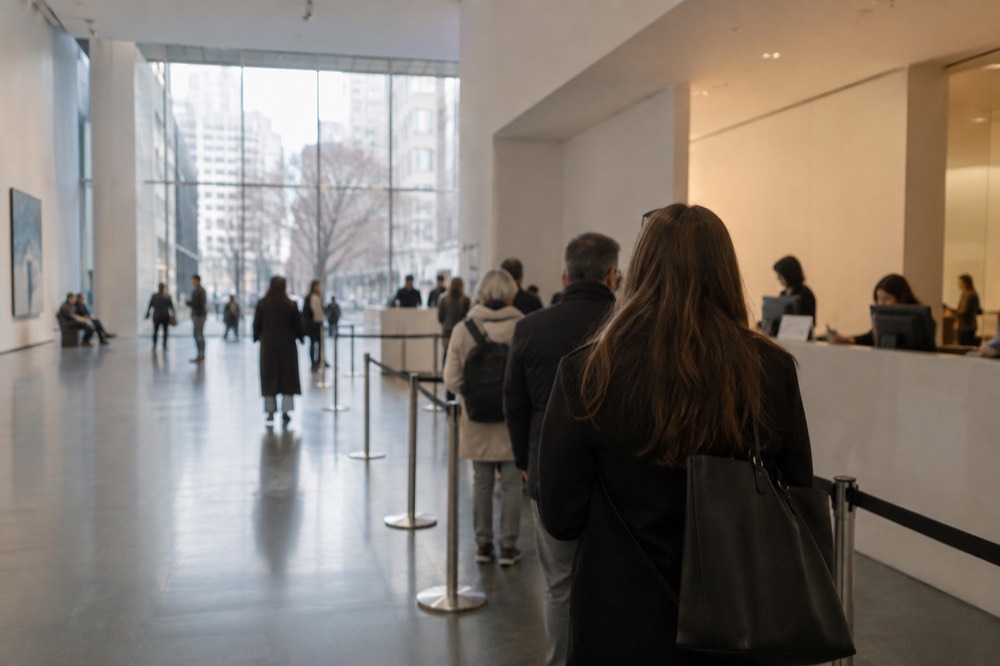
The desk queue is not a myth. On peak days it stretches along the museum's street facade, and it moves slowly because every transaction is a conversation about ticket types. A pre-purchased ticket converts that wait into a security-bag check, which takes minutes. The math is simple: you pay nothing extra and you save somewhere between ten minutes and forty-five, depending on the day.
There is one honest caveat. Pre-booked tickets are date-stamped, so if your plans are loose, a walk-up ticket is the more forgiving choice. New York itineraries slip: a long lunch, a subway delay, a spontaneous detour to Greenwich Village. If you are the kind of traveler who reschedules by the hour, buy at the desk and accept the queue.
Is MoMA Free on Friday Nights?
No, not for tourists. The free Friday evening admission at MoMA, running 5:30pm to 8:30pm and funded by UNIQLO, is available only to New York State residents, and it requires a free ticket reserved in advance plus proof of residency at the door. Out-of-state and international visitors pay full admission on Friday evenings like any other time. This is one of the most misquoted rules in New York travel writing.
The restriction is enforced, not theoretical. Residents reserve free tickets ahead, subject to availability, and show a New York State ID or equivalent proof at entry. A visitor from Ohio or Osaka who shows up at 6pm on a Friday expecting free entry will be paying $30. Guides that list "free Friday nights at MoMA" as a budget tip for visitors are describing a residents' benefit as if it were a tourist one.
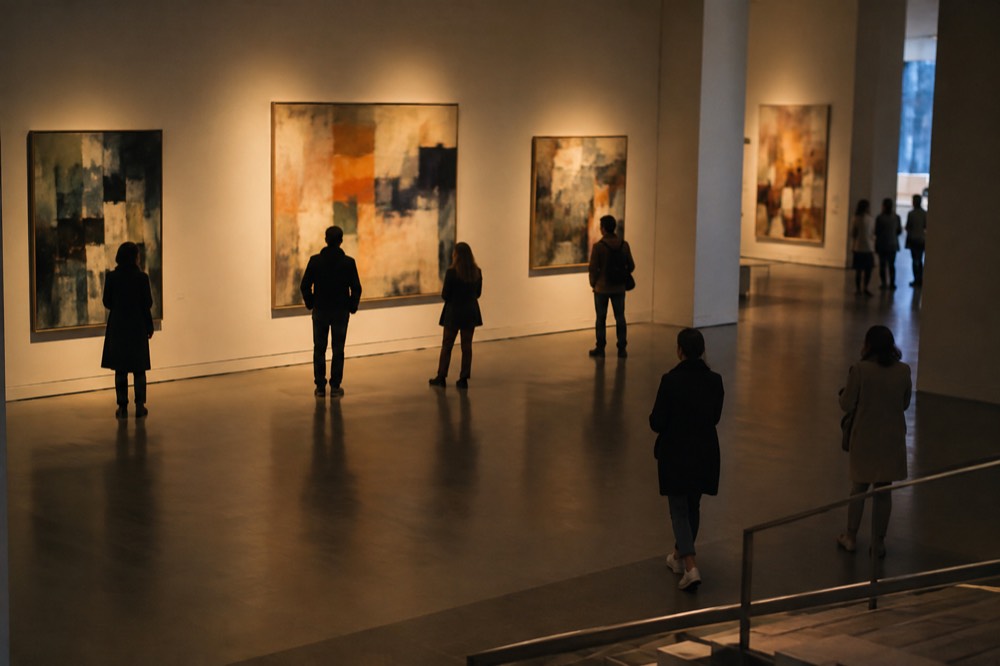
What Friday evenings do offer everyone, resident or not, is the longest opening hours of the week: the museum stays open until 8:30pm instead of 5:30pm. For an out-of-town visitor, that is the real Friday value. Arrive at 5:30pm and you get three hours of gallery time, and the after-work local crowd thins noticeably after 7pm as the residents who came for free finish their visit. The last hour of a Friday is one of the calmer times to see Starry Night without a wall of phones in front of it.
| Free or discounted window | Who qualifies | Conditions |
|---|---|---|
| Friday evenings 5:30-8:30pm | New York State residents only | Free ticket reserved in advance, proof of residency required |
| Age 16 and under | Everyone | Free every day, no ticket needed |
| Museum members | Everyone | Membership tiers set by the museum |
| Free general admission for all visitors | Nobody | MoMA has no all-visitor free day |
Compare that with the city's other big museums before you plan around it. The free museums in NYC guide lists which institutions genuinely offer all-visitor free hours, because a few do, and MoMA is not one of them. If free modern art is the goal, the timing and venue need to change, not just the day.
How Long Should You Spend at MoMA?
Two to three hours covers MoMA's highlights comfortably: the fifth-floor masterworks, a pass through the contemporary floors, and a pause in the sculpture garden. A serious art lover can absorb a full day, but the museum's layout makes a short, focused visit unusually easy, because the collection is compact by New York standards and the escalators put the best-known paintings within ten minutes of the entrance. First-time visitors should plan two hours minimum.
The museum rewards focus over endurance. Unlike the Metropolitan Museum of Art, which is physically enormous and punishes completists, MoMA's gallery space is concentrated, and the highlights route is short. The failure mode is the opposite: visitors who budget a full morning often leave after ninety minutes, because the marquee works are dense and the eye tires. Two hours with a break in the sculpture garden beats four hours of shuffling.
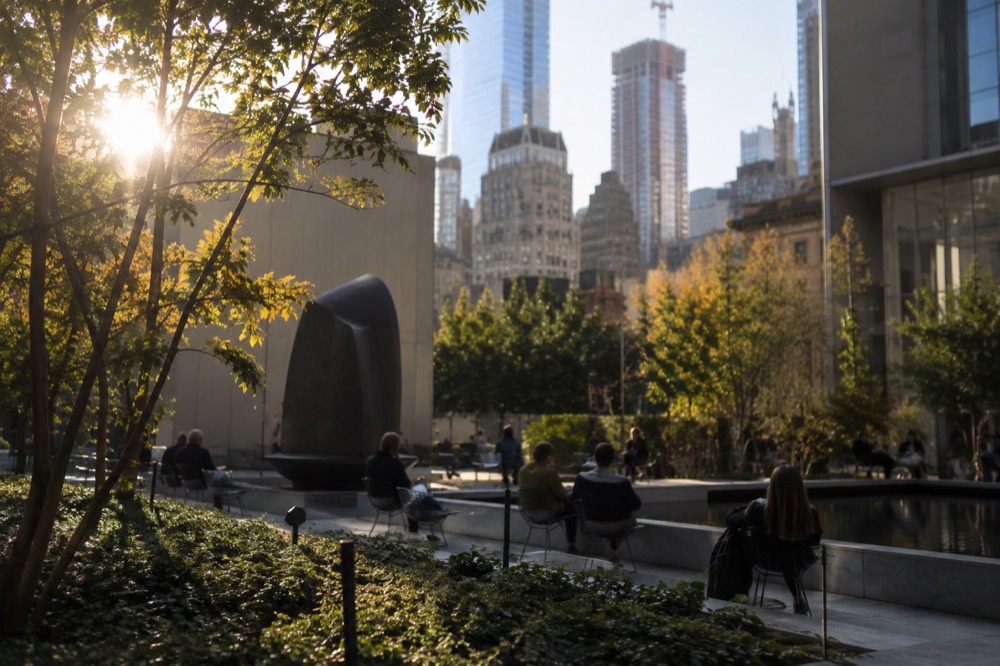
Timing within the day matters more than most guides admit. The museum opens at 10:30am, and the first hour is the quietest, particularly on weekdays. The midday crush, roughly noon to 3pm, is when tour groups arrive. Late Friday evening, as above, is the other sweet spot. Weekends are busy at every hour; if your trip is a weekend in NYC, book the earliest possible slot and do the fifth floor before the crowd builds.
| Time slot | Crowd level | Notes |
|---|---|---|
| 10:30-11:30am weekdays | Quietest | Best window for the fifth floor |
| Noon-3pm | Busiest | Tour groups arrive |
| After 4pm | Thinning | Museum closes 5:30pm, so short |
| Friday 5:30-8:30pm | Moderate | Residents' free window; thins after 7pm |
| Saturday and Sunday all day | Busy | Book the first slot if you must |
Does a City Pass Cover MoMA?
MoMA is not part of the New York CityPASS bundle, which builds its five-attraction selection from a list that includes the Empire State Building, Top of the Rock, the Statue of Liberty ferry, the 9/11 Memorial and Museum and several museums, but not MoMA. Travelers relying on a pass should check the attraction list against their actual wishlist before buying.
This surprises people, and it is worth checking rather than assuming. The pass ecosystem in New York has also shifted: one of the major passes ceased trading in 2025, and the New York Pass now sits inside the Go City product family. The New York CityPASS page covers the current bundle in detail, including the box-office prices it discounts against.
For a museum-heavy itinerary, the honest comparison is pass-versus-walk-up, and MoMA's $30 is the number that goes in the walk-up column. If your wishlist is the Empire State Building, Top of the Rock and the statue ferry, a pass wins easily. If your wishlist is MoMA, the Guggenheim and gallery-hopping in Chelsea, the passes mostly do not help, and individual tickets are the better buy.
How Do You Get to MoMA?
MoMA sits between 5th and 6th Avenues in Midtown Manhattan, a five-minute walk from Rockefeller Center and about ten minutes on foot from Times Square. The closest subway options are the 5th Avenue station on the E and M lines, and the 47-50th Streets station on the 1 train, with the N, Q, R and W at 49th Street also within easy reach. A single subway fare is $3.00.
Midtown's street grid makes this simple. From Rockefeller Center, walk one block north and one block west. From Times Square, walk east along 49th or 50th Street for roughly ten minutes. The Midtown Manhattan guide covers the surrounding blocks, which are among the densest in the city for pairing: Rockefeller Center, St Patrick's Cathedral and the Museum of Modern Art sit within a fifteen-minute walk of one another.
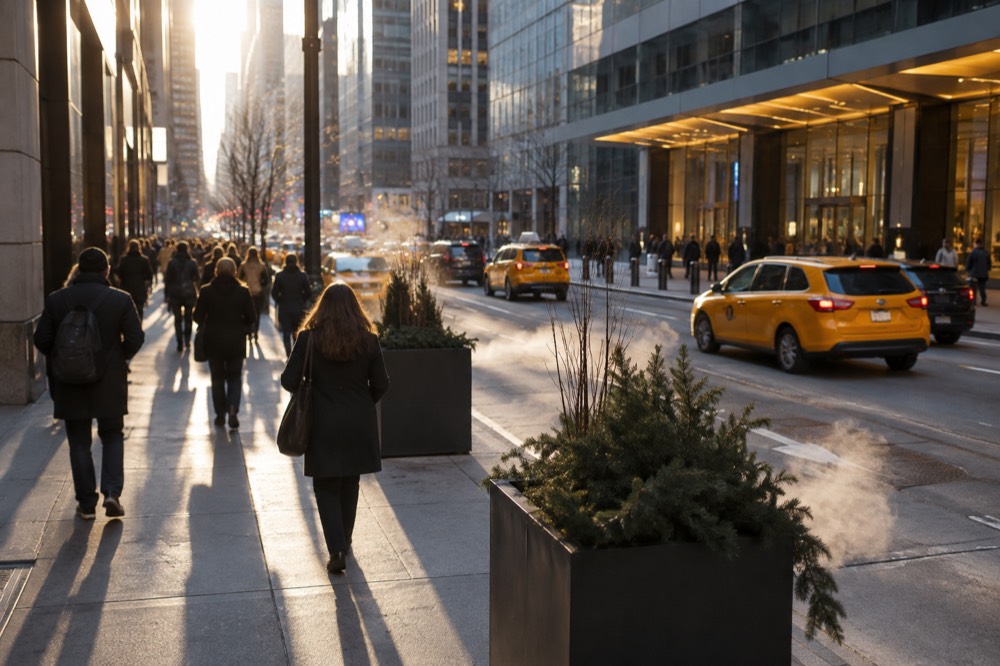
Fare mechanics, briefly, because they changed recently and most guides have not caught up. The MetroCard is retired: as of 1 January 2026 the MTA no longer sells or refills them. You tap in with OMNY, which means a contactless credit or debit card, a phone, or an OMNY card, and the system caps you automatically at $35 per rolling seven days across subway and local bus rides with no pass to buy. The OMNY guide explains the cap rules, including the one that trips groups up: each traveler must tap the same card or device every time for their own cap to apply.
What Pairs Well with MoMA on the Same Day?
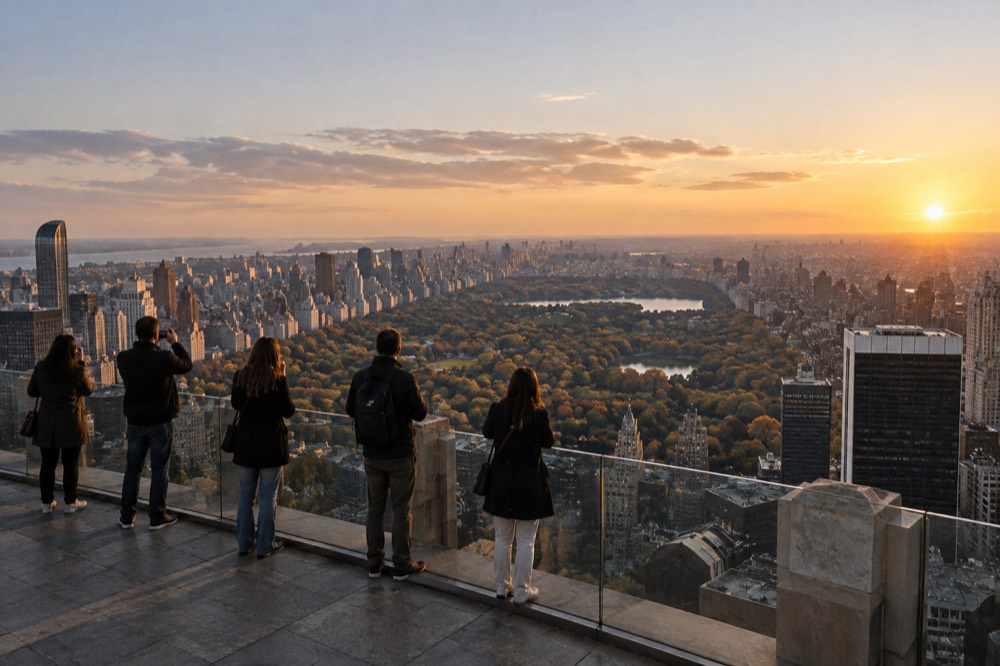
The natural pairing is Rockefeller Center and Top of the Rock, both a five-minute walk away, since the observation deck's three levels look north over Central Park and the deck ticket is timed, which lets you book a late-afternoon slot after the museum closes at 5:30pm. St Patrick's Cathedral, on 5th Avenue across from Rockefeller Center, is on the same short walk, and the sculpture garden gives you the mid-visit break.
This is where an itinerary either clicks or collapses. MoMA closes at 5:30pm on most days, which leaves an evening gap. Top of the Rock runs until midnight with last entry at 23:10, so a 6pm or sunset slot is the standard move, and the walk between the museum door and the deck entrance is under ten minutes. Sunset slots sell out first, so book the deck before you book the museum.
An alternative pairing heads downtown instead: MoMA in the morning, then the subway to the High Line and Chelsea Market for the afternoon. That is more travel time and less walking distance, but it suits visitors who have already done Rockefeller Center. The rainy day activities in NYC guide collects indoor options, and MoMA belongs near the top of any wet-weather list since the entire visit happens under one roof.
| Pairing | Walk from MoMA | Why it works |
|---|---|---|
| Top of the Rock | 5 minutes | Timed evening slots after the museum closes |
| St Patrick's Cathedral | 6 minutes | Free entry, short visit, on the same block |
| Rockefeller Center | 5 minutes | Skating in winter, plaza year-round |
| SUMMIT One Vanderbilt | 15 minutes | Mirror-room deck near Grand Central |
| Central Park south end | 10 minutes | Post-museum decompression walk |
For visitors who want the museum and a deck in one ticket transaction rather than two, the pairing options below bundle MoMA entry with the city's pass and deck products, which is how most first-time visitors end up buying them anyway.
Should You Book MoMA Tickets in Advance?
Yes for peak periods, no for quiet ones. Book ahead for any weekend, any day from June through August, any rainy day, and any Friday, because those are the days when the desk queue is longest and pre-booked entry saves the most time. On a weekday afternoon between September and May, walk-up admission is low-risk, and the desk queue is often just a few minutes. The ticket price is identical either way.
The decision is purely about time and flexibility. Advance booking costs nothing extra and removes the queue, but locks your date. Walk-up keeps your options open and costs you the queue. Families with teenagers should note the under-17 free rule applies regardless of how you buy, so the advance-purchase decision only concerns the paying adults in the group.
One last planning note that closes the loop: the museum is closed on Thanksgiving and Christmas, and hours can shift around holidays, so if your trip falls on a holiday week, check the museum's own calendar for the specific date rather than relying on the standard 10:30am to 5:30pm pattern. The Friday late opening is the one schedule feature worth building a plan around, resident or not, because three evening hours in a quiet gallery is a better museum experience than three midday hours in a crowded one.
Common Questions About MoMA Tickets
These are the questions visitors ask most often about MoMA admission, answered with the current prices and rules: the $30 adult ticket, the New York State residents-only free Friday night, the free-under-17 policy, and the hours. Each answer below reflects the museum's published admission policy as verified against independent sources.
How much are MoMA tickets?
Adults pay $30, seniors 65 and over and visitors with disabilities pay $22, and students pay $17. Everyone 16 and under enters free. Those prices apply at the desk and for pre-booked entry alike, and the ticket covers the permanent collection, included exhibitions and the sculpture garden.
Is MoMA free on Friday nights?
Only for New York State residents, who must reserve a free ticket in advance and show proof of residency. The free window runs 5:30pm to 8:30pm on Fridays. Out-of-state and international visitors pay standard admission on Friday evenings, though they do benefit from the extended 8:30pm closing time.
Do children need MoMA tickets?
No. Visitors 16 and under enter free every day, with no ticket required. That threshold is more generous than many other New York museums, where the free-child cutoff is typically 12, so a family with teenagers saves meaningfully at MoMA compared with elsewhere in the city.
How long does a MoMA visit take?
Two to three hours covers the highlights: the fifth-floor masterworks including Starry Night, the contemporary floors, and the sculpture garden. Devoted art fans can spend a full day, but the museum's compact layout makes a focused two-hour visit the more common and more enjoyable pattern.
Is MoMA included in the New York CityPASS?
No. The CityPASS attraction list includes the Empire State Building, Top of the Rock, the Statue of Liberty ferry, the 9/11 Memorial and Museum and several other museums, but not MoMA. Check the current attraction list against your wishlist before buying any pass, since MoMA's $30 admission sits outside the most popular bundle.
What is the closest subway station to MoMA?
The 5th Avenue station on the E and M lines is closest, with the 47-50th Streets station on the 1 train a short walk away. A single subway fare is $3.00, paid by tapping a contactless card or phone with OMNY, since MetroCards are no longer sold as of January 2026.