Greenwich Village NYC: What the Neighborhood Is Really Like for Visitors
Greenwich Village is the part of New York City that behaves least like a tourist attraction and most like a neighborhood, which is exactly why people cross the world to walk it.
Short answer
Greenwich Village suits travelers who want walkable streets, serious food and music history over skyscraper spectacle. It works as a base for longer stays and as a half-day visit from Midtown, reachable in about 15 minutes on the A, B, C, D, E, F or M trains to W 4th St-Washington Sq.
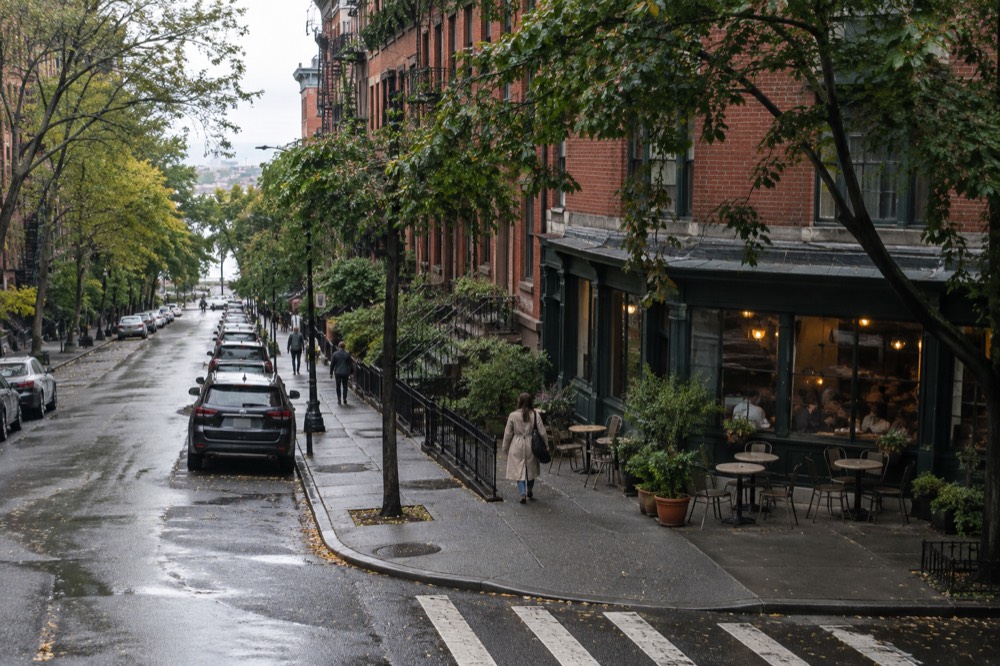
Most of Manhattan runs on a grid, and then the grid stops. Below 14th Street the street plan bends, narrows and dead-ends, a leftover of the days when this was a village outside the city proper. That accident of planning is why Greenwich Village still feels like a place people live in rather than a corridor people pass through. Washington Square Park sits at its heart, jazz basements and offbeat theaters survive in its basements, and the eating, from slice joints to century-old bakeries, is the equal of anywhere in the five boroughs.
This guide covers the practical questions: whether the Village works as a base for your trip, what a day there actually looks like, what it costs, and who should choose it over Midtown or Brooklyn. It is part of a wider set of neighborhood profiles on New York City Travel Guide, alongside the main things to do in NYC roundup.
Is Greenwich Village a Good Base for a New York City Trip?
Greenwich Village is a strong base for trips longer than three nights, especially for travelers who value evening life and food over doorstep proximity to the tourist core. It sits roughly 15 minutes from Times Square by subway, so the classic sights stay reachable without living inside them. Hotel prices run high for what you get, and rooms are small, which is the honest trade. First-timers determined to tick every deck and museum may prefer Midtown.
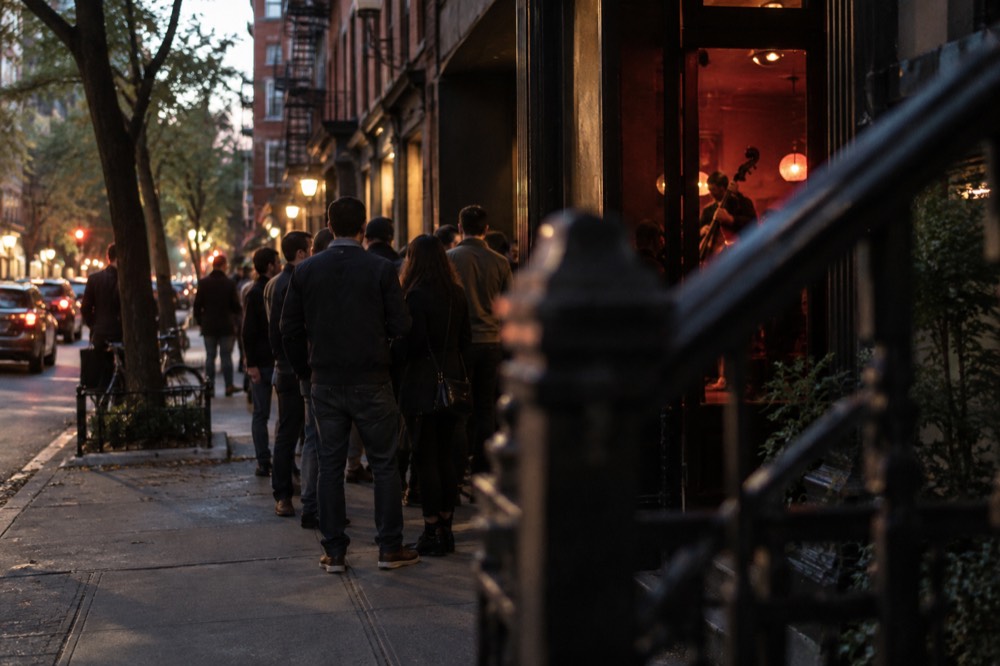
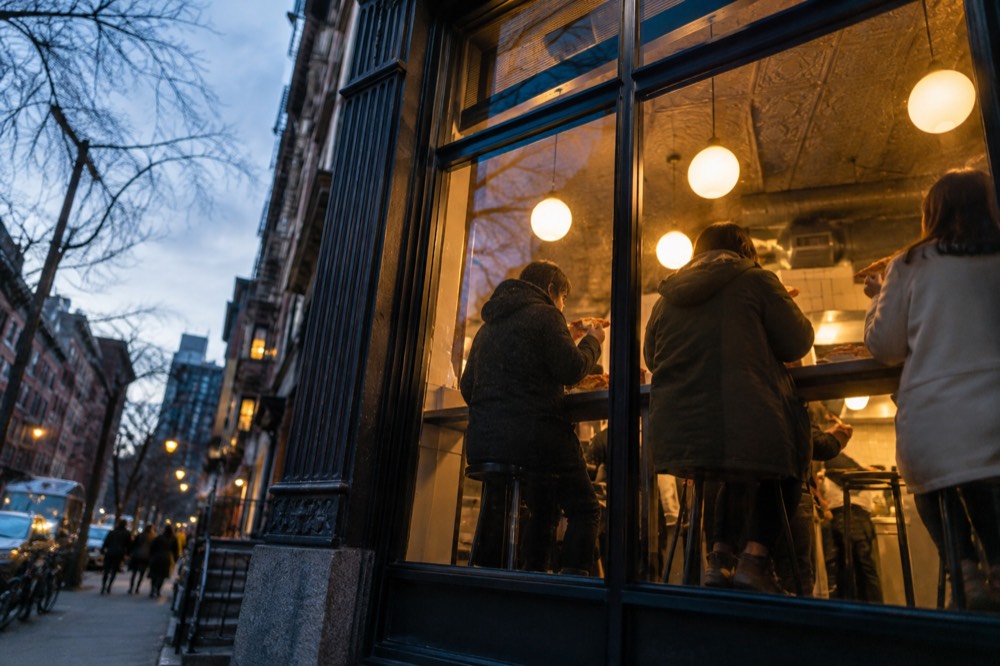
The case for basing here is the evenings. When the sightseeing stops, Midtown largely shuts down into a corridor of offices and chain storefronts, while the Village fills up. Comedy rooms, jazz clubs, wine bars and late kitchens cluster within a ten-minute walk of Washington Square Park, so your night does not depend on a subway ride home.
The case against is price and space. Village hotels charge boutique rates for rooms that would be considered modest anywhere else, and the neighborhood's charm is partly a function of its narrowness, which means noise. Ask for a room facing away from an avenue when you book. Families with young children often do better on the Upper West Side near Central Park, which has more green space per doorstep.
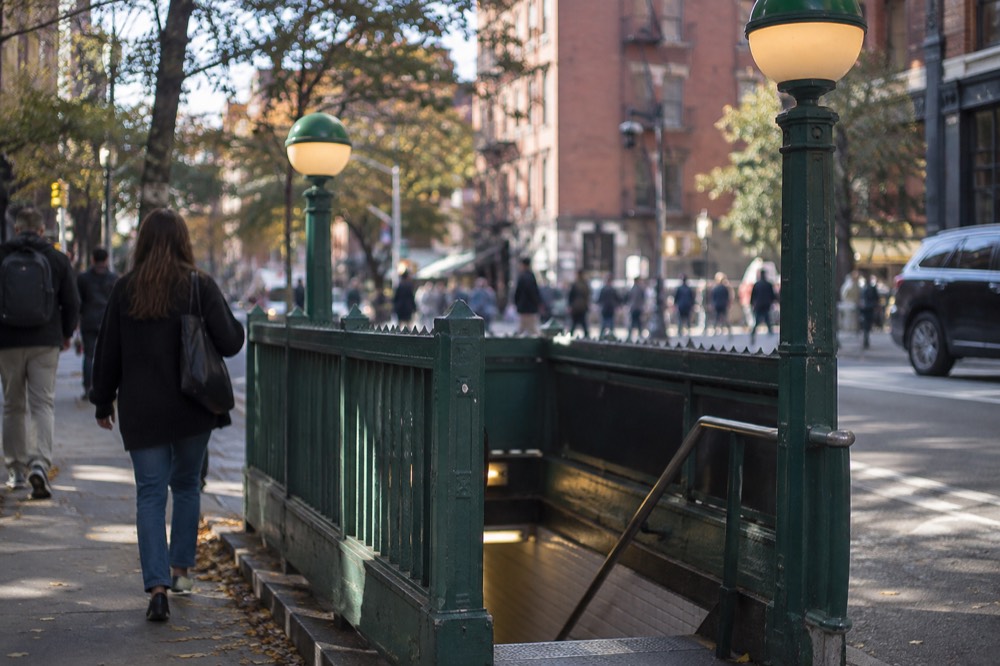
The subway coverage is genuinely good, which matters more than any single hotel. The W 4th St-Washington Sq station is served by the A, B, C, D, E, F and M trains, one of the widest selections in Manhattan, and the 1 train stops at Christopher St-Sheridan Sq a few blocks west. Few Village addresses are more than a ten-minute walk from a station.
There is also a quieter argument for the area that guidebooks underplay: it is a neighborhood where you can shop, eat and listen without ever crossing an avenue of tourist foot traffic. The bookstores, record shops and bakeries that survive here are the kind that survive because locals use them, and a base here puts you inside that daily life rather than looking at it from a tour bus window.
What Kind of Day Out Is Greenwich Village, and Who Does It Suit?
Greenwich Village works best as a slow, walking day rather than a checklist of sights. The honest inventory of monuments is short: Washington Square Park, the arch, some famous facades and a lot of atmosphere. What the area rewards is time spent in it, eating, browsing and listening. It suits food travelers, music fans and anyone tired of crowds. Visitors who need a landmark every twenty minutes will find it thin.
The typical shape of a day is a morning in Washington Square Park, a wander west through the lanes toward Hudson River Park, lunch at a slice joint or a bakery, an afternoon in the record shops and bookstores, and an evening at a jazz club or comedy room. None of that requires a ticket in advance except the evening venue, and the whole loop covers perhaps a mile and a half of walking.
The neighborhood's identity was built by bohemia, and the residue is real even if the rents that caused it are long gone. The music history is the strongest thread: jazz clubs around the blocks south of the park, folk music's New York epicenter a short walk west in the West Village, and theaters that premiered work too strange for Broadway. A guided walk earns its keep here, because almost none of this is visible from the street.
Two walks cover the neighborhood well from different angles. The food tour strings six tastings into a single three-hour route, and the free Village walk on GuruWalk covers the crooked streets, Washington Square and the jazz-block backstories on a pay-what-you-want basis. Guides there work for tips, so the price is whatever you decide at the end.
How Do You Get to Greenwich Village and Around It?
The fastest route from Midtown is any of the A, B, C, D, E, F or M trains direct to W 4th St-Washington Sq, roughly a 15-minute ride from Times Square, with a single fare of $3.00. The 1 train serves Christopher St-Sheridan Sq for the western blocks.
The old advice about buying a 7-day unlimited MetroCard is dead: the MTA stopped selling MetroCards on 1 January 2026, and the weekly value now comes from automatic OMNY capping at $35.
Tap the same card or phone every ride and the $35 weekly cap applies itself, with nothing to buy in advance. That is the whole system now. Mixing your phone and a plastic card breaks the cap silently, so pick one device and stick to it. The fare details live in our OMNY and fare guide.
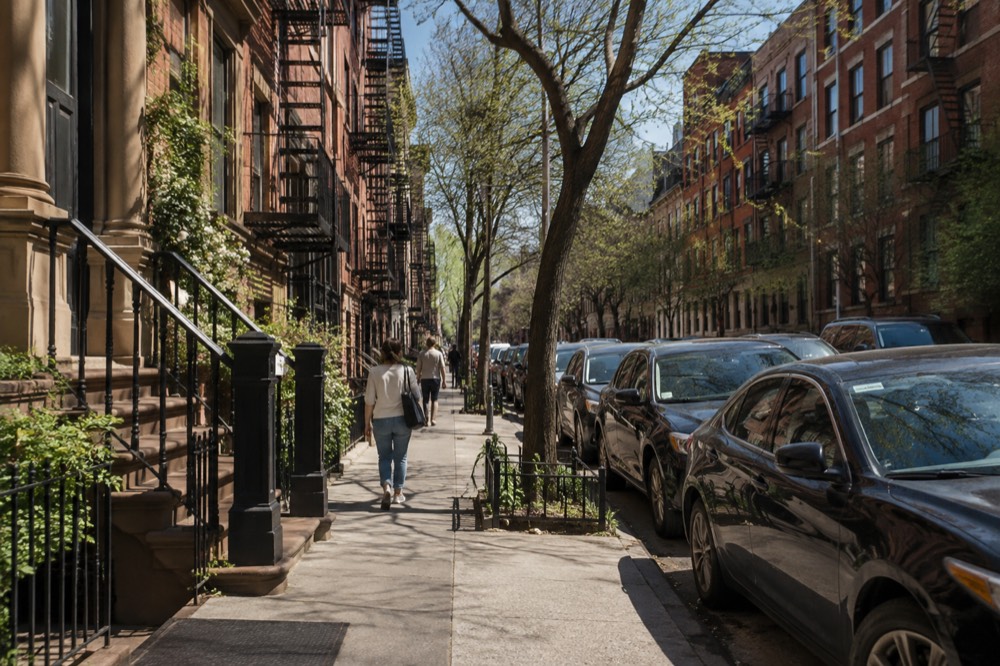
Getting around the Village itself is entirely a matter of feet. The street plan predates the grid, so it confuses even locals, and driving is worse than pointless: parking is scarce, traffic is slow and the subway beats a car for every journey a visitor makes. Citi Bike docks are scattered through the area for the riverside stretches.
| Route | Trains | Typical ride from Times Sq | Notes |
|---|---|---|---|
| W 4th St-Washington Sq | A, B, C, D, E, F, M | ~15 min | Best for the park and eastern Village |
| Christopher St-Sheridan Sq | 1 | ~12 min | Best for the West Village lanes |
| Houston St | 1 | ~13 min | Southern edge, SoHo side |
| Bleecker St-Lafayette | 4, 5, 6 | ~12 min | Eastern edge, NoHo side |
What Are the Best Things to Do in Greenwich Village?
The core Village experience is Washington Square Park, the crooked streets around it, the jazz and comedy basements, and the food, in roughly that order of time spent. The park is free and needs no planning. The music rooms sell out on weekends and need booking. The food rewards either a guided tour or a short list of institutions, because the best places are unmarked and the traps sit on the main drags.
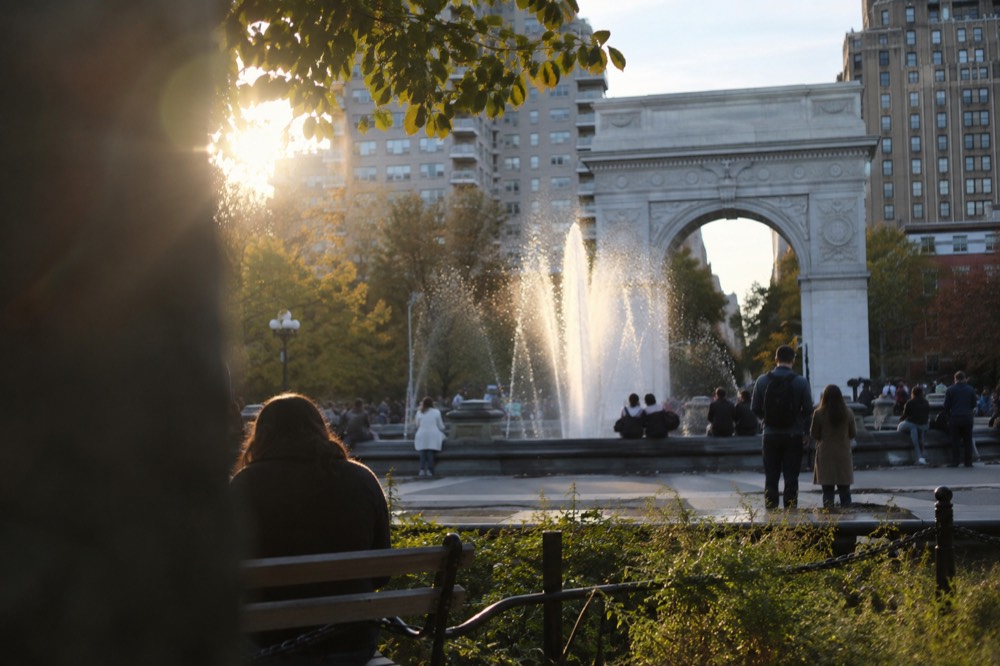
Washington Square Park is the living room. Buskers, chess players, dog runs and NYU's student crowd share the space under the marble arch, and it costs nothing. From the park, head west on any of the lanes: Minetta, Jones, Bedford. The streets refuse to run straight, which is the point. Turn toward the water and you reach Hudson River Park, a greenway with river views that runs the whole western edge of Manhattan.
The music is the neighborhood's claim to serious cultural weight. Jazz rooms around the blocks south of the park run sets nightly, and the folk-era venues sit in the West Village, where the scene concentrated in its heyday. Book weekend shows well ahead, the small rooms genuinely sell out. The comedy rooms are cheaper and looser, with rotating bills of working comics.
For structure, the food walk is the strongest single purchase in the neighborhood. Six tastings add up to a real meal, and the guide routes you through the Village's food identity, slices, bakeries and old institutions, while doubling as a primer on the music and bohemia past. Plan nothing afterward except a nap.
If you would rather not pay a fixed fee at all, the free neighborhood walk on GuruWalk covers Washington Square, the crooked streets and the jazz history on a tip basis. Six of the ten free New York walks on that platform belong to a single operator, CityShuffles, so the choice of free-walk guides in the city is narrower than the listings suggest, but the Village route itself is well reviewed.
Where Should You Eat in Greenwich Village?
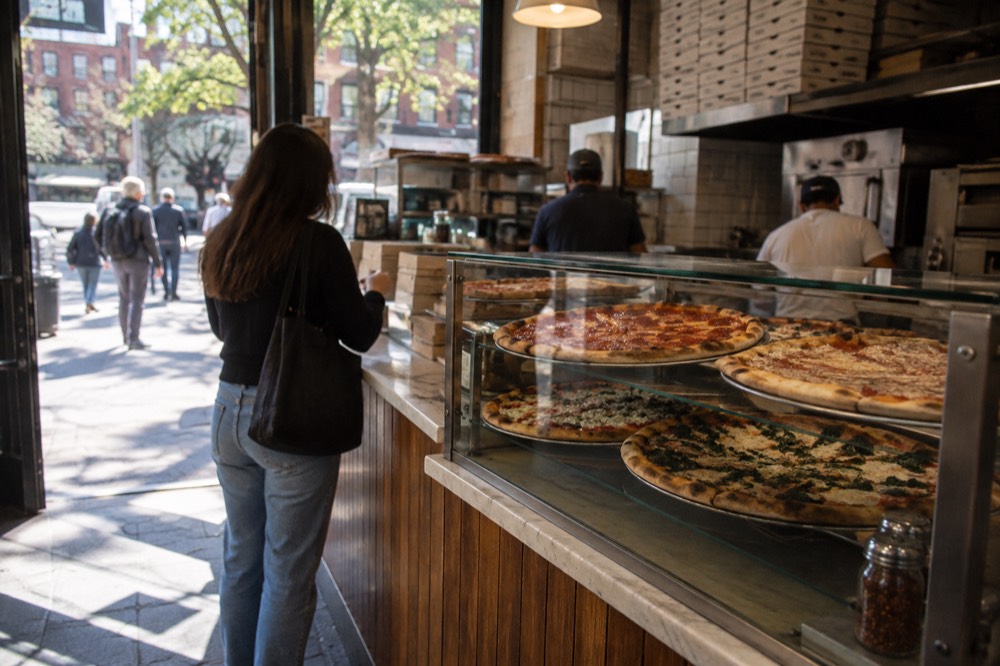
Eat the neighborhood's institutions rather than its newest openings: a slice from a classic pizza counter, bagels and baked goods from long-standing bakeries, and pasta from the old Italian blocks around Carmine Street and Bleecker. The food tour's six stops are chosen on exactly this logic, and doing it independently works too if you accept some walking between bites. The main drags hold the traps; the side streets hold the food.
The Village's food identity is older and more layered than the current restaurant cycle. Pizza by the slice is a civic institution here, the Italian heritage survives in a few blocks of old-school shops and restaurants, and the bakeries that fed the neighborhood for decades still queue on weekend mornings. That depth is why a food tour earns its price in this part of the city specifically, and why the same money spent in Midtown buys less.
| Food tour option | Area | Duration | Price from (per person) | Rating |
|---|---|---|---|---|
| Greenwich Village food tour, 6 tastings | Greenwich Village | 3 hours | $97 | 5.0 |
| Chinatown & Little Italy food tour, 6 dishes | Chinatown / Little Italy | 3 hours | $99 | 4.9 |
| Chelsea Market & High Line food tour | Chelsea | 3 hours | $83 | 4.9 |
| SoHo, Little Italy & Chinatown walking tour (light on food) | SoHo and south | 2 hours | $25 | 4.9 |
The comparison is worth a sentence: the Village tour is the highest rated of the set and the only one with a perfect rating across a large review count, but the Chelsea Market option is the better rainy-day pick because its market half is indoors. The SoHo walk is a cheaper orientation to the downtown neighborhoods generally, with tastings replaced by history.
For an evening, the jazz-club dinner pattern works well: an early slice or pasta, then a set. Clubs typically run two seatings a night, and the later one is the looser one. Reserve the first if you have a show elsewhere afterward.
What Does a Day in Greenwich Village Cost?
A Village day can be done for almost nothing or built around paid experiences, and the spread is entirely optional spending. The park, the streets, the riverside greenway and the free GuruWalk cost nothing beyond tips and a subway fare. The paid stack is the food tour from $97, a jazz set with a drink or two, and coffee and slices along the way. Transport adds $3.00 per subway ride, capped automatically at $35 a week under OMNY.
The table below prices three honest versions of the same day. The budget version is not a diminished experience, it is the actual Village: the park, the streets, a slice, the free walk and the riverside. The mid version adds the food tour, which replaces lunch and doubles as the neighborhood's best guided introduction. The full version adds an evening jazz set on top.
| Spend level | What it includes | Cost basis |
|---|---|---|
| Budget | Subway rides, a slice, coffee, Washington Square Park, free tip-based walk | A $3.00 fare plus whatever you tip |
| Mid | Food tour from $97 (replaces lunch), plus a slice or pastry and subway | From $97 plus incidentals |
| Full | Food tour, evening jazz set with drinks, coffee and pastry stops | From $97 plus the club's cover and bar |
One nearby freebie deserves a flag. The Whitney Museum of American Art sits at the southern end of the High Line, a 15-minute walk up the Hudson greenway from the Village's western edge, and it is free every day for anyone 25 and under, with free Friday nights open to everyone. Pairing a Village morning with a Whitney afternoon costs nothing on the right day of the week.
What Is Near Greenwich Village for the Rest of Your Day?
The Village borders five neighborhoods worth walking into: SoHo's cast-iron blocks to the east, the Lower East Side and NoHo, Chelsea and the High Line to the north, the West Village's quieter lanes continuing west, and the East Village across Broadway. All are within a 15-minute walk, which is why the area works as a base: your second and third days fill themselves without a subway ride. Chinatown and Little Italy sit 20 minutes south on foot.
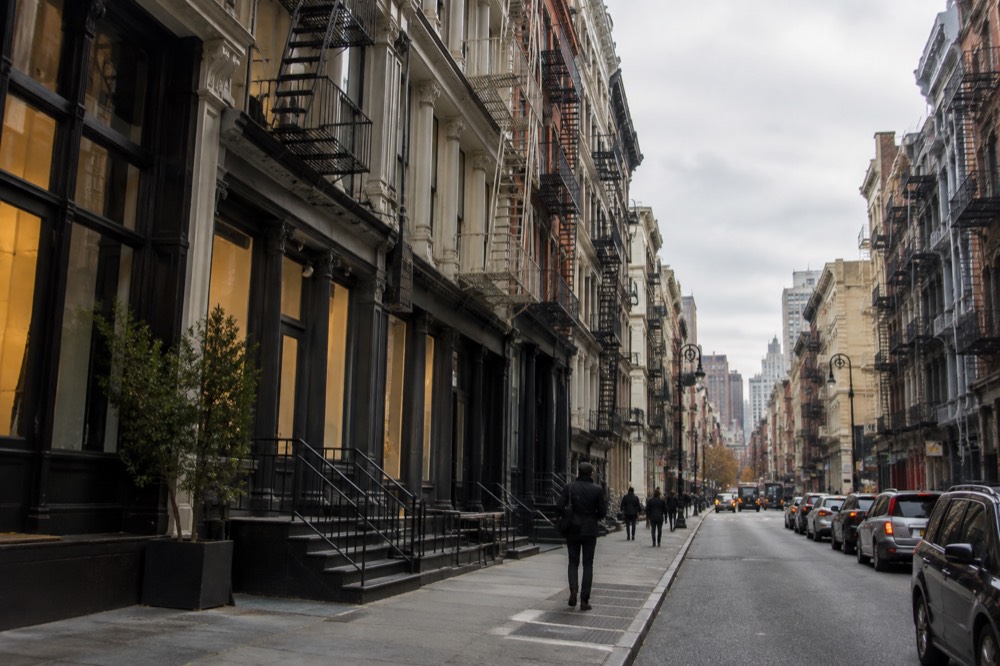
SoHo is the natural first extension, close enough that the boundary blurs on foot. Its cast-iron architecture and shopping streets make a clean contrast with the Village's residential lanes, and the SoHo guide covers it in detail. North of the park, Chelsea and the High Line give you an elevated walk with river views, and the High Line deposits you at the Whitney's door.
The eastward walk crosses Broadway into NoHo and then the East Village, a younger, louder food and bar district that rewards an evening rather than an afternoon. For visitors assembling a full downtown day, the things to do in Manhattan guide sequences these neighborhoods into a workable route.
A structured option for the southern stretch is the SoHo, Little Italy and Chinatown walking tour, which covers all three in a two-hour guided sweep. It is light on food and heavy on history, a decent complement to the Village food tour if you want the downtown story told rather than tasted.
Whichever of these extensions you pick, the Village stays your anchor. Everything above loops back to Washington Square Park within half an hour on foot, which is the quiet reason basing here pays off across a whole trip.
Common Questions About Greenwich Village NYC
Greenwich Village is the downtown Manhattan neighborhood around Washington Square Park, known for crooked pre-grid streets, jazz and folk music history, off-Broadway theater and some of the city's best casual food. Visitors most often ask whether it is worth staying in, how it compares to the East Village and SoHo, and whether a day there needs a tour.
The short answers: yes for longer trips, quieter than the East Village, more residential than SoHo, and a food tour is the one guided spend that clearly pays.
Is Greenwich Village worth visiting?
Yes, for most travelers. It is the part of Manhattan that behaves like a neighborhood rather than a corridor, with the city's strongest concentration of jazz rooms, comedy clubs and old food institutions inside a walkable square mile. If your trip is only one or two days and you need the major landmarks, treat it as a half-day visit anchored on Washington Square Park.
Is Greenwich Village the same as the West Village?
No. Locals use Greenwich Village for the area around Washington Square Park and New York University, and the West Village for the quieter residential lanes further west toward the river. The border is loose and visitors walk between them without noticing, but the West Village is calmer and more expensive, while the heart of Greenwich Village is busier and younger.
How many days should you spend in Greenwich Village?
One full day covers the park, the lanes, a food tour and an evening show. Two days let you add the riverside greenway, the Whitney at the High Line's southern end and the neighboring East Village or SoHo without rushing. Staying there as a base, you will pass through it constantly anyway.
What is the best time of day for Greenwich Village?
Morning for the bakery queues and a quiet Washington Square Park, afternoon for the wander west, evening for the music rooms, which is when the neighborhood earns its reputation. Weekend evenings are the busiest and the clubs sell out, so book ahead or go midweek.
Do you need a tour for Greenwich Village?
Not for the streets, which are safe and pleasant to wander alone. A tour pays off for two things: the food, where a guide's stop list saves you the hit-and-miss, and the history, since almost nothing of the music and bohemia past is labeled on the buildings. The food tour and the free tip-based walk cover those two needs respectively.
Is Greenwich Village expensive?
By national standards, yes. By Manhattan standards, the spending is controllable: the park and streets are free, slices and bagels are cheap, and the free GuruWalk costs only your tip. The big-ticket items are the food tour from $97, jazz sets with drink minimums, and hotels, which charge boutique rates for small rooms.
The Village's real advantage never shows up on an itinerary. It is that the neighborhood keeps working after dark, when the sightseeing city goes quiet. Plan one evening here with nothing scheduled after it, and let the blocks do the rest.