Things to Do in Manhattan: A Practical Guide to New York's Main Island
Manhattan is one of five boroughs, and most first visits never leave it. Here is what the island actually offers, what things cost, and how to plan days that do not collapse by 3pm.
Short answer
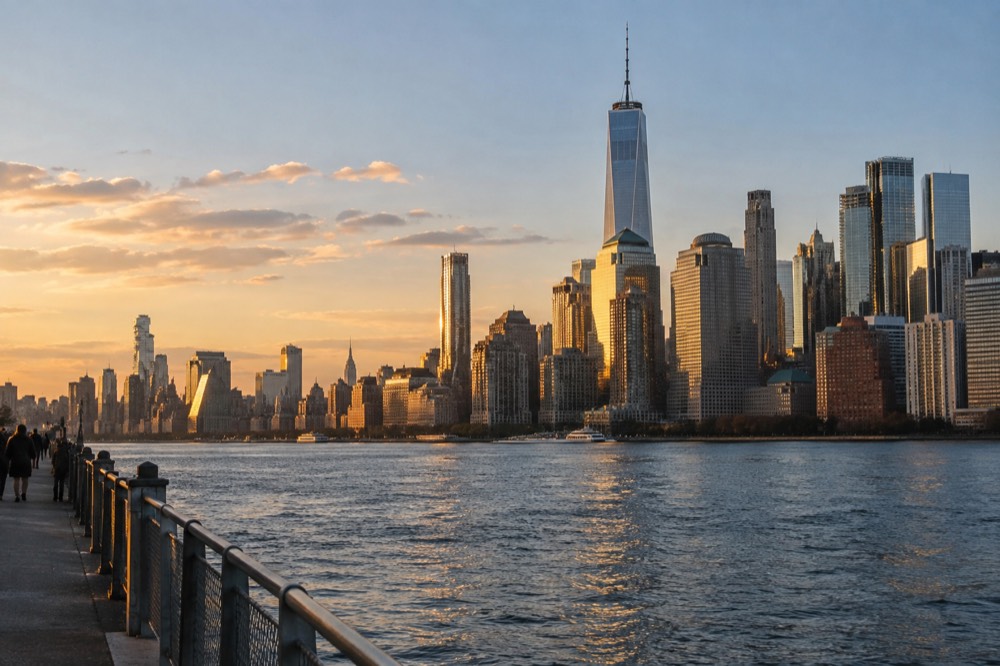
Manhattan packs Central Park, Museum Mile, three classic observation decks, the Theater District, Chinatown, Little Italy, SoHo and the Financial District into a strip of land roughly 13 miles long. A subway ride is $3.00, a weekly fare cap of $35 applies automatically with OMNY, and the biggest planning decision is grouping sights by neighborhood rather than crisscrossing the island.
Manhattan runs roughly 13 miles from Battery Park to Inwood, and it is not the whole of New York City, whatever a thousand films have suggested. It is one borough among five. Brooklyn, Queens, the Bronx and Staten Island hold more than half the city's population, and some of the best eating in the region. Still, most first trips anchor here, and for good reason: the density of recognizable places per square mile has no real rival anywhere.
This page is the practical version of the question. What is actually on the island, what does it cost, how do the neighborhoods group together, and how many days does a sensible visit need. The short answer to that last one is that Manhattan rewards four or five days and punishes the single-day blitz, because the island is longer than it looks on a map and the subway, for all its virtues, runs uptown and downtown rather than across your wishes. For the citywide picture, start with things to do in NYC and come back here for the island-level detail.
What Is Manhattan, Exactly, and How Is It Organized?
Manhattan is an island borough of about 1.6 million residents, organized loosely into named districts that run from the Financial District at the southern tip up through Midtown to Harlem and Washington Heights at the top. Numbered streets run east-west and avenues run north-south below roughly 59th Street, which makes navigation straightforward once you accept that uptown means north and downtown means south. Neighborhoods are the real unit of planning: each one rewards a slow half-day.
The numbered grid is your friend. Crossing from 5th Avenue to 6th Avenue is a short walk; walking from 42nd Street to 86th Street is a commitment of nearly two and a quarter miles. First-time visitors consistently underestimate the vertical distances and overestimate the horizontal ones, which is why grouping your days by neighborhood matters more than any list of top sights.
A rough mental map, south to north:
| Area | Character | Typical Half-Day |
|---|---|---|
| Financial District and Battery Park | Skyscrapers, colonial lanes, harbor views | Wall Street, 9/11 Memorial, ferry terminals |
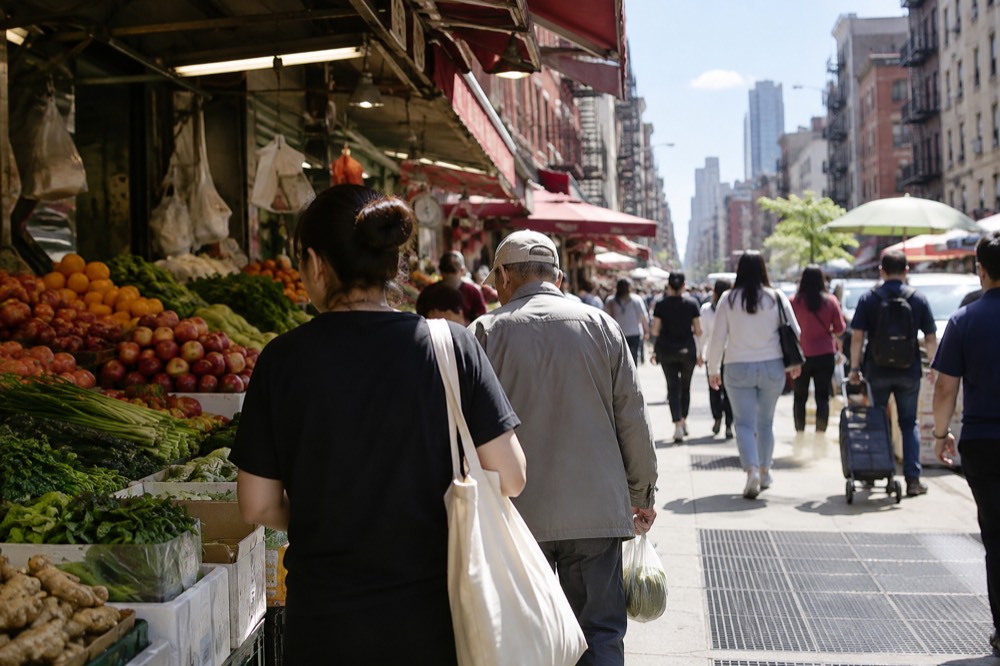
| Lower East Side, Chinatown, Little Italy | Food, tenement history, bargain shopping | Tastings, markets, Mulberry Street |
| SoHo, TriBeCa, Greenwich Village | Cast-iron architecture, boutiques, jazz past | Washington Square Park, gallery blocks |
| Midtown | Times Square, theaters, decks, flagship museums | Rockefeller Center, Grand Central, a show |
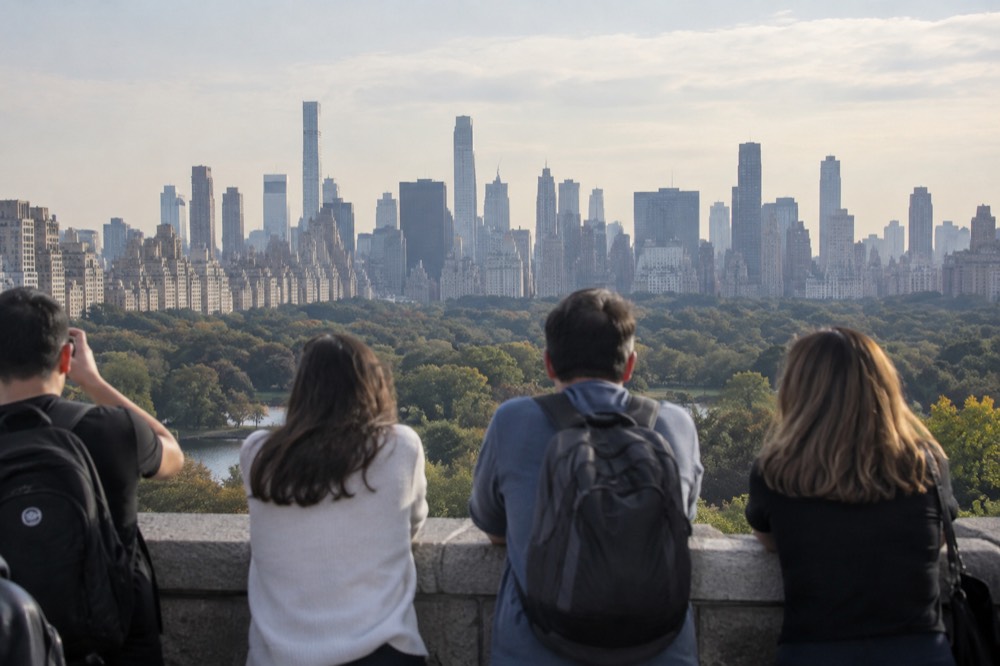
| Central Park and Museum Mile | Green space, the Met, the Guggenheim | Park loops and two museums maximum |
| Harlem and Upper Manhattan | Gospel, jazz history, Alexander Hamilton lore | Sunday morning or a walking tour |
Two of these districts deserve special mention because visitors get them wrong. Greenwich Village is not a single block of cafes; it is a web of crooked streets that predate the grid, and its history runs from jazz basements to the Stonewall uprising. Harlem, meanwhile, sits far enough uptown that a spontaneous stroll from Midtown is not happening, but it rewards a deliberate morning more than almost anywhere else on the island, as our Harlem guide lays out.
How Many Days Do You Need for Manhattan?
Four days is the honest minimum for a first visit that includes Central Park, one or two museums, an observation deck, downtown Manhattan and a Broadway show. Three days works if you cut the museum count to one and skip a neighborhood. Two days forces hard choices, and one day means picking a single region of the island, usually downtown or Midtown, and doing it properly rather than racing between them.
The reason is geometry. Battery Park to the northern edge of Central Park is about eight miles. A day that starts at the Statue of Liberty ferry, continues to Greenwich Village, then tries to reach the Met before closing will spend more time underground than above it. The subway is fast, but transfers eat time and the park's museums hold more than any afternoon can absorb.
A shape that works for four days:
| Day | Anchor | Add-Ons |
|---|---|---|
| 1 | Lower Manhattan: ferry, Financial District, 9/11 Memorial | Brooklyn Bridge walk at sunset |
| 2 | Downtown neighborhoods: Chinatown, Little Italy, SoHo, the Village | Food tour or walking tour |
| 3 | Midtown: Grand Central, Rockefeller Center, an observation deck | Broadway show at night |
| 4 | Central Park and Museum Mile | The Met or MoMA, park walk |
The 9/11 Memorial deserves a plain note here. The outdoor reflecting pools are free and require no ticket. The museum beneath them is a sober, well-made exhibition that sits at the site of a mass killing, so give it unhurried time rather than slotting it between photo stops. The memorial and museum guide covers timed entry and the free-Monday ticket releases, which open at 07:00 ET each Monday, first come first served.
For the downtown day, a guided option compresses the learning curve. The free, tip-based Financial District walk covers Wall Street, the Stock Exchange and the memorial plaza in about two and a half hours, with guides paid whatever you decide at the end. It runs on GuruWalk, and the same operator runs several of the free walks listed on this site.
What Are the Best Free Things to Do in Manhattan?
Manhattan gives away a startling amount: the Staten Island Ferry costs nothing, Central Park needs no ticket, the 9/11 Memorial plaza is free, the High Line is a public park, and Grand Central's main concourse is one of the great interior spaces on earth, open to anyone. Add the free-admission windows at several museums and the Brooklyn Bridge promenade, and a low-budget day is genuinely easy to build.
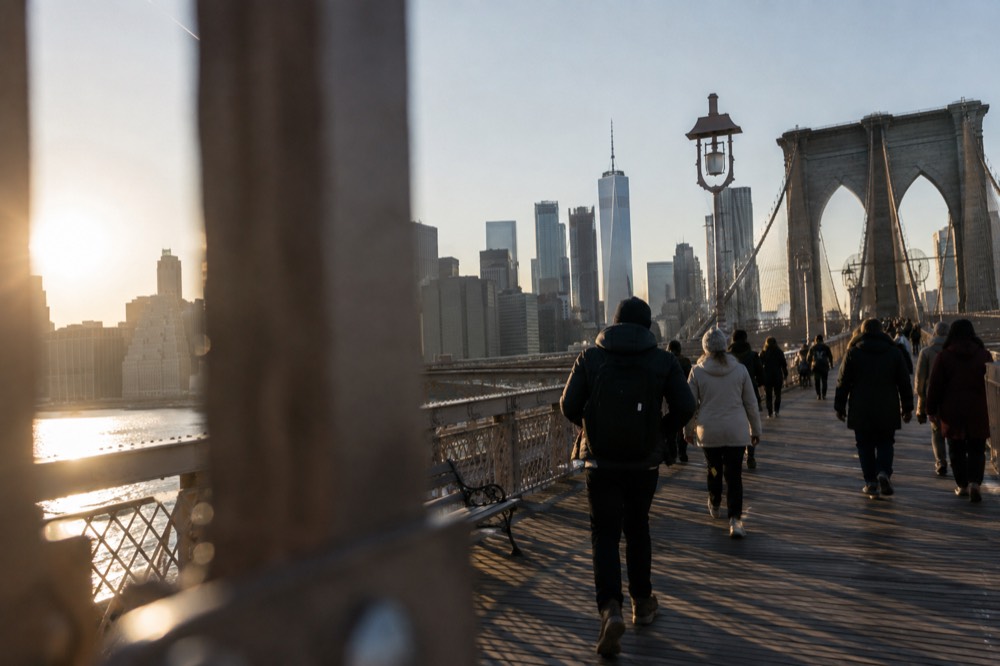
The bridge deserves its reputation. Walking it takes under an hour each way at a relaxed pace, and the view from the pedestrian promenade, with traffic humming below the walkway, beats most paid decks for drama. Start from the Manhattan side late in the afternoon and you arrive in Brooklyn Heights as the skyline lights come on. The Brooklyn Bridge guide covers the logistics, including the DUMBO side and the classic Washington Street photo.
Museum free windows are real but conditional, and the conditions matter. MoMA's Friday evening free admission, 17:30 to 20:30, is for New York State residents only, with proof required. The Whitney runs Free Friday Nights open to everyone, 17:00 to 22:00, plus free Second Sundays all day, timed tickets required. The Guggenheim has pay-what-you-wish Tuesdays and Sundays, 16:00 to 17:30, minimum one dollar, and it sells out. The full list, with every condition spelled out, is in free museums in NYC.
One warning that saves real money: numerous boat operators sell sightseeing cruises that circle Liberty Island and never land, some charging more than the official ferry. Only Statue City Cruises is authorized by the National Park Service to dock at Liberty Island and Ellis Island. If you want to stand on the island, buy the official ferry ticket; if you only want the photo from the water, a harbor cruise is fine, and the distinction is laid out in Statue of Liberty tickets.
For a splurge that earns its price, the downtown food walk below is the single best-value guided introduction to the island's most edible blocks, because six tastings add up to an actual meal rather than a sampler. Check availability if a food-first day appeals.
What Do Manhattan's Observation Decks and Museums Actually Cost?
Manhattan has five major observation decks and its headline museums cluster around the $30 admission mark: the Metropolitan Museum of Art charges adults $30, MoMA charges $30, the Guggenheim $30 standard, and the Whitney $30 with free entry for anyone 25 and under. Deck pricing is dynamic by date and time slot, but the box-office benchmarks run from $26 for the official Statue of Liberty ferry up to $75.12 for the Empire State Building's full AM/PM experience.
The deck comparison is about the view, not the price, because three of them land within a few dollars of each other. Here are the box-office figures the pass companies publish for their own savings math, which serve as honest upper bounds:
| Attraction | Adult box-office benchmark | What makes it different |
|---|---|---|
| Empire State Building (AM/PM, 86th floor + museum + same-night re-entry) | $75.12 | Open-air deck, the classic icon itself |
| Top of the Rock | $71.86 | The only deck that puts the Empire State Building in the frame |
| Edge at Hudson Yards | $62.06 | Cantilevered platform with a glass floor |
| 9/11 Memorial & Museum | $36.00 | Not a deck; included here as the downtown anchor |
| Statue of Liberty Grounds and Ellis Island (official ferry) | $26.00 | The only way onto the islands themselves |
Book decks online and you will usually pay less than those box-office figures, since all five use timed dynamic pricing. The choice between them is a choice of subject: the Empire State Building for history and open air, Top of the Rock for the Central Park panorama, SUMMIT One Vanderbilt for mirrored rooms and playful installations, Edge for the glass floor and the newest architecture, One World Observatory for Lower Manhattan and the harbor. If you plan to hit several of these in one trip, a pass can undercut individual tickets, and the sums are worked through in is the New York CityPASS worth it.
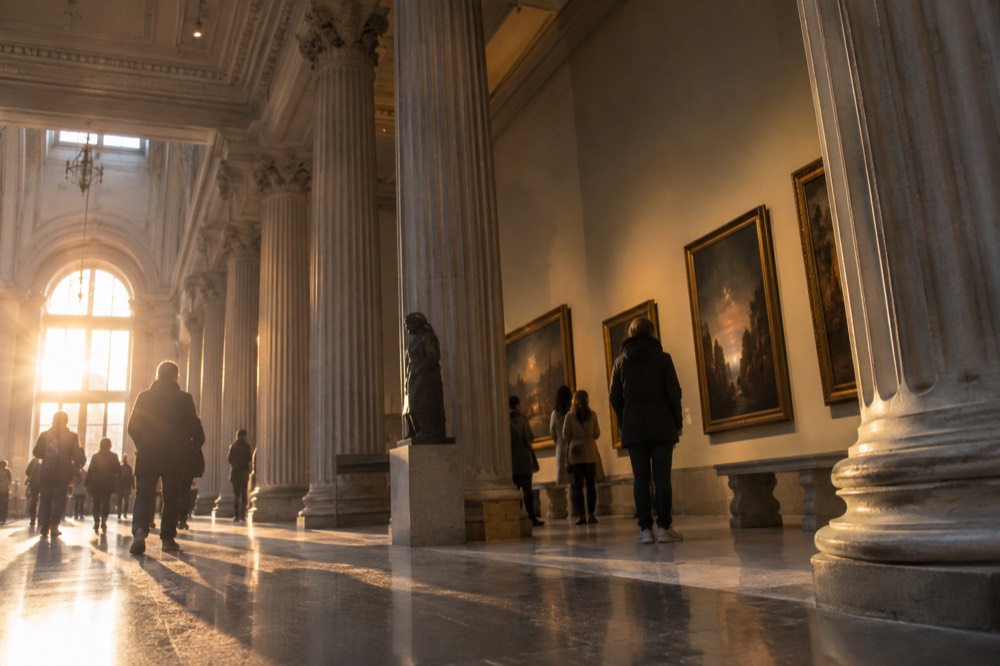
The Met needs its own paragraph because it is the most wrongly described attraction in American travel writing. Admission is a fixed, mandatory $30 for adults, $22 seniors, $17 students, free for children 12 and under. Pay-what-you-wish applies only to New York State residents and to students from New York, New Jersey and Connecticut, and even then you must pay something, with online pay-what-you-wish requiring a New York State billing address. What the ticket quietly includes is the information gain: one admission covers both the Fifth Avenue building and The Met Cloisters on the same day, a pairing almost no guide mentions. Note also that a long list of galleries, including the American Wing, the Costume Institute and the roof garden, are closed for renovation, so check the museum's closures page before planning a specific wing.
A guided highlights walk is the efficient alternative to wandering 2 million square feet alone.
Which Manhattan Neighborhoods Should You Actually Visit?
Spend real time in four or five neighborhoods rather than sampling fifteen. The strongest half-days on the island are Greenwich Village for street life and music history, SoHo for cast-iron architecture and shopping, Chinatown and Little Italy for food, the Lower East Side for tenement history and nightlife, and Harlem for gospel, jazz and a slower, more residential Manhattan. Midtown is where the famous sights are, not where the city feels most alive.
SoHo's cast-iron facades are the largest concentration of that architecture anywhere, and the blocks between Houston and Canal streets read like an open-air museum of 19th-century commercial building. Go early, before the shopping crowds thicken. Chinatown presses against it immediately to the south, and the transition happens mid-block: one street of boutiques, then fish markets and dumpling counters. Little Italy survives as a compact stretch of Mulberry Street, smaller than its reputation but vivid, and the story of all three neighborhoods, who settled them and what remains, is told far better on foot than from a search result.
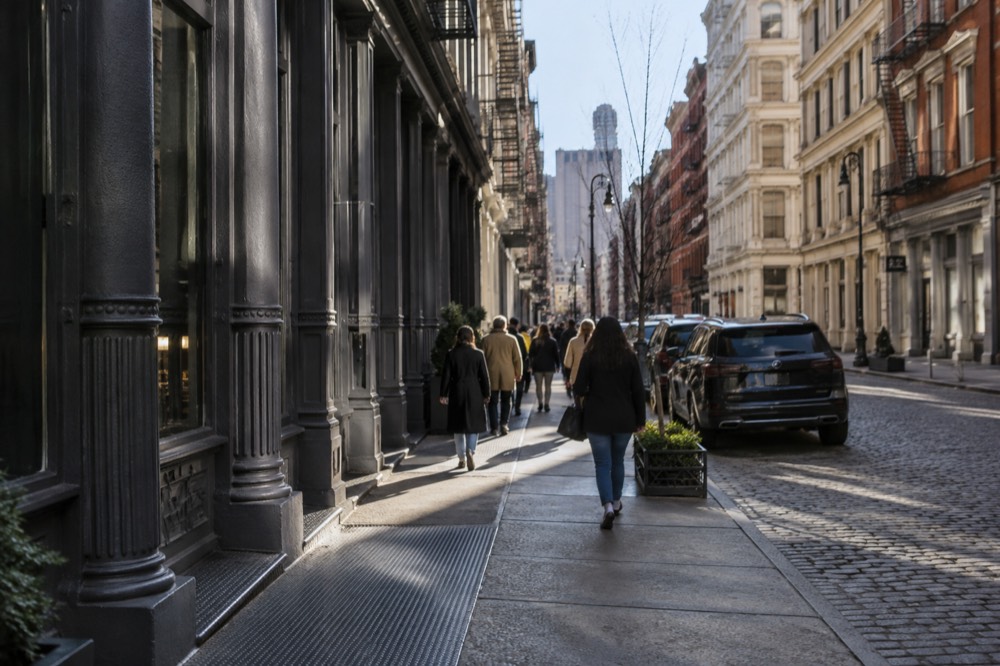
The Village rewards aimlessness. Its streets refuse the grid, leftovers of a period before the numbered grid arrived, and the twists hide Washington Square Park, the old jazz clubs on and around Bleecker Street, and row houses with genuine literary history. Combine it with the Lower East Side for an afternoon that runs from park benches to pickle shops. The neighborhood-by-neighborhood version, including the outer boroughs, is in NYC neighborhoods.
A guided sweep through SoHo, Little Italy and Chinatown costs about the same as lunch and buys you two hours of context.
Where Should You Eat in Manhattan?
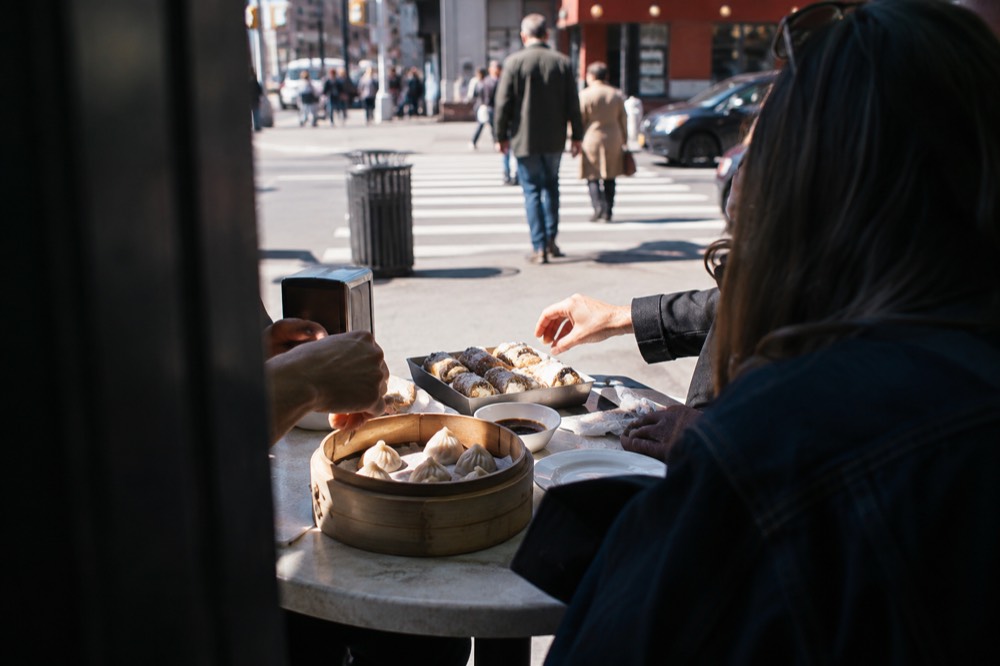
Anchor your eating around three or four specialties rather than restaurant-hopping at random: pizza by the slice, bagels with smoked fish in the morning, the old delis, and the dumpling counters of Chinatown, where a filling meal still costs a few dollars. Neighborhoods matter more than individual venues: pizza in Greenwich Village, bagels on the Upper West Side, everything fried or steamed in Chinatown, and a proper deli sandwich on the Lower East Side.
The bagel question is a religion with no pope, and any list of the best shops in best bagels in NYC will start arguments that outlast the meal. What is safe to say is that a Manhattan bagel shop at 8am, steam rising from the kettle-boiled batch, is one of the island's genuine institutions, and that ordering it toasted marks you as a newcomer. The slice-joint tradition is equally democratic: fold it, eat it standing, move on.
Chinatown rewards the adventurous and the cheap equally. The dumpling counters around Doyers Street and the markets on Canal give you a full meal for less than a cup of coffee in Midtown, and the neighborhood's food culture is the reason guided food walks exist. The two-district walk below strings Chinatown and Little Italy together with six tastings, from dumplings to cannoli, which add up to lunch and a half, so arrive hungry and skip the beforehand coffee.
How Do You Get Around Manhattan?
The subway answers almost every Manhattan transport question. It costs $3.00 per ride, with automatic weekly capping at $35 once you tap the same card or phone twelve times in a rolling seven-day window using OMNY. There is no 7-day unlimited pass to buy any more: the MTA stopped selling and refilling MetroCards on 1 January 2026. Tap the same device every time, since mixing phone and plastic breaks the cap silently.
That MetroCard detail matters because most published guides still tell you to buy a 7-day unlimited on arrival. That product no longer exists. OMNY, the tap-to-pay system, accepts contactless credit cards, debit cards, mobile wallets and the reloadable OMNY card, and the $35 weekly cap applies automatically with no pass, no purchase decision and no queue at a machine. The full mechanics, including the express-bus cap and reduced-fare rules, are in OMNY in NYC.
Two practical habits. First, uptown and downtown, not north and south; every platform sign uses those words and matching them to your destination saves endless wrong-platform moments. Second, express and local is a real distinction: the 4 and 5 trains run express on the Lexington Avenue line while the 6 runs local, and riding an express past your stop is a five-minute tax, not a catastrophe, but an avoidable one.
For the airports, the cheapest runs are not the obvious ones. LaGuardia's Q70 Link bus is free, so the subway-plus-bus trip to Midtown totals $3.00, the cheapest airport transfer in the city. JFK's AirTrain adds $8.75 on top of the subway fare, making the rail trip $11.75. Both routes are detailed in JFK to Manhattan. Do not rent a car for Manhattan itself; parking, traffic and garage fees make the subway the honest answer every time.
What Should You Do in Manhattan at Night?
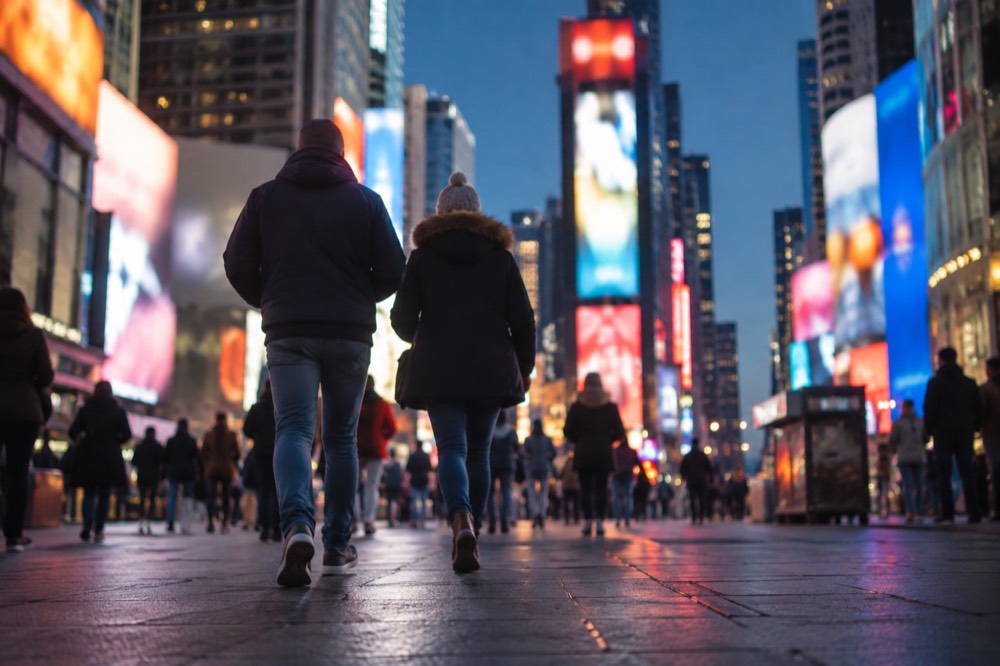
Broadway is the headline, and the discounted routes are real: the TKTS booths sell same-day seats at 20 to 50% off with an $8-per-ticket fee, digital lotteries typically land winning tickets in the $30-$50 range, and rush policies are set show by show. Beyond the theaters, Manhattan at night means rooftop bars, jazz rooms in the Village and Harlem, comedy showcases in Midtown, and the skyline seen from the water on an evening cruise.
The TKTS detail worth knowing is inventory scope: booths sell same-day performances plus next-day matinees, so an evening visit sets up tomorrow afternoon's show. Only two booths currently operate, Times Square at Duffy Square and the David Rubenstein Atrium at Lincoln Center, and older guides still list a downtown booth that no longer runs. Hours vary by day and booth, so check tdf.org rather than a printed timetable. The whole discount landscape is covered in cheap Broadway tickets.
The non-theater evening is underrated. The Village jazz basements run sets late, Harlem's music rooms do the same uptown, and a Midtown comedy showcase costs around $20 with a two-drink minimum. On the water, an evening cruise loops the harbor as the skyline switches on, which pairs the sunset and the illuminated skyline in one two-hour ride.
For a show decision, the safe family pick is The Lion King, whose masks and score land with almost every audience, and the full field is compared in best Broadway shows.
What About Day Trips Out of Manhattan?
Manhattan works as a base for day trips in every direction: Washington DC and Philadelphia by coach, the Hudson Valley and Sleepy Hollow to the north, the Hamptons east on Long Island, and the Woodbury Common outlets. The trade-off is time. The DC day runs 11 to 13 hours, Niagara Falls runs roughly 19, and every one means an early start and a late return, so weigh whether a second city is worth a day of your visit.
The honest framing is opportunity cost. A day trip costs you a Manhattan day, and on a four-day first visit the answer is usually no. On a week-long stay, one excursion breaks the urban rhythm nicely. The coach tours handle logistics you would otherwise navigate alone, which is the real product being sold.
| Day trip | Travel shape | Best for |
|---|---|---|
| Washington DC highlights | 11-13 hours door to door by coach | Monuments and the National Mall |
| DC and Philadelphia combined | Roughly 15 hours | Two cities, zero planning, long day |
| Hudson Valley and Sleepy Hollow | About 7 hours | Autumn foliage and Headless Horseman lore |
| The Hamptons and Sag Harbor | About 14 hours | Ocean-side villages without a car |
| Woodbury Common outlets | Full day, coach transfer | Serious shoppers |
Brooklyn deserves the closing word here, because it is not a day trip, it is a subway ride. The bridge walk ends in DUMBO, Williamsburg's food and shops sit two stops from the Lower East Side, and treating the outer boroughs as optional extras is the single most common planning mistake first-time visitors make. More on that in things to do in Brooklyn.
For a wider selection of island experiences, from harbor cruises to helicopter flights, see NYC tours.
Common Questions About Things to Do in Manhattan
The questions below are the ones planners actually ask. The short answers: four days is right for a first visit, you do not need a car and should not rent one, the subway at $3.00 a ride with a $35 weekly cap beats every alternative, Central Park and the Staten Island Ferry cost nothing, and the biggest savings lever is either a pass or the museums' free windows, depending on how many paid sights you intend to visit.
How many days do you need in Manhattan?
Four days covers Central Park, one or two museums, an observation deck, downtown and a Broadway show at a humane pace. Three works with cuts, and one day should be spent in a single region rather than racing the length of the island.
What is the cheapest way to get around Manhattan?
The subway, at $3.00 per ride with OMNY, which caps your weekly spending at $35 automatically after 12 paid rides on the same card or device. There is no 7-day unlimited pass any more; MetroCard sales ended on 1 January 2026.
Do you need to book Manhattan attractions in advance?
Timed-entry sights, the observation decks and the major museums, are best booked ahead for the slot you want. The Statue of Liberty crown must be reserved well in advance because supply is tiny, and Broadway's popular shows are cheapest when bought early.
What is free to do in Manhattan?
Central Park, the Staten Island Ferry, the Brooklyn Bridge promenade, the High Line, the 9/11 Memorial plaza, Grand Central's concourse and the free-admission windows at several museums, including the Whitney's Friday nights and the Guggenheim's late Tuesday and Sunday pay-what-you-wish hours.
Is Manhattan the same as New York City?
No. Manhattan is one of five boroughs. Brooklyn, Queens, the Bronx and Staten Island hold most of the city's residents and some of its best food, and several sit within a short subway ride of the island's sights.
What should you not miss in Manhattan?
Walking at least part of Central Park, crossing the Brooklyn Bridge on foot, one observation deck at sunset, the Met or MoMA, and a Broadway evening. Everything else is a bonus layered onto that core.
Planning Manhattan well comes down to respecting the island's length and grouping your days by neighborhood. The subway rewards you, the free sights are genuinely world-class, and the paid ones, bought with a little foresight, cost less than the box-office prices suggest. This New York City Travel Guide has the deeper pages on every sight named above if your itinerary needs one more decision made for you.