What Is the Best Hotel to Stay in Times Square, New York?
A direct, sourced answer to which hotel to pick in and around Times Square: how to choose by block, what the area trades away, and what a stay there really costs.
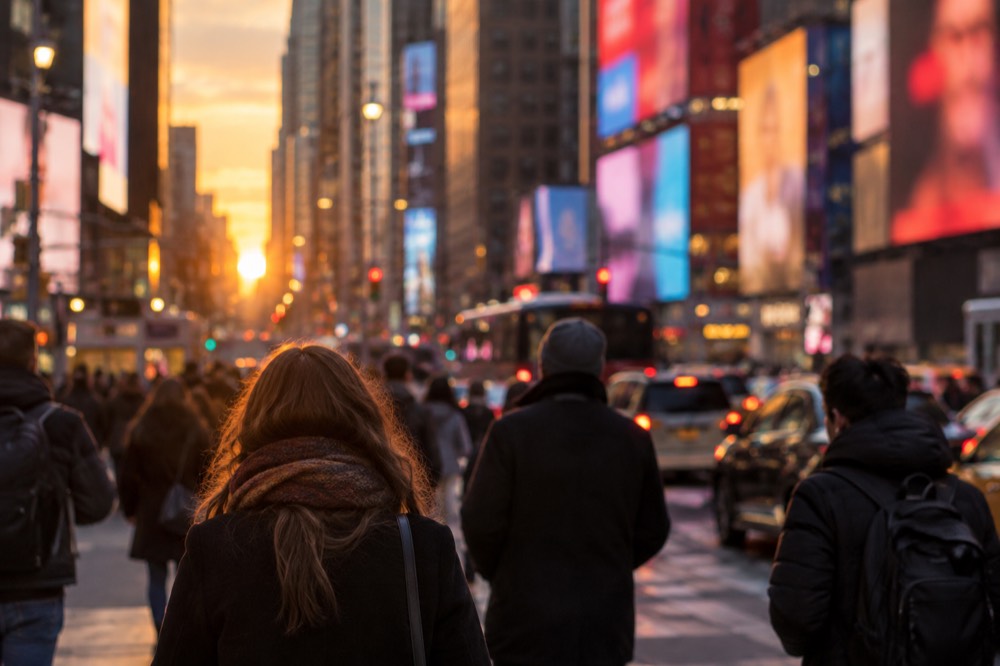
Times Sq-42 St was the busiest subway station in New York in 2025 by a wide margin, 61,203,303 riders against Grand Central's 35,764,931. That single fact explains both the appeal and the problem of sleeping in Times Square: you are at the center of the city's transport web, and you are sleeping inside its loudest room. Anyone asking which hotel is "the best" here is really asking three smaller questions, and this page answers each with real numbers: which block, which tradeoffs, and which price shape.
What Is the Best Hotel to Stay in Times Square, New York?
There is no single best hotel in Times Square, and any page naming one is guessing: the best choice is the hotel whose tradeoffs match your trip. A theater-heavy itinerary favors the blocks between 6th and 8th Avenues in the West 40s, where most of the district's rooms sit. A family that wants quiet sleeps better one subway stop away. Budget and dates move the answer more than any property's reputation, because Times Square pricing swings sharply by season.
That may sound like a dodge, so let me make it concrete. The hotels inside the Times Square bow tie, the pedestrian zones where 45th and 47th Streets cross Broadway and 7th Avenue, are overwhelmingly large mid-range and upscale chains built for exactly one customer: the visitor who wants to step out of the lobby and be under the billboards. They are convenient, safe, and walkable to an enormous share of the tourist itinerary. They are also loud at street level, priced at a premium for the address, and often have small rooms, because Manhattan land costs force it.
What we will not do on this page is print a nightly rate. Hotel prices in this district change daily, move with the convention calendar and the Broadway calendar, and are behind booking engines that no guide can honestly quote. What we can do is give you the decision framework that the "top ten hotel" pages skip: which side of the square, what you give up, what the surrounding ten-minute walk offers, and how the costs around the hotel, transit, food, tickets, actually add up.
If you want the one-sentence version: pick the best-reviewed hotel you can afford on a block between 6th and 8th Avenues in the West 40s with the amenities you need, book early for peak dates, and spend the money you save on the things New York is actually for. For the full spread of what to do once you have dropped your bags, start with the things to do in NYC page, which covers the whole city from this district outward.
A good first move after check-in is a free orientation walk. The Times Square, Grand Central, Rockefeller tour on GuruWalk covers the billboards, the celestial ceiling and the blocks between, and you pay the guide what you think the walk was worth at the end.
Is Times Square Actually the Best Base for a New York Trip?
For a first visit built around Broadway shows, observation decks and Midtown landmarks, Times Square is a genuinely strong base, and the subway numbers back that up: twelve lines meet at or near Times Sq-42 St, the busiest station in the system. For a trip centered on downtown, Brooklyn, food neighborhoods or museums, it is a mediocre base, a 15-to-25-minute ride each way to the things you came for.
The honest case for staying here is friction reduction. If your list is The Lion King, the Empire State Building, Top of the Rock, SUMMIT One Vanderbilt, Rockefeller Center and a Circle Line cruise, every one of those is a short walk or one train from a Times Square hotel room, and several are within fifteen minutes on foot. Broadway theaters cluster between 41st and 54th Streets, and the TKTS booth under the red steps at Duffy Square sells same-day discounted tickets, up to 50 percent off face value plus an $8 per-ticket service fee, for performances that evening and next-day matinees. Staying in the district means you can queue, buy, eat and walk to the curtain without planning a crossing of the city.
The honest case against is everything else. The restaurants immediately around the square skew toward high-volume tourist fare. The noise is real: the billboards run all night, and even rooms facing away pick up street sound from the avenues. And the district empties of locals after office hours, so you are sleeping in a neighborhood that exists to serve people who do not live there. New Yorkers overwhelmingly live and socialize elsewhere, and a visitor who never leaves the West 40s goes home having seen a stage set.
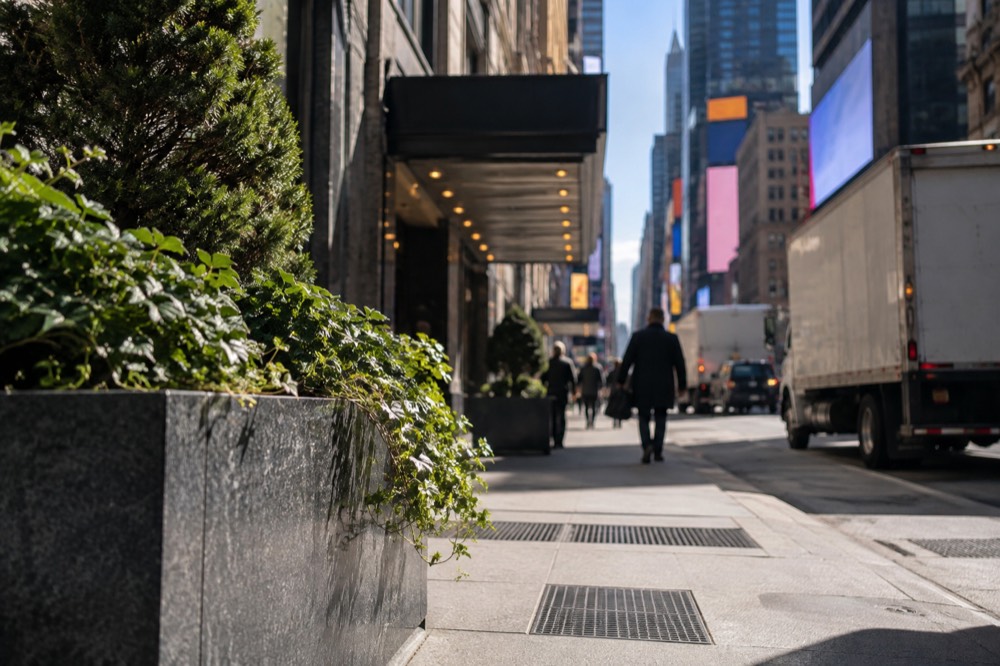
The practical middle path, and the one most experienced visitors land on, is to stay near Times Square rather than in it. One subway stop in any direction, or a ten-minute walk, buys you a quieter street, often a lower rate for an equivalent room, and the same commute to everything Midtown. The tradeoffs are worth laying out side by side:
| Base | Walk to Broadway theaters | Street noise at night | Food within 5 minutes | Best for |
|---|---|---|---|---|
| Inside the Times Square bow tie | 1-5 minutes | High, billboards run all night | Tourist-heavy, chains | Theater marathons, zero-commute trips |
| West 40s, 8th to 10th Avenues | 5-12 minutes | Moderate | Better local options, Hell's Kitchen | Most first-time visitors |
| East side, 5th to Lexington | 8-15 minutes | Lower | Midtown lunch spots, quieter dinners | Museum Mile, Central Park focus |
| One stop out (Union Square, FiDi) | 10-20 minutes by train | Low | Strong neighborhood scenes | Second visits, food-driven trips |
For a fuller breakdown of what the square itself contains beyond the hotels, see the Times Square guide, and for the question of where to sleep if seeing everything matters more than sleeping under the lights, the answer page on where is the best place to stay in New York to see everything covers the whole-city version of this decision.
Which Block Should You Choose Around Times Square?
Choose by avenue before you choose by brand. West of 8th Avenue, in Hell's Kitchen, the streets are quieter, the food is better and the walk to the theaters is under fifteen minutes. Between 6th and 8th Avenues in the West 40s you get maximum convenience at maximum noise. East of 5th Avenue the district calms down and puts you closer to Central Park, MoMA and Rockefeller Center. The block determines your trip more than the star rating does.
This is the part of the decision the hotel-list pages never explain, and it is where a Times Square stay is actually won or lost. The district is small, roughly five blocks by four, but its edges have completely different characters.
West of 8th Avenue is Hell's Kitchen, and it is where the neighborhood's restaurant scene actually lives. Ninth Avenue in particular is a long run of small independent kitchens, and 9th and 10th Avenues host a dense strip of places to eat that locals genuinely use. A hotel a block or two west of the theater cluster puts you a ten-minute walk from your curtain time and a two-minute walk from a better dinner than you will find inside the square. The trade is that some blocks west of 10th Avenue feel less polished at night, though the area around the Port Authority bus terminal is heavily trafficked and policed simply because of its volume.
Between 6th and 8th Avenues, the West 40s blocks are the heart of the hotel stock. This is where most of the big-name properties cluster, and it is where the convenience is highest: your lobby is five minutes from a Broadway house, three minutes from a subway entrance, and directly under the district's light and noise. Rooms here face either the action or an airshaft, and the difference between those two room types is the difference between sleeping and not. If you book here, a room facing an interior or a side street is worth asking for, and worth a polite request at check-in.
East of 5th Avenue the character changes quickly. Within two blocks you are in the quieter corporate Midtown around Madison and Lexington, closer to Rockefeller Center, St. Patrick's Cathedral, the New York Public Library and the southern end of Museum Mile. This side suits visitors whose list leans toward the Metropolitan Museum of Art, MoMA and Central Park rather than the theaters, and it puts Bryant Park, a calmer green space with food kiosks and a lawn, within a short walk instead of the square's crush.
One decision that is easy to get wrong: proximity to Penn Station. The blocks south of the West 40s around 7th Avenue feel like they are "in Times Square" on a map, and they are a ten-minute walk from the billboards, but they face the traffic and crowds around Madison Square Garden. That can be the right call if you are arriving and departing by train from Penn, and the wrong one if you are here for the theaters.
If you plan to stack the big Midtown sights, a pass can change the math on where you sleep, because it removes the need to be central to save on transit. The New York CityPASS bundles five attractions from an eleven-attraction menu that includes the Empire State Building, Top of the Rock and the official Statue of Liberty ferry, valid over nine consecutive days, and it rewards an itinerary that moves fast rather than one anchored to a single neighborhood.
What Does a Times Square Hotel Cost, and What Are You Paying For?
You are paying for the address, not the room. Times Square hotels carry a location premium over equivalent rooms a ten-minute walk away, and Manhattan hotel rooms at this price level are usually smaller than visitors expect. The nightly rate is only part of the bill: New York adds hotel taxes and fees on top of the quoted rate, and the district's food prices run above the city average. Budget the whole day, not just the bed.
We will not print a nightly figure, because any specific number would be fiction by the time you read it. What is stable, and what you can plan around, is the shape of the cost. Rates in this district peak around the December holidays, New Year's Eve and the late-spring and early-autumn convention windows, and soften in the dead of winter, January and February, when the city is at its quietest. Booking well ahead for peak dates is not optional advice here, it is the difference between the room you want and the room that is left.
The premium itself is a choice, not a scam. You are buying walkability to the single densest cluster of tourist attractions in the city, and for some trips that is worth real money. The honest test: divide the difference in rate between a Times Square property and a comparable one a subway stop away by the number of days, and ask whether that buys you more than the transit fares and twenty minutes a day would cost. On a theater-heavy two-night trip, central wins. On a five-night trip that ranges across the five boroughs, it usually does not.
The costs around the room are predictable, and this is where verified numbers help. Getting around is genuinely cheap if you do it the New York way: a subway ride is $3.00, and OMNY, the tap-to-pay system, caps your fares automatically at $35 in a rolling seven-day window, with no pass to buy. Do not let any older guide tell you to buy a 7-day unlimited MetroCard: the MTA stopped selling and refilling MetroCards on 1 January 2026, and the $35 cap replaced that product entirely. The full fare mechanics are on the NYC subway page.
| Cost around the stay | Figure | What to know |
|---|---|---|
| Subway or local bus ride | $3.00 | Free transfer between subway and bus within 2 hours |
| Weekly transit ceiling | $35 | Automatic OMNY cap, rolling 7 days, no pass to buy |
| MetroCard | No longer sold | Retired for purchase and refill as of 1 January 2026 |
| TKTS theater ticket | Up to 50% off face value | Plus $8 per-ticket fee, same-day and next-day matinees |
| Broadway lottery ticket | Roughly $30-$50 | Varies by show, enter via official lotteries |
Food is the other lever. Eating inside the square means paying square prices. Two blocks west, on 9th Avenue, the same money buys considerably more kitchen, and the city's best restaurants, including several neighborhoods within one train ride of the West 40s, are covered on our dining pages.
What Are the Alternatives Within a Ten-Minute Walk?
The best alternatives to a Times Square hotel room are Hell's Kitchen for food, the Garment District and NoMad for quieter rooms at similar prices, and the blocks east of 5th Avenue for a museum-and-park itinerary. All three keep you within a fifteen-minute walk or one short subway ride of the square while giving you a street that behaves like a neighborhood at night.
None of them require giving up Broadway, because every theater remains walkable from all three.
Hell's Kitchen, west of 8th Avenue, is the strongest of these for most visitors, and it is barely a secret anymore. Its advantage is dinner. The 9th Avenue strip is one of the better concentrations of small restaurants in Midtown, and after a show the walk back east to your room is shorter than the wait at a sit-down place inside the square. The area also carries the district's best budget tier, small independent hotels a few blocks from the theaters at rates that undercut the big Midtown chains for the same walk time.
South of the West 40s, the Garment District and NoMad give you the same architecture, former commercial buildings converted to hotel use, with less foot traffic. NoMad in particular has quietly collected a run of well-regarded hotels, and its blocks sit between the square and Madison Square Park, which puts you between two of the city's better green spaces. The commute to the theaters grows to about fifteen minutes on foot, or five on the subway.
East of 5th Avenue, the choice is about your daytime list rather than your evenings. This side puts you at Rockefeller Center's doorstep, a few minutes from MoMA's galleries, and at the southern end of the walk up Fifth Avenue toward Central Park and the Metropolitan Museum of Art. If your evenings are a Broadway show and your days are museums, this east-of-the-square position can beat the square itself, because you spend your mornings where you actually want to be.
The one alternative we should name honestly is staying farther out entirely. Union Square, the Lower East Side and Long Island City in Queens all offer more character per dollar, at the cost of a 15-to-25-minute commute into Midtown. For a second or third visit, that trade is often right. For a first visit with three Broadway nights booked, it rarely is.
How Should You Book, and When Is the Square at Its Best and Worst?
Book early for peak dates, cancel freely, and time your days around the crowds rather than fighting them. The square is most crowded from late afternoon through the evening, and its hotels fill hardest around the December holidays, New Year's Eve and major conventions.
January and February are the softest, cheapest window, and February brings a surprise: it is both the snowiest month in Central Park, 10.1 inches on average, and the driest, 3.19 inches of precipitation, per the official NOAA normals.
The booking mechanics matter more here than in most cities, because this district's rates are hostage to events. A big convention at the Javits Center or a blockbuster show's opening week can double the price of rooms that were cheap a month earlier. The practical sequence: pick your block first, then shortlist two or three properties on it, then book a refundable rate early and re-shop as your dates approach. That is not gaming the system, it is just how a dynamic market works.
Timing your days matters just as much. The square's pedestrian crush peaks from mid-afternoon to around 11pm, and it is genuinely quiet, almost eerily so, before 9am, when the district belongs to commuters and delivery trucks. A hotel here gives you early-morning access to the Empire State Building and Top of the Rock before the queues build, which is a real, concrete advantage of the address that the price premium buys. The observation decks all use timed entry, and morning slots are the calmest.
Weather planning deserves one correction, because most visitors get it backwards. The instinct is to avoid January for snow and book summer for dry streets. The NOAA 1991-2020 normals for Central Park say the opposite: July averages 4.60 inches of precipitation, the wettest month of the year, while February, the snowiest, is also the driest month in total precipitation at 3.19 inches. A February hotel rate, softened by the quiet season, comes with cold that is real but not the washout visitors imagine. The month-by-month detail is on our weather coverage.
For the evenings themselves, the district's show calendar is the other rhythm to plan around. The best Broadway shows page covers what is playing, and the TKTS booth under the red steps at Duffy Square, the one at West 47th Street between Broadway and 7th Avenue, is the district's discount engine: every ticket it sells is reduced, typically 20 to 50 percent, with an $8 per-ticket fee. There is no downtown booth anymore, despite what older guides say; the operating booths are Duffy Square and Lincoln Center, and current inventory is on the TDF site.
If your days are deck-heavy, SUMMIT One Vanderbilt, next to Grand Central, is the closest observation experience to the West 40s hotels, and its mirrored rooms suit visitors chasing memorable photos over quiet sightseeing. It is a short walk or one subway stop from the square.
Common Questions About Staying in Times Square
The questions below are the ones visitors actually ask before booking a Times Square hotel, answered directly: whether the noise is manageable, whether the area is safe at night, whether it suits families, and whether the premium is worth paying. Each answer is short because each answer is genuinely simple once you know the district's shape.
The short version: the noise is solvable, the safety is fine by big-city standards, families do better a block or two out, and the premium is worth it exactly as often as your itinerary is theater-heavy.
What is the best hotel to stay in times square, new york?
There is no single best property, because dates and budget move the answer more than reputation does. The reliable method: choose a block first, the West 40s between 6th and 8th Avenues for maximum theater convenience, or west of 8th Avenue for quieter streets and better food, then pick the best-reviewed hotel on that block that fits your budget, and request a room facing away from the avenue.
Is Times Square too noisy to sleep in?
The billboards run all night and the avenues never fully quiet down, but the noise is manageable with the right room. Ask for a high floor or a room facing a side street or interior courtyard. One block west of 8th Avenue the street noise drops sharply, and most of the district's hotel stock sits in that quieter band anyway.
Is Times Square safe at night?
Yes, by big-city standards. The square is one of the most heavily trafficked and most policed spaces in the United States, simply because of its volume: 61,203,303 subway riders passed through Times Sq-42 St in 2025. The standard visitor precautions apply anywhere in Manhattan, stay aware on quiet side streets late at night, but the district itself is crowded, lit and busy until late.
Is Times Square a good area for families with kids?
It works, with adjustments. The convenience is real: shows, the TKTS booth and several attractions are steps away. But the crush of the bow tie is tiring with young children, and the district's restaurants skew adult and tourist. Families usually do better a block or two west or east, same commute, calmer street, and the city's family-specific options are covered on our things to do in NYC with kids page.
Should I stay in Times Square or somewhere else in Manhattan?
Stay in or near Times Square if your trip is theater-heavy, first-time and Midtown-focused. Stay elsewhere, Union Square, the Lower East Side, Long Island City, if your trip is food-driven, borough-hopping or a repeat visit. The test is simple: count your planned evenings within a ten-minute walk of the square. Three or more, the premium pays. Fewer, it usually does not.
How early should I book a Times Square hotel?
As early as your dates allow for the December holidays, New Year's Eve and any convention week, and freely, with a refundable rate, for everything else. Rates in this district are dynamic and event-driven. Book a refundable room early, then re-shop as the date approaches. January and February are the softest, cheapest window in the district.
The last word belongs to the decision, not the district. A Times Square hotel room is a tool: it buys you walkability to the densest cluster of shows, decks and lights in the city, and it charges you for the privilege in noise, space and rate. Match the block to your evenings, book the refundable rate, spend the savings on a show and a proper dinner two avenues west, and the address does exactly what you paid it to do. This page is part of the New York City Travel Guide coverage of where to stay and what to do across the five boroughs.