What Is the Most Visited Museum in New York City?
The most visited museum in New York City is the Metropolitan Museum of Art. Here is why it tops every other NYC museum, what admission really costs, and how to plan a visit.
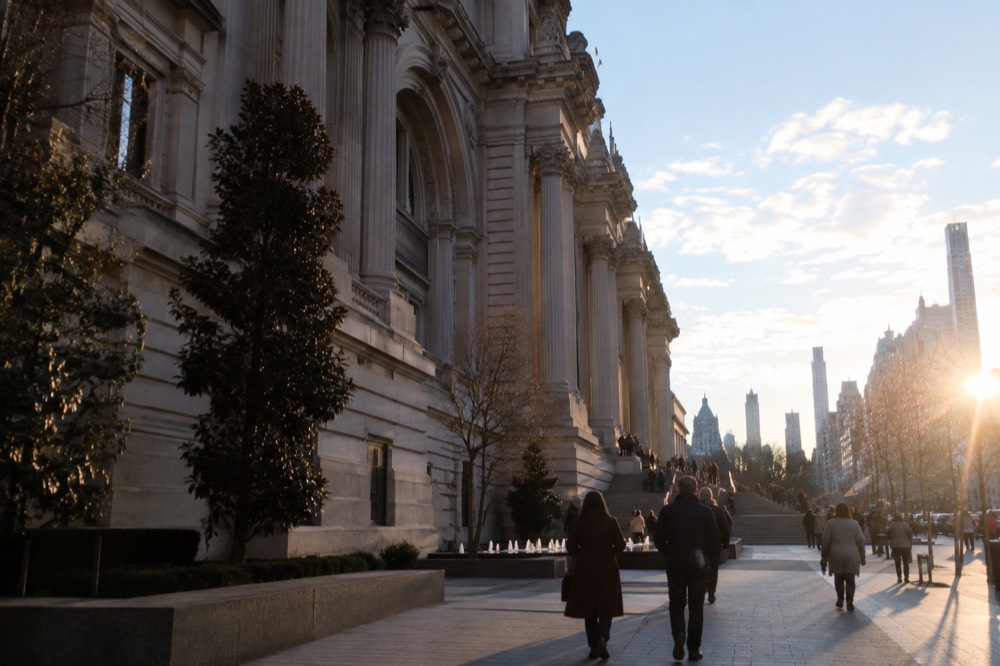
The Metropolitan Museum of Art sits on Fifth Avenue on the Upper East Side, holding two million works across roughly two million square feet of gallery space. It is the museum that defines Museum Mile, the one whose steps appear in more photographs than any other cultural building in the five boroughs, and the one that consistently draws more visitors than any other museum in New York City. That standing is worth understanding before you plan a trip around it, because the crowds, the ticketing rules and the gallery closures that come with that popularity all shape what a visit actually feels like.
This page answers the question directly, then gets into the details most guides skip: what a Met ticket really costs and who qualifies for pay-what-you-wish, which other New York museums sit in the same weight class, and what is currently closed inside the building. It also covers the timing questions that decide whether your visit feels like a marathon or a pleasure: which days the museum is shut, when the quiet hours fall, and how to pair the building with the rest of an Upper East Side day.
What Is the Most Visited Museum in New York City?
The most visited museum in New York City is the Metropolitan Museum of Art, the encyclopedic museum on Fifth Avenue on the Upper East Side. No other museum in the five boroughs matches its annual draw across art, history and world cultures. Exact attendance figures shift year to year, but the Met's position at the top of the city's museum rankings has held for years, and the gap to second place is not small.
The reason is scale, and it is worth being precise about what that means. The Met is not a single-subject institution. It holds Egyptian temples, European painting, medieval armor, American decorative arts, musical instruments and photography under one roof, which means it competes for visitors with interests that would normally be split across five separate museums. A family can spend a full day inside without any of them exhausting their own interests.
That breadth also explains the crowd pattern. The museum's own published hours are Sunday to Tuesday and Thursday, 10:00 to 17:00, with Friday and Saturday running to 21:00, and it is closed on Wednesdays, Thanksgiving, 25 December, 1 January and the first Monday in May. Anyone turning up on a Wednesday finds the doors shut, which happens more often than you would expect given how many itineraries are built around "the Met in the afternoon."
The practical takeaway is simple. If the Met is the headline museum of your trip, treat it like one: book a timed ticket, arrive near opening, and give it a half day rather than a rushed hour between other stops. The building rewards patience, and the visitors who enjoy it most are the ones who arrived with a plan rather than a hope. Our full Metropolitan Museum of Art tickets guide covers the booking mechanics in detail.
Why the Met Draws Bigger Crowds Than Any Other NYC Museum
The Met's visitor lead comes from three compounding advantages: a collection that spans five thousand years of human culture, a location at the heart of Museum Mile beside Central Park, and a ticket that also covers The Met Cloisters in Upper Manhattan on the same day. No competing museum in the city combines all three. That is why its galleries, steps and Great Hall absorb more annual foot traffic than any other cultural institution in New York.
The Cloisters point deserves emphasis because most guides bury it. Every Met ticket includes same-day entry to both Met locations, Fifth Avenue and The Met Cloisters, the medieval-art branch in Fort Tryon Park. A visitor who plans the logistics can see the Temple of Dendur in the morning and medieval cloisters above the Hudson in the afternoon on one admission. That is real added value on the most expensive museum ticket in the city, and it is verified policy, not a promotion.
Location does the rest. The Met anchors Museum Mile, the stretch of Fifth Avenue that also holds the Guggenheim and, a short walk south, the Whitney's former territory now anchored further downtown. Central Park sits directly across the street, which makes the museum a natural pairing with a morning walk, a carriage ride or a visit to Bethesda Terrace. Few museums anywhere get that kind of gravitational assist from their surroundings.
There is a subtler factor too, one that shows up in how the building is actually used. Because the collection spans so many cultures and centuries, the Met draws repeat visits from New Yorkers as well as tourists, which keeps its galleries active on weekdays when other museums go quiet. A museum that depends purely on tourism empties out between peak seasons. The Met does not, and that steady local base underwrites the exhibitions, the programming and the sheer staffing level that a two-million-object institution requires.
For visitors building a classic first-time itinerary, the Met slots into the same day as Central Park and the Upper East Side without any transit friction, which is exactly why our things to do in NYC planning page treats it as a fixed point rather than an option.
How Much Does It Cost to Visit the Met?
General admission to the Metropolitan Museum of Art is $30 for adults, $22 for seniors 65 and over, and $17 for students, with children 12 and under free. Pay-what-you-wish applies only to New York State residents and to students from New York, New Jersey and Connecticut, and even then you must pay something. Out-of-state and international visitors pay the fixed price, with no discount window. Every ticket covers both Met locations on the same day.
The pay-what-you-wish rule is the single most misunderstood museum policy in New York, and getting it wrong costs visitors real planning time. The Met's own wording is unambiguous: the amount you pay is up to you, but you must pay something, with a one-cent minimum per ticket. To buy pay-what-you-wish tickets online you need a New York State billing address. New Jersey and Connecticut students can only buy them in person with valid student ID. Proof of eligibility is checked, and acceptable documents include a New York State driver's licence, an IDNYC card, a current bill with a New York State address, or a student ID.
| Ticket type | Price | Notes |
|---|---|---|
| Adult general admission | $30 | Fixed and mandatory for out-of-state and international visitors |
| Senior 65+ | $22 | |
| Student | $17 | General student rate |
| Child 12 and under | Free | |
| Visitor with a disability | $22 | Care partner enters free, in person only |
| New York State resident | Pay what you wish | Minimum $0.01, proof of residency required |
| NY/NJ/CT student | Pay what you wish | NJ/CT students must buy in person with ID |
One more detail that saves confusion at the door: a Met ticket is valid for the date printed on it and includes exhibitions, not just the permanent collection. There is no cheaper "collection only" option for tourists. Budget the full amount, and treat any pay-what-you-wish claim you read elsewhere with suspicion unless it names the eligibility rules.
Which Other New York Museums Come Close?
The museums nearest the Met in visitor volume are the American Museum of Natural History on the Upper West Side and the Museum of Modern Art in Midtown, followed by the Intrepid Museum, the 9/11 Memorial & Museum and the Guggenheim. None matches the Met's annual draw, but each pulls a distinct crowd: families head to the dinosaur halls, modern-art lovers to MoMA, and history-focused visitors to the 9/11 Memorial & Museum in Lower Manhattan.
The American Museum of Natural History is the family counterpart to the Met. Its general admission is pay-what-you-wish for New York State residents with ID, while everyone else pays a fixed price, and its ticketed extras, including the giant-screen films and the Hayden Planetarium space show, cost more on top. The museum is open daily, generally 10:00 to 17:30, and closed on Thanksgiving and Christmas. If your group includes children, the dinosaur halls and the great blue whale usually beat European painting for holding power. The rest of the planning pages sit on New York City Travel Guide.
MoMA, in Midtown a short walk from Rockefeller Center, holds the modern canon: Van Gogh's Starry Night through to the design galleries and the sculpture garden. Adult admission is $30, with visitors 16 and under entering free. Its famous free Friday evenings, 17:30 to 20:30, are reserved for New York State residents only, with proof of residency required and advance reservation needed, so a tourist cannot use that window. Our MoMA tickets guide covers the full details.
| Museum | Borough | Adult admission | Standout free or discounted window |
|---|---|---|---|
| Metropolitan Museum of Art | Manhattan, Upper East Side | $30 | Pay-what-you-wish for NY State residents and NY/NJ/CT students |
| American Museum of Natural History | Manhattan, Upper West Side | Fixed price for non-residents | Pay-what-you-wish general admission for NY State residents |
| MoMA | Manhattan, Midtown | $30 | Free Friday nights, NY State residents only |
| Intrepid Museum | Manhattan, Pier 86 | $38 | NYC residents get 50% off every day |
| 9/11 Memorial & Museum | Manhattan, Financial District | $36 | Free admission Mondays, tickets released online at 07:00 ET |
| Guggenheim | Manhattan, Upper East Side | $30 standard, $16 during exhibition changeover | Pay-what-you-wish Tuesdays and Sundays 16:00-17:30, $1 minimum |
| Whitney Museum of American Art | Manhattan, Meatpacking District | $30 | Free every day for anyone 25 and under |
Two rows in that table deserve a second look. The Intrepid's 50% discount for NYC residents is unusually generous and applies every single day, not on a special evening. And the Whitney's free-under-25 policy is open to everyone regardless of where they live, which makes it the standout deal for younger travelers in a city where museum admission otherwise starts at $30 across the board.
The Guggenheim also illustrates how much a single date can change the price. Its standard adult admission is $30, but during exhibition changeover periods the rate drops to $16, and the reduced window has been in force for stretches of recent months. Which price applies on any given day depends on the exhibition calendar, so check the museum's own plan-your-visit page before booking. The building itself, Frank Lloyd Wright's spiral on Fifth Avenue, is half the reason to go, and the ramp is best experienced before the crowds thicken.
If you are pairing museums with the rest of a Midtown day, the observation deck and museum combination at the Empire State Building works well in the opposite direction: a museum morning followed by an evening at the 86th floor.
What Is Actually Open at the Met Right Now?
The Met is open, but a long list of galleries is closed for renovation, including parts of the American Wing, Ancient West Asia and Ancient Cyprus, Asian Art, the Costume Institute, European Paintings 1250-1800, European Sculpture and Decorative Arts, Greek and Roman Art, the Cantor Roof Garden, Modern and Contemporary Art, and the Robert Lehman Collection. Anyone visiting for a specific wing should check the museum's gallery closures page before booking.
This matters more than most visitors expect, because the closed list includes exactly the rooms people travel for. The Cantor Roof Garden, the seasonal rooftop with its skyline views, is among the affected spaces, as are substantial stretches of the Modern and Contemporary galleries. The Ancient West Asia and Ancient Cyprus galleries are scheduled to reopen in 2027. The American Wing, one of the museum's signature draws, is affected in part rather than wholly.
The honest planning advice is to build your visit around what is confirmed open rather than what a guidebook from a few years ago promised. The Egyptian wing's centerpiece spaces, the arms and armor galleries and the European painting highlights that remain accessible still fill a full day on their own. But if your heart is set on one specific room, verify it first on the museum's own closures page, which the museum keeps current.
The closures also change the pay-what-you-wish calculus for eligible residents. If the sections you most wanted are shut, a shorter visit at a lower self-set price is a legitimate choice under the policy, since the amount is genuinely up to the eligible visitor. Tourists on the fixed $30 ticket do not have that flexibility, which is one more reason to check the closures list before paying full price.
For a different kind of museum experience entirely, the guided group option below routes you through the highlights with skip-the-line access, which is worth considering while parts of the building are behind construction hoarding and self-guided routing is harder than usual.
How to Plan a Met Visit Around the Crowds
Arrive at opening time or use the Friday and Saturday evening hours, when the museum runs to 21:00 and many day-trippers have already left. Avoid Wednesdays entirely, since the museum is closed that day, and expect the busiest stretch between late morning and mid-afternoon. Booking a timed ticket in advance removes the ticket-line wait, which is the single biggest time saver at an institution that draws more visitors than any other museum in the city.
The Wednesday closure is the detail that wrecks the most itineraries. Visitors assume a museum of this stature is open seven days, slot it into a midweek afternoon, and find themselves staring at locked doors on Fifth Avenue. Build your week with that fixed point in mind: the Met is a Sunday-through-Tuesday, Thursday-through-Saturday museum.
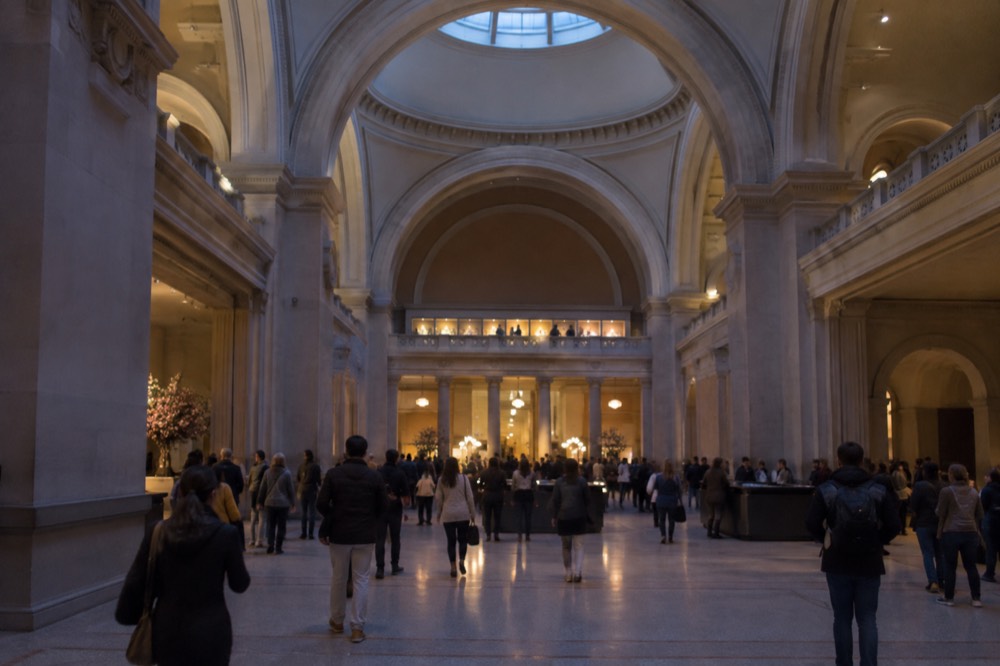
Inside, the flow is predictable. The Great Hall funnels everyone toward the same starting decisions, and the Egyptian wing near the entrance absorbs the first wave. Working outward from the quieter galleries, or starting at the top floor and descending, spreads your visit against the current rather than with it. The evening hours on Friday and Saturday are the closest thing to a quiet Met that exists, and they pair naturally with dinner on the Upper East Side afterward.
Getting there is straightforward. Several subway lines stop within a short walk of the museum, and the crosstown buses along the Upper East Side drop passengers almost at the steps. If you are coming from the American Museum of Natural History on the other side of the park, the crosstown bus through Central Park is the pleasant route, and the walk through the park itself takes only marginally longer on a nice day. Either way, build in the security line at the entrance, which moves quickly but exists even for timed-ticket holders.
For visitors who want the highlights decoded rather than discovered by accident, or who simply want someone else to handle the routing while parts of the building are closed, the three options below cover the most useful angles: a museum-style experience at the Empire State Building, the natural history giant across the park, and modern art in Midtown.
Common Questions About the Most Visited Museum in New York City
The most visited museum in New York City is the Metropolitan Museum of Art, and the questions visitors ask most often concern price, eligibility for discounts, how long a visit takes and what is currently closed. The answers below cover the five that matter most: the $30 fixed admission, the pay-what-you-wish rules, the Wednesday closure, the same-day Cloisters inclusion and the realistic length of a visit.
What is the most visited museum in new york city?
The Metropolitan Museum of Art on Fifth Avenue. It draws more visitors than any other museum in the five boroughs, helped by its encyclopedic collection, its Central Park-adjacent location and a ticket that also covers The Met Cloisters on the same day.
Is the Met pay-what-you-wish for tourists?
No. Pay-what-you-wish applies only to New York State residents and to students from New York, New Jersey and Connecticut, and even they must pay something. Everyone else pays the fixed $30 adult admission, $22 for seniors, $17 for students, free for children 12 and under.
Is the Met open every day?
No. The museum is closed on Wednesdays, plus Thanksgiving, 25 December, 1 January and the first Monday in May. On the days it is open, hours run 10:00 to 17:00, with Friday and Saturday extending to 21:00.
Does a Met ticket include The Met Cloisters?
Yes. Every ticket includes same-day entry to both Met locations, Fifth Avenue and The Met Cloisters in Fort Tryon Park, along with exhibitions. The Cloisters is a separate trip uptown, so plan the transit if you intend to use both.
How long should I spend at the Met?
Half a day is the realistic minimum for the highlights, and a full day is easy to fill. With parts of the building currently closed for renovation, a focused two-to-three-hour route through the open highlights works better than an exhaustive sweep.
The Met earns its top spot honestly: no other museum in New York offers the same range, the same setting or the same two-location ticket. Plan for the Wednesday closure, book ahead, check the closures list for the wings you care about, and the city's most visited museum will feel a lot less like its reputation suggests.