What Is the Nicest Neighborhood in Brooklyn?
A direct, sourced answer to which Brooklyn neighborhood is the nicest, with honest comparisons of Brooklyn Heights, Park Slope, Dumbo and Williamsburg.
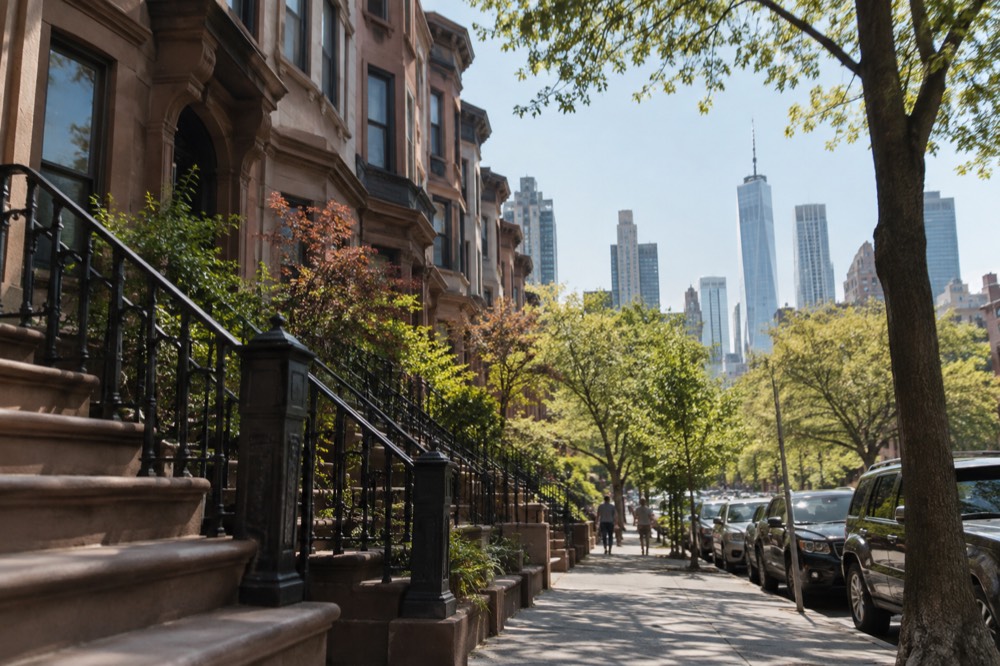
Brooklyn is a city of roughly 2.6 million people spread across dozens of neighborhoods that share a borough name and little else. Asking which one is nicest is like asking which arrondissement of Paris is prettiest: the answer exists, but it depends on whether you mean beautiful, pleasant, convenient or cool. The honest answer, for the most common meaning of nice, is Brooklyn Heights. Below that sits a short list of contenders, each of which beats Brooklyn Heights for a specific kind of visitor, and this page compares them on real characteristics rather than vibes.
What Is the Nicest Neighborhood in Brooklyn?
Brooklyn Heights is the nicest neighborhood in Brooklyn by most measures: it has the borough's oldest and most consistently beautiful brownstone blocks, a landmarked historic district, quiet streets, and the Brooklyn Heights Promenade, a waterfront walk with a direct view across the East River at the Lower Manhattan skyline. It is also one of the first subway stops into Brooklyn, roughly five minutes from Manhattan, which makes it the rare neighborhood that is both calm and centrally placed.
Brooklyn Heights earned its reputation honestly. It was one of the first areas of Brooklyn to be settled, and its streets retain a scale that later neighborhoods lost: low-rise brick and brownstone row houses, church spires, and tree lines. The Brooklyn Heights Promenade, the raised waterfront walkway a block off the main commercial strip, delivers the single best free view of the Manhattan skyline, the Brooklyn Bridge and New York Harbor that the city offers. On a clear evening it is the view people photograph and then assume they paid for.
The trade-off is price. Brooklyn Heights is one of the most expensive residential areas in the borough, and the restaurant and bar scene is quieter than in neighborhoods further out. If your idea of nice includes a loud Saturday night, this is not your neighborhood. If your idea includes sleeping well and walking to a view, it is.
For visitors rather than apartment hunters, the practical appeal is different: Brooklyn Heights sits directly at the Brooklyn end of the Brooklyn Bridge, so a walk over the bridge lands you in the neighborhood by design. The free, tip-based Brooklyn Bridge, Brooklyn Heights and Dumbo walking tour on GuruWalk covers exactly this route in about three hours, and it is a good way to see the neighborhood's high points without planning anything.
There is also a sunset version of the same idea: a free evening walk across the bridge timed to the sky turning gold, ending on the Brooklyn side as the skyline lights come on. Both walks are tip-based, so you decide the guide's pay at the end, and both are run by the same operator, CityShuffles, which is worth knowing before you assume you are choosing between rival companies.
Is Park Slope Nicer Than Brooklyn Heights?
Park Slope is the better "nicest neighborhood" for families and for visitors who want a neighborhood that feels lived-in rather than preserved. It sits below Prospect Park on brownstone streets that rival Brooklyn Heights architecturally, but it adds a stronger restaurant scene, easier access to a major park, and a slightly less rarefied atmosphere. For a trip with children, Park Slope beats Brooklyn Heights on almost every practical count.
The anchor is Prospect Park, Brooklyn's large landscaped park, which sits along the neighborhood's entire eastern edge. Families get the park, the playground culture of the side streets, and a commercial strip along 5th Avenue and 7th Avenue that runs from coffee shops to proper restaurants. The streets between are classic Park Slope: wide, tree-lined, and lined with row houses that photograph as well as anything in the borough.
The comparison with Brooklyn Heights comes down to what you are doing. Brooklyn Heights is a place to walk through and look at; Park Slope is a place to spend a day. A visitor with kids can spend the morning in Prospect Park, eat lunch on 7th Avenue, and never need to leave. A visitor chasing the skyline photograph goes to Brooklyn Heights instead.
Park Slope also borders Prospect Heights, where Barclays Center sits above the Atlantic Avenue subway hub. That matters for evenings: a Brooklyn Nets game ticket at Barclays Center is one of the easiest big-night-out bookings in the borough, with several subway lines stopping within a short walk of the arena. Opponents and seating tiers move the price, which shows on the live booking page, so check the listing for the matchup you want before committing to a date.
The neighborhood has one more practical advantage for visitors: it is flat where Brooklyn Heights climbs. The walk from the promenade up into the Brooklyn Heights historic district is a real hill, short but steady, and anyone traveling with a stroller or tired legs will notice it. Park Slope's grid, by contrast, runs gently downhill toward the park from Grand Army Plaza, and the long blocks make navigation almost impossible to get wrong.
What About Dumbo and Williamsburg?
Dumbo is the nicest Brooklyn neighborhood for the view and the photograph, and Williamsburg is the nicest for nightlife, food and a scene, but neither is the nicest to live in or to linger in. Dumbo is small, expensive and crowded at the famous spots; Williamsburg is large, loud and genuinely fun. Both beat Brooklyn Heights for a specific kind of visitor, and both lose to it on quiet.
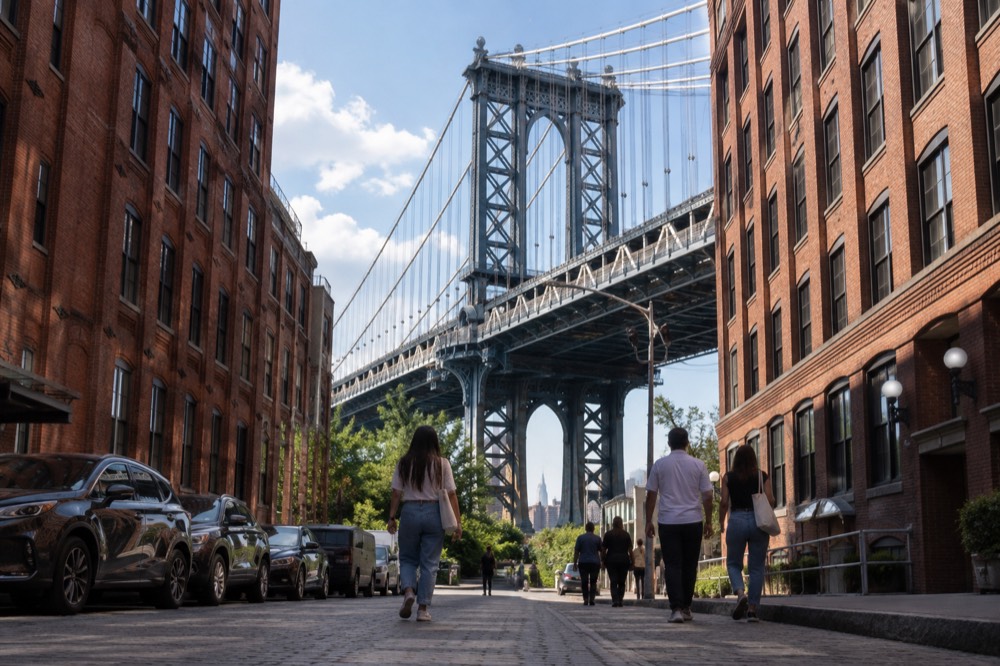
Dumbo, the area under the Manhattan and Brooklyn Bridges at the Brooklyn waterfront, holds the single most photographed corner in the borough: Washington Street, where the Manhattan Bridge frames the Empire State Building between two brick buildings. The cobbled streets, the waterfront parks and the old industrial buildings turned galleries make it beautiful in a way nowhere else in Brooklyn is. The crowds at the Washington Street corner are a direct consequence.
Williamsburg, across the East River from the Lower East Side, is the opposite trade: less classically beautiful, far more alive. The North Side holds the restaurants, bars and music venues; the South Side holds the Hasidic Jewish quarter, one of the most distinctive neighborhoods in the city, where the free Williamsburg walking tour on GuruWalk spends its route. That tip-based walk, about two hours and 45 minutes, traces the Jewish quarter's synagogues, bakeries and food traditions alongside the art-and-hipster streets around them, and it is the honest way to see a side of Brooklyn most visitors never reach.
One honesty note on the free walks: six of the ten free New York walks on GuruWalk belong to a single operator, CityShuffles, including the Brooklyn Bridge, Brooklyn Heights and Dumbo tour and the Brooklyn Bridge sunset walk. The Williamsburg walk is run by a different operator. There is not a wide ecosystem of free-walk companies here, and pretending otherwise would be dishonest.
Which Brooklyn Neighborhood Is Best for a First Visit?
For a first visit, Dumbo and Brooklyn Heights together make the best single afternoon in Brooklyn: walk the Brooklyn Bridge from Manhattan, land in Dumbo for the Washington Street view, then walk up into Brooklyn Heights for the promenade skyline and the brownstone blocks. That loop covers the borough's two most distinctive sights in about three hours on foot, and it is the route most guided walks take for good reason.
The loop works because of geography. The bridge's pedestrian promenade ends at the border of Dumbo and Brooklyn Heights, and the two neighborhoods sit against each other along the waterfront. You do not need a plan beyond walking toward the river and then uphill. The guided version, the free Brooklyn Bridge, Brooklyn Heights and Dumbo tour on GuruWalk, adds the engineering history of the bridge and the story of how the waterfront blocks were saved from demolition, which is context you will not get from a map.
If you have a second Brooklyn day, spend it in Park Slope and Prospect Park, or in Williamsburg for the evening. If you have only one evening, a Nets game at Barclays Center or a night out in Williamsburg both beat returning to Manhattan early.
The comparison below is the honest version of the "nicest neighborhood" question, broken into the things a visitor actually weighs.
| Neighborhood | Strongest for | Weakest at | Best free thing |
|---|---|---|---|
| Brooklyn Heights | Beauty, quiet, skyline view, proximity to Manhattan | Nightlife, restaurant depth | The Promenade |
| Park Slope | Families, Prospect Park, livable streets | Waterfront views | Prospect Park |
| Dumbo | The photograph, waterfront parks, galleries | Crowds at the famous corner, prices | Washington Street view |
| Williamsburg | Nightlife, food, music, the Jewish quarter | Classic beauty, quiet | East River waterfront view |
How Do You Get Around Brooklyn?
The subway is how Brooklyn moves, and the fare is $3.00 per ride with contactless OMNY payment, capped automatically at $35 in any seven-day period, so a week of riding never costs more than that. There is no pass to buy and no decision to make: the cap applies by itself when you tap the same card or phone. The MetroCard that older guides tell you to buy is no longer sold.
That last point matters because almost every competing guide still opens with "buy a 7-day unlimited MetroCard when you land." Since 1 January 2026 the MTA no longer sells or refills MetroCards at all, and the weekly value moved into the automatic OMNY cap. Tap the same card or device every time, because mixing your phone and the plastic card in your pocket breaks the cap silently. Groups should note that each traveler needs their own card or device for their own cap.
Brooklyn's subway geography is simpler than it looks. The 2, 3, 4, 5, A, C, F, N, Q, R, W, L and G trains all serve the borough, and the neighborhoods in this article cluster at the first stops into Brooklyn: Brooklyn Heights at High St and Clark St, Dumbo at York St and the High St walk, Park Slope along the 2 and 3 at Grand Army Plaza and the B and Q at 7th Avenue, Williamsburg on the L at Bedford Av. Atlantic Avenue-Barclays Center is the hub where many of these lines cross, which is why a Nets night out is logistically painless.
Uptown and downtown, not north and south, is the local vocabulary, and express versus local is a real distinction: the 4 and 5 run express along the same Eastern Parkway corridor as the local 2 and 3, so check which one your platform serves. For everything else, the NYC subway guide covers the system in detail, and the broader things to do in Brooklyn round-up maps the neighborhoods against the sights.
| Neighborhood | Nearest subway stops | Lines |
|---|---|---|
| Brooklyn Heights | High St, Clark St | A, C, 2, 3 |
| Dumbo | York St, High St | F, A, C |
| Park Slope | Grand Army Plaza, 7th Avenue | 2, 3, B, Q |
| Williamsburg | Bedford Av, Lorimer St | L, G, J, M |
What Is the Nicest Brooklyn Neighborhood on a Budget?
None of the four neighborhoods above is cheap to live in, but for a visitor the honest budget answer is that the nicest parts of Brooklyn are unusually free to experience: the promenade, the bridge walk, Prospect Park and the Washington Street view all cost nothing, and the borough's free, tip-based walking tours on GuruWalk cover the same ground a paid tour would. The money goes to food, tickets and transport, not to seeing the neighborhoods.
The practical version of a Brooklyn day can cost a subway fare plus lunch. Walk the bridge, spend an hour in Dumbo, climb into Brooklyn Heights for the promenade, and you have seen the two most distinctive neighborhoods in the borough for $3.00 in transit. Add the free CityShuffles bridge-and-Dumbo walk and you get the history too, paying the guide what you think the walk earned.
Where money genuinely improves the day: a Nets ticket is among the cheaper big-arena nights in American sports, with the current price shown on the live listing; the food tours and comedy rooms in Williamsburg run cheaper than their Manhattan equivalents; and the paid Brooklyn Bridge and Dumbo guided walk, about two hours with a guide, from $49 per person on the live listing, is worth it if you want the engineering story without relying on a tip-based guide's availability.
There is one more budget angle worth naming: Brooklyn's nicest neighborhoods are at their best in the hours that cost nothing. The promenade at sunset, Prospect Park on a Sunday morning, the Washington Street corner before the tour groups arrive, these are free and better than anything behind a ticket booth. The paid layer, a game, a food tour, a comedy room, is the evening, not the reason you crossed the bridge.
For a fuller budget breakdown across the whole city, the New York City Travel Guide covers free museums, cheap eats and pass maths in one place.
Common Questions About the Nicest Neighborhood in Brooklyn
The short answers: Brooklyn Heights for classic beauty and the skyline, Park Slope for families and park life, Dumbo for the photograph, Williamsburg for the night out. All four sit within a short subway ride of each other, and the bridge walk stitches the best two together on foot, so a visitor does not have to choose one.
What is the nicest neighborhood in brooklyn?
Brooklyn Heights, for most meanings of nice: the oldest landmarked brownstone blocks, quiet streets, the Promenade's free skyline view, and a five-minute subway ride from Manhattan. Park Slope is the better pick for families, Dumbo for the photograph, Williamsburg for nightlife.
Is Brooklyn Heights worth visiting?
Yes, and it costs nothing to visit. The Promenade is free, the historic district is walkable in an hour, and the neighborhood sits at the Brooklyn end of the bridge walk, so it fits naturally into a first Brooklyn day.
Is Dumbo the same as Brooklyn Heights?
No. Dumbo is the small waterfront district under the bridges, known for the Washington Street photo spot and converted-industrial streets. Brooklyn Heights is the residential historic district on the bluff above it. They sit next to each other and are easy to combine on foot.
Which Brooklyn neighborhood is best for families?
Park Slope. It borders Prospect Park, its streets are calm and tree-lined, and its restaurant strips handle children without friction. Prospect Heights next door adds Barclays Center for an evening event.
Do I need a car in Brooklyn?
No. The subway covers every neighborhood in this article, the fare is $3.00 with an automatic $35 weekly cap, and parking in brownstone Brooklyn is scarce. Walk, ride the train, and skip the rental entirely.
Are the free Brooklyn walking tours actually free?
They are free to book on GuruWalk and you tip the guide what you choose at the end. Note that six of the ten free New York walks on GuruWalk are run by one operator, CityShuffles, so the choice of companies is narrower than it looks.
The last word on nice: pick the neighborhood that matches what you are actually doing that day. A bridge walk answers Dumbo and Brooklyn Heights; a park morning answers Park Slope; a night out answers Williamsburg. The borough rewards moving between them, and the subway, at $3.00 a ride with the $35 weekly cap doing the maths for you, is built exactly for that.