What to Do in New York City with Kids?
A sourced, practical answer to what to do in New York City with kids: museums, observation decks, Central Park, the official Statue of Liberty ferry, transit fares for children, and whether a city pass pays off for families.
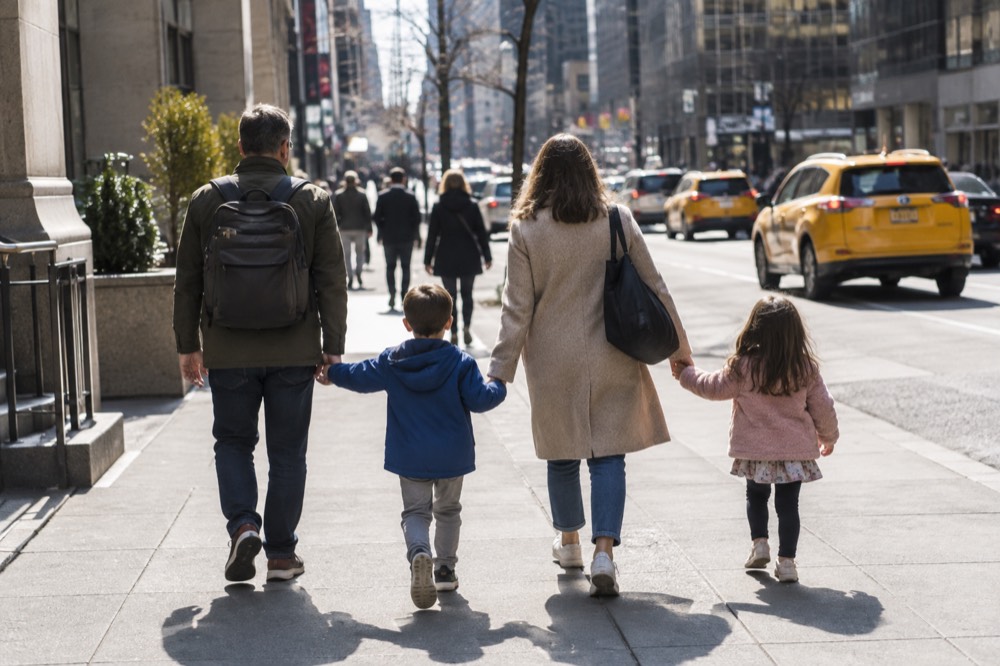
New York City welcomed 65 million visitors in 2025, and a large share of them arrived with strollers, school schedules and the same question: what holds a child's attention here for more than twenty minutes? The honest answer is that the city is unusually good with kids, but only if you plan around three constraints: timed tickets, walking distance and the fact that several of the best things for children are either cheap or free. Up to three children under 44 inches tall ride the subway free with a paying adult, the Staten Island Ferry costs nothing, and the Central Park grounds are open to everyone.
This page answers the question directly, then earns the rest of the space with the details: which museums suit which ages, which observation deck a seven-year-old actually remembers, how the ferry to the Statue of Liberty works, and whether a pass like the CityPASS saves a family real money. Every price below comes from official operator or government sources. For the full sightseeing picture beyond the family lens, the site's things to do in NYC page covers every attraction category in the city.
What to Do in New York City with Kids?
The best things to do in New York City with kids are the American Museum of Natural History, Central Park, the official ferry to the Statue of Liberty and Ellis Island, an observation deck such as SUMMIT One Vanderbilt, and the free Staten Island Ferry. Children under 44 inches ride the subway free, and several major museums admit young children at no charge, so a family trip costs far less than most visitors expect.
That is the compressed answer. The longer version depends on your children's ages and your dates, and the rest of this page breaks it into decisions you can actually make: museums first, because they are the most age-sensitive choice, then the decks and the water, then the transit and budget mechanics that make or break a family day.
A useful framing: New York rewards families who do two substantial things per day rather than four. The distances look small on the map and feel large at four in the afternoon with a tired eight-year-old. The New York City with kids guide on this site builds full day-by-day itineraries on that principle; this page stays on the question of what, not in what order.
Which New York Museums Work Best for Children?
The American Museum of Natural History is the best museum in New York City for kids, with dinosaur halls, the great blue whale and the planetarium under one roof. The Intrepid Sea, Air and Space Museum, an aircraft carrier on the Hudson, is the strong second choice for children who like machines. Both are stroller-friendly and sized for a half day, and the Metropolitan Museum of Art suits older children.
The Natural History Museum sits on the Upper West Side, directly across the park from the Met, which makes the pairing obvious. Its admission policy matters to families: general admission is pay-what-you-wish for New York State residents, and everyone else pays a fixed price. The museum's own ticketing page states the policy in those exact terms, with the resident option and the out-of-state option listed separately. If your family lives in New York State, bring proof and choose the resident option online.
The Intrepid Museum at Pier 86 charges $38 for adults and $28 for children aged 5 to 12, with children 4 and under free, per the box-office figures CityPASS publishes. What you get is a flight deck of jets and helicopters, a space shuttle prototype and a guided missile submarine you can walk through. Kids who like vehicles will burn an entire afternoon here. New York City residents get 50% off every day, and US military and veterans enter free with ID.
The Met deserves a mention with two honest caveats. Children 12 and under enter free, which is genuinely valuable, but adult admission is a fixed and mandatory $30, pay-what-you-wish only for New York State residents and NY, NJ and CT students, and you will be asked for proof. Also, the museum currently has significant gallery closures: the American Wing, parts of the Asian Art galleries, the Costume Institute, the roof garden and much of the Modern and Contemporary galleries are closed in whole or in part, per the Met's own closures page. Check that page before promising a child a specific room.
| Museum | Best ages | Adult price | Child price | Notes |
|---|---|---|---|---|
| American Museum of Natural History | 4+ | Fixed price for out-of-state visitors; pay-what-you-wish for NY State residents with ID | Reduced child rates | Dinosaur halls, whale, planetarium |
| Intrepid Sea, Air and Space Museum | 6+ | $38 | $28 (ages 5-12), under 4 free | Aircraft carrier, space shuttle, submarine |
| Metropolitan Museum of Art | 10+ | $30, mandatory for visitors | Free for 12 and under | Major gallery closures in force; check before visiting |
| Children's entry at MoMA | All | $30 | Free for 16 and under | Best for teens with real art interest |
If the museum day is the anchor of your trip, the Metropolitan Museum of Art tickets guide covers the admission rules in full, including the same-day Cloisters inclusion most guides omit.
Which Observation Deck Should a Family Pick?
SUMMIT One Vanderbilt is the observation deck children remember longest, because its mirrored rooms and glass ledges feel like a playground high above the street. The Empire State Building is the classic choice with an open-air 86th floor deck and a museum portion, while Top of the Rock frames Central Park in the same shot as the skyline. All decks use timed entry, so book a slot rather than walking up.
Pricing is dynamic by date and slot at every deck, so treat any figure as a starting price rather than a flat rate. SUMMIT One Vanderbilt starts from $44 for visitors 13 and over, with youth tickets from $38, plus a $3 online processing fee per order. The Empire State Building's basic 86th floor ticket starts from $44 plus a $5 booking charge per transaction, and Top of the Rock starts from $42. One World Observatory, downtown at the World Trade Center, starts from $39 to $44 depending on the ticket type, and it opens at noon rather than 9am on September 11.
For a family, the deck decision is really a neighborhood decision. SUMMIT sits next to Grand Central, so it pairs with a Midtown morning. Top of the Rock pairs with Rockefeller Center and a walk into the park. One World Observatory pairs with Lower Manhattan and the harbor. Pick the one that matches where you already are, and resist the urge to stack two decks in one day; the second view is the one nobody remembers.
A note on height and age: the glass floor at Edge and the glass ledges at SUMMIT thrill some children and unsettle others. Edge, at Hudson Yards, starts from $34 to $45 plus a $2 processing fee per ticket, and it is the highest outdoor platform in the Western Hemisphere. If your child is nervous, the Empire State Building's outdoor deck with its high railings is the gentlest introduction to the view.
Is the Statue of Liberty Ferry Good with Kids, and Which Boat Should You Book?
The official Statue City Cruises ferry is the only boat that lands on Liberty Island and Ellis Island, and it is one of the best family outings in New York. Adult admission is $26.00, children 4 to 12 pay $17.00, and under-4s ride free, with the round-trip ferry, both islands and both museums included. Sightseeing boats that only circle the islands never land, and some charge more than the real ferry.
Statue City Cruises is the only operator authorized by the National Park Service to dock at the islands, departing from Battery Park in Manhattan and Liberty State Park in New Jersey. Every ferry ticket includes the round trip, grounds access on both islands, the Statue of Liberty Museum, the Ellis Island National Museum of Immigration and self-guided audio tours. Ranger programmes are free when running.
The detail that surprises most families is the crown. Crown access costs $26.30 for adults, thirty cents more than the grounds ticket, because the barrier is not money but supply: crown tickets are name-bearing, limited to four per household, checked against photo ID, and reported to sell out around 90 days and often several months ahead. If the crown matters to your family, book as early as your dates allow through the official operator, and check the National Park Service crown page rather than trusting a fixed release window.
Ellis Island is the half of the trip families underrate. The National Museum of Immigration is a migration-history site, and it lands differently with children than a standard museum: the Great Hall where arrivals were processed gives a school-age child something concrete to hold onto. Budget three to five hours for both islands, and go in the morning before the afternoon queues build at the Battery Park security screening.
What Are the Best Free and Cheap Things to Do in NYC with Kids?
The best free things to do in New York City with kids are the Staten Island Ferry, Central Park's playgrounds and lawns, the High Line, the 9/11 Memorial plaza, and Coney Island's boardwalk. The subway itself is a cheap attraction for many kids, and up to three children under 44 inches tall ride free with a fare-paying adult, so a family of four can cross the city for the price of two fares.
The Staten Island Ferry is free, running between Whitehall in Manhattan and St. George on Staten Island, and it passes the Statue of Liberty at a distance that satisfies most children who do not need to stand on the island. The ride is about 25 minutes each way. The free claim is universally reported; the city's DOT ferry pages are the official source if you want to verify before you go.
Central Park costs nothing to enter and holds more playgrounds than any family can use in a week. Bethesda Terrace, the Mall and Bow Bridge are the classic walk, and the park's design means flat, stroller-friendly paths connect most of it. The Central Park Zoo is a separate paid attraction, modest in size, which is exactly why it suits children: small enough to finish before a meltdown, and the penguins are the reliable stars.
The High Line, the elevated park on the old freight rail viaduct in Chelsea, is free and works for kids because it is a walk with a view rather than a walk through traffic. The 9/11 Memorial plaza, the outdoor reflecting pools, is free and open daily; the museum beneath it is a separate paid, timed ticket, and families should decide based on age rather than treating it as a default stop. The museum is a sensitive visit best suited to older children.
| Free activity | Where | Why it works for kids |
|---|---|---|
| Staten Island Ferry | Whitehall to St. George | A real boat, harbor views, the statue in the distance |
| Central Park playgrounds | Central Park, multiple locations | Dozens of playgrounds, no ticket, no schedule |
| The High Line | Chelsea, Gansevoort to 34th St | An elevated walk with skyline views, no traffic |
| 9/11 Memorial plaza | World Trade Center | Free, open daily, best for older children |
| Coney Island boardwalk | Southern Brooklyn | Beach, boardwalk and people-watching, free to walk |
The site's free things to do in NYC page expands this list considerably if the budget is tight.
How Do Children Pay for the Subway in New York?
Children under 44 inches tall ride the subway and local buses free, up to three per fare-paying adult, and everyone else pays $3.00 per ride by tapping a contactless card or phone with OMNY. There is no child fare product to buy: the height rule applies at the turnstile, and the adult fare is the same $3.00 whether the rider is six or sixty. Two adults with two small children ride for two fares.
The bigger fact, and one most guides still get wrong, is that the MetroCard is gone. As of 1 January 2026 the MTA no longer sells or refills MetroCards at all, and any guide telling you to buy a 7-day unlimited on arrival is sending you to a product that no longer exists. The replacement is automatic: tap the same card or device for every ride and OMNY caps your charges at $35 in a rolling seven-day window, after which the rest of that period is free. There is no pass to buy and no decision to make.
Two mechanics matter for families. First, the cap counts one card or device per person, so each adult needs to tap their own card consistently; mixing a phone and a plastic card breaks the cap silently. Second, the seven days start with your first tap, not on a calendar day, so the cap fits a trip of any length up to a week. For most families visiting for three to five days, the cap simply never triggers, and you pay $3.00 a ride.
For a full breakdown of fares, transfers and the cap, the OMNY guide covers every rule, and the NYC subway guide handles routing with children in mind.
Is the New York CityPASS Worth It for a Family?
The New York CityPASS costs $149 for adults and $129 for children aged 6 to 17, covers your choice of five attractions from a menu of eleven, and is valid for nine consecutive days from first use. For a family doing the classic circuit, the Empire State Building, Top of the Rock, the statue ferry and two museums, it saves real money. For a slow-paced family doing two attractions a day, it usually does not pay off.
The arithmetic is straightforward. CityPASS itself publishes the combined box-office value of its five-attraction adult bundle at $307.04, against the $149 pass price, a claimed saving of $158.04. Individual box-office figures include the Empire State Building AM/PM Experience at $75.12, Top of the Rock at $71.86, the official Statue of Liberty and Ellis Island ferry at $26.00, the Intrepid Museum at $38.00 and the American Museum of Natural History at $43.00. Five of those at full price already exceeds two adult passes.
The catch is the nine-day window and the five-attraction commitment. Reservations are required at some attractions and recommended at others, handled through the pass app, and a family that uses only three of five choices has usually lost money. Children under 6 often enter attractions free anyway, so a pass for a toddler is wasted spend; check each attraction's child age threshold before buying.
One warning that matters in 2026: not every pass on the market still exists. The Sightseeing Pass ceased trading in 2025, and competitor guides still list it, so do not buy one. The New York Pass now sits inside Go City as the All-Inclusive product, with adult pricing from $169 for consecutive-day unlimited entry, and the Go City Explorer starts from $89 with choices spread over 30 days. The Explorer structure suits families who decide day by day.
| Pass | Adult price | Child price | Structure | Best for |
|---|---|---|---|---|
| New York CityPASS | $149 | $129 (6-17) | Choose 5 of 11 attractions, 9 consecutive days | First-time families doing the classic circuit |
| Go City Explorer | From $89 | Varies by tier | Choose 2 to 10 attractions, 30 days from first use | Families with loose plans |
| New York Pass (Go City All-Inclusive) | From $169 | Varies by tier | Unlimited entries over consecutive days | Packed itineraries stacking several sights daily |
The site's full New York CityPASS guide runs the numbers in detail, and the is the New York CityPASS worth it page answers the question for edge cases.
What Works on Rainy Days and in Different Seasons?
On a rainy day in New York with kids, the wins are the American Museum of Natural History, the Intrepid, the Museum of Broadway, Chelsea Market, and any glass-walled observation deck, since decks stay open in rain. Seasonally, December belongs to Dyker Heights' Christmas lights in Brooklyn, summer belongs to the harbor and Coney Island, and February, which averages more snow than January, is the month to build indoor days around.
New York has no dry season: the official Central Park climate normals show July as the wettest month of the year at 4.60 inches of precipitation, ahead of August at 4.56 and June at 4.54. Families booking summer to dodge rain have it backwards. February, the snowiest month at 10.1 inches on average, is also the driest by total precipitation at 3.19 inches, which means crisp, clear, cold days that are excellent for deck visits if everyone is dressed for it.
The Museum of Broadway in Times Square is a strong rainy-hour filler for theater-loving families: self-paced, timed-entry, about one to two hours, with costumes and set pieces. For December visitors, the Dyker Heights Christmas lights, a residential Brooklyn block that goes all out, are a genuine family event, and a guided tour handles the subway ride and the route. In summer, the harbor cruises and Coney Island absorb heat better than any museum queue.
One seasonal caution: observation decks sell timed slots, and holiday weeks fill them early. If your trip overlaps Christmas week, Thanksgiving week or a summer weekend, book decks, the statue ferry and Broadway seats before you fly, and leave the free layers, parks, ferries, playgrounds, as the spontaneous part of the trip.
Common Questions About New York City with Kids
Families ask the same handful of practical questions before a New York trip: how many days are enough, whether children pay on the subway, which attractions are free for kids, whether the city is manageable with a stroller, and what to do when the weather turns. The answers are mostly reassuring: children under 44 inches ride free, several major museums admit young children free, and four to five days is the sweet spot for a first family visit.
What to do in new york city with kids?
Start with the American Museum of Natural History, the official Statue of Liberty and Ellis Island ferry, Central Park, and one observation deck such as SUMMIT One Vanderbilt or the Empire State Building. Add the free layers: the Staten Island Ferry, the High Line and the park's playgrounds. Children under 44 inches ride the subway free, and the 9 to 12 age range can also handle the Tenement Museum or the Met's open galleries.
How many days does a family need in New York City?
Four to five days is the practical sweet spot for a first family visit. That allows one museum day, one harbor-and-statue day, one Central Park and Midtown day, one Brooklyn day, and a buffer for weather and fatigue. Three days works if you cut Brooklyn; seven days lets you add a day trip, but most children hit a wall before the adults do.
Do kids pay for the subway in New York?
Children under 44 inches tall ride free, up to three per fare-paying adult, on the subway and local buses. Everyone taller pays the standard $3.00 fare with OMNY. There is no child ticket product to buy; the height rule is applied at the turnstile.
Which NYC attractions are free for children?
Children 12 and under enter the Metropolitan Museum of Art free, 16 and under enter MoMA free, and 25 and under enter the Whitney free every day. The 9/11 Memorial plaza, the Staten Island Ferry, Central Park and the High Line are free for everyone. The Intrepid charges from age 5, and the official statue ferry charges from age 4.
Is New York doable with a stroller?
Yes, with planning. The subway has elevators at most major stations but not all of them, so check station accessibility before each ride, and buses are the fallback since drivers kneel the bus and all buses take strollers. Museums, decks and ferries are all stroller-friendly, and Central Park's paths are flat throughout.
What should a family do in New York on a rainy day?
The American Museum of Natural History, the Intrepid, the Museum of Broadway and Chelsea Market are the reliable indoor anchors. Observation decks stay open in rain and the glass-walled ones, SUMMIT and One World Observatory, keep the view. July is statistically the wettest month in Central Park, so summer visitors should hold at least one indoor plan in reserve.
The last planning decision is the one everything else hangs on: book the timed things, the ferry, the deck, the museum slots, before you leave, and let the free city fill the gaps. Children remember the boat, the dinosaurs and the train itself, and two of those three cost less than a pizza dinner. This desk's New York City Travel Guide hub carries the rest of the site if the trip has grown beyond one question.