NYC with Kids: A Realistic Family Itinerary That Actually Works
New York with children rewards families who plan less per day than they think they need, book two or three things ahead, and let the city do the entertaining between them.
Short answer
Plan two anchored activities per day, one morning and one afternoon, and leave the gaps open. Book the Statue of Liberty ferry, an observation deck slot, and a CityPASS if you will hit five big attractions. Kids under 44 inches ride the subway free, and the city's best-kid attractions, from Central Park to the Staten Island Ferry, cost nothing at all.
New York City welcomed 65 million visitors in 2025, and a large share of them arrived with strollers, snack bags and a five-year-old's definition of a good day. The city is genuinely one of the best places in the world for children, but it punishes over-scheduling. Distances are longer than they look on a map, museum fatigue sets in around hour two, and the observation deck you booked for 4pm competes directly with the meltdown hour.
This itinerary is built around a simple rule: two anchored activities per day, one in the morning when everyone has energy, one after lunch, and open time between them. It assumes a four-day visit, because four days is the sweet spot for families, long enough to cover the essentials, short enough that nobody ends up hating the subway. If you have less, the day-by-day table tells you what to cut first.
How Many Days Do You Need in New York City with Kids?
Four full days is the realistic minimum for a first family trip, and three days works if you drop the outerborough stops. Families who compress Central Park, the Statue of Liberty, two museums, a deck, Brooklyn and a show into two days end up exhausted and remember none of it. Kids need playground stops, long lunches and afternoon breaks, so plan two anchors per day.
The arithmetic is straightforward. There are roughly six essential kid-facing experiences: Central Park, the American Museum of Natural History, the Statue of Liberty and Ellis Island ferry, one observation deck, the Brooklyn Bridge walk, and a Broadway show if your children are old enough to sit through one. At two per day, that is three days. Day four is the flex day: Coney Island in summer, theIntrepid in bad weather, or a slower downtown morning.
Age changes the maths more than anything else. Toddlers need Central Park, the carousel, the zoo and not much else; a stroller-friendly day beats a museum day. Children aged six to eleven are the sweet spot for this itinerary: old enough for the ferry, young enough to be thrilled by a bridge. Teenagers can handle three anchors a day and will want the High Line, SoHo and food stops added on.
| Trip length | What fits | What to cut first |
|---|---|---|
| 2 days | Central Park, AMNH, one deck, ferry | Brooklyn, Broadway, day trips |
| 3 days | Add Brooklyn Bridge and Dumbo | Coney Island, second museum |
| 4 days | Add Broadway or Coney Island, flex morning | Nothing essential |
| 5+ days | Add a Harbor or the Bronx Zoo | Slow the pace instead of adding |
What Is the Best Day-By-Day Itinerary for NYC with Kids?
Cluster each day around one neighborhood so you never cross the city twice: day one Central Park and the natural history museum, day two Midtown with an observation deck and Times Square, day three Lower Manhattan with the ferry and the Brooklyn Bridge, day four a seasonal flex day. Keep the morning anchor before 10am, eat an early sit-down lunch, and end by 6pm. Booking the timed things ahead makes the rest relaxed.
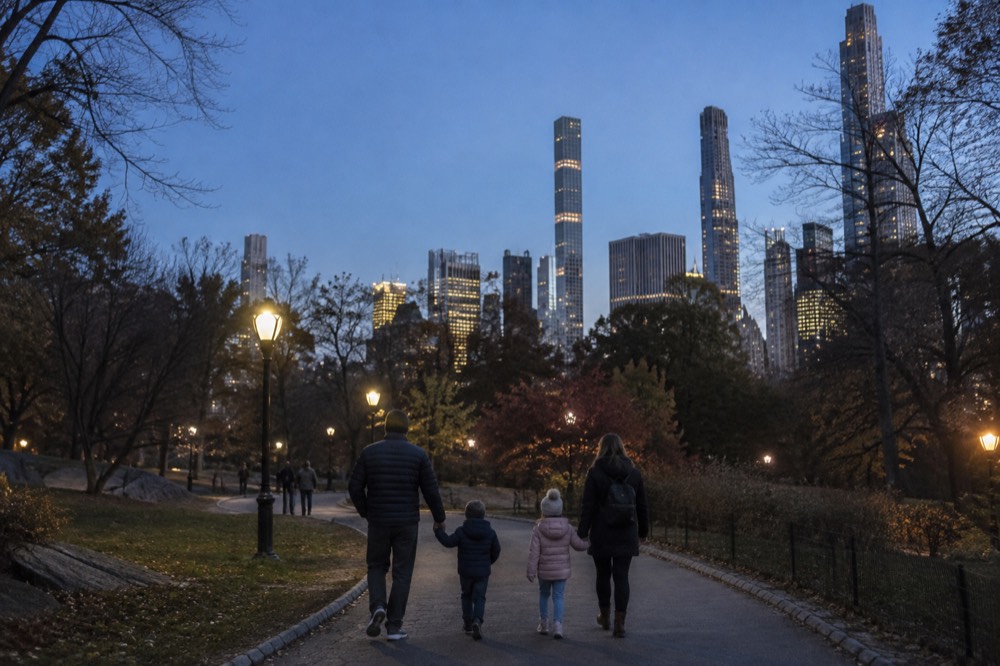
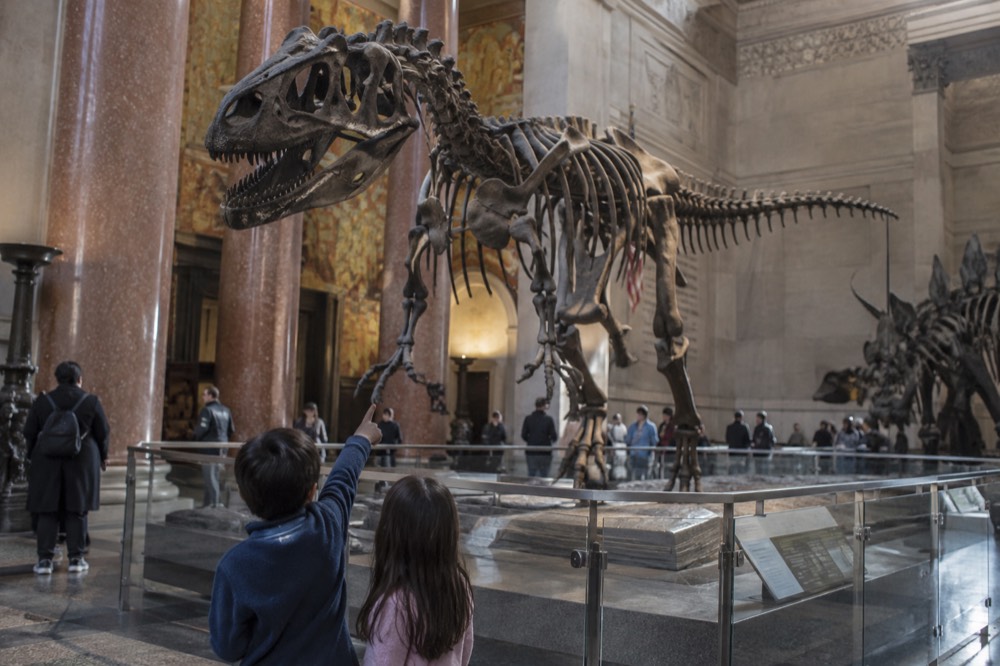
Day one stays above 59th Street. Enter Central Park from the south, hit the zoo area and the carousel, walk the Mall to Bethesda Terrace where kids can watch the rowboats, and then take the 20-minute walk west to the American Museum of Natural History. Do the dinosaur halls and the great blue whale, then stop. Resist the planetarium add-on unless your child is genuinely obsessed; the museum alone is a full morning plus.
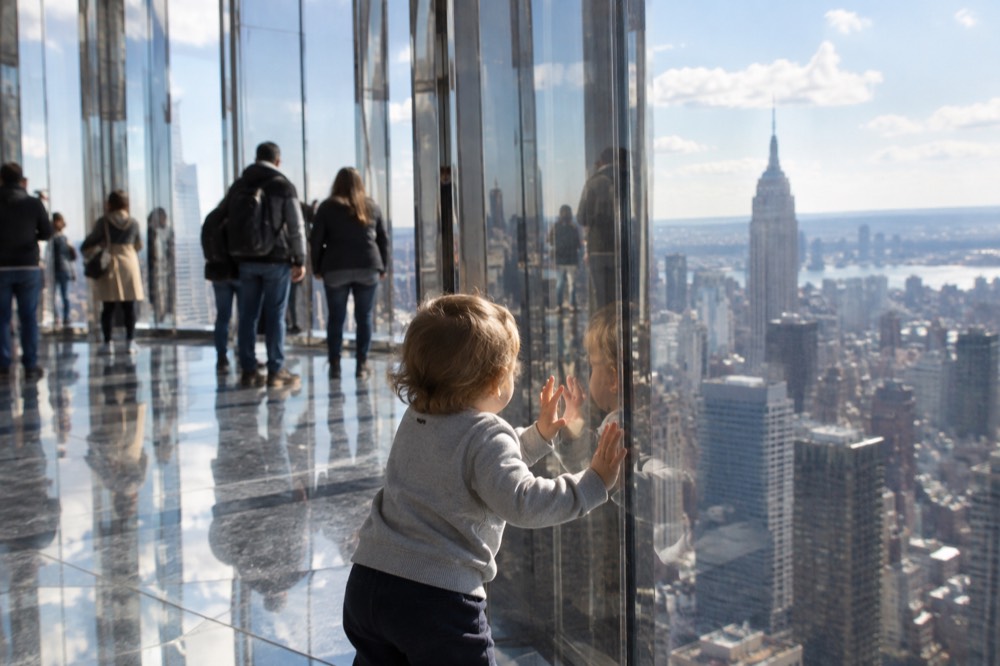
Day two is Midtown. Morning at SUMMIT One Vanderbilt, which children reliably love because the mirrored rooms are basically a playground, then Bryant Park for lunch and its carousel, then the New York Public Library's Rose Main Reading Room, which is free and quietly impressive. Late afternoon in Times Square is the one time the crowds work in your favor: the billboards are the attraction, and you need nothing but eyes.
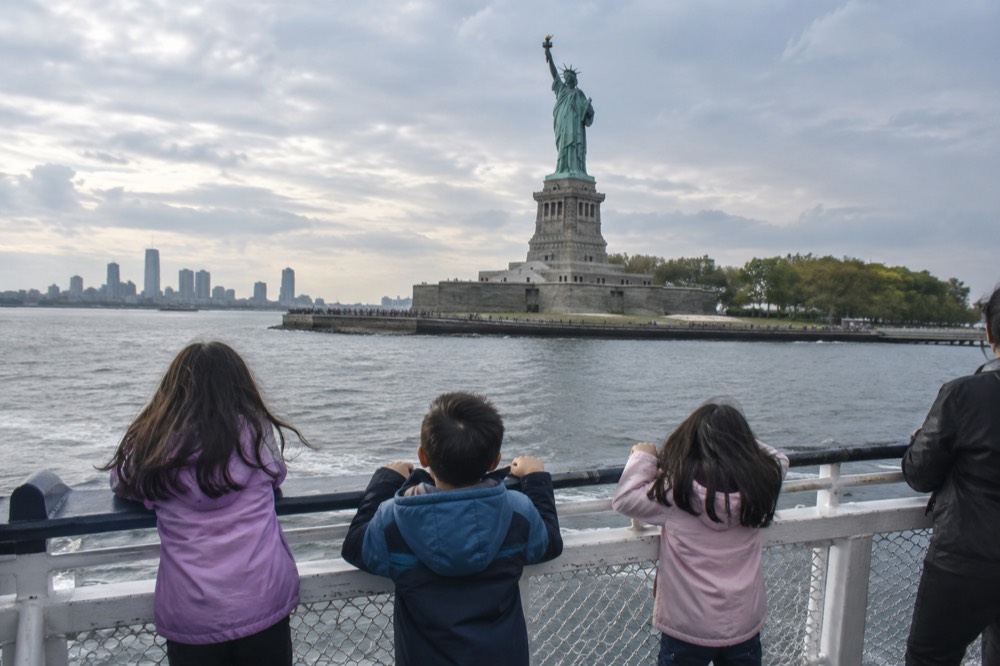
Day three goes downtown. The first ferry to Liberty Island leaves from Battery Park in the early morning, and the first boat of the day is the one with the shortest lines. Reserve ahead: Statue City Cruises is the only operator authorized by the National Park Service to land on the islands, and lookalike cruises that only circle the statue sell for similar money without ever letting you off the boat. After the islands, walk north through the Financial District, cross the Brooklyn Bridge promenade in late afternoon light, and take the subway back from Dumbo.
Day four is the seasonal flex day. Summer: Coney Island, with the beach, the boardwalk and an aquarium, reachable in about an hour from Midtown. Winter: theIntrepid Sea, Air and Space Museum, an aircraft carrier with a space shuttle on deck, which is the single most reliable bad-weather kid attraction in the city. Shoulder season: Harlem for a gospel concert, or a slower downtown day with the Staten Island Ferry, which is free and gives kids a proper boat ride with the Statue of Liberty in view.
| Day | Morning anchor | Afternoon anchor | Evening |
|---|---|---|---|
| 1 | Central Park, carousel, Bethesda Terrace | American Museum of Natural History | Early dinner Upper West Side |
| 2 | SUMMIT One Vanderbilt | Bryant Park, NYPL | Times Square billboards |
| 3 | Statue of Liberty and Ellis Island ferry | Brooklyn Bridge walk, Dumbo | Pizza in Dumbo |
| 4 | Seasonal pick: Coney Island, Intrepid or Harlem | Free-form, playgrounds, shopping | Pack and early night |
For a wider menu of stops that pair well with these days, our things to do in NYC guide covers the full list, and the dedicated things to do in NYC with kids page goes deeper on ages and interests. If rain wrecked your plan, the rainy day activities guide rebuilds a day indoors.
Which Paid Attractions Are Actually Worth the Money for Families?
The paid attractions that earn their price are the Statue of Liberty ferry at $26 per adult and $17 per child aged 4-12, one observation deck, and the American Museum of Natural History, in that order. A New York CityPASS at $149 adult and $129 child pays off only if you genuinely use all five attractions within its nine-day window. Families visiting two or three big sights should buy individually instead.
The honest way to decide is to price your actual list. The CityPASS covers five attractions from a menu of eleven, including the Empire State Building, Top of the Rock, the Statue of Liberty ferry, the American Museum of Natural History, the Intrepid, the Guggenheim, the Whitney, Edge, the 9/11 Memorial and Museum, and a Circle Line cruise. If your day-by-day plan already includes five of those, the bundled price beats the individual box-office totals by a wide margin. If it includes three, it does not.
The deck decision is a real one, and kids have opinions. SUMMIT One Vanderbilt is the most playful: mirrors, glass ledges and an art installation children treat as a game, timed entry from $44 for ages 13 and up and from $38 for ages 6-12. The Empire State Building's 86th floor has the open-air romance and the outdoor deck. One World Observatory is the pick if day three has you downtown anyway, from $39-$44 plus fees, and the ride up is fast enough to be a thrill on its own. Doing two decks in one trip is almost always a mistake; pick one and spend the saved money on pizza.
| Attraction | Adult price | Child price | Kid verdict |
|---|---|---|---|
| Statue of Liberty and Ellis Island ferry | $26.00 | $17.00 (4-12), under 4 free | Boat ride plus statue, easy win |
| SUMMIT One Vanderbilt | from $44 | from $38 (6-12) | Mirrors and glass, best for ages 6+ |
| One World Observatory | from $39-$44 | varies by date | Fast elevator, harbor views |
| American Museum of Natural History | fixed for out-of-state, pay-what-you-wish for NY State residents | lower youth rates | Dinosaurs, reliably excellent |
| Broadway show | varies by show and seat | varies | Ages 6+ only, mostly |
One note on the 9/11 Memorial and Museum: the outdoor memorial pools are free and always open, and the museum is a somber, quieter experience that suits older children and teenagers. Adult admission is $36, children 6 and under are free, and Monday admission is free for everyone, with tickets released at 7am ET on the website each Monday. Do not treat it as an entertainment stop in a packed kid itinerary; it deserves its own unhurried block if you include it.
Is the Statue of Liberty Worth Doing with Kids?
Yes, for almost every family, the ferry to Liberty Island and Ellis Island is the single most reliable kid-pleaser among the paid attractions. Every ticket includes the round-trip ferry, both islands, the Statue of Liberty Museum, the Ellis Island National Museum of Immigration and audio tours. The catch families miss: many harbor cruises never land, and only Statue City Cruises is authorized to dock at the islands.
The crown is the part people over-plan for. A Crown Reserve ticket costs $26.30 for adults, thirty cents more than the grounds ticket, so the barrier is not money, it is availability: crown tickets are name-bearing, limited to four per household, photo ID is checked at boarding, and they sell out weeks to months ahead. With children, the grounds and museum are honestly enough. The pedestal is a middle option that also needs early booking.
Practical notes that matter with kids: arrive at Battery Park 30-45 minutes before your ferry slot, because security screening is airport-style, and strollers must be folded on the boat. Ellis Island has real luggage to climb on and a genuinely moving search-room restoration; children aged eight and up connect with it, younger ones last about twenty minutes. Under 4 is free on the ferry, ages 4-12 pay $17.
Which Museums in New York Actually Work for Children?
The American Museum of Natural History is the default answer and deservedly so, but theIntrepid Sea, Air and Space Museum is the sleeper pick for children who like machines, and the Museum of Broadway works for theater-obsessed kids aged eight and up. At the Metropolitan Museum of Art, children 12 and under are always free. The Met is not pay-what-you-wish for tourists: that applies only to New York State residents and NY, NJ and CT students.
Museum strategy with kids is about duration, not selection. Ninety minutes is the realistic ceiling for most children in even the best museum. Pick two or three target galleries, enter at opening when crowds are thinnest, and leave before the whining starts. At the Met, the Temple of Dendur and the arms and armor galleries are the kid magnets; note that a long list of galleries including the Costume Institute, the Cantor Roof Garden and parts of the American Wing are closed for renovation, so check the museum's closures page before promising a specific room. More of these guides are collected on New York City Travel Guide.
The free and reduced windows are worth building a day around. MoMA is free Friday evenings from 5:30pm to 8:30pm for New York State residents only, with advance reservation and proof of residency. The Whitney is free for anyone 25 and under every day, free for everyone on Friday nights, and free all day on the second Sunday of each month. The Guggenheim runs pay-what-you-wish Tuesdays and Sundays from 4:00pm to 5:30pm. None of these require a child to be a New Yorker, and the Whitney policy in particular is unusually generous.
| Museum | Kid-friendly draw | Child admission | Free window |
|---|---|---|---|
| AMNH | Dinosaurs, whale, planetarium | Youth rates; pay-what-you-wish on general admission for NY State residents with ID | None general |
| The Met | Temple of Dendur, armor | 12 and under free | PWYW for NY State residents and NY/NJ/CT students |
| MoMA | Van Gogh, sculpture garden | 16 and under free | Fri 5:30-8:30pm, NY State residents only |
| Whitney | Big spaces, river terraces | 25 and under free daily | Fri nights, all visitors |
| Intrepid | Aircraft carrier, space shuttle, submarine | 5-12 $28, 4 and under free | 50% off for NYC residents |
| Museum of Broadway | Sets, costumes, playbills | Paid entry, self-paced | None |
How Do You Get Around New York with Kids Without Losing Your Mind?
The subway is the answer, and it is cheaper for families than almost anywhere else: children under 44 inches tall ride free, up to three per fare-paying adult. A single subway or local bus ride costs $3.00, paid by tapping a card or phone at the turnstile, and the weekly fare cap is $35, applied automatically after 12 paid rides within seven days.
The MetroCard era is over: since 1 January 2026 the MTA no longer sells or refills them.
That last fact matters because most family travel advice still says "buy a 7-day unlimited when you land." That product no longer exists. The replacement is better for visitors: the $35 weekly cap applies automatically with no pass to buy, no decision to make, and once you hit it the rest of the week's subway and local bus rides are free. One hard rule: tap the same physical card or the same device every time. Mixing your phone and the plastic card in your pocket breaks the cap silently, and each adult in a group needs their own card, because group trips do not pool toward the cap.
With kids, the working rules are these: take express trains when the route allows, because fewer stops means fewer chances to miss your exit; board the first or last car, which is usually less crowded; and put the child against the pole, not the door. Uptown and downtown, not north and south, is how everyone gives directions, and the difference between local and express trains is real, so check the sign on the platform before assuming your train stops where you need.
Taxis and rideshares fill the gaps: late nights, airport runs, the meltdown moment. They are metered, predictable and often worth the money with tired children, but for crossing Manhattan midday the subway is usually faster than a cab sitting in traffic. Our full NYC subway guide covers the details, including the out-of-system free transfers that occasionally save a walk.
Where Should You Eat with Kids in New York?
Eat the city's cheap iconic foods rather than sit-down restaurants with children in tow: pizza by the slice, bagels in the morning and a deli sandwich at lunch cost a fraction of a table-service meal and are the foods your kids will remember. Children are welcome almost everywhere before 7pm, so eat dinner at 5:30pm, before the adult crowd arrives. Save one splurge for the night everyone has the energy for it.
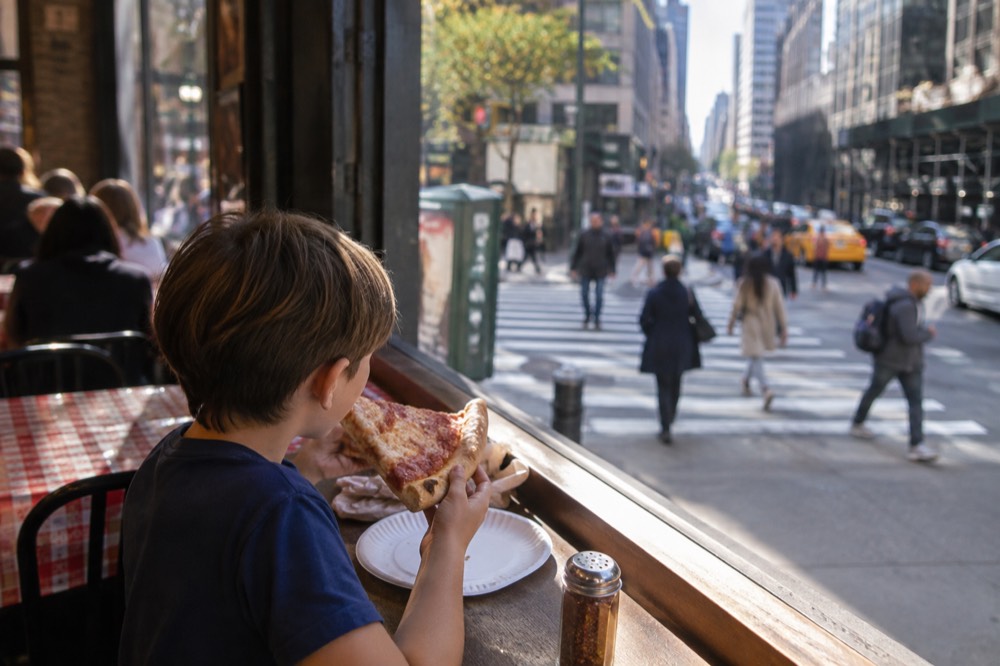
Pizza is the backbone of any kid's New York trip, and the slice joint model is perfect for families: no reservation, no wait, food in ninety seconds. Bagels work the same way in the morning. For the full experience, a food tour is the structured version of this: the Chinatown and Little Italy tour runs about three hours with six tastings that together make a real meal, and the Greenwich Village version mixes slices, sweets and small plates with a walk through the neighborhood's history. Both suit children old enough to walk three hours with stops.
The splurge options are real too. A Broadway matinee followed by an early Theater District dinner is the classic family night out; where to eat before the show matters mostly for timing, so pick somewhere within a few blocks of the theater. And if one evening deserves a celebration budget, the harbor dinner cruises turn the skyline into the entertainment while the food arrives, which can be worth it with older children on a milestone trip.
| Meal | Good family option | Ballpark cost per person |
|---|---|---|
| Breakfast | Bagel with cream cheese, coffee for adults | $5-$10 |
| Lunch | Pizza by the slice, deli sandwich | $8-$15 |
| Snack | Street cart pretzel, hot dog | $3-$6 |
| Dinner | Casual sit-down, early seating | $20-$40 |
| Splurge | Food tour or Chinatown feast | $50-$100 |
What Are the Best Free Things to Do in NYC with Kids?
A striking amount of the best kid material costs nothing: Central Park's playgrounds and Bethesda Terrace, the Staten Island Ferry's round trip past the statue, the Brooklyn Bridge walk, the High Line, Times Square after dark and the 9/11 Memorial plaza are all free. Add the free museum windows, MoMA's Friday evenings for residents and the Whitney's free-under-25 policy, and a family can fill two full days without buying a single attraction ticket.
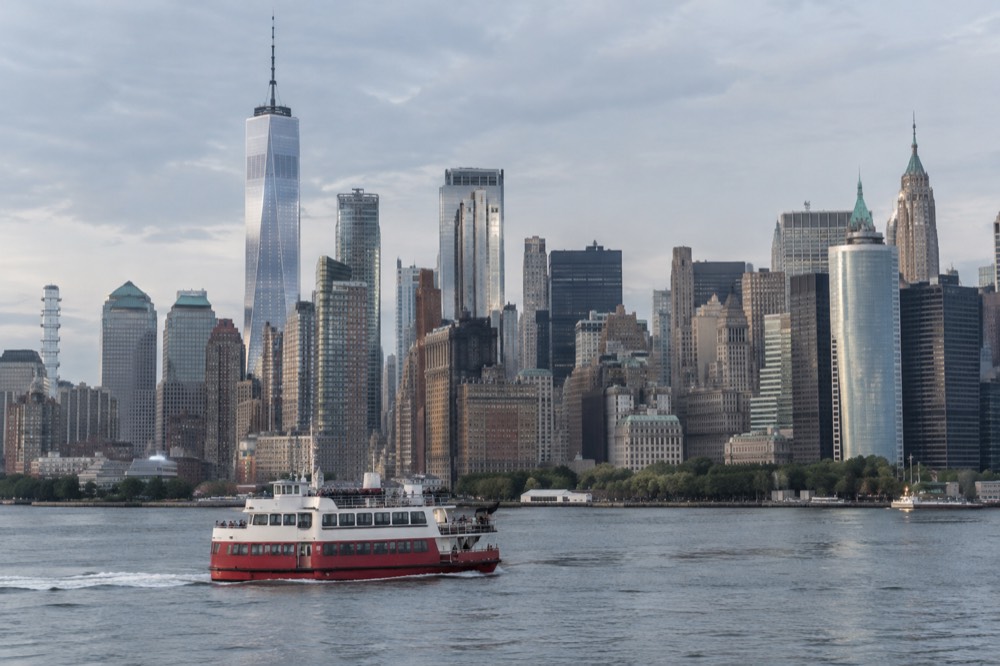
Central Park alone is a full free day if you let it be: the carousel and zoo cost money, but the playgrounds, the Mall, Bow Bridge and the Ramble's winding paths do not. The High Line pairs with Hudson Yards, where walking the elevated park costs nothing even if the deck above does not. The Staten Island Ferry leaves from Lower Manhattan roughly every half hour around the clock, runs past the harbor and the statue, and turns around at St. George for the ride back; locals use it as a commute, kids use it as a boat.
Timing matters for the free museum windows. The Whitney's Friday nights run 5:00pm to 10:00pm with advance tickets recommended, and its second-Sunday free days need timed tickets that go fast. The Guggenheim's pay-what-you-wish window is shorter, 4:00pm to 5:30pm on Tuesdays and Sundays, with a $1 minimum and advance reservation strongly recommended. If your itinerary lands on a Monday, remember the 9/11 Memorial Museum releases free Monday tickets at 7am ET, first come first served.
What If It Rains, or Someone Melts Down?
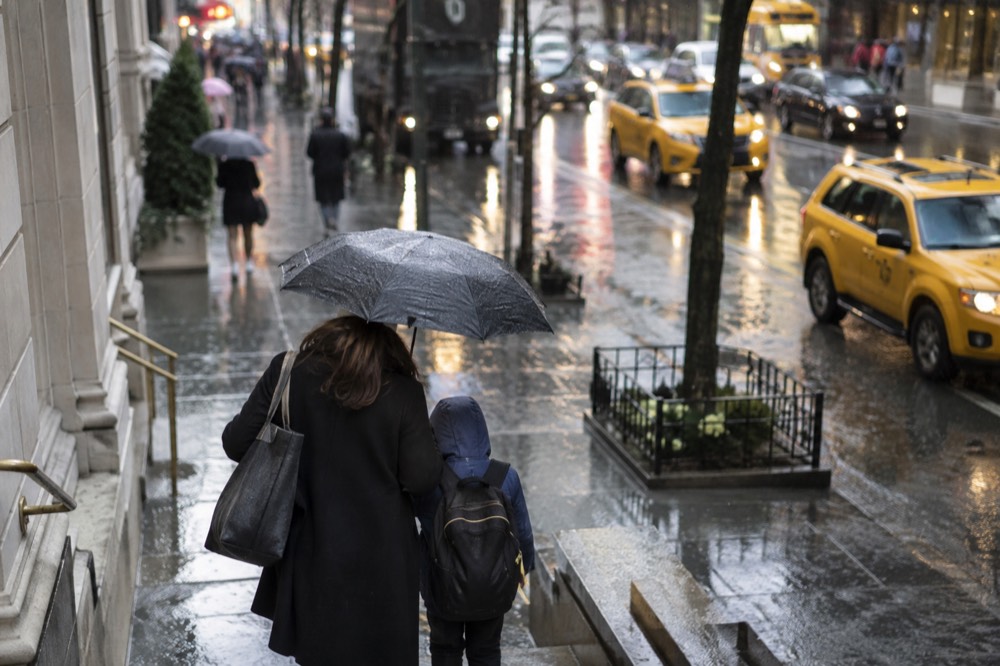
Rain in New York is a museum-and-market day, not a lost day: the city has enough indoor attractions to absorb any weather, from theIntrepid's aircraft carrier to Chelsea Market's food stalls, and July, the wettest month in Central Park with an average of 4.60 inches of rain, usually delivers short heavy bursts rather than all-day drizzle.
The meltdown plan matters too: build one playground stop into every day and treat the hotel afternoon break as an investment.
The indoor bench is deep. TheIntrepid works from age five up, the Museum of Broadway suits show-loving kids, the American Museum of Natural History absorbs a whole rainy morning, and Chelsea Market plus the High Line is a half-day that is half indoors. Broadway matinees are the ultimate rainy afternoon: two and a half hours of guaranteed sitting, and tickets through the TKTS booths in Times Square and Lincoln Center are discounted 20-50% off face value with an $8 per-ticket service fee, sold for same-day performances and next-day matinees.
The midday hotel break deserves a defense. Families on a once-in-a-decade trip feel guilty returning to the room at 2pm, but a 90-minute rest with screens and curtains drawn converts a disastrous 5pm into a decent 7pm. New York is overstimulating for adults; for a seven-year-old it is relentless. Two anchors, a break, and an evening activity is a full day by any honest measure.
Common Questions About Visiting NYC with Kids
The questions families ask most are about pace, price and age thresholds: how many days, whether the passes pay off, which attractions suit which ages, and how the subway works with children. The short version: four days, two anchors a day, and a pass only if you will use five attractions. Children under 44 inches ride transit free, kids under 12 enter the Met free, and the free layer is large enough to rescue any budget.
Is New York City good for kids?
Yes. The city is dense with kid-facing attractions, the transit system makes them reachable without a car, and the informal food culture suits children. The caveats are pace and cost: plan two anchors per day and book the timed attractions ahead, and the trip works.
How many days do you need in NYC with kids?
Four full days covers the essentials: Central Park, the natural history museum, an observation deck, the Statue of Liberty ferry, the Brooklyn Bridge and a Broadway show. Three days works if you drop the flex day; two days forces hard cuts and usually disappoints.
Do kids ride free on the NYC subway?
Up to three children under 44 inches tall ride free with a fare-paying adult on the subway and local buses. Taller children pay the $3.00 fare, and every rider's taps count toward the automatic $35 weekly OMNY cap on the same card or device.
Is the New York CityPASS worth it for families?
It is worth it if you will visit five of its eleven included attractions within the nine-day validity window. At $149 adult and $129 child against box-office totals like $75.12 for the Empire State Building experience and $71.86 for Top of the Rock, a five-attraction plan saves real money. A three-attraction trip should buy individually.
What age is best for a first trip to New York with kids?
Ages six to eleven are the sweet spot: old enough for the ferry, the bridge walk and a Broadway show, young enough to be delighted by billboards and boat rides. Younger children have a great time too, but the itinerary shifts to Central Park, playgrounds and the carousel, with one museum per trip.
What is the cheapest way to see the Statue of Liberty with kids?
The official ferry costs $17 for children aged 4-12 and nothing for under 4s, and includes both islands and both museums. If even that stretches the budget, the Staten Island Ferry is completely free and passes the statue in the harbor, though it does not land on the island.
The last practical piece of advice is the one families skip: book the ferry, the deck and the show before you fly, then stop planning. The best hours of a New York trip with kids are usually the unplanned ones, a playground found by accident, a slice eaten on a stoop, the moment the subway emerges onto a bridge and the whole carriage fills with light. Give those hours room to happen, and the itinerary takes care of itself.