What Was Frank Sinatra's Favorite Restaurant in NYC?
The direct, sourced answer to what was Frank Sinatra's favorite restaurant in NYC, plus where else the Chairman ate around Manhattan and how to walk the same blocks today.
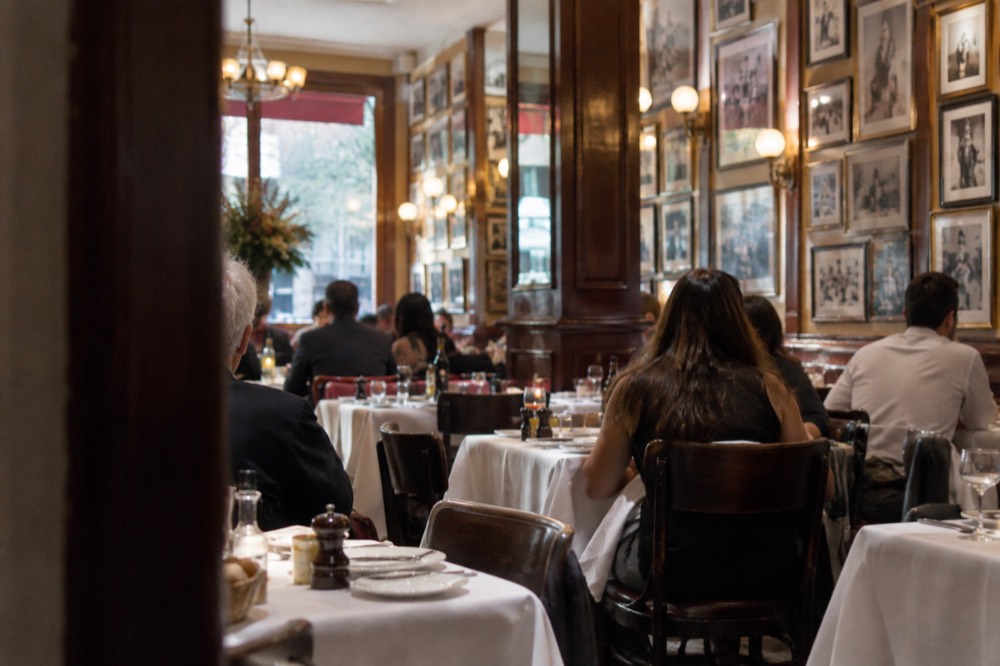
Ask a dozen New Yorkers where Frank Sinatra liked to eat and most of them will give you the same answer before you finish the question. The name that survives, in obituaries, profiles and decades of food writing, is Patsy's, the Italian restaurant on West 56th Street between 8th and 9th Avenues. That is the closest thing to a settled answer this question has.
This page works through what the record actually says, where the reporting is thin, and what a visitor can still do about it today. Because the honest answer has two layers: a specific restaurant uptown, and a whole Italian-American city that shaped the man's tastes in the first place.
What Was Frank Sinatra's Favorite Restaurant in NYC?
By nearly every published account, Frank Sinatra's favorite New York restaurant was Patsy's Italian Restaurant on West 56th Street in the Theater District, a family-run red-sauce institution he was reported to visit regularly for decades. The restaurant itself has long embraced the association, keeping his booth and his memory central to its identity. No other New York restaurant appears in the Sinatra record as consistently, so Patsy's is the answer to give when the question is asked plainly.
The association is not a marketing invention that appeared after his death. Profiles of Sinatra written during his lifetime referenced his loyalty to the place, and the restaurant's own history, as told by the family that has run it across generations, places him among its most devoted regulars. He was reported to have his own table there, and the staff's accounts of his orders, his entourage and his habits have been retold in food media for years.
Two things keep this from being a simple story. First, Sinatra ate out constantly, in many cities, and plenty of other New York restaurants have claimed a piece of him. Second, "favorite" is a word the man himself never definitively attached to any single address in a quotable, sourced way. What the record supports is a strong, long-running pattern: when Sinatra wanted Italian food near the theaters he played, the reporting says he went to Patsy's.
The pattern matters more than the label. A visitor who wants to eat where Sinatra ate is really looking for two experiences: the specific 56th Street dining room, and the older Italian neighborhoods downtown where the cuisine he loved was born. Both are still reachable, and the second one you can taste your way through on foot.
Where Is Patsy's, and What Should You Know Before Going?
Patsy's Italian Restaurant sits on West 56th Street between 8th Avenue and 9th Avenue in Midtown Manhattan, a short walk from Carnegie Hall and the Theater District, which is exactly why it suited Sinatra's working life. It remains a reservation-first, white-tablecloth restaurant run by the same family. Expect classic Southern Italian cooking, an old-school room, and prices in line with a Midtown institution rather than a casual trattoria.
The location explains the loyalty better than any single dish could. Sinatra's New York professional life ran through Midtown: the theaters, the recording sessions, the television appearances. A restaurant a few blocks from all of it, serving the food he grew up eating, was a practical favorite as much as an emotional one. The reporting on his visits consistently frames it that way: a reliable room near the work.
The restaurant leans into the history without turning into a museum. His photograph hangs with many others, and the family's telling of the Sinatra years is part of the house story. Reservations are the sensible route, especially pre-theater, when the room fills with the same crowd timing that made the place useful to Sinatra in the first place. Walk-ins do happen, but on a show night you are gambling.
One honest caveat belongs here. Restaurants associated with celebrities attract retellings, and retellings drift. Specific anecdotes about Sinatra's exact orders and his exact booth have been repeated so often that their provenance is hard to pin down. The core claim, that he was a devoted regular across many years, is the part that appears consistently across independent accounts. Treat the colorful details as legend with a solid foundation, not as documented fact.
If eating at the table itself is the goal, say so when booking. The restaurant knows why many people come and handles it graciously, but a white-tablecloth house on a Theater District block manages its seating tightly. Ask, do not assume.
What Else Did Sinatra Eat Around New York?
Beyond Patsy's, the reporting ties Sinatra to a familiar set of New York Italian rooms: restaurants in Little Italy such as Angelo's and Grotta Azzurra, the storied Midtown institution The '21' Club, and various steakhouses and supper clubs around Midtown. The '21' Club is the best documented of the non-Italian stops, thanks to its celebrity history. The downtown Italian names appear in profiles and neighborhood lore, with thinner sourcing than the Patsy's record.
The list below sorts the claims by how solidly they hold up. It is a planning table, not a ranking: every entry is a real restaurant you can visit today, and the middle column tells you how much weight the association can honestly carry.
| Restaurant | The Sinatra association | What a visitor gets today |
|---|---|---|
| Patsy's, West 56th St | Consistent, decades-long regular per repeated reporting | Classic Southern Italian, white-tablecloth service, the strongest Sinatra claim in the city |
| The '21' Club, Midtown | Well-documented celebrity haunt of his era | A storied Midtown dining room with Prohibition-era character; check current booking terms before planning |
| Grotta Azzurra, Mulberry Street | Appears in Little Italy lore and Sinatra-era retellings | Old Mulberry Street dining in the heart of Little Italy |
| Angelo's of Mulberry Street | Cited in neighborhood profiles as a Sinatra stop | Family-run Italian on the strip Sinatra's grandparents' generation would have known |
| Bamonte's, Williamsburg | Brooklyn Italian lore places Sinatra-era celebrities there | A rare old-school Brooklyn Italian room, worth the trip for the atmosphere alone |
Notice what the table shows. The strongest Sinatra food story in New York is an Italian story. He was the son of Italian immigrants, and the cuisine he kept returning to was the one his family brought with them. That is why the honest way to explore this question is not one restaurant but a trail: Midtown, where he worked and ate, and the old Italian neighborhoods downtown, where that food culture took root in New York.
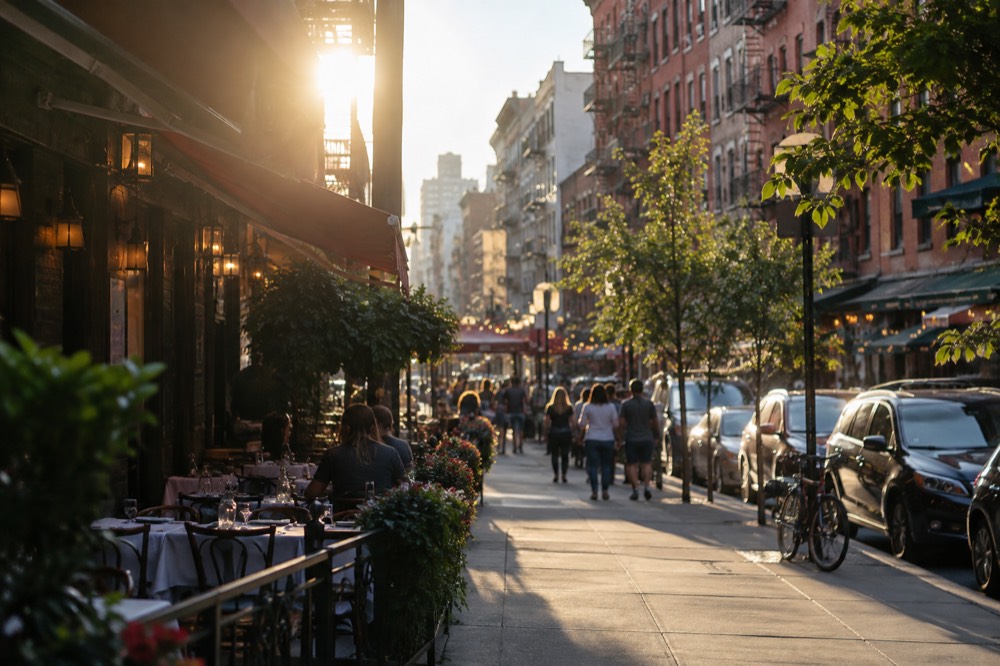
Little Italy is the obvious second stop, and it is small enough that an afternoon covers it. Mulberry Street is the spine of it, a few blocks of restaurants and bakeries between Canal Street and Houston Street, with Chinatown pressing against its southern edge. The neighborhood is far smaller than its reputation, which surprises many first-time visitors: it takes ten minutes to walk its length slowly.
That smallness is actually its charm. You can eat your way across the whole enclave in one sitting, which is exactly what a food tour is built for.
Is Little Italy Still Worth the Visit?
Yes, with honest expectations. Little Italy today is a compact, tourist-heavy stretch of Mulberry Street rather than the sprawling immigrant neighborhood it once was, but it still delivers real Italian bakeries, old restaurants and a street-level history you can taste. Pair it with neighboring Chinatown, which long ago grew around it, and you get one of the best eating walks in Manhattan. Go hungry, go in the afternoon, and treat it as a meal with architecture attached.
The neighborhood's story is a migration story, and it deserves that framing rather than a "must-see" pitch. What survives on Mulberry Street is the commercial heart of a community that has largely dispersed to the outer boroughs and New Jersey, as Italian-American families prospered and moved. The restaurants that remain are the residue of that history, some run by the same families for generations, others newer arrivals trading on the address.
For a visitor tracing Sinatra, the point is not that he ate on Mulberry Street regularly. It is that this food culture, born in neighborhoods like this one, is the food culture he carried with him to West 56th Street. Eating a plate of pasta downtown and then a plate uptown is the difference between the source and the tribute.
Practical notes: the Little Italy guide on this site covers the block-by-block detail, and the adjacent Chinatown neighborhood guide handles the larger, livelier half of the pairing. The Feast of San Gennaro, the neighborhood's big September street festival, is the one time of year when Little Italy fully takes over its streets again, and it is worth timing a visit around if your dates allow.
The eating itself rewards guidance. The best stops on Mulberry Street are not always the most visible ones, and a few blocks away in Chinatown the choices multiply. That is the case for a guided walk: someone else separates the institution from the souvenir.
How Do You Build a Full Sinatra Eating Day in Manhattan?
A sensible Sinatra day runs downtown in the morning and Midtown in the evening: start with coffee and a pastry in Greenwich Village or SoHo, walk north through Little Italy and Chinatown with a long lunch stop, then head uptown for a pre-theater dinner at or near Patsy's on West 56th Street. The geography cooperates, since the downtown neighborhoods chain together on foot and Midtown is one subway ride away.
The morning half is the flexible half. SoHo's cast-iron blocks sit directly south of Little Italy, and Greenwich Village sits directly west, so any of the three makes a starting point. The downtown walk from Washington Square Park to Mulberry Street is roughly twenty minutes at a visitor's pace, with plenty of reasons to stop. This is the city Sinatra moved through as a young performer, when the Village clubs and the downtown theaters were where careers were built.
The subway handles the uptown leg. From the Canal Street station, an express run up the west side or the 6 train up Lexington Avenue puts you in Midtown in under half an hour. That leaves time for a museum hour or a stroll past Carnegie Hall before dinner, and it puts you in the neighborhood with an appetite.
The evening is the fixed point. A reservation near the theaters, a classic Italian dinner, and, if the night calls for it, a show afterward is as close as 2026 gets to a Sinatra evening in New York. The city's Italian dining scene is vastly bigger and better now than it was, which is the good news: the trail does not end at one address.
For the bigger picture of what else to stack around this day, the site's things to do in Manhattan guide covers the full borough menu, and the Greenwich Village guide fills in the downtown morning in more detail. If the day stretches into a weekend, the weekend in NYC itinerary shows how the pieces fit together with more time to spare.
Can You Still Experience the Sinatra Era in New York?
Partly. The restaurants survive, and so does the Theater District he worked in, but the supper-club New York Sinatra knew is largely gone, replaced by a live-music and Broadway landscape that keeps fragments of the era. Patsy's is the strongest intact piece, The '21' Club is another, and a handful of downtown Italian rooms preserve the cooking. What no longer exists is the mid-century nightlife ecosystem around them.
The honest framing helps set expectations. Sinatra's New York was a city of supper clubs, showrooms and restaurants where the performer and the audience ate at neighboring tables. Some of the buildings remain, a few of the rooms remain, and the food tradition remains strongest of all. The city that produced the man is recoverable through dinner in a way it is not through nightlife.
Broadway carries some of the weight. The Theater District that Sinatra played is still the Theater District, and an evening of live performance before or after an Italian dinner is the closest structural match to his routine. The Broadway shows guide on this site covers what is playing and how to buy smart.
Music venues come and go, but the standard advice holds: book the dinner, book the show, and let the day fill in around them. The Sinatra trail is unusually forgiving that way, because its anchors are restaurants, and restaurants keep hours.
For the final piece of the day, or a second day entirely, the guided options below cover the downtown half of the story: the neighborhoods where Italian New York began, walked with someone who knows which counters and corners carry the history. Each one is a real, bookable walk with a live listing for current times and prices.
Common Questions About Frank Sinatra's Favorite Restaurant in NYC
The short answers: Patsy's on West 56th Street is the restaurant the record names most consistently, it is still open and run by the same family, and you can eat in the neighborhoods that shaped his tastes on the same day. Little Italy is small but genuinely worth the visit, especially paired with Chinatown. The questions below cover the details visitors ask most, from reservations to how much of the Sinatra lore is documented.
What was Frank Sinatra's favorite restaurant in NYC?
Patsy's Italian Restaurant on West 56th Street, between 8th and 9th Avenues in Midtown. Published accounts across decades consistently name it as his regular New York Italian spot, and the restaurant has kept his memory central to its identity ever since. No other New York restaurant appears in the Sinatra record as reliably.
Is Patsy's still open?
Yes. Patsy's Italian Restaurant continues to operate on West 56th Street, run by the family that has owned it across generations. It remains a reservation-first, white-tablecloth restaurant serving classic Southern Italian cooking, a short walk from Carnegie Hall and the Broadway theaters.
Did Sinatra eat in Little Italy?
The strongest documented association is with Patsy's in Midtown, not Little Italy. Downtown restaurants such as Grotta Azzurra and Angelo's appear in neighborhood lore and Sinatra-era retellings, but the sourcing is thinner than the Patsy's record. The honest framing: Little Italy is where the food culture he loved was born, and it is worth visiting for that reason regardless of which specific tables he used.
Can you sit at Sinatra's table at Patsy's?
The restaurant has long kept a Sinatra association alive in its room, and visitors do come specifically for it. The practical advice is to mention the interest when booking rather than assuming on arrival, since a Theater District restaurant on a show night manages its seating carefully. Treat the specific anecdotes as house legend with a solid foundation.
Is Little Italy worth visiting today?
Yes, with adjusted expectations. It is a compact stretch of Mulberry Street, smaller than most visitors imagine, but it still delivers real bakeries, old restaurants and street-level Italian-American history. Paired with adjacent Chinatown, it makes one of the best eating walks in Manhattan. Go hungry and go in the afternoon.
What is the best way to see Sinatra's New York in one day?
Walk downtown in the morning through SoHo, Little Italy and Chinatown with a long lunch, then take the subway to Midtown for a pre-theater dinner at or near Patsy's on West 56th Street, with a Broadway show afterward if the evening calls for it. Book the dinner ahead and leave the downtown half loose.
The question has a clean answer, which is rare for celebrity trivia. Patsy's owns it. But the better prize is the trail around it: a city where the red-sauce tradition that produced the man's favorite dinner is still being cooked, downtown and uptown, in rooms you can walk into tonight. Start on New York City Travel Guide for the wider map, and work backward to the table.