Where Is the Best Nightlife in New York? The Honest Neighborhood Answer
A direct, sourced answer to where the best nightlife in New York is, neighborhood by neighborhood, from Broadway and comedy clubs to Harlem jazz and late-night transit.
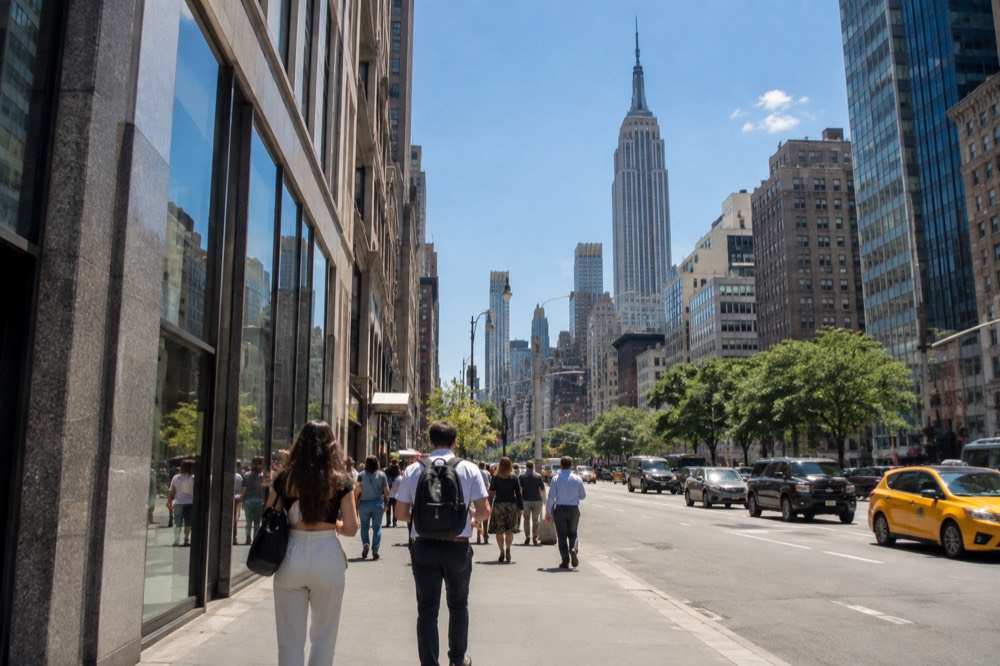
The question sounds simple until you try to answer it. New York has roughly 8.3 million residents spread over five boroughs, and no single district owns the night. Manhattan's Theater District empties its crowds onto 45th Street around 10:30pm at the exact moment the East Village is filling up, and Harlem's jazz rooms hit their stride later than both. Anyone who tells you one neighborhood has "the best nightlife in New York" is describing their own taste, not the city.
This page answers the question properly: scene by scene, with the neighborhoods that actually host each one, what tickets cost on the listings we track, and how the night ends logistically. The short version is that the best nightlife in New York is the one that matches the night you planned, and the city has a distinct district for almost every version of it.
Where Is the Best Nightlife in New York?
The best nightlife in New York concentrates in five areas: the Theater District and Midtown for Broadway shows and comedy, the East Village and Lower East Side for dive bars and live music, SoHo and TriBeCa for cocktail lounges, Williamsburg in Brooklyn for indie venues and rooftops, and Harlem for jazz, blues and gospel-rooted rooms. None of them is a single "best," because each owns a different genre and a different hour of the night.
Midtown is where most first-time visitors start, and it earns that for one reason: density. The theaters sit within a few blocks of each other, the comedy clubs are walking distance, and the subway lines under Times Sq-42 St connect to almost everywhere else. That station is not just the busiest in the system, it carried 61,203,303 riders in 2025, about 71% more than Grand Central's 35,764,931. A night that begins at a Broadway curtain and ends in a comedy basement requires almost no planning.
Downtown works the other way around. The East Village and Lower East Side run on walkable clusters of small bars, music venues and late kitchens, and the night builds gradually instead of starting at a fixed curtain time. Brooklyn's Williamsburg is the indie version of that, with venues, rooftops and record bars packed between the L train stops. Harlem is the city's deepest music neighborhood, and its rooms trade on history rather than volume.
If the plan involves an organized night out rather than bar-hopping, booked experiences are the reliable spine of a New York evening:
Each of those three sits in a different neighborhood and a different mood, which is exactly the point. A Theater District musical, a Midtown comedy showcase and a Harlem jazz evening are all "New York nightlife," and none of them substitutes for the others.
Which New York Neighborhood Fits the Night You Want?
Match the neighborhood to the night, not the other way around: Midtown and the Theater District for shows and comedy, the East Village and Lower East Side for cheap bars and rowdier rooms, SoHo and TriBeCa for cocktails, Williamsburg for indie music and rooftops, and Harlem for jazz and blues. Staying near your scene beats commuting across the city at midnight, because the subway runs all night but distances in New York are real.
The practical mistake visitors make is booking a show in Midtown, dinner in the West Village and a jazz set in Harlem in one evening. The geography fights you. New York's subway runs 24 hours, but a three-borough night means an hour of riding between the good parts.
Here is the honest comparison:
| Neighborhood | Best for | Typical vibe | When it peaks |
|---|---|---|---|
| Theater District / Midtown | Broadway shows, comedy clubs | Polished, tourist-heavy, expensive drinks | 7pm-11pm, tied to curtain times |
| East Village / Lower East Side | Dive bars, live music, late food | Young, loud, walkable clusters | 9pm-2am |
| SoHo / TriBeCa | Cocktail lounges, wine bars | Lower-key, dressed up, pricier | 8pm-midnight |
| Williamsburg, Brooklyn | Indie venues, rooftops, record bars | Local, creative, L train dependent | 9pm-2am |
| Harlem | Jazz, blues, gospel traditions | Historic rooms, music-first crowds | 8pm-late, weekends strongest |
Two of those scenes deserve a deeper note. Williamsburg's nightlife genuinely depends on the L train, so check service before you commit to a Brooklyn night; weekend work on that line is not rare. And Harlem's rooms are music venues first and bars second, which means the performance schedule sets the evening, not the door.
Dress codes are worth a sentence, because they worry people unnecessarily. Broadway theaters have no dress code at all, and neither do comedy clubs; you will see everything from suits to sneakers at an 8pm curtain. The cocktail lounges of SoHo and TriBeCa are the only scene where dressing up is close to expected, and even there the bar is "smart," not formal. Music venues in the East Village and Williamsburg could not care less. Pack for comfort first and the room second.
For a deeper look at the drinking end of the spectrum, our rooftop bars guide covers the view-driven options across Manhattan and Brooklyn, and the things to do at night page maps the full after-dark menu beyond bars.
If a Broadway night is the anchor of your evening, it is worth locking the seat before you plan anything else, because everything else in the Theater District arranges itself around a 7pm or 8pm curtain:
What Is the Best Live Music Nightlife in New York?
Harlem is the anchor of New York's jazz and blues nightlife, with historic rooms tied to the neighborhood's musical past, while the East Village, Lower East Side and Williamsburg carry the indie and rock end. A guided jazz evening in Harlem runs about four hours and covers multiple venues with live performance at the finish, which suits visitors who want the history explained rather than just a seat at a bar.
Harlem's claim is not nostalgia marketing. The neighborhood's theaters, churches and brownstone blocks are where the Harlem Renaissance actually happened, and the walking tours there visit the streets tied to Langston Hughes and Duke Ellington rather than generic "music history." The guided jazz and blues evening we track moves between venues tied to that past and finishes with live performance, over roughly four hours.
Downtown carries the other half of the live-music answer. The East Village and Lower East Side hold small rooms where touring bands and local acts play seven nights a week, and Williamsburg's venues book the bigger indie names. The split is simple: Harlem for jazz, blues and tradition, Brooklyn and downtown Manhattan for guitars.
One scheduling note that surprises visitors: gospel is a Sunday-morning tradition in Harlem, not a nightlife product, but there is a midweek option. A Wednesday gospel concert in Harlem runs about an hour and books out, which makes it a rare weeknight music night that does not require a Sunday commitment.
Season matters more for live music than for any other scene. Summer pushes performances outdoors and stretches the whole city's schedule later, while winter concentrates everything inside the rooms, which is honestly when Harlem's jazz clubs are at their most atmospheric. If your trip falls in the colder months, treat the weather as a feature: the rooms are warm, the crowds are locals rather than tourists, and the calendars run deep.
Is Broadway Part of the New York Nightlife Scene?
Yes, Broadway is the single biggest organized nightlife product in New York: most shows run roughly two and a half hours with an intermission, curtain is typically 7pm or 8pm, and the Theater District's bars and restaurants fill in the hours before and after. A musical like MJ the Musical is effectively a planned night out in Midtown, with seats assigned at booking and a running time of about two and a half hours.
Visitors often treat Broadway as daytime sightseeing, but it is structurally an evening activity. The curtain times push the entire Theater District into a rhythm: pre-theater dinner from 5pm, curtain at 7pm or 8pm, and the streets flooding with people at roughly 10:30pm, which is when the comedy clubs and hotel bars nearby get their second wave.
MJ the Musical sits in the Neil Simon Theatre in the heart of that district and traces Michael Jackson's rise through the songs that defined him. It is a big, loud, polished production, well suited to a group night out and less ideal for very young children who may find the volume and pacing a lot. The listing shows dates and seat categories, and weekend seats in the better tiers go first.
For cheaper Broadway nights, the TKTS booth at Duffy Square sells same-day tickets at up to 50% off face value, plus an $8 per-ticket service fee, and its inventory covers same-day performances plus next-day matinees. Digital lotteries through Broadway Direct and Lucky Seat typically award seats in the $30-$50 range. Both routes trade certainty for price, which is a fair deal on a loose itinerary and a bad one on a one-night visit.
What About Comedy and Small-Venue Nights in New York?
Comedy is New York's cheapest organized night out: a stand-up showcase in a Midtown club starts from $20 per person on the listing we track, with rotating bills of working comics doing short sets. The rooms are small, the atmosphere is loose, and two-drink minimums are common at clubs like this, so budget for the drinks on top of the ticket.
Comedy fills the gap between a bar night and a show night. It is cheaper than Broadway, shorter than a musical, and it needs no planning beyond a ticket. The catch is that lineups rotate, so you are betting on the room rather than a famous name. That is also the appeal: New York's stand-up rooms are where working comics test material, and a random Tuesday can outperform a Saturday.
The same logic applies to off-Broadway and small-venue theater downtown, where tickets cost less and the productions take more risks. Between comedy, off-Broadway rooms and the music venues in the East Village, downtown Manhattan is the budget end of organized nightlife, and Midtown is the premium end.
How Do You Get Home After a Late Night in New York?
The subway runs 24 hours and a single ride costs $3.00, with automatic fare capping at $35 per rolling seven days when you tap the same card or device every time, so late-night transit is cheap but not free-form. The MetroCard is retired: as of 1 January 2026 the MTA no longer sells or refills them, so the answer for every visitor is OMNY, which means tapping a contactless card or phone at the turnstile.
This is the part of a nightlife guide that most competitors get wrong, because their advice is a decade old. There is no 7-day unlimited MetroCard to buy at the airport any more. The replacement is automatic: tap the same contactless card or phone for every ride, and once you hit $35 in a seven-day window, the rest of that period is free. The seven days start with your first tap, not on a Monday.
The critical rule is consistency. Tap your phone on the way to dinner and your plastic card on the way home and the cap silently breaks, because the system treats them as two different riders. Pick one device or card for the whole trip.
| Way home | Cost | Notes |
|---|---|---|
| Subway, single ride | $3.00 | Runs 24 hours; free transfer to a bus within 2 hours |
| OMNY weekly cap | $35 | Automatic, rolling 7 days, same card or device required |
| Paper single-ride OMNY ticket | $3.50 | From a machine, valid 2 hours, no subway-to-bus transfer |
| Express bus | $7.25 | Rarely relevant to a night out |
| Rideshare | Varies by demand | Check the app; surge pricing after midnight is real |
Weekend service changes are the other thing to check. Weekend subway ridership has recovered more strongly than weekday ridership since the pandemic, so late-weekend trains are relatively full, and scheduled work hits some lines on weekends specifically. Check the MTA alerts before you commit to a venue three express stops from your hotel.
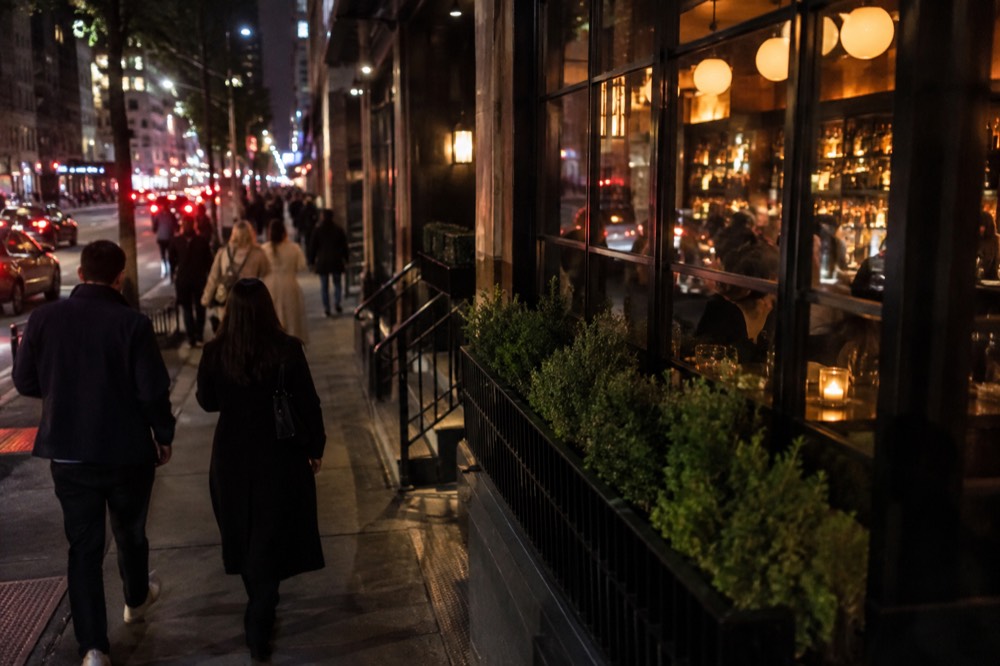
Which Booked Night Out Should You Reserve in Advance?
Reserve anything with a fixed seat and a fixed start time: Broadway musicals, the popular comedy showcases and the guided Harlem jazz evenings all sell by capacity, and weekend inventory goes first. A musical ticket starts from around $71 on the listing, comedy from $20 and the four-hour Harlem jazz tour from $139, so the decision is partly budget and partly how structured you want the night to be.
The rule of thumb is simple. If the night has a curtain or a departure time, book it. If the night is a bar or a walk-in venue, do not bother planning it at all, because the whole pleasure of downtown New York after dark is drifting between rooms that do not require tickets.
For visitors who want the full spread of organized evenings, these are the three we would put on a shortlist, one per neighborhood:
Booked nights also have a hidden advantage over bar-hopping: they end on time. A musical finishes near 10:30pm, a comedy showcase runs about 90 minutes, and a guided jazz evening has a fixed finish, which means you always know when you will be back at a subway platform. Loose nights are fun, but on a short trip a scheduled anchor guarantees you at least one complete New York evening.
Common Questions About Nightlife in New York
The most common nightlife questions are about age limits, dress codes, safety getting home and how late things actually run, and the answers are mostly practical rather than dramatic. New York's organized nights out are ticketed events with fixed times, its bar scenes cluster in walkable neighborhoods, and its 24-hour subway removes the midnight-cutoff anxiety that dominates nightlife in most other American cities.
Where is the best nightlife in new york?
There is no single best district. The Theater District and Midtown own Broadway and comedy, the East Village and Lower East Side own dive bars and live music, SoHo and TriBeCa own cocktails, Williamsburg owns the indie scene, and Harlem owns jazz and blues. Pick the neighborhood that matches the night you want and stay relatively close to it.
Is New York nightlife safe at night?
The organized parts of a New York night out, theaters, comedy clubs and music venues, are ticketed events with staffed entrances and predictable crowds. The practical safety questions are the ordinary city ones: keep your phone out of your back pocket, know your subway route before you leave the venue, and use the same contactless card for OMNY so you are never stuck at a turnstile. The subway runs all night.
How expensive is a night out in New York?
It scales enormously. A stand-up comedy ticket starts from $20 plus drinks, a Broadway musical starts from around $71 on the listing for a major title, and a guided four-hour Harlem jazz tour starts from $139. Bar drinks in Midtown cost more than downtown, and two-drink minimums at comedy clubs are standard, so budget for drinks on top of tickets.
What time does nightlife start in New York?
It depends on the scene. Broadway curtains are typically 7pm or 8pm, comedy showcases run in the evening blocks, jazz rooms in Harlem hit their stride after 8pm, and downtown bar neighborhoods build gradually from 9pm onward. Midtown peaks early and empties around 11pm; downtown and Brooklyn peak later.
Can you do a Broadway show and a comedy club on the same night?
Usually not comfortably. A musical runs about two and a half hours including intermission, so a 7pm curtain ends around 10pm, and comedy showcases run in fixed evening blocks. If you want both, put the comedy on a different night, or look for a late showcase and check its start time on the listing before booking the theater ticket.
Do you need to book New York nightlife in advance?
Only the ticketed parts. Broadway seats, popular comedy showcases and guided music tours sell by capacity and should be reserved ahead, especially on weekends. Bars, dive venues and most music rooms downtown are walk-in, and booking those would be missing the point.
The honest closing advice is geographic. Choose your scene first, book the ticketed anchor of the evening second, and pick a hotel within a reasonable subway ride of both. The city will supply the night; your job is only to avoid spending it underground between boroughs. More scene-by-scene options, from free evening views to after-dark itineraries, are on the New York City Travel Guide homepage and the things to do in NYC at night guide.