Rooftop Bars in NYC: The Honest Guide to Drinking Above the City
Rooftop bars in NYC range from hotel lounges with skyline views to casual beer gardens perched above the streets. This guide covers what to expect, what you will pay, and how to pick the right one for your night.
Short answer
The best rooftop bars in NYC cluster in Midtown, Chelsea and the Lower East Side, with cocktails usually running $18-$25 and many hotel rooftops enforcing dress codes after dark. No rooftop bar has a view of the whole skyline at once, so pick your bar for the slice of the city you want to see.
The Empire State Building sits in the middle of almost every rooftop bar view in Manhattan, which is the first thing to understand before you pick one. A rooftop is not a helicopter: it shows you one slice of the city, framed by whatever the building faces, and the difference between a forgettable terrace and a memorable night is mostly about which slice you get. This guide, from the editors behind New York City Travel Guide, walks through the views, the costs, the dress codes and the neighborhoods so you can choose with your eyes open instead of trusting a listicle that ranks thirty bars it has never visited.
What Are the Best Rooftop Bars in NYC?
The best rooftop bars in NYC are the ones whose view matches your plan for the night: Midtown hotel rooftops for the Empire State Building postcard, Chelsea and Meatpacking rooftops for Hudson River sunsets, and Lower East Side rooftops for a casual, less expensive scene. No single bar sees all of Manhattan at once, so "best" depends on whether you want one tower, a river sunset, or just fresh air above the street.
Dress codes and cover charges, not the views, are what usually surprise first-time visitors.
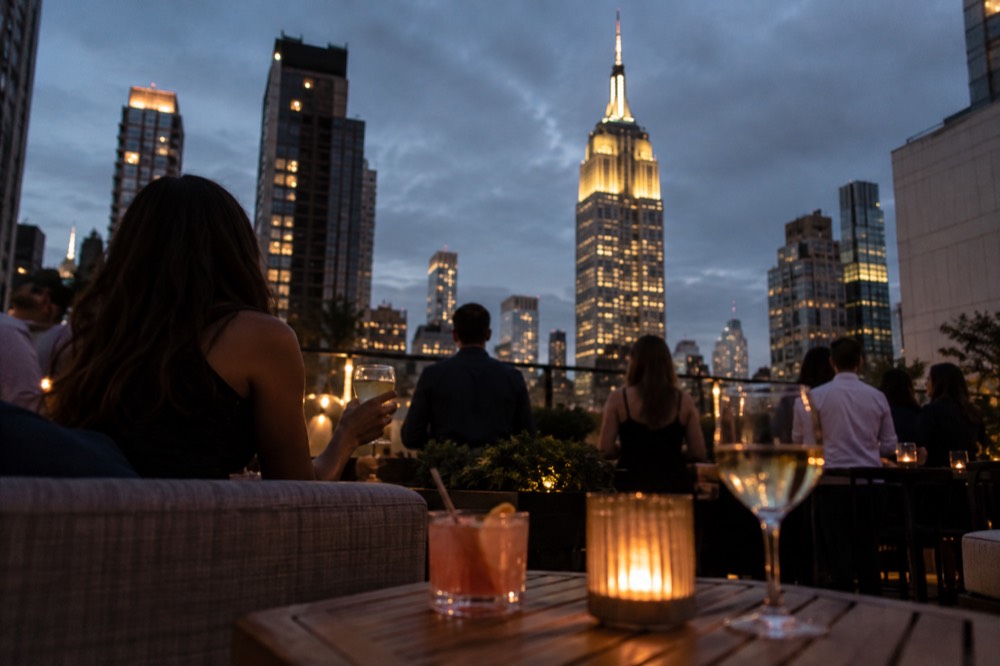
New York's rooftop scene is genuinely varied, and that variety is the point. At the top of the market sit hotel rooftops in Midtown, where the Empire State Building fills the frame and a cocktail costs about the same as a Broadway lottery ticket. In the middle sit the large, convivial rooftops of Chelsea and the Meatpacking District, many of them attached to hotels or restaurants, with Hudson views and a mixed crowd of locals and visitors. At the accessible end, the Lower East Side and Williamsburg run smaller, looser rooftops where the view is secondary to the atmosphere.
The honest framing is this: a rooftop bar sells you a seat above the noise of the street, and the skyline comes with it. If the skyline is the entire reason you are going up, an observation deck does that job better and often cheaper. If you want a drink in your hand while the sun goes down behind the Hudson, a rooftop is the right tool. Both can belong in one trip, and pairing them is covered further down this page.
One practical warning that applies across the whole scene: rooftop bars close for winter, usually from roughly November through March or April, and many run reduced hours in shoulder seasons. A bar that was open on your last visit may be shuttered on this one. Check the venue's own site or social channels the day you plan to go, because seasonal schedules change and few venues keep their listings current everywhere.
Which Rooftop Bars in NYC Have the Best Views?
Midtown rooftops facing south or east give you the Empire State Building and the Midtown tower cluster; rooftops in Chelsea and the Meatpacking District face the Hudson River and catch the sunset; and Brooklyn rooftops in DUMBO and Williamsburg frame the Lower Manhattan skyline across the water. The most photographed setup is a Midtown rooftop with the Empire State Building in frame, which is why those bars fill up fastest around sunset in summer.
The view you should not expect is the whole city at once, because no rooftop is tall enough for that.
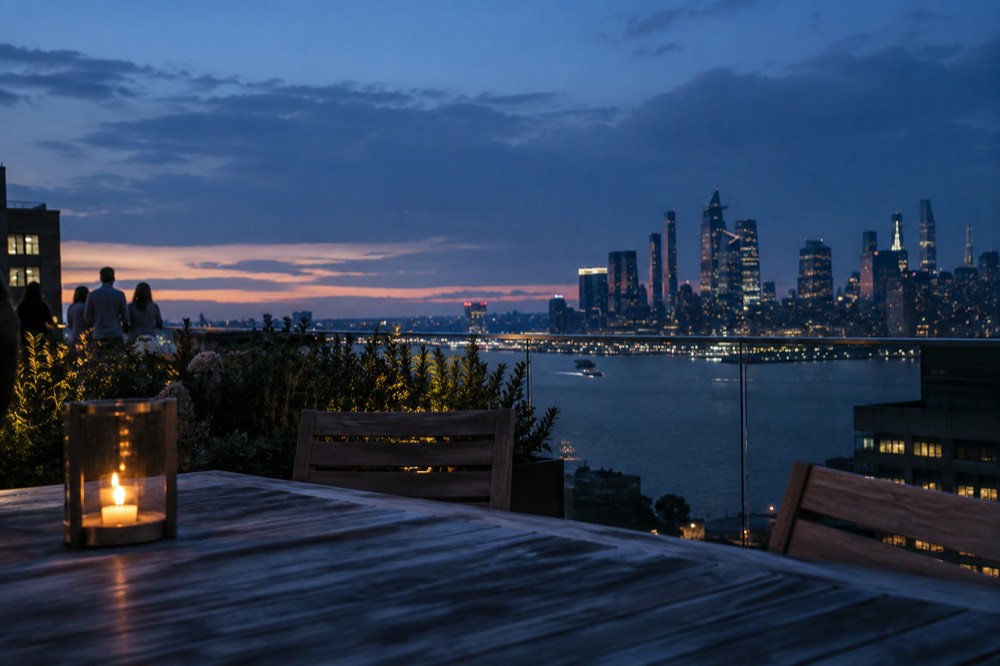
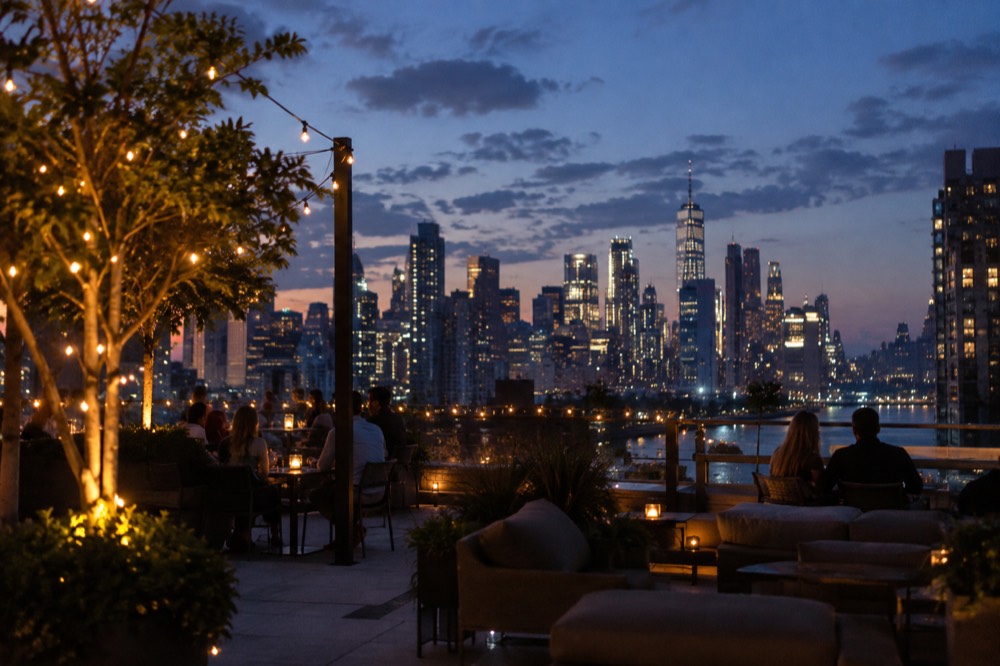
Think of Manhattan's rooftop views as three distinct theaters. The Midtown theater stars the Empire State Building, with Rockefeller Center, the Chrysler Building and the newer Midtown towers in supporting roles. The West Side theater faces the Hudson, and its show is the sunset, with New Jersey's low-rise waterfront as the horizon and the ferries crossing underneath. The downtown-and-Brooklyn theater looks at Lower Manhattan's cluster from across the East River, with One World Trade Center as the anchor and the bridges bracketing the frame.
The comparison below is the one most visitors wish they had before booking a table.
| Rooftop location | What the view stars | Best time to go | Crowd level |
|---|---|---|---|
| Midtown hotel rooftops | Empire State Building, Midtown towers | After dark, when the tower lights are on | Heaviest, especially weekends |
| Chelsea / Meatpacking | Hudson River, sunset over New Jersey | The hour before sunset | Heavy at golden hour |
| Lower East Side | Low-rise rooftops, street grid, occasional skyline glimpses | Evenings, any season they are open | Moderate, more local |
| DUMBO / Brooklyn Heights | Lower Manhattan skyline across the East River | Sunset into blue hour | Moderate |
| Williamsburg | Midtown skyline in the distance | Sunset, from May through September | Busy on weekends |
A note on honesty: rooftop bars are not observation decks, and the two get confused constantly. A rooftop puts you between six and twenty stories up. SUMMIT One Vanderbilt, by contrast, puts you next to Grand Central at roughly 1,000 feet, with mirrored rooms and glass ledges that fold the skyline around you. If the view is the priority and the drink is optional, the deck wins. If you want both, go to the deck for sunset and the bar afterward.
For the full skyline from the water instead, an evening cruise is the other honest alternative, and it is covered in the last section of this guide.
How Much Do Rooftop Bars in NYC Cost?
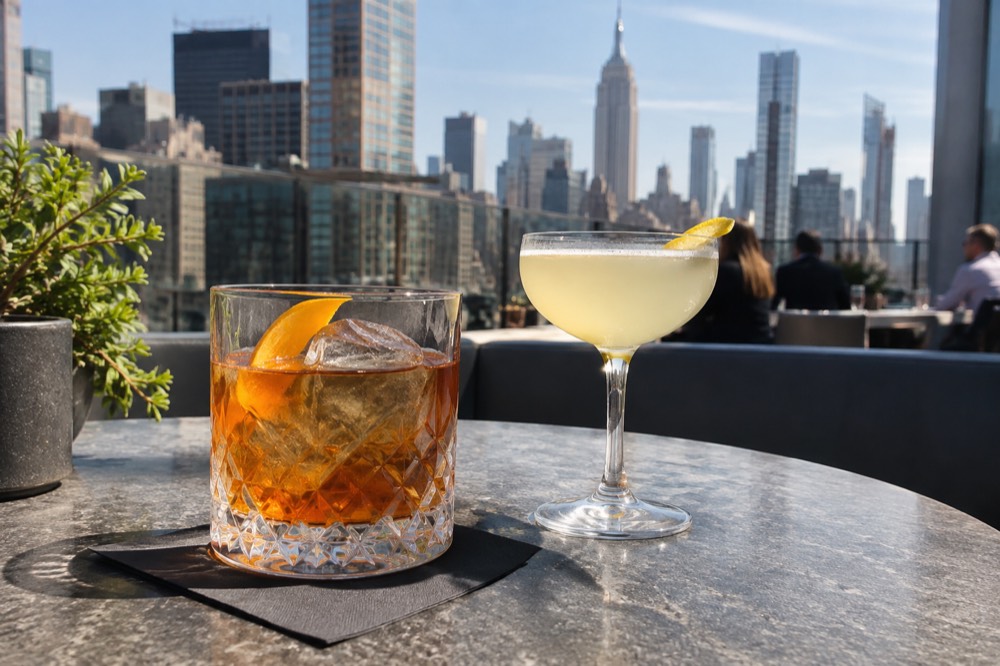
Expect cocktails at NYC rooftop bars to usually run $18-$25 each, beers around $10-$15, and wine in the same range as cocktails, though every venue sets its own menu and prices move with the season. Many hotel rooftops add nothing at the door, while some venues charge a cover or a table minimum on weekend nights.
Budget roughly $60-$90 per person for a two-drink evening with tax and tip, and check the venue's current menu before you go, because rooftop pricing is not standardized anywhere.
The economics of a rooftop night are predictable once you know the shape. The drink prices are high because you are paying rent on the most expensive real estate in the country plus the square footage above it. Tax and tip push a $20 cocktail to about $26 before you have finished it. Table service is where costs escalate fast: a reserved table at a popular Midtown rooftop on a summer Saturday can carry a minimum spend that exceeds the cost of a Broadway seat, and the minimum is spent whether you drink it or not.
| Cost item | Typical planning range | Notes |
|---|---|---|
| Cocktail | $18-$25 | Higher at hotel rooftops in Midtown |
| Draft beer | $10-$15 | Often the best value on the menu |
| Wine by the glass | $16-$24 | Similar to cocktails at most venues |
| Cover charge | $0-$30 | Weekends and event nights only, at venues that charge one |
| Table minimum | Varies widely | Common at reserved tables, check when booking |
| Tax and tip | Add roughly 30% | Combined sales tax plus a standard tip |
The ranges above are planning figures, not promises. Every rooftop sets its own prices, and menus change seasonally, so treat the table as a budgeting tool and check the venue's current menu before you commit. What is safe to say is that no rooftop bar in this city is cheap, and the ones that advertise themselves as such are usually counting on you not noticing the beer price.
There are ways to soften the bill. Weekday afternoons, where a venue runs a happy hour, are the cheapest hours any rooftop offers, and some hotel rooftops are free to enter before a certain hour in the afternoon even when they charge a cover at night. Sharing a table splits any minimum. And the most reliable money-saver is the simplest one: one drink at the rooftop for the view, and the second round at a street-level bar around the corner.
What Should You Wear to a Rooftop Bar in NYC?
Most upscale hotel rooftop bars in NYC enforce a smart-casual dress code after dark, which in practice means no athletic wear, flip-flops, tank tops on men, or beach clothing, and the door staff at popular Midtown venues do turn people away for all of those. Casual rooftops in the Lower East Side and Brooklyn rarely enforce anything beyond shoes and a shirt.
The safe uniform that works everywhere is dark jeans or chinos with a collared shirt or a simple dress, plus closed shoes at night. Check the venue's website, because codes are posted and enforced unevenly.
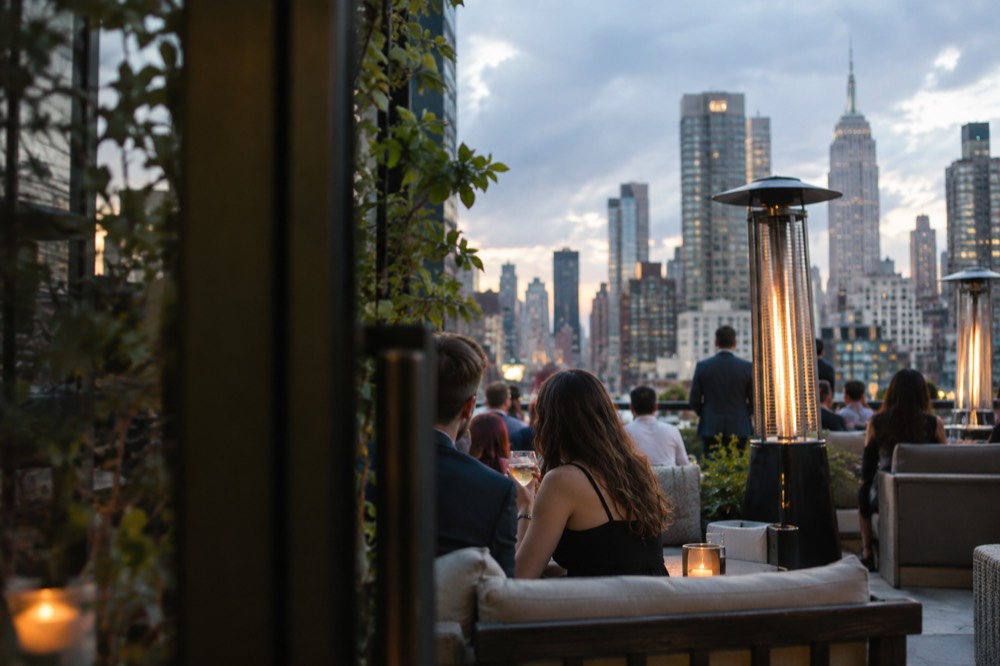
Dress codes are where rooftop bars divide into two businesses. The hotel rooftop is selling an atmosphere, and the door policy is part of the product: the doorman is not being arbitrary, he is protecting the room the venue has spent money creating. The neighborhood rooftop is selling a beer with a view, and the only code is the one the health department requires. Going to the wrong one in the wrong clothes is the single most common way a rooftop night ends early.
| Venue type | Typical dress code | Enforcement |
|---|---|---|
| Midtown hotel rooftop | Smart casual, no athletic wear or flip-flops | Enforced at the door, especially after dark |
| Chelsea / Meatpacking rooftop | Smart casual to dressy on weekends | Enforced at peak hours |
| Lower East Side rooftop | Casual | Rarely enforced |
| Brooklyn rooftop bar | Casual | Rarely enforced |
Two practical notes. First, rooftop temperatures run several degrees cooler than street level, and the wind up there is real, so a light layer earns its place in your bag even in July. Second, sneakers have become broadly acceptable at many venues, but the safest versions are plain and clean rather than technical running shoes, and the most expensive hotel rooftops still prefer otherwise. When in doubt, dress one notch above what the website asks for.
When Is the Best Time to Visit Rooftop Bars in NYC?
The best time to visit rooftop bars in NYC is a weekday evening between May and September, arriving about an hour before sunset, when the light is best, the crowds are thinnest, and most venues are open. Weekends between June and August are the hardest slots, with lines, covers and full rooms.
Winter closes most rooftops entirely, and July, the month most visitors assume is reliably sunny, is actually New York's wettest month, averaging 4.60 inches of rain in Central Park, so summer evenings carry real shower risk and a backup plan matters.
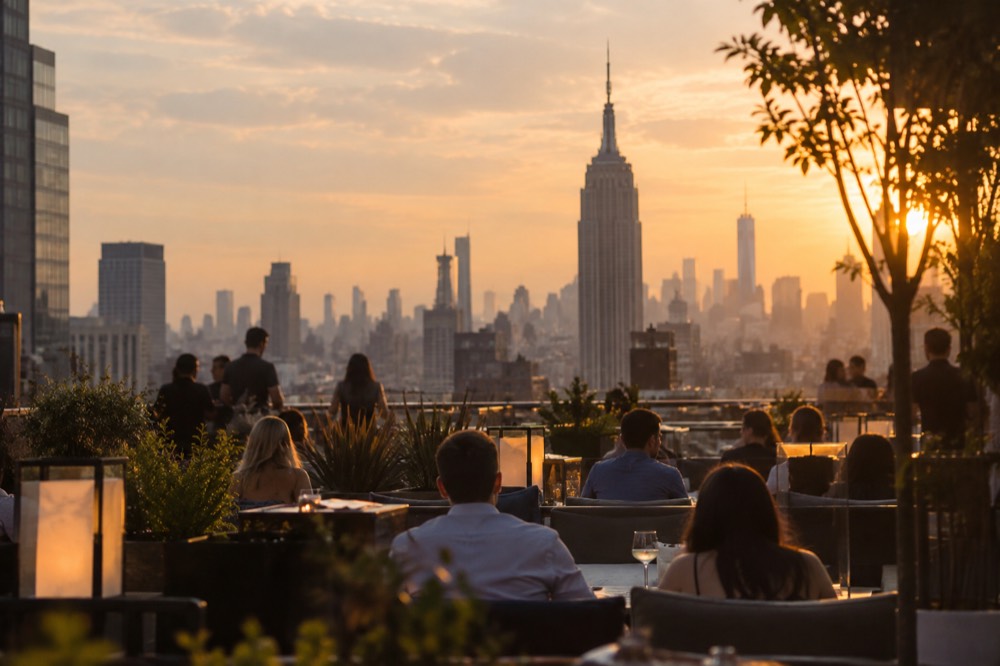
The seasonal calendar is straightforward. Rooftop season in New York runs roughly from April or May through October, with the core months being May to September. The shoulder months, May, June and September, are the sweet spot: warm enough for short sleeves, quiet enough that you can often walk in without a reservation. July and August bring the heat and the crowds together, along with the thunderstorms the climate data warns about. By November most rooftops have closed or moved their service indoors.
The hour of the evening matters as much as the month. Golden hour, the stretch before sunset, is when every rooftop is at its most photogenic and its most in demand. Arriving 60 to 90 minutes before sunset gets you a seat for the light show without the queue. After dark, the Midtown rooftops get better as the tower lights come on, while the Hudson-facing ones lose their best feature and become ordinary bars with a dark horizon. Weekday afternoons are the budget slot, and Sunday afternoons are the relaxed one.
| Time slot | What you get | Trade-off |
|---|---|---|
| Weekday afternoon | Cheapest drinks, easiest entry | No sunset, thinner atmosphere |
| Golden hour, any day | The best light and views | Busiest, hardest seats |
| Late night, Midtown | Lit skyline, full atmosphere | Covers, crowds, dress codes enforced |
| Sunday afternoon | Local, unhurried crowd | Some venues close early |
Can You See the Skyline Without Paying Bar Prices?
Yes, and often better: the free options include the Staten Island Ferry's harbor crossing, the Brooklyn Heights promenade's skyline panorama, and the rooftop gardens and terraces that several public buildings open in warm months, while the paid alternatives include observation decks and harbor cruises that give you the whole skyline rather than one slice of it.
SUMMIT One Vanderbilt puts you roughly 1,000 feet above Grand Central with the skyline folded into mirrored rooms around you, a view no rooftop bar can match from twenty stories up. The honest split is this: rooftops for atmosphere, decks and boats for the view itself.
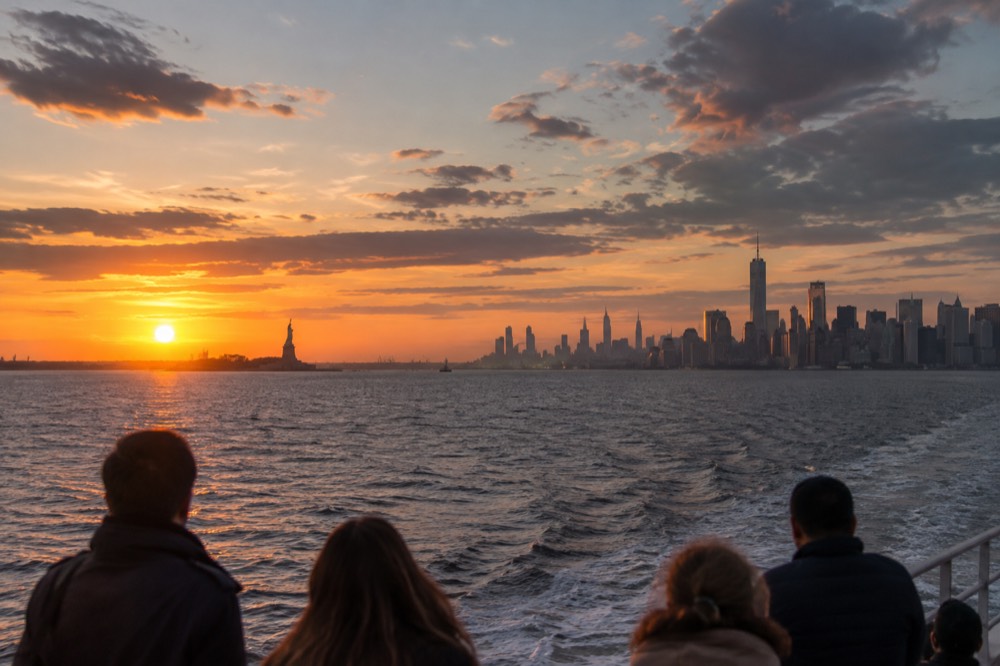
This is the comparison the rooftop marketing never makes. A bar at fifteen stories gives you a framed slice of the city plus a drink. An observation deck gives you the entire skyline from four to ten times the height. A harbor cruise gives you the skyline as a shoreline, with the Statue of Liberty and the bridges in the frame, and the sunset behind it. None of them is the wrong choice, but they are different products at different prices, and knowing which one you are buying saves both money and disappointment.
For the deck that pairs most naturally with a rooftop night, this is the one:
For the skyline from the water, with the sun going down behind the harbor:
And for the version of the skyline no rooftop and no deck can offer, the whole island from the air in a single sweep:
If your plan is drinks plus a view on a budget, the workable compromise is a free viewpoint at sunset, followed by a single drink at a rooftop afterward. The Brooklyn Heights promenade, a short walk from the Brooklyn Bridge, delivers the Lower Manhattan skyline across the water for nothing, and DUMBO's waterfront streets put the Manhattan Bridge overhead in the same frame. Both pair well with a nightcap in Brooklyn rather than Manhattan, where rooftop prices are gentler.
Which Neighborhoods Have the Best Rooftop Bars in NYC?
Midtown has the most rooftop bars and the best Empire State Building views, Chelsea and the Meatpacking District have the strongest concentration of hotel rooftops with Hudson sunsets, the Lower East Side runs the casual, cheaper scene, and Brooklyn's Williamsburg and DUMBO hold the skyline-across-the-water rooftops with the most relaxed crowds. Harlem and Queens have smaller, quieter rooftop scenes that most visitors never hear about.
The practical rule is to pick the neighborhood that matches your night, because crossing the city for a single drink rarely pays off.
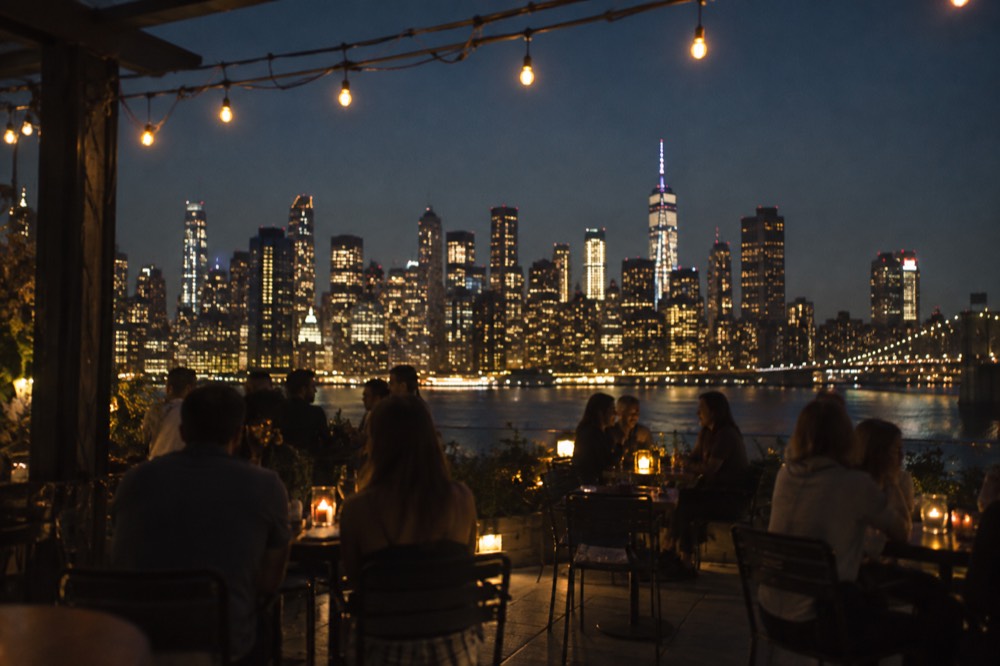
Midtown is the default, and its density is real: the blocks between Bryant Park and Rockefeller Center hold more rooftop venues than any other part of the city, most of them attached to hotels, most of them facing the Empire State Building. The trade-off is that you are drinking alongside the theater crowd and the convention crowd, and the dress codes run strictest here. Chelsea and the Meatpacking District to the south are the West Side's answer, with Hudson views and a scene that skews younger and louder, and the High Line running through the neighborhood gives you a free elevated walk on the way. Our guide to walking the High Line in New York covers that route.
The Lower East Side and the East Village run the opposite product: smaller rooftops, cheaper drinks, no view to speak of, and the best odds of a conversation with a stranger. Across the river, Williamsburg's rooftops frame the Midtown skyline from a distance that makes it feel like a backdrop, and DUMBO's sit under the bridge anchorage with Lower Manhattan across the water. For a fuller picture of what each borough offers beyond the rooftops, see our overview of things to do in NYC and the guide to things to do in Brooklyn.
| Neighborhood | Rooftop character | View | Typical price feel |
|---|---|---|---|
| Midtown | Hotel lounges, strictest codes | Empire State Building, Midtown towers | Highest |
| Chelsea / Meatpacking | Big terraces, energetic crowds | Hudson River, sunset | High |
| Lower East Side | Casual, compact | Rooftops and street grid, partial skyline | Moderate |
| Williamsburg | Relaxed, music-forward | Midtown skyline across the river | Moderate |
| DUMBO | Waterfront, photogenic | Lower Manhattan, bridges | Moderate to high |
Getting between these neighborhoods is a subway ride, not a cab crawl. The $3.00 fare and the automatic $35 weekly OMNY cap make a two-neighborhood night entirely reasonable, and the trains run late. One planning note from the ridership data: weekend trains are the fuller ones relative to normal, so a Saturday night bar crawl means company on the platform.
How Do You Plan a Rooftop Bar Night in NYC?
Pick one neighborhood, reserve or arrive early at any hotel rooftop you care about, dress one notch above the stated code, and build the night as a sequence: golden hour at a Hudson-facing rooftop or a free viewpoint, the lit skyline after dark in Midtown, and a street-level bar for the rounds you actually want to drink.
Reservations matter most from June through August and on any weekend, and a backup indoor bar matters in July, the city's wettest month. The biggest mistake visitors make is trying to hit three rooftops in three neighborhoods in one night.
The sequence beats the crawl, and here is why. Each rooftop charges its prices whether you stay twenty minutes or two hours, so a three-bar night in Manhattan can cost more than a Broadway ticket before dinner. Moving between neighborhoods eats forty minutes a hop once you count the walk, the wait and the ride. And the best single hour of any rooftop night, the sunset, happens once, in one place, so the whole plan should be built around where you want to be when it happens.
For more on structuring a whole trip around nights like this, our guides to things to do in NYC at night and the best views in NYC go deeper than this page can. If the observation deck has earned a place in your plan, our NYC observation decks comparison breaks down all five, their heights and their differences.
Common Questions About Rooftop Bars in NYC
The most common rooftop bar questions are about reservations, dress codes, covers, winter closures and age limits, and the short answers are: reserve for summer weekends, dress smart-casual for hotel rooftops, expect covers only at peak hours, assume most rooftops close from November to April, and know that every rooftop bar in New York is 21-and-up because it is a bar. Children cannot enter, even at hotel rooftops that serve food earlier in the day.
The details behind each answer follow below.
Do you need a reservation for rooftop bars in NYC?
For a casual Lower East Side or Brooklyn rooftop, usually not. For a Midtown or Chelsea hotel rooftop on a summer weekend evening, yes, and often well in advance, with some venues taking reservations only through their own sites. Weekday and off-peak visits rarely need one. If a venue is walk-in only, arriving an hour before sunset is the reliable strategy.
Do rooftop bars in NYC charge a cover?
Some do, mainly at peak hours on weekend nights and at event-driven venues, with covers commonly in the $10-$30 range where they exist. Many hotel rooftops charge nothing at the door and make their money on the drinks instead. Check the venue's site the day you go, because cover policies change seasonally.
Can you wear sneakers to a rooftop bar in NYC?
At casual rooftops, yes without question. At upscale hotel rooftops, clean, plain sneakers are accepted at many venues but athletic shoes, flip-flops and beachwear are not, and enforcement tightens after dark. The safe rule is dark jeans or chinos, a collared shirt or a simple dress, and closed shoes at night.
Are rooftop bars in NYC open in winter?
Mostly no. The majority of the city's rooftops close or move service indoors from roughly November through March or April, and the handful that stay open in winter usually run enclosed, heated terraces. Rooftop season proper runs May through September, with May, June and September the most comfortable months.
What is the drinking age at rooftop bars in NYC?
21, as at every bar in the United States, and ID is checked at the door at hotel rooftops regardless of how old you look. Children cannot enter rooftop bars, including hotel rooftops, even during food service hours. Families wanting a skyline experience with kids should look at observation decks instead.
Which rooftop bar in NYC has the best view of the Empire State Building?
Midtown rooftops south of the tower have the closest, most dramatic framing, and several hotel rooftops in the blocks around Bryant Park and NoMad market that view directly. The alternative is a downtown or Brooklyn rooftop, where the whole Midtown cluster including the Empire State Building sits across the water at a distance that photographs beautifully. Both work; they are different pictures.