Hudson Yards: What to Expect from New York's Newest Neighborhood
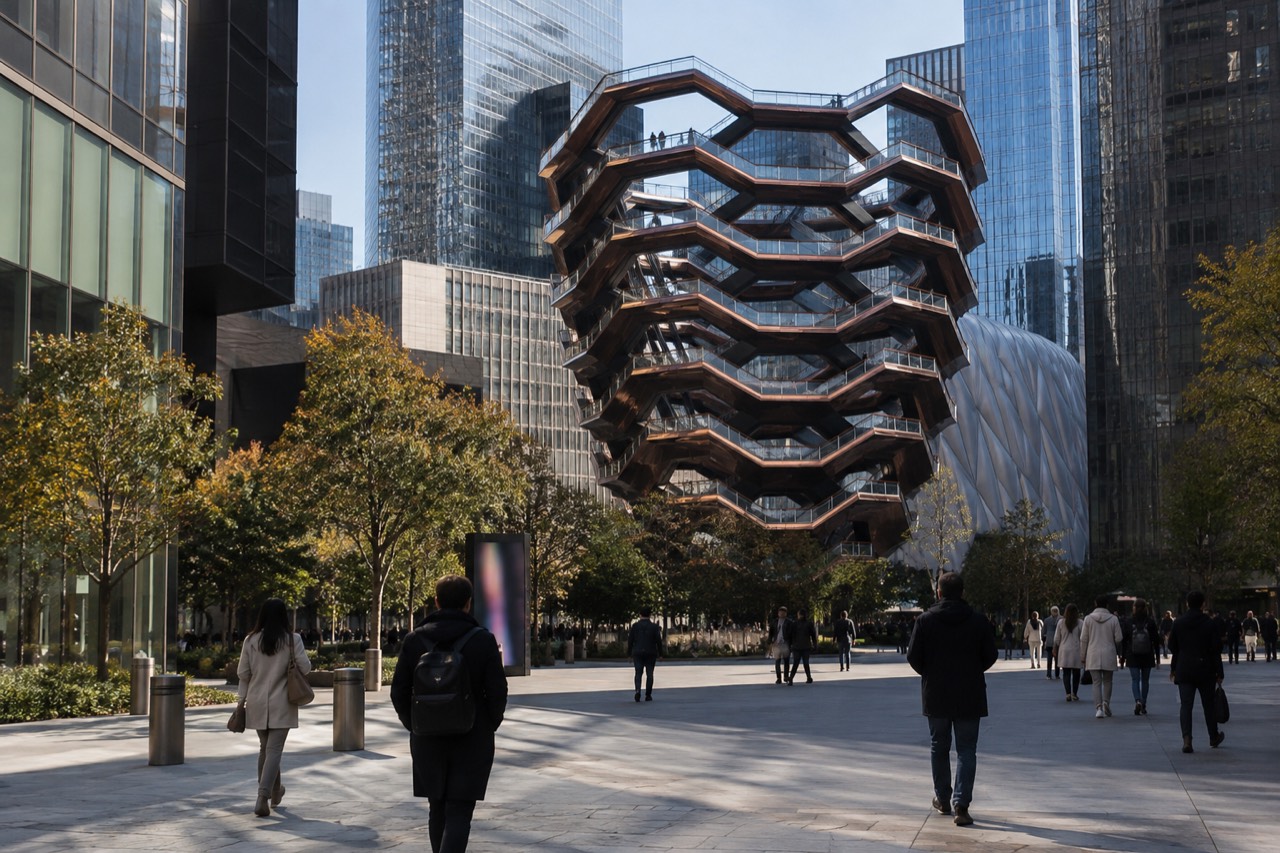
Hudson Yards is the newest big thing in Manhattan: a cluster of towers, a cantilevered observation deck and a mall, all built over an active rail yard on the Far West Side.
Short answer
Hudson Yards is a planned neighborhood of offices, homes, shops and public space built over a rail yard between 30th and 34th Streets on Manhattan's Far West Side. Its headline attraction is Edge, a cantilevered observation deck, and it sits directly at the northern end of the High Line.
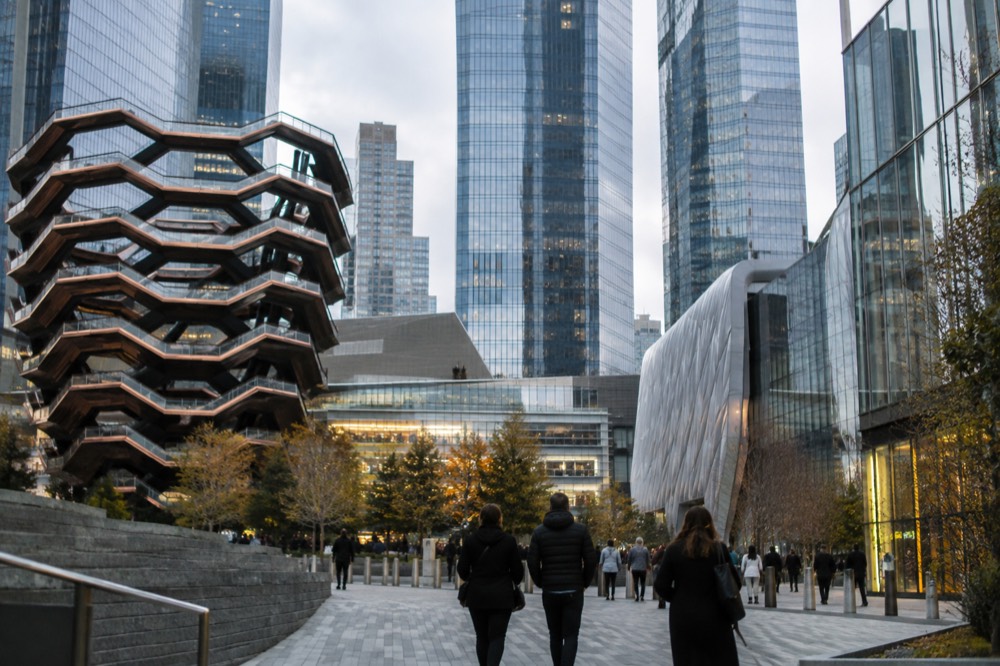
Manhattan ran out of obvious places to build, so it built over a rail yard. Hudson Yards sits on a platform constructed above active Long Island Rail Road tracks on the Far West Side, between 30th and 34th Streets, west of 10th Avenue. The towers, the mall, the deck and the public plaza all stand on engineering that most visitors never think about while shopping for shoes.
That origin explains a lot about how the place feels. Hudson Yards is clean, vertical and new in a way almost nothing else in Manhattan is. There is no gradual century of accretion here, no crooked street plan from the Dutch colonial era. What you get instead is a planned district, purpose-built, with an observation deck jutting off one tower and the northern end of the High Line landing you almost at its doorstep.
This guide covers what Hudson Yards actually is, what it costs to visit, how to plan a few hours there, and who it suits as a base versus a day out. For the wider picture of the city, start with our things to do in NYC overview, and for the deck itself see our full Edge NYC ticket guide.
What Is Hudson Yards, Exactly?
Hudson Yards is a 28-acre planned neighborhood on Manhattan's Far West Side, built on a platform over an active Long Island Rail Road yard between 30th and 34th Streets, west of 10th Avenue. It rose in phases as a mixed-use district of office towers, apartment buildings, a large shopping center, restaurants and public space, making it the newest major neighborhood in Manhattan. The two things most visitors come for are Edge, an outdoor observation deck cantilevered off the side of one tower, and the direct connection to the High Line, the elevated park that ends here.
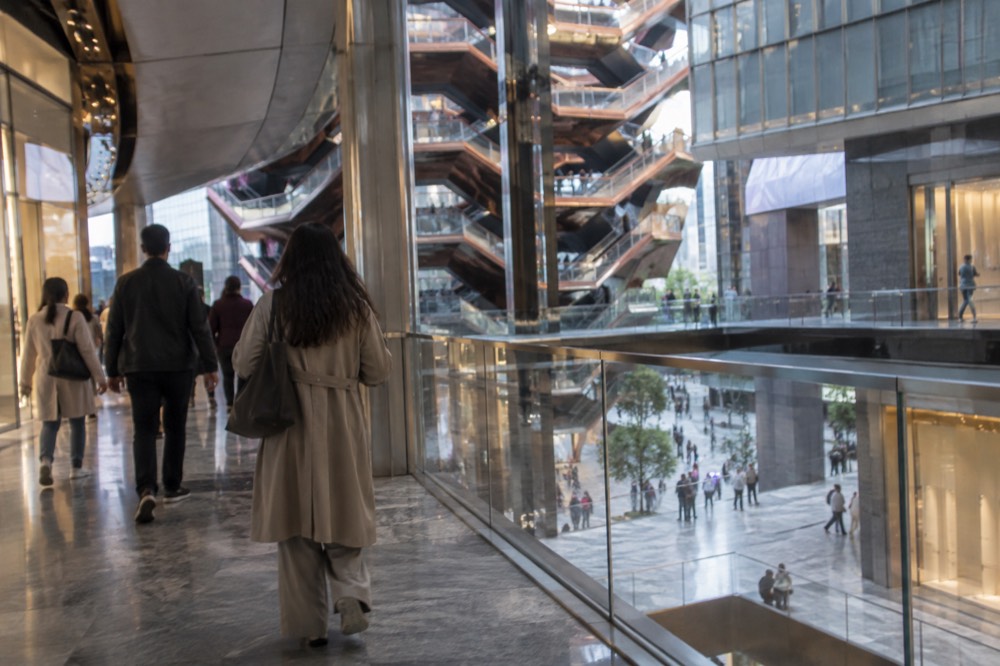
The location is the whole story. For most of the twentieth century this was land the city turned its back on: rail yards, warehouses and the approaches to the Lincoln Tunnel. The platform changed what the land could hold, and the towers went up. Today the district feels closer in spirit to a purpose-built Asian financial center than to the low-rise blocks of Chelsea one avenue east.
That split is worth understanding before you plan a visit. Walk one block east and you are in Chelsea, with its galleries, brownstones and the High Line threading through at track level. Hudson Yards itself is glass, escalators and indoor everything. Some visitors love the contrast. Others find it airless. Both reactions are reasonable, and both should shape how long you give the area.
A good frame: treat Hudson Yards as an attraction cluster with a mall attached, not as a neighborhood you wander for hours the way you might Greenwich Village. Two or three well-chosen hours, anchored by a timed Edge slot and a stretch of the High Line, covers it well.
How Much Does It Cost to Visit Hudson Yards?
Walking around Hudson Yards is free, and so is the High Line, which lands at the district's edge. The main costs are Edge, which prices dynamically from roughly $34-$45 plus a $2 processing fee per ticket, with the CityPASS-published box office rate at $62.06 for the deck plus the immersive experience, and food, which spans food-hall prices to expensive sit-down dining. A visitor can spend an afternoon here for the price of a subway ride, or several hundred dollars, depending on appetite.
The pricing detail that matters most is the deck. Edge uses timed-entry dynamic pricing, meaning the adult fare moves with date and demand. The lowest published starting prices run roughly $34-$45, with a $2 processing fee per ticket on top. The $62.06 figure is the box-office price CityPASS publishes for the deck plus its immersive experience, which is useful as an upper bound: if an online price creeps near that, you are buying peak demand. Compare the live listing before you commit, because the spread between a Tuesday morning and a sunset Saturday is real money.
Everything else bends toward free. The public plaza and its planted terraces cost nothing. The High Line costs nothing. The Shops and Restaurants work like any mall: expensive to buy in, free to look at. And the subways and buses that get you here are flat-fare, which we cover further down.
How Do You Get to Hudson Yards?
The subway fare is a flat $3.00 per ride, and the district is served by the 7 train's 34 St-Hudson Yards terminus, plus crosstown buses and a short walk from Penn Station-area stations. Tap the same contactless card or phone every ride and OMNY caps your weekly spending at $35 automatically, with no pass to buy and nothing to plan. From most of Midtown the trip takes under fifteen minutes, and from the High Line you simply walk north until the park ends at the yards. There is no reason to drive here at all.
One thing to get right: the 7 train runs between the Hudson Yards terminus and Times Sq, so coming from the east side or downtown usually means a transfer at Times Sq or along 42nd Street. The walk from Penn Station, roughly a dozen blocks west and north, is also practical on a nice day and passes through the blocks where Far West Side redevelopment tapers off into older Chelsea.
There is no reason to drive here. The neighborhood was designed around transit, parking is paid garage parking, and Manhattan surface traffic makes a cab from Midtown barely faster than the train at peak times. Save the car thinking for day trips out of the city, which we cover later in this guide.
| Option | Approximate cost | Notes |
|---|---|---|
| Subway, single ride | $3.00 | Flat fare, tap contactless or OMNY card |
| OMNY weekly cap | $35 | Automatic, rolling 7 days, same card or device each tap |
| Express bus | $7.25 | Only useful from outer boroughs |
| Walk from Penn Station | Free | Roughly 15-20 minutes, practical in good weather |
| Citi Bike | Varies by plan | Docking stations along the West Side Hudson River path |
| Driving | Garage rates | No reason to; the district is transit-built |
What Is Edge, and Is It Worth the Ticket?
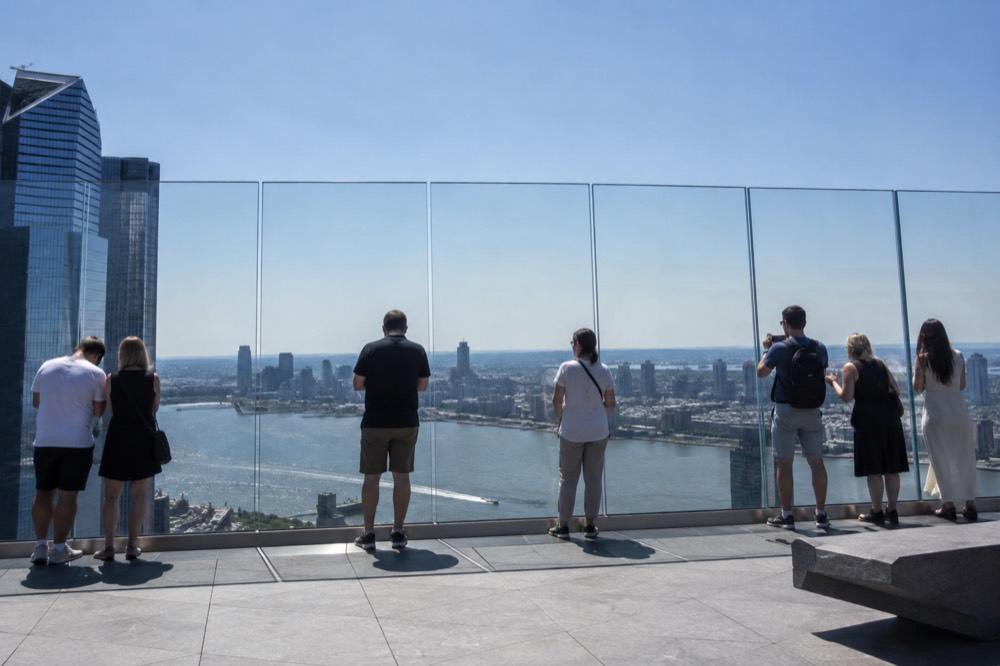
Edge is a cantilevered outdoor observation deck that juts out from the 100th floor of 30 Hudson Yards, featuring a glass floor, an outdoor skywalk and angled glass walls, and it claims the highest outdoor platform in the Western Hemisphere. Tickets are timed, which spreads crowds across the day, and prices move with demand from roughly $34-$45 plus fees. For most visitors it is the single best reason to come to Hudson Yards, especially on a clear day.

The honest pitch is this: Edge trades the classic skyline view for a sensation. From Top of the Rock or the Empire State Building you get the postcard with the great towers in it. From Edge you get the thrill of standing on a wedge of steel hanging off the side of one, with Lower Manhattan, the harbor, the Hudson River and New Jersey laid out around you. The glass floor section is the part people remember, and the part anyone with vertigo should think about before booking.
Timing matters more here than at most decks. Because it faces west over the river, sunset slots are the premium product and price accordingly. A morning ticket buys the same views for less, with fewer people at the rail. Whichever you choose, book a timed slot rather than turning up, since entry windows are the mechanism that keeps the deck from feeling like a rush-hour platform. If you are weighing Edge against the other four decks in the city, our Edge NYC guide breaks down the comparison in detail.
What Else Is There to Do in Hudson Yards?
Beyond Edge, the district's draws are the Shops and Restaurants, a multi-level mall with more than 100 stores and a food hall on level five, the public plaza and its performances, and the direct connection to the High Line, which you can board here and walk three-quarters of the way down Manhattan's west side. The Whitney Museum sits at the park's southern end if you make the full walk. Together this makes the area work as a half-day circuit rather than a single attraction.
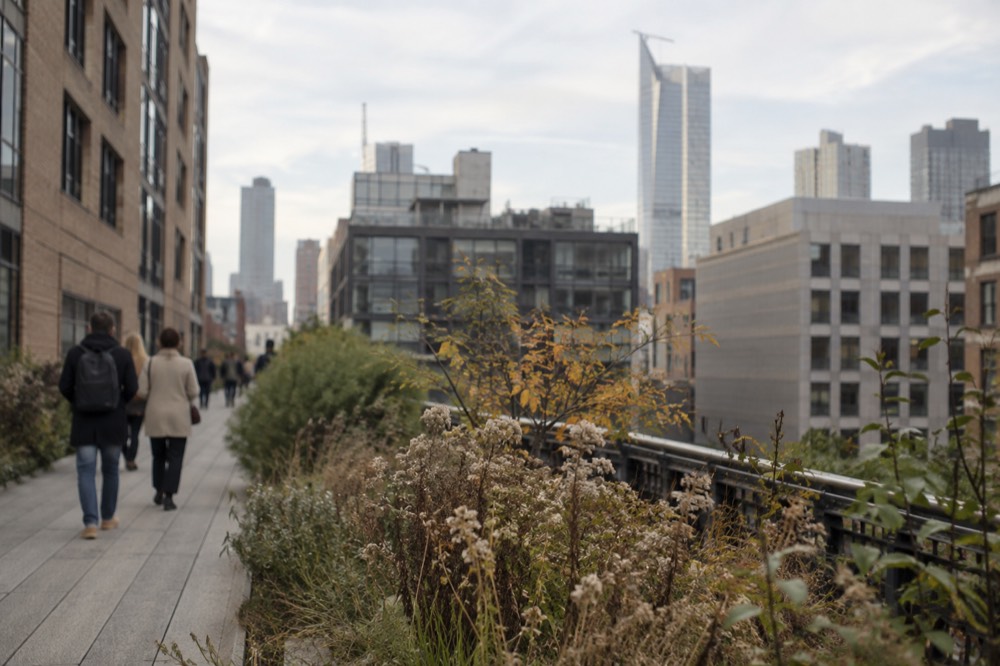
The High Line is the underrated half of any Hudson Yards visit. The elevated park, built on a former freight rail line, begins practically at the yards and runs south through Chelsea to the Meatpacking District. Walking its whole length takes under an hour without stops, but nobody does it without stops: the plantings, the seating steps over 10th Avenue and the views into apartment windows and gallery roofs pull you along. Start at Hudson Yards and finish at the Whitney, where anyone 25 and under enters free every day, and you have one of the better free-after-Edge afternoons in Manhattan. Everything else covered here is indexed on New York City Travel Guide.
The mall deserves a fairer hearing than guidebook snark gives it. Yes, it is a mall. It also holds one of the more practical collections of eating options on the Far West Side, from the level-five food hall for a fast lunch to expensive sit-down restaurants with skyline views for a splurge evening. On a wet day, which February and July both supply in quantity, an indoor circuit of shops, food and the deck is a genuinely useful shape for the afternoon.
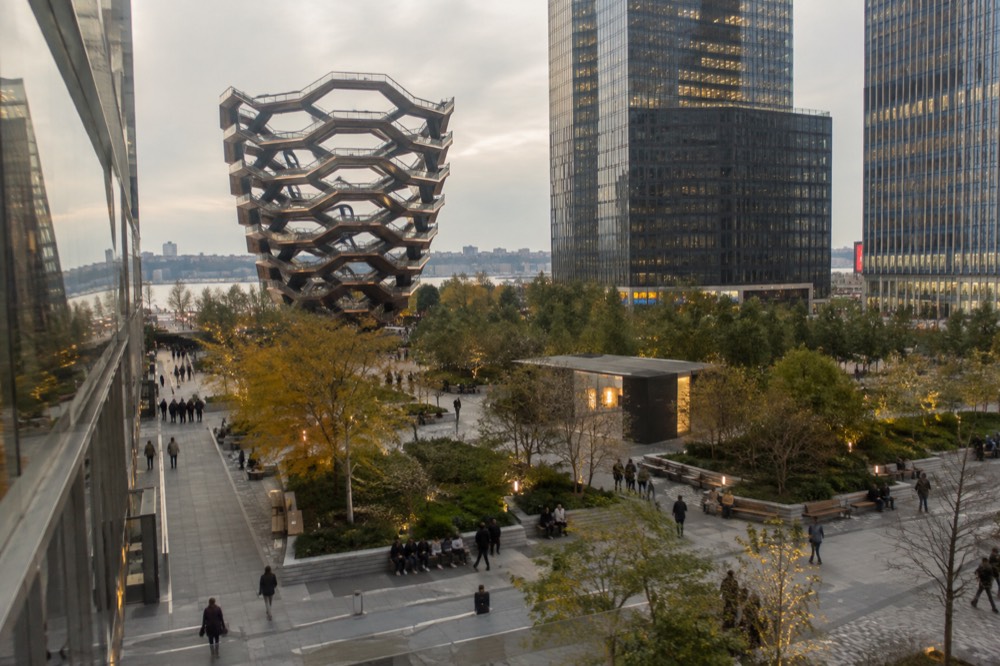
The plaza between the towers hosts public programming, art installations and seasonal events, and it is the best free place in the district to simply sit. In December the surrounding blocks light up, and the holiday markets and installations across Midtown and beyond are covered in our guide to Christmas in NYC.
| Activity | Time needed | Cost | Best for |
|---|---|---|---|
| Edge observation deck | 1 hour | From roughly $34-$45 plus fees | First visit, clear days, thrill-seekers |
| The Shops and Restaurants | 1-2 hours | Free to browse | Rainy days, food, shopping |
| Public plaza and gardens | 30 minutes | Free | Sitting, people-watching, photos |
| High Line walk north-to-south | 1-1.5 hours | Free | Anyone with legs and daylight |
| Whitney Museum at the south end | 2 hours | $30, free for 25 and under | American art, Hudson views |
Where Should You Eat in Hudson Yards?
Eating options split into three tiers: the level-five food hall for fast, inexpensive meals; mid-priced restaurants inside the mall and surrounding towers; and high-end dining rooms, including several with skyline views, on the upper floors. Prices run noticeably above what the same food costs a few blocks east in Chelsea, which is the rent speaking. The food hall is the value play for lunch between the deck and the park, while the splurge rooms are best booked ahead for evening slots, where window tables go first.
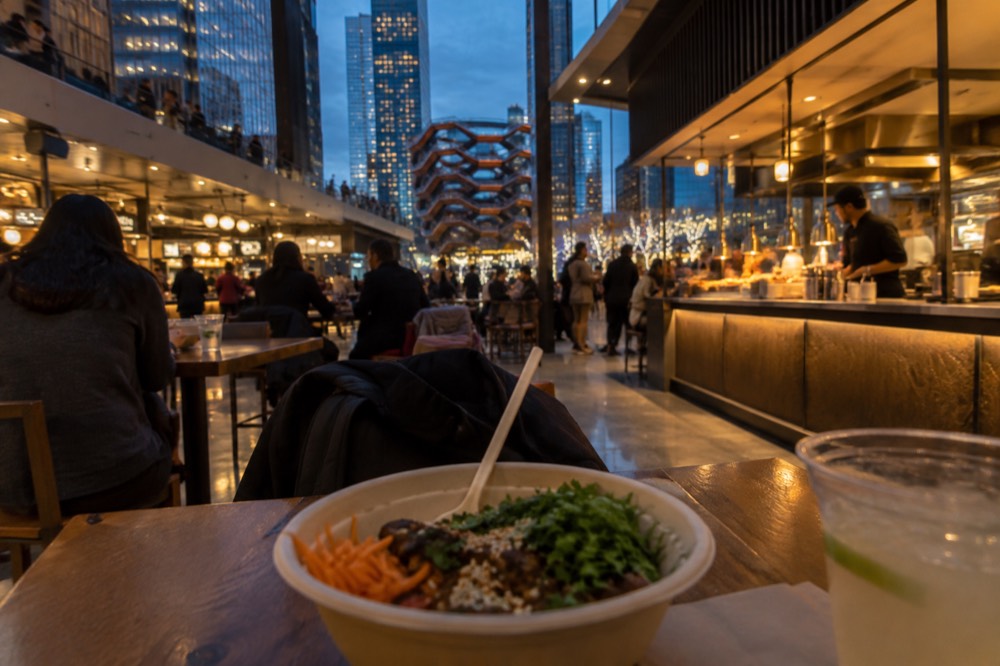
Be realistic about the food hall: it is a food hall, a strong one, with enough variety that a group of picky eaters can each find something without a negotiation. It is not a destination the way the city's great dining rooms are. If your trip budget has one big dinner in it, spend it somewhere with a reason to exist beyond the view, and use the hall for lunch between the deck and the High Line.
For the splurge end, book before you travel. The dining rooms with the best window tables fill first, particularly for weekend evenings and holiday periods. If a view dinner is the plan, reserve a slot timed to sunset and check the seasonal light: in June the sun sets late enough that a 20:00 reservation still gets you daylight fading over the Hudson, while in December you want to be seated by 17:00.
Is Hudson Yards a Good Place to Stay?
Hudson Yards works as a base for one specific kind of trip: a short, shopping-and-sightseeing-heavy visit where you plan to move by subway and want brand-new rooms, direct High Line access and a mall downstairs. It suits business travelers and anyone whose priorities are Edge, Chelsea galleries and the West Side. It suits families and first-time visitors less well, because the classic sights of Midtown, the parks and the museums sit a subway ride away, and the district itself goes quiet in the evening once the offices empty out.
The comparison that matters is against Midtown, and the honest answer is that most first-time visitors are better based near the classic core. Hudson Yards' hotels trade on newness and calm; Midtown trades on proximity. If your list is Empire State, Times Square, MoMA and Central Park, staying here adds transfer time to every single item. If your list is Edge, the High Line, the Whitney and long Chelsea mornings, the calculus flips.
Evening is the district's weak point. The residential and hotel population is still growing into the neighborhood, and the streets empty faster than in established areas. None of this is a safety concern, and our reporting on safety in New York covers the citywide picture with figures. It is simply a liveliness question: dinner and the deck, yes; a nightlife crawl, no.
| Traveler type | Hudson Yards as a base | Verdict |
|---|---|---|
| First-time visitor, classic sights | Extra transit time to most icons | Stay Midtown instead |
| Shopper on a short trip | Mall downstairs, Woodbury coach tours nearby | Strong fit |
| Business traveler | New rooms, quiet nights, walkable offices | Very strong fit |
| Family with kids | Space to run, but thin on kid-specific draws | Mixed |
| High Line and gallery devotee | Northern end of the park at your door | Strong fit |
How Do You Plan the Perfect Hudson Yards Day?
The strongest single-day shape is: morning Edge slot while crowds are thin, lunch from the food hall, the afternoon on the High Line walking south with stops as the mood strikes, and either the Whitney at the far end or a crosstown train back east. That sequence puts the paid, timed attraction first, feeds you without a reservation, and hands the open-ended half of the day to a park where wandering is the point. Budget four to six hours total.
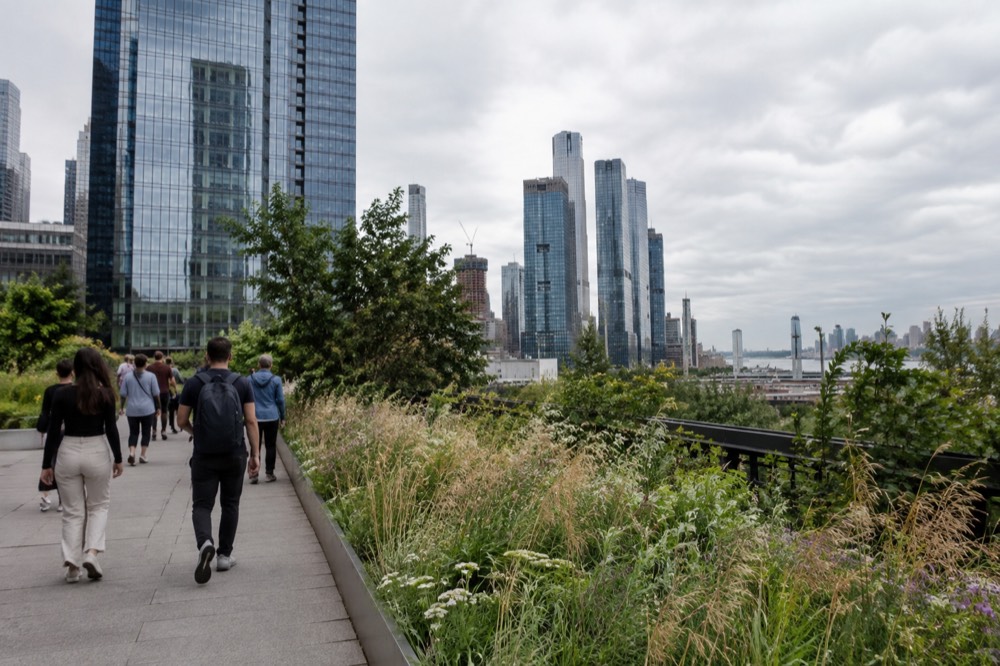
Timing rules worth following: book the earliest Edge slot you can stomach, because the deck fills through the afternoon and the price climbs with the calendar. Walk the High Line south, not north, so the crowd flows with you rather than against you. And check the weather before committing the day, because the deck's outdoor sections and the entire park are exposed; July, statistically the wettest month in Central Park's record at 4.60 inches of precipitation, is exactly when a mall-and-museum backup plan earns its keep.
If your interests tilt toward food, the alternative shape is to fold a Chelsea or Meatpacking food walk into the afternoon. The High Line drops you into both neighborhoods, and guided walks that pair the park with tastings are among the better-value structured days on the West Side.
| Time | Plan | Cost |
|---|---|---|
| 09:00 | Arrive, coffee, walk the plaza before the mall fills | Free |
| 10:00 | Edge, earliest available timed slot | From roughly $34-$45 plus fees |
| 11:30 | Level-five food hall lunch | Food-hall prices |
| 13:00 | High Line south, stops as you like | Free |
| 15:30 | Whitney Museum or train back east | $30, free 25 and under |
| 18:00 | Dinner back at Hudson Yards or in Chelsea | Varies |
What Day Trips Work from Hudson Yards?
Hudson Yards sits on the Far West Side with easy access to Midtown coach departure points, which makes it a workable launchpad for the classic escorted day trips: Washington and Philadelphia, the Woodbury Common outlet run, and Hudson Valley tours that leave from Midtown. The trade is simple: coach-based tours depart early and return late, so the neighborhood's quiet evenings are actually convenient, while the morning commute to the pickup point adds a short subway ride. None of these need a car.
The Washington and Philadelphia combination is the big one: roughly 15 hours door to door, packing the National Mall, the White House area and Independence Hall into a single guided outing. It suits visitors on a long stay who want a second and third city without touching a train timetable. Skip it if you would rather go deep on one place, because a 15-hour coach day is a commitment.
For shoppers, the Woodbury Common coach is the natural pairing with a Hudson Yards base. The round-trip transfer to one of the region's largest outlet centers costs from $55 per person and handles the Hudson Valley drive, leaving you a solid block of shopping time before the ride back. Given the mall downstairs, the district already attracts shoppers, and this is the extension of that instinct.
The wider menu of escapes, from the Hudson Valley to the Hamptons, is covered in our day trips from NYC guide. One rule stands for all of them: renting a car for the city itself is the wrong call, and the honest answer for getting around New York is the subway.
When Is the Best Time to Visit Hudson Yards?
Weekday mornings are the quiet window for Edge and the plaza, weekends and holiday periods are the busiest and most expensive, and the seasons matter less here than in most of Manhattan because the district's core, the mall and the deck, is largely an indoor-plus-timed-ticket experience. That said, the High Line half of any visit is best in spring and fall, and the observation deck rewards clear, cold winter days with the sharpest visibility of the year.
The weather data cuts against intuition in two ways worth knowing. July, the month visitors book expecting dry summer sightseeing, is actually the wettest month in New York's Central Park record, averaging 4.60 inches of precipitation. And February, not January, is the snowiest month, averaging 10.1 inches against January's 8.8. A Hudson Yards itinerary is unusually well-armored against both facts: if the rain arrives, the mall, the food hall and the deck's enclosed sections absorb the day without a rewrite.
Counter-programming also works. Winter weekdays after the holidays are among the emptiest times on the deck, and the cold-air clarity over the Hudson can beat a hazy August afternoon for visibility. Dress for the wind, which on an outdoor platform 100 floors up is not a suggestion.
Common Questions About Hudson Yards
Hudson Yards raises a handful of recurring questions from first-time visitors, and most have short answers: the area itself is free to explore, Edge needs a timed ticket booked ahead, the High Line connects directly, and two to three hours covers the core visit comfortably. The details below answer the questions travelers ask most, with the specifics that actually change a plan.
Is Hudson Yards free to visit?
Yes. The public plaza, the gardens and the High Line all cost nothing, and browsing the Shops and Restaurants is free. The paid attractions are Edge and, at the park's far end, the Whitney Museum.
How much is Edge at Hudson Yards?
Edge uses dynamic timed pricing, with adult tickets starting from roughly $34-$45 depending on date and slot, plus a $2 processing fee per ticket. The CityPASS-published box-office rate for the deck with the immersive experience is $62.06, which serves as a useful upper bound when comparing what the live listing quotes you.
How do I get to Hudson Yards by subway?
Take the 7 train to the 34 St-Hudson Yards terminus. The fare is a flat $3.00 per ride, and if you tap the same contactless card or device every time, OMNY caps your weekly subway and local bus spending at $35 automatically. There is no 7-day unlimited pass to buy any more.
Can you walk from Hudson Yards to the High Line?
Yes, the High Line's northern end sits essentially at the district's edge. Walking south takes you through Chelsea to the Meatpacking District in about an hour without stops, ending near the Whitney Museum.
Is Hudson Yards worth visiting with kids?
Partly. The deck's glass floor and the plaza's open space land well with children, and the food hall solves lunch. But the district is thin on kid-specific attractions, so treat it as one stop on a wider day rather than a destination in itself.
How long should you spend at Hudson Yards?
Two to three hours covers Edge, a food-hall lunch and the plaza. Add another hour or two if you plan to walk the High Line south, and more again if the Whitney is on the list.
The last word goes to expectations. Hudson Yards will not give you old New York, because it is the one large piece of Manhattan that never had a past life to preserve. What it gives instead is the newest skyline in the city, a deck worth the elevator ride and a park at the door that leads you back into the Manhattan you came for. Plan it as a morning, not a weekend, and it earns its place on the itinerary.