Tribeca NYC: What the Neighborhood Is Like, and Who It Suits
Tribeca is the quietest of Manhattan's famous downtown neighborhoods: cobblestones, loft conversions, film-festival history and some of the best restaurants in New York, all packed into a triangle below Canal Street.
Short answer
Tribeca, short for Triangle Below Canal Street, is a residential neighborhood of converted lofts and cobblestoned blocks in Lower Manhattan. It suits travelers who want calm, excellent food and central downtown access, not bargain prices or nightlife. Give it half a day, or book it as a quiet base with room to breathe.
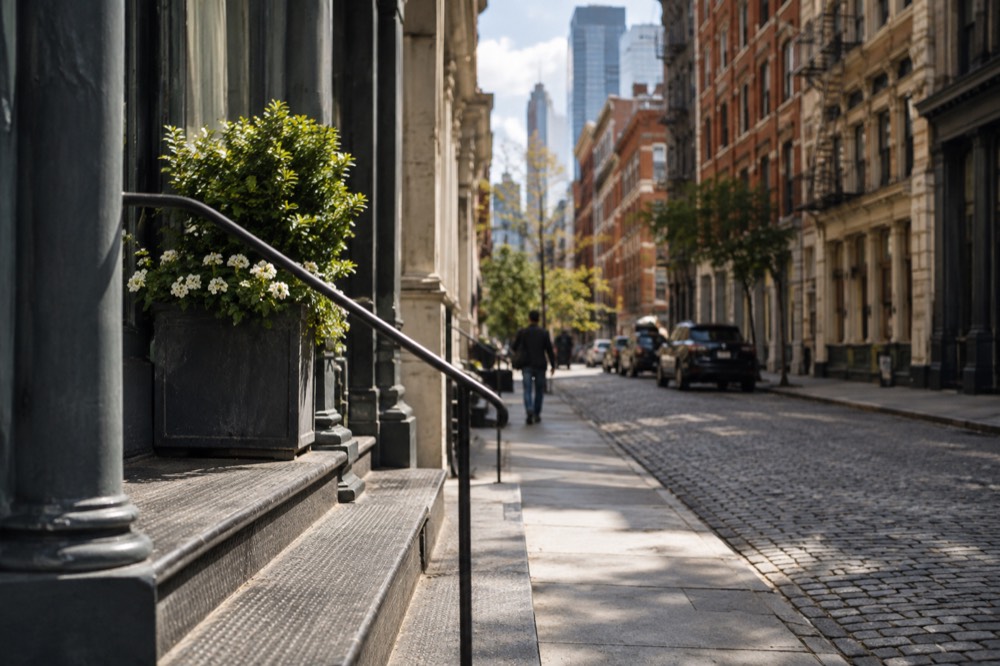
The name is an acronym with a compass reading attached: TriBeCa, Triangle Below Canal Street. That triangle is bounded roughly by Canal Street to the north, West Street along the Hudson to the west, and either Chambers or Vesey Street to the south, depending on who is drawing the map. What fills it is a neighborhood of 19th-century commercial buildings that factories and merchants abandoned and residents reclaimed, block after block, turning printing lofts and dry-goods warehouses into some of the most expensive apartments in the United States.
That history shapes what a visitor actually gets. Tribeca is not loud. There is no single attraction that pulls a crowd the way the Empire State Building or Times Square does. What there is: cobblestone corners that survive intact, a food scene punching far above the neighborhood's quiet profile, the annual Tribeca Festival filling theaters each spring, and a location that puts the World Trade Center site, the Hudson River waterfront and SoHo each within a short walk. This guide, from the editorial desk at New York City Travel Guide, covers what Tribeca is like as a day out and as a base, what things cost, and who the neighborhood genuinely suits.
What Is Tribeca, Exactly, and Where Does It Start?
Tribeca stands for Triangle Below Canal Street, a Lower Manhattan neighborhood running from Canal Street south to roughly Chambers or Vesey Street, between the Hudson River and Broadway or Lafayette Street on its eastern edge. Its defining feature is architecture: blocks of cast-iron and brick commercial buildings from the 19th century, converted into loft apartments. It is overwhelmingly residential, quiet by Manhattan standards, and one of the wealthiest zip codes in the United States.
The boundaries matter more here than in most neighborhoods because Tribeca sits squeezed between places with stronger identities. Go east across Broadway and you are in Chinatown or on the edge of SoHo's cast-iron shopping blocks. Head north over Canal Street and SoHo proper begins. South and west, the Financial District and the World Trade Center site press against it, with City Hall Park marking the southeastern corner of the neighborhood's orbit.
The through-streets to know are few. West Broadway is the spine, running north-south through the heart of the neighborhood, with Tribeca's best-known restaurants clustered along it and on Greenwich Street. Canal Street is the hard northern edge, loud and busy, six lanes of traffic that the quieter blocks south of it seem to exist in defiance of. Chambers and Duane Streets cross east-west, and the Holland Tunnel entrance at Canal and Varick funnels a permanent stream of cars along the western blocks.
For orientation purposes, three landmarks anchor the map: the Woolworth Building near City Hall on the eastern side, Washington Market Park in the center-west, and the riverfront Hudson River Park running the full length of West Street. If you can find those three, you can find anything in Tribeca.
Is Tribeca Worth Visiting, or Only Worth Living In?
Yes, Tribeca is worth visiting, but as a half-day walk rather than a full-day destination. There is no marquee attraction, so the neighborhood rewards travelers who enjoy architecture, quiet streets and very good food. Combine it with the World Trade Center site, the Hudson River waterfront or a SoHo-Chinatown loop, all of which start within a ten-minute walk. Visiting Tribeca alone, from nowhere else, rarely justifies the trip downtown.
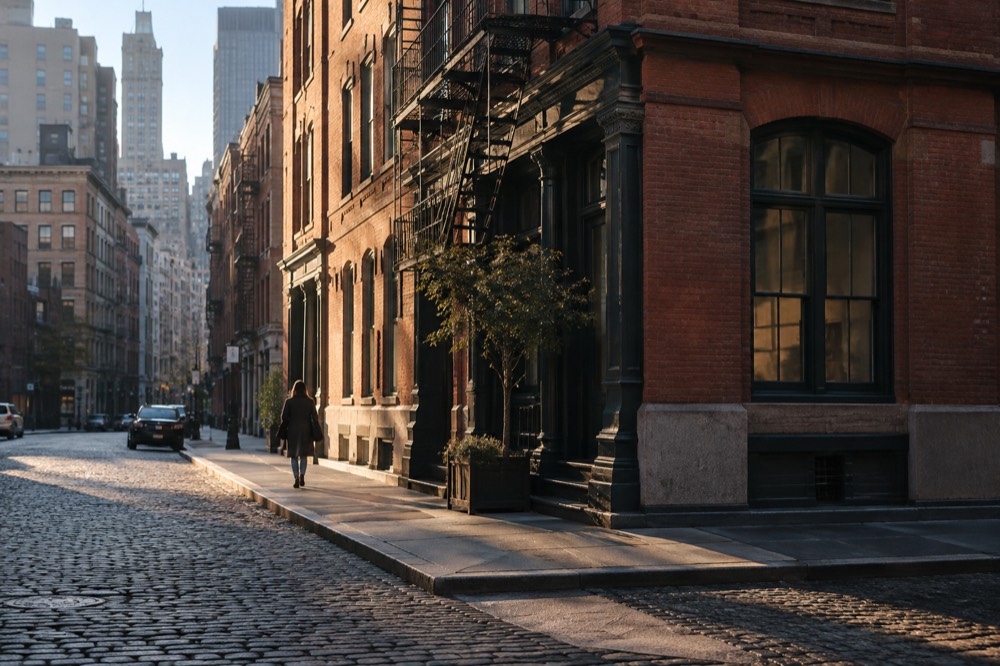
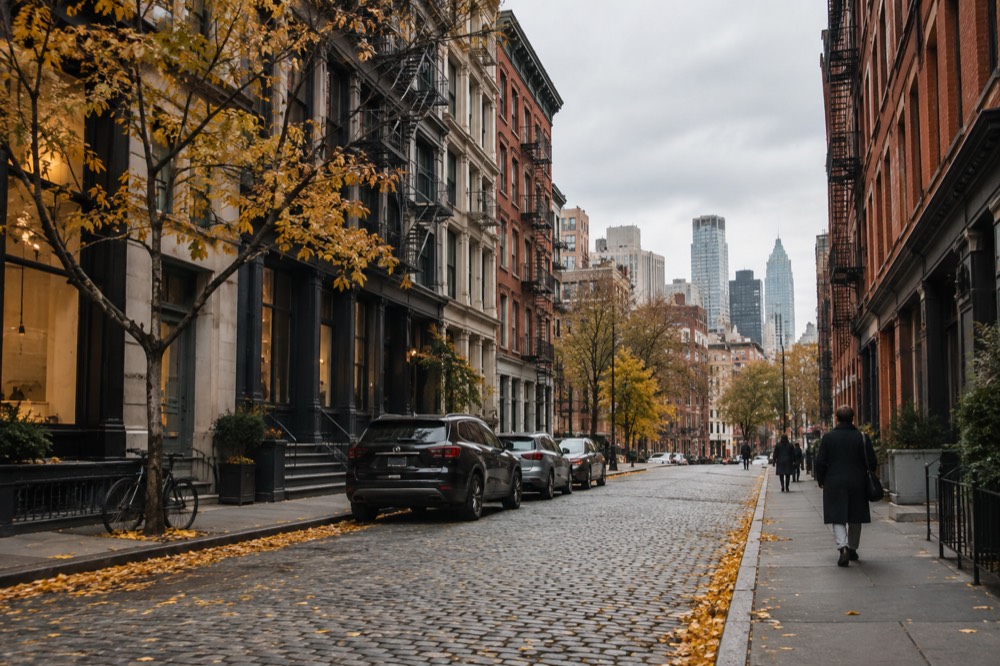
The honest pitch for Tribeca as a sightseeing stop is texture. The neighborhood holds one of the largest concentrations of cast-iron and pre-war commercial architecture in the city, much of it preserved because the area was economically marginal for decades before loft conversion began. Hudson Street, Greenwich Street and the cross-blocks between them still carry original cobblestones in places, which is rarer than visitors expect in a city that paves aggressively.
The second reason is the Tribeca Festival, founded by Robert De Niro and his producing partners after the attacks on downtown Manhattan. It runs each spring, screens films in venues across the neighborhood and Lower Manhattan, and for those two weeks the area's restaurant bars fill with industry badges. Outside festival season, the neighborhood settles back into its residential rhythm.
The third reason is proximity. This is where Tribeca quietly wins as a day out: it borders enough heavy-hitters that a morning here slots into a bigger downtown day naturally.
A workable downtown loop that includes Tribeca looks like this:
| Stop | Time needed | Walk from previous |
|---|---|---|
| 9/11 Memorial plaza | 30-45 min | Start point |
| One World Observatory or the 9/11 Museum | 1-2 hrs | 5 min north |
| Tribeca lunch on Greenwich or West Broadway | 1 hr | 10 min north |
| Washington Market Park and loft-block stroll | 45 min | 5 min |
| Hudson River Park waterfront | 30 min | 5 min west |
| SoHo shopping or Chinatown food walk | 2 hrs | 15 min east |
Note the sequencing logic: the memorial plaza and museum sit at Tribeca's southern edge, so the neighborhood works either as a calm decompression after a heavy morning at the World Trade Center site, or as a quiet warm-up before it. Both orders work. Our dedicated 9/11 Memorial and Museum guide covers tickets and timing for that stop, and the things to do in NYC page places Tribeca in the wider downtown picture.
If a food walk is the anchor of your downtown day, these three options fit the geography especially well:
The food tour is the natural Tribeca pairing: it starts minutes east in Chinatown, six tastings add up to a full meal, and you can walk into Tribeca afterward for coffee and the loft blocks. The tip-based Financial District walk on GuruWalk covers Wall Street and the 9/11 Memorial from the same corner of the island.
What Are the Best Things to Do in Tribeca?
The best things to do in Tribeca are architectural: walk the cobblestoned blocks off West Broadway, see the cast-iron facades of the historic district, and linger in Washington Market Park. Add Hudson River Park for river views, the Woolworth Building lobby if it is open, and the restaurant scene, which is the neighborhood's genuine attraction. There is no ticketed landmark here, so the experience is the streets themselves, taken slowly.
Start with the historic district blocks. The core streets to walk are Greenwich, Vestry, Laight and Harrison, plus the stub of Hubert Street, where original cobblestones and 19th-century warehouses survive in combinations that feel closer to old SoHo than Manhattan today. Unlike SoHo, there are almost no crowds, because there is almost no retail. Most ground floors hold restaurants, galleries or residents' front doors, not shops, and that is the point.
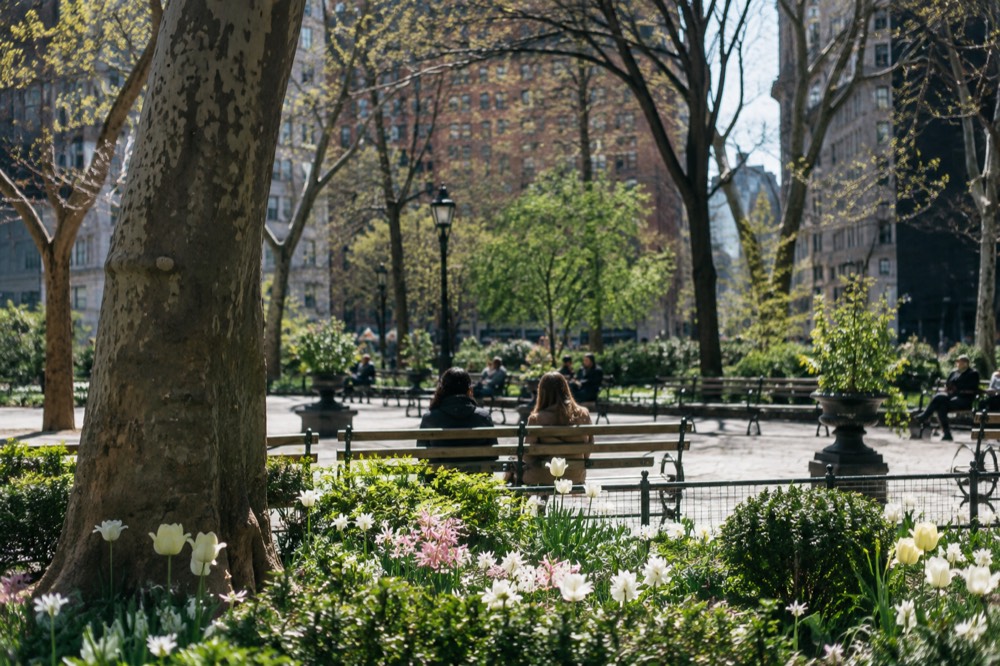
Washington Market Park, at Washington and Chambers Streets, is the neighborhood's green heart, with a community garden, tennis courts and a playground that fills with strollers after school. It sits on land that was, generations ago, part of a wholesale produce market, which is where the name comes from; today it is simply the most pleasant patch of open ground between the Hudson and Broadway in this part of town.
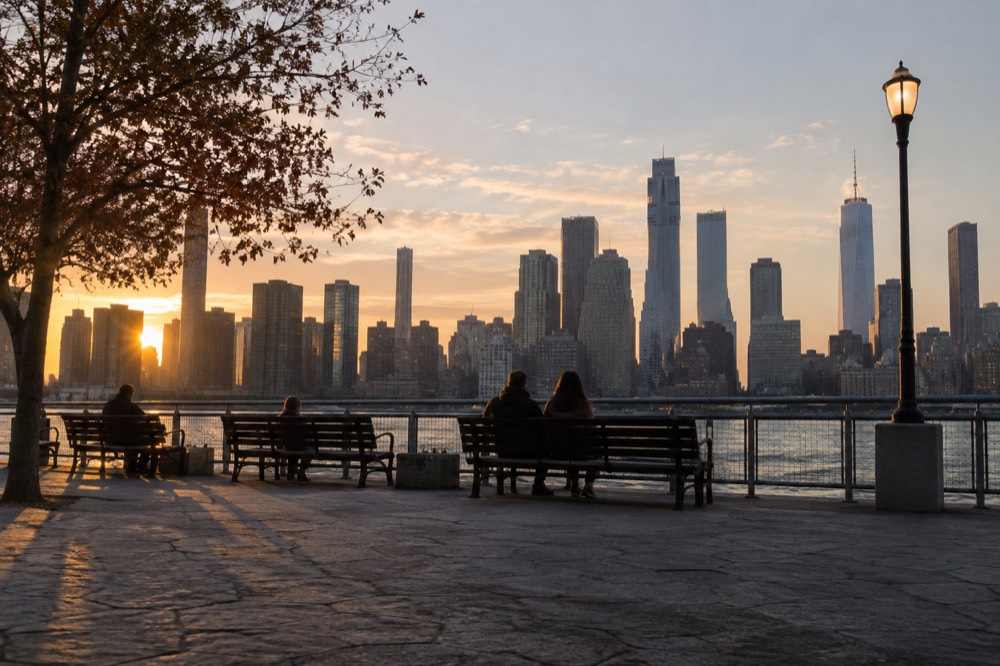
The Hudson River waterfront runs the length of the neighborhood along West Street. Hudson River Park's esplanade here is wide, calm and facing the New Jersey skyline, with a public pier that locals use for sunset and runners use year-round. If your hotel or route brings you downtown in the evening, the riverfront at golden hour is the neighborhood's best free show.
The Woolworth Building, on Broadway near City Hall Park, is the one piece of Tribeca-adjacent architecture worth naming individually: a landmark early skyscraper crowned in green copper. Its ornate lobby is generally accessible only via organized tours or for tenants, so check current access before counting on a look inside. The exterior is visible from City Hall Park regardless.
Two more stops round out a slow half-day. First, City Hall Park itself, at the neighborhood's southeast corner, is a proper park with fountains and a surprisingly good people-watching bench economy. Second, St. John's Park no longer exists as a park, but the name survives on maps and a fenced green at Hudson and Laight Streets marks private space worth a glance, not a visit.
For a deeper architectural day built around loft-era and Gilded Age Manhattan, a guided walk adds context the street signs do not carry:
Where Should You Eat and Drink in Tribeca?
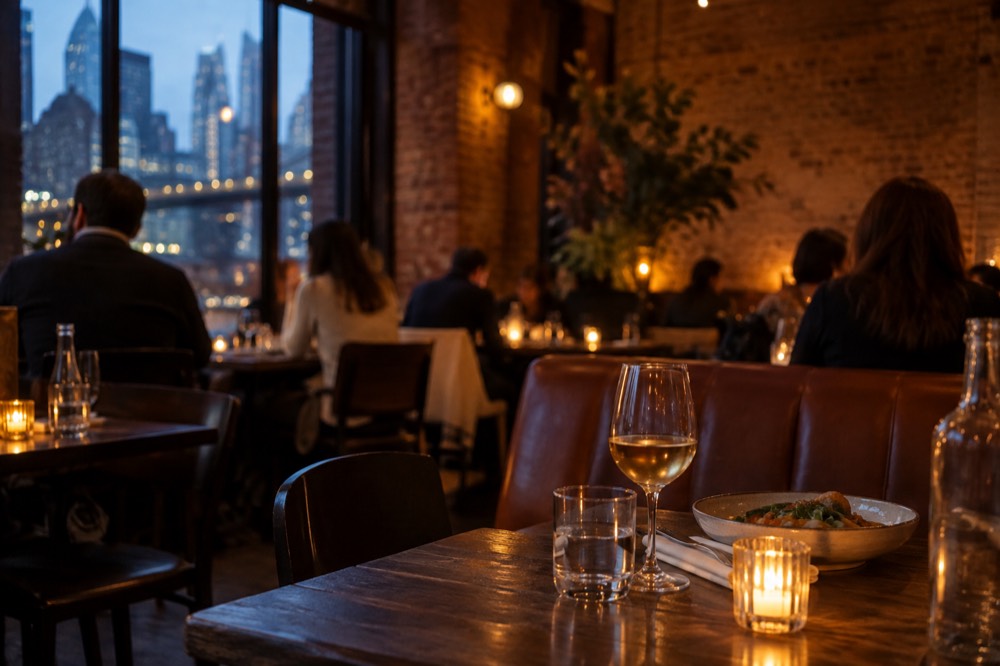
Tribeca's restaurants are among the best in Lower Manhattan, spanning old-school French bistros, chef-driven tasting rooms and casual daytime bakeries, with prices to match the real estate. The strongest dining streets are Greenwich Street, West Broadway and Duane Street. Expect dinner mains in the $30-$50 range at the established spots, tasting menus well above that, and brunch lines forming before 11am on weekends at the neighborhood favorites.
The neighborhood's dining reputation was built on French and Italian foundations, and the classics still anchor it. Odeon on West Broadway, a Tribeca institution since the loft-conversion era, holds its corner with brasserie standards and a late-night scene that outlasts most of downtown. The harder-to-book rooms along Greenwich and Duane Streets rotate in and out of the city's conversation, but the pattern holds: serious kitchens, small rooms, reservations released weeks ahead, walk-in chances best at the bar on weeknights.
Daytime is more relaxed. Bakeries and coffee roasters along Greenwich Street and near the Chambers Street subway serve the stroller-and-laptop crowd, and the quality is genuinely high, because the customer base is local and unforgiving. Dinner price expectations, honestly stated:
| Meal | Typical Tribeca range per person | Notes |
|---|---|---|
| Coffee and pastry | $8-$15 | Roasters and bakeries on Greenwich St |
| Casual lunch | $18-$30 | Cafes, pizza, a few sandwich spots |
| Bistro dinner | $60-$90 | Mains $30-$50, two courses plus a drink |
| Tasting menu | Well above the bistro range | Chef-driven rooms, reservations weeks ahead |
| Glass of wine at a bar | $15-$22 | Lofts converted to wine bars |
These are planning ranges drawn from the neighborhood's current character, not operator promises; check the room before you book. What Tribeca does not offer much of is cheap eating, which is why the smart budget move is a fifteen-minute walk east. Chinatown's dumpling shops and noodle counters sit directly across Broadway, and Little Italy's old Mulberry Street blocks are just beyond. A guided walk with tastings turns that geography into dinner:
Six tastings make a real meal, the pace is easy, and the route ends within a short walk of Tribeca's quieter blocks, which makes it an efficient way to eat well downtown without paying bistro prices twice in one day.
How Expensive Is a Day in Tribeca, Really?
A day in Tribeca can cost almost nothing beyond a subway fare and lunch, because the neighborhood's attractions are streets and parks, not ticketed venues. The spending happens in restaurants: a casual lunch runs $18-$30, bistro dinners $60-$90 per person, and tasting menus climb from there. There is no entry fee for the historic blocks, Washington Market Park or the Hudson River esplanade, so cost tracks almost entirely with how you choose to eat.
That split is the honest answer. On the sightseeing ledger, Tribeca is one of the cheapest neighborhoods in Manhattan: no observation deck, no museum of its own, no paid landmark. You pay $3.00 for a subway ride, you walk, you look. The spending temptation is entirely culinary, and it is optional.
For travelers using passes, one point of honest geography: none of the major New York passes cover a Tribeca attraction, because there isn't one to cover. The CityPASS bundle's downtown entries, the 9/11 Memorial & Museum and One World Observatory, sit at the neighborhood's southern edge, so a pass day can plausibly end with a Tribeca dinner. Our New York CityPASS guide and the broader New York City pass comparison work through whether the math favors your itinerary.
A realistic per-person day budget, covering a mixed downtown day that centers on Tribeca:
| Budget style | Daily spend per person | What it looks like |
|---|---|---|
| Bare bones | $40-$70 | Subway fare, Chinatown lunch, free sights, supermarket dinner |
| Comfortable | $120-$200 | Bistro dinner, coffee stops, memorial museum entry |
| Open wallet | $300+ | Tasting menu, wine, taxi back uptown |
The bare-bones row is genuinely achievable here, and that surprises people who hear "Tribeca" and think hedge-fund lunch. The walk east to Chinatown collapses food costs instantly. The comfortable row is the typical visitor pattern. The top row is what the neighborhood's restaurants are actually built for, and if a tasting menu is the plan, book before you fly.
Is Tribeca a Good Base for a New York Trip?
Tribeca works brilliantly as a base for travelers who want quiet, space and a central downtown location, and it suits longer stays and family trips especially well. The trade-offs are price, since hotels here run high, and evening atmosphere, which is residential rather than lively. For a first trip built around Midtown sightseeing, other neighborhoods are more practical; for a second visit, Tribeca is among the best beds in Manhattan.
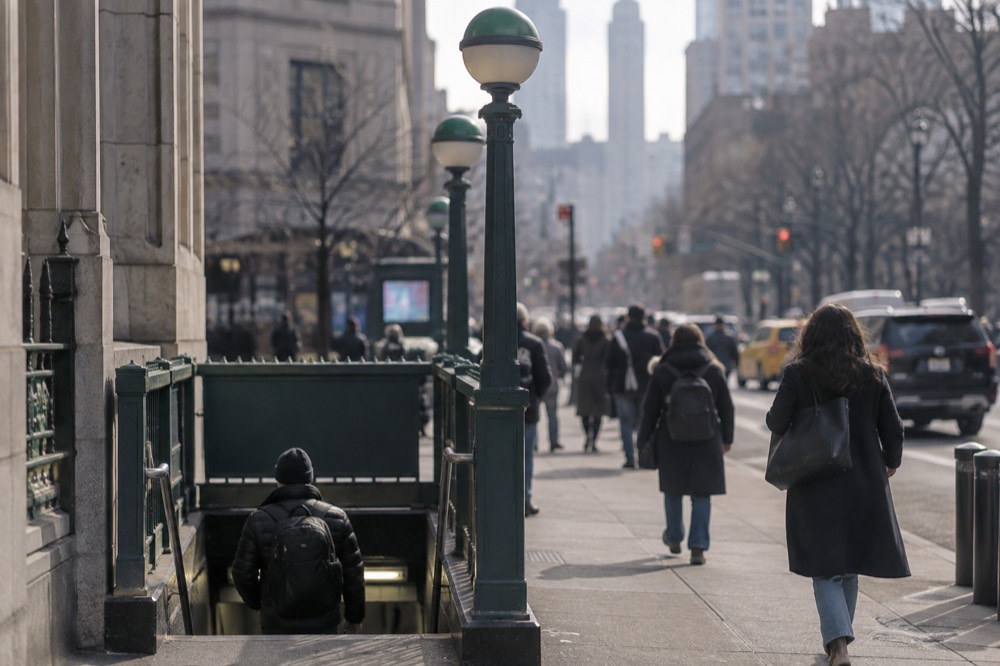
The case for basing here is location plus calm. From central Tribeca you can walk to the World Trade Center site, City Hall, SoHo, Chinatown and the Hudson waterfront inside fifteen minutes. Subway access is genuinely good: the 1 train stops at Franklin Street and Canal Street, the A, C and E run up Church Street, the 2 and 3 serve Chambers Street, and the R and W stop at Canal on Broadway. Five lines, four stations, no transfers needed to reach Midtown in roughly twenty minutes.
The case against is honest too. There is very little nightlife by Manhattan standards: a handful of hotel bars and restaurant bars, early closing times, and quiet streets after ten. Solo travelers chasing energy will prefer the East Village or the Lower East Side, and first-timers who want to walk out of their hotel into Times Square should read our Midtown Manhattan guide instead. Families, couples and anyone noise-sensitive tend to love it here, because the neighborhood empties of office workers in the evening and stays that way until morning.
One practical note for families weighing the area: the things to do in NYC with kids roundup covers downtown's family-heavy stops, and Washington Market Park is exactly the kind of neighborhood playground that makes apartment-based stays with children workable. Between the park, the riverfront and the subway lines on the neighborhood's edges, the logistics of a family week in Tribeca are simpler than in most of Manhattan.
The strongest pairing move if you base in Tribeca is a Wall Street morning: the Financial District is a ten-minute walk south, and a guide who has actually worked in markets explains the machinery behind the ticker tape far better than plaques do.
That kind of guided morning also protects your energy for the evenings, which is when a Tribeca base shows its value. After a day of downtown walking you are already home, the quiet streets are yours, and the better restaurants are a five-minute stroll rather than a subway ride. Basing elsewhere means ending every evening with a commute; basing here means ending it with dinner.
How Do You Get to Tribeca?
Tribeca is served by the 1 train at Franklin Street and Canal Street, the 2 and 3 at Chambers Street, the A, C and E along Church Street, and the R and W at Canal Street, with a $3.00 OMNY tap per ride. From Midtown the trip runs roughly 20 minutes; from Brooklyn, one seat on several lines. Walking in from SoHo or the Financial District takes ten minutes or less.
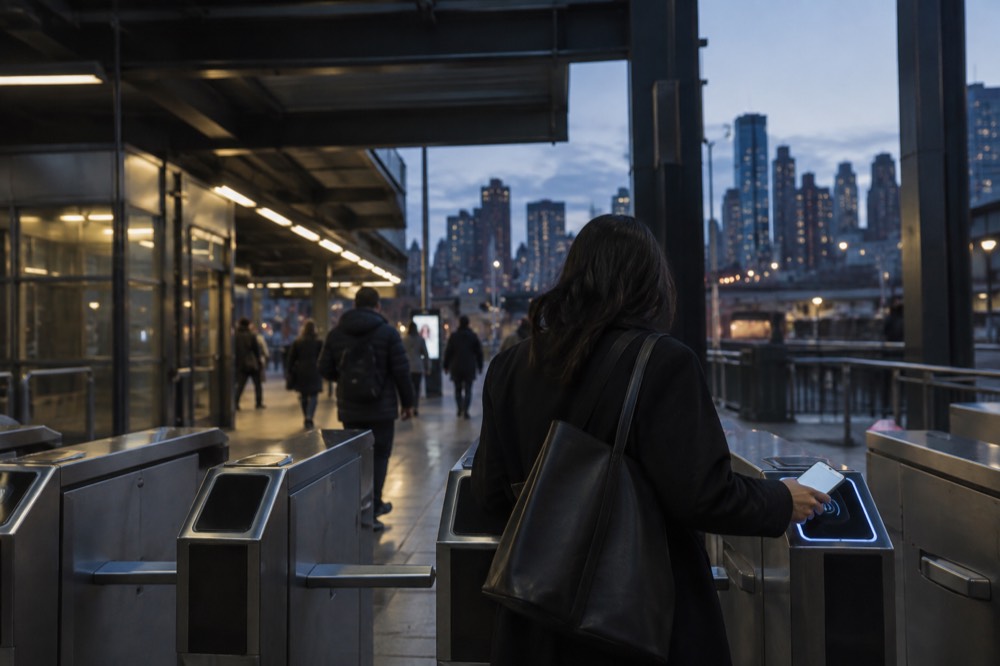
The fare system is the part worth knowing before arrival, because it changed recently and most guides online have not caught up. The MetroCard is retired: as of 1 January 2026 the MTA no longer sells or refills them, and the old 7-day unlimited pass no longer exists as a product. The replacement is automatic fare capping under OMNY. Tap the same credit card, debit card or phone at every turnstile, and once your taps total $35 within a rolling seven-day window, the rest of that period's subway and local bus rides are free. There is nothing to buy in advance and no pass to activate, but you must tap the same card or device every time, and each person in a group needs their own.
The station picture, mapped:
| Station | Lines | Where it puts you in Tribeca |
|---|---|---|
| Franklin St | 1 | Heart of the neighborhood, West Broadway |
| Canal St (Varick) | 1 | Northwest corner, Hudson St blocks |
| Chambers St | 2, 3 | Southeast, City Hall Park side |
| Canal St (6th Ave line) | A, C, E | Church St spine, mid-neighborhood |
| Canal St (Broadway) | R, W | Eastern edge, toward SoHo and Chinatown |
For airport arrivals, Tribeca's position favors downtown-friendly routes. From JFK, the E train to Chambers Street area stops works without transfers after the AirTrain, at $11.75 end to end. From Newark, the NJ Transit train to New York Penn Station, then the 1 or 2,3 downtown, runs about forty minutes plus the station transfer, and note the weekday shuttle-bus replacement on the EWR AirTrain between the terminals and the rail station in the 05:00-15:00 window. Our JFK to Manhattan, LaGuardia to Manhattan and Newark Airport to Manhattan pages carry the full route breakdowns.
Citi Bike docks sit along West Street and Greenwich Street, and the Hudson River Park esplanade is one of the best protected bike corridors in the city, running from Tribeca north to Midtown and beyond.
When Is the Best Time to Explore Tribeca?
The best time to walk Tribeca is a weekday morning, when the streets are quiet, bakery windows are stocked and the cobblestone blocks are almost empty before the lunch crowd. Spring and fall deliver the most comfortable walking weather; summer brings heat and humidity with the waterfront as relief; winter is cold but the neighborhood's low-key character suits it. The Tribeca Festival each spring is the one period when the streets fill and restaurant reservations tighten.
The weather picture for Lower Manhattan follows the city's Central Park normals closely, and two details in that data run against visitor expectations. July is New York's wettest month by the official 1991-2020 normals, averaging 4.60 inches of precipitation, ahead of August and June. And February out-snows January, averaging 10.1 inches of snowfall to January's 8.8, while also being the driest month overall. In other words: summer visitors should plan for afternoon thunderstorms, and February visitors should expect snow more than January travelers do.
Season by season, honestly:
| Season | Tribeca experience | Watch out for |
|---|---|---|
| Spring | Festival energy, outdoor tables opening | Festival-week crowds, reservation crunch |
| Summer | Waterfront evenings, long daylight | Heat, humidity, July's rain |
| Fall | Best walking weather, film-season calm | Little; the strongest season here |
| Winter | Quiet, some snow-dusted cobblestones | Cold river winds off the Hudson |
Timing within the day matters as much as the season. Weekday mornings belong to dog walkers and school runs; midday brings a modest office lunch crowd; early evenings see strollers on the way home; after 9pm the neighborhood goes dark and quiet. Weekend brunch is the one stretch when the popular spots draw lines, so either arrive before 11am or book ahead.
A Sample Half-Day in Tribeca, Hour by Hour
A satisfying Tribeca half-day runs about four hours: start at City Hall Park, walk the cobblestoned blocks of Vestry and Harrison Streets, pause at Washington Market Park, eat lunch on Greenwich Street, and finish on the Hudson River esplanade. Adding the 9/11 Memorial plaza at the start, or a Chinatown food walk at the end, stretches the same route into a full downtown day without backtracking, since every stop sits within fifteen minutes' walk of the next.
The route works because Tribeca is small and its neighbors are close. A concrete schedule:
| Time | Stop | Why here |
|---|---|---|
| 9:30am | City Hall Park | Quiet, green, the Woolworth Building in view |
| 10:00am | Franklin St to Vestry and Harrison | The historic loft blocks, cobblestones, cast iron |
| 11:00am | Washington Market Park | Sit, rest, watch the neighborhood |
| 11:45am | Lunch, Greenwich or Duane St | The neighborhood's real attraction |
| 1:00pm | Hudson River Park esplanade | River views, public pier, sunset potential |
From there the day forks east or south. East across Broadway is Chinatown and Little Italy, where a food tour converts the afternoon into the day's best meal; south is the World Trade Center site and the memorial plaza, which our things to do in Manhattan page folds into a fuller downtown itinerary. Either fork takes ten minutes on foot.
If the afternoon goes to the bridge, this walk covers the crossing with the photo stops attached:
Common Questions About Tribeca, NYC
Tribeca is a small, wealthy, mostly residential neighborhood of converted lofts below Canal Street, best known for its cast-iron architecture, quiet cobblestoned streets, outstanding restaurants and the annual Tribeca Festival. It suits calm-seeking visitors, families and longer stays more than nightlife hunters or budget travelers, and it rewards a half-day visit paired with the World Trade Center site, SoHo or Chinatown. Below, the questions visitors ask most often, answered directly.
Is Tribeca expensive to visit?
Walking around Tribeca is free, and the neighborhood's attractions, its streets and parks, cost nothing. The expense is in eating and staying: casual lunches run $18-$30, bistro dinners $60-$90 per person, and hotels are among the pricier in Manhattan. A budget traveler can spend a morning here for a subway fare and walk east to Chinatown for cheap food.
What does Tribeca stand for?
TriBeCa is an acronym for Triangle Below Canal Street, the name coined for the area when loft conversions began turning its old commercial buildings into apartments. The triangle is bounded by Canal Street to the north, the Hudson River to the west, and roughly Chambers or Vesey Street to the south.
Is Tribeca safe for tourists?
Tribeca is one of the quietest, most residential neighborhoods in Lower Manhattan, with low foot traffic after business hours and a heavily residential street life. Normal city awareness applies, as anywhere in New York, but visitors consistently describe the area as calm rather than intimidating.
How far is Tribeca from Times Square?
Roughly four miles north. The 1 train runs from Franklin Street to Times Sq-42 St directly, in about twenty minutes, making a Midtown evening an easy round trip for anyone staying in the neighborhood.
Where do celebrities eat in Tribeca?
The neighborhood's restaurants have long attracted film-industry regulars, especially during the spring festival, and a handful of dining rooms along Greenwich and West Broadway are known for discreet, high-profile service. Specific current favorites shift constantly, so treat any named list with caution and book the well-reviewed rooms instead.
Can you visit the Tribeca Festival?
Yes. The festival runs each spring, screens films in venues across Tribeca and Lower Manhattan, and tickets are sold to the general public. Screenings and talks often sell out for headline events, so check the festival's own site for the current year's program and on-sale dates before planning a trip around it.
The honest closing note: Tribeca is not a neighborhood you check off a list, because there is nothing to check off. It is a neighborhood you take slowly, ideally with a lunch reservation and nowhere to be afterward. Pair it with the louder blocks on its borders, use it as the calm center of a downtown day, and it earns its place on the itinerary.