Coney Island: What a Visit Really Costs, Takes and Delivers
Coney Island sits at the far southern edge of Brooklyn, where the subway ends and the Atlantic begins. Getting there is cheap and simple, but the timing decides everything: the amusements run on a seasonal calendar, the beach is free, and a summer Saturday is a completely different trip from a February afternoon.
Short answer
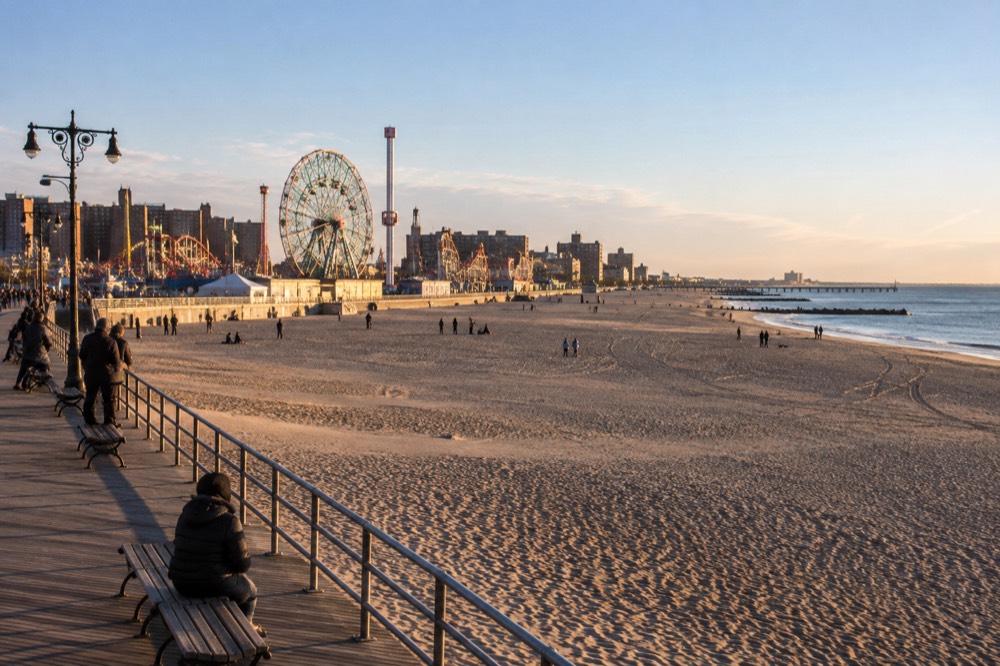
Coney Island is a free beach and boardwalk at the end of several subway lines in southern Brooklyn, roughly an hour from Midtown Manhattan. The subway fare is $3.00 each way, the beach and boardwalk cost nothing, and the amusement parks, aquarium and food are what you pay for. The rides operate seasonally, so check the operators' published calendars before you commit a day.
Coney Island: What a Visit Really Costs, Takes and Delivers
The subway ride to Coney Island is one of the longest in the system, and it ends with a strange reward: sand, salt air and a skyline of rides instead of towers. For most of the year this corner of Brooklyn belongs to locals. In summer it becomes a full day trip, and the difference between a good visit and a frustrating one comes down to three things: when you go, what you expect to pay for, and how you handle the crowds.
This guide covers the practical reality. What the trip costs, how the seasonal calendar works, what is actually free, and an honest answer to the question every visitor asks after looking at a map: is it worth the ride from Manhattan?
Where Is Coney Island and How Do You Get There?
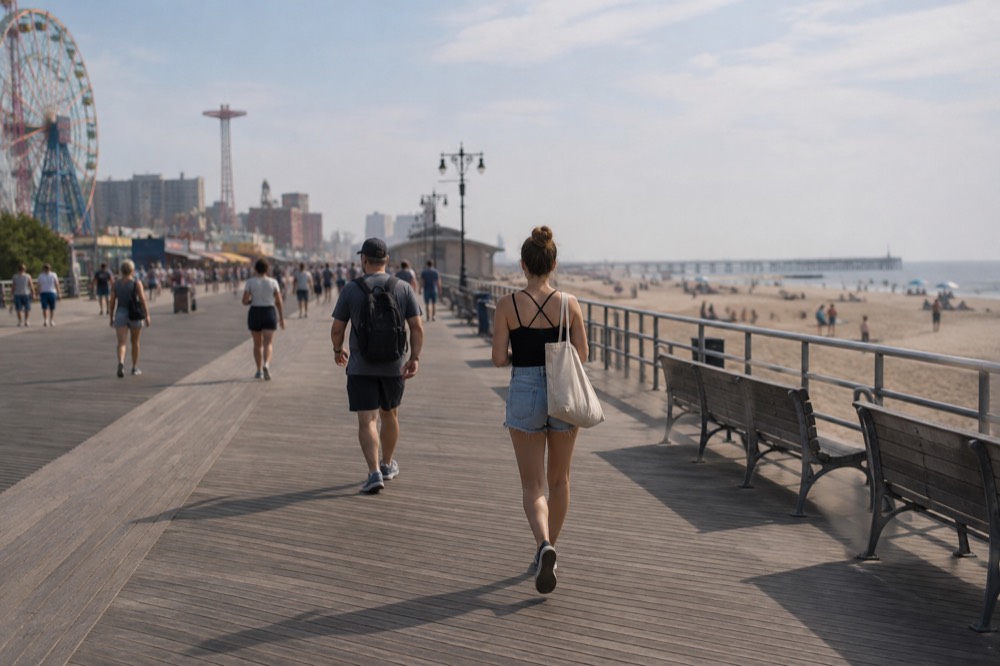
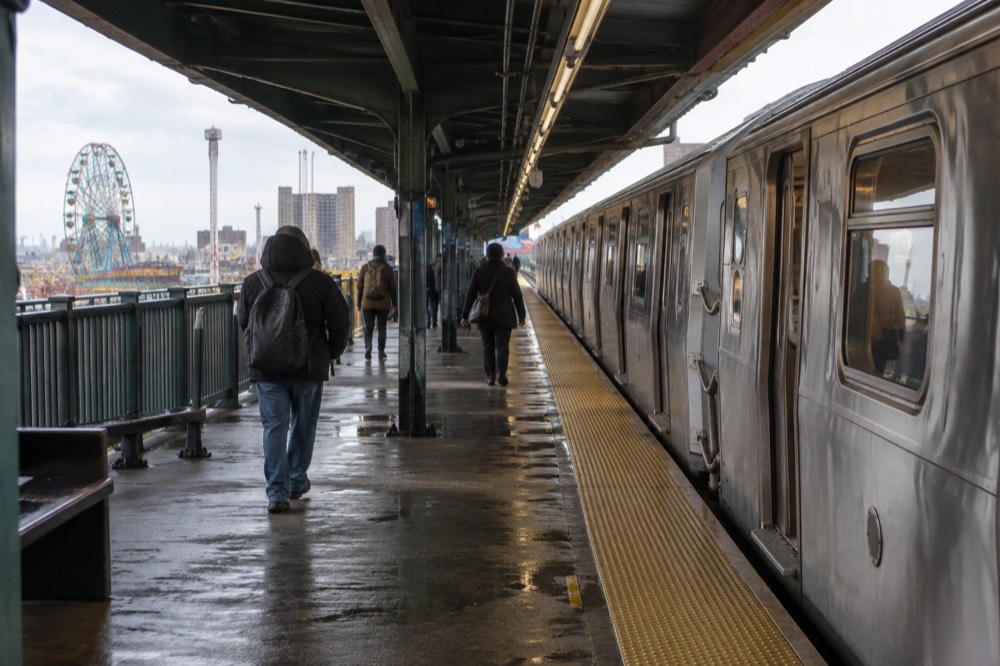
Coney Island sits on the Atlantic shore of southern Brooklyn, at the end of the line for several subway routes, roughly an hour from Midtown Manhattan. The subway fare is $3.00 per ride, and with OMNY the fare caps automatically at $35 in a rolling seven-day period, so a round trip costs most visitors $6.00. The station sits a short walk from the boardwalk.
The honest answer to the transport question is the subway, full stop. Driving to Coney Island on a summer weekend means hunting for parking near a beach neighborhood at peak season, and the ride from Manhattan can take as long as the train while costing vastly more. The beach and the amusements sit within an easy walk of the terminal station, so once you arrive nothing else about the trip requires a vehicle.
Fares work differently now than they did a few years ago, and a lot of older guides have this wrong. The MetroCard is retired: as of 1 January 2026 the MTA no longer sells or refills them. You tap a credit card, debit card, phone or OMNY card directly at the turnstile, and if you tap the same card or device every time, the system caps your weekly spending at $35 for subway and local bus rides combined. After the cap, further rides that week are free. There is no pass to buy and no decision to make at a machine.
The tap-matters rule deserves a warning. If you tap your phone in the morning and the plastic card in your pocket on the way home, the system treats those as two separate travelers and neither earns the cap. Pick one method for the whole trip and stick to it. Families should know the cap applies per person, not per group.
| Option | Cost each way | Notes |
|---|---|---|
| Subway, tap to pay | $3.00 | Fare caps at $35 per rolling 7 days with OMNY on one card or device |
| Subway, paper single-ride ticket | $3.50 | Bought from a machine; valid 2 hours, no subway-to-bus transfer |
| Taxi or rideshare from Midtown | Many times the subway fare | Slow in summer traffic; parking near the beach is scarce |
| Reduced fare (eligible seniors 65+/disabled) | $1.50 | Applies at all times of day |
The fares and capping rules above come straight from the MTA's own fare pages. For a deeper dive into the system, our New York subway guide covers lines, etiquette and planning, and the wider things to do in NYC page places Coney Island among the city's bigger attractions.
What Does a Day at Coney Island Cost?
The beach, the boardwalk and the ocean views cost nothing, and the subway fare is $3.00 each way. What you pay for is everything on top: the amusement park rides, the aquarium, the food and any games on the boardwalk. A visitor who walks the boardwalk, swims and eats modestly can do the whole day for the price of transport and lunch. A family riding the amusements all afternoon should budget for it like any theme park visit.
The pricing structure is the thing to understand before you go. Coney Island is not a gated attraction with one admission price. It is a neighborhood with a public beach, a public boardwalk and privately run amusements alongside them. You can walk the entire boardwalk, sit on the sand and watch the rides from the ground without paying a cent beyond your subway fare. The moment you step into a ride queue or an attraction, you are in ticket territory, and each operator sets its own pricing.
Ride pricing follows the theme park pattern: wristbands, per-ride tickets or point-based cards depending on the operator and the season, with the details on each operator's own channels. The seasonal calendar matters as much as the price. The amusement operators run on published seasonal schedules, and a warm Tuesday in May can be a completely different proposition from a July Saturday. Before you commit a day, check the current operating calendar rather than trusting a general guide, ours included, because opening weeks and hours shift year to year.
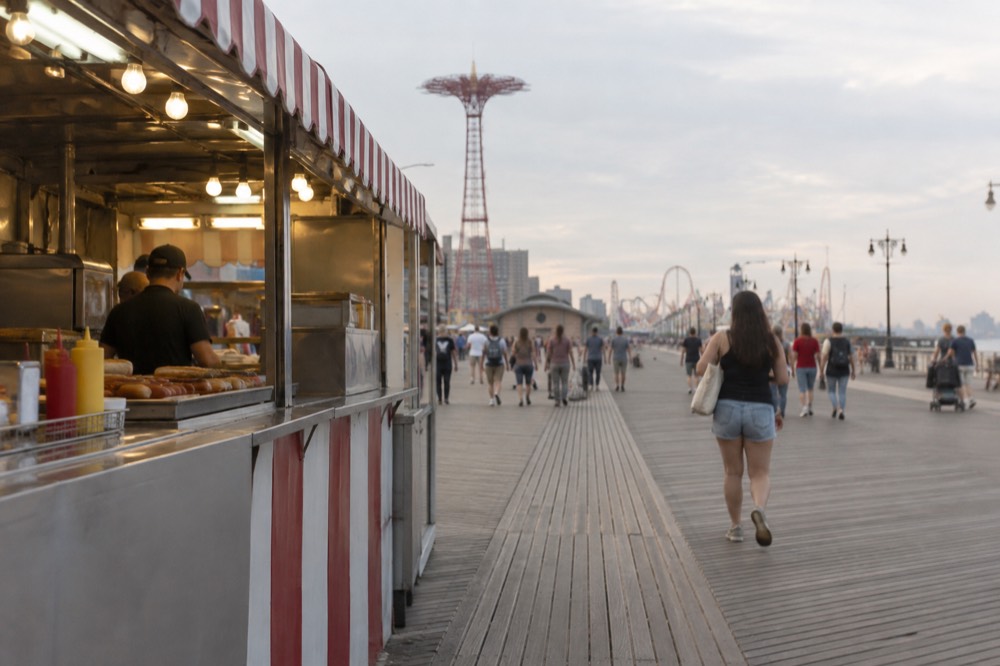
Food is the other budget line, and it is genuinely part of the experience. The boardwalk is lined with casual stands and old institutions, and the neighborhood streets behind it hold a full range of restaurants. Prices run from cheap snacks to full sit-down meals. If you are feeding a family, set a number before you arrive; the smell of the boardwalk makes spontaneous spending easy.
| Item | Typical cost | Notes |
|---|---|---|
| Beach and swimming | Free | Public beach, lifeguards during the beach season |
| Boardwalk walking and people-watching | Free | Open year-round, at its busiest in summer |
| Amusement rides | Per operator | Wristbands or per-ride pricing; seasonal schedules apply |
| Aquarium | Per operator | Check the operator's own site for current admission |
| Boardwalk food | Snack prices to full meals | Nathan's Famous and the boardwalk stands are institutions |
| Subway from Midtown | $3.00 each way | $35 weekly OMNY cap applies automatically |
A word on combining the trip with other Brooklyn plans. Coney Island is far enough south that pairing it with anything in northern Brooklyn makes for a long day. If you want two borough experiences in one outing, the bridge-and-waterfront side of Brooklyn pairs better with itself. One option is the free Brooklyn Bridge, Brooklyn Heights and Dumbo walk on GuruWalk, a tip-based tour that crosses the bridge and ends near the waterfront before you continue south; there is also a paid Brooklyn Bridge and Dumbo walking tour if you prefer a fixed price.
When Is the Best Time to Visit Coney Island?
The core season is summer, when the beach is staffed, the amusements run daily and the boardwalk is at full energy, but that is also when the crowds are thickest. Late spring and early fall give you pleasant walking weather with thinner crowds, though the amusement calendar shortens outside peak season. Winter visits are quiet and moody, with the boardwalk open but the rides largely seasonal. The calendar, not the weather forecast, is the binding constraint.
The seasonal logic deserves a closer look, because visitors routinely get it backwards. New York's official climate normals, measured at Central Park, show July as the wettest month of the year at 4.60 inches of precipitation on average, ahead of August at 4.56 and June at 4.54. Summer visitors who assume they dodged the rain by skipping spring are statistically choosing the wettest stretch. On the other side of the calendar, February out-snows January, averaging 10.1 inches of snow against January's 8.8, while also being the driest month overall.
| Month | Avg high | Avg low | Precipitation | Snow |
|---|---|---|---|---|
| May | 71.4°F | 55.0°F | 3.96 in | 0.0 in |
| June | 79.7°F | 64.4°F | 4.54 in | 0.0 in |
| July | 84.9°F | 70.1°F | 4.60 in | 0.0 in |
| August | 83.3°F | 68.9°F | 4.56 in | 0.0 in |
| September | 76.2°F | 62.3°F | 4.31 in | 0.0 in |
| October | 64.5°F | 51.4°F | 4.38 in | 0.1 in |
Those figures come from the NOAA 1991-2020 climate normals for Central Park, the standard official dataset for the city. The practical reading: June through September are all warm enough for the beach, the differences between them are small, and picking September over July trades peak heat for slightly less rain and far fewer people once schools go back.
Timing within the week matters more than timing within the summer. Weekend crowds at Coney Island in July are a real phenomenon, and the research behind this site found something that cuts against common instinct: New York's transit has recovered on weekends far more than on weekdays. Average weekend subway ridership in 2025 ran at 88 percent of 2019 levels while weekday ridership sat at just 73 percent. In other words, the leisure city is the crowded city now. A weekday beach day buys you noticeably more space.
What Is There to Do at Coney Island Beyond the Beach?
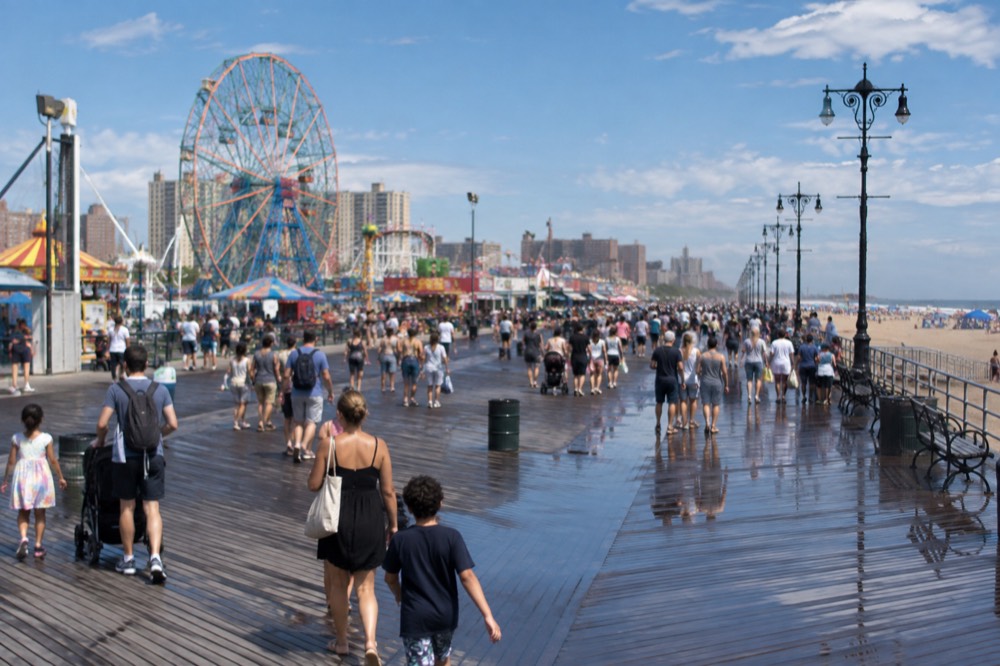
The beach is the headline, but the district packs a full day: a classic wooden roller coaster and the surrounding amusement parks, an aquarium, the boardwalk itself as a free promenade, a minor league baseball stadium in season, and a food scene that runs from boardwalk institutions to sit-down restaurants. None of it requires a ticket to enter the area. You choose your own mix of free walking and paid attractions.
Start with the boardwalk, because it is the spine of everything. It runs along the beach with ocean on one side and the amusements, food stands and people-watching on the other, and it costs nothing to walk its length. Even in the off season, when the rides are quiet, the walk itself and the winter ocean are the draw. Photographers tend to prefer the shoulder hours, early morning or late afternoon, when the light is low and the crowds thin.
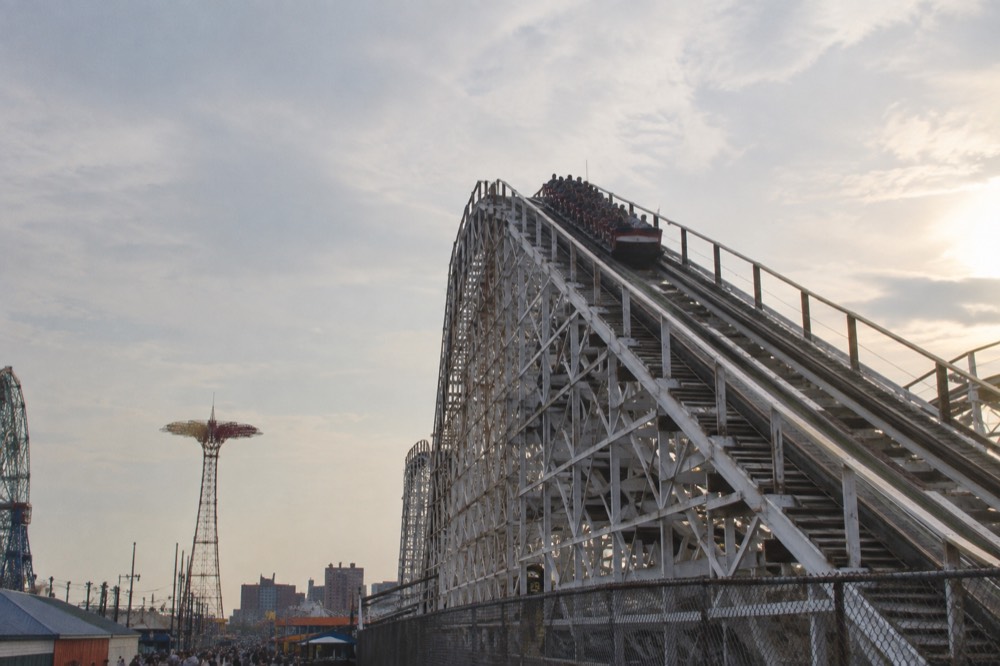
The amusements are the reason most visitors come, and the classic coaster is the marquee ride. It is a wooden coaster with a long history, and riding it is one of those New York rituals that people remember for years. The surrounding parks hold the usual mix of thrill rides, family rides and boardwalk games. Pricing is per operator and seasonal, so treat the operators' own sites as the source of truth for wristbands and hours rather than any printed figure, which goes for this guide too.
The aquarium sits at the eastern end of the boardwalk and makes an easy pairing with a beach afternoon, especially with kids or on a day when the weather turns. Like the amusements, it runs its own admission calendar. The baseball stadium hosts minor league games in season, and a summer evening game is one of the more underrated warm-weather tickets in the city: cheap seats, a small park and a post-game walk back toward the boardwalk.
Is Coney Island Worth the Trip from Manhattan?
For most first-time visitors with four or more days in the city, yes, Coney Island earns the hour-long ride, provided you commit at least half a day rather than treating it as a quick stop. It offers something Manhattan cannot: an actual ocean beach at the end of a subway line, plus amusements and a food culture with real history. On a tight two- or three-day itinerary, it is a reasonable cut.
The honest case for skipping it is about opportunity cost. A round trip eats most of two hours, and on a short visit those hours could cover the Statue of Liberty, a museum or a Broadway show. The weather matters too: an overcast 60-degree day turns the beach into a long cold walk, and the amusements are the only thing left to spend on.
The honest case for going is that Coney Island is unlike anything else in the five boroughs. The contrast is the point. You leave Midtown's towers and an hour later you are barefoot on sand with a coaster behind you. It is also one of the cheapest full days out in New York: a $3.00 fare each way, a free beach and boardwalk, and food at boardwalk prices rather than Midtown ones.
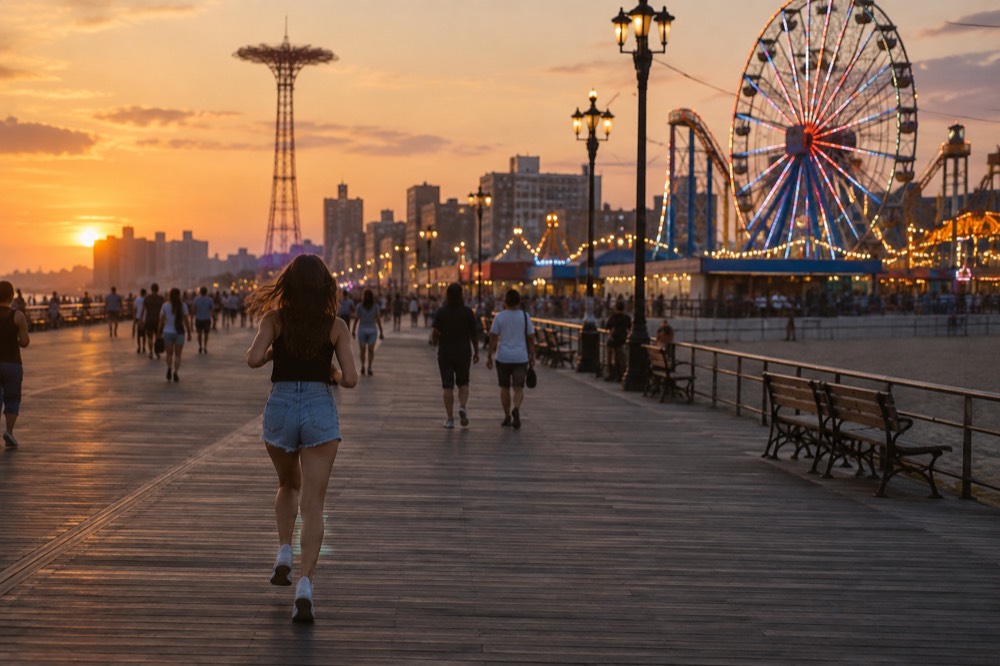
A sensible middle path for short trips: go in the late afternoon on a hot day. The crowds thin, the light turns golden over the water, and you can eat dinner on the boardwalk before riding back. You get the essence of the place in four hours instead of eight.
How to Plan a Coney Island Day with Kids
Coney Island is one of the most kid-friendly destinations in New York, combining a free beach, gentle rides, an aquarium and plentiful casual food, all within a compact walkable strip. The main planning risks are sun, crowds and exhaustion on the way home. Aim to arrive mid-morning, alternate paid attractions with free beach time, and leave before the evening meltdown window rather than after it.
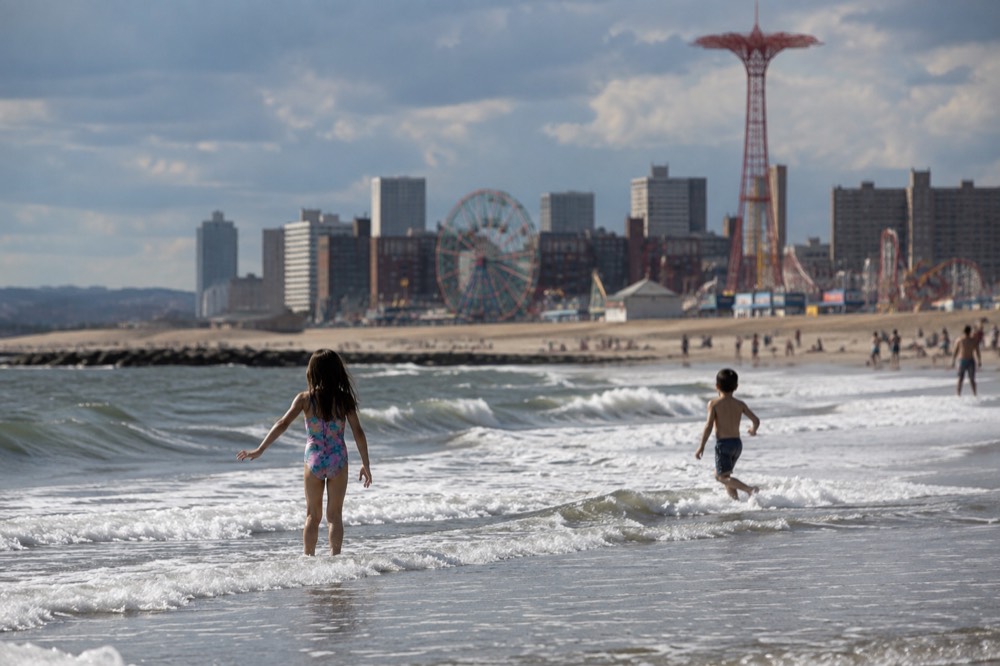
The beach itself does most of the work with children. During the beach season it is a guarded public beach, and sand plus waves will occupy most kids for hours at zero cost. Pack towels and sunscreen from home; buying either at a beach stand costs a premium. The amusements split into thrill rides for older kids and gentler options for small ones, and per-ride pricing lets families buy selectively instead of committing everyone to a wristband.
The aquarium is the reliable backup plan. Weather turns, patience runs out, and an indoor-leaning attraction rescues the day. It sits within the same walkable strip, so no extra transit is involved.
One practical note for the ride home: the return train from Coney Island on a summer evening fills up fast after fireworks or big events. Board early in the platform queue, expect to stand for the first stretch, and keep the kids' snacks in reserve for the ride. An hour standing on a hot train is the part of the day families remember least fondly, and a little planning prevents it.
Where Coney Island Fits in a Bigger New York Trip
Treat Coney Island as a borough day, not a Midtown add-on. It pairs naturally with a morning elsewhere in Brooklyn or a slow summer schedule, and it should sit in your itinerary opposite the dense Manhattan days: museums and observation decks one day, beach and boardwalk the next. Travelers who alternate like this see more of the actual city and burn out less. The site's own planning pages make the sequencing easy.
If you are building a first trip around the classics, the sequencing advice is simple. Do the Midtown cluster on one day, the downtown and harbor cluster on another, and slot Coney Island on a hot afternoon or a lighter day in between. The best time to visit NYC guide covers the city-wide seasonal logic, and Coney Island follows the same curve with the beach layered on top.
For structure on your Manhattan days, a guided walk is an efficient anchor. The Central Park guided walking tour strings together Bethesda Terrace, the Mall and Bow Bridge in about two hours with a guide handling the route, which pairs well with a museum stop afterward. It suits first-timers who would rather not decode the park's loops alone.
Food tours make a similar case for structure. The Chinatown and Little Italy food tour covers six tastings across two adjacent downtown neighborhoods in about three hours, and the six stops add up to a real meal. It is a strong fit for the day before a Coney Island trip, since it teaches you the downtown street grid you will return to.
And for the Brooklyn side of the ledger, the free Brooklyn Bridge sunset walk on GuruWalk deserves a look. It is tip-based, crosses the bridge as the sun goes down, and finishes on the Brooklyn side as the skyline lights come on. Like the other GuruWalk tours listed on New York City Travel Guide, it is run by an independent guide and you pay what you think the walk was worth at the end.
Common Questions About Coney Island
The questions below cover the practical gaps: whether the beach is free and guarded, what happens in the off season, how the fare cap works, whether a winter visit makes sense, and how Coney Island compares with other options in the city. Each answer is short and direct. For anything not covered here, the operators' own published calendars are the next place to check.
Is the beach at Coney Island free?
Yes. The beach and the boardwalk are public and free, with no gate or admission. Lifeguards are on duty during the beach season; outside it, swimming is not supervised and the sand and boardwalk remain open for walking.
How much is the subway to Coney Island?
The fare is $3.00 each way. If you tap the same card or device for every ride, OMNY caps your subway and local bus spending at $35 across a rolling seven-day period, and rides after the cap are free. There is no pass to buy; the cap applies automatically.
Is Coney Island open in winter?
The boardwalk and beach are open year-round and free to walk. The amusement parks and the food stands run on seasonal calendars, so many are closed or on limited schedules outside the warmer months. Check each operator's published calendar before going in the off season.
Can you do Coney Island as a half-day trip?
Yes, and in hot weather a late-afternoon arrival is arguably the best version of the trip. You get the golden light on the water, dinner on the boardwalk and a cooler ride home. Allow at least three to four hours on site plus roughly an hour of transit each way from Midtown.
Is Coney Island safe for tourists?
Coney Island is a busy, family-oriented neighborhood with a large seasonal police and lifeguard presence in summer. As anywhere in New York, keep normal city precautions around valuables, and swim only when lifeguards are on duty. Blanket statements about neighborhoods are not something this site makes.
What is the best month to visit Coney Island?
June through September for the full beach-and-rides experience, with September offering nearly identical warmth to July with smaller crowds once schools return. July is statistically the city's wettest month, so if rain matters to your plans, the shoulder edges of summer are the safer bet.
The last word on planning: pick your day against the calendar first and the forecast second. A September weekday with the amusements running gives you the full Coney Island, sand and noise and all, at the lowest crowd levels of the season. A warm evening in the same month, with the lights on and the crowd thinning, is the version regulars keep to themselves.