Grand Central Terminal: What a Visit Actually Involves
Grand Central Terminal is free to enter, sits on top of one of the busiest subway complexes in the United States, and rewards a slow look more than a quick photo. Here is what a visit involves, from OMNY fares to the whispering gallery.
Short answer
Grand Central Terminal is free to enter and open daily. Take the subway to Grand Central-42 St, tap in with OMNY at $3.00 a ride, and give yourself an hour for the main concourse, the celestial ceiling and the whispering gallery. A guided secrets tour costs from $39 per person.
The ceiling above the main concourse of Grand Central Terminal holds a painted sky that most of the 35,764,931 people who passed through the Grand Central-42 St subway complex in 2025 never looked up to notice. That figure comes from the MTA's own 2025 ridership data, and it makes the terminal's station one of the busiest in the entire system, though not the busiest. Times Sq-42 St carried 71% more riders that same year.
That gap is the first thing worth knowing about a visit. Grand Central is a working terminal first and a landmark second, and the crowd moves with purpose. The visitors who enjoy it most are the ones who step out of the flow, look up, and give the building more than the ten minutes a walk-through allows. This guide from New York City Travel Guide covers what a visit actually involves: how to get there, what it costs, what to see, and when to go.
What Is Grand Central Terminal?
Grand Central Terminal is a railroad terminal in Midtown Manhattan at 42nd Street and Park Avenue, and it is a working transportation hub rather than a museum. Trains run north to the suburbs, subway lines run underneath it, and the building itself is free to enter, packed with shops and a dining concourse. Visitors come for the main concourse, the painted ceiling, and details like the whispering gallery that most daily commuters walk straight past.
The word "Terminal" is the correct one, not "Station," because trains end and begin their journeys here rather than passing through. The distinction matters to the people who work in the building, and it is the kind of detail a guide corrects within the first five minutes of any walking tour.
The building's role has shifted over the years. Where it once existed almost purely for rail travel, it now functions as a destination in its own right: a place to eat, shop, meet, and gawk at the concourse. The dining concourse sits below the main floor, and the retail runs along the passages that connect the terminal to the surrounding blocks. On a weekday, the crowd skews heavily toward commuters. On a weekend, tourists dominate.
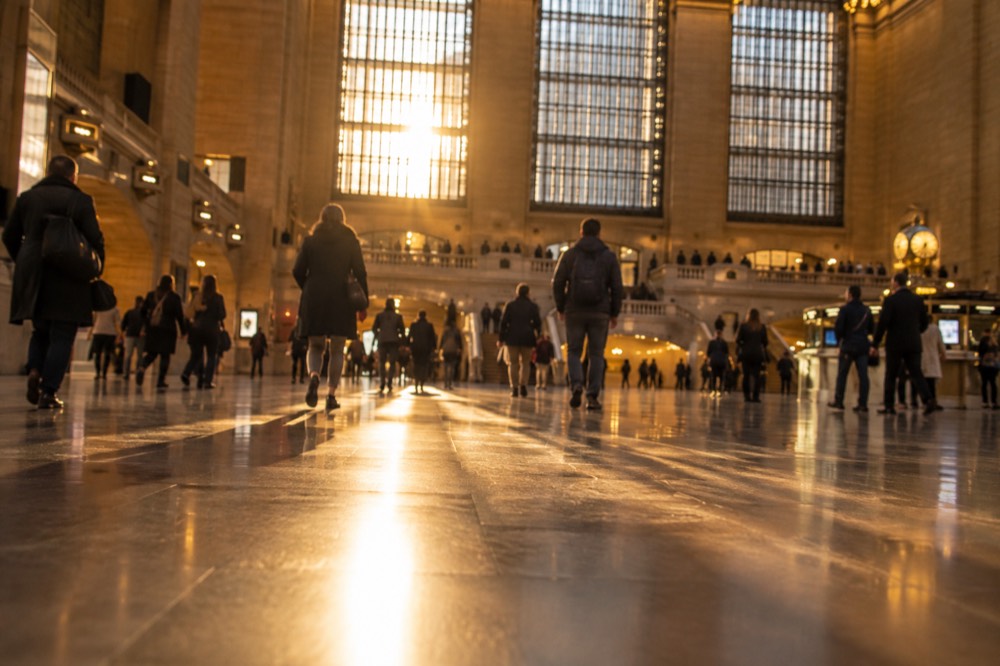
What surprises many first-time visitors is the scale of the interior. The main concourse is one of the largest public interior spaces in the city, and photographs do not prepare you for the noise of it, which is a strange, echoing hum of announcements, footsteps, and conversation. Stand still for two minutes and you will hear it settle into a rhythm.
The terminal also anchors a neighborhood worth exploring on foot. The blocks east of it climb into Midtown Manhattan office territory, while a short walk south lands you in the Financial District direction along the 4 and 5 trains. Most visitors, though, pair Grand Central with Rockefeller Center or Times Square, both of which sit within an easy walk of the 42nd Street corridor.
How Do You Get to Grand Central Terminal?
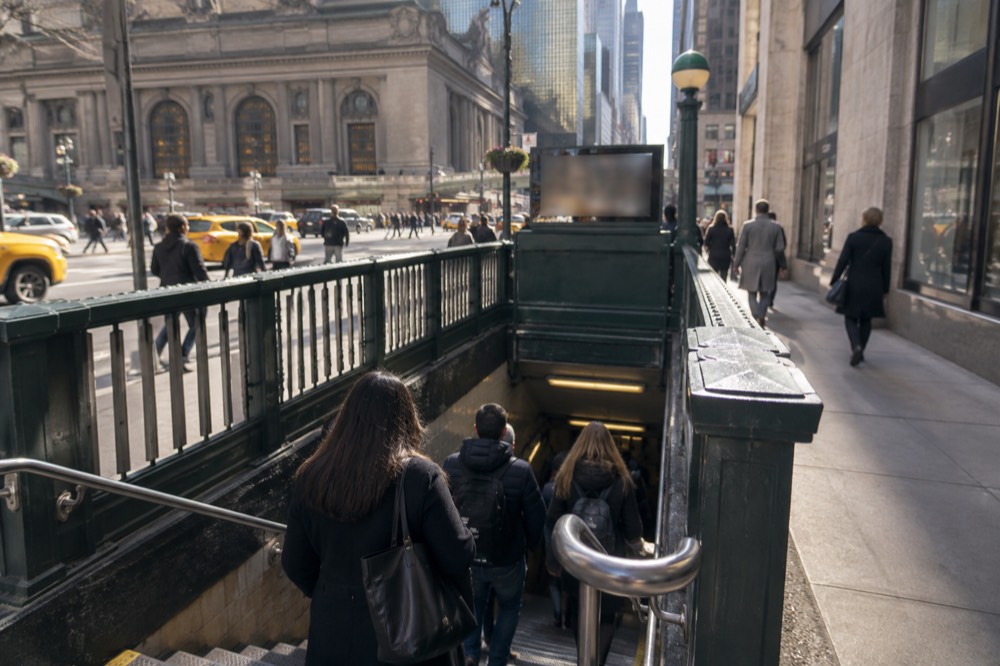
The subway is the practical answer. The Grand Central-42 St station complex sits directly beneath the terminal, served by the 4, 5, 6 and 7 trains plus the 42nd Street shuttle to Times Square. A single ride costs $3.00 paid by tapping a contactless card or phone with OMNY, and the fare system now caps your weekly spending automatically. There is no longer any pass to buy in advance, and no MetroCard to purchase either.
That last point deserves emphasis, because most New York guides still tell you to buy a 7-day unlimited MetroCard when you land. As of 1 January 2026 the MTA no longer sells or refills MetroCards at all, per the transit agency's own fares page (mta.info). The weekly value now comes from automatic OMNY fare capping at $35 over a rolling seven-day window, which applies with no pass to buy and no decision to make. Tap the same card or device every time, and once you hit the cap, the rest of that week's subway and local bus rides are free.
| Fare item | Price | Notes |
|---|---|---|
| Single subway or local bus ride | $3.00 | Tap with OMNY, contactless card or phone |
| OMNY weekly cap | $35 | Automatic, rolling 7-day window, same card or device required |
| Children under 44 inches | Free | Up to three with a fare-paying adult |
| Express bus | $7.25 | Not needed for Grand Central |
| Single-Ride OMNY ticket (paper) | $3.50 | From a machine, valid 2 hours |
The practical takeaway: getting to Grand Central costs $3.00 from anywhere the subway reaches, and a week of sightseeing around the city costs no more than $35 per person in fares no matter how many rides you stack. If you are planning the rest of your itinerary, the money page of things to do in NYC pairs well with a transport primer, and the NYC subway guide covers the system in more depth.
Walking is the other realistic option for anyone already in Midtown. The terminal sits at 42nd Street and Park Avenue, about a mile east of the Hudson riverfront attractions. The walk from Times Square along 42nd Street takes most people fifteen to twenty minutes and passes the library on the way, which makes a pleasant chain: Times Square, the New York Public Library, then Grand Central.
A guided visit changes the experience considerably, and two options cover the terminal from different angles.
What Does a Visit to Grand Central Terminal Cost?
Entering Grand Central Terminal costs nothing. There is no ticket, no gate, and no security line for the main concourse or the dining level. The costs only begin if you want a guide: the Secrets of Grand Central Terminal tour runs from $39 per person for a 90-minute guided walk, and the free GuruWalk alternative to Midtown's landmarks costs nothing upfront, with guides working for tips. Food and shopping inside are priced like Midtown, so budget accordingly.
For most visitors, the free-entry fact is the headline. You can walk in off 42nd Street, stand in the main concourse for as long as you like, photograph the ceiling, find the whispering gallery, and eat lunch in the dining concourse without ever buying a ticket for the building itself. The terminal is one of the few major Manhattan landmarks where the default visit costs exactly zero.
The comparison below shows what your money buys if you do want a guide.
| Option | Upfront cost | Duration | What you get |
|---|---|---|---|
| Self-guided visit | Free | As long as you like | Concourse, ceiling, whispering gallery, dining level |
| Secrets of Grand Central Terminal tour | From $39 per person | 1 hour 30 minutes | Guided walk, hidden details, back stories |
| GuruWalk Midtown landmarks walk | Free, tip-based | 2 hours | Times Square, Grand Central, Rockefeller in one walk |
| Museum of Broadway ticket | From $44 per person | 1 to 2 hours | Self-paced Broadway history, near the Theater District |
The Secrets tour, run as a small-group walk, is the pick for travelers who love hidden details over big landmarks. You get the whispering gallery, the celestial ceiling and the back stories most commuters rush past every day without ever noticing. For anyone weighing it against the free option, the difference is depth: the paid tour spends its full 90 minutes inside the terminal, while the free GuruWalk walk splits its two hours between Times Square, Grand Central and Rockefeller Center. Both are honest products, but they answer different questions.
What Should You Actually See Inside Grand Central Terminal?
The four essentials are the main concourse, the celestial ceiling, the whispering gallery, and the Oyster Bar and dining concourse below. The main concourse is the grand room you have seen in photographs; the ceiling holds a painted sky with a famous deliberate error; the whispering gallery near the Oyster Bar carries sound across an archway; and the dining level feeds everyone from commuters to tourists. Together they fill a comfortable hour.
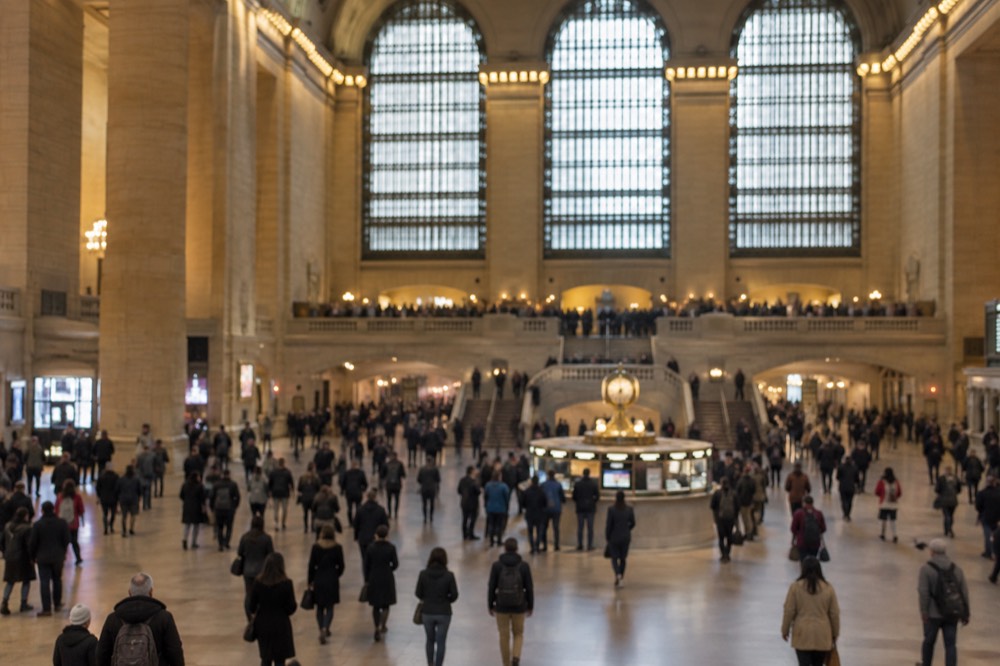
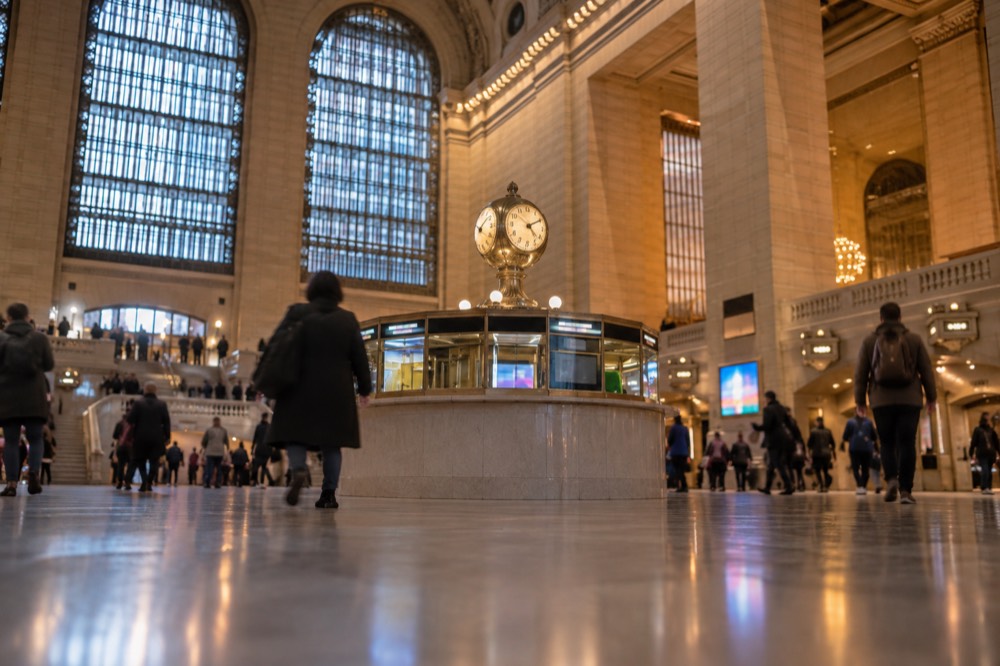
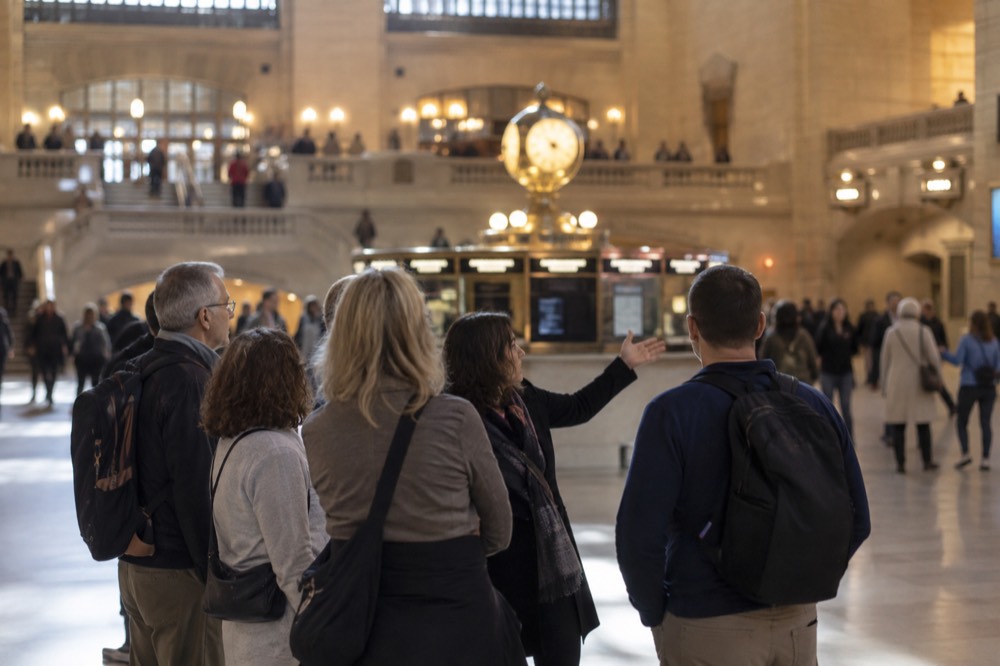
The main concourse is the reason people come. It is a vast room with a four-faced clock at its center, and the crowd flows around it in every direction. The clock face is made of opal, though you would never know it from the floor, and the information booth beneath it is the classic meeting spot. Locks of people arrange to meet "under the clock," and the phrase means exactly this spot.
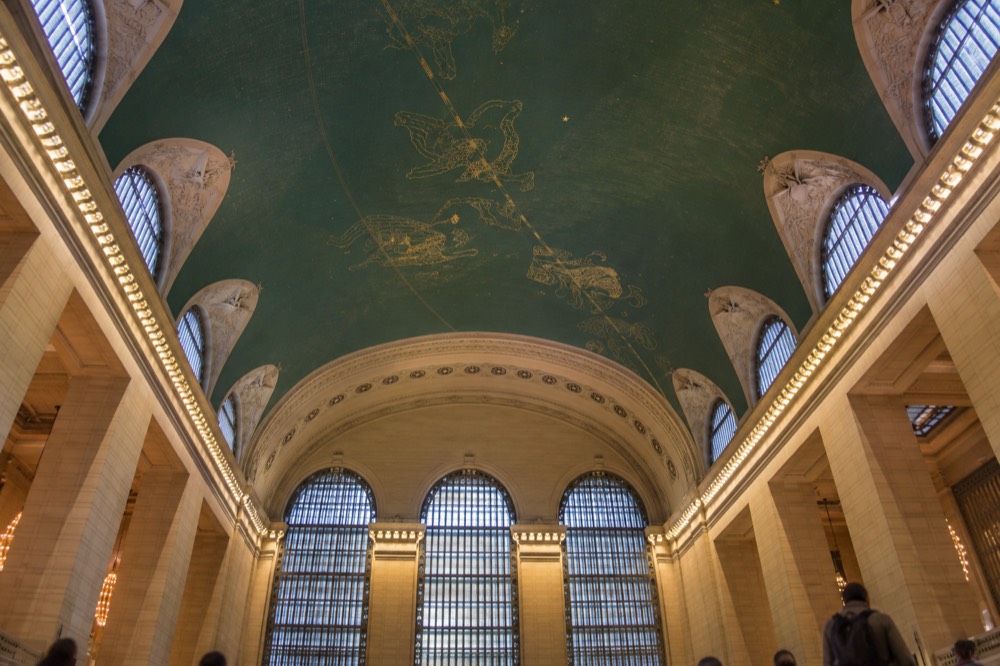
The ceiling above it is painted with a sky of gold stars and constellations. The famous detail is that the sky is painted in reverse, a mirror image of the heavens, and the story guides tell is that it was an error the painter noticed too late. Whether the tale is exactly as told or a piece of friendly legend, the ceiling itself is unmissable. Look for the small dark rectangle near one constellation, a patch left unrestored to show how dirty the ceiling had become before a restoration cleaned it.
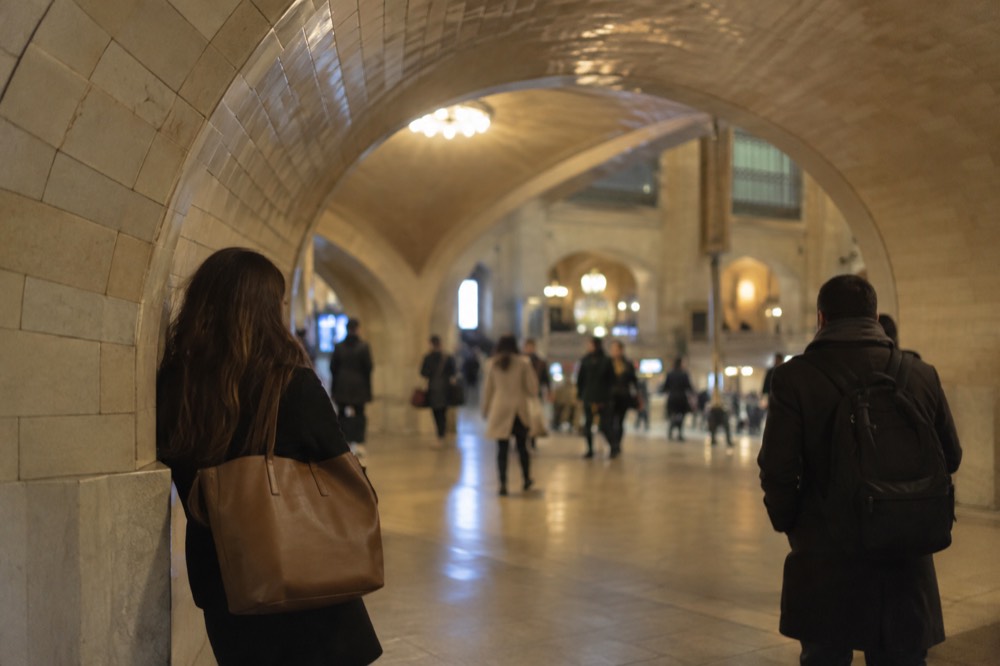
The whispering gallery sits outside the Oyster Bar on the dining level. It is a low tiled archway, and if two people stand in opposite corners facing the wall, a whisper travels cleanly across the curve. It is free, it takes two minutes, and it delights children more reliably than almost anything else in Midtown. The acoustics are a fluke of the Guastavino tile work, not a designed feature.
The dining concourse sits below the main floor and runs the range from quick counters to the landmark Oyster Bar itself. It is the practical answer for lunch in a part of Midtown where restaurant tables are scarce at noon, and the food is better than a food court has any right to be.
When Is the Best Time to Visit Grand Central Terminal?
Early morning on a weekday is the quietest window, roughly 7 to 9am, when the commuter rush is thinning and the tour groups have not yet arrived. Midday is the busiest, and the concourse is at its most crowded between noon and 2pm. Evening after 7pm empties out again, and the ceiling lights give the room a different character. Weekend mornings are the easiest compromise for families.
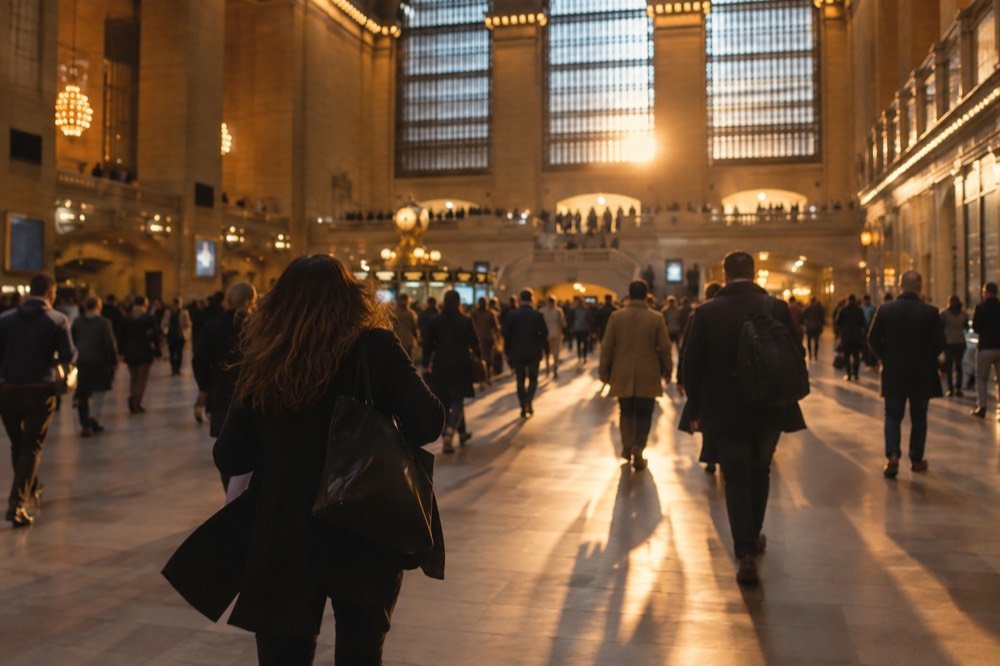
The rhythm of the terminal follows the workday. The weekday morning rush fills the concourse with people moving fast, and it is genuinely difficult to stand and stare without becoming an obstacle. The honest advice is to see the rush once from the edge of the room, because it is part of the show, then return to the center after 10am when the flow thins.
Tour groups cluster between 11am and 3pm, which is when the whispering gallery is loudest and hardest to test properly. If the whispering gallery matters to you, go early or go late. The archway needs quiet to work, and a crowd of twenty people defeats the acoustics entirely.
| Time window | Crowd level | Best for |
|---|---|---|
| Weekday 7-9am | Busy but purposeful | Watching the commuter rush from the edge |
| Weekday 10am-11am | Moderate | Photographing the concourse and ceiling |
| Weekday noon-2pm | Very busy | Lunch in the dining concourse, little else |
| Weekday after 7pm | Quiet | The whispering gallery, evening light |
| Weekend morning | Moderate | Families, relaxed exploring |
Season matters less here than at outdoor attractions, which is one of the terminal's virtues. It is an all-weather, all-season destination, and it earns a place on any rainy day activities in NYC list precisely because the whole visit happens indoors. In July, the wettest month in New York by NOAA's Central Park normals at 4.60 inches of precipitation, an indoor landmark with a dining level is a genuinely useful plan B.
Is Grand Central Terminal Worth Visiting with Kids?
Yes, and for one specific reason: the whispering gallery. Children find the archway's trick genuinely magical, and it costs nothing. The dining concourse handles picky eaters better than most Midtown restaurants, the terminal is fully enclosed and stroller-friendly, and the subway ride in is itself part of the entertainment. Give it an hour, not a morning, and it earns its slot on a family itinerary.
The building works for families because it is low-commitment. There is no ticket to buy, no line to stand in, and no schedule to keep. A family can arrive by subway, spend forty minutes on the concourse and the whispering gallery, eat in the dining level, and leave without anyone feeling shortchanged. The failure mode is the opposite: planning too much time and expecting a museum's worth of content from a train station.
The subway journey in deserves a mention for families. Up to three children under 44 inches tall ride free with a fare-paying adult, and the 7 train's platform at Grand Central sits deep underground, which makes the arrival feel like an event. For a fuller family plan, the things to do in NYC with kids guide places the terminal in context with the rest of the city.
What Is Near Grand Central Terminal?
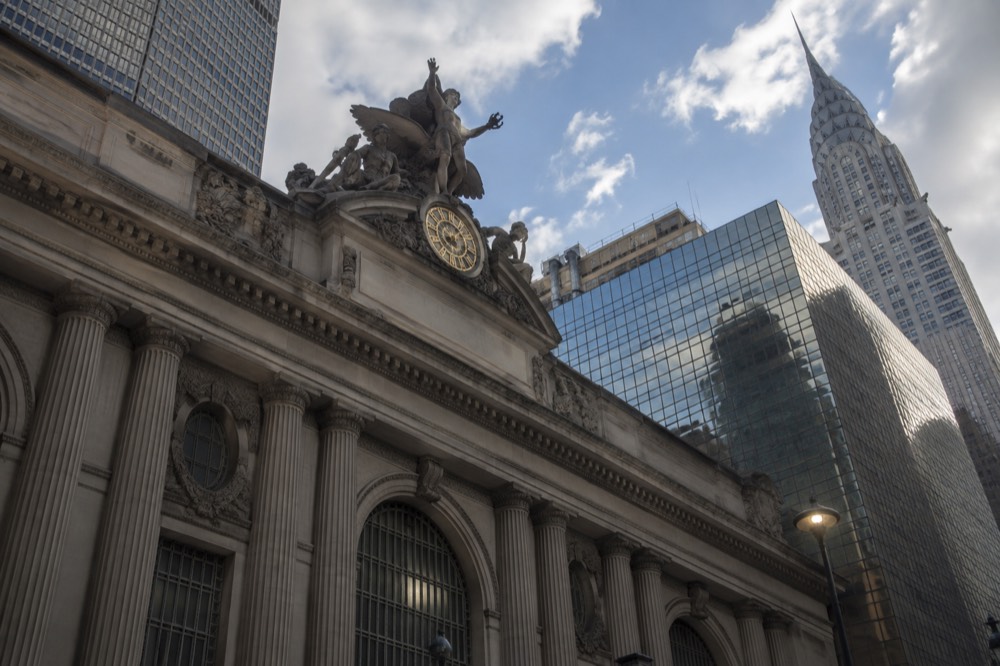
Rockefeller Center is a five-minute walk west, Times Square about fifteen minutes along 42nd Street, the New York Public Library sits between them, and the Chrysler Building looms a block east at 42nd Street and Lexington Avenue. SUMMIT One Vanderbilt sits directly next to the terminal and is the natural pairing, since you can walk from the concourse to the ticketed observation deck without going outside.
The one-block cluster around the terminal is unusually dense. SUMMIT One Vanderbilt, with its mirrored rooms and glass ledges, shares the block and makes the easiest two-stop itinerary in Midtown: an hour in the terminal, then a timed ticket up the tower. The SUMMIT One Vanderbilt guide covers the deck in detail.
Rockefeller Center, five minutes west, adds Top of the Rock, the Rockefeller Center attractions and, in winter, the ice rink and the tree. The Empire State Building sits further south and west, about a mile away, which is a subway ride rather than a walk for most people.
For visitors who want a guided sweep of the whole Midtown set rather than working out it alone, the free GuruWalk walk covering Times Square, Grand Central and Rockefeller Center is the honest budget option, run on tips on GuruWalk.
Can You Visit Grand Central Terminal on a Layover or Short Trip?
Yes, and it is one of the best short-visit landmarks in the city precisely because it needs no ticket and no reservation. A layover visitor with two spare hours can reach the terminal by subway from any of the three airports, spend an hour inside, and be back en route without ever having booked anything. The only paid element worth pre-booking is a guided tour, and even that can often be arranged close to the day.
The airport math matters here. From JFK, the subway plus AirTrain costs $11.75 each way. From LaGuardia, the free Q70 LaGuardia Link bus plus one subway fare costs $3.00 total, the cheapest airport run in the city. From Newark, the NJ Transit train plus AirTrain costs $16.80, though weekday travelers should note that AirTrain service to the rail station is currently replaced by shuttle buses between 5am and 3pm. The layover in NYC guide builds the full itinerary for a short stop.
For a one-day visitor, Grand Central earns its slot because it combines three things: it is free, it is indoors, and it sits at a subway interchange that makes the next stop easy. A realistic short-trip chain is the terminal, Rockefeller Center, and a walk to Times Square, all within ninety minutes of walking and one subway tap.
Is a Guided Tour of Grand Central Terminal Worth It?
For most visitors, yes, because the terminal's best content is invisible without a guide. The ceiling's deliberate error, the whispering gallery's acoustics, the unrestored patch, and the building's survival against demolition threats are stories you can walk past entirely on your own. The paid secrets tour costs from $39 per person for 90 minutes, and the free GuruWalk alternative covers the terminal as part of a wider Midtown walk.
The honest framing is that Grand Central rewards explanation. A self-guided visitor sees a beautiful room. A guided visitor learns why the sky is painted backwards, why a small dark rectangle was left dirty on purpose, and how the terminal survived the era when its demolition was a live proposal. None of that is on a plaque in a way that lands.
The paid option is the Secrets of Grand Central Terminal tour, a 90-minute guided walk rated 4.9 from more than two thousand reviews, priced from $39 per person. It suits travelers who love hidden details over big landmarks and want the full time spent inside the building. Check availability
The free option, run on tips on GuruWalk, spends part of its two hours on the terminal and part on Times Square and Rockefeller Center. It is the better fit for a first-day orientation to Midtown, while the paid tour is the better fit for someone who has already seen the big sights and wants the deep cut.
For visitors pairing the terminal with an art stop, the Metropolitan Museum of Art sits a short ride uptown on the 4, 5 or 6 trains, and a guided highlights walk there covers the marquee rooms in a couple of hours.
Common Questions About Grand Central Terminal
The questions visitors ask most are about cost, access, timing and the difference between the terminal and the station next door. The short answers: entry is free, the subway is the way in, the whispering gallery is the must-see detail, and the paid tour is worth it for travelers who want the stories rather than just the room. The full set of answers follows.
Is Grand Central Terminal free to visit?
Yes. There is no ticket, no gate and no entry fee for the main concourse, the whispering gallery or the dining level. You only pay if you book a guided tour or buy food and shopping inside.
What is the difference between Grand Central Terminal and Grand Central Station?
"Terminal" is the correct name, because trains end their journeys here rather than passing through. Locals say both, but the building's own signage and the railroad that operates it use Terminal.
How do I get to Grand Central Terminal?
Take the 4, 5, 6 or 7 train to Grand Central-42 St, or the 42nd Street shuttle from Times Square. A single ride costs $3.00 with OMNY, and weekly spending caps automatically at $35 with no pass to buy.
What is the whispering gallery?
A low tiled archway on the dining level near the Oyster Bar. Two people standing in opposite corners facing the wall can whisper to each other across the curve. It is free and takes two minutes, but it needs a quiet room to work.
How long should I spend at Grand Central Terminal?
About an hour for the concourse, the ceiling and the whispering gallery, plus mealtime if you are eating in the dining concourse. It is a stop on a Midtown itinerary, not a half-day destination on its own.
Is Grand Central Terminal worth visiting with kids?
Yes. The whispering gallery delights children, the dining level handles picky eaters, and the whole visit is indoors and free. Up to three children under 44 inches tall ride the subway free with a fare-paying adult.
The terminal closes only briefly overnight and otherwise runs continuously, which makes it one of the most forgiving landmarks in the city to plan around. Arrive by subway, look up before you look around, and let the ceiling do the rest.