Guggenheim Museum Tickets: Prices, Hours and How to Book
The Guggenheim charges $30 standard adult admission, drops to $16 during exhibition changeover weeks, and runs pay-what-you-wish windows on Tuesday and Sunday afternoons. Here is what each option buys and how to time a visit.
Short answer
A standard adult Guggenheim ticket costs $30, with a reduced $16 rate during exhibition changeover periods. Pay-what-you-wish windows run Tuesdays and Sundays 4:00-5:30pm with a $1 minimum. Children under 12 enter free, and the museum is open daily 10:30-17:30.
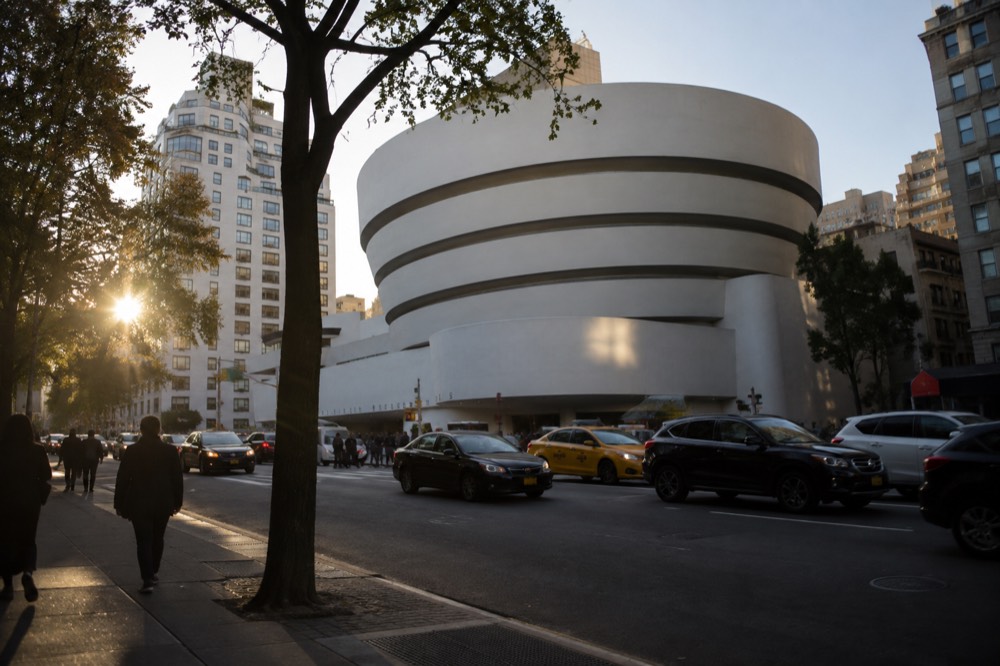
The Solomon R. Guggenheim Museum is the one major New York museum where the building competes with the collection. Frank Lloyd Wright's spiral ramp curls up the inside of the Fifth Avenue landmark, and the architecture alone pulls visitors who could not name a single canvas inside. That popularity shapes everything about ticketing: the museum sells timed entry, runs genuinely cheap pay-what-you-wish windows, and drops its headline price to $16 during exhibition changeover weeks when some galleries sit empty.
This guide lays out what each Guggenheim ticket option costs, when the discounts apply, what the ticket actually covers, and how to fit the museum into an Upper East Side day. Every price below comes from the museum's own published information or from verified box-office data, and where a figure depends on the calendar, it says so plainly.
How Much Do Guggenheim Museum Tickets Cost?
A standard adult Guggenheim ticket costs $30, with visitors aged 12-17 paying $19 and children under 12 entering free. During exhibition changeover periods the adult rate drops to $16, and the youth rate to $12 with student ID. Pay-what-you-wish windows run Tuesdays and Sundays from 4:00pm to 5:30pm, with a suggested $10 contribution and a $1 minimum, so the cheapest legal entry into the museum is one dollar.
The two-price structure is the thing most guides flatten into a single number. The Guggenheim genuinely operates at $30 for most of the year and $16 for stretches when its main galleries close to install new shows. A live check of the museum's pricing found $16 in force across a window covering 3 August to 17 September 2026, a changeover period. Both numbers are real states of the same scheme, not a discrepancy.
That creates an odd planning decision. A visitor who lands during changeover pays nearly half price but sees fewer special exhibitions. One who times a visit to an opening week pays full freight and gets the new show. Neither is a trap; the museum prices honestly for what is on the walls.
| Ticket type | Price | Notes |
|---|---|---|
| Adult, standard | $30 | Full collection and open exhibitions |
| Adult, exhibition changeover | $16 | Reduced rate while galleries reinstall |
| Youth 12-17 | $19 | $12 with student ID during changeover |
| Children under 12 | Free | No ticket needed |
| Pay-what-you-wish | $1 minimum, $10 suggested | Tuesdays and Sundays, 4:00-5:30pm |
Booking through a reseller changes none of these numbers, but it does buy a reserved timed slot and a skip of the ticket line. For travelers stacking several museums into one trip, the Guggenheim Museum entry ticket is the straightforward option, and there is a case for checking it against a multi-attraction pass first, which this guide covers further down.
When Are the Pay-What-You-Wish Windows at the Guggenheim?
Pay-what-you-wish admission runs Tuesdays and Sundays from 4:00pm to 5:30pm, with a $1 minimum and a $10 suggested contribution per person. Advance reservation is strongly recommended because the window sells out, and a limited number of on-site tickets are held back for the day. Older guides that point to Saturday evening are out of date; the current windows are Tuesday and Sunday late afternoons only, so plan around those two days.
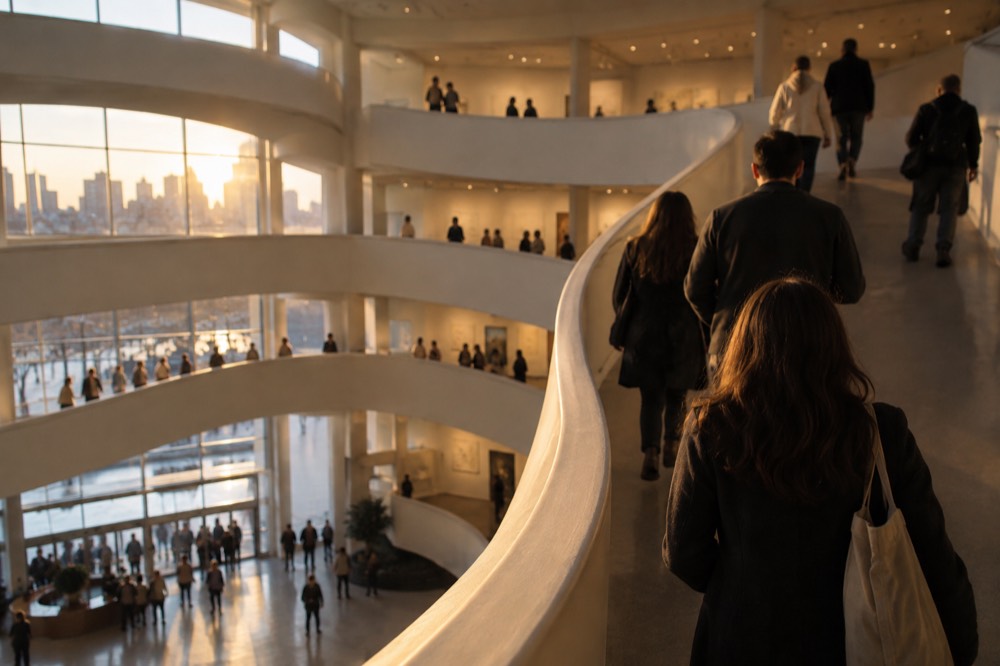
The 90-minute window is short, and the museum is upfront that capacity is limited. Two practical consequences follow. First, the 4:00pm crowd is real: everyone who wants the discount arrives at the same moment, and the rotunda fills quickly. Second, 90 minutes is enough for the permanent collection ramp if you move with purpose, but tight if you read every wall label. The spiral works in your favor here, because the ramp is a single continuous route: start at the bottom or the top and let the building pace you.
A visitor with flexibility should treat the window as a bonus rather than a plan. If Tuesday or Sunday afternoon already fits the itinerary, the discount is free money. If it would force a rushed visit or a detour, the $30 standard ticket bought for a quieter morning delivers a better hour in the building.
Is It Worth Buying a Skip-the-Line Guggenheim Ticket?
A skip-the-line ticket is worth it mainly during peak periods: exhibition openings, weekend afternoons, the pay-what-you-wish windows, and the holiday season from late November through December. At other times, especially weekday mornings, the Guggenheim's ticket line moves fast enough that prebooking buys convenience rather than access, and walk-up purchase is a perfectly reasonable choice.
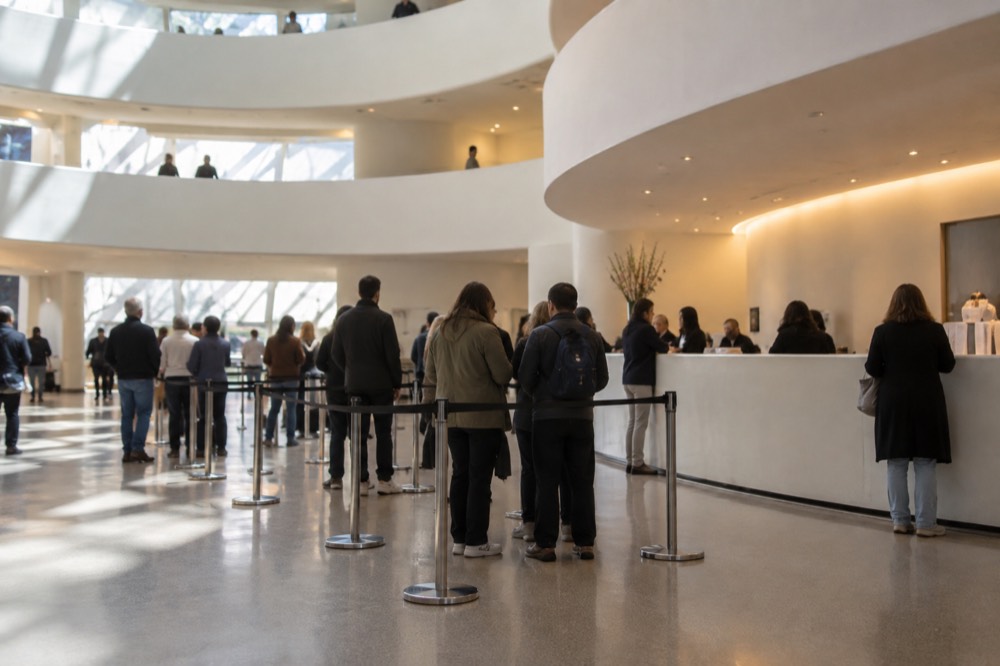
The honest breakdown looks like this. The Guggenheim is a single-building museum with a controlled entrance, not a sprawling campus, so its queues never reach the scale of the Empire State Building or the Statue of Liberty ferries. What it does have is concentration: everyone arrives on Fifth Avenue at once when a big show opens, and the discounted windows concentrate demand further. A reserved timed entry turns that crowd into a non-event.
For most travelers the deciding factor is the rest of the day. The Guggenheim sits at the top of Museum Mile, walking distance from the Metropolitan Museum of Art and the Frick-era mansions of the Upper East Side. A prebooked slot pins your arrival time, which helps when you are chaining two museums into one afternoon and hurts when you like to wander. Reserved entry pairs naturally with a broader sightseeing plan; the things to do in NYC rundown covers how the museum slots into a first visit.
For visitors who want a guide attached rather than just a ticket, there is a different product worth knowing about: a small-group highlights tour of the Metropolitan Museum of Art nearby, which suits travelers doing Museum Mile in one push.
What Do Guggenheim Tickets Actually Include?
Every Guggenheim admission ticket covers the permanent collection, all open special exhibitions, and full access to the rotunda ramp and its galleries for the whole day of your visit. There is no separate fee for the spiral itself, no premium tier beyond standard admission, and no add-on charge for temporary shows that are open on the day, unlike museums that layer exhibition surcharges onto a base ticket.
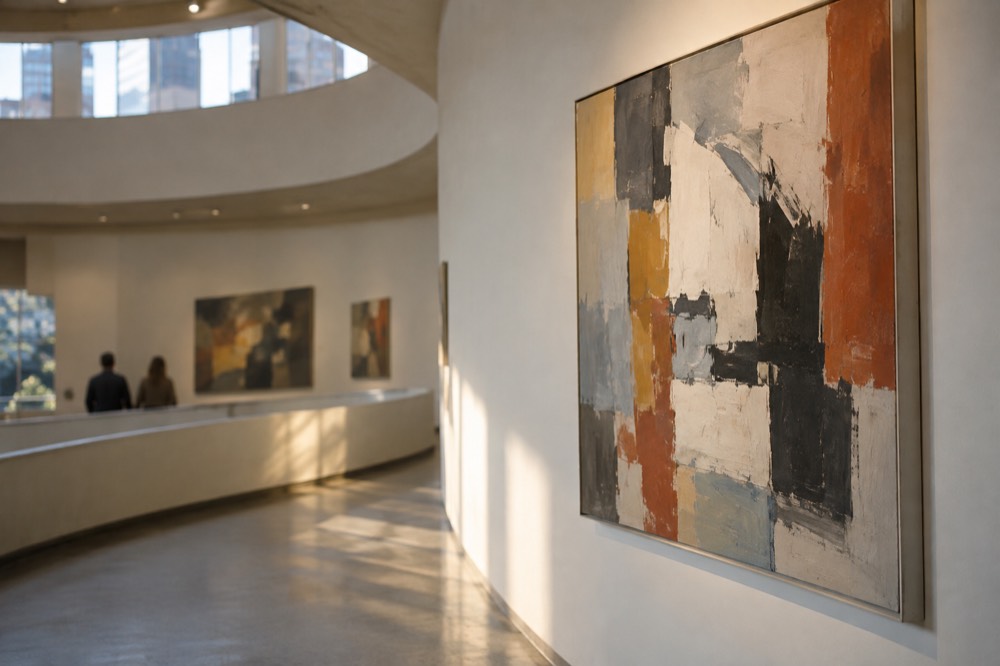
That flat structure simplifies budgeting. The $30 you pay, or the $1 minimum in the discount window, is the whole cost of the art. The museum does not sell a "spiral plus collection" bundle because no such split exists.
What the ticket does not include is food, and the museum's cafe prices run at normal Upper East Side museum-cafe levels. Visitors planning a long stay should eat beforehand along Lexington or Madison Avenue, where the neighborhood's restaurants sit a few blocks east.
One structural point matters for expectations. The Guggenheim's gallery space is smaller than its fame suggests. The rotunda is magnificent, but the museum hangs far less work than the Metropolitan or MoMA. Two to three hours covers the building comfortably at reading pace, less if you treat the ramp as the main event. Visitors who want a full day of art should pair the Guggenheim with a second museum; the Metropolitan Museum of Art is a fifteen-minute walk down Fifth Avenue, and one Met ticket covers both the Fifth Avenue building and The Cloisters on the same day.
How Does the Guggenheim Compare with Other Museum Mile Museums?
The Guggenheim's $30 standard adult price matches MoMA and the Whitney exactly, undercuts nothing on Museum Mile, and sits far below the two-attraction potential of a single Met ticket. Its distinguishing asset is the building itself: no other museum in New York delivers an architectural experience this integrated with the collection, which makes it the strongest pick for visitors who care about design as much as art.
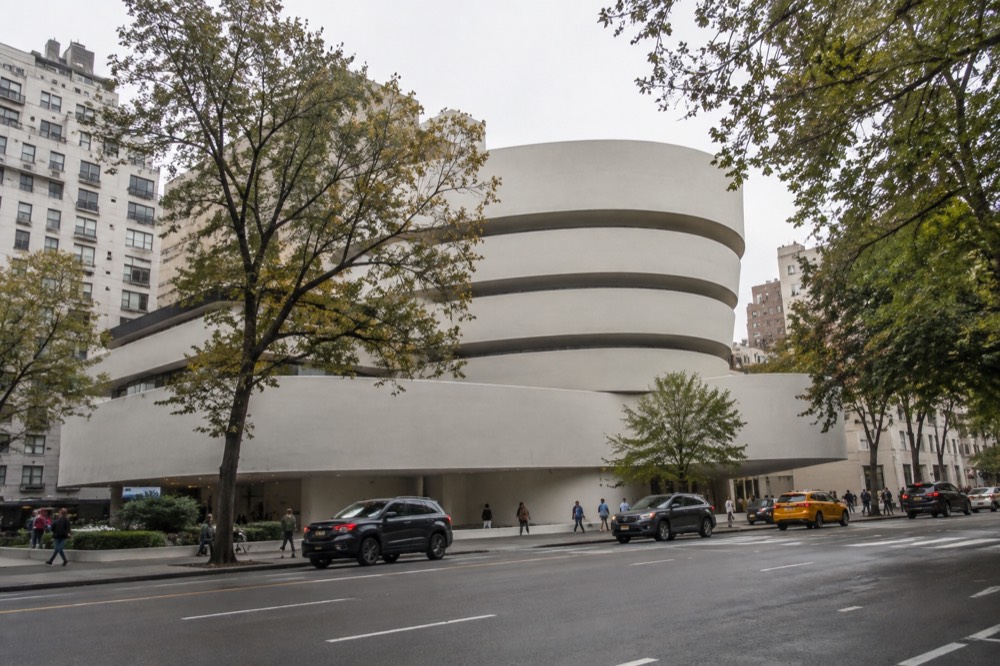
Price is a weak differentiator among the big New York museums because most have converged on the same number. The real comparison is what each $30 buys and when each museum can be had for less. The table below pulls together the verified figures for the major Manhattan museums. Everything else covered here is indexed on New York City Travel Guide.
| Museum | Standard adult | Best discount window | Free for |
|---|---|---|---|
| Guggenheim | $30 ($16 changeover) | PWYW Tue & Sun 4:00-5:30pm | Under 12 |
| MoMA | $30 | Free Fri 5:30-8:30pm, NY State residents only | 16 and under |
| Whitney | $30 | Free Fri 5:00-10:00pm, everyone | 25 and under |
| The Met | $30 | PWYW for NY State residents and NY/NJ/CT students only | 12 and under |
| Intrepid | $38 | 50% off for NYC residents | 4 and under |
Two patterns jump out. First, the Whitney and MoMA offer the most generous free windows for out-of-state visitors, while the Guggenheim's discount is small in amount but unrestricted in who can use it. Second, the Guggenheim is the only museum on the list whose headline price itself moves, dropping to $16 during changeovers. A flexible visitor can exploit that: the museum publishes its exhibition calendar, and a visit timed to a changeover week trades the new show for a near-half-price ticket.
For a Museum Mile day, the classic pairing is Guggenheim plus the Met, which can be walked between them in fifteen minutes. The MoMA guide covers the Midtown alternative for visitors based downtown of the park.
What Are the Guggenheim's Hours and the Best Time to Visit?
The Guggenheim is open daily from 10:30am to 5:30pm, with no late night in the standard week. The best visiting window is a weekday shortly after the 10:30am opening, when the ramp is quietest; the worst is weekend afternoons and the final hour before closing on discount days, when the pay-what-you-wish crowd compresses into the same 90 minutes.
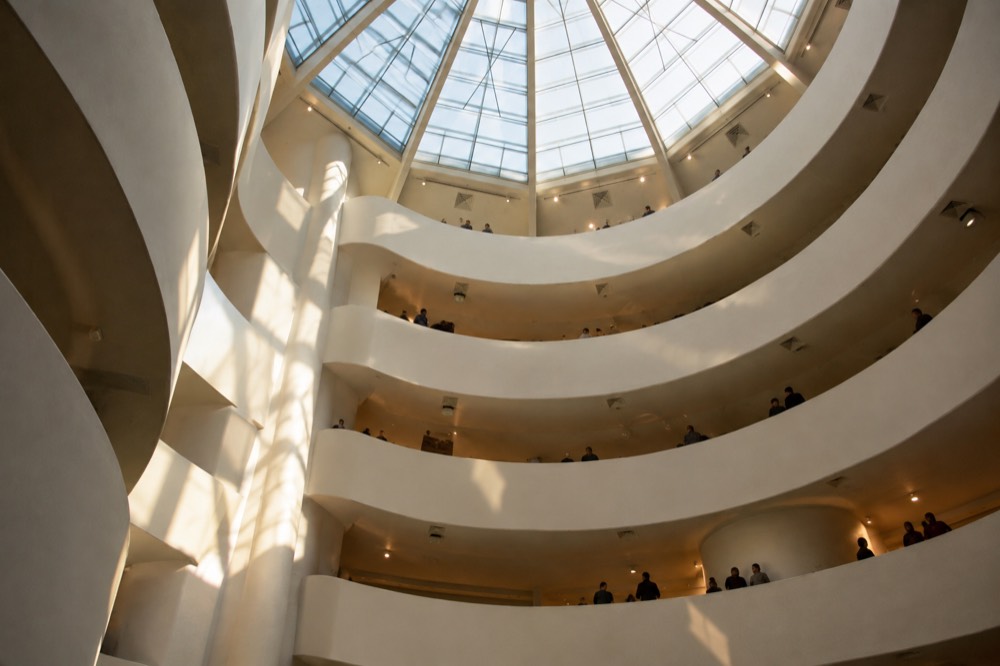
Unlike MoMA and the Whitney, which both run Friday late openings, the Guggenheim keeps uniform hours every day. That removes the "Friday night museum" play from your itinerary entirely. The corollary: weekday mornings are genuinely calm here in a way they are not at the bigger museums, because the Guggenheim draws fewer school groups and tour buses than the Met or the Natural History Museum across the park.
Seasonally, the museum's attendance follows the exhibition calendar more than the weather. Opening weeks for major shows are busy regardless of month, and the stretch from late November through December brings the holiday crowds up Fifth Avenue. A quiet visit is easiest in late January and February, with the trade-off that an exhibition changeover may be in force, which is exactly when the $16 rate applies: fewer people, lower price, less on the walls.
| Time slot | Crowd level | Notes |
|---|---|---|
| Weekday 10:30am-noon | Lowest | Best photography light in the rotunda |
| Weekday afternoon | Moderate | School groups taper after 2:00pm |
| Weekend morning | Busy | Arrive at opening |
| Tue/Sun 4:00-5:30pm | Very busy | Pay-what-you-wish window concentrates demand |
| Exhibition opening week | Very busy | Book timed entry regardless of day |
Should You Buy Guggenheim Tickets Through a Pass?
The Guggenheim participates in the New York CityPASS bundle, which lists its box-office value at $30, so a pass only pays off if you will use enough of its other attractions to beat the $149 adult pass price against à la carte tickets. For a one-museum visit the pass is irrelevant; for a five-attraction first-timer itinerary the Guggenheim slots in as one of the choices, not a reason to buy.
The arithmetic is straightforward. CityPASS costs $149 adult and covers a choice of five attractions from an eleven-attraction menu; the Guggenheim is on that menu at its $30 value. The pass beats individual purchase only when your chosen five sum past $149, and the heavy lifters on that list are the Empire State Building at $75.12 box office, Top of the Rock at $71.86 and Edge at $62.06. A bundle built around those three plus the Guggenheim and one more clears the bar comfortably.
The Explorer-style passes work differently: you buy a number of visits rather than a fixed set, which suits travelers whose plans are loose. The comparison of New York CityPASS options breaks down which bundle fits which itinerary.
One warning that is easy to act on: at least one formerly major New York pass, The Sightseeing Pass, ceased trading in 2025 and is no longer selling. Any guide still recommending it is out of date, and any old pass voucher from that company is not something to build a Guggenheim visit around.
How Should You Plan a Full Guggenheim Visit?
Plan two to three hours inside the museum, arriving at the 10:30am weekday opening, then walk fifteen minutes down Fifth Avenue to the Metropolitan Museum of Art for the afternoon, since both sit on Museum Mile and the pairing is the most efficient art day in New York. Enter the Guggenheim, ride to the top of the ramp and walk the spiral downward, which saves your legs and puts the collection in the museum's intended sequence.
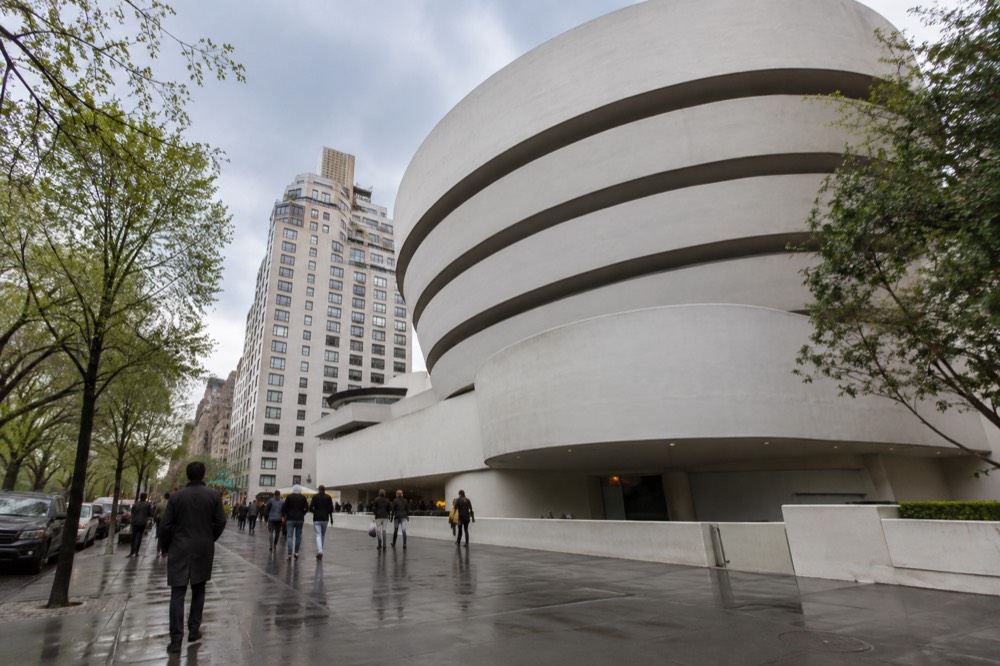
The downward strategy is not a hack, it is the building's design. Wright intended visitors to take the elevator up and drift down the gradual ramp, meeting the art at an easy grade instead of climbing it. Walking up works too, and some prefer finishing in the rotunda's skylit dome, but going up first is kinder to anyone with tired feet or mobility limits. The ramp is continuous, so there are no navigation decisions to make once you commit to a direction.
Getting there is simple by subway. The 4, 5 and 6 trains run up Lexington Avenue with a stop at 86th Street, about a ten-minute walk west to Fifth Avenue. The 6 train's local stop at 96th Street works for approach from the north. Fares are $3.00 per ride with contactless payment, and the MTA's automatic weekly fare cap of $35 means a week of museum-hopping rides stops charging after twelve paid taps on the same card or device. One caution from recent MTA policy: the 7-day unlimited MetroCard no longer exists, so ignore any older guide telling you to buy one at the airport.
| Itinerary block | Timing | Notes |
|---|---|---|
| Guggenheim arrival | 10:15am | Doors at 10:30am, queue forms early on weekends |
| Rotunda walk, top to bottom | 10:30am-1:00pm | Cafe break possible mid-visit |
| Walk to the Met | 1:00-1:20pm | Fifteen minutes down Fifth Avenue |
| Met afternoon | 1:30pm onward | One ticket also covers The Cloisters same day |
For visitors who prefer modern over classical, MoMA is the substitute pairing, covered in the site's MoMA ticket guide, and a skip-the-line MoMA entry is the natural companion purchase for that version of the day.
Common Questions About Guggenheim Museum Tickets
Most questions about Guggenheim tickets come down to four things: whether the $30 price is fixed, when the pay-what-you-wish windows run, whether children need tickets, and how the changeover discount works. The answers are short. The price is $30 standard and $16 during changeovers, the discount windows are Tuesday and Sunday afternoons, children under 12 enter free, and the reduced rate applies automatically whenever the museum's main galleries are reinstalling.
How much are Guggenheim Museum tickets?
Standard adult admission is $30, with youths 12-17 at $19 and children under 12 free. During exhibition changeover periods the adult rate drops to $16 and the youth rate to $12 with student ID. Pay-what-you-wish windows on Tuesday and Sunday afternoons carry a $1 minimum.
Does the Guggenheim have a free day?
Not a full free day, but it runs pay-what-you-wish admission Tuesdays and Sundays from 4:00pm to 5:30pm, with a $1 minimum and $10 suggested. Advance reservation is recommended because the window sells out, and children under 12 are always free.
Can you buy Guggenheim tickets at the door?
Yes, walk-up purchase is available, and outside peak periods the line moves quickly. Timed-entry tickets bought in advance are worthwhile during exhibition openings, weekend afternoons and the discount windows, when demand concentrates.
Is the Guggenheim worth it if galleries are closed for changeover?
That depends on what you came for. The rotunda, the permanent collection and the building itself remain the main draw, and the $16 reduced rate prices the trade honestly. If a specific special exhibition is your reason for visiting, check the museum's exhibition calendar before booking.
How long does a Guggenheim visit take?
Two to three hours covers the building comfortably at reading pace. The gallery space is smaller than the museum's fame suggests, and the continuous ramp makes navigation effortless, so a focused visit can run shorter.
Is the Guggenheim included in New York CityPASS?
Yes, the Guggenheim is one of the attractions on the CityPASS menu at a $30 value. The $149 adult pass pays off only when your chosen five attractions sum past that price, so treat the Guggenheim as one choice in the bundle rather than a reason to buy it.
A final note on the building itself. The Guggenheim is one of the few museums where the architecture debate never settled: critics argued about Wright's spiral from the start, and visitors still split between those who find the ramp a distraction from the art and those who find it inseparable from it. Either way, it is the one New York museum you can describe without mentioning a single painting, and the ticket, at full price, at the changeover rate, or for a dollar on a Tuesday afternoon, buys the whole spiral.