One World Observatory: Tickets, Hours and Whether the View Is Worth It
One World Observatory sits at the top of the tallest building in the Western Hemisphere, and its skip-the-line ticket is the cheapest of the five major New York decks. Here is what the visit involves, what it costs and how to time it.
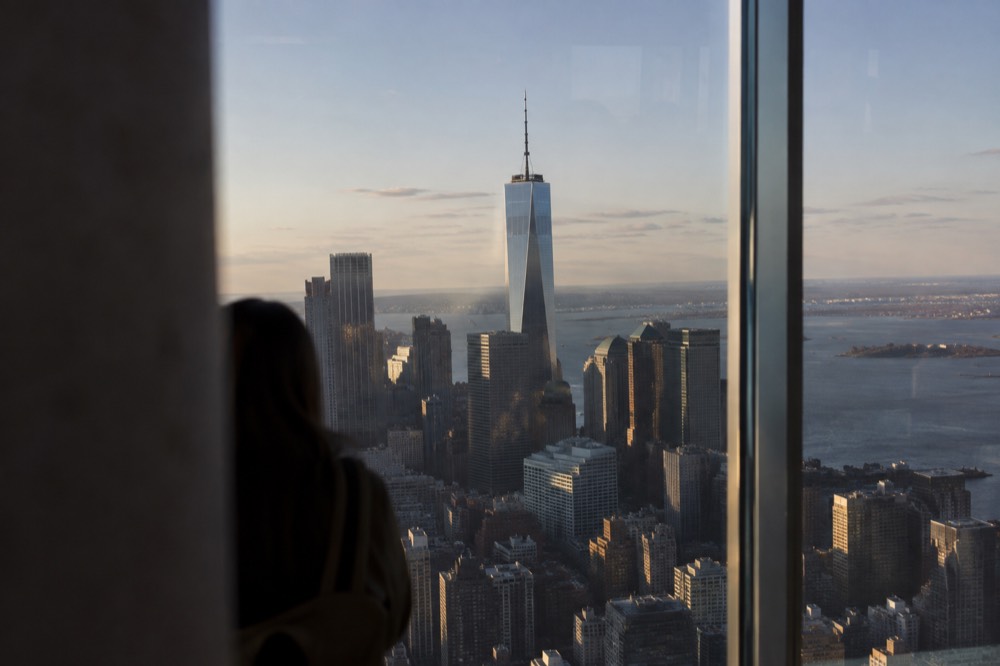
Short answer
One World Observatory is the observation deck at the top of One World Trade Center in Lower Manhattan. Adult admission starts from $39-$44 with dynamic timed pricing, and the observatory is open daily from 09:00 to 21:00. It is the tallest deck in the Western Hemisphere and the cheapest of New York's five major decks.
One World Observatory occupies the top three floors of One World Trade Center, high above the streets of the Financial District. It is the tallest observation deck in the Western Hemisphere, and it holds a second distinction that almost nobody mentions: among New York's five major decks, it is also the cheapest, with the skip-the-line ticket listed from $30.49 against $47.91 at three of its Midtown rivals. That gap, $17.42, is not a rounding error. It is the difference between this deck and the others, and it shapes the whole question of whether to come.
The observatory sits at the World Trade Center, which means a visit here lands you next to the 9/11 Memorial pools, the 9/11 Memorial & Museum and the Oculus, all within a two-minute walk. Most people treat the deck as half of a bigger downtown morning. This guide covers the tickets, the timing, the ride up, what you actually see, and an honest comparison against the other four decks, so you can decide with real numbers rather than marketing copy.
Where Is One World Observatory and How Do You Get In?
One World Observatory is inside One World Trade Center in Lower Manhattan, with the entrance on the west side of the building facing the World Trade Center campus. The observatory spans the top three floors of the tower, reached by elevators from the basement-level concourse. The nearest subway complex is WTC Cortlandt, and the Dey Street and Oculus passages connect the building to the Fulton Center hub and the PATH station without going outside.
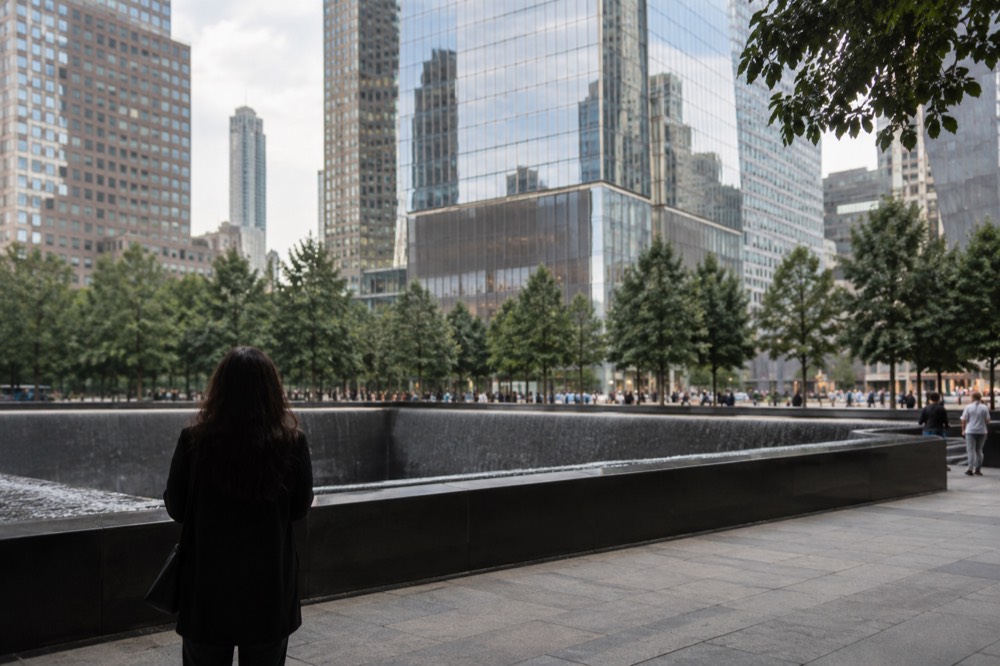
The location is the deck's biggest structural advantage over its Midtown competitors. WTC Cortlandt serves the 1 train; Fulton Center, a short walk through the Dey Street passage, serves the 2, 3, 4, 5, A, C, J and Z trains; and the adjacent Oculus carries PATH trains from New Jersey. You can reach the building from almost anywhere in the city with a single subway ride, and from New Jersey with one PATH hop.
The entrance process is worth understanding before you arrive. Security screening happens at concourse level, in the same building complex as the shopping and transit halls, so the line you join is a security line first and a ticket line second. This is why skip-the-line products have real value here: the "line" being skipped is the ticketing and boarding queue, while every visitor, ticketed or not, passes through screening. Once through, you are grouped for the elevator ascent.
Fares, for planning: a subway ride is $3.00, and the MTA's OMNY system caps your rides at $35 across a rolling seven-day period, applied automatically when you tap the same card or device every time. There is no pass to buy. The MetroCard was retired on 1 January 2026 and can no longer be purchased or refilled, so ignore any guide that tells you to buy a 7-day unlimited on arrival. It does not exist.
How Much Do One World Observatory Tickets Cost?
Adult admission to One World Observatory starts from $39-$44, using dynamic timed pricing that rises with demand, plus a $3.50 processing fee and tax on top. The cheapest way in is the skip-the-line ticket sold through the operator's live listing, which starts from $30.49 per person. Children under 6 enter free, and the observatory is not part of the CityPASS attraction lineup, so pass holders should not expect it as a choice.
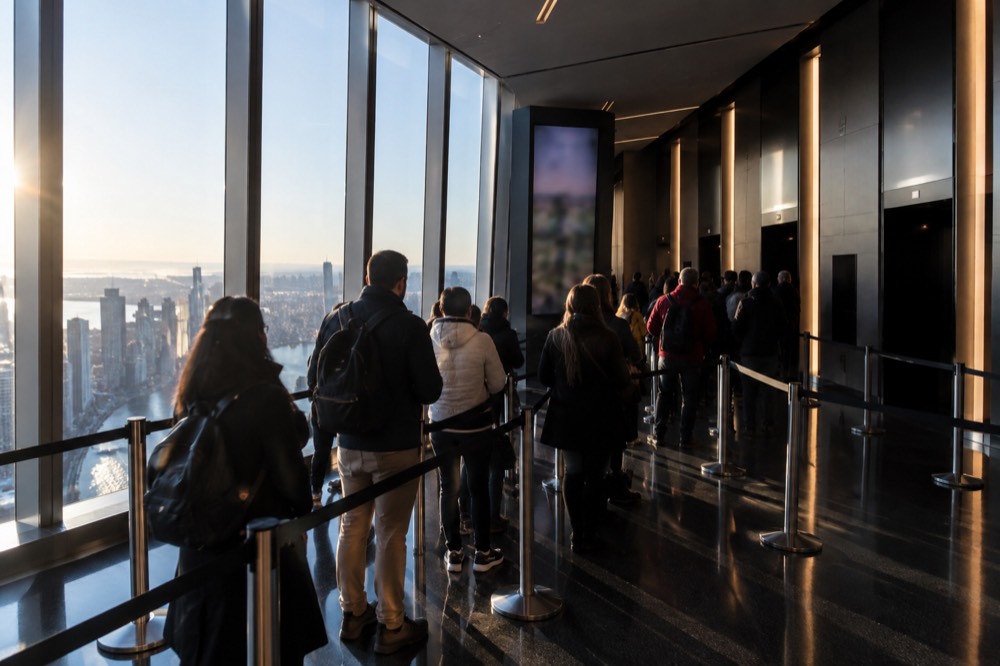
The dynamic pricing model matters more here than at most attractions. The observatory charges by date and time slot, so a Tuesday morning in February and a Saturday at sunset in July are different products at different prices. The "from" figures are the floor, not the norm. Sunset slots carry the heaviest premium, and weekend evenings in high season can land well above the starting price. Booking a morning slot, or a weekday afternoon, is the single most reliable way to pay near the bottom of the range.
Here is how the ticket options compare:
| Ticket | What it covers | Adult price | Best for |
|---|---|---|---|
| Standard timed entry | Elevator ascent, all observatory floors, the Sky Portal and exhibits | from $39-$44 + $3.50 fee + tax | Visitors with a fixed budget and flexible timing |
| Skip-the-line ticket | Same access, bypasses the ticketing and boarding queue | from $30.49 per person | The cheapest entry, booked through the live listing |
| All-Access 9/11 combo | Guided Ground Zero walk, 9/11 Memorial Museum entry, observatory | from $109 per person | Visitors doing the whole World Trade Center in one block |
| Flex or priority options | Wider entry windows, flexible arrival | priced at booking | Travelers whose schedule may slip |
One caution that costs people real money: the observatory is not on CityPASS. The New York CityPASS lineup includes the Empire State Building, Top of the Rock and Edge among its choices, but not One World Observatory. If you are building a pass strategy around decks, the passes and this deck do not overlap, which is covered in the comparison section below.
Should You Book Ahead or Buy at the Door?
Booking ahead is the practical answer for One World Observatory, because timed slots for sunset and weekend windows sell out first and walk-up prices sit at the top of the dynamic range. The skip-the-line ticket, from $30.49, is cheaper than the door price and locks a fixed entry window. Same-day visits are possible on quiet weekdays, but anyone with a preferred time, especially late afternoon, should reserve before arriving in Lower Manhattan.
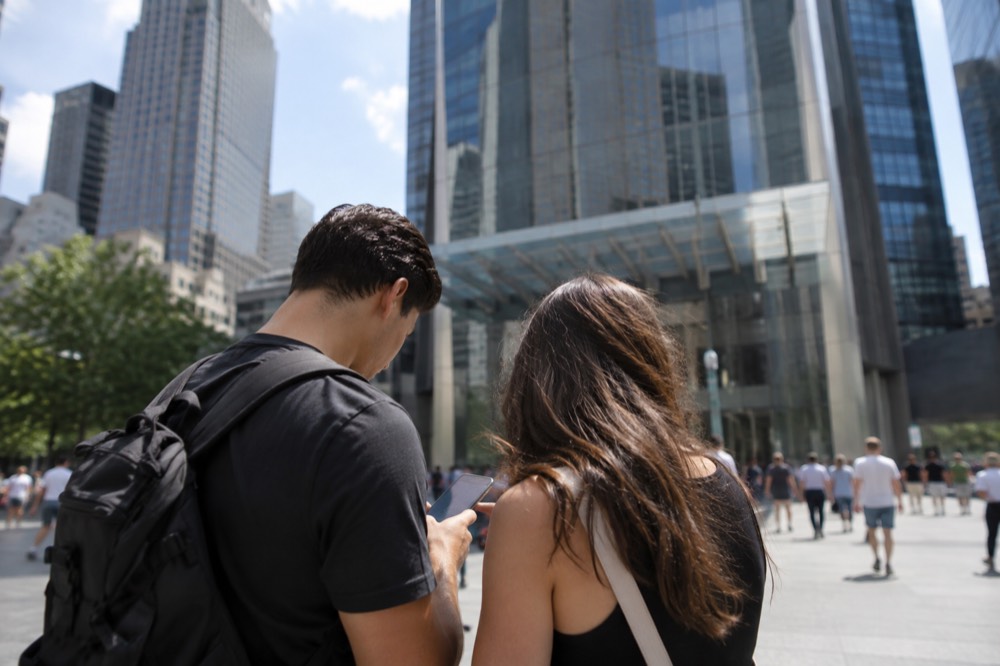
The decision moment is real here in a way it is not at, say, the Staten Island Ferry. If your plan is "do the 9/11 Memorial in the morning, the museum at noon, then go up the tower," you are committing to an approximate observatory time several hours in advance. A pre-booked slot turns that guess into a schedule. A walk-up ticket turns it into a gamble on availability.
For visitors who want the whole World Trade Center experience handled in one organized block, there is a combined option: a guided tour covering Ground Zero, the 9/11 Memorial Museum and One World Observatory, with a guide managing the timing between them.
The same product family includes a standalone timed ticket for the 9/11 Memorial & Museum, which is the natural pairing if you would rather walk the memorial plaza on your own and only pay for structure inside the museum.
If your downtown day is still taking shape, the broader things to do in NYC roundup covers how the World Trade Center fits into a first visit alongside the harbor, the bridges and Midtown.
Both options above route through the operator's live listing, where current prices, dates and cancellation terms appear before you commit. If you are still weighing whether the deck fits your itinerary at all, read the comparison below first, then come back and book once you know which view you actually want.
What Are the Hours, and When Is the Best Time to Visit?
One World Observatory is open daily from 09:00 to 21:00, with last entry an hour before closing, and on September 11 it opens at 12:00 rather than 09:00. The best time to visit is the last two daytime slots before sunset, because you watch the light change across the harbor and the skyline without paying the full sunset premium. Mornings are the quietest and cheapest; weekend evenings are the most crowded.
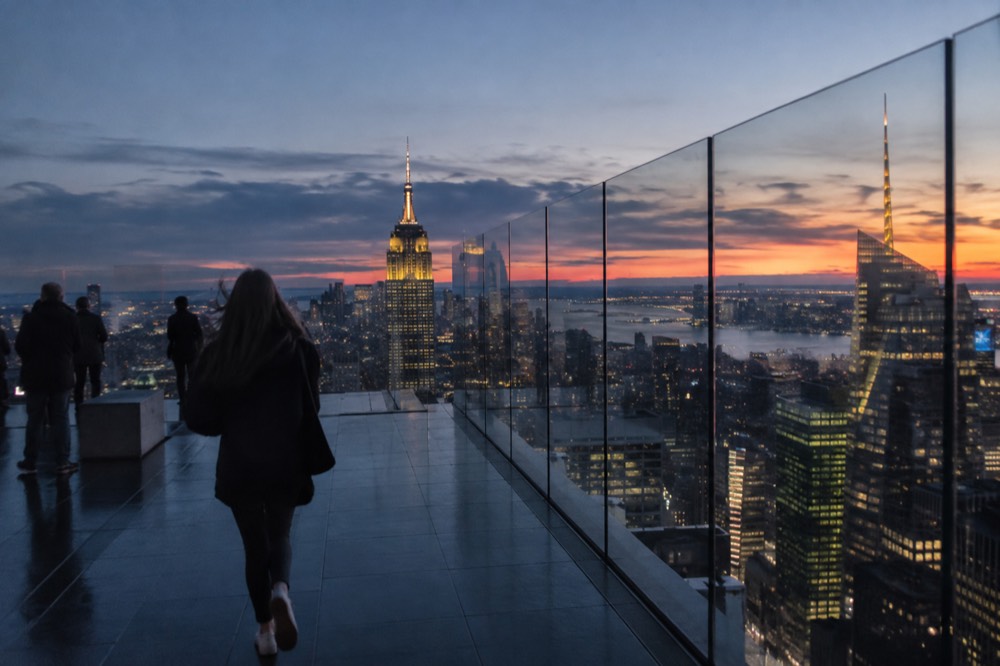
The September 11 late opening is worth knowing about for a different reason than logistics. On that date the memorial plaza holds the annual names-reading ceremony, and the observatory's delayed opening exists around it. If your trip falls on September 11, plan the day around the memorial rather than the deck, and treat the observatory as an afternoon option.
For the rest of the year, the timing logic is straightforward. Morning slots cost the least and draw the thinnest crowds, but morning haze over the harbor is a real factor in summer. The pre-sunset window is the sweet spot: you see the city in daylight, then watch it switch on. Full-dark visits are dramatic but flatten the detail, and the harbor merges into the black.
A seasonal note drawn from the official climate record: July is New York's wettest month, averaging 4.60 inches of rain in Central Park, ahead of August and June. Summer visitors should not bank on a clear evening. Visibility is best in the cold, dry months, and February, the driest month of the year, is quietly one of the sharpest times to see the skyline from this height, provided you dress for the wind on the outdoor portions.
What Do You Actually See from the Top?
From the top floor you see the full New York harbor, the Statue of Liberty, the Brooklyn Bridge, the Manhattan and Brooklyn skylines, and, looking north, the whole spine of Midtown and Central Park in one frame. The view is the only major deck view centered on the harbor rather than on Central Park, which makes it the strongest deck for the statue, the bridges and the Jersey City waterfront, and the weakest for the park itself.
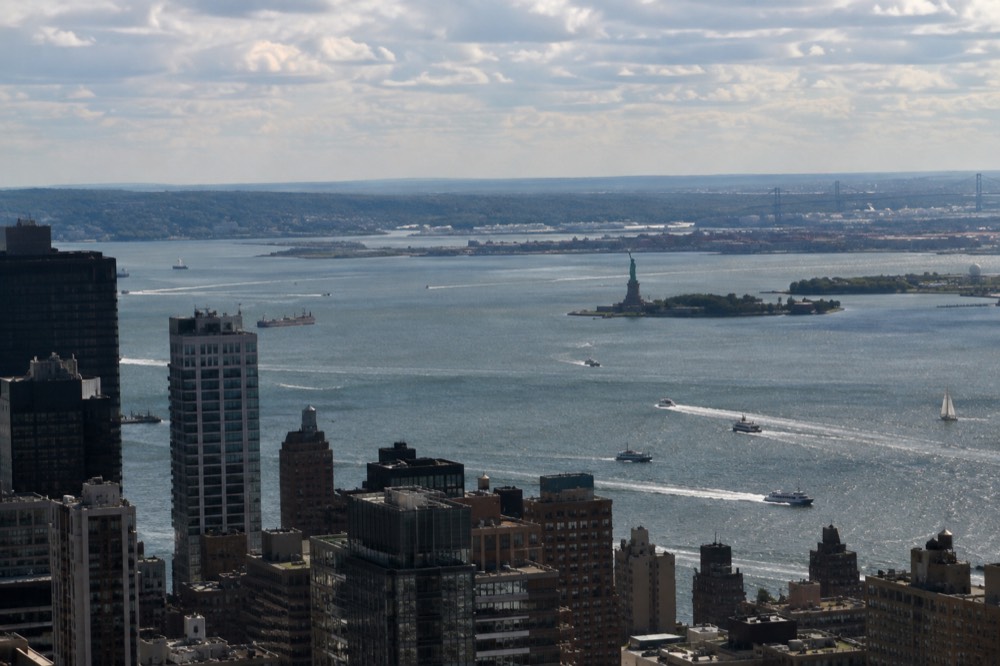
The ascent is part of the show. The elevators, among the fastest in the hemisphere, run a time-lapse presentation on their walls that compresses the skyline's growth across centuries into a 47-second ride. At the main level, the See Forever Theater plays a short film that dissolves into the actual view when the screen lifts. These are well-executed pieces, not afterthoughts, and they set up the moment the glass wall appears.
One level holds the Sky Portal, a disc of high-definition footage that gives the sensation of standing on a live feed of the street far below, plus the café and bar. The top level is the main viewing floor, with glass on all sides. The outdoor exposure here is minimal compared with the Empire State Building's open-air 86th floor or Edge's outdoor skywalk, which cuts both ways: less wind and weather risk, but less of the raw open-air feeling some visitors want.
For photographers, the honest summary is this. If your one non-negotiable shot is the Empire State Building framed by Central Park, this is the wrong deck. If your shot is the harbor, the statue, the bridges fanning out toward Brooklyn, or the Manhattan skyline seen as a single wall from a distance, this is the best deck in the city for it.
How Does One World Observatory Compare to the Other NYC Decks?
One World Observatory is the tallest and cheapest of New York's five major decks, with its skip-the-line ticket from $30.49, while the Empire State Building, SUMMIT One Vanderbilt and Edge all price identically from $47.91. The real comparison is not height or price but view: One World owns the harbor and Lower Manhattan, Top of the Rock owns Central Park, and the Empire State Building owns the classic open-air experience.
| Deck | Location | Adult from | Signature view | Open air |
|---|---|---|---|---|
| One World Observatory | World Trade Center, Lower Manhattan | $30.49 skip-the-line; $39-$44 standard | Harbor, Statue of Liberty, bridges | Minimal, enclosed glass |
| Empire State Building | Midtown South | $47.91 | Classic skyline, deck in the frame | Yes, 86th floor |
| Top of the Rock | Rockefeller Center, Midtown | $45.73 | Central Park with the Empire State Building in frame | Yes, terraces |
| SUMMIT One Vanderbilt | Grand Central, Midtown | $47.91 | Mirrored rooms, glass ledges | Mostly enclosed |
| Edge | Hudson Yards | $47.91 | Cantilevered platform, glass floor | Yes, outdoor skywalk |
The price cluster is the striking fact. Three Midtown decks, run by three different operators, price identically from $47.91. One World Observatory sits $17.42 below them. That is not because the view is worse; it is because downtown competes differently, and the observatory prices against its own neighborhood's demand rather than Midtown's. A visitor choosing purely on value gets the tallest deck in the hemisphere for the least money.
The pass question follows. CityPASS includes the Empire State Building, Top of the Rock and Edge among its eleven choices, but not One World Observatory. So if you hold a pass, the economical play is to use it on a Midtown deck and pay separately for One World, or to skip this deck if your budget is fixed. The 9/11 Memorial and Museum sits two minutes away and is the more consequential stop for most visitors; budget for it first.
Is One World Observatory Worth It?
For most visitors, yes, on two conditions: you want the harbor view rather than the Central Park view, and you book the cheaper skip-the-line ticket rather than the door price. At $30.49 it is the best value per foot of any deck in the city. At full dynamic pricing on a summer Saturday, the calculus tightens, and a visitor with a CityPASS in hand may do better spending that evening at a Midtown deck already paid for.
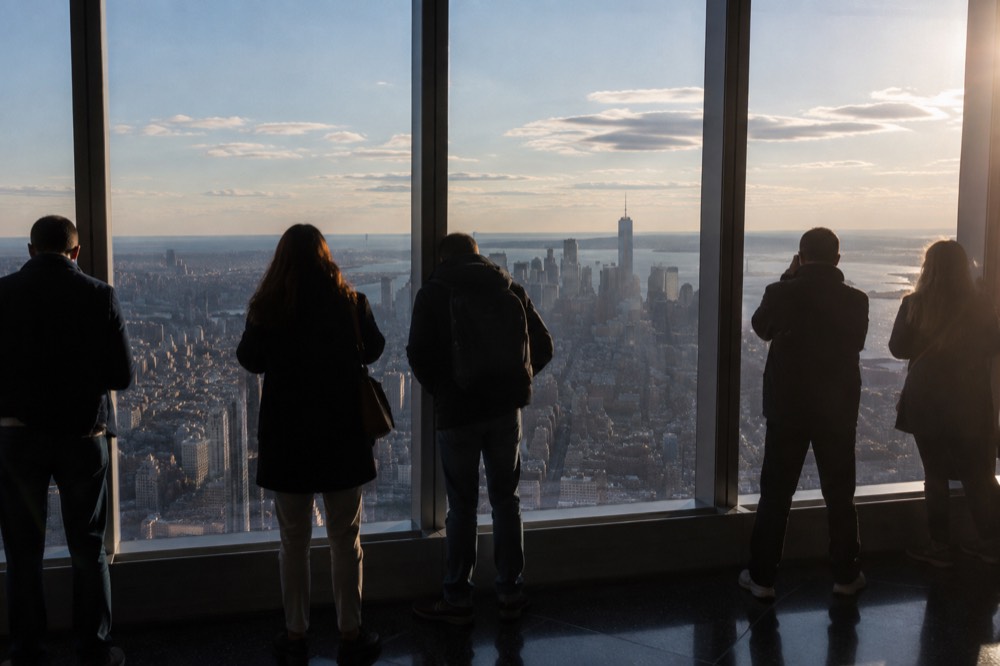
The honest case against is narrow but real. If your trip is three days or fewer and you are staying in Midtown, the World Trade Center is a dedicated subway trip each way, and the deck's indoor-heavy format delivers less of the visceral, wind-in-your-face experience that makes the Empire State Building or Edge memorable. Visitors who report disappointment here almost always booked a full-price sunset slot and expected an open-air deck.
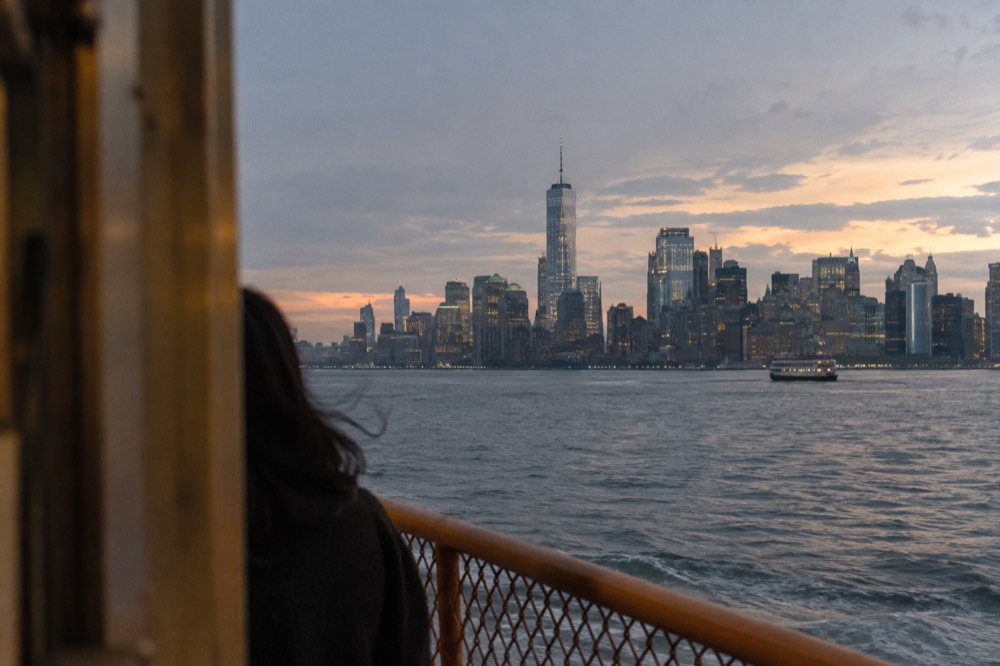
The case for is stronger than the price suggests. The sight lines down the harbor, the proximity to the memorial and museum, and the elevator and theater presentation add up to a complete, well-run visit. And the neighborhood around it is the densest concentration of meaningful stops in the city: the memorial pools, the museum, the Oculus, Wall Street and the Staten Island Ferry are all within a ten-minute walk.
For a full combined option that strings the observatory together with the memorial and museum under one guide:
How Should You Plan the Whole World Trade Center Visit?
Plan the World Trade Center as a half-day block: the memorial plaza first, since it is free and takes 30 to 45 minutes, then the 9/11 Memorial Museum for two hours, then the observatory timed for the late afternoon.
Museum admission is $36 for adults at the box office, with free-admission Mondays released at 07:00 ET on the museum's website, and the memorial plaza itself is free with no ticket, open daily 08:00 to 20:00.
The sequencing matters more than people expect. The museum is an emotionally heavy two hours, and going straight from it to a celebratory sunset deck can feel jarring. The observatory's own tone, quiet and glass-walled, handles that transition better than most. Give yourself a break between the two, on the plaza or in the Oculus food hall.
The 9/11 Memorial and Museum is a site of mass killing, and it deserves plain description rather than sales copy: two reflecting pools set in the footprints of the towers, edged with the names of the dead, and beneath them a museum holding the survivors' staircase, recovered artifacts and the stories of the day. Free-admission Mondays exist, but the released tickets go quickly at 07:00. More planning detail is on our 9/11 Memorial and Museum guide.
Getting There and Getting Home
The fastest route to One World Observatory is the 1 train to WTC Cortlandt, which stops directly beneath the World Trade Center, or any of the 2, 3, 4, 5, A, C, J or Z trains to Fulton Center followed by the covered Dey Street walk. From New Jersey, PATH trains stop inside the Oculus next door.
A single subway ride costs $3.00, and OMNY caps a rolling seven-day period at $35 automatically when you tap the same card or device.
| Route | Trains | Cost | Notes |
|---|---|---|---|
| WTC Cortlandt | 1 | $3.00 | Directly beneath the complex, shortest walk |
| Fulton Center | 2, 3, 4, 5, A, C, J, Z | $3.00 | Covered Dey Street passage to the site |
| PATH from New Jersey | WTC station | PATH fare | Arrives inside the Oculus |
| Citi Bike | Docking stations nearby | Day pass rates | Best for the Brooklyn Bridge approach |
One practical note for the ride home: the evening exit from the World Trade Center puts you within walking distance of the Staten Island Ferry terminal, a free ride past the Statue of Liberty, which makes a natural close to a downtown day if the observatory visit ends before 20:00. The ferry is covered in detail on the Staten Island Ferry guide.
Common Questions About One World Observatory
These are the questions visitors ask most before booking: whether the observatory is the tallest deck in the hemisphere, what a ticket costs, how long a visit takes, whether it appears on the CityPASS, and how it compares to the Midtown decks. Each answer below is short and specific, drawn from the operator's listing and the official observatory information, so you can plan without re-reading the whole guide.
How tall is One World Observatory?
One World Observatory sits at the top of One World Trade Center, making it the tallest observation deck in the Western Hemisphere. The building itself is the tallest in the hemisphere, crowned by its spire.
How much are One World Observatory tickets?
Standard adult admission starts from $39-$44 with dynamic timed pricing, plus a $3.50 processing fee and tax. The skip-the-line ticket sold through the operator's live listing starts from $30.49 per person, making this the cheapest of New York's five major decks.
How long does a visit take?
Most visitors spend 60 to 90 minutes, covering the elevator ascent, the theater presentation and all the observatory floors. Allow two hours if you plan to eat or drink at the café level, and add time for security screening at busy hours.
Is One World Observatory included in CityPASS?
No. The CityPASS lineup includes the Empire State Building, Top of the Rock and Edge among its eleven choices, but not One World Observatory. Pass holders should plan to buy observatory tickets separately.
What is the best time of day to visit?
The last two daytime slots before sunset give you daylight, the transition and the lit skyline in one visit, without the full sunset premium. Mornings are cheapest and quietest, and summer evenings carry haze risk, since July is New York's wettest month.
Is it better than Top of the Rock or the Empire State Building?
It depends on the view you want. One World Observatory owns the harbor, the Statue of Liberty and the bridges. Top of the Rock owns Central Park with the Empire State Building in frame, and the Empire State Building offers the classic open-air experience. On price, One World is $17.42 cheaper than the three Midtown decks.
Whatever you decide, book the slot before you leave for Lower Manhattan. The cheapest deck in the city still sells out its best windows, and the walk-up price is the worst one on offer. More on planning the wider trip is on the New York City Travel Guide homepage.