Tenement Museum Visitor Guide: Tours, Tickets and What to Expect on the Lower East Side
The Tenement Museum tells the story of American immigration through the rooms where immigrants actually lived, and it works very differently from the big museum campuses uptown.
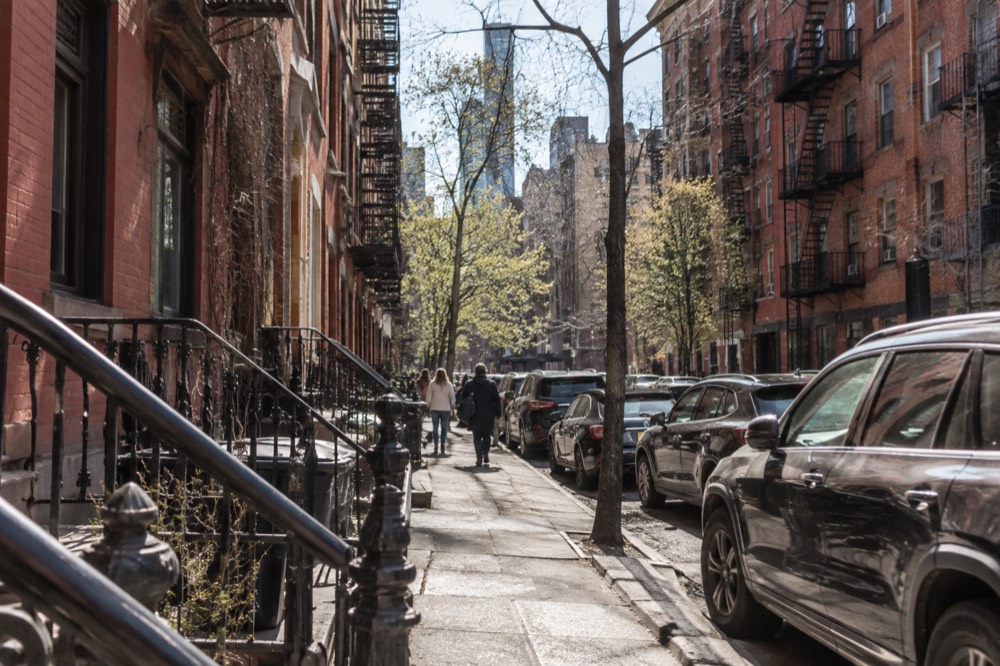
Short answer
The Tenement Museum is a guided-tour museum on the Lower East Side, visited in small groups led by an educator through restored apartments in a historic tenement building. You choose a tour when you book, prices and the current lineup are on the official site, and it is best reserved ahead because group sizes are deliberately small.
Tenement Museum Visitor Guide: Tours, Tickets and What to Expect on the Lower East Side
Most New York museums are buildings constructed to hold objects. The Tenement Museum is the object. It is a former apartment building on the Lower East Side, preserved and partly restored so that visitors can walk through the cramped rooms where working-class immigrant families actually lived, and hear the specific, documented stories of the people who occupied them. That single structural difference changes everything about how you plan a visit: you do not wander in with a general admission ticket and drift between galleries. You book a tour, you join a small group, and an educator walks you through rooms that were never meant to be public space.
This guide covers what that means in practice, how the museum compares with the institutions you might be stacking against it on the same ticket budget, how to reach the Lower East Side, and how to judge whether it fits your trip. It is a migration-history site rather than an entertainment attraction, and it earns its place differently from the observation decks and landmark museums nearby. For the wider picture of the neighborhood around it, see the Lower East Side area guide, and for the full city picture start with things to do in NYC.
What Is the Tenement Museum in New York City?
The Tenement Museum is a history museum on the Lower East Side of Manhattan that interprets the American immigrant experience through the preserved apartments of a single former tenement building. Visits are built around small guided tours of restored rooms, each tied to the real lives of families who lived there, rather than self-guided gallery browsing. It is a migration-history site, and its subject is the everyday domestic life that most museums skip entirely.
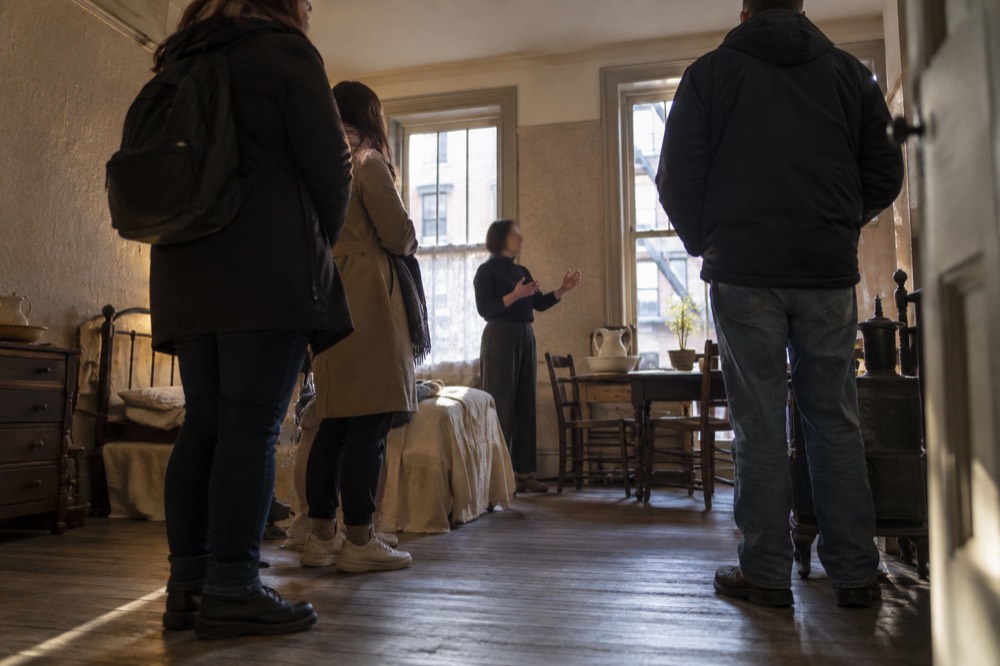
The museum's premise is deceptively simple. Instead of collecting artifacts and displaying them behind glass in a purpose-built gallery, the institution took an ordinary residential building, researched the families who lived in it across successive waves of immigration, and reconstructed specific apartments around what is documented about those households. The result is closer to time travel than to a conventional exhibition. A guide leads a small group up the stairwell, into rooms lit and furnished to a particular era, and uses the space itself as the primary source.
That approach has consequences for the visitor. Group sizes are kept small because the rooms are small; the apartments on a typical tour were built for families, not tour buses. The educators are not reciting a script so much as running a discussion, and questions are part of the format. The museum also runs neighborhood walking tours that take the story out onto the surrounding blocks, where the synagogues, shops and tenements of the old Lower East Side still stand.
It is worth being clear about what the museum is not. It is not a hardship theme park and it is not a patriotic pageant. The interpretation engages with the real economics of tenement life: overcrowding, labor, disease, the garment industry that ran through these apartments, and the legal reforms that eventually followed. Reviews from visitors consistently describe the experience as more affecting than expected, which is a fair warning for anyone treating it as a box to tick between shopping stops.
How Does Visiting the Tenement Museum Actually Work?
A visit is not general admission. You select a specific guided tour when you book, each tour covers different apartments, families and themes, and you arrive for that timed departure at the visitor center before walking to the historic building with your group. Because room capacity is tight, tours sell out on busy days, so booking ahead is the standard advice rather than a marketing line. The current tour lineup, times and prices are listed on the museum's official site.
The booking decision is the decision. Each tour in the lineup zeroes in on a different set of families, eras and themes, from the earlier waves of European immigration through later chapters of the neighborhood's story, and no single tour covers everything. Choosing between them is a matter of interest rather than quality. If one member of your party cares about the garment industry and another about food and family life, you may end up discussing which tour to take over dinner the night before, which is a good sign of a museum doing its job.
Tours run on a schedule, and the meeting point is the museum's visitor and shop space rather than the historic building itself. Arrive with time to spare, because groups leave together and a late arrival can mean missing the walk over. The tours themselves involve standing, walking and stair-climbing in a building from an era before accessibility codes; anyone with mobility concerns should check the accessibility information on the official site before booking, since the honest answer is that the historic fabric imposes real constraints and the museum publishes exactly what is and is not workable.
Time-wise, plan on the tour length shown for your chosen option plus buffer for check-in and the shop. This is not an all-day site. The natural rhythm is a morning or afternoon tour followed by the neighborhood itself, which is one of the best eating and wandering districts in the city. If you are the kind of traveler who likes pairing a morning history visit with an afternoon icon, the city's headline observation decks and museums slot neatly into the same day, and the Empire State Building's deck-and-museum ticket is the classic counterpart from this part of Manhattan: from tenement apartments to the 86th floor in an afternoon.
A practical note on timing your week: the museum, like most New York institutions, has its own schedule of open days and evening hours, and these change seasonally. The museum's own site is the source of truth, and any printed guide, including summaries elsewhere on the web, can lag behind. Check it the day before you go.
How Much Does the Tenement Museum Cost Compared with Other NYC Museums?
The Tenement Museum's ticket price and tour options are listed on its official site, and because the product is a guided tour rather than general admission, its price sits apart from the fixed entry fees of the big museums. For context: the Met charges $30, MoMA $30, the Whitney $30, the Guggenheim $30, the 9/11 Memorial Museum $36 and the Intrepid $38 for adults. A Lower East Side history tour is a different category of spend.
That comparison matters because most visitors budget museums as a single line item. The table below pulls together the verified adult admission figures for the major Manhattan museums, so you can see where the Tenement Museum fits before you check its live pricing.
| Museum | Adult admission | Notes |
|---|---|---|
| Metropolitan Museum of Art | $30 | Fixed for visitors; pay-what-you-wish only for NY State residents and NY/NJ/CT students, minimum $0.01, proof required |
| MoMA | $30 | Free Friday evenings 17:30-20:30 for New York State residents only, proof required, reserve ahead |
| Whitney Museum of American Art | $30 | Free for anyone 25 and under; free Friday nights 17:00-22:00 for everyone |
| Guggenheim Museum | $30 standard | $16 during exhibition changeover; pay-what-you-wish Tuesdays and Sundays 16:00-17:30, $1 minimum |
| 9/11 Memorial & Museum | $36 | Free admission Mondays, tickets released online at 07:00 ET, first come first served |
| Intrepid Museum | $38 | NYC residents get 50% off every day; free for US military and veterans with ID |
| American Museum of Natural History | $43 per the CityPASS box-office table | Pay-what-you-wish on general admission for NY State residents with ID; per-ticket price otherwise varies by package |
| Tenement Museum | Check the official site | Sold as guided tours, not general admission, so pricing is per tour |
Two things follow from that table. First, the Tenement Museum's guided format means its price buys a curated experience with an educator, not building access, which is the same reason a guided group tour of the Metropolitan Museum costs more than walking into the Met alone. Second, if you are stacking several of the fixed-price museums in one trip, the pass products start to matter, and the New York CityPASS at $149 adult bundles five attractions over nine consecutive days, including the Empire State Building and the official Statue of Liberty ferry.
Is the Tenement Museum Worth the Trip?
For most visitors with any interest in how New York actually became New York, yes. The museum is consistently rated among the city's most affecting experiences precisely because it is small, specific and human-scaled against the skyscraper spectacle elsewhere in the itinerary. It is not worth it for travelers who want self-guided freedom, big-photo moments or a site that can absorb a whole day; it is a two-hour commitment that punches far above its footprint.
The honest case for going rests on what it does that nothing else in the city does. The great New York museums hold the possessions of the wealthy and the celebrated. This building holds the lives of people who left almost nothing behind, reconstructed from census records, court documents and the fabric of the apartments themselves. If your trip already includes Ellis Island, the pairing is natural: one site is the door the immigrants came through, the other is the room they slept in afterward.
The case against is equally honest. If your party contains restless children, a tight schedule or a strong preference for wandering at your own pace, a fixed-time guided tour through small rooms can feel constraining. The museum is also a commitment to listening: the tours are discussion-led, and a visitor who wants to photograph their way through a sightseeing day will get less from it than one who sits with the stories. And because capacity is deliberately small, a spur-of-the-moment visit can end in disappointment during peak season.
A reasonable middle path for mixed groups: send the history-minded members of your party on a morning tour while the rest take a longer breakfast on the Lower East Side, then reconvene for the neighborhood's food, which is the equal of anywhere in Manhattan. The area guide linked above has the full rundown, and the museums overview on this site helps if you are still weighing this against gallery alternatives.
How Do You Get to the Tenement Museum on the Lower East Side?
Take the subway: the fare is $3.00 per ride, and the Lower East Side is served by several lines with stations within walking range of the museum's blocks. Tap the same contactless card or phone every ride and the $35 weekly OMNY cap applies automatically, no pass to buy. Driving is the wrong answer here; the streets are narrow, parking is scarce, and the subway is faster door to door.
There is no MetroCard to buy any more, and that is not a typo repeated from an older guide. As of 1 January 2026 the MTA no longer sells or refills them. The system that replaced them, OMNY, works with the contactless credit or debit card or mobile wallet you already carry: tap at the turnstile, pay $3.00 a ride, and once your taps total $35 inside a rolling seven-day window, further subway and local bus rides are free. The catch, and it catches real visitors every day, is that the cap only counts taps from the same card or device. Mixing your phone on Monday and the plastic card in your wallet on Tuesday breaks the cap silently.
| Transit option | Cost | Notes |
|---|---|---|
| Subway or local bus, single ride | $3.00 | Free transfer between subway and bus within 2 hours |
| OMNY weekly cap | $35 | Automatic, rolling 7 days from first tap, same card or device required every ride |
| Express bus | $7.25 | The cap including express buses is $67 |
| Reduced fare (eligible seniors and disabled riders) | $1.50 | Subway and local bus, all times |
| Children under 44 inches | Free | Up to three per fare-paying adult on subway and local bus |
| Airport comparison: LaGuardia via free Q70 bus plus subway | $3.00 | Cheapest airport run in the city |
| Airport comparison: JFK via subway plus AirTrain | $11.75 | AirTrain adds $8.75 on top of the subway fare |
The fare table above is worth reading once and remembering: it is the complete cost picture of moving around the city for almost every visitor. From the airports, the differences are stark, and the assumption that JFK, with its dedicated rail link, is the cheap one is backwards. LaGuardia's Q70 Link bus is free, so the whole run to a Manhattan subway connection costs a single $3.00 fare, while the AirTrain at JFK stacks $8.75 on top of the subway fare.

What Should You Do Around the Tenement Museum Before or After?
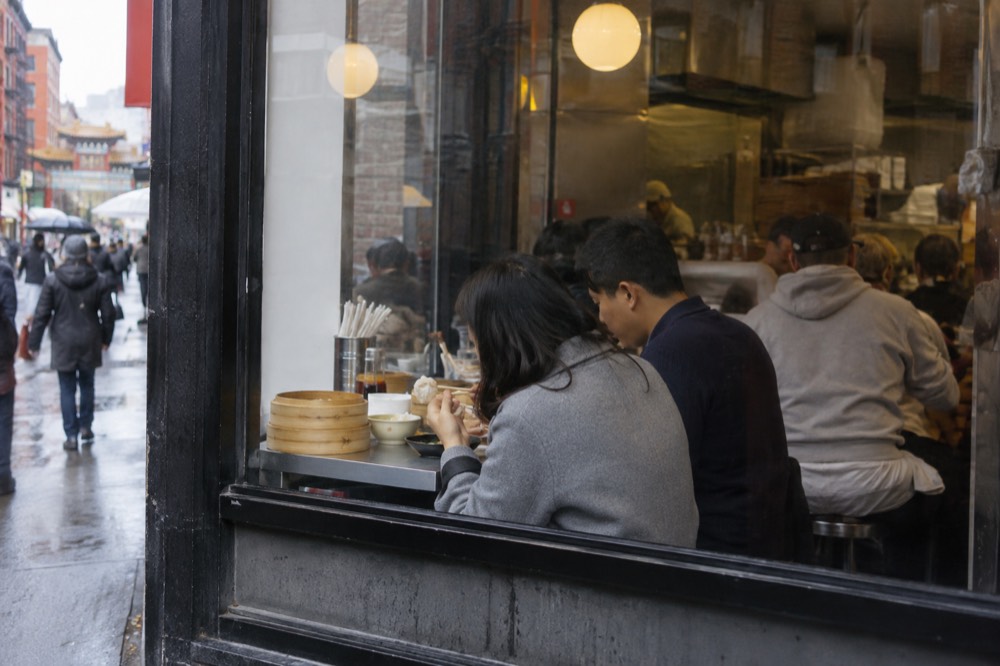
The Lower East Side is one of the densest eating-and-walking districts in New York, so plan the neighborhood, not just the museum. The classic pattern is a guided food walk through the adjacent blocks of Chinatown and Little Italy, or a self-guided crawl of the neighborhood's legendary bagel, deli and dumpling spots, either side of your timed tour. Give the area at least half a day; it rewards slow wandering more than any checklist.
The geography works in your favor. The Tenement Museum sits in a district that was, for successive generations of newcomers, the first stop in America, and the food culture those communities built is still the reason locals cross the city to come here. A guided food tour is the efficient version of that, and there are strong options within a short walk of the museum's blocks. The Chinatown and Little Italy food tour runs six tastings over three hours through the two neighborhoods immediately adjacent to the Lower East Side, and it doubles as a history walk of the same migration story the museum tells.
If you would rather eat independently, the practical advice is simple: arrive hungry, space your stops, and treat the queue as part of the experience. The neighborhood's institutions have earned their lines. The citywide restaurant and bagel guides on this site cover the essentials if you want a longer list.
Below is a comparison of the guided walking and food options in and around this downtown pocket, drawn from current listings, for anyone deciding between a tour and a self-guided wander.
| Tour | Area | Duration | Rating | From (per person) |
|---|---|---|---|---|
| Chinatown and Little Italy food tour, six tastings | Chinatown / Little Italy | 3 hours | 4.9 | $99 |
| SoHo, Little Italy and Chinatown walking tour | SoHo / Little Italy / Chinatown | 2 hours | 4.9 | $25 |
| Financial District, Wall Street and 9/11 Memorial free walk | Financial District | 2.5 hours | 4.95 | Free, pay what you want, on GuruWalk |
| SoHo, Little Italy, Chinatown free walk | Downtown Manhattan | 2 hours | 4.88 | Free, pay what you want, on GuruWalk |
| Brooklyn Bridge and Dumbo walking tour | Brooklyn Bridge / DUMBO | 2 hours | 4.7 | $49 |
One honesty note on the free-walk rows: those are tip-based tours run by independent guides on GuruWalk, not our products, and six of the ten New York walks on that platform belong to a single operator, so do not read the list as a wide marketplace. The paid options above are bookable through the live listings linked from each tour page.
When Is the Best Time of Year to Visit the Tenement Museum?
Any season works, because the museum itself is indoors and tour-based, but spring and fall give you the best weather for the neighborhood walking that should surround your visit. Summer brings the biggest crowds and the heaviest rain of the year, and winter is quietest, with February the statistically snowiest month in Central Park. Book timed tours well ahead for summer and the December holiday period, when Lower East Side foot traffic peaks.
The climate data for New York, measured from the official Central Park normals, inverts two common assumptions. July is the wettest month of the year in New York, averaging 4.60 inches of precipitation, ahead of August at 4.56 and June at 4.54. And February out-snows January, 10.1 inches against 8.8, while also being the driest month by total precipitation at 3.19 inches. Visitors who book summer to dodge rain, or brace for January blizzards, have it exactly backwards.
| Season | Average high / low | What it means for this visit |
|---|---|---|
| Spring (Mar-May) | 49.9-71.4 / 35.8-55.0 | Best overall: mild streets for the walking tours and market browsing around the museum |
| Summer (Jun-Aug) | 79.7-84.9 / 64.4-70.1 | Hot, humid, and the wettest months of the year; book tours early, do outdoor wandering in the morning |
| Fall (Sep-Nov) | 76.2-54.0 / 62.3-42.0 | Excellent: warm into October, thinning crowds after summer |
| Winter (Dec-Feb) | 44.3-42.2 / 33.8-29.5 | Quietest; February is both the snowiest and the driest month, so a timed indoor tour is a safe bet |
Because the museum experience is a scheduled indoor block, it is actually a strong bad-weather pick: a rainstorm that ruins an observation deck visit barely touches a tenement apartment tour, and the neighborhood's food halls and old restaurants provide the shelter between stops.
Who Should Skip the Tenement Museum?
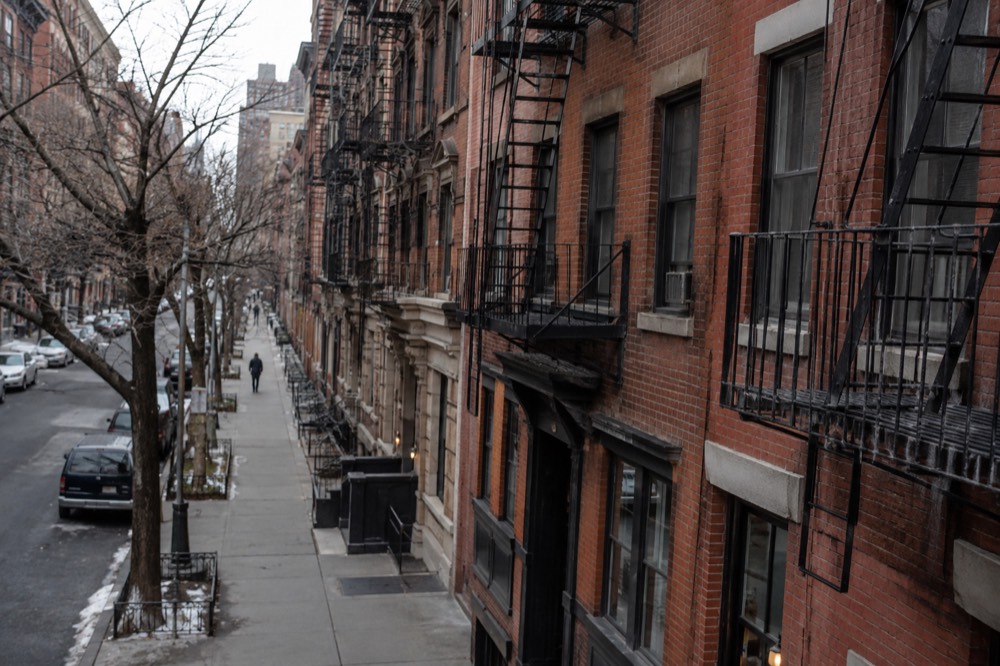
Travelers who want self-guided freedom, big photogenic interiors, or a site that fills a whole day should pass. The museum is a sequence of small rooms, a fixed tour time, group conversation and staircases in a historic building, with no wandering off and limited accessibility in the oldest fabric. Visitors with mobility constraints, very young children, or a packed itinerary that cannot hold a two-hour scheduled block will get more from a different stop.
This is not a knock on the museum. It is a precise description of the format, and the format is the point. But honest trip planning means matching the product to the traveler. A family with a four-year-old is better served by the American Museum of Natural History, whose dinosaur halls and whale are built for exactly that audience, and whose Super Saver ticket bundles the planetarium shows and giant-screen films. A solo visitor who hates schedules is better off with the city's pay-one-price gallery giants, where you can leave when you are done.
Equally, the museum is a poor fit for the checklist traveler racing between photo opportunities. There is no observation deck, no skyline, no gift-shop selfie moment that travels on social media. What there is instead is a room where a family of garment workers lived and worked at the same table, and a guide who can tell you their names. That trade suits some visitors perfectly and leaves others cold, and both reactions are legitimate.
If you are unsure, apply a simple test: does the phrase "small group discussion about immigration history, standing in a restored 19th-century apartment" sound like the best two hours of your trip or a school field trip? Your answer is correct either way.
How Does the Tenement Museum Compare with Ellis Island?
The two sites cover the same story from opposite ends: Ellis Island is the processing hall where twelve million immigrants were admitted to the country, while the Tenement Museum is the apartment where they slept, worked and raised children afterward. They are complements, not competitors, and the strongest itinerary includes both, ideally the museum before or after a harbor visit that lands at Ellis Island. One is a monument to arrival, the other a study of what arrival actually meant.
The pairing is so natural that the museum's own educators reference it, and visitors who do both consistently describe the sequence as the fullest immigration-history experience in the country. The official ferry from Battery Park is the only way to set foot on the island, and the Statue of Liberty and Ellis Island reserved ferry tour covers both stops with a guide attached, which is the efficient version if you want commentary rather than the audio tour alone.
Practically, the two sites sit at opposite ends of the downtown sightseeing arc: the harbor departure points at Battery Park in the Financial District, and the museum on the Lower East Side, with the Chinatown and civic-courthouse blocks in between. Doing both in one day is feasible and common: a morning ferry, lunch, and an afternoon tenement tour, or the reverse. Doing both in one morning is not, and attempts usually end with a sprint and a missed check-in.
For the deeper planning on the harbor half, including the ferry operator situation and the crown-ticket scarcity, see the Ellis Island guide. The short version of the commercial warning: Statue City Cruises is the only ferry operator authorized to land at the islands, and lookalike cruise products that merely circle the statue are not the same product, whatever the brochure implies.

How Do You Fit the Tenement Museum Into a New York Itinerary?
Treat the museum as a half-day anchor on the Lower East Side: a timed tour plus the neighborhood's food and streets, with the rest of the day spent downtown or in Brooklyn. In a first-timer's three-day plan it belongs on the downtown day, after or before the harbor landmarks, with the Brooklyn Bridge walk and DUMBO as the natural bridge eastward.
In a longer trip, pair it with a deep-dive day on the Lower East Side, Chinatown and SoHo.
The downtown geography makes this almost self-planning. The Financial District's landmarks, the harbor ferries, the museum, Chinatown, Little Italy and the Brooklyn Bridge anchorage all sit within a walkable rectangle of southern Manhattan, connected end to end by a handful of subway stops or a pleasant forty-minute walk. Our 3 days in NYC itinerary lays out exactly this shape, and the money-page hub carries the full index of the city's sights.
For travelers building the day around bigger ticketed attractions, the observation decks and the major museums are the usual companions, and booking those ahead matters more than visitors expect. The MoMA entry ticket is the classic Midtown pairing for an art-focused itinerary, and it sits within walking distance of Rockefeller Center, which makes it a natural same-day partner for Top of the Rock.
One structural tip for the itinerary stage: put the scheduled, capacity-limited things first. A tenement tour at a fixed time with small groups, a crown ticket, a Broadway seat: these are the items that fail if you leave them to the day itself. The walkable, untimed pleasures, the bridge, the neighborhoods, the food, flex around them. New York rewards the traveler who books three or four anchors and improvises the rest.

Common Questions About the Tenement Museum in New York City
The questions below cover the practical essentials: whether the museum is worth it, how long a visit takes, whether you can go without a guided tour, where it is, and what to do nearby. The recurring theme is the same: this is a timed, small-group, guided-tour museum, so booking ahead and arriving on time matter more here than at almost any other attraction in the city. Check the official site for the current lineup and prices.
Is the Tenement Museum worth visiting?
For most travelers with any interest in immigration history or how ordinary New Yorkers actually lived, yes, and it frequently ranks among visitors' most memorable stops in the city. It is small and specific rather than grand, and it delivers an emotional, story-driven experience that no gallery museum replicates. Travelers who prefer self-guided visits or spectacle-heavy attractions should temper expectations.
How long does a visit to the Tenement Museum take?
Plan on roughly two hours for the museum itself, depending on the tour option you book, plus check-in time at the visitor center beforehand. Most visitors then spend additional time in the shop and the surrounding Lower East Side neighborhood, which is one of the city's best districts for eating and walking. It is a half-day anchor, not a full-day site.
Can you visit the Tenement Museum without a tour?
The museum is designed around guided tours led by educators through the restored apartments, rather than self-guided gallery access, because the rooms are small and the interpretation is the product. The visitor center and shop are the public spaces you can enjoy freely. Check the official site for the current tour lineup and any non-tour options before you go.
Where is the Tenement Museum located?
On the Lower East Side of Manhattan, the historic immigrant neighborhood whose tenement blocks, markets and food institutions surround it. The area is served by multiple subway lines with stations within walking distance, and the fare is $3.00 per ride, with the $35 weekly OMNY cap applying automatically when you tap the same card or device. The exact address and directions are on the museum's official site.
Is the Tenement Museum accessible for visitors with mobility issues?
The historic tenement building predates accessibility codes, and tours involve stairs and standing in small rooms, so some portions are genuinely difficult or impossible for wheelchair users. The museum publishes detailed accessibility information on its official site, including which experiences are workable, and checking before booking is the right move. The visitor center and shop are more accessible than the historic building itself.
What else should you do near the Tenement Museum?
Eat. The Lower East Side, Chinatown and Little Italy hold some of the most famous food institutions in New York, from bagel and deli counters to dumpling houses, and a guided food tour is an efficient way through them. The Brooklyn Bridge walk and DUMBO sit just south across the anchorage, and the SoHo shopping blocks begin a few minutes west. Give the area half a day beyond the tour itself.
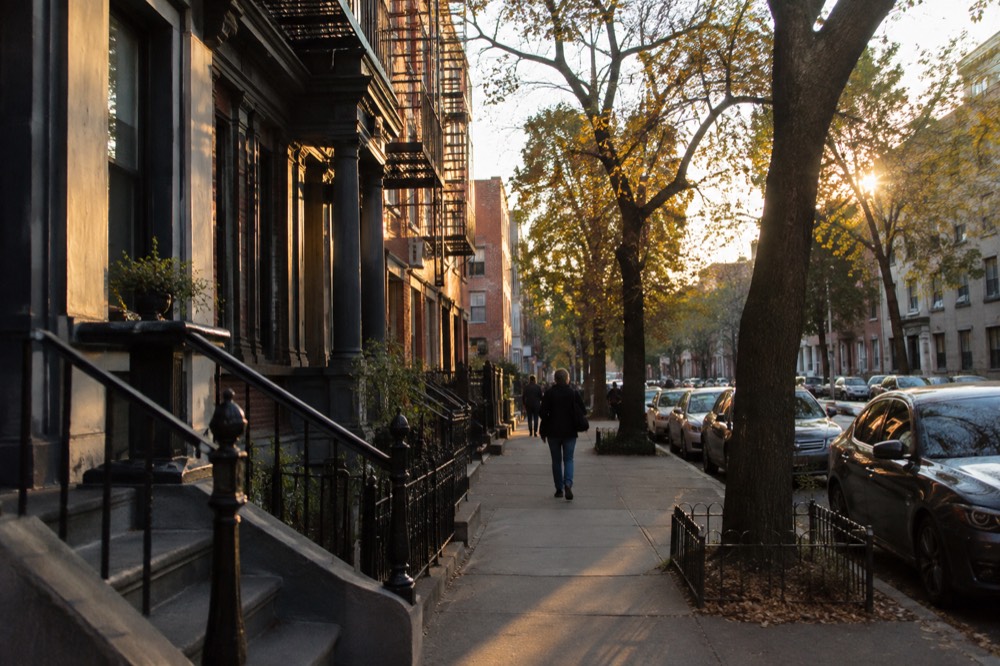
The Lower East Side does not photograph like Midtown, and that is precisely why it belongs on the itinerary. The buildings around the museum are the exhibit, the food is the living continuation of the story the tours tell, and a single well-timed visit explains more about how New York was built than a week of skyline views. Book the tour, arrive early, stay hungry, and walk the blocks after.
For more from this desk, see the full New York City Travel Guide index.