3 Days in NYC: A Realistic First-Trip Itinerary
Three days is enough to see New York properly if you stop trying to see all of it. This itinerary paces one anchor per day around the real constraints: ticket times, subway legs and the fact that the city is five boroughs, not one.
Short answer
Three days in NYC works if you commit to one anchor per day: Day 1 Midtown and an observation deck, Day 2 the Statue of Liberty ferry and Lower Manhattan, Day 3 Central Park, a museum and Broadway. Pay per ride with OMNY, book the ferry and any deck ahead, and skip anything that needs a second visit.
Three days in New York is the most common first trip length, and it is the length most visitors get wrong. The mistake is not choosing bad attractions. It is stacking six stops a day in a city where two of those stops are forty minutes apart by subway and the third has a timed entry you already booked for the wrong hour.
This itinerary is built around one anchor per day, with everything else arranged around it. It assumes you are sleeping in Manhattan, walking more than you expect, and tapping a card at every turnstile. The broader sweep of options lives on our things to do in NYC page; this one is only about what fits in 72 hours.
Is 3 Days in NYC Enough for a First Visit?
Three days is enough to see the core of Manhattan well, and not enough to see New York City. You can cover Midtown, Lower Manhattan, the Statue of Liberty ferry, Central Park, one major museum and a Broadway show in three days at a human pace. You cannot also do Brooklyn properly, Harlem, Queens, the Bronx or Staten Island. Treat three days as a first pass that earns a second trip, and plan one anchor per day rather than three.
The arithmetic is simple. A timed observation deck visit runs about ninety minutes door to door. The Statue of Liberty and Ellis Island ferry is a five-hour block if you do both islands. The Metropolitan Museum of Art alone can absorb a full afternoon, and it is closed on Wednesdays, which matters if Day 3 falls midweek. Add transit legs, meals and the simple fact that you will walk ten miles a day, and two anchors per day is the honest maximum.
What three days does give you is the shape of the city: the skyline from above, the harbor from the water, the park at street level and one neighborhood walked slowly rather than four driven past. That is a better trip than a checklist that leaves you remembering mostly escalators.
Here is the shape of the three days before the detail:
| Day | Anchor | Neighborhood base | Evening |
|---|---|---|---|
| Day 1 | Observation deck (SUMMIT One Vanderbilt or Empire State) | Midtown, Times Square, Grand Central | Midtown dinner, early night |
| Day 2 | Statue of Liberty and Ellis Island ferry | Battery Park, Financial District, Brooklyn Bridge | Sunset walk to DUMBO or back over the bridge |
| Day 3 | Central Park plus one museum | Upper East Side or Upper West Side | Broadway show |
What Should Day 1 in NYC Look Like?
Day 1 belongs to Midtown, and the anchor is an observation deck. Start at Times Square early, before the crowds build, then walk to Grand Central Terminal before 10am, and book a midday or sunset slot at SUMMIT One Vanderbilt or the Empire State Building. Keep the afternoon loose for Rockefeller Center, the New York Public Library and Bryant Park, all within a short walk of each other. Resist adding downtown, because the ferry needs its own morning.
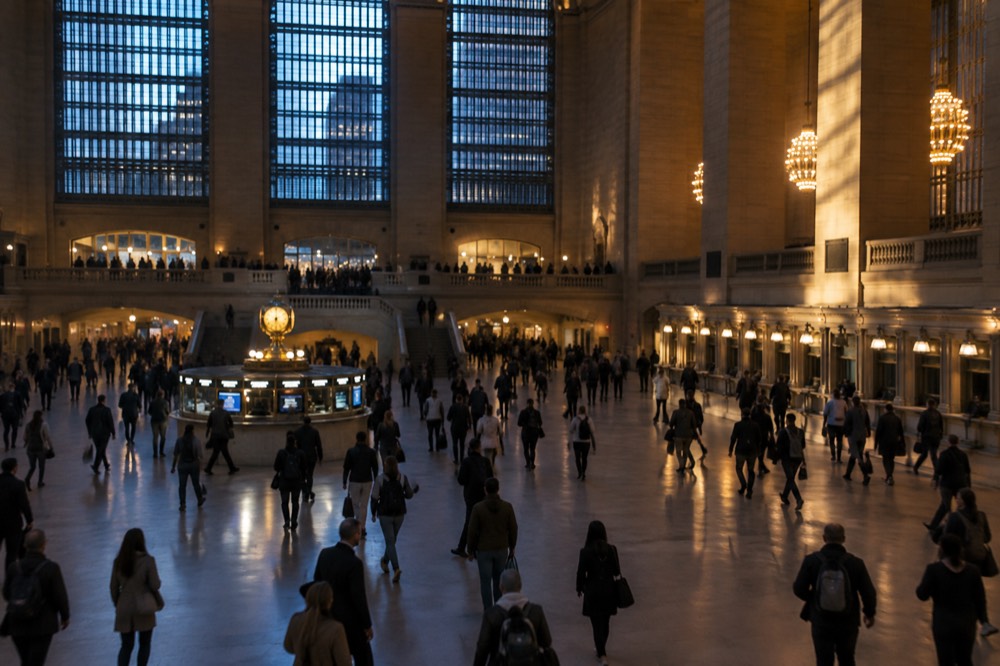
Midtown is where every first-timer lands, so do it in the right order. Times Square at 8am is nearly empty and photogenic; Times Square at 2pm is a crowd you walk through rather than look at. Grand Central Terminal is two blocks of walking away and rewards the early hour: the main concourse, the celestial ceiling and the whispering gallery are all free to see, and the building is calmer before the commuter waves. Our secrets of Grand Central guide covers the details worth slowing down for.
The deck decision matters more than people expect. SUMMIT One Vanderbilt sits next to Grand Central and plays with mirrors and glass; the Empire State Building is the classic open-air 86th-floor experience with a museum attached. Both use timed entry, so book the slot before you leave home rather than queueing at a box office.
If SUMMIT is your pick, note the practical details: tickets start from $47.91 per person, the visit runs about ninety minutes, and the mirrored rooms are the draw. Book a late-afternoon slot if you want the light to change while you are up there.
After the deck, keep the evening light. Bryant Park and the New York Public Library sit behind the Empire State Building and cost nothing. Fifth Avenue walking north from the Empire State Building takes you past St Patrick's Cathedral and up to Rockefeller Center, which is the natural place to end if you chose SUMMIT earlier in the day and want one more skyline look from Top of the Rock instead.
A Day 1 sequence that works, timed:
| Time | Stop | Notes |
|---|---|---|
| 8:00-9:00 | Times Square | Nearly empty, best photos |
| 9:00-10:30 | Grand Central Terminal | Free, calm before rush |
| 11:00-12:30 | Bryant Park and NYPL | Rest the legs |
| 13:00-14:30 | Lunch, Midtown | Eat before the theater crowds |
| 15:00-16:30 | Observation deck slot | Timed entry, booked ahead |
| Evening | Fifth Avenue walk or Rockefeller Center | Free, flexible |
How Do You Spend Day 2 in NYC?
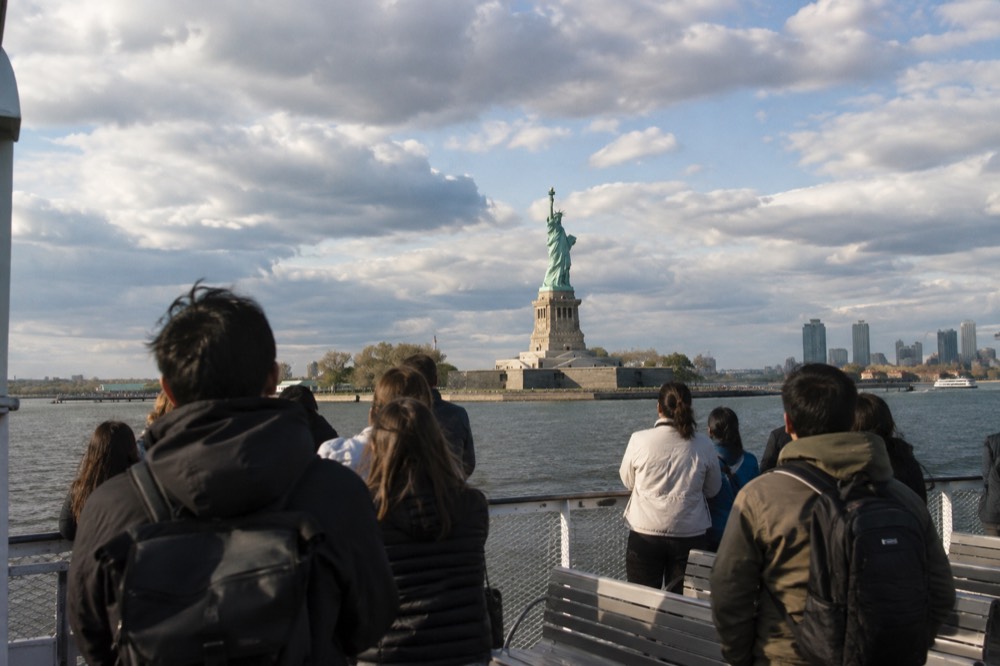
Day 2 is the harbor day, and the Statue of Liberty ferry is the anchor because it needs a full morning. Take the first or second sailing from Battery Park, do Liberty Island and Ellis Island, then spend the afternoon in the Financial District and at the 9/11 Memorial, and finish by walking the Brooklyn Bridge toward sunset. Book the ferry in advance through the official operator, because lookalike cruises circle the islands and never land.
Only one ferry operator is authorized by the National Park Service to land at Liberty Island and Ellis Island: Statue City Cruises, sailing from Battery Park and from Liberty State Park in New Jersey. The official adult ticket is $26.00, children 4-12 pay $17.00, and that covers the round trip, both islands and both museums. Our Statue of Liberty tickets guide breaks down the tiers.
The warning that saves trips: plenty of harbor cruises sell tickets that sound similar and cost more, and their boats circle the islands without landing. If standing on Liberty Island matters to you, the official ferry is the only route. The crown costs just thirty cents more than the grounds ticket, $26.30, but crown access sells out months ahead, is limited to four tickets per household and requires photo ID. For a three-day trip, the grounds ticket is the realistic choice.
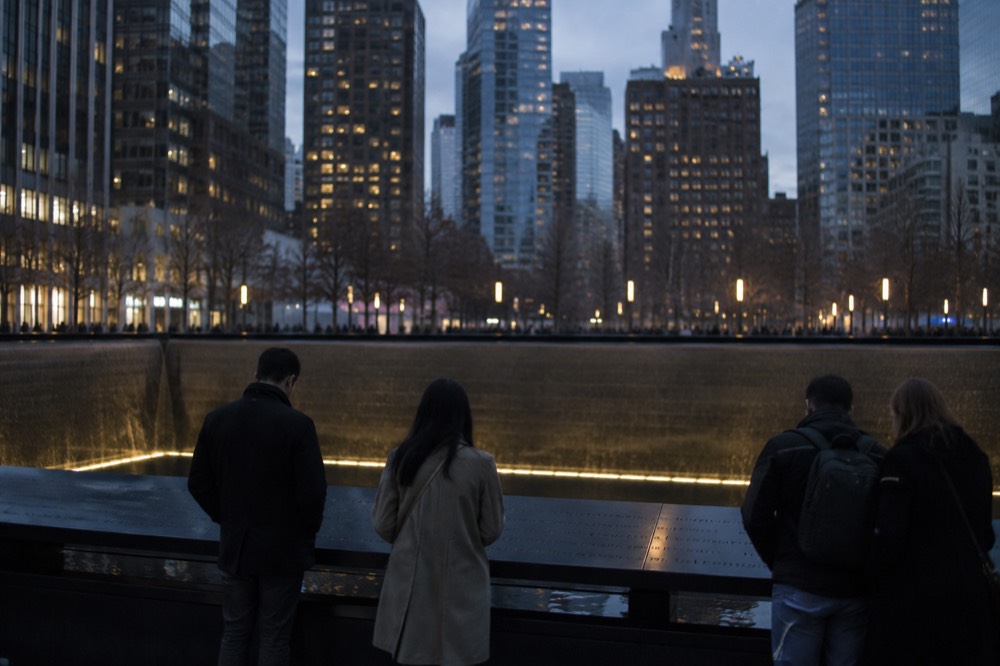
Back on land, the afternoon writes itself. The Financial District is a fifteen-minute walk from the ferry terminal: Wall Street, Federal Hall and the colonial-era lanes survive between the towers. The 9/11 Memorial plaza, the two reflecting pools, is free and open daily 8am to 8pm, no ticket needed. The museum beneath it is a separate timed ticket, $36 for adults, and it deserves two hours rather than a rushed half. Describe it plainly: it sits at the site of a mass killing, and it is a place for quiet attention, not a stop on a sweep.
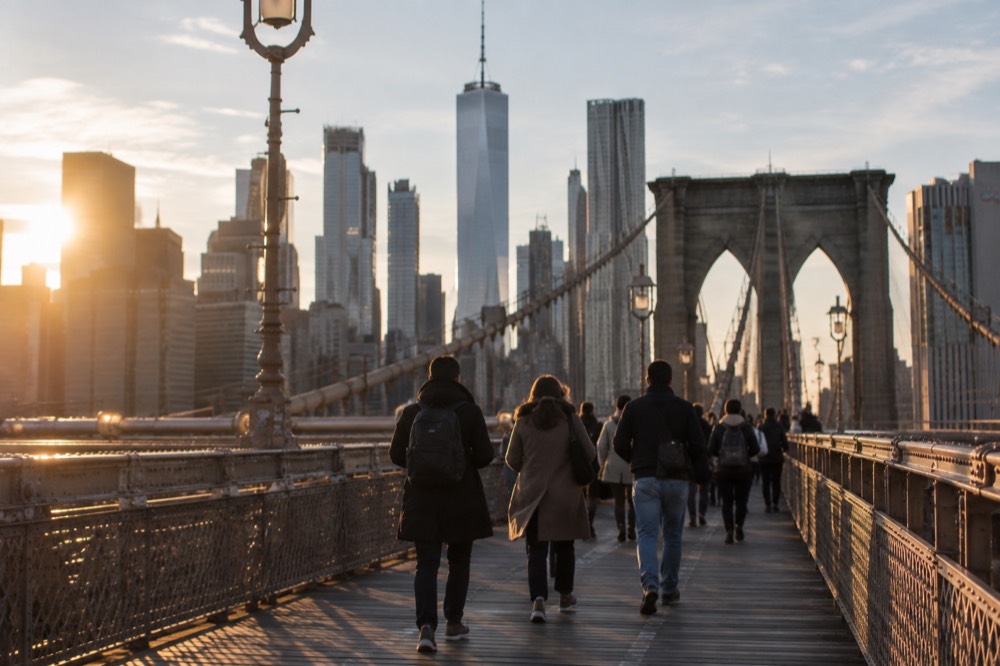
End the day on the Brooklyn Bridge. The pedestrian promenade takes about forty minutes at photo pace, and walking toward Brooklyn at sunset puts the skyline behind you. Turn down into DUMBO for the Washington Street view of the Manhattan Bridge if your legs allow, then take the F back from York Street, or re-cross on foot.
What Should Day 3 in NYC Cover?
Day 3 pairs Central Park with one museum and a Broadway show, and the order depends on the day of the week. Walk the park's southern half in the morning, from Grand Army Plaza to Bethesda Terrace, then spend the afternoon at the Metropolitan Museum of Art or the American Museum of Natural History, and finish with a show in the Theater District. Check the Met's Wednesday closure and its gallery-closure list before you commit.
Central Park in the morning is the calmest version of itself. The southern loop, Grand Army Plaza, the Mall, Bethesda Terrace and Bow Bridge, takes about ninety minutes at a stroll and covers the postcard set without getting lost in the northern woods. Our Central Park guide maps the full options if you have more energy.
The museum choice is a real fork. The Metropolitan Museum of Art is on the park's eastern edge; admission is $30 for adults, $22 seniors, $17 students, free for children 12 and under, and pay-what-you-wish applies only to New York State residents and NY, NJ and CT students, with proof. One ticket also covers The Cloisters the same day, which is a genuinely overlooked perk. But the Met is closed Wednesdays, and a long list of galleries, including the Costume Institute and parts of the modern and contemporary wing, are closed for renovation, so check the museum's gallery-closures page for what is open on your date. The American Museum of Natural History on the western edge is the family pick, with dinosaur halls and the planetarium. The full index of guides sits on New York City Travel Guide.

The evening is Broadway. If you have not booked ahead, the TKTS booth in Duffy Square sells same-day tickets at 20-50% off face value plus an $8 fee, and the app shows live inventory. Our cheap Broadway tickets guide covers lotteries and rush options, which commonly land seats in the $30-$50 range.
A Day 3 that works:
| Time | Stop | Notes |
|---|---|---|
| 9:00-10:30 | Central Park southern loop | Grand Army Plaza to Bethesda Terrace |
| 11:00-14:30 | The Met or AMNH | Met closed Wednesdays; check closures |
| 15:00-17:00 | Back through the park or Fifth Avenue | Flexible |
| 17:30 | TKTS booth, Duffy Square | Same-day tickets, next-day matinees |
| 20:00 | Broadway show | Book or queue, either works |
How Much Do 3 Days in NYC Cost?
A three-day budget hinges on three big line items: the observation deck, the ferry and the show. The official ferry is $26, one deck starts from $30.49 at One World Observatory while three others list from $47.91, the Met is $30, and a Broadway ticket can run from lottery prices of $30-$50 up to full box office.
Transit is capped at $35 with OMNY, and a CityPASS at $149 adult can cut the attraction line if your plan matches its list.
The honest version of an NYC budget has wide bars because the spread between a frugal trip and a comfortable one is enormous. The three line items that move the total are the deck, the ferry and the show; everything else in a New York day can be as cheap or as expensive as you choose. Here is a per-person planning range for the fixed costs:
| Category | Budget range (3 days) | Notes |
|---|---|---|
| Subway and local bus | Up to $35 | OMNY weekly cap, automatic |
| Airport round trip | $6-$24 | LGA cheapest at $3 each way; JFK $11.75 each way |
| Statue of Liberty ferry | $26 | Official adult ticket, both islands |
| Observation deck | $30-$48 | One World cheapest; three decks price at $47.91 from |
| One major museum | $30 | Met adult; MoMA also $30 |
| Broadway ticket | $30-$150+ | Lottery vs box office |
| Food | $60-$150 per day | Slice-and-bagel days vs sit-down dinners |
| CityPASS (optional) | $149 adult | Five attractions, 9 consecutive days |
The deck pricing detail most guides miss: One World Observatory starts from $30.49, while the Empire State Building, SUMMIT One Vanderbilt and Edge all list from $47.91. The comparison between them is about the view and the experience, not the price, but if budget drives the choice, the downtown deck is $17.42 cheaper than the top three.
The CityPASS math only works if you use all five choices, and its window is nine consecutive days, which a three-day trip can fill only with a packed plan. If your three days include the ferry, a deck and two museums from its list, it pays off. If your plan is looser, book individually.
How Do You Get Around During 3 Days in NYC?
You get around on the subway and on foot, and you pay by tapping a contactless card or phone with OMNY: $3.00 a ride, one free transfer within two hours, and an automatic $35 weekly cap per person. Do not rent a car in Manhattan, do not plan around taxis except in a pinch, and budget real walking time. Uptown and downtown are the local words for the two directions.
The single most important rule is invisible: tap the same card or device every time. The $35 weekly cap starts from your first tap and only counts rides on that one card or phone, so switching between your phone and the plastic in your pocket silently breaks the cap. Groups do not share a cap either; each traveler needs their own card.
The second rule is directional. New Yorkers say uptown and downtown, not north and south, and the platforms are labeled that way. Express and local is a real distinction: an express train skips stations and can save ten minutes on a long crosstown haul, but it can also drop you six blocks past your stop. When in doubt on a three-day trip, take the local.
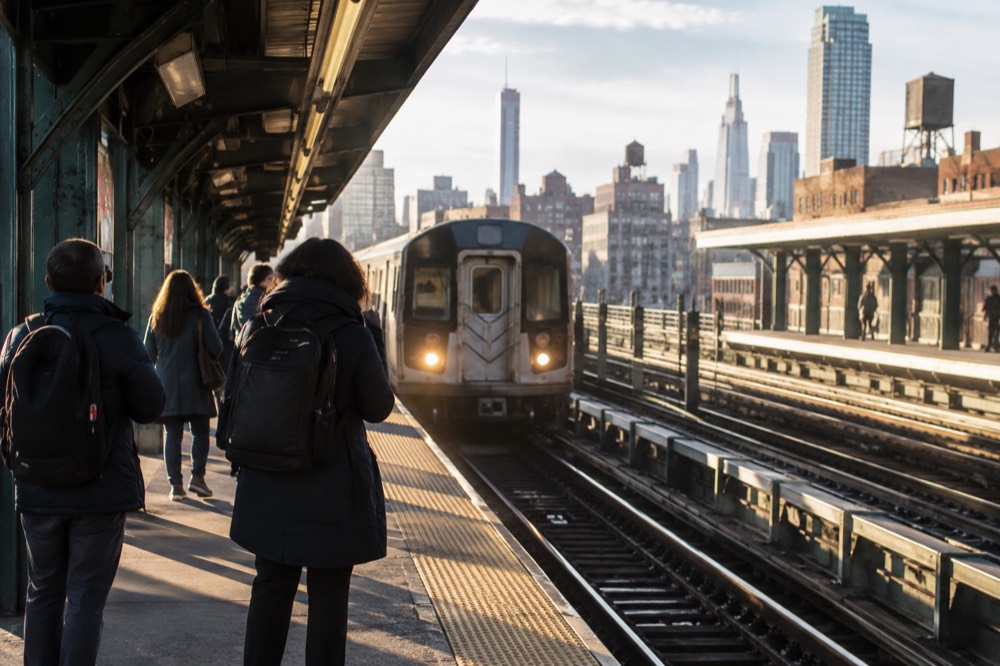
Transit legs for this itinerary, so you can sanity-check the pacing:
| Leg | Line | Rough time |
|---|---|---|
| Midtown to Battery Park (Day 2) | The 4 or 5 to Bowling Green | 20-25 min |
| DUMBO back to Midtown (Day 2 evening) | The F from York Street | 25 min |
| Midtown to Central Park (Day 3) | The N, R or W to 5th Ave/59th St | 10 min |
| Museum to Times Square (Day 3) | The 7 from 5th Ave | 10 min |
What Can You Skip If You Run Short on Time?
Cut in this order: the second observation deck, Ellis Island's full museum if the ferry runs late, the museum on Day 3 in favor of the park, and any neighborhood that needs a dedicated subway leg. Do not cut the ferry, the bridge walk or the Broadway show, because those are the three experiences that do not compress. Times Square needs ten minutes, not an evening, and Rockefeller Center can be a walk-past rather than a stop.
The trap in a three-day trip is the second deck. Once you have seen the skyline from SUMMIT or the Empire State Building, the marginal value of a second paid view is low; the free view from the Brooklyn Bridge promenade is better than most decks because the skyline is in it. If you want a second perspective, walk the bridge at sunset on Day 2 and count that as your second deck.
Ellis Island is the harder cut. The National Museum of Immigration is genuinely moving and it is included in the ferry ticket, but if your sailing left late and the afternoon is going, Liberty Island plus the skyline from the water is the core of the experience. Decide on the boat, not before.
The one thing not to compress is meals. New York is a food city and the cheapest version of it, a slice, a bagel, a deli sandwich, is also among the best. Sitting down for a real dinner in the Village or Chinatown on one of the three nights is not time lost from sightseeing; for many visitors it is the thing they remember.
Common Questions About 3 Days in NYC
The questions below are the ones that decide whether a three-day New York trip works: how many days are enough, which attractions to book ahead, whether the pass pays off, what to cut and how to pace the days. Each answer is short and direct, because these are planning decisions, not essays. Read them before you book anything with a timed entry.
Is 3 days in NYC enough?
Yes, for a first pass at Manhattan: one deck, the ferry, Central Park, one museum and a show all fit at a human pace. No, if you want Brooklyn, Harlem or Queens beyond a single walk. Treat it as a first trip that earns a second.
What should I book before arriving for 3 days in NYC?
Book the Statue of Liberty ferry, one observation deck slot and a Broadway show if you want specific seats. The Met and MoMA can be bought on the day. Crown tickets need months of lead time, but the standard grounds ferry ticket needs only a few days ahead in most seasons.
Is the New York CityPASS worth it for 3 days?
Only if your plan uses five of its attractions inside the nine-day window. A packed three-day itinerary hitting the ferry, a deck and two museums from its list can save real money. A loose plan is better served by booking individually.
What is the best order for 3 days in NYC?
Day 1 Midtown and a deck, Day 2 the harbor and Lower Manhattan, Day 3 Central Park, a museum and Broadway. The order matters because the ferry needs a morning and the museum needs a non-Wednesday if you choose the Met.
How much walking is involved in 3 days in NYC?
Expect five to eight miles a day. Comfortable shoes are not a cliché here; the subway stairs and long blocks punish the wrong pair. Plan one seated block per day, the deck, the museum or the show, to break it up.
Can you do Brooklyn in a 3-day NYC trip?
Partly. The Brooklyn Bridge walk into DUMBO on Day 2 gives you the classic Brooklyn view without a dedicated day. A real Brooklyn day, Williamsburg or Prospect Heights, is worth having but it costs you one of your three anchors. Save it for the second trip.
The last word on pacing: three days rewards the traveler who books the two or three timed things early and lets the rest of each day fill in around them. The ferry slot, the deck slot and the show are the skeleton. Everything else in this itinerary can bend, and the best hours of a New York trip are usually the unplanned ones between the anchors.