Yankee Stadium Tour: What You Get, What It Costs and Whether It Is Worth It
Yankee Stadium sits in the South Bronx, roughly thirty minutes from Midtown Manhattan by subway, and its guided tours are one of the few big-league ballpark visits reachable on a single MetroCard tap. Here is what the tour involves, how to book it honestly, and how to decide if it belongs on your trip.
Short answer
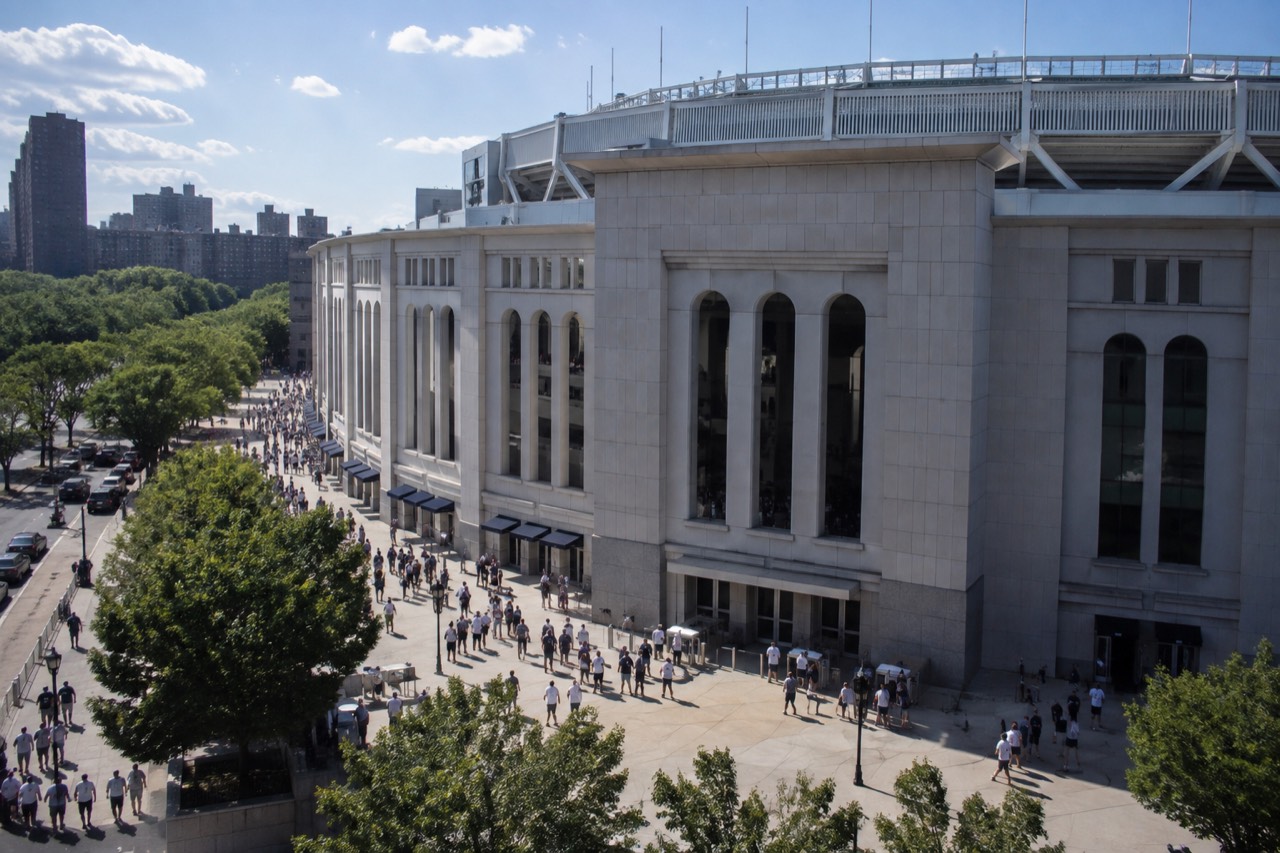
The Yankee Stadium Tour is a guided walk through parts of the ballpark the public never sees on game day, typically including the Yankees Museum, Monument Park, the press box and, on non-game days, areas like the dugout. Tickets are sold through the Yankees' official site, availability shifts with the game schedule, and no major New York attraction pass covers it.
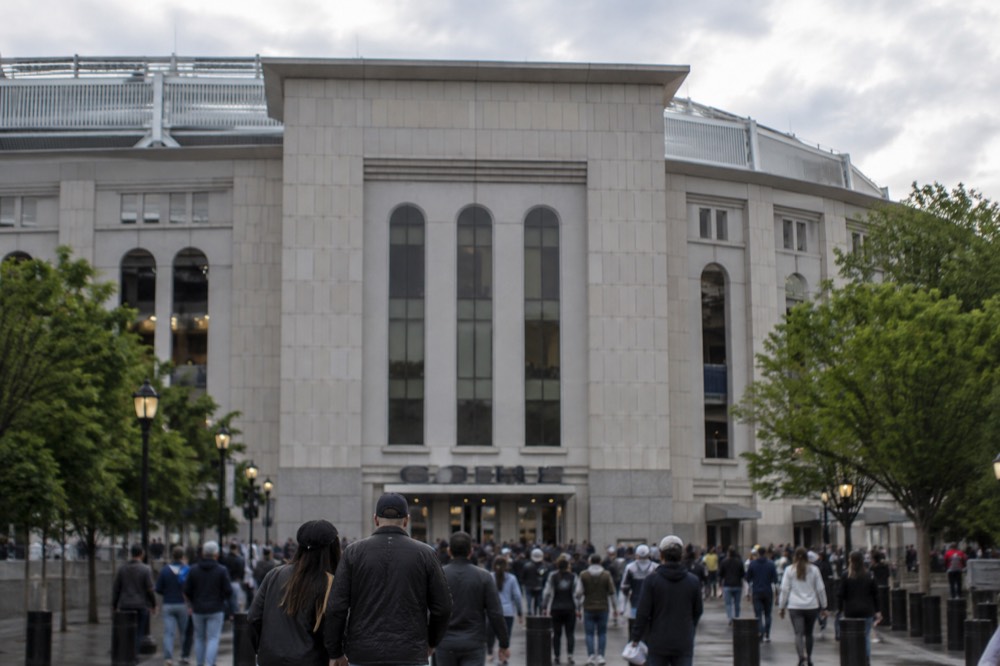
The 4 train pulls into 161 St-Yankee Stadium and the platform fills with people wearing navy pinstripes. That station complex, serving the ballpark directly, is the reason a stadium visit is one of the easiest add-ons in New York: no bus, no transfer, no planning beyond a subway ride. The tour itself is a different proposition. It is a ticketed, scheduled experience inside a working ballpark, which means its availability bends around the game calendar in ways a museum never does. This page covers what the tour involves, how to think about cost without relying on stale numbers, how to get there on the current fare system, and how to judge the value.
What Is the Yankee Stadium Tour?
The Yankee Stadium Tour is a guided, ticketed walk through the Bronx ballpark run by the New York Yankees organization, taking visitors into areas normally closed on game days: the Yankees Museum, Monument Park, the press box level and, when the schedule allows, the dugout. Tours run in several formats, from a standard guided visit to premium and game-day variants, and the exact route changes with what the building is being used for that day.
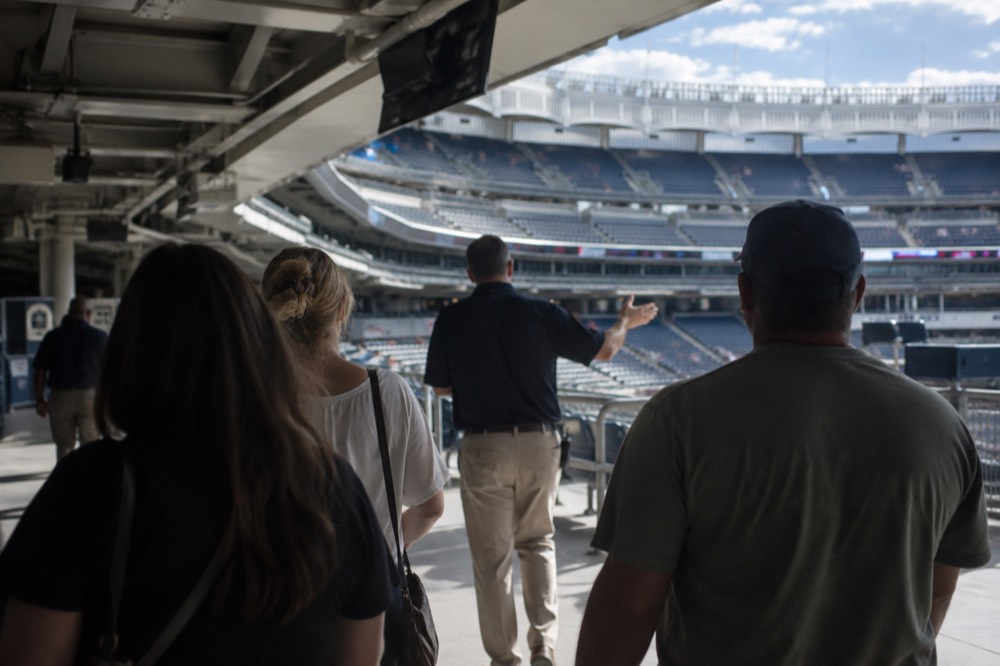
The core appeal is access. On game day, a ticket gets you a seat and a concourse. On a tour, you walk spaces the public rarely enters: the museum gallery with its memorabilia, the monuments and retired numbers in Monument Park along the left field wall, the press box with its view down at the diamond, and often the home dugout itself. Which of those you see depends on the variant you book and on whether the team is home.
The second thing to understand is that this is a live venue, not a museum with fixed rooms. A touring day and a game day collide constantly. When the Yankees are home, access to the field level, the dugout and the clubhouse areas shrinks or disappears, because those spaces are being prepared for professional use. The premium formats exist partly to buy access on days the standard tour cannot offer it. None of this is hidden: the official tour booking pages state which areas each variant includes, and reading that list before paying is the single most useful thing a visitor can do.
Third, the context. The Bronx is one of New York's five boroughs, and Yankee Stadium is its most visited attraction by a wide margin. A tour here is also, incidentally, a reason to visit a borough most Manhattan-centered itineraries skip entirely. If you are building a broader plan, our things to do in the Bronx guide covers what else is within reach of the same subway stop.
How Do You Book a Yankee Stadium Tour, and What Does It Cost?
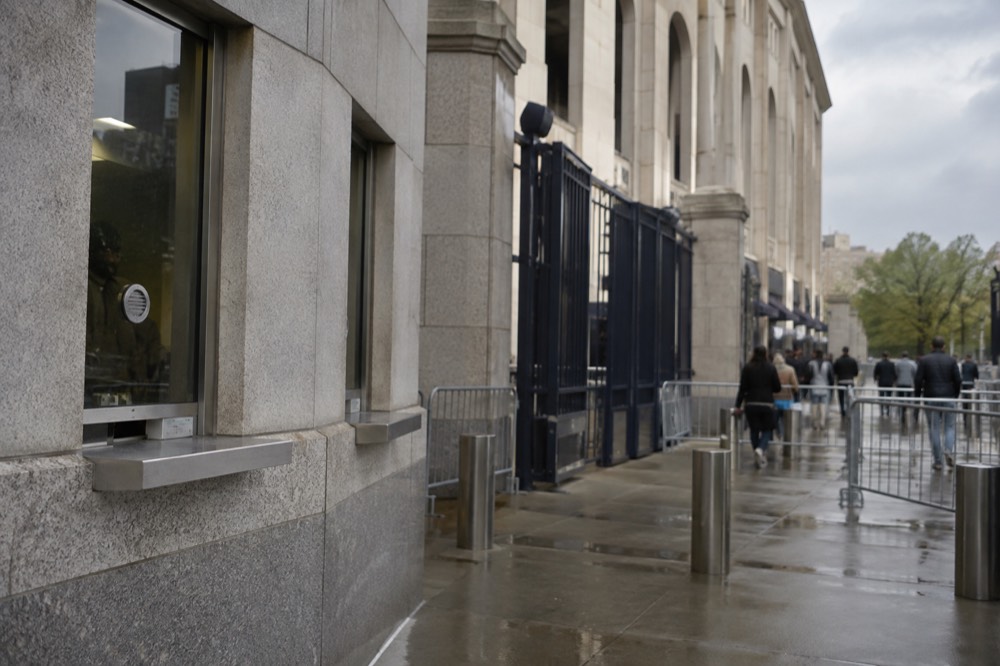
The correct channel is the Yankees' official website, where tour tickets are sold by date, time slot and tour type, with prices shown before checkout. Resale desks and hotel concierges can sell you a stadium tour, sometimes at a markup, so compare against the official listing before paying anyone. Prices vary by tour format and season, and this guide does not quote one, because a stale figure is worse than none: the live booking page is the source of truth.
Booking strategy matters more here than at a museum. Three practical rules:
First, book around the game schedule, not just the calendar. The Yankees publish their season schedule well in advance, and the difference between a tour on an off day and a tour on a home-stand day is the difference between a full route and a restricted one. If the dugout and field-level access are the reason you are going, pick a date with no home game.
Second, buy from the source. The official site lists the tour variants, their durations and their included areas. Third-party sellers are not necessarily dishonest, but the markup and the fine print live in the gap between their page and the official one. If a third party cannot tell you which areas the tour includes on your date, buy elsewhere.
Third, timing. Tours sell out around popular dates, especially summer weekends and any period tied to a home stand, marquee opponent or a bobblehead giveaway. The same rule that applies to the Statue of Liberty's crown applies here in miniature: the scarce thing is not the money, it is the slot.
One cost question deserves a direct answer: no, the major New York attraction passes do not cover it. The verified CityPASS attraction list, read directly from the operator's own materials, includes the Empire State Building, Top of the Rock, the 9/11 Memorial & Museum, the Statue of Liberty ferry, the American Museum of Natural History, the Intrepid, the Guggenheim, the Whitney, Edge and a Circle Line cruise. Yankee Stadium is not on it. If a reseller claims a pass includes the stadium tour, check that pass's own current attraction list before believing it. Our New York CityPASS guide has the full breakdown.
For travelers pairing the ballpark with the rest of a first visit, these are the experiences most often booked alongside a Bronx outing:
The pass above is the one to compare against individual tickets, but only if the stadium tour is a small part of a dense sightseeing plan. For a trip built around baseball, it is irrelevant.
How Do You Get to Yankee Stadium?
Yankee Stadium is served directly by its own subway station, 161 St-Yankee Stadium, with the fare at $3.00 per ride and an automatic weekly cap of $35 under OMNY, the tap-to-pay system that replaced the MetroCard, which the MTA stopped selling and refilling on 1 January 2026. From most of Manhattan the ride is roughly half an hour, and the ballpark is visible from the station platform, so wayfinding is essentially impossible to get wrong.
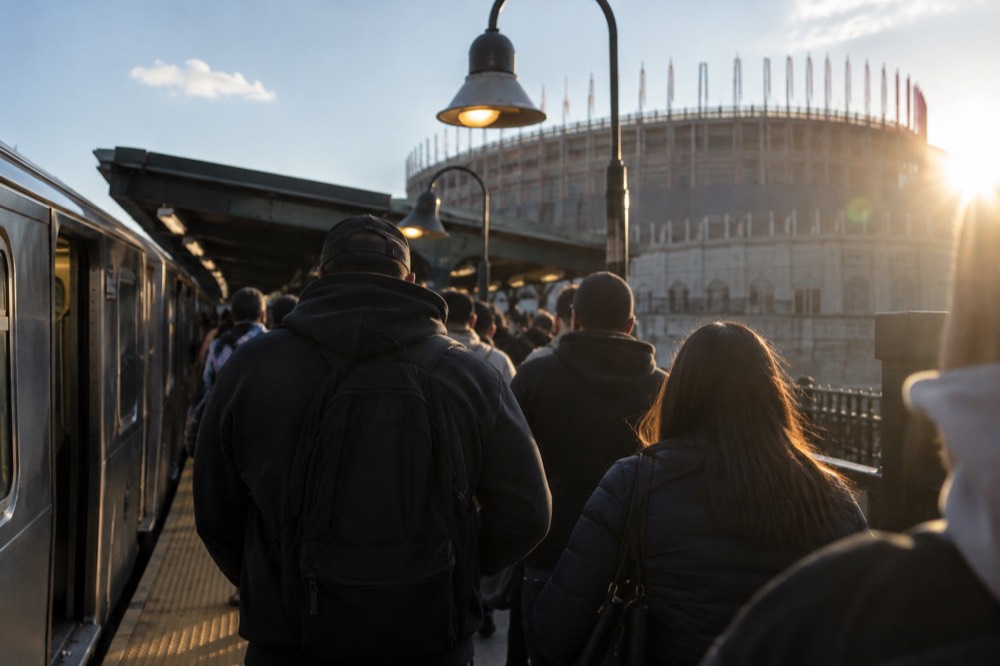
The fare mechanics are worth knowing because most guides still get them wrong. There is no 7-day unlimited pass to buy any more. The MetroCard retired: as of 1 January 2026 the MTA no longer sells or refills them, and the old unlimited passes had to be started by 31 March 2026. The replacement is OMNY, which works with a contactless credit or debit card, a phone or a watch, and caps your spending automatically: once you hit $35 in subway and local bus rides inside a rolling seven-day window that starts with your first tap, every further ride that week is free. No pass to buy, no decision to make. The one rule that matters is to tap the same card or device every time, because the cap is tracked per card and mixing your phone with the plastic card in your pocket breaks it silently. Our NYC subway guide covers the system in full.
A fare comparison for the realistic options from Manhattan:
| Option | Fare | Notes |
|---|---|---|
| Subway to 161 St-Yankee Stadium | $3.00 | Direct station at the ballpark; counts toward the $35 weekly OMNY cap |
| Local bus connections | $3.00 | Free transfer to or from the subway within 2 hours |
| Express bus | $7.25 | Counts toward the higher $67 weekly cap that includes express routes |
| Reduced fare (eligible seniors and disabled riders) | $1.50 | Subway and local bus, at all times |
| Children under 44 inches | Free | Up to three children per fare-paying adult, subway and local buses |
Fares and rules in that table are published by the MTA. Anything about travel time beyond "roughly half an hour from most of Manhattan" depends on your starting point and service conditions, so check a live trip planner on the day. Weekday construction and service changes are a fact of life on the subway, and game days add crowds that fill the arriving trains two hours before first pitch. If you are taking a tour rather than a game, you will usually travel outside those peaks, which is one of the quiet advantages of the tour format: the station at 11am on a Tuesday is a different place from the station at 6pm on a Friday.
For travelers combining the stadium with Midtown sightseeing, the geography is friendlier than it looks. The ballpark sits at the top of a straightforward subway ride from Grand Central's side of Manhattan, and SUMMIT One Vanderbilt, one of the city's most-booked observation experiences, sits directly next to Grand Central Terminal. Doing both in one day, decks in the morning and ballpark in the afternoon, is a common and workable pattern.
What Do You Actually See on the Tour?
The standard route strings together the ballpark's public-facing highlights and its behind-the-scenes areas: the Yankees Museum with its championship memorabilia, Monument Park with the retired numbers and plaques along the left field wall, the press box and broadcast level with the view down the third base line, and, on non-game days, typically the dugout. Premium variants add stops the standard tour skips, and the official listing for each variant states exactly which areas are included.
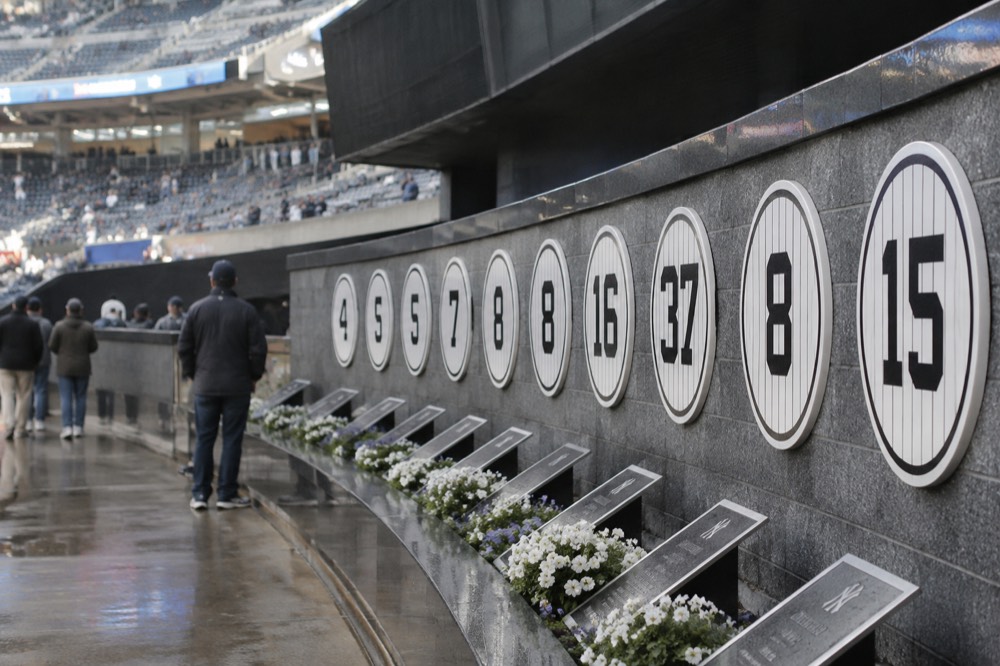
Two stops carry most of the emotional weight. Monument Park is where the franchise's history is physical: the retired numbers, the plaques, the names that span a century of baseball. Guides here earn their fee, because the stories behind the monuments are the reason to stand in front of them rather than walk past. The Yankees Museum is the other anchor, and it is the stop most affected by touring formats: exhibits rotate, and championship artifacts move between display and storage.
The dugout and field level are the stops people remember, and they are also the stops most at risk on game days. If seeing the field from the home dugout is the entire reason for your visit, plan around the schedule, book an off day, and confirm the included areas when you buy. A tour that excludes the dugout is still a good tour; it is just a different product, and you should know which one you paid for.
What the tour is not: a baseball game. If your interest in the stadium is watching baseball, a cheap ticket to a game is a different and arguably better experience, and the Yankees' schedule gives you eighty-one home dates to choose from. The tour is for people who want the building and its history, not nine innings.
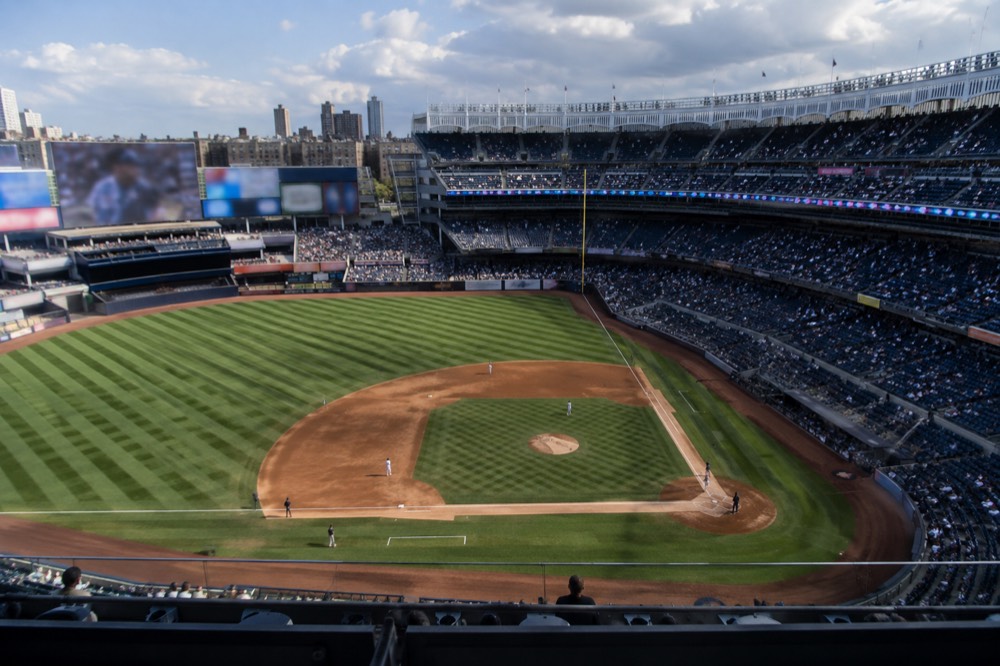
A comparison of the realistic visit formats:
| Format | What it is | Access | Best for |
|---|---|---|---|
| Guided tour, off day | Scheduled guided walk, full route | Museum, Monument Park, press level, typically dugout and field level | First-time visitors who want the complete route |
| Guided tour, game day | Same product on a restricted route | Museum and public-facing areas; field-level access reduced or unavailable | Visitors already attending the game that day |
| Premium tour variants | Extended or enhanced formats | Adds stops the standard route skips, per the official listing | Dedicated fans and repeat visitors |
| Game ticket only | A seat at a game | Seating bowl and concourses only | People who want baseball, not architecture |
The exact inclusions of each variant are on the Yankees' official tour pages at mlb.com/yankees, and that is where the final word on any given date's route lives.
When Is the Best Time to Take a Yankee Stadium Tour?
The best time is a weekday with no home game, in the morning, because the tour route is fullest when the ballpark is empty and the dugout and field-level stops are open. Avoid the hours before a home game entirely, since the building shifts into operational mode and the restricted route delivers less for the same ticket. Seasonally, spring and early fall give you the widest choice of off days and the most comfortable walking weather.
The game schedule is the whole decision. The Yankees publish home and away dates months ahead, and the pattern of a season means some weeks are wide open and others are a wall of home games. A visitor with fixed dates should check the schedule first and buy the tour second. A visitor with flexible dates should work backwards: find the off day, then build the day around it.
Weather matters less than you would expect, because much of the tour route is indoors or under cover, but the walk between stops crosses open concourses, and the Bronx in late July, when Central Park's climate normals show an average high of 84.9 degrees, is a different proposition from May. For what it is worth, and contrary to most visitors' assumptions, the verified NOAA normals for Central Park show July as New York's wettest month, at 4.60 inches of precipitation on average, ahead of both August and June. Summer in New York is not the dry season people imagine.
The official 1991-2020 climate normals for Central Park, month by month across the main visiting season:
| Month | Avg high (Central Park normals) | Precipitation | What it means for a tour visit |
|---|---|---|---|
| April | 61.8 °F | 4.09 in | Mild and comfortable on the open concourses |
| May | 71.4 °F | 3.96 in | One of the most pleasant months for the walks between stops |
| June | 79.7 °F | 4.54 in | Warm; a morning slot beats the afternoon heat |
| July | 84.9 °F | 4.60 in | The hottest and the wettest month; book morning and plan for showers |
| September | 76.2 °F | 4.31 in | Warm without the July peak; check the home schedule when picking a date |
| October | 64.5 °F | 4.38 in | Cool and crisp; a layer for the open-air stops is enough |
Those figures are the NOAA 1991-2020 monthly normals for Central Park, the nearest official long-run climate record to the stadium. They are averages, not forecasts, so treat them as a planning baseline rather than a promise about any given week.
Is the Yankee Stadium Tour Worth It?
For a baseball fan, the tour is one of the better-value experiences in New York, because it delivers something the city's other attractions cannot: a working major-league ballpark from the inside, reachable by one subway ride. For a neutral visitor with limited days, it is a specialist pick.
If your trip is three days or fewer and baseball is not an interest, the museums, decks and harbor will out-earn a Bronx ballpark walk; the honest answer is to skip it.
The honest framing is that this is a test of your itinerary, not of the product. The tour is well regarded by the people who take it, and the most common criticism in visitor feedback is not the tour itself but the gap between expectations and the route on a restricted day, which is a booking problem, not a quality problem. Solve the booking problem and the complaint mostly dissolves.
Think about the day as a unit. The subway ride is roughly half an hour each way, the tour itself runs a couple of hours, and the stadium complex sits in a neighborhood with its own food and character. Budget most of a half day. If that half day comes out of a first visit that has not yet covered the Met, the 9/11 Memorial, the Brooklyn Bridge or a harbor view of the Statue of Liberty, those come first, and the things to do in NYC page is the place to sequence them. If your trip already covers the essentials, or you are a returning visitor, or someone in your party cares about baseball, the calculation flips completely.
How Does the Tour Fit with the Rest of the Bronx?
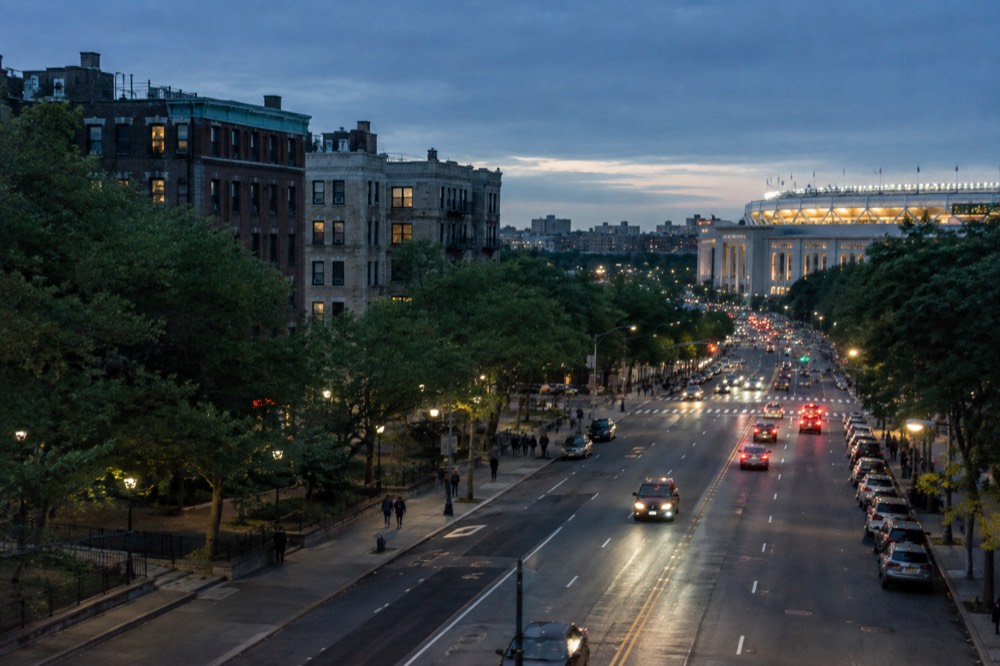
The stadium is the anchor, but the surrounding area rewards an extra hour: the Grand Concourse, one of the borough's grand boulevards, sits a short walk away, and the Bronx's food scene clusters around the same subway lines you arrived on. The practical pattern is stadium tour in the morning, lunch in the neighborhood, then the subway back to Manhattan for an afternoon attraction, which keeps the whole day inside one fare-capped transit day.
The Bronx does not need to be a detour. It is a borough with over a million residents, its own cultural institutions, and a food reputation that extends well beyond the stadium walls. The mistake visitors make is treating 161 St as an isolated attraction island: arrive, tour, leave. The better version gives the neighborhood the same hour you would give any other part of the city you came to see.
For visitors who want the neighborhood food experience with a guide rather than guesswork, a walking food tour is the established format in the city, and the downtown versions are the most booked:
Common Questions About the Yankee Stadium Tour
The questions below are the ones visitors actually ask before booking: whether game days change the tour, how long it runs, whether kids suit it, and whether a pass can pay for it. The short answers are that game days restrict the route, the standard tour runs around two hours, children are welcome and often get the most out of it, and no major pass includes the stadium. The detail follows in each answer.
Can you take a Yankee Stadium Tour on a game day?
Yes, tours generally run on game days, but the route is restricted because the ballpark is being prepared for play. Field-level, dugout and clubhouse access are the stops most affected. If those stops are the reason for your visit, book an off day instead; the official booking page states which areas each tour variant includes.
How long is the Yankee Stadium Tour?
The standard guided tour runs roughly two hours, with premium and extended variants running longer. Duration also depends slightly on group size and questions along the way, so treat the listing's stated length as the planning figure and build your day around it.
How much do Yankee Stadium Tour tickets cost?
Prices vary by tour format and date, and this guide does not quote a figure because a stale number is worse than none. The Yankees' official site shows the per-person price for each tour type and time slot before checkout, and that is the only reliable source. Compare any reseller or concierge price against it before paying.
Is the Yankee Stadium Tour good for kids?
Generally yes. The walking distance is moderate, much of the route is under cover, and the museum and Monument Park stops hold children's attention better than most museum galleries. Very young children may find the guided pacing slow. Check the listing for any age restrictions on premium variants before booking.
Does the New York CityPASS or any attraction pass include the Yankee Stadium Tour?
No. The verified CityPASS attraction list includes the Empire State Building, Top of the Rock, the 9/11 Memorial & Museum, the Statue of Liberty ferry, the American Museum of Natural History, the Intrepid, the Guggenheim, the Whitney, Edge and a Circle Line cruise. Yankee Stadium is not covered, so budget for it separately if baseball is on your list.
Is Yankee Stadium accessible for wheelchair users?
The ballpark is a modern venue with elevators and accessible seating throughout the seating bowl, and the tour route uses concourse level surfaces for most stops. Confirm accessibility details for the specific tour variant and date with the Yankees directly when booking, since some behind-the-scenes areas have access constraints.
The Verdict and a Practical Plan
Book the tour on an off day, arrive by subway with OMNY rather than any preconception about passes, confirm the included areas at the moment of booking, and give the neighborhood an hour after the tour ends. That four-step plan extracts nearly all of the available value from the experience and avoids the two ways it disappoints: a restricted route you did not expect and a price paid to a middleman.

A sample day that works: tap into the subway from wherever you are staying, ride to 161 St-Yankee Stadium, take a morning tour while the ballpark is quiet, eat lunch in the neighborhood rather than the concourse, and ride back to Manhattan for an afternoon at a museum or a deck. The whole transit day costs a single rider $3.00 per tap and stops charging at the $35 weekly cap. It is a day that costs less than a single observation-deck ticket and delivers something none of the decks can: a ballpark, its monuments, and a borough most visitors never reach. More planning help for the whole trip is on the New York City Travel Guide homepage, and if the visit falls on a longer stay, the decision stops being either-or and becomes sequencing, which is the easier problem to have.
For a longer trip that stacks attractions daily, this is the comparison worth running before you buy anything:
And if the pass maths does not favor you, a short or unplanned stay is better served by buying individual tickets to exactly the things you will actually do, stadium tour included.