Montauk from NYC: The Route, the Stops and How Long the Day Really Takes
Montauk sits at the far eastern end of Long Island, and the distance is the whole story of the trip: the reward is real, but the ride out and back will claim most of your daylight.
Short answer
Montauk is reachable from Manhattan by LIRR train, by Hampton Jitney bus, by car, or on a guided Hamptons day tour. The journey is long in every case, so most visitors treat Montauk as either an early-start day trip or an overnight, and the guided tours that reach the eastern end of Long Island typically bundle Sag Harbor and outlet shopping into the same day.
Montauk is the last stop. That is not a figure of speech: the Long Island Rail Road line that leaves Manhattan ends there, at a small station near the fishing docks, and beyond it there is nothing but the Atlantic. The village sits at the eastern tip of Long Island, past the Hamptons, roughly three hours from Midtown by train or car on a good day. On a summer Friday it can be longer, a lot longer, because the same road that carries you carries everyone else who had the same idea.
That distance shapes everything about this article. A day trip to Montauk from NYC is absolutely possible, and plenty of people do it, but it is a different animal from a day trip to the Hamptons or a quick hop to Coney Island. You are committing most of your daylight to the round trip. This guide walks through the four realistic ways to make the journey, what each one costs in time and effort, what to actually do when you arrive, and how to decide whether Montauk deserves the day or whether a closer destination serves you better.
How Do You Get from NYC to Montauk?
You have four realistic options: the LIRR train from Grand Central Madison or Penn Station, the Hampton Jitney bus from Manhattan stops, a self-driven run along the Long Island Expressway and Montauk Highway, or a guided day tour out of Manhattan. Train and bus drop you in the village center where you can walk.
A car gives you the only real flexibility to reach the lighthouse and the state park beaches, but someone has to drive it both ways, and summer traffic on the single east-west road is the tax everyone pays.
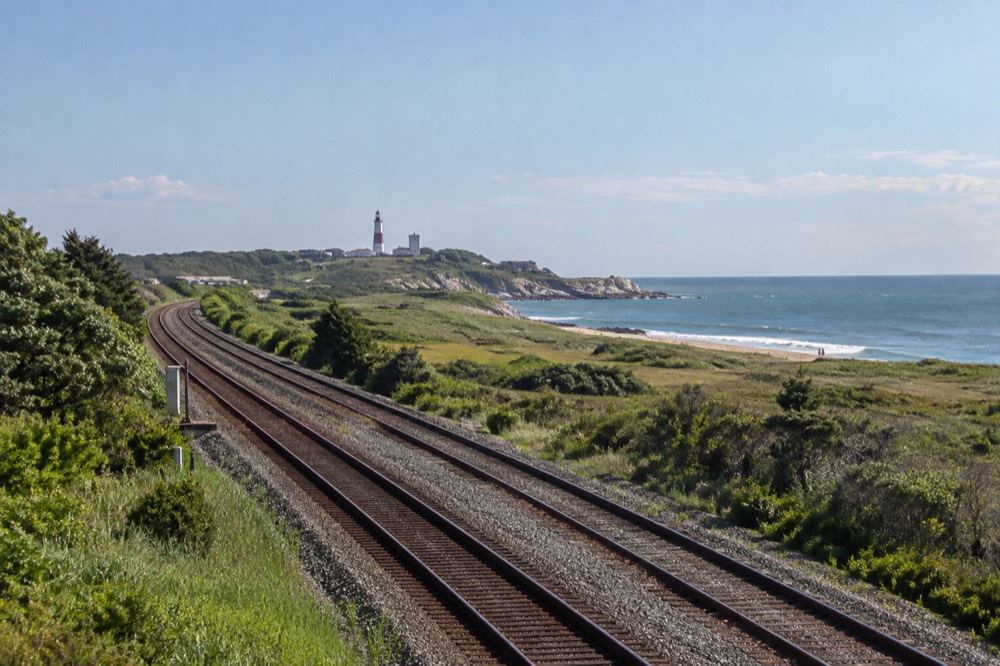
The train is the option most first-timers picture. The LIRR runs service along the Montauk branch, and the ride is long but calm, threading through the towns of the North Fork approach and ending steps from Montauk's harbor. Check the current Montauk branch timetable before you commit, because off-season weekend service is thinner than summer service, and a missed connection on the way back can turn a long day into a very late one.
The Hampton Jitney bus is the other classic. It picks up at multiple Manhattan locations and runs frequent service to the Hamptons towns and on to Montauk. The bus shares the same road as the cars, so it earns no exemption from Friday traffic, but you can sleep, and the driver handles the parking situation, which in Montauk during July and August is not a small thing.
Driving is the choice for people who want the lighthouse, Kirk Park Beach, or the trails of Montauk Downs without waiting for a local cab. The trade is simple: you get total freedom and you give up the ability to nap, read, or drink anything at dinner. Parking in the village fills early in peak season, so an early start matters more than a fast drive.
The guided tour option deserves more respect than it usually gets, and we cover it in its own section below.
| Option | Where it starts | Who it suits | Main drawback |
|---|---|---|---|
| LIRR train | Grand Central Madison / Penn Station | Travelers who want no traffic risk and a walkable arrival | Long ride, limited off-season frequency |
| Hampton Jitney bus | Multiple Manhattan stops | Visitors who want door-to-village service without driving | Same road as the cars, summer congestion |
| Rental car or own car | Anywhere | Anyone set on the lighthouse and state park beaches | You drive both ways, parking is tight in season |
| Guided day tour | Manhattan hotel pickup points | First-timers who want the coast without the logistics | Fixed itinerary, less time in Montauk itself |
One note on car hire: renting a car makes sense only for a day trip like this, never for getting around the city itself. The honest answer for transportation inside New York is the subway, and the same is true for most of Manhattan before you leave it. If you want the full picture on fares, the MTA ended MetroCard sales on 1 January 2026 and the $35 weekly OMNY cap now does the work the old 7-day unlimited used to do, applied automatically when you tap the same card or device every time.
How Long Does the Trip from NYC to Montauk Really Take?
Plan on the journey eating roughly six to seven hours of your day round trip, door to dock, in normal conditions, and more than that on a summer Friday or holiday weekend. The ride east is only half the equation: you also need to be back at the Montauk station or bus stop in time for the last departure, which in practice means your day in the village has a hard stop in the late afternoon.
Anyone who tells you Montauk is a quick escape from Manhattan is describing an overnight, not a day trip.
The honest arithmetic works like this. If a morning train or bus gets you there around midday, you have the afternoon in Montauk: lunch, a walk, the beach, maybe the lighthouse if you have wheels or the local shuttle is running. Then you turn around. Arriving back in Manhattan in the evening is normal and achievable. What is not achievable is a leisurely sunset dinner in Montauk followed by a same-night return, unless you are driving and willing to arrive home very late.
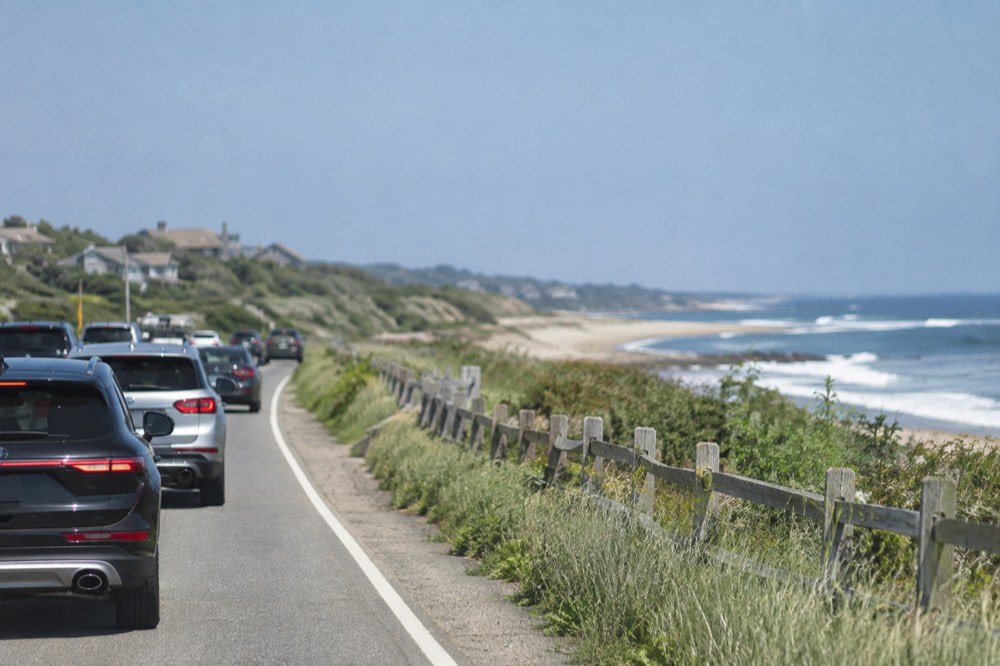
Summer changes the calculus on the road. The Long Island Expressway and Montauk Highway are the main arteries for the entire South Fork, and the Friday and Sunday waves of weekenders share them with you. The train sidesteps congestion but runs on its own schedule, so a delayed morning departure compresses your afternoon rather than extending it.
An early start is the single best decision you can make. Leaving Manhattan in the first hours of the morning buys you the calm version of Montauk: empty breakfast spots, easy parking, a beach that still feels local. Leave at noon and you will meet the day-trip crowd head-on at the worst point of the road.
If the length of this trip gives you pause, that instinct is worth listening to. Plenty of visitors decide the far coast is better saved for an overnight with a real morning in it, and spend their single free day on a shorter run instead. Our day trips from NYC guide lays out the full menu, from the Hudson Valley to Philadelphia, sorted by how much of your day each one costs.
If you would rather compare guided options that leave the logistics to someone else, these are the day tours currently worth a look:
Is a Guided Hamptons and Montauk Day Tour Worth It?
A guided tour makes sense when you value the coast itself over maximum hours in Montauk village, because the tours that reach the eastern end of Long Island typically pair it with Sag Harbor and an outlet stop rather than parking you in one place all day. The upside is real: no driving, no parking, no timetable anxiety about the last train.
The trade is equally real: you see Montauk on the operator's clock, not yours, and the stop is one act in a longer play.
The strongest match on our roster is the Hamptons, Sag Harbor and outlet shopping day trip. It runs a long but organized day out of Manhattan, pairing ocean-side villages with the historic whaling port of Sag Harbor and a shopping stop on the way home. The price starts from $161 per person, the day runs about 14 hours, and it carries a 4.5 rating from 164 reviews. For a traveler who wants a genuine taste of the South Fork without renting a car or studying a rail timetable, it answers the question cleanly.
The tour logic is worth spelling out. Montauk's isolation is its charm and its cost. A guide absorbs the cost: the driving, the parking, the timing, the knowledge of which village is worth which hour. What a guide cannot absorb is your preference. If your heart is set on a slow afternoon on a specific Montauk beach, or on watching the surfers at Ditch Plain on your own schedule, the tour format will fight you, and the train or a car will serve you better.
Families and groups often come out ahead on guided transport for a reason that has nothing to do with commentary: a coach seat means nobody in your party spends the day as the driver. On a trip this long, that matters more than it would on a two-hour outing.
What Should You Actually See and Do in Montauk?
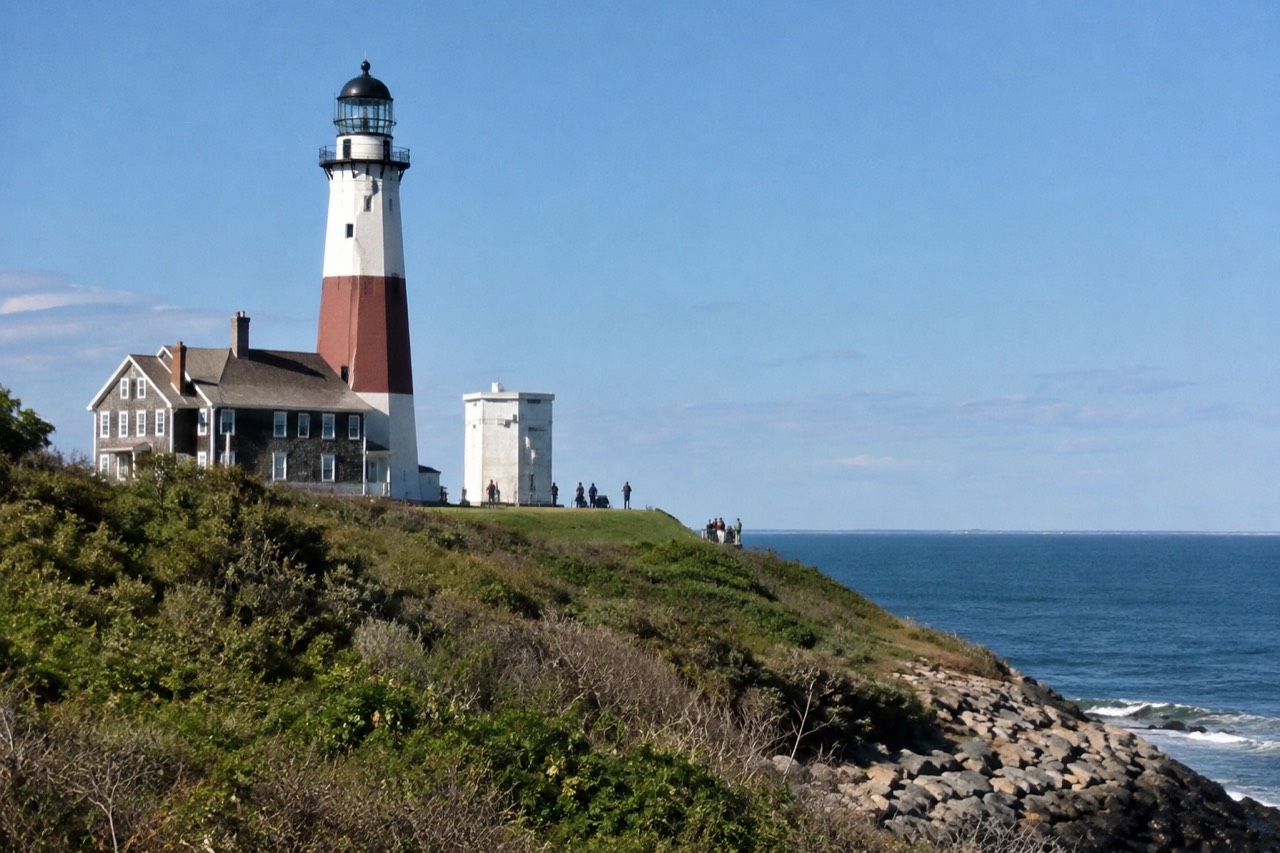
Montauk's essential stops are the Montauk Point Lighthouse at the island's eastern tip, the Atlantic-facing beaches south of the village, the working harbor around which the town is built, and the casual seafood spots that line the main roads. The lighthouse is the one unmissable landmark, standing on the bluff where the island ends. The beaches are the reason most people come.
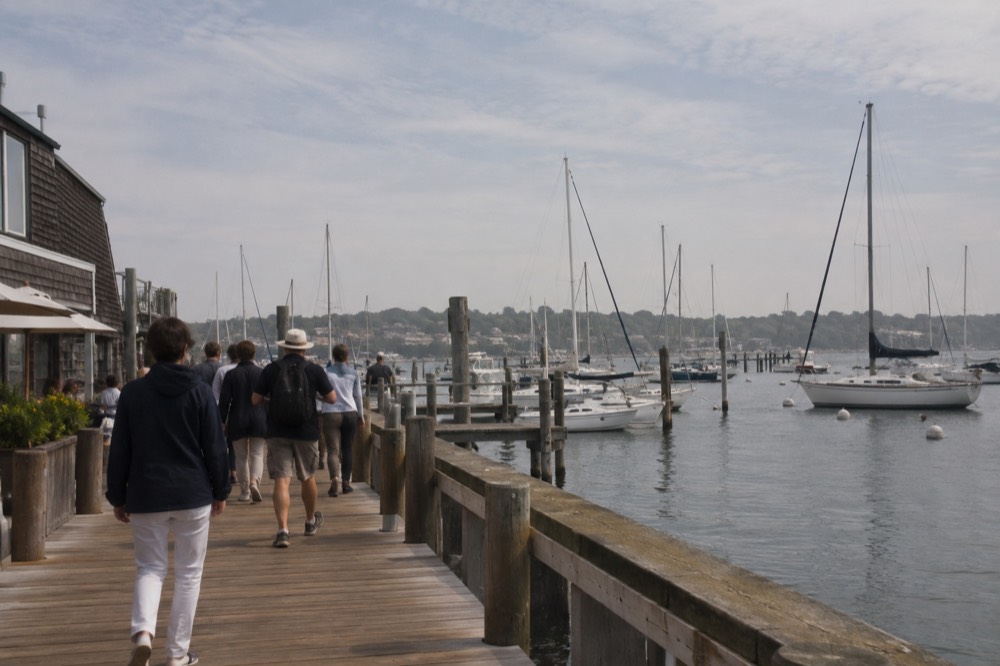
The harbor is where the town's fishing-village character still shows, and it is all walkable from the village center in a way the Hamptons towns mostly are not.
The Montauk Point Lighthouse is the oldest lighthouse in New York State, commissioned under President George Washington, and it anchors the eastern tip with views across the point where the Atlantic meets Block Island Sound. The walk around the grounds is the classic Montauk postcard, wind included. Check opening times for the tower climb before you go, since access varies by season.
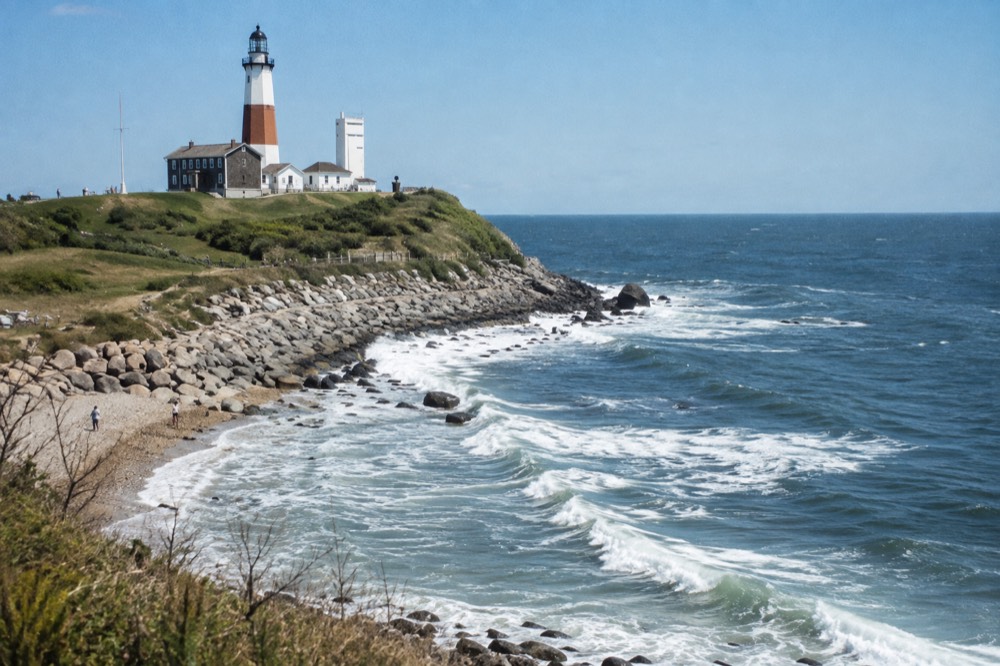
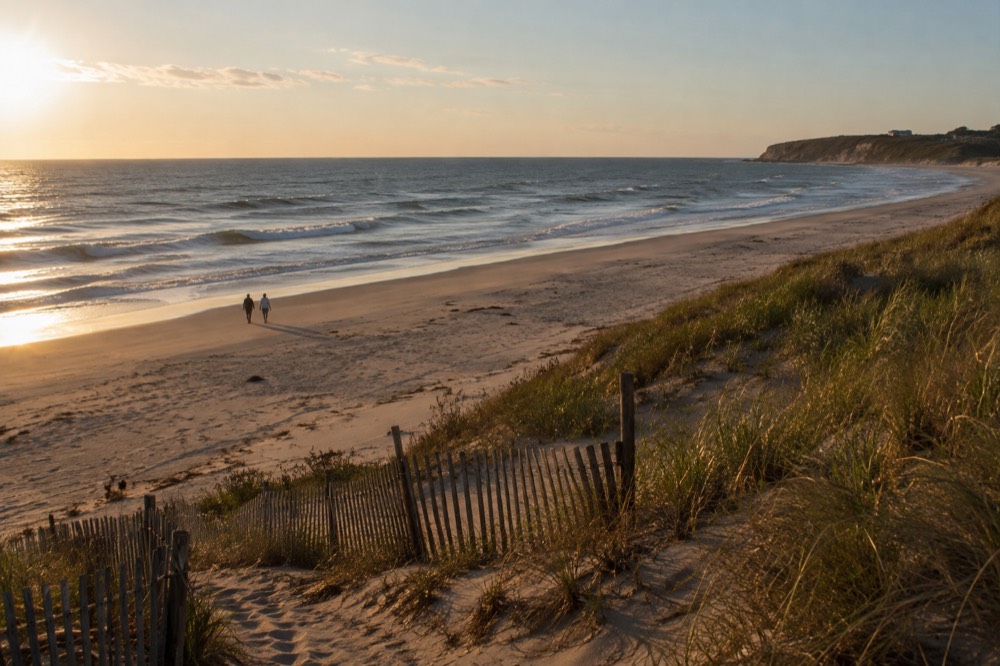
The beaches split into two families. The ocean beaches, including Atlantic-facing Kirk Park Beach near the village and the celebrated surf spots farther west, offer the wide sand and the waves. The harbor side is calmer and better for families with small children and for anyone who wants flat water. Note that some beaches charge for access in season, and the ocean here is genuinely cold outside midsummer, a fact that surprises visitors who assume Long Island water behaves like the mid-Atlantic.
The harbor itself earns an hour. Montauk remains a working fishing port, and the fleet comes and goes around the day's tides. Charter fishing, whale watching and seal cruises in the cooler months all run from these docks, and booking ahead matters in summer for anything on the water.
Food in Montauk runs to lobster rolls, clam bars and casual seafood shacks rather than fine dining, though the latter exists too in season. Portions of the scene shut down or shorten hours between roughly November and March, when the village reverts to a quiet off-season rhythm. If a specific restaurant is the point of your trip, verify it is open on a weekday in the shoulder season before you build the day around it.
| Stop | What it is | Time to allow | Best for |
|---|---|---|---|
| Montauk Point Lighthouse | Historic lighthouse on the eastern bluff | 1-2 hours | The view, the photo, the history |
| Kirk Park Beach | Ocean beach a short walk from the village | 2-3 hours | Families, a quick swim, easy access |
| Montauk Harbor | Working fishing port and charter docks | 1 hour | Watching the fleet, booking a boat trip |
| Downtown Montauk | Shops, seafood spots and casual bars along the main roads | 1-2 hours | Lunch, browsing, an early dinner before departure |
When Is the Best Time of Year to Visit Montauk from NYC?
The sweet spot is late June through early July or the stretch after Labor Day in September, when the water is warm enough to swim, the businesses are fully open and the peak crowds have eased. July and August deliver the full Montauk, beach clubs and all, but they also deliver the traffic, the parking crunch and the highest accommodation prices on the whole East End.
Winter is quiet and atmospheric, but the day-trip case weakens when restaurants close early and the sea breeze turns bitter.
There is a weather fact worth knowing before you book any New York summer beach day, and it runs against intuition. Official NOAA climate normals for Central Park show that July is the wettest month of the year in New York, averaging 4.60 inches of precipitation, ahead of August at 4.56 and June at 4.54. Visitors tend to assume summer is the dry window and winter is the soggy one. The data says the three wettest months of the year are all in summer.

September is the connoisseur's month. The ocean has stored a full summer of heat, the school calendar has carried the family crowds home, and the village still runs at close to full operating tempo. May and June run cooler in the water but quieter on the roads. October brings the wind and the first closures, and from November the day trip becomes a decision about atmosphere rather than beaches.
Whenever you go, build the return leg into the plan before you commit to the outbound one. The last departure of the day is the hard wall of any Montauk day trip, and every year a few visitors learn this by standing at a dark station platform hoping for a train that already left.
How Does Montauk Compare with Other Day Trips from NYC?
Montauk is the longest-haul beach day trip in the standard New York repertoire, trading hours of travel for the most dramatic coastline within reach of the city. Compared with the Hudson Valley, it is about water instead of mountains. Compared with Washington DC or Philadelphia, it is about relaxation instead of landmarks. Compared with the closer beaches at Coney Island or the Rockaways, it is about escaping the city entirely rather than enjoying its edge.
Choose it when the coast is the point, and choose almost anything else when it is not.
The comparison matters because your days in New York are finite. A five-day trip can afford one long-haul excursion, maybe two, and the rest of the itinerary should spend those days well. Our New York City Travel Guide homepage lays out the full orientation if you are still sketching the shape of the trip, and the itinerary guides, from one day in NYC upward, help you see where a full day off-island fits, or whether it fits at all.
| Day trip | Travel character | What you get | Full-day guided option from this site |
|---|---|---|---|
| Montauk / the Hamptons | Longest road or rail run, East End traffic in summer | Ocean beaches, Sag Harbor, fishing-village calm | Hamptons, Sag Harbor and outlets tour, from $161, about 14 hours |
| Hudson Valley and Sleepy Hollow | North by coach, no water | River towns, Walkway Over Hudson, autumn foliage | Sleepy Hollow and Walkway tour, from $135, about 7 hours |
| Woodbury Common outlets | Shorter coach run, west of the Hudson | Hundreds of outlet stores, a pure shopping day | Shopping tour, from $55, about a full day |
| Washington DC | Very long coach or rail day | Monuments, the National Mall, a second city | DC highlights tour, from $120, 11-13 hours |
The Hudson Valley option makes a sharp contrast and a good alternate. It runs roughly half the duration of the coastal day at seven hours door to door, costs less on the guided version at $135 from, and swaps salt air for river gorges and the Headless Horseman lore of Sleepy Hollow. For a fall trip in particular, the foliage argument beats the beach argument outright.
The two-capital combo is the other end of the spectrum: a packed 15-hour day covering the National Mall and Independence Hall in a single outing, from $189 per person. It suits visitors who want maximum landmark density and accept that the day belongs to the coach.
If none of those fit, the shopping day is the most low-commitment of the group, a coach run to one of the region's largest outlet centers with the driving handled for you.
And if you would rather let someone else sort the comparison entirely, the full set of organized options is here:
Common Questions About Montauk from NYC
Most questions about a Montauk day trip come down to the same three anxieties: whether the journey is worth it, whether you can do it without a car, and what happens if you miss the last way home. The short answers are yes, the coast justifies the ride; yes, the train and the bus both deliver you to a walkable village; and missing the last departure means an expensive taxi ride or an unplanned overnight, so treat the return time as fixed from the moment you plan the day. Everything else is detail, and the details are below.
Can you do Montauk as a day trip from NYC?
Yes, with an early start. The train and bus both make it workable, and a guided tour makes it effortless, but in every version the journey consumes a large share of your daylight. Plan to leave Manhattan in the morning and return in the evening, and treat the last departure time as a hard deadline.
Do you need a car in Montauk?
No, not for the village itself. The train and bus stations sit within walking distance of the harbor, downtown and the nearest ocean beach. A car or a local taxi helps for the lighthouse and the beaches farther from the center. If the lighthouse is essential to your day, either drive out or check the local shuttle options before you go.
Which is better to Montauk, the train or the bus?
The train avoids road traffic and ends steps from the village. The bus offers more Manhattan pickup points and similar end-to-end timing when the roads behave. In peak summer the train's predictability wins; off-season, the decision usually comes down to which timetable fits your day.
What is the best month to visit Montauk?
Late June through early July, and September after Labor Day, offer the best balance of warm water, open businesses and manageable crowds. July and August are the full season but also the busiest roads and tightest parking. Winter is quiet and atmospheric but many businesses close or shorten hours.
Is Montauk the same as the Hamptons?
Montauk sits at the eastern end of the same South Fork as the Hamptons towns, but it has its own character: more fishing village, less estate country. It is farther out than Southampton or East Hampton, so budget extra travel time if your itinerary mixes both, and know that many day tours treat the Hamptons towns and Sag Harbor as the stops rather than pushing all the way to Montauk.
What happens if you miss the last train or bus back?
You are looking at a long, expensive taxi or rideshare back to the city, or an unplanned night in Montauk, where accommodation in season is neither cheap nor plentiful at short notice. Check the return timetable before you leave Manhattan, set an alarm, and start heading to the station with time to spare.