Storm King Art Center: The Route, the Stops and How Much of the Day It Really Takes
Storm King Art Center sits in the Hudson Valley roughly an hour north of the city, and it is one of the few major art destinations near New York that is about landscape as much as objects. Getting there without a car takes planning, and the visit itself eats most of a day once travel is counted.
Short answer
Storm King Art Center is an open-air sculpture park in the Hudson Valley about an hour's drive north of Manhattan. There is no direct subway or rail link, so you either drive, take a combination of train and taxi, or join an organized coach tour. Plan on the trip taking most of a day door to door.
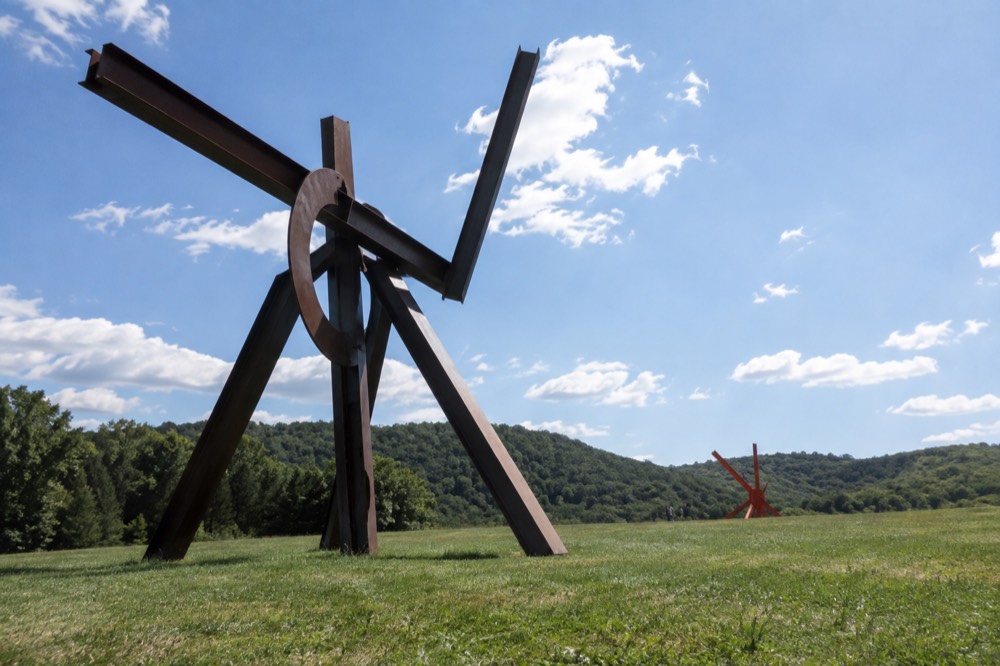
Storm King Art Center is the rare New York-area destination where the artwork is measured in tons and the gallery ceiling is the sky. Sculptures sit across rolling fields in the Hudson Valley, framed by wooded hills, roughly an hour's drive north of Manhattan. For a city built on vertical density, a day spent in open horizontal space is a genuine contrast, and that contrast is the whole draw.
The catch is logistics. Unlike the destinations inside the five boroughs, Storm King does not sit on a subway line, and there is no single-seat rail connection from Manhattan. Every version of this trip involves a decision: drive, stitch together a train and a taxi, or hand the whole thing to a coach operator. This guide walks through each option honestly, then covers how much time the visit itself deserves, what the seasons do to the experience, and how to fold other Hudson Valley stops into the same day. For the wider picture of escaping the city for a day, start with our day trips from NYC overview.
What Is Storm King Art Center?
Storm King Art Center is a large outdoor sculpture park in the Hudson Valley, north of New York City, where monumental sculptures are installed across fields, hills and woodland rather than inside galleries. Visitors walk or ride between works across open landscape, and the art is intended to be seen in changing light and weather, in every season. It is a day-long destination in its own right, not a quick stop on a route between other sights.
The center's reason for being is scale. Indoors, a sculpture competes with walls and lighting; here, a welded steel form the size of a house stands against a mountain ridge, and the distance between you and it is part of the work. Some pieces are visible from far across the grounds and reveal themselves gradually as you approach. Others hide in wooded areas or sit low in meadows and only register when you are nearly on top of them.
That means the visit is a walk first and an art viewing second. The grounds are extensive, the terrain rolls, and the routes between clusters of work are long enough that the center lends trams and bicycles on a seasonal basis, subject to availability. Check the official site for what is running on your date, because tram and bike service is exactly the kind of operational detail that changes with the calendar and the weather.
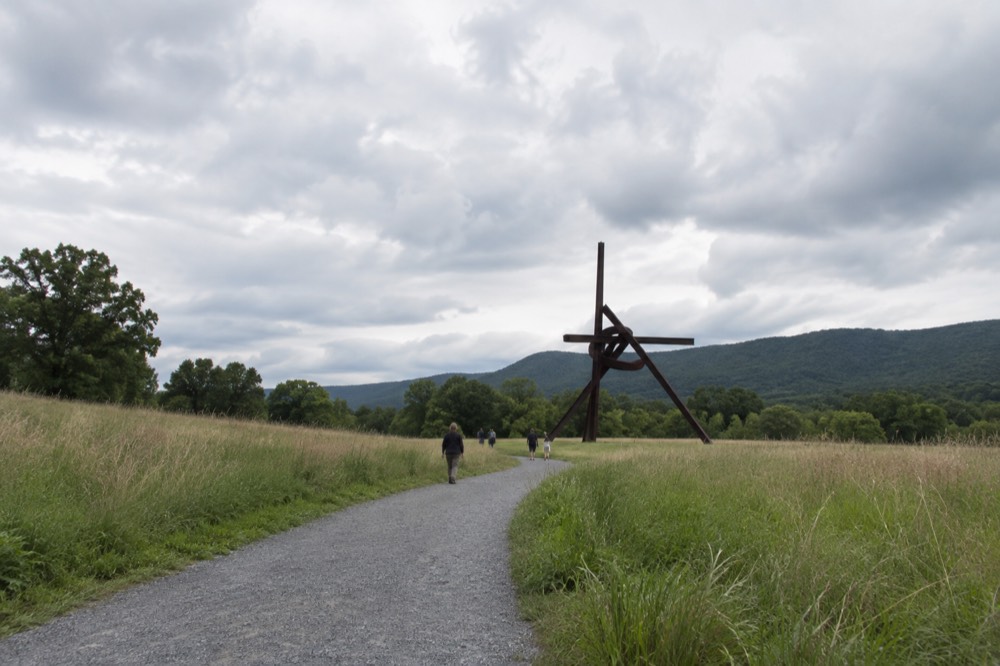
It is also worth being honest about who this suits. If your idea of a good museum afternoon is two hours in the European paintings wing, an outdoor sculpture park may or may not land. If you like walking, photography, landscape or modern sculpture, it is one of the best single days you can build out of the city. Families tend to do well here because children can move, shout and burn energy without anyone shushing them.
How Do You Get to Storm King from NYC?
There is no direct public transit link from Manhattan to Storm King Art Center. The realistic options are driving, which takes roughly an hour to an hour and a half depending on traffic, combining a rail line with a taxi for the final leg, or booking a seat on an organized coach tour that includes the center. Each trades cost against convenience, and the right one depends on whether you want the flexibility of a car.
Driving is the straightforward version. The route runs north out of Manhattan and up the west side of the Hudson Valley, and on a normal traffic day you are looking at somewhere between one and two hours each way, longer on a summer weekend afternoon when everyone heads back to the city at once. Parking at the center is available on site. The honest caution for international visitors: rent a car for this trip only, not for the city itself. Manhattan parking and traffic make a rental car a liability inside the five boroughs, and the subway is the correct answer for getting around New York, as our how to get around NYC guide explains in detail.
The train-plus-taxi version works but needs care. Rail services on both sides of the Hudson reach stations within taxi range of the center, and ride-hailing coverage in the valley is thinner than in the city, so check your return options before you commit. Build in a buffer: the last thing you want is to finish at closing time and discover that no car is coming for forty minutes. Check current fares and schedules on the official rail operator sites rather than any guide, because both change.
The third option is the coach tour. Several Hudson Valley day tours from Manhattan either call at Storm King or cover comparable valley territory, and the trade is simple: you give up control of the schedule and gain a driver who knows the roads and a guide who knows the stops. For travelers who do not want to drive on the right, or who would rather look at the river than at a highway, this is often the best version of the day.
| Option | Rough time each way | Flexibility | Best for |
|---|---|---|---|
| Drive yourself | 1-2 hours | Full control of arrival and departure | Groups of 2-4, confident drivers |
| Train plus taxi | 2-3 hours including connections | Moderate, dependent on taxi availability | Solo travelers avoiding a rental |
| Organized coach tour | Set by operator, typically a full-day itinerary | Low, fixed schedule | Anyone who would rather not drive |
One timing note that belongs here: this is one of the few New York-area attractions where the journey is genuinely pleasant rather than something to endure. The Hudson Valley is the point of the region. If you treat the drive or the ride as dead time to be minimized, you are missing half the day trip.
The guided Hudson Valley route above covers Sleepy Hollow and the Walkway Over the Hudson, one of the longest elevated pedestrian bridges in the world, and it represents the coach-tour version of this day: door-to-door from Manhattan with someone else handling the logistics. It runs about seven hours, so it is a full day but not an exhausting one, and the folklore angle of Sleepy Hollow gives the valley a story to hang the scenery on.
How Much Time Does a Storm King Visit Take?
The visit itself deserves at least three to four hours on the grounds, and the round trip from Manhattan adds roughly three to five hours of travel depending on your mode. Realistically, Storm King is a full-day trip: leave the city in the morning, arrive around midday, spend the afternoon with the sculptures, and return in the evening. Trying to compress it into half a day usually means shortchanging the art or rushing the journey.
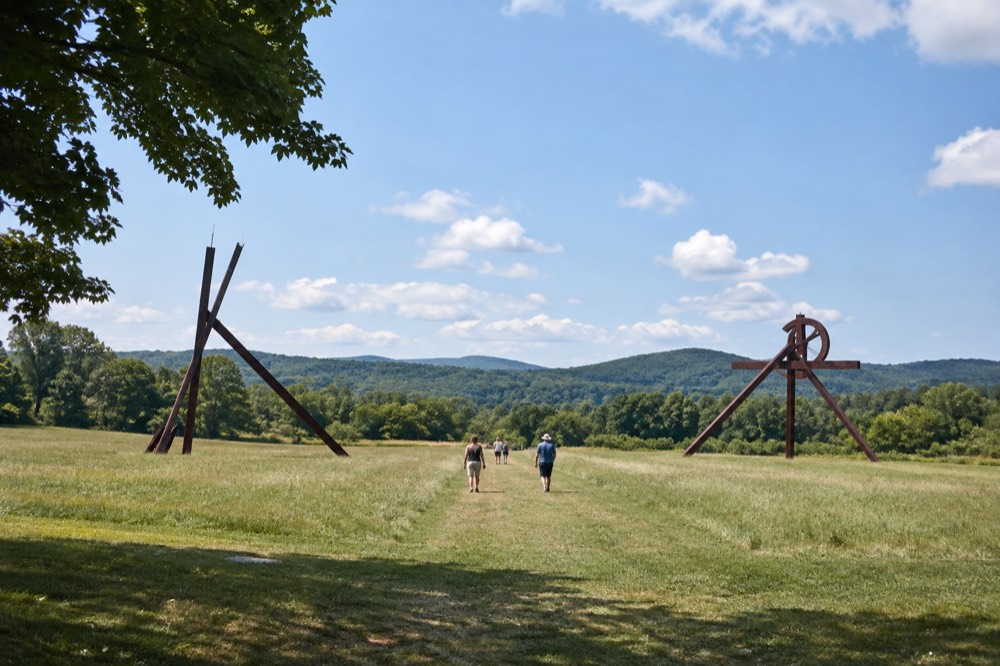
The number that surprises people is not the travel time, it is the on-site time. Because the works are spread across open ground rather than hung on walls, seeing the major clusters means covering real distance on foot. Add the stops you will want to make: photographs against the hills, a pause at the cafe, a loop back to a piece that caught you on the way in. A two-hour visit gets you a sample. A four-hour visit gets you the actual place.
Season and day of the week matter more here than at indoor museums. Peak foliage weekends in October draw the biggest crowds of the year, and the valley roads fill accordingly. Arriving at opening time on a weekday gives you the grounds close to empty, which changes the experience completely: monumental sculpture in silence, with nothing between you and the hillside.
If you are pairing Storm King with anything else in the valley, and you should if you have the stamina, the practical pattern is to give the art center the core of the day and flank it with a shorter stop: a riverside town for food on the way up, or a walk on the way back. Our Hudson Valley from NYC guide maps the wider region and the other stops worth folding in.
| Plan | On-site time | Total door-to-door | Realistic? |
|---|---|---|---|
| Quick sample | 2 hours | 6-8 hours | Possible but rushed |
| Standard visit | 3-4 hours | 8-10 hours | The normal version |
| Storm King plus one valley stop | 3-4 hours plus 1-2 | 10-12 hours | Best on a long summer day |
Book timed tickets on the official site before you go. The center manages capacity, and peak-season weekends can sell out in advance, which is a harder failure than a queue because there is no waiting list at the gate.
When Is the Best Time of Year to Visit Storm King?
Fall is the most popular season, because the Hudson Valley foliage turns the hills around the sculptures into the strongest backdrop of the year, but that popularity brings the biggest crowds. Late spring and early summer offer green fields, long daylight and thinner numbers. Winter visits are possible and strikingly beautiful when snow is on the ground, though tram and bike service may not run. The season changes the art, not just the comfort.
The official climate record for the region tells a useful planning story. These are the Central Park normals for New York City, and the Hudson Valley an hour north runs a few degrees cooler with more dramatic foliage timing, so treat them as a floor:
| Month | Avg high °F | Avg low °F | Precipitation (in) | What it means at Storm King |
|---|---|---|---|---|
| April | 61.8 | 45.5 | 4.09 | Muddy paths, early green |
| May | 71.4 | 55.0 | 3.96 | Long days, comfortable walking |
| June | 79.7 | 64.4 | 4.54 | Green fields, full service season |
| July | 84.9 | 70.1 | 4.60 | Hot, wettest month, go early |
| September | 76.2 | 62.3 | 4.31 | First color, quieter than October |
| October | 64.5 | 51.4 | 4.38 | Peak foliage, peak crowds |
| November | 54.0 | 42.0 | 3.58 | Bare trees, stark sculpture views |
Two facts in that table run against instinct. July is the wettest month in New York, averaging 4.60 inches of rain, ahead of August and June, so a summer visit needs a genuine rain plan rather than an assumption of good weather. And the spread between the driest and wettest months is small, only about 1.4 inches, which is to say there is no dry season here at all. Check the forecast, pack a layer, and wear shoes that can handle grass and gravel, because you will be walking on both.
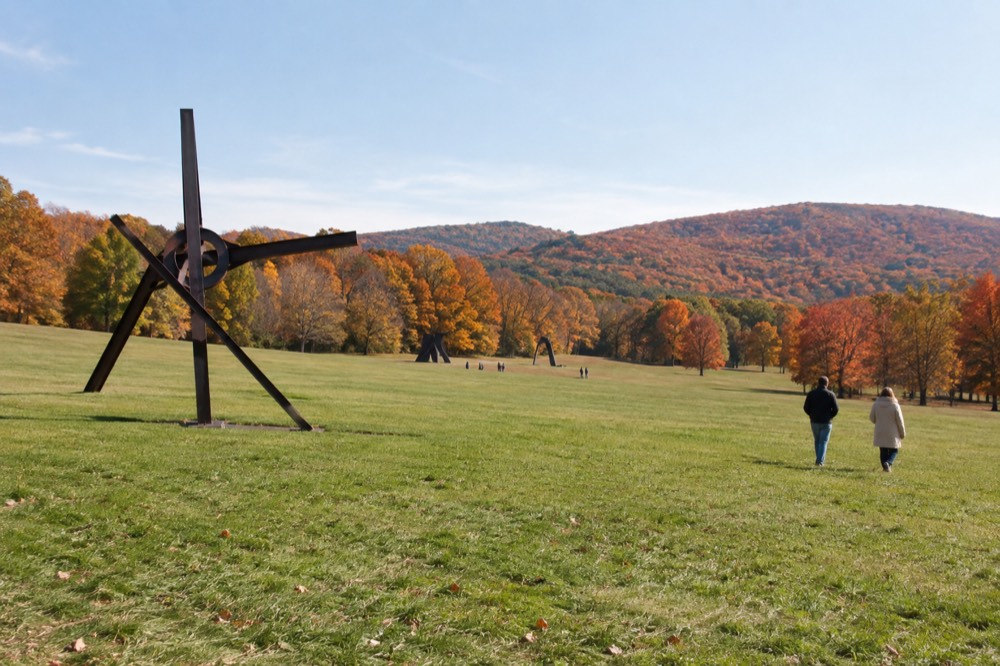
October deserves its popularity. The valley's hardwood ridges go red and gold, the low autumn light throws long shadows across the fields, and the sculptures photograph better than in any other month. The cost is company: foliage weekends bring the year's largest crowds, both to the grounds and to the roads. If October is your only window, go on a weekday if you possibly can, and book everything, tickets and any valley restaurant, well ahead. For a wider view of the city's calendar and crowds, our best time to visit NYC guide covers the seasonal rhythm.
Winter is the sleeper option. Snow on welded steel against bare hills is a completely different exhibition, and the crowds thin to almost nothing. The trade is cold, reduced services and the chance that everything is grey and brown instead. Check the official site for winter opening days before promising anyone a snowy sculpture park, because schedules tighten in the off season.
What Should You Bring and How Should You Plan the Day?
Bring walking shoes, sun protection, a water bottle and a layer for wind, because the grounds are open fields with little shade and the weather changes fast. Reserve timed tickets in advance, plan food around the on-site cafe or a picnic, and decide your return transport before you arrive, not after. The single most common mistake at Storm King is treating it like an indoor museum, when it is closer to a hike with art on it.
Footwear first. The paths are a mix of gravel, mown grass and paved stretches, and the distances between sculpture clusters are long. Sandals and city sneakers both work badly after a couple of hours. Trail shoes or anything with grip and support will earn its place in your bag, and in wet weeks the grass sections get genuinely muddy.
Then sun and wind. The fields offer almost no shade, and a cloudless June afternoon on open ground is a sunburn machine. A hat, sunscreen and more water than you think you need cover it. In spring and autumn the wind is the issue: the same openness that makes the views work makes the grounds breezy, and a windproof layer is the difference between a four-hour visit and a two-hour one.
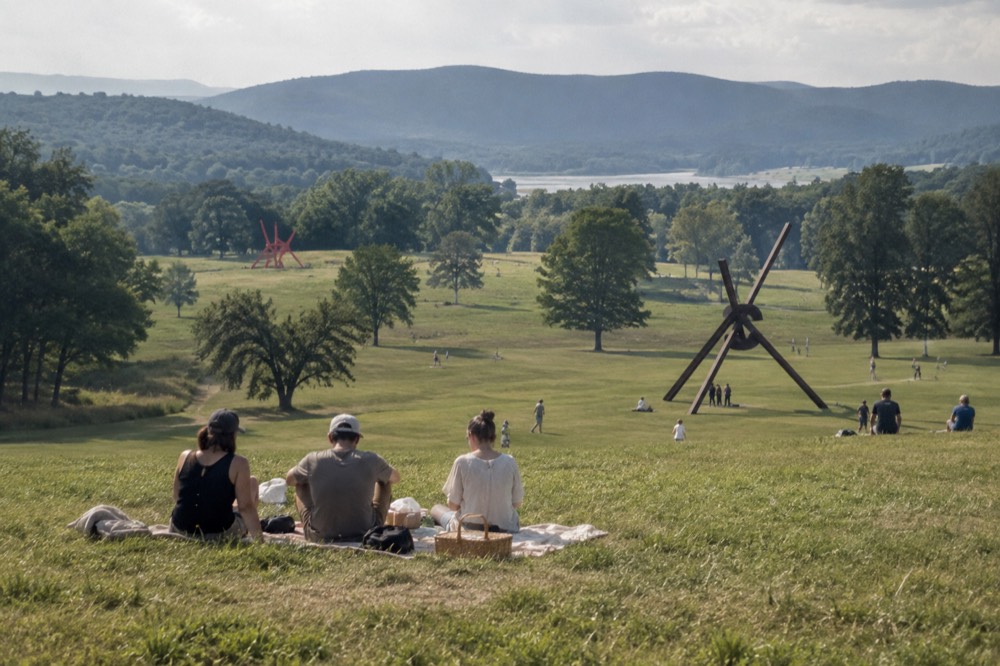
Food is easier than it used to be but still worth planning. There is a cafe on site, and its hours and menu follow the season; check the official site for your date rather than assuming a full kitchen in November. Picnicking is part of the culture of the place for many visitors, and a cooler in the car turns the return drive into a valley dinner stop. If you are going car-free, eat a real breakfast in the city and plan the cafe or a packed lunch rather than betting on valley options near a rail station.
A sample shape for the day, assuming a morning start from Manhattan:
| Time | What you do |
|---|---|
| 08:00-09:00 | Leave Manhattan, beat the worst of the traffic |
| 09:00-10:00 | Optional valley stop: coffee, a riverside town, provisions |
| 10:30-14:30 | Storm King grounds: the full loop, cafe or picnic lunch |
| 15:00-16:30 | Second stop on the return: a walk, a town, a viewpoint |
| 17:00-18:30 | Drive or ride back to the city |
That shape is built for a long daylight window, May through September. In October and November, compress it: the grounds close earlier and dusk comes fast in the valley, and walking back to a distant parking area in the dark is avoidable with a 09:00 arrival.
Can You Pair Storm King with Other Hudson Valley Stops?
Yes, and you should, because the drive past Storm King passes some of the best day-trip territory within range of New York. The natural pairings are the riverside towns along the Hudson, the Walkway Over the Hudson at Poughkeepsie, Sleepy Hollow to the south, and the farms and orchards of the lower valley. One additional stop is realistic in a day; two is a mistake. The valley rewards depth over a checklist.
South of Storm King, Sleepy Hollow is the easiest pairing because it sits on the way for anyone driving up from Manhattan. The village leans fully into its Headless Horseman heritage, especially in autumn, and the historic sites and cemetery walks give the day a narrative counterweight to the abstraction of the sculptures. Coach tours that combine valley stops typically structure the day around this kind of pairing, and the guided option below does exactly that, folding Sleepy Hollow and the Walkway Over the Hudson into one seven-hour loop out of Manhattan.
If a valley day trip sounds like the wrong shape for this visit and you would rather keep your evenings in the city, the picks above are the two ends of the New York spectrum: the Empire State Building's decks and museum for the skyline from the middle of Manhattan, and MJ the Musical for a Theater District night. A sculpture park by day and a Broadway show by evening is a genuinely great New York day, provided you are honest about the drive in between.
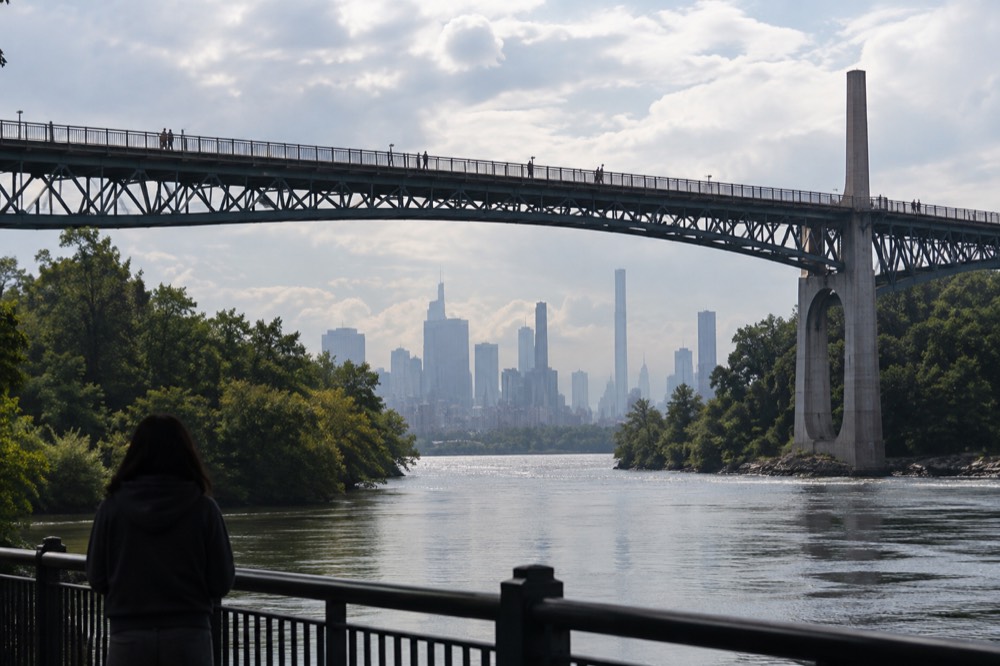
North and east of the center, the options multiply. The Walkway Over the Hudson, one of the longest elevated pedestrian bridges in the world, converts an old rail bridge into a mile-plus stroll a hundred feet above the river, and it is the single best free-form stop in the region for anyone who wants scenery without a ticket line. Farther afield, Cold Spring is the classic Metro-North village trip, compact, walkable and full of places to eat; our Cold Spring NY guide covers it as its own destination. In October, the orchards and farm stands of the lower valley add a cider-and-apples stop that pairs naturally with the foliage.
Two cautions on pairing. First, check whether your Storm King ticket day aligns with the opening days of whatever you are pairing it with, because smaller valley attractions keep limited schedules midweek and off season. Second, resist the three-stop itinerary. The valley's roads look short on a map and run slow in reality, especially on foliage weekends, and a day spent entirely in the car is the most common way this trip goes wrong.
For anyone weighing a valley day against a classic city day instead, the Empire State Building ticket above bundles the 86th floor open-air deck with a museum experience that adds the building's real history, and it rewards lingering rather than snapping and leaving. Some trips, the honest answer is that Manhattan itself is the destination, and a things to do in NYC plan beats any day trip.
Common Questions About Visiting Storm King from NYC
The short answers: Storm King is roughly an hour to an hour and a half north of Manhattan by car, there is no direct train, a visit needs at least three to four hours on the grounds plus travel, fall is the most spectacular and most crowded season, and the trip is best treated as a full day with one additional valley stop at most. Tickets should be reserved in advance on the official site.
Can you get to Storm King Art Center without a car?
Yes, but it takes stitching together. Rail services on both sides of the Hudson reach stations within taxi range of the center, and ride-hailing exists in the valley with thinner coverage than in the city. Check your return ride before you arrive, and build buffer time into the end of the day. The simpler car-free option is an organized coach tour that includes the region.
How far is Storm King Art Center from Manhattan?
Roughly an hour to an hour and a half of driving north from Manhattan, depending on traffic and your starting point. On a summer weekend afternoon the return leg can run longer as city-bound traffic builds, so plan the drive back for before or after the peak rather than through it.
How long should you spend at Storm King Art Center?
Three to four hours on the grounds is the standard visit, enough to walk the main sculpture clusters at a real pace with pauses for photos and food. Two hours gives you a sample; more than four suits visitors who picnic, sketch or photograph seriously. Add travel and the day runs eight to ten hours door to door.
What is the best month to visit Storm King?
October for foliage, if you accept the biggest crowds of the year and book ahead. Late May and June for green fields, long daylight and thinner numbers, with a rain plan because summer months carry the most precipitation on the official record. September is the compromise: first color, fewer people, warm days.
Is Storm King good for kids?
Generally yes. The grounds are open, the walking is self-paced, and children can move and talk freely in a way indoor museums do not allow. The distances are long for small legs, so the tram, when it is running, is worth checking on the official site. Bring snacks and plan a shorter route rather than the full loop.
Do you need to buy Storm King tickets in advance?
Yes, reserve timed tickets on the official site before you go. The center manages capacity, and peak-season weekends, above all October foliage weekends, can sell out in advance. There is no waiting list at the gate for a sold-out day, so booking is the only safe play.
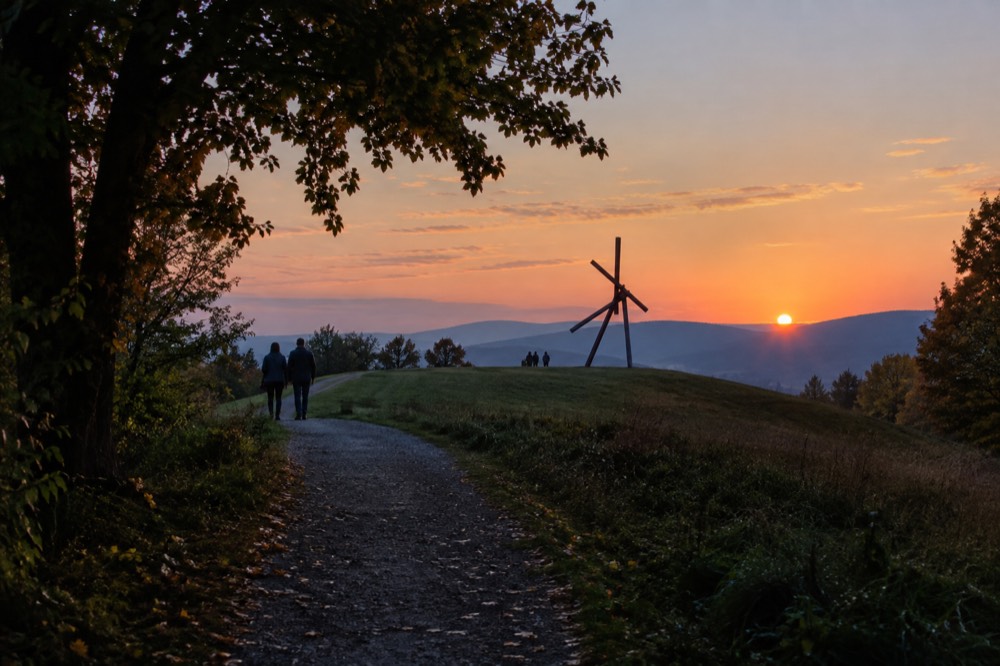
The last practical decision is what you do with the evening. A Hudson Valley day that ends back in Manhattan around six leaves room for a show, and MJ the Musical above is a safe pick for a big, polished Theater District night, about two and a half hours with an intermission. Book the seat, not just the sculpture park, and the day closes the way New York days should: with the trip report over dinner and something to see afterward. More planning help lives on the New York City Travel Guide homepage, including transit basics that matter for the morning half of this itinerary.