Best Brunch in NYC: Where to Eat, What to Order, and How to Skip the Lines
New York takes brunch as seriously as it takes pizza, and the city rewards anyone who plans the meal the way a local would: by neighborhood, by dish, and by the clock.
Short answer
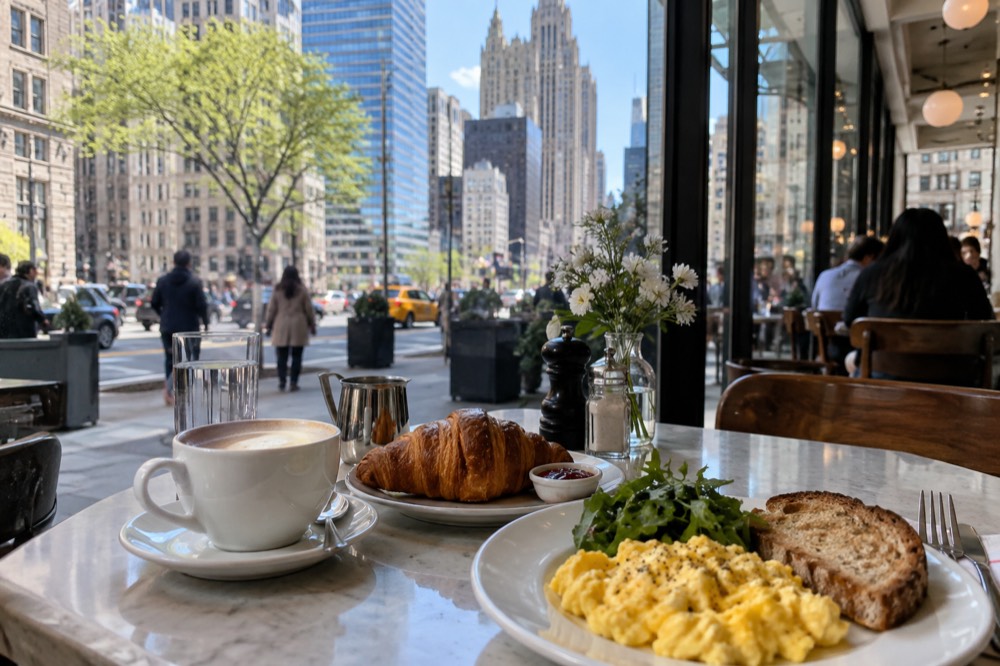
The best brunch in NYC is found in the neighborhoods rather than one single street: the Lower East Side and East Village for bagels and classic diner plates, Harlem for soul food, Greenwich Village and SoHo for café brunch, and Williamsburg for the trend-led end of the spectrum. Book ahead for weekends, arrive before 10am or after 1:30pm to dodge waits, and expect to pay sit-down prices that climb sharply once cocktails enter the picture.
Brunch in New York is not one meal, it is several. On the same Saturday morning, a bagel counter on the Lower East Side is turning out hundreds of hand-rolled bagels with lox, a Harlem institution is plating chicken and waffles for a line that started forming before the doors opened, and a SoHo café is serving eggs and natural wine to a table of people who booked three weeks out. The visitor mistake is treating these as interchangeable. They are different meals with different prices, different waits and different dress codes, and the city is far more enjoyable when you match the brunch to the day you are actually having.
This guide lays out the strongest brunch neighborhoods, the dishes that are genuinely worth ordering, how to eat well on a budget, and the timing tricks that cut the waits. It also pairs the food with the walks worth taking afterward, because the best brunch days in New York end with a stroll, not a nap. For the wider sightseeing picture around the meal, our things to do in NYC guide covers the rest of the day, and the best bagels in NYC guide goes deeper on the city's most argued-about food. This site, the New York City Travel Guide, keeps every recommendation tied to what you can actually verify before you go.
What Makes a Great NYC Brunch?
A great NYC brunch comes down to three things: a kitchen that does one thing exceptionally rather than everything adequately, a neighborhood worth walking before or after, and a wait you have planned for rather than stumbled into. The city's brunch scene rewards specialization, so the smoked-fish counter, the soul-food institution and the French café each beat the generalist diner on their own ground.
Timing matters too, because the weekend crowd between 11am and 1pm can double any wait.
The first thing to understand is that New York brunch is a weekend institution in a way it is not in most cities. Saturday and Sunday are when the famous rooms fill, when the no-reservation counters develop their lines, and when the prix-fixe brunch deals with included drinks appear. Weekday brunch, by contrast, is a calmer, cheaper and often better experience: the same kitchens, a fraction of the crowd, and menus that lean toward the regulars' favorites rather than the Instagram plates.
The second thing is specialization. The places New Yorkers defend with real passion tend to do a narrow thing at a high level. A bagel shop that boils and bakes on premises, an appetizing store slicing smoked salmon by hand, a Harlem restaurant whose fried chicken has a reputation built over decades, a Ukrainian diner turning out pierogi. The generalist brunch spot with a twelve-page menu exists and is fine, but it is rarely the meal anyone remembers.
The third is geography. Brunch in New York is a neighborhood activity, because the good rooms cluster: the Lower East Side and East Village are dense with both old counters and new cafés, Greenwich Village has the quaint-corner end, Harlem owns the soul-food brunch, and Williamsburg and the broader Brooklyn waterfront have the trend-led, vegetable-forward rooms. Choosing the neighborhood first narrows the choice in a useful way and gives you a walk before or after.
Which Are the Best Brunch Neighborhoods in NYC?
The best brunch neighborhoods in NYC are the Lower East Side and East Village for bagels, bialys and classic counters, Greenwich Village and SoHo for café-style brunch, Harlem for soul food, Williamsburg in Brooklyn for the modern end, and Chinatown for dim sum, which is brunch by a different route. Each has a distinct character and price band, and the strongest brunch days pair one neighborhood with a walk through it afterward.
The Lower East Side is the historic anchor. This is where the appetizing tradition lives, the shops that sell cured and smoked fish alongside bagels, and where a wave of newer brunch rooms has settled among the old ones. The neighborhood walks well: ten minutes gets you from a bagel counter to the Tenement Museum, which tells the story of exactly the immigrant kitchens this food came from. It is a migration-history site rather than an experience, and it gives the meal a frame.
Harlem is the soul-food capital of the brunch hour. The classic rooms here serve chicken and waffles, grits, and comfort plates that draw lines on Sunday mornings, and the neighborhood pairs naturally with gospel music: a Wednesday concert or a Sunday service slots against brunch in a way few other neighborhoods can manage. Book ahead for weekends, because the famous tables fill early.
Williamsburg and the Brooklyn waterfront are the modern wing. Expect natural wine, grain bowls and excellent pastry alongside the brunch standards, and a shorter wait than the equivalent Manhattan rooms on many weekends. The walk across the Brooklyn Bridge or a stroll through the waterfront streets makes the trip a full morning.
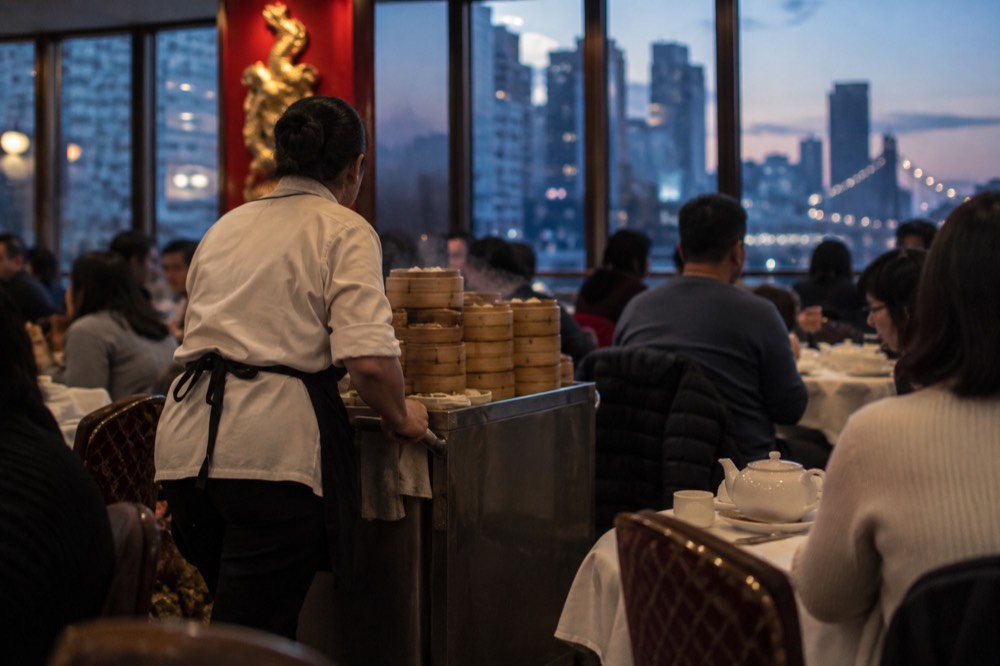
Chinatown is the sleeper answer to the brunch question, because dim sum is brunch in everything but name. Carts or menus of small plates, tea on the table, and a total bill that undercuts most sit-down brunches. It is also the most crowded-with-locals rather than tourists of the options, which is its own endorsement.
The comparison below is the honest version of the choice: no single neighborhood wins, but each wins on a specific axis.
| Neighborhood | Brunch character | Typical wait on weekends | Best paired with |
|---|---|---|---|
| Lower East Side | Bagels, appetizing, newer cafés | Moderate to long at famous counters | Tenement Museum, Essex Market area |
| East Village | Diner classics, Ukrainian, small cafés | Moderate | Tompkins Square Park, East Village stroll |
| Greenwich Village | Quaint cafés, pastry, people-watching | Long at the well-known rooms | Washington Square Park, crooked streets |
| SoHo | Café brunch amid cast-iron blocks | Long, reservations help | SoHo architecture walk, shopping |
| Harlem | Soul food, gospel Sundays | Long at the institutions | Gospel music, Harlem heritage walk |
| Williamsburg (Brooklyn) | Trend-led, vegetable-forward, pastry | Moderate | Waterfront, Brooklyn Bridge walk |
| Chinatown | Dim sum, tea houses | Short to moderate, moves fast | Chinatown lanes, Little Italy |
What Are the Classic NYC Brunch Dishes Worth Ordering?
The classic NYC brunch dishes are the bagel with lox and schmear from a shop that boils on premises, chicken and waffles in Harlem, pierogi and other Ukrainian plates on the East Side, eggs Benedict done properly in a classic café, and dim sum in Chinatown. Ordering the specialty rather than the general menu is the highest-value decision at any brunch table, because the kitchens are known for one thing and do it better than anything else.
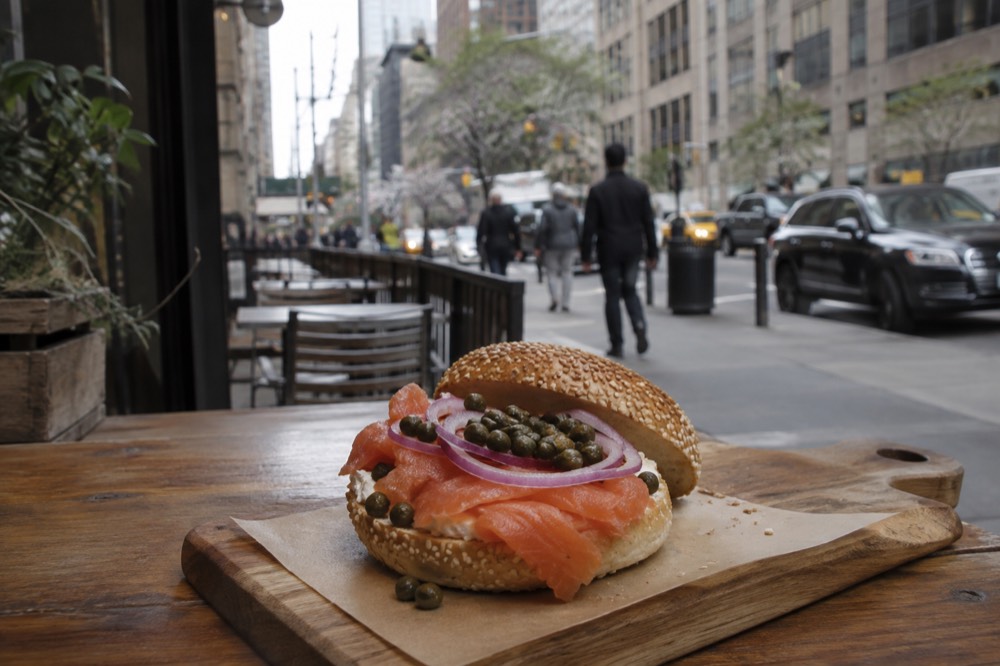
The bagel is the city's most argued-about food and the correct anchor of any brunch conversation. What separates a real New York bagel is the boil before the bake, which produces the dense, glossy crust that a steamed factory bagel never matches. The classic order is a bagel with cream cheese, lox, and the fixings: capers, onion, tomato. An appetizing counter that slices the fish by hand is a different experience from a deli slicing from a machine, and both are different from a bodega bagel, which has its own hungover charm.
Harlem's contribution is chicken and waffles, along with the broader soul-food plate: fried chicken, grits, biscuits, mac and cheese. The classic rooms here are institutions with lines to match, and the Sunday brunch is as much a social event as a meal. Come hungry and come early.
The East Village holds the city's Ukrainian brunch tradition, with pierogi, potato pancakes and borscht served in diners that have been doing it for generations. It is hearty, inexpensive relative to the café brunches, and one of the few brunch traditions in the city that is genuinely unfazed by trends.
| Dish | Where it is done best | What to expect |
|---|---|---|
| Bagel with lox and schmear | Lower East Side appetizing counters | Hand-sliced fish, a queue, eaten fast |
| Chicken and waffles | Harlem soul-food institutions | Large plates, Sunday lines, come early |
| Pierogi and potato pancakes | East Village Ukrainian diners | Hearty, filling, modest prices |
| Eggs Benedict | Classic cafés and bistros citywide | The test of a kitchen's brunch competence |
| Dim sum | Chinatown tea houses | Small plates, tea, fast table turnover |
| Pastry and coffee | SoHo, Greenwich Village, Williamsburg | The light-brunch option, excellent bakeries |
| Brunch cocktails | Wherever you book | The biggest line-item on the bill |
One honest note on the drinks: the included-cocktail brunch deal is a New York fixture, and it is also where the bill doubles. If the meal is the point, the deal is often worse value than it looks. If the morning is the point, it is a bargain. Decide which before you sit down.
How Much Does Brunch Cost in NYC?
Brunch in NYC spans a wide band: a bagel with cream cheese from a counter is a few dollars, a bagel with hand-sliced lox and the fixings runs meaningfully more, dim sum in Chinatown feeds a table for less than most sit-down brunches, and a full café brunch with a cocktail in Manhattan commonly lands in the $30-$60 range per person before tip.
The deciding factors are the neighborhood, the drinks, and whether the kitchen is an institution or a café.
The cheapest good brunch in New York is a counter brunch. A bagel and a coffee, eaten standing or on a bench, is the meal the city runs on, and it costs a fraction of any sit-down table. Dim sum is the next tier of value: a table of small plates in Chinatown, ordered steadily, with tea, and the total is routinely lower than a single brunch entrée with a cocktail in SoHo.
The mid-band is the standard café brunch: eggs, a side, coffee, and tax and tip. Prices vary by neighborhood, with Manhattan's fashionable quarters at the top of the range. The jump comes with alcohol. A brunch cocktail or two moves the per-person total up sharply, which is why the prix-fixe-with-drinks deals exist: they are not always cheaper, but they make the number predictable.
At the top end are the destination brunches: the famous rooms, the hotel brunches, and the tasting-menu-adjacent weekend services. These are reservation-only, priced accordingly, and worth it when the room itself is the occasion. For a fuller picture of eating out across the whole trip, our best restaurants in NYC guide covers the city's dining scene beyond the weekend.
| Brunch style | Typical per-person band | Notes |
|---|---|---|
| Bagel and coffee, counter | Low single digits to mid teens | The city's baseline meal |
| Dim sum, Chinatown | Broad, scales with ordering | Tea usually included, great group value |
| Diner or Ukrainian brunch | Mid band | Hearty plates, no cocktail pressure |
| Café brunch, no drinks | Roughly $25-$45 | Manhattan's fashionable quarters at the top |
| Café brunch with cocktails | Roughly $40-$70 | The deal-driven tier, book ahead |
| Destination or hotel brunch | Top of the range | Reservation-only, room is the occasion |
Treat these as planning ranges rather than promises: menus change, and the honest move is always to check the current menu before you commit a group to a table. The one fixed rule is tipping: New York service culture expects a tip on the full bill, and budgeting for it from the start prevents surprises.
Where to Find the Best Budget Brunch in NYC?
The best budget brunch in NYC is counter food: a bagel from a shop that boils on premises, dim sum in Chinatown ordered plate by plate, or a pierogi plate in an East Village Ukrainian diner. Each feeds you well for a fraction of a café brunch, and none requires a reservation, a wait-list app, or a cocktail decision.
The trade is comfort and seating rather than quality, because the kitchens at this end are often the most specialized in the city.
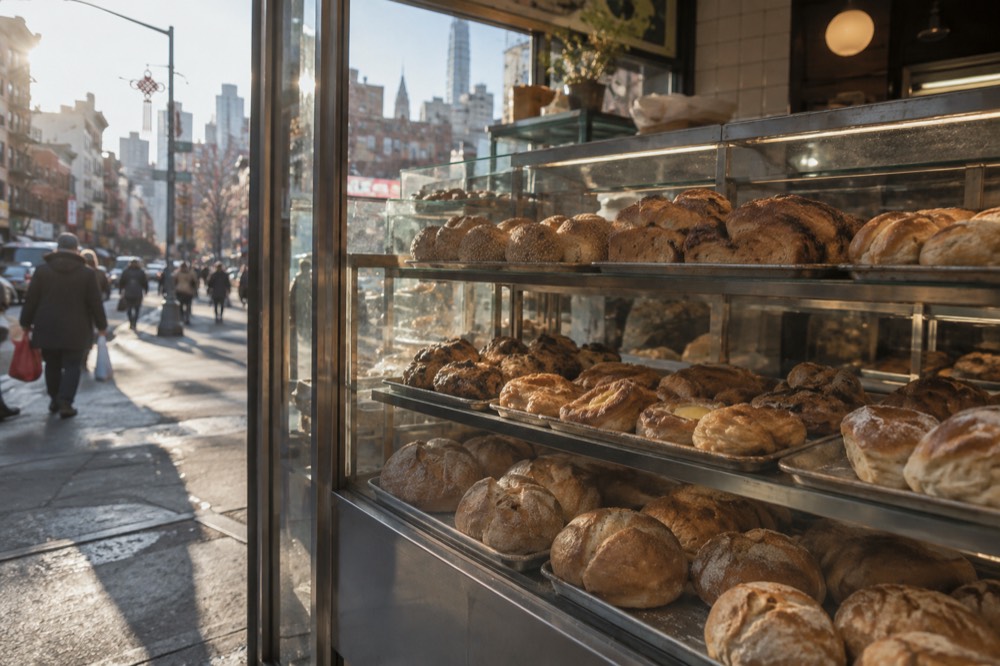
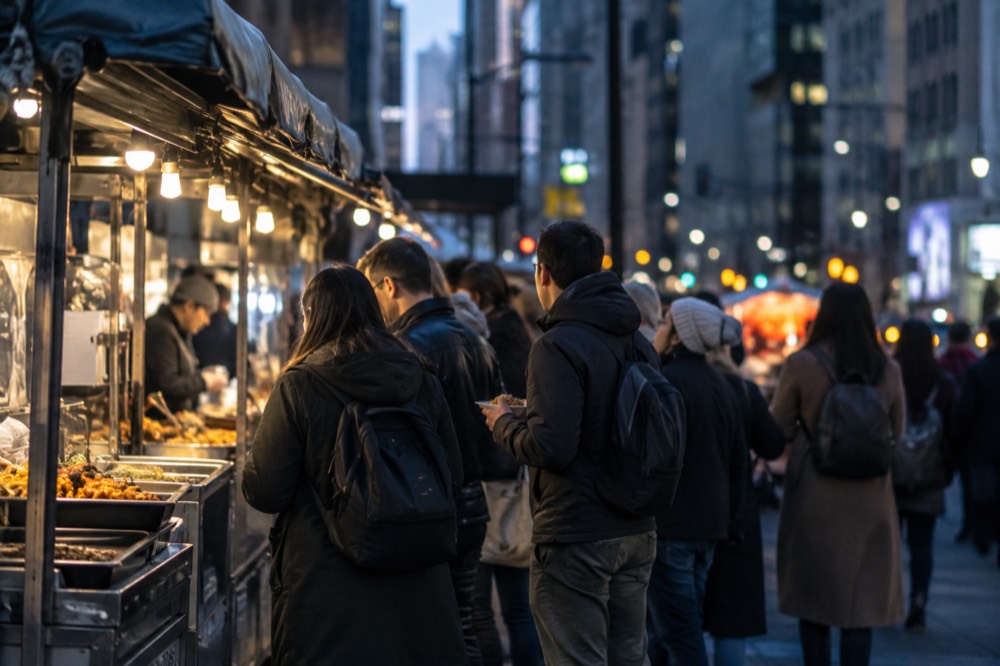
The counter tradition is the heart of budget eating in New York. The bagel shop, the appetizing store, the slice joint and the dumpling counter all share a model: a narrow menu, high volume, and prices that reflect it. For brunch specifically, the bagel is the obvious pick, but the Chinatown dumpling houses and bakeries do a morning trade that functions as brunch in every way that matters, including the walk required to reach them.
Dim sum deserves its own paragraph as the best group-value brunch in the city. A table of four in a Chinatown tea house, ordering steadily from carts or menus, eats a genuinely large brunch for a total that embarrasses most brunch menus. The tea is on the table, the turnover is fast, and the room is loud in the best way. It is also the budget option least affected by trend pricing, because the value comes from the format itself.
The East Village diners round it out. The Ukrainian rooms serve plates that fill you for the day at diner prices, and the neighborhood's density means a backup is never more than a block away. For a deeper run at the city's cheap-eats scene beyond the brunch hour, the cheap eats NYC guide maps the whole landscape.
Where Can You Get Brunch with a View in NYC?
Brunch with a view in NYC means one of three moves: a rooftop or terrace table in Midtown or the Meatpacking District looking over the skyline, a waterfront table in Brooklyn Heights or DUMBO with Manhattan across the river, or a café beside a park such as Central Park or Washington Square.
The honest ranking puts the Brooklyn waterfront first for the money, because the Manhattan skyline in the frame is the view people came for, and the far-side rooms price more gently.
The Brooklyn waterfront is the strongest play. A brunch in Brooklyn Heights or DUMBO comes with the Manhattan skyline across the water, the sort of view the Manhattan rooms charge for, and the walk along the promenade afterward is one of the city's best free experiences. The Manhattan Bridge framing the streets of DUMBO is the postcard, and the brunch tables near it turn over steadily.
Midtown's rooftops are the splurge end. The high rooms over the Theater District and Rockefeller Center area deliver the skyline-at-your-feet version, at prices to match, and weekend brunch service up high is a reservation exercise rather than a walk-in. The views are genuinely spectacular and genuinely billed.
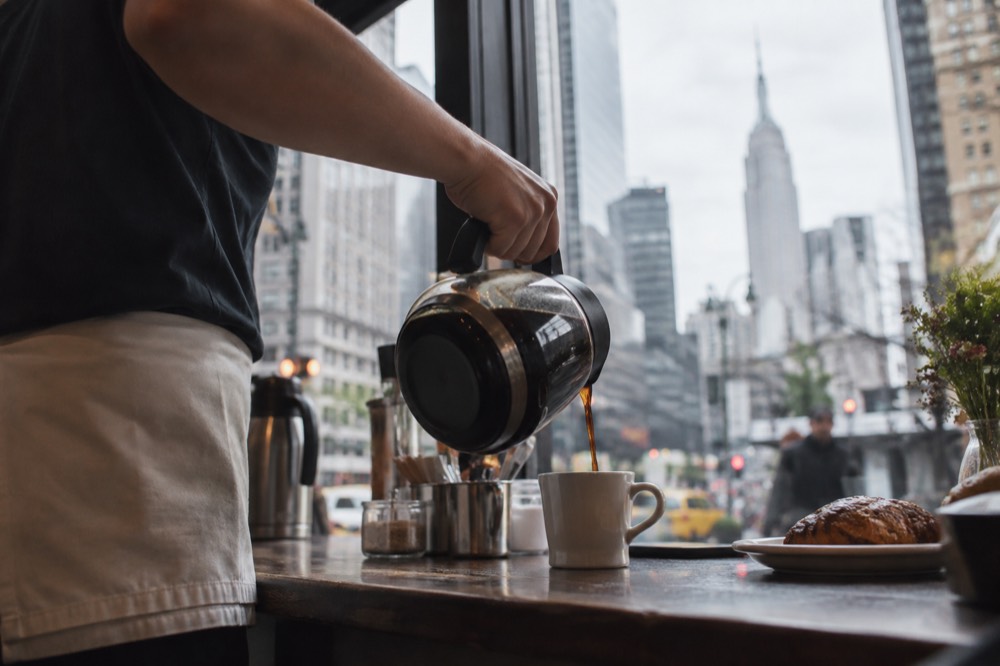
The park-side café is the third option and the most underrated. A table near Central Park, or a coffee in Greenwich Village a block from Washington Square, gives you the greenery-and-people view, which is the one New Yorkers actually choose for themselves. It is also the option most resilient to weather surprises, because the park changes character rather than closing.
| View type | Where | Character | Price band |
|---|---|---|---|
| Skyline from across the river | Brooklyn Heights, DUMBO | The postcard, walkable promenade after | Moderate |
| Rooftop skyline | Midtown rooftops | The splurge version, book well ahead | Top of the range |
| Park-side | Central Park edges, Greenwich Village | Greenery, people-watching, local pace | Moderate |
| Waterfront casual | West Side, Hudson River side | Riverside paths, relaxed rooms | Moderate |
How Do You Beat the Brunch Lines in NYC?
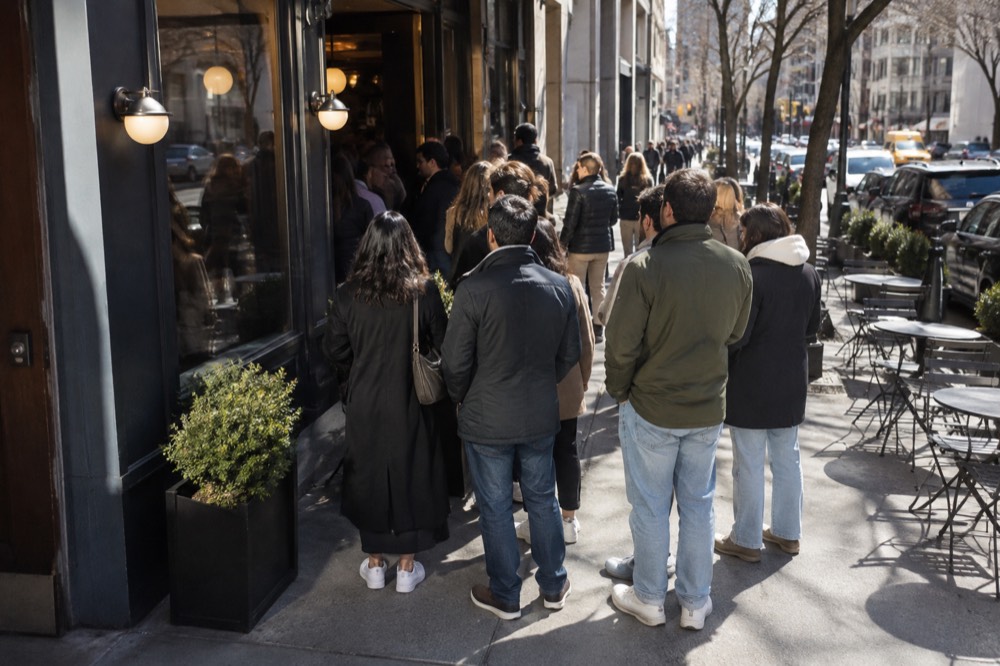
The reliable ways to beat NYC brunch lines are to eat before 10am or after 1:30pm, to book the reservation-only rooms midweek or well ahead for weekends, to prefer counter-service spots where the line moves in minutes rather than hours, and to treat dim sum as the fast-turnover alternative to a wait-list café.
The most effective tactic is early arrival: the famous no-reservation counters are calm in the first hour and mobbed by noon, and the same kitchen serves both crowds.
The clock is the whole game. New York brunch peaks between 11am and 1pm on Saturday and Sunday, and the waits at no-reservation institutions stretch accordingly. Arriving at opening, or close to it, converts an hour-long wait into a seat on arrival. The late window after 1:30pm works nearly as well and suits anyone whose morning belongs to a museum or a walk.
Counter service is the structural cheat code. A place where you order at the counter and find a stool has a line that moves, because tables turn the moment plates are cleared. The full-service rooms with wait-lists are where time goes to die. If the plan is a packed day, the counter brunch is the plan-friendly brunch.
Reservations are worth their effort for the destination rooms. Many of the best-known café brunches in SoHo, Greenwich Village and Williamsburg book rather than queue, and the booking windows open days to weeks ahead, varying by venue. Check the restaurant's own site or reservation page rather than assuming walk-in works. And if the wait is unavoidable, make the wait useful: several of the best brunch neighborhoods are also the best walking neighborhoods, and a 45-minute wait is a 45-minute walk through SoHo's cast-iron blocks if you put your name down and wander.
How Do You Pair Brunch with a Neighborhood Walk?
The best brunch-and-walk pairings in NYC are the Lower East Side brunch followed by the Tenement Museum and a wander through the neighborhood, a Greenwich Village brunch followed by Washington Square Park and the crooked streets around it, a Chelsea brunch followed by the High Line, and a Chinatown dim sum brunch followed by the lanes of Chinatown and Little Italy. The pairing works because New York's brunch neighborhoods are also its best walking neighborhoods.
The Chinatown and Little Italy pairing is the classic. A dim sum brunch in Chinatown, then a walk south through the lanes and into Little Italy's old Mulberry Street blocks, covers two of the city's most storied immigrant food neighborhoods in a single morning. The stories are the part most visitors miss: who settled where, what remains, and how the enclaves formed. A guided walk covers that layer in a way a map cannot, and the food stops along the way double as dessert.
Greenwich Village rewards the same treatment. A café brunch, then Washington Square Park, then the streets that bend against the grid, past jazz basements and offbeat theaters. The Village is one of the few Manhattan neighborhoods where getting lost is the plan, and a brunch at its edge gives the walk a starting point.
Chelsea pairs a market brunch with the High Line, the elevated park built on a former rail line that runs through the neighborhood and down the West Side. The market-and-elevated-park combination is one of the most reliable rainy-morning structures in the city, because half of the route is indoors. For the full picture on that pairing, the Chelsea Market and High Line guided food walk covers both with a guide, and the High Line guide maps the park itself.
For the Village end, the Greenwich Village food tour strings six neighborhood institutions together with the lanes and squares that made the area famous, and it doubles as a primer on the music and bohemia past. If you would rather walk than eat, the SoHo, Little Italy and Chinatown walking tour covers all three neighborhoods in one guided sweep, heavy on history and light on food.
What Is the Best Time of Day for Brunch in NYC?
The best time for brunch in NYC is between 9am and 10:30am at the famous no-reservation counters, before the 11am-to-1pm peak, or after 1:30pm when the wait-lists collapse. Weekday brunch is the quietest and often the best-value version of the meal, with the same kitchens and a fraction of the crowd.
The one window to avoid is the Sunday noon hour at any well-known room, when the lines are longest and tempers shortest.
The reasoning is arithmetic rather than opinion. The brunch rooms have fixed capacity and a weekend demand curve that spikes late morning. Every seat turned before 10am is a seat you did not wait for, and the kitchens are fresher. The same logic makes the post-1:30pm window strong: the crowd thins, the pace relaxes, and several rooms run the full menu until late afternoon.
Weekday brunch is the insider answer. Plenty of the city's brunch rooms run a weekday service with the same menu, shorter hours and no line, and a Monday or Tuesday brunch is one of the few genuinely uncrowded experiences left in Manhattan. It also pairs well with the museum schedule: several of the city's museums open at 10am or 10:30am, which makes a 9am counter brunch the exact right predecessor.
| Time window | Crowd level | Notes |
|---|---|---|
| Before 9:30am | Quietest | Best at no-reservation institutions |
| 9:30am to 10:30am | Light | The sweet spot for famous counters |
| 11am to 1pm | Peak | Longest waits, book or avoid |
| 1:30pm to close | Thinning | Relaxed, full menu usually still running |
| Weekdays | Light all day | Same kitchens, calmer rooms |
What Should You Know Before Booking NYC Brunch?
Before booking NYC brunch, know that reservations at the destination rooms open days to weeks ahead and vary by venue, that prix-fixe deals with cocktails are predictable but not always cheaper, that large groups need a reservation almost everywhere worth going, and that the neighborhoods around the best rooms deserve a place in your walking plans.
The checklist is short: pick the neighborhood, pick the specialty, check the current menu and booking page, and arrive outside the 11am-to-1pm window if you could not book.
Groups change the math. A table for two can often improvise, but a table for six needs a reservation at almost any brunch room worth the name, and the group-friendly formats are dim sum, diners and counter clusters rather than the small cafés. The prix-fixe question deserves a clear head: the included-drinks deal fixes your cost, which is genuinely useful for groups, but it is only a saving if you were drinking anyway.
The last planning item is the day around the meal. New York brunch is at its best as the anchor of a morning rather than the whole of it: the museum that opens at 10am, the walk through the neighborhood, the park at the end of the street. The meal is the easiest part of that plan to get right, because the city has already done the specialization for you.
Common Questions About Brunch in NYC
The most common brunch questions in NYC are about timing, cost and reservations: when the lines peak, whether the cocktail deals are worth it, which neighborhoods suit a first visit, and what to do when you cannot get a table.
The short answers are that the peak runs 11am to 1pm on weekends, the deals are worth it only if you were drinking anyway, the Lower East Side, Chinatown, Greenwich Village and Harlem each suit a different kind of morning, and the fallback is always the counter.
What time is brunch in NYC?
Most NYC brunch rooms serve from roughly 8am or 9am until mid-afternoon on weekends, with a shorter weekday service at many places. The crowd peaks between 11am and 1pm on Saturday and Sunday, so the best windows are before 10am or after 1:30pm.
Do I need a reservation for brunch in NYC?
It depends on the room. The destination cafés in SoHo, Greenwich Village and Williamsburg mostly take reservations, and weekend tables should be booked ahead. The famous counter spots and dim sum houses do not, and the line moves fast enough that walking in is normal.
How much does brunch cost in NYC?
Planning ranges: a bagel and coffee at a counter is a few dollars, dim sum scales with what you order and is strong group value, a café brunch without drinks commonly runs about $25-$45 per person, and the same brunch with cocktails moves the total up sharply. Always check the current menu, and budget for the tip on the full bill.
What is the best neighborhood for a first-time NYC brunch?
The Lower East Side for the bagel-and-lox tradition, Chinatown for dim sum, Greenwich Village for café brunch and a walkable neighborhood, or Harlem for soul food and a Sunday-morning atmosphere. Pick the one that matches the rest of your morning rather than the one with the longest queue.
Is dim sum considered brunch?
Functionally, yes. Dim sum is a morning-to-early-afternoon meal of small plates and tea, and it does everything brunch does, often faster and cheaper. It is the best-value group brunch in the city and the option least affected by weekend trend pricing.
What should I do if the wait is too long?
Put your name down and walk. The best brunch neighborhoods are the best walking neighborhoods, and a 45-minute wait is a 45-minute stroll through SoHo, the Village or the Brooklyn waterfront. Alternatively, switch to a counter spot, where the line turns over in minutes rather than hours.
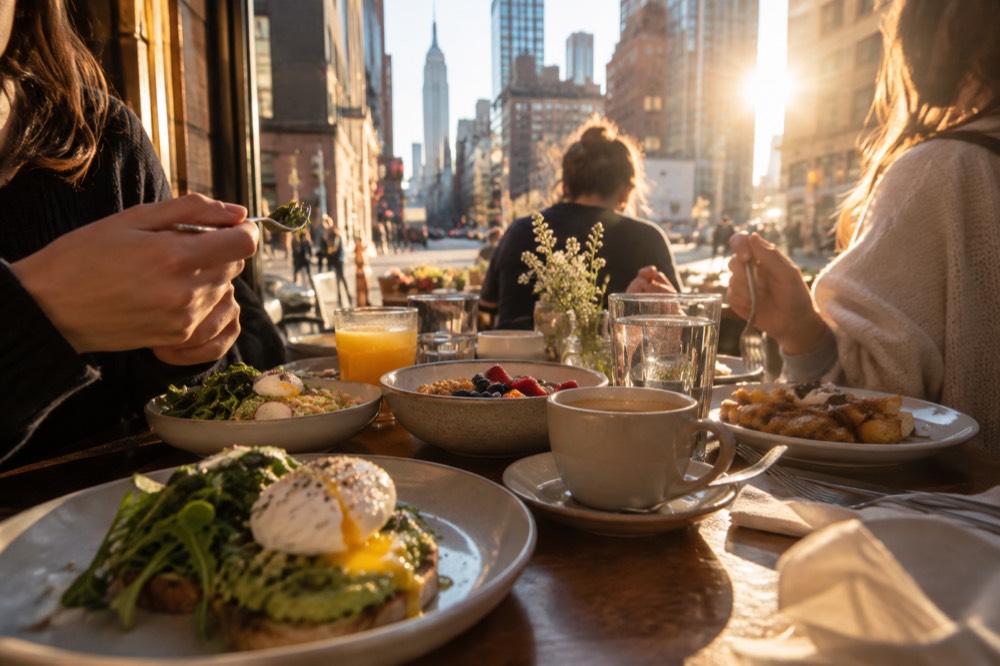
The last word goes to the format rather than any single room: pick the neighborhood, pick the specialty, and let the city's kitchens do what they have spent decades specializing in. A bagel eaten on a bench at 9am, a dim sum table loud with carts, or a booked café with the afternoon free behind it are all the best brunch in New York, on the mornings they fit.