Cheap Eats NYC: Where to Eat Well Without Spending Much
New York prices its hotel rooms and observation decks for visitors, but its food runs on a parallel economy of slice shops, carts and counters that has barely changed in spirit for decades. This is where to find it.
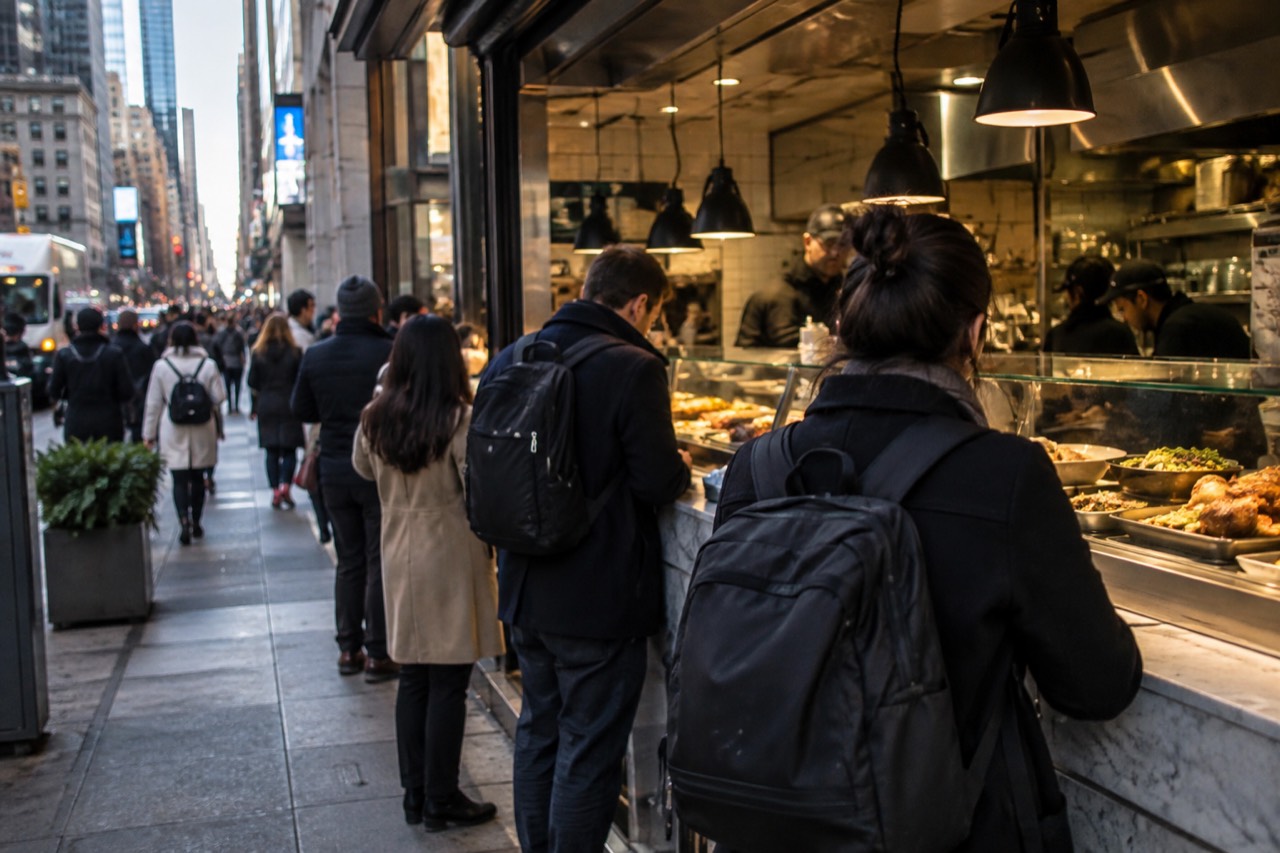
Short answer
The cheapest good food in NYC clusters in Chinatown, the East Village, Jackson Heights and along the halal-cart rows of Midtown. A subway ride costs $3.00, an OMNY week caps at $35, and the food tours worth the money are the Chinatown and Little Italy walk, the Greenwich Village walk and the Chelsea Market and High Line walk.
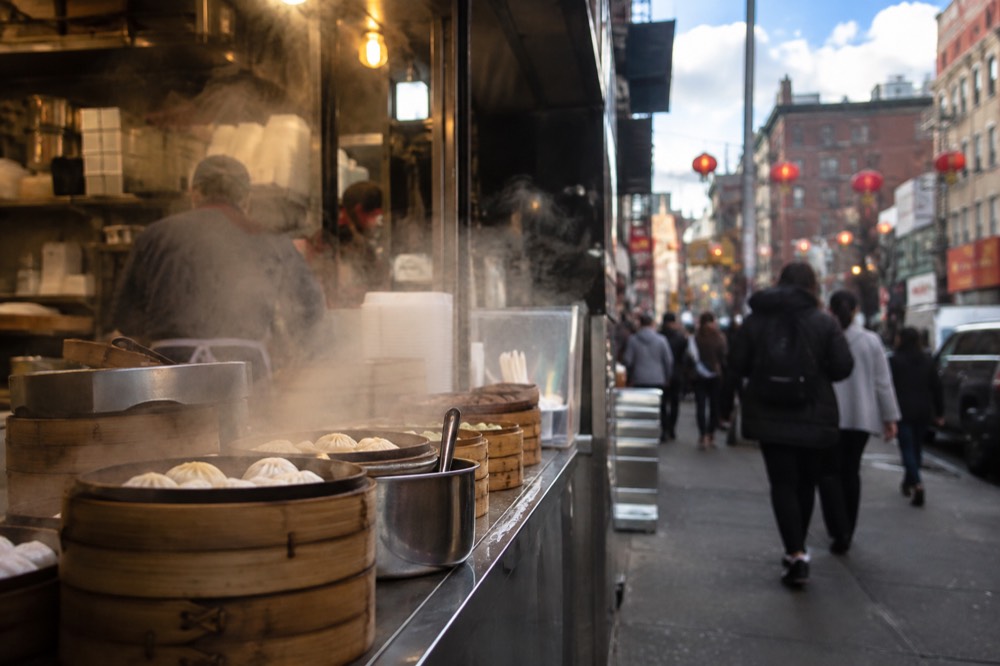
New York charges visitors $30 to walk into the Metropolitan Museum of Art and $47.91 to stand on an observation deck, but the city's food runs on a parallel economy that has nothing to do with those prices. The halal cart on the corner, the slice shop with the paper plates, the dumpling counter with the steamers going at 11am: these are the places where the city feeds itself, and a visitor who eats where locals eat can spend less per day than the price of one museum ticket. This guide, part of the New York City Travel Guide series, covers where that food actually is, what a fair price looks like, and how to get to it for $3.00 a ride.
The honest framing matters here. New York is not a cheap city, and pretending otherwise helps nobody. But the gap between what a tourist spends on food and what a resident spends is enormous, and it comes down to knowing which streets and which counters. That knowledge is free, and this page is built to hand it over.
Where to Find the Best Cheap Eats in NYC
The best cheap eats in NYC cluster in five places: Chinatown for dumplings and roast meats, the East Village for slices and small counters, Jackson Heights in Queens for Latin American and South Asian food, Sunset Park in Brooklyn for Chinese, and the Midtown halal cart rows for a full plate at lunch. None requires a reservation, and the pattern is simple: the further you eat from a hotel lobby, the less you pay.
The geography is not random. Cheap food in New York follows immigrant neighborhoods, because those are the places where restaurants cook for their own community first and price accordingly. Chinatown works because the kitchens on and around Mott Street, Bayard Street and East Broadway serve one of the densest residential populations in the country. Jackson Heights works because the Roosevelt Avenue corridor under the elevated 7 train tracks cooks for one of the most linguistically diverse neighborhoods in the world. The East Village works for a different reason: student demand from the universities nearby keeps a lid on prices, and the slice shops that survived did so by staying cheap.
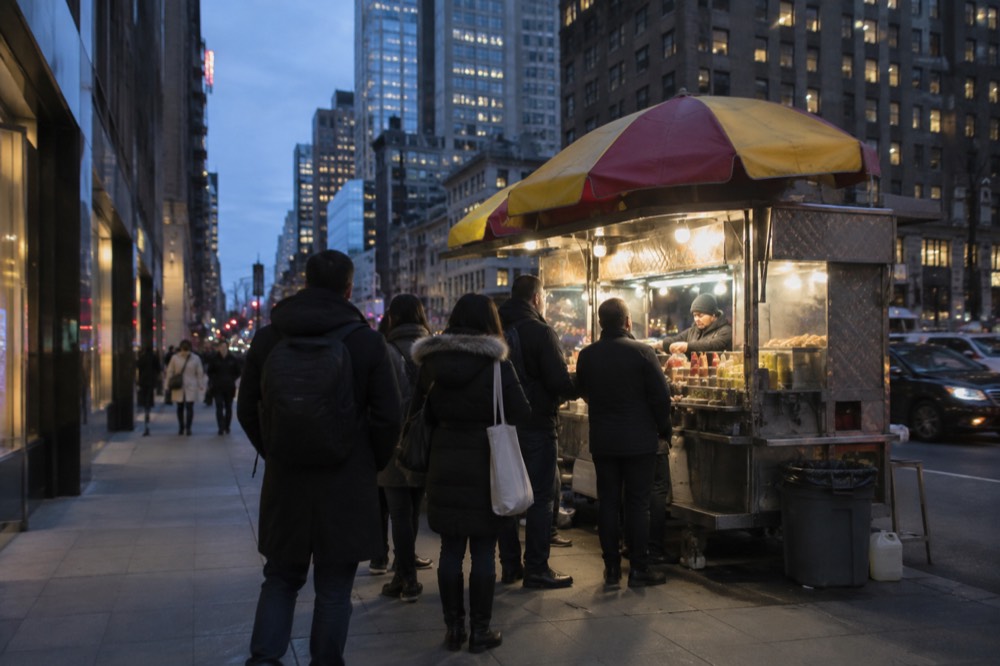
Midtown is the exception that proves the rule. It is the most expensive restaurant district in the city and simultaneously home to the halal cart, the single best-value hot meal available anywhere in Manhattan. The carts cluster around the office canyons, particularly on the side streets between Fifth and Lexington Avenues in the 40s and 50s, because that is where the lunchtime office crowd is. A chicken-and-rice plate from a cart is a full meal, cooked in front of you, served in minutes.
| Neighborhood | Borough | What to eat there | Getting there |
|---|---|---|---|
| Chinatown | Manhattan | Dumplings, roast duck over rice, bahn mi, egg tarts | The J or Z to Bowery, the 6 to Canal St |
| East Village | Manhattan | Pizza by the slice, ramen counters, bagels | The 6 to Astor Place |
| Jackson Heights | Queens | Arepas, Tibetan momos, Indian thalis, Tibetan noodle soup | The 7 along Roosevelt Avenue |
| Sunset Park | Brooklyn | Cantonese and Fujianese cooking, dim sum | The N or R to 8th Ave |
| Midtown cart rows | Manhattan | Halal chicken or lamb over rice | Any train to the 40s or 50s |
If you are planning the rest of your days around eating cheaply, the wider budget guide to NYC covers free museums and cheap sightseeing, and the cheap things to do in NYC page pairs well with this one.
What a Slice, a Halal Plate and a Bagel Actually Cost
A plain cheese slice at a neighborhood shop typically runs $3-$5, a halal cart plate with chicken and rice runs roughly $10-$15, and a bagel with cream cheese runs about $4-$6. These are planning ranges, not promises: prices vary by block and by year, and the number on the board is the only one that counts. All three deliver a full meal for a fraction of a sit-down restaurant bill.
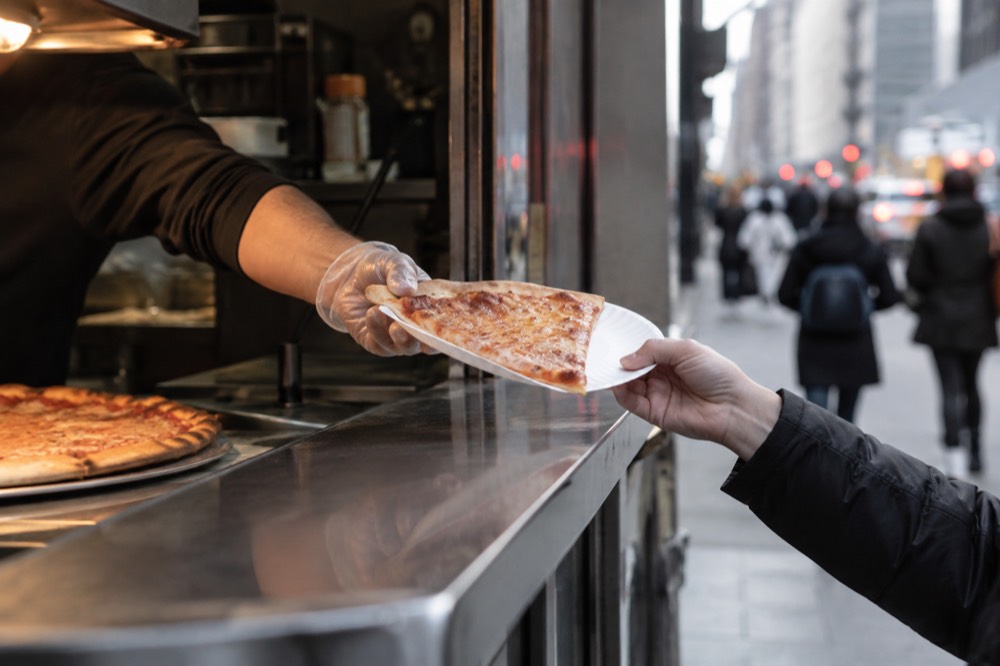
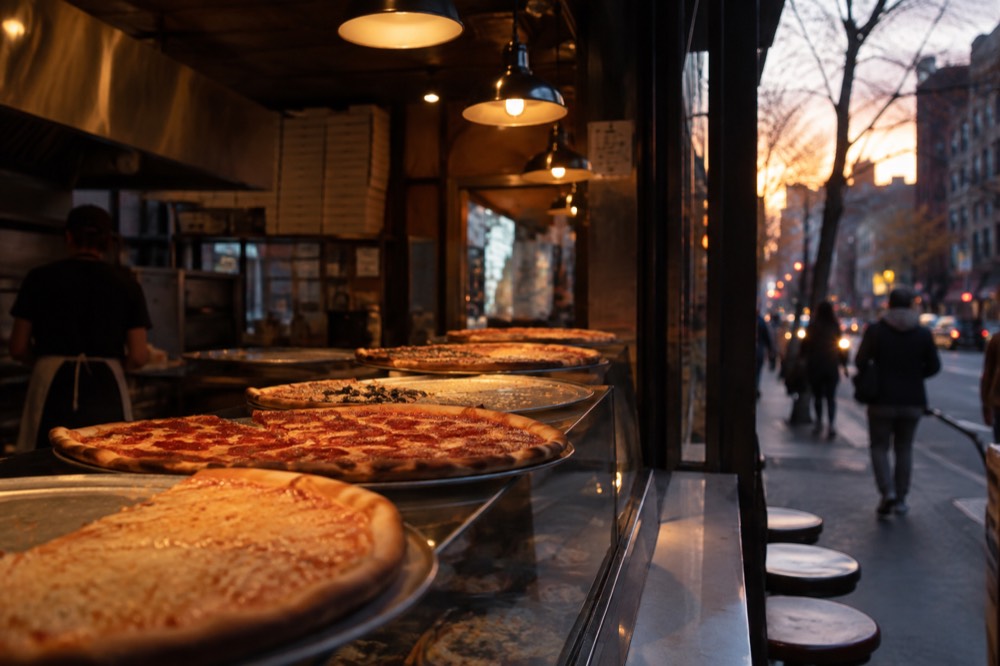
The dollar slice is mostly gone from Manhattan, and any guide still promising one is working from old information. What replaced it is the $3-to-$5 slice, which is still one of the best calorie-per-dollar trades in the city. The best pizza in NYC guide covers the full landscape, but for cheap-eats purposes the rule is simple: the slice shop with the line out the door and the old oven is the one to join. Slices come out continuously, so the wait is short even when it looks long.
The halal cart plate deserves its own explanation, because visitors routinely confuse it with the tourist traps that set up near the major sights. The real carts are the ones with the office queues at lunchtime, the ones that have been on the same corner for years, and the ones where the price is written on a sticker rather than shouted. The plate is chicken or lamb or a mix, over yellow rice, with salad and a white sauce that the cart owner will happily drench the whole thing in. Hot sauce comes separately and should be applied with respect.
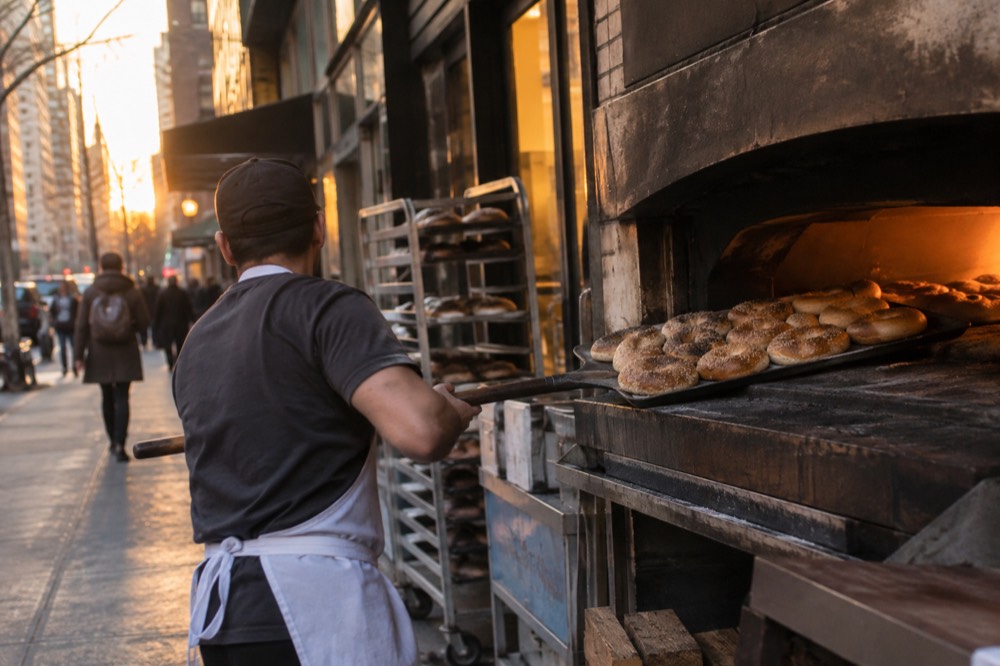
Bagels are the third pillar. A proper New York bagel is boiled then baked, and the city argues endlessly about who does it best. The best bagels in NYC guide sorts that fight out. What matters on a budget is that a bagel with cream cheese is a complete breakfast for the price of a coffee in a hotel lobby, and that the morning queue at a good bagel shop is the most reliable quality signal in the city. Order fast, pay cash or card, and step aside to eat.
One warning that saves real money: the food carts parked directly outside the major attractions, the ones near the observation decks and the ferry terminals, charge two or three times what the same food costs ten blocks away. The city's health grading letter is posted on every cart and every counter, and it is worth a glance wherever you buy.
Chinatown and Little Italy: The Cheapest Eating Streets in Manhattan
Chinatown is the cheapest place to eat a full meal in Manhattan, with dumpling counters and roast-meat rice plates priced well below anything in the surrounding neighborhoods, and Little Italy's Mulberry Street sits right next to it for a cannoli to finish. The two neighborhoods share a handful of walkable blocks, so one visit covers both. Go before noon or after 2pm to eat without a wait, and expect cash-only counters.
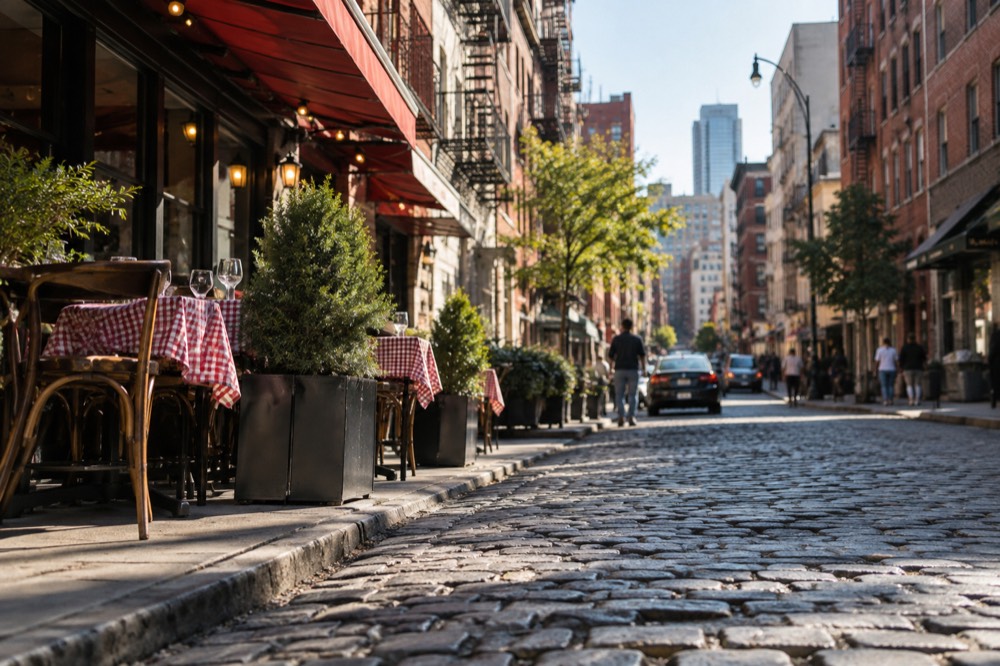
The eating geography of Chinatown is compact. The dumpling counters cluster around Mosco Street and Doyers Street, the tiny crooked lane that was once the most dangerous corner in the city and is now where tourists photograph the curve. The roast-meat shops hang their ducks in the window along Mott Street and Bayard Street, and the rice plates underneath those windows are a full lunch. The egg tarts and the bakeries are scattered through, and the price of everything is posted. Bring small bills, because several of the oldest counters remain cash-only.
Little Italy has a different reputation problem: food writers have spent decades declaring it overpriced and inauthentic, and along the Mulberry Street tourist strip that criticism is fair. But the neighborhood still holds, and the cannoli from the old bakeries is the reason to come. The honest advice is to eat your meal in Chinatown, walk one block to Mulberry Street, buy dessert, and leave the sit-down restaurants to someone else.
The decision worth making here is whether to explore these blocks on your own or with a guide who knows the counters. A food walk turns guesswork into a plan.
The Chinatown and Little Italy walk deserves its own note, because it is the one most directly relevant to this page. Six tastings add up to a real meal, so the standard advice is to arrive hungry and skip lunch.
If you would rather have the whole thing organized in one booking, the guided option handles the route, the stories and the stops.
Greenwich Village and the East Village: Slices, Counters and Old Bakeries
Greenwich Village and the East Village offer the best cheap eating in Manhattan below 14th Street, with pizza slices, old bakeries and small plates packed into a few walkable blocks around Washington Square and St. Marks Place. The Village's food identity runs from coal-oven slices to century-old bakeries, and the East Village adds ramen counters and pierogi shops. Neither neighborhood requires a car, a reservation or much planning.
The Village is where New York's food mythology lives: the jazz basements, the offbeat theaters, the brownstones that artists once could afford. The eating follows that history. The Greenwich Village guide covers the neighborhood in full, but the cheap-eats core is a short list: the slice shops near the corner of Bleecker and Carmine, the old bakeries that still sell by the piece, and the coffee bars that survived the rent increases. Washington Square Park itself is free, and eating a slice on a bench facing the arch is a genuinely New York lunch.
The East Village, a few blocks east, is denser and younger. St. Marks Place between Second and Third Avenues is the spine: ramen counters, pierogi windows, falafel shops and dessert places stacked on top of each other. The neighborhood also holds some of the city's best cheap Japanese food, a legacy of the businesses that grew up around the area's Japanese community. The queues move fast because the counters are small and the turnover is constant.
The Village food walk is the guided version of this, and it doubles as a primer on the neighborhood's music and bohemian past, which is context you will not get from a menu board.
Chelsea Market, the High Line and the Food Halls
Chelsea Market is the best-known food hall in the city, and it sits directly under the High Line, so a cheap lunch and a free elevated walk pair naturally in one visit. The market's stalls run from lobster rolls to tacos, with prices that vary widely by vendor, so the budget move is to browse the full length of the market before buying anything. The High Line above it is free to walk.
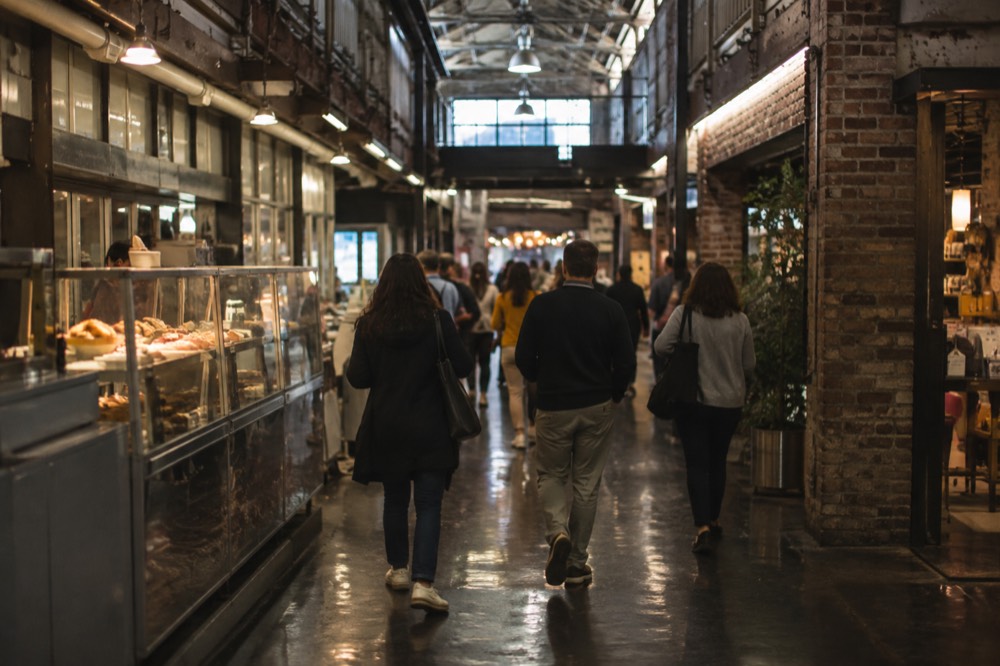
Chelsea Market is a former Nabisco factory, and the building's brick corridors now hold dozens of vendors. It is not the cheapest food in this guide, and it is honest to say so: a food hall in a tourist corridor prices accordingly. But it rewards browsers. The stalls at the far end from the main entrance tend to have shorter queues, and the market's own rhythm means late morning and mid-afternoon are the calm windows. The High Line guide covers the walk itself, which runs north along the old rail viaduct with garden planting and skyline views the whole way.
The guided version combines both: the elevated park with a guide who knows which vendors are worth the stop, then the market for tastings. It is also a decent rainy-day pick, because the market half of the route is indoors.
The other food halls worth knowing are Time Out Market in DUMBO, which pairs eating with the best free skyline view from Brooklyn Bridge Park, and the Grand Central Dining Concourse, which feeds commuters rather than tourists and prices accordingly. The concourse sits one level below the main concourse of Grand Central Terminal, and the Grand Central guide covers the landmark above it, including the whispering gallery and the celestial ceiling.
| Food hall | Where | Who it prices for | Cheap-eats angle |
|---|---|---|---|
| Chelsea Market | Chelsea, Manhattan | Visitors and locals, mixed | Browse the full length before buying |
| Grand Central Dining Concourse | Midtown, Manhattan | Commuters | Prices set for daily repeat customers |
| Time Out Market | DUMBO, Brooklyn | Visitors | Eat inside, then the free park view outside |
| Essex Market | Lower East Side, Manhattan | Residents of the neighborhood | One of the oldest public markets in the city |
Free and Almost-Free Food Experiences in NYC
New York has a real set of free food-adjacent experiences: the Chelsea Market corridors cost nothing to browse, the Staten Island Ferry is a free harbor crossing with skyline views, and several museums open their doors free on scheduled evenings, including the Whitney every Friday night and the 9/11 Memorial Museum on Monday evenings. None of these involve free food itself, but they build a day around eating cheaply without paying for entertainment.
The honest list of genuinely free food in New York is short and mostly seasonal: farmers market samples at the greenmarkets, the tastings at some food festivals, and the occasional store opening. Treat anything beyond that with suspicion. What the city offers instead is free experiences that pair with cheap eating, and the strongest of those is the ferry.
The Staten Island Ferry costs nothing, runs around the clock, and passes the Statue of Liberty at a distance on every crossing. It is a commuter service, not a cruise, and the Staten Island Ferry guide explains how to ride it without wasting time. The budget day that works: a dumpling lunch in Chinatown, the subway to the ferry terminal, the round-trip crossing, and dinner back in the East Village.
| Free window | Where | Who it covers | When |
|---|---|---|---|
| Whitney Museum free nights | Meatpacking District | Everyone | Fridays 17:00-22:00, capacity limited |
| MoMA free Friday evenings | Midtown | New York State residents only, proof required | Fridays 17:30-20:30 |
| 9/11 Memorial Museum free Mondays | World Trade Center | Everyone, tickets released online each Monday morning | Monday evenings, first come first served |
| 9/11 Memorial plaza | World Trade Center | Everyone, no ticket | Daily, always free |
| Staten Island Ferry | St. George to Whitehall | Everyone | Around the clock, no ticket |
The 9/11 Memorial plaza, the two reflecting pools set into the footprints of the towers, is free and open to all, and it sits within walking distance of the Financial District's lunch counters. The museum beneath it is a different kind of visit, and it deserves unhurried time rather than a slot squeezed between meals.
Getting to Cheap Eats: Subway Fares Explained
A single subway or local bus ride costs $3.00, and there is no longer any pass to buy: the MetroCard was retired on 1 January 2026, and the weekly value now comes from automatic OMNY fare capping at $35, which applies when you tap the same card or device every ride. Once you hit $35 in a rolling seven-day window, the rest of that week's subway and local bus rides are free.
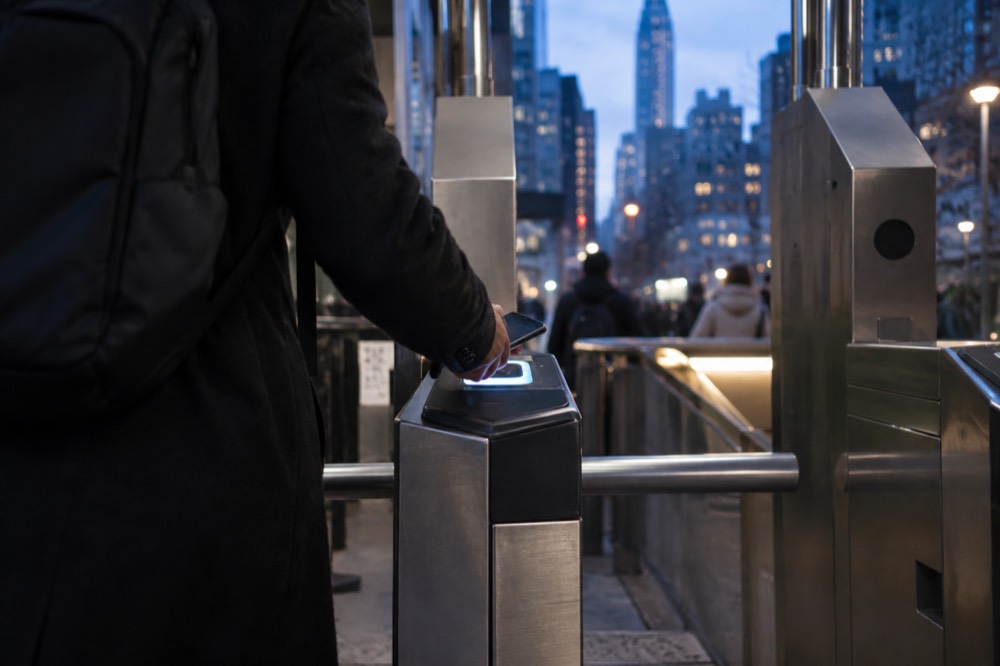
Tap your contactless card, phone or watch at the turnstile and the system tracks your rides toward the cap. The rule that trips people up: you must tap the same physical card or the same device every single time. Mixing your phone and the plastic card in your pocket breaks the cap silently, and the MTA will not warn you. Groups should also know that each traveler needs their own card or device, because transfers and group rides do not count toward anyone's cap. The official fare details are published at mta.info/fares/omny.
What this means for a cheap-eats itinerary is simple math. Eating in Jackson Heights from Midtown costs $3.00 each way. Eating in Sunset Park costs the same. A week of crossing the city for food, five rides a day, hits the $35 cap on the twelfth paid ride and everything after that is free. The subway is not just the cheapest way to reach cheap food, it is the only way that makes sense, and the how to get around NYC guide covers the full system.
How to Build a Full Cheap-Eats Day in NYC
A realistic cheap-eats day in New York runs about $30-$45 per person for food and transport combined: a bagel breakfast, a halal cart or dumpling lunch, a slice or a food-hall snack in the afternoon, a proper dinner in an immigrant neighborhood, and $6.00 of subway fares to tie it together. The day works best when the neighborhoods are grouped by geography, because backtracking across Manhattan wastes both fare and appetite.
The template that works, tested against the map rather than against a brochure: breakfast at a bagel counter in Midtown or the East Village, morning walking in Chinatown with a dumpling lunch before the noon rush, the subway to the High Line for the free walk and a Chelsea Market snack, then the evening in Jackson Heights for a dinner that will cost less than the museum ticket you did not buy. That is one day, five neighborhoods of food, and the only tickets required are subway taps.
The longer stays get easier, not harder, because the OMNY cap means the transport cost falls toward zero as the week fills. Pair the eating with the free museum windows from the table above and a $200 food week in New York is genuinely achievable, which is a sentence that would have sounded absurd next to the observation deck prices at the top of this page.
| Meal | Where | Typical planning range | Notes |
|---|---|---|---|
| Breakfast | Bagel counter, citywide | $4-$8 with coffee | Cash-friendly, fast, no wait at 8am |
| Lunch | Halal cart or dumpling counter | $5-$15 | Office queues are the quality signal |
| Afternoon | Slice or food-hall snack | $4-$10 | Browse the full market before buying |
| Dinner | Jackson Heights or Sunset Park | $15-$25 | Cash-only counters exist, bring small bills |
| Transport | Subway, up to 5 rides a day | $3.00 per ride, $35 weekly cap | Tap the same card every time |
Common Questions About Cheap Eats in NYC
The questions visitors ask most about cheap eating in New York come down to five: where the cheapest full meal is, whether food carts are safe, what a slice should cost, whether Chinatown needs cash, and how to eat cheaply near the main sights. The short answers are Chinatown, yes with a glance at the health grade, roughly $3-$5, bring small bills, and walk ten blocks away from any attraction. The longer answers follow.
Where is the cheapest place to eat a full meal in NYC?
Chinatown in Manhattan is the cheapest place to eat a complete meal, with dumpling counters and roast-meat rice plates priced below anything in the surrounding neighborhoods. Jackson Heights in Queens and Sunset Park in Brooklyn match or beat it, at the cost of a $3.00 subway ride each way.
Are NYC food carts safe to eat from?
Yes, with one check. Every cart and restaurant in the city displays a health department grading letter, and a glance at that letter is the same protection you get anywhere else in New York. The carts with the office lunch queues are the ones cooking high volumes continuously, which is its own form of quality control.
How much is a pizza slice in NYC?
Planning range, roughly $3-$5 for a plain cheese slice at a neighborhood shop, with toppings costing more. The dollar slice is largely gone from Manhattan. The number on the board at the counter is the only one that counts, and prices move with the years.
Do I need cash for cheap eats in NYC?
Bring some. Most counters take cards now, but several of the oldest and cheapest spots in Chinatown and Jackson Heights remain cash-only, and small bills speed up every transaction at a busy counter. A card remains fine almost everywhere else.
Can you eat cheaply near Times Square?
Yes, but not on the avenue itself. The halal cart rows on the side streets in the 40s and 50s, a few blocks from the theaters and billboards, serve full plates at lunch prices, and the slice shops of Hell's Kitchen sit a short walk west. The rule of thumb: every block you walk away from a tourist landmark saves money on the plate.
Is a food tour worth it if I am on a budget?
It can be, because the good ones convert six tastings into a full meal plus a neighborhood history you would otherwise miss. The Chinatown and Little Italy walk, the Greenwich Village walk and the Chelsea Market and High Line walk are the three that fit this page best. Book one, eat a big meal on it, and spend nothing else on food that day.