Cheap Things to Do in NYC: A Sourced Guide to the City on a Small Budget
New York punishes careless spending more than almost any city on earth, but the gap between a cheap day and an expensive one is mostly planning. This guide uses verified prices, free admission windows and the fare rules most guides still get wrong.
Short answer
A cheap day in NYC costs under $20 per person if you walk the free icons, ride the $3.00 subway, eat from slice shops and street carts, and time your museum visits for the free or pay-what-you-wish windows that most visitors never hear about.
New York City welcomed 65 million visitors in 2025, and a fair share of them went home broke for no good reason. The city's most famous experiences split into two categories: a handful of genuinely expensive ones, and an enormous amount of world-class stuff that costs nothing or close to it. The Brooklyn Bridge promenade is free. The Staten Island Ferry is free. The High Line is free. The 9/11 Memorial plaza is free. A subway ride costs $3.00, a pizza slice costs less than a coffee in most capitals, and half the major museums open their doors for nothing on published days that most guides never mention.
The catch is that the free and cheap options sit next to aggressive traps. Lookalike harbor cruises charge more than the official ferry to Liberty Island and never land. Observation decks stack booking fees on top of timed tickets. And the single most-quoted transit product in New York travel writing, the 7-day unlimited MetroCard, does not exist any more: the MTA stopped selling and refilling MetroCards on 1 January 2026. Any guide that tells you to buy one is out of date.
This page lays out the cheap side of the city with verified numbers: what is actually free, what is nearly free, when the museums drop their prices, and where the small leaks in a budget usually appear. For the full picture of paid and free attractions together, start with our things to do in NYC overview, and see our deeper NYC on a budget guide for accommodation and trip-level planning.
How Much Does a Cheap Day in NYC Actually Cost?
A realistic cheap day in New York costs roughly $10-$25 per person: $6.00 in subway fares if you ride twice, $5-$12 for food from a slice shop or a cart, and $0 for attractions if you stick to the free icons. Add one paid museum at a pay-what-you-wish window or a $26.00 ferry ticket and the day still lands under $40. The variable is how many timed-ticket attractions you stack.
The floor is lower than most people expect. Walking costs nothing, and the walks that tourists pay tour companies to replicate, across the Brooklyn Bridge, along the High Line, through Greenwich Village and Central Park, are all public space. The subway fare is $3.00 per ride with one free transfer within two hours, and if you tap the same card or device all week, the MTA caps your weekly subway and local bus spending at $35 automatically. Two rides a day for five days costs $30, not $70.
The ceiling is where carelessness lives. Here is how the same day can swing:
| Item | Cheap version | Careless version |
|---|---|---|
| Getting around (1 day) | 2 subway rides, $6.00 | 4 taxi or rideshare hops, $50+ |
| Lunch | Slice and a can, $6-$8 | Times Square sit-down, $35+ |
| Harbor view | Staten Island Ferry, free | Lookalike cruise that never lands, $40+ |
| Museum | Free-admission window, $0 | Full-price walk-up plus special exhibition, $50+ |
| Observation deck | Skip it, or a pass slot | Box office walk-up, $75.12 at the Empire State Building |
The Empire State Building's AM/PM Experience costs $75.12 at the box office, per the price table CityPASS publishes. That single ticket costs more than three full cheap days in the city. Nothing wrong with buying it, but it should be a decision, not a default.
What Are the Best Free Things to Do in NYC?
The best free things to do in NYC are the Brooklyn Bridge promenade, the Staten Island Ferry, the High Line, the 9/11 Memorial plaza, Central Park, Grand Central Terminal's main concourse and the Federal Reserve's gold vault area in the Financial District. All of them are genuinely free, none require a ticket, and together they cover the harbor, the skyline, the park and the city's most moving public space in a single walkable circuit.
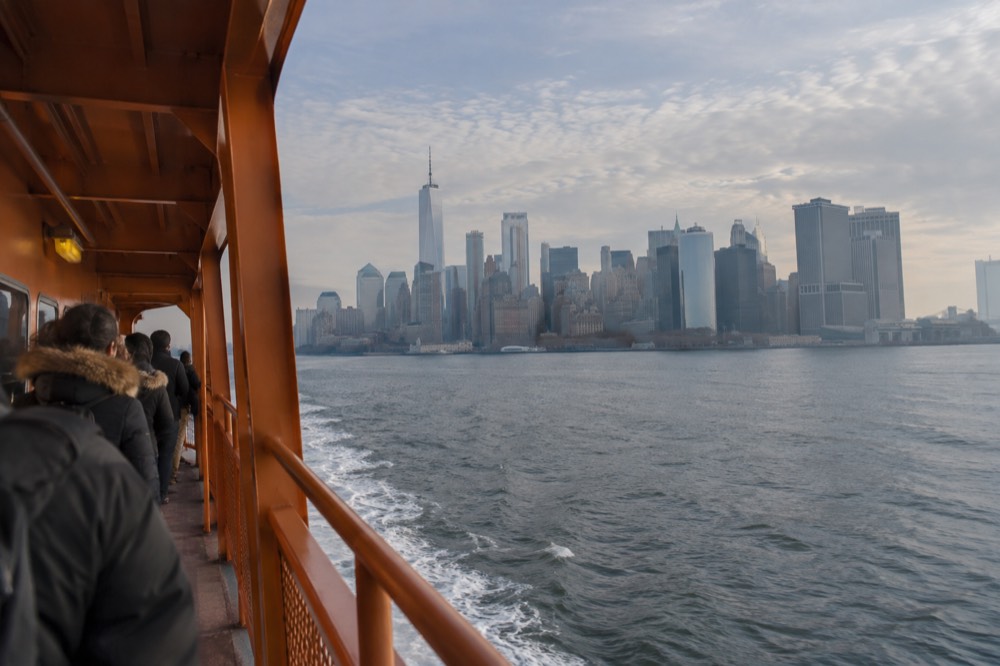
Start with the Staten Island Ferry. It runs around the clock between Whitehall in Lower Manhattan and St George on Staten Island, passes the Statue of Liberty at close range, and the ride is free, a service of the NYC Department of Transportation. Tourists pay $40 and more for harbor cruises that offer roughly the same statue view. Ride at sunset, sit on the right side heading out, and treat the round trip as a 70-minute cruise that happens to be a commuter route.
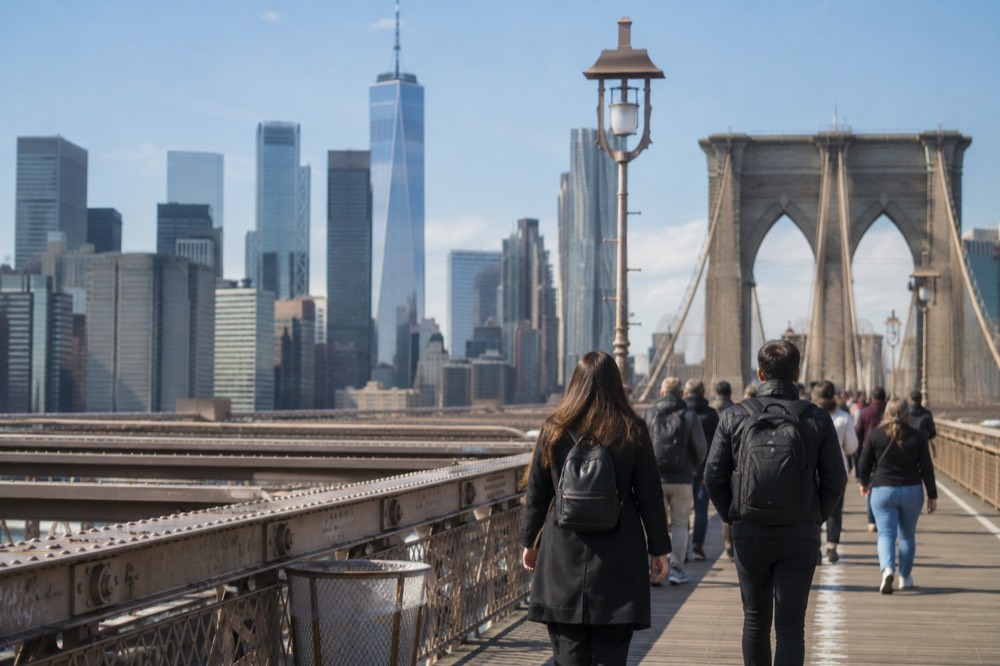
The Brooklyn Bridge costs nothing to cross on foot, and the promenade sits above the traffic on the raised wooden walkway. Walk it from Manhattan to Brooklyn, then stay for the Brooklyn Heights promenade and the DUMBO waterfront, which are also free. A guided option exists if you want the engineering history explained, and there is even a free, tip-based walk on GuruWalk covering the bridge, Brooklyn Heights and DUMBO, where you pay the guide whatever you think the walk was worth at the end.
The High Line, the elevated park built on a former freight rail line on the West Side of Manhattan, is free and open to the public. It connects the Meatpacking District to Hudson Yards and drops you right at Little Island, another free public park on the water. Central Park needs no introduction, but the free version deserves one: Bethesda Terrace, the Mall, Bow Bridge and the Ramble cost nothing, and the park's designed landscapes are the point, not a backdrop.
Two more free stops anchor downtown. The 9/11 Memorial plaza, with its two reflecting pools set in the footprints of the towers, is free and open daily from 08:00 to 20:00, no ticket needed. Describe it plainly: it is a memorial at the site of a mass killing, and it rewards quiet time more than any itinerary slot. And Grand Central Terminal's main concourse, with its celestial ceiling and whispering gallery, is one of the great free interiors in America. You can walk in off 42nd Street at any hour the terminal is open.
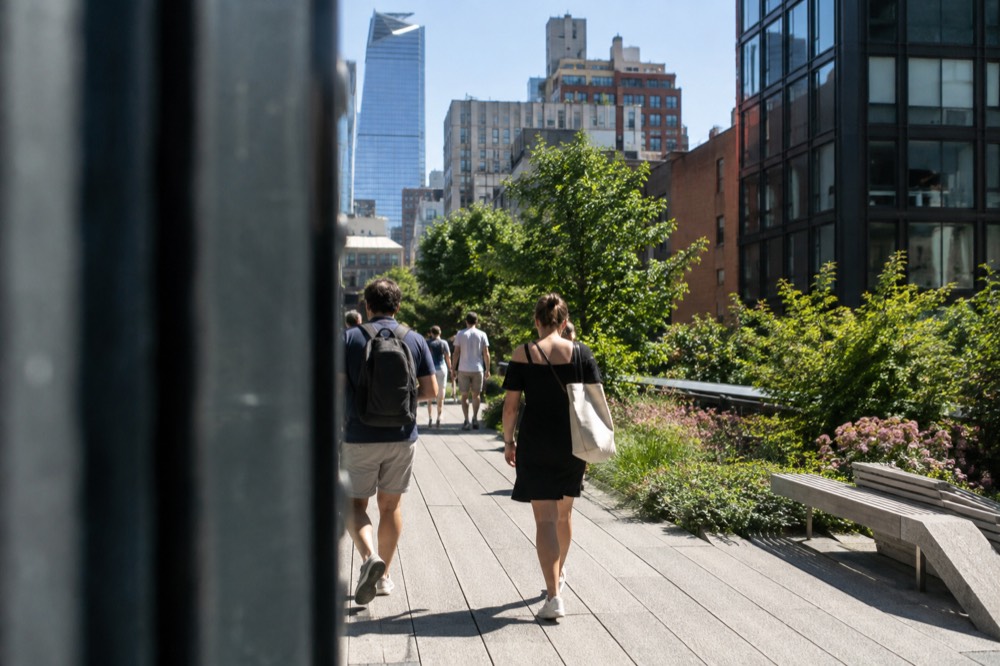
| Free thing | Where | Why it beats the paid version |
|---|---|---|
| Staten Island Ferry | Whitehall to St George | Same statue and harbor view as a paid cruise |
| Brooklyn Bridge promenade | Manhattan to DUMBO | The walk tour companies sell, at $0 |
| High Line | Gansevoort to W 34th St | Elevated skyline walk, connects two free parks |
| 9/11 Memorial plaza | World Trade Center | The outdoor memorial is always free, no ticket |
| Grand Central concourse | 42nd Street | Free interior landmark, no entry fee at all |
| Central Park loops | Mid-Manhattan | Designed landscape in the heart of the island, $0 |
Which Cheap Attractions in NYC Are Worth the Ticket Price?
The paid attractions that justify their price on a budget trip are the official Statue of Liberty and Ellis Island ferry at $26.00 for adults, the 9/11 Memorial Museum at $36.00, and the observation decks only if you buy them through a pass. The ferry is the standout: it is the only operator authorized by the National Park Service to land on Liberty Island, and it includes both island museums and audio tours.
Here is the honest trap, stated plainly because it costs real money: numerous lookalike cruise operators sell boat trips that circle the islands and never land, and some charge more than the real ferry. A visitor who buys one of those cannot set foot on Liberty Island. The official operator is Statue City Cruises, the only ferry company authorized by the National Park Service, departing from Castle Clinton in Battery Park and from Liberty State Park in Jersey City.
The price structure is worth knowing. An adult general ticket, covering the grounds of both islands plus both museums, costs $26.00, with children 4-12 at $17.00 and seniors at $23.00. The crown reservation costs $26.30, thirty cents more, and the barrier to the crown is not money but availability: crown tickets are name-bearing, capped at four per household, checked against photo ID, and reported to sell out months ahead. Book as early as your dates allow if the crown matters to you.
For the museums, the 9/11 Memorial Museum charges $36.00 for adults at the box office, but it releases free admission tickets every Monday at 07:00 ET on its website, first come first served. That is a real, standing free window, not a rumor. The Intrepid Museum charges $38.00, but New York City residents get 50% off every day with proof of residency.
If your cheap trip still includes several big paid sights, the pass maths changes things. New York CityPASS costs $149.00 for adults and covers your choice of 5 attractions from a list of 11 over 9 consecutive days. CityPASS's own figures put the combined regular price of the adult picks at $307.04, a claimed saving of $158.04. The list includes the Empire State Building, Top of the Rock, the Statue of Liberty ferry, the 9/11 Memorial Museum, the Intrepid, the Guggenheim and the Whitney, among others. It only pays off if you genuinely use all five, so check the inclusions against your own list before buying.
The pass question comes down to one honest test: write your actual itinerary first, price it at the box-office figures above, and only then see whether the bundle beats it. A traveler doing the ferry, the 9/11 museum and two decks comes out ahead; a traveler whose list is mostly free attractions and one museum should buy the ferry ticket directly and skip the bundle entirely.
| Attraction | Adult price | Cheapest legitimate route |
|---|---|---|
| Statue of Liberty and Ellis Island ferry | $26.00 | Official ferry, includes both museums |
| 9/11 Memorial Museum | $36.00 | Free Monday tickets, released 07:00 ET weekly |
| 9/11 Memorial plaza | Free | No ticket, open 08:00-20:00 |
| Intrepid Museum | $38.00 | 50% off for NYC residents |
| Empire State Building (AM/PM) | $75.12 | CityPASS slot if doing 5 sights |
| Staten Island Ferry | Free | Just board at Whitehall |
How Do You Eat Cheap in NYC?
You eat cheap in NYC at pizza slice shops, dollar-a-slice and two-dollar-a-slice counters, bagel bakeries, halal carts, bodegas and the city's long-running dumpling shops, where $8-$12 buys a full meal. The rule that saves the most money is geographic: never eat within two blocks of a major attraction, and walk east or west first. The city's best cheap food sits ten minutes from the tourist core, not in it.
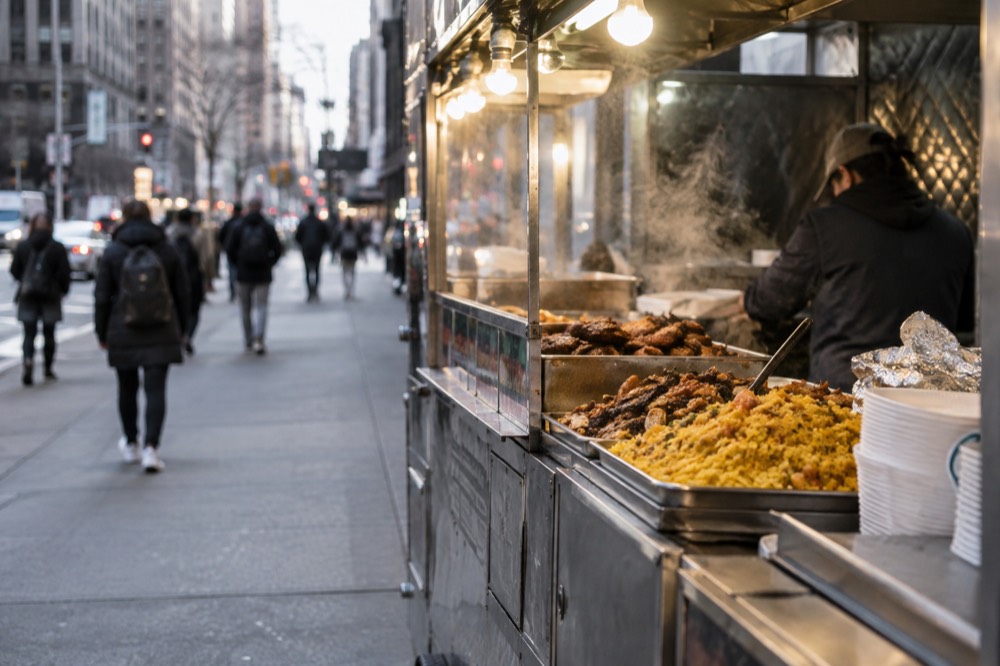
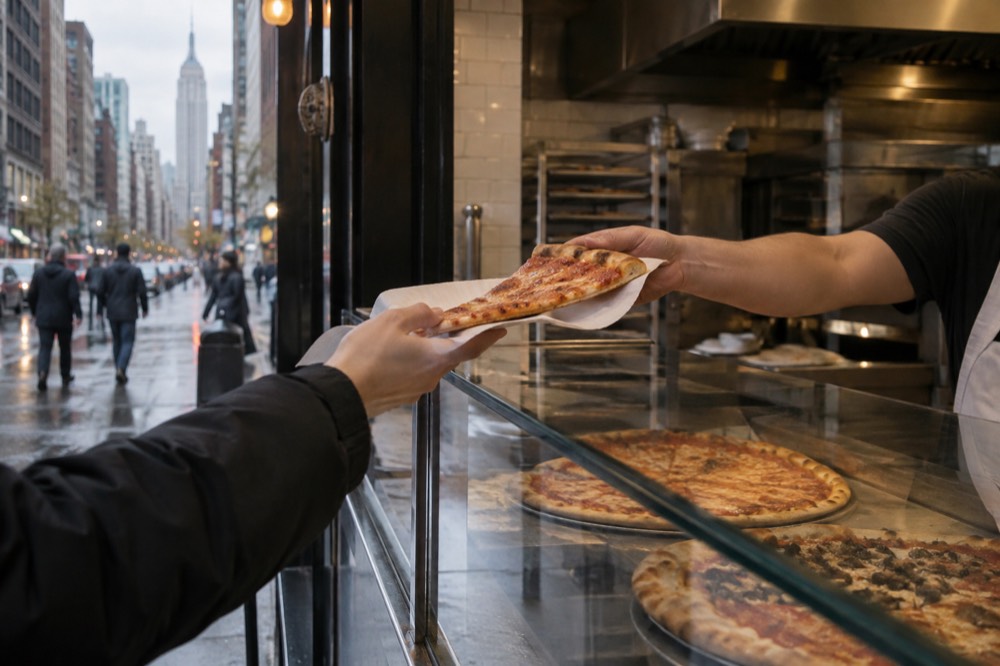
The slice is the anchor. A plain slice at a neighborhood pizzeria runs roughly $3-$5 across the boroughs, and a slice plus a can of soda remains a complete lunch for under $10. The halal cart is the second anchor: the chicken-and-rice plates from Midtown's carts became famous for a reason, and $10-$15 still covers a plate big enough for two light eaters. Bagels with cream cheese from a proper bagel bakery land around $4-$6. Dumpling shops in Chinatown sell by the tray at prices that feel like a misprint. The rest of the planning pages sit on New York City Travel Guide.
Two structural rules keep the food budget intact. First, the price of a sandwich rises with proximity to a landmark: the same bacon-egg-and-cheese that costs $5 in Astoria costs $12 near Times Square. Second, sit-down restaurants in the Theater District and around major attractions price for captive audiences. Walk five blocks in any direction first. Our best pizza in NYC guide and the cheap eats roundup go deeper on specific neighborhoods.
| Cheap meal | Typical cost | Where it works best |
|---|---|---|
| Pizza slice and a drink | $5-$9 | Anywhere, any borough |
| Chicken and rice from a halal cart | $10-$15 | Midtown carts, lunch |
| Bagel with cream cheese | $4-$6 | Morning, anywhere |
| Dumplings, Chinatown | $6-$12 | Downtown lunch |
| Bodega sandwich | $5-$8 | Breakfast or lunch |
| Slice shops near colleges | $3-$5 | Greenwich Village, Morningside |
What Is the Cheapest Way to Get Around NYC?
The cheapest way to get around NYC is the subway at $3.00 per ride, tapped with the same card or phone all week so the automatic $35 OMNY weekly cap kicks in after roughly 12 paid rides. Do not look for a 7-day unlimited pass: the MTA stopped selling and refilling MetroCards on 1 January 2026, and the cap replaced the product. Walking covers most of Manhattan's tourist core for free.
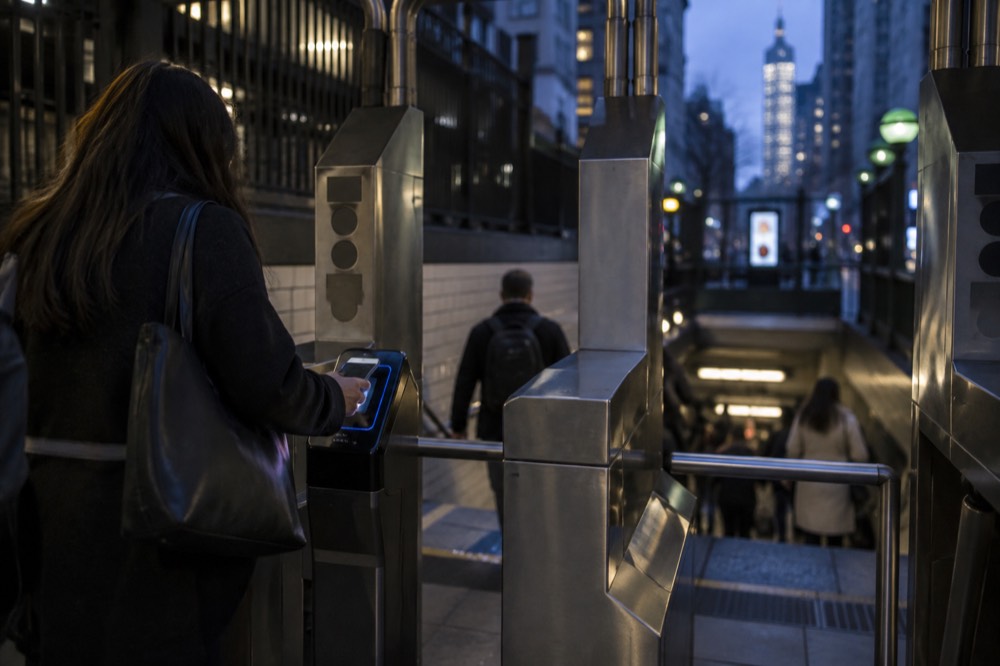
The fare rules are simple once you know them. A single subway or local bus ride is $3.00, with one free transfer within two hours between subway and bus. Up to three children under 44 inches tall ride free with a paying adult. The weekly cap is $35 for subway plus local bus, and $67 if you also ride express buses. The seven-day window starts with your first tap and resets from there. The one mistake that quietly costs money: tapping your phone on Monday and your plastic card on Tuesday means neither device ever reaches the cap.
Airport transfers are where budgets die, and the official numbers are surprising. The cheapest airport run in the city is LaGuardia's: the Q70 LaGuardia Link bus is free, so the whole trip from Midtown costs one $3.00 subway fare. JFK, the airport people assume is the well-connected one, costs $11.75 by subway and AirTrain, because the AirTrain adds $8.75 on top of the fare. Newark runs $16.80 by NJ Transit train from Penn Station, and a current service change has weekday shuttle buses replacing the AirTrain between the terminals and the rail station from 05:00 to 15:00, so allow extra time on weekday mornings. Our JFK to Manhattan guide covers the options in detail.
Do not rent a car for the city itself. Parking, tolls and traffic make it the most expensive way to see Manhattan by a wide margin. The subway is faster than a cab across most of the island at peak times, and it runs all night.
When Do NYC Museums Drop Their Prices?
Most major NYC museums have published free or pay-what-you-wish windows: the 9/11 Memorial Museum releases free tickets every Monday at 07:00 ET, the Whitney is free for anyone 25 and under plus free Friday nights for everyone, the Guggenheim runs pay-what-you-wish on Tuesdays and Sundays from 16:00 to 17:30, and MoMA's free Friday evenings are for New York State residents only. The Met has no free window for tourists.
The fine print matters more than the headlines, so here it is museum by museum.
The Metropolitan Museum of Art is the most-misquoted museum in American travel writing. Admission is a fixed, mandatory $30 for adults, $22 for seniors, $17 for students, free for children 12 and under. Pay-what-you-wish applies only to New York State residents and students from New York, New Jersey and Connecticut, and even for them the Met's own wording is that you must pay something, with a one-cent minimum. Online pay-what-you-wish requires a New York State billing address, and NJ/CT students must buy in person with ID. A tourist who shows up expecting to pay a dollar will pay $30. The consolation is real, though: every ticket includes same-day entry to both the Met Fifth Avenue and The Met Cloisters.
The Whitney Museum of American Art is the most generous major museum in the city. Anyone 25 and under gets in free every day, Friday nights from 17:00 to 22:00 are free for everyone, and the second Sunday of every month is free all day. The Guggenheim runs pay-what-you-wish on Tuesday and Sunday afternoons from 16:00 to 17:30, with a $1 minimum, and it sells out, so reserve ahead. The 9/11 Memorial Museum's free Monday release is first come first served at 07:00 ET on its website. MoMA's free Friday nights, 17:30 to 20:30, are restricted to New York State residents with proof, so out-of-state visitors should plan on the $30 ticket or a pass slot.
| Museum | Adult price | Free or reduced window | Who qualifies |
|---|---|---|---|
| The Met | $30 | Pay-what-you-wish | NY State residents, NY/NJ/CT students only |
| Whitney | $30 ($16 during changeovers) | PWYW Tue and Sun 16:00-17:30 | Everyone on the free days |
| Whitney | $30 | Free daily under 25; free Fri nights; free 2nd Sundays | Everyone on the free days |
| Guggenheim | $30 ($16 during changeovers) | PWYW Tue and Sun 16:00-17:30 | Everyone, $1 minimum |
| 9/11 Memorial Museum | $36 | Free Mondays, released 07:00 ET | Everyone, first come first served |
| MoMA | $30 | Free Fri 17:30-20:30 | NY State residents only |
| Intrepid | $38 | 50% off daily | NYC residents |
One more note on the Met: the museum is open, but a long list of galleries is closed for renovation, including parts of the American Wing, the Costume Institute, the Cantor Roof Garden and sections of the Modern and Contemporary galleries. Check the museum's gallery-closures page before planning a visit around a specific wing.
What Are Cheap Things to Do in NYC at Night?
Cheap nights in NYC run on free-to-enter spaces and entertainment bought the smart way: the Staten Island Ferry at sunset, the Brooklyn Bridge at dusk, Washington Square Park and Bryant Park after dark, and Broadway tickets through the TKTS booth at up to 50% off, digital lotteries that typically cost $30-$50, or free pay-what-you-want walks on GuruWalk. A big night out can cost a fortune; the same evening done deliberately can cost $20.

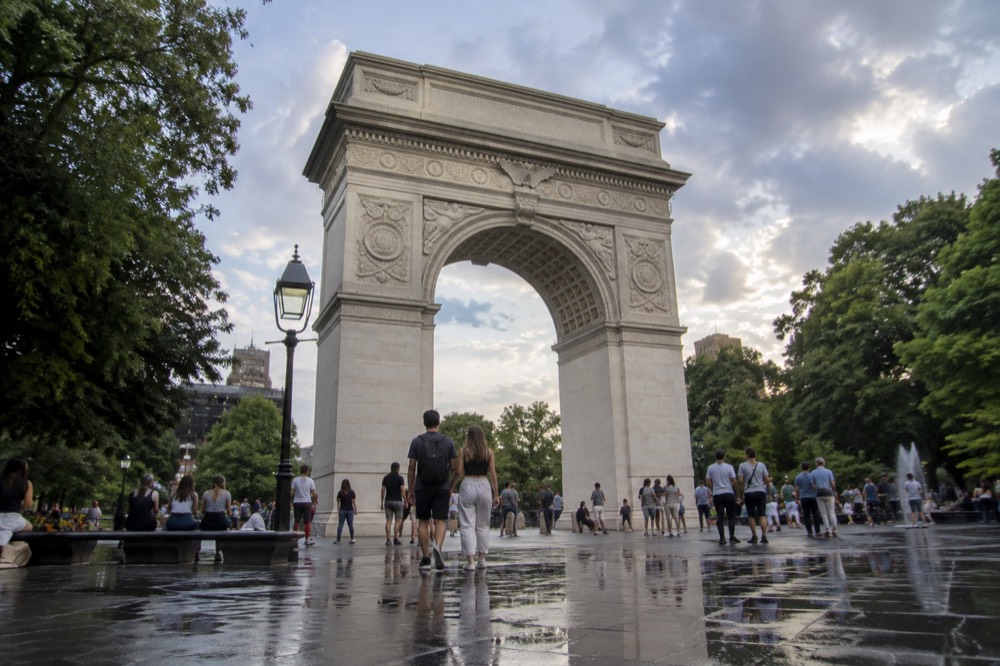
The free evening circuit is strong. Times Square's pedestrian plaza costs nothing and is best experienced briefly, at night, on foot. Bryant Park sits behind the New York Public Library's main building and hosts free programming much of the year. Washington Square Park in Greenwich Village is the city's best free people-watching after dark, with the arch and the buskers. The Brooklyn Bridge at sunset, walked from the Brooklyn side toward Manhattan, gives you the skyline lighting up behind you, and a free sunset walk over the bridge runs on GuruWalk if you want a guide with it. One honesty note on the free walks: six of the ten New York walks on GuruWalk belong to a single operator, CityShuffles, so the choice of free-walk guides is narrower than the listing count suggests.
Broadway is the classic budget paradox: the most expensive night in the city is also one of the cheapest if you buy correctly. The TKTS booth run by TDF sells same-day tickets at up to 50% off face value, plus an $8 per-ticket service fee, from the Times Square booth on W 47th Street and the Lincoln Center booth. There is no downtown or Brooklyn booth currently operating, despite what older guides say. Digital lotteries through Broadway Direct and Lucky Seat typically land winning tickets in the $30-$50 range, and rush tickets, set per show, sit in a similar band. Our cheap Broadway tickets guide covers the full playbook.
For music, the city's smaller venues run cheap or free early sets most nights, and Harlem's gospel tradition has a low-cost entry point: a Wednesday gospel concert in Harlem runs from $25, which is far less than a show ticket and a genuine piece of the neighborhood's culture. Comedy is cheaper still, with stand-up showcases in Midtown from around $20, though a two-drink minimum is standard at clubs.
Common Questions About Cheap Things to Do in NYC
The questions budget travelers ask most are whether the Staten Island Ferry is really free, whether the Met is pay-what-you-wish, how the subway fare cap works, whether the city passes are worth it and what a cheap day actually totals. The short answers: the ferry is free, the Met is $30 for tourists, the $35 weekly cap applies automatically, a pass only pays if you use all its slots, and a disciplined day costs under $25 before any paid attraction.
Is the Staten Island Ferry really free?
Yes. The ferry between Whitehall in Lower Manhattan and St George on Staten Island charges no fare in either direction, and it passes the Statue of Liberty at close range. It is a commuter service run by the city's Department of Transportation, not a tour, so seats are first come and the views are the same ones cruises charge for.
Is the Met pay-what-you-wish?
Only for New York State residents and students from New York, New Jersey and Connecticut, and even then you must pay something, with a one-cent minimum. Everyone else pays a fixed $30 adult admission, $22 for seniors, $17 for students, free for children 12 and under. Online pay-what-you-wish requires a New York State billing address.
Should I buy a 7-day unlimited MetroCard?
You cannot. The MTA stopped selling and refilling MetroCards on 1 January 2026, and the 7-day unlimited no longer exists. The replacement is automatic: tap the same card or phone for subway and local bus rides and OMNY caps your weekly spending at $35, after which further rides in that window are free.
Is the New York CityPASS worth it for a budget trip?
Only if you plan to visit at least five of its included attractions within 9 days. The adult pass costs $149.00 against a combined regular price of $307.04 for the full adult selection, per CityPASS's own figures. If your trip is mostly free attractions plus one or two paid sights, skip the pass and buy the ferry ticket directly.
What is the cheapest way to see the Statue of Liberty?
For the view only, the free Staten Island Ferry passes close enough for photos. To set foot on Liberty Island, the official ferry is the only authorized operator, at $26.00 for adults including both islands and both museums. Avoid lookalike cruises that circle the islands without landing, some of which charge more than the official ticket.
How much money do I need per day in NYC?
A disciplined day with walking, subway rides, slice-shop meals and free attractions costs roughly $10-$25 per person. Add one paid museum or the ferry and the day lands under $40. The budget breaks not on food or transit but on stacked timed-ticket attractions bought at walk-up prices.
The cheapest version of New York is not a lesser version. The ferry, the bridge, the park and the memorial plaza are the things people remember, and every one of them is free. Spend where the city earns it, skip the lookalikes, and tap the same card every time.