NYC Photo Spots: Where to Photograph New York City
New York is the most photographed city on earth, which is exactly why the obvious angles are the crowded ones. This guide covers the classic NYC photo spots, the decks worth paying for, and the street-level corners most visitors never frame.
Short answer
The best NYC photo spots split into three tiers: paid observation decks like SUMMIT One Vanderbilt and Top of the Rock, free elevated walks like the Brooklyn Bridge promenade and the High Line, and street-level corners such as Washington Street in DUMBO and SoHo's cast-iron blocks. Timing matters more than gear: early morning and the hour before sunset beat midday at almost every location.
New York gives away roughly 61 million reasons a year to photograph Times Square alone, at least by subway count: Times Sq-42 St recorded 61,203,303 riders in 2025, 71% more than Grand Central, according to the MTA's own ridership data. Every one of those people is standing in one of the most photographed intersections on the planet. The city rewards photographers who step one block off the obvious route, and this guide is about where those steps lead.
The short version: the best NYC photo spots divide into paid views (the observation decks), free elevated views (the Brooklyn Bridge, the High Line, the Staten Island Ferry terminal area), and street-level texture (DUMBO's Washington Street, SoHo's cast-iron facades, the crooked lanes of Greenwich Village). What separates a good frame from a postcard duplicate is timing, and the sections below cover both the where and the when, with real ticket prices drawn from verified sources. The longer version is the rest of this page.
What Are the Most Famous NYC Photo Spots?
The most famous NYC photo spots are the Empire State Building, the Brooklyn Bridge, Times Square, Central Park, Top of the Rock, the Statue of Liberty, DUMBO's Washington Street and the Flatiron Building. Each one has a canonical angle that every visitor shoots, and each one has a better angle a short walk away. Knowing the difference is what turns a snapshot into a photograph.
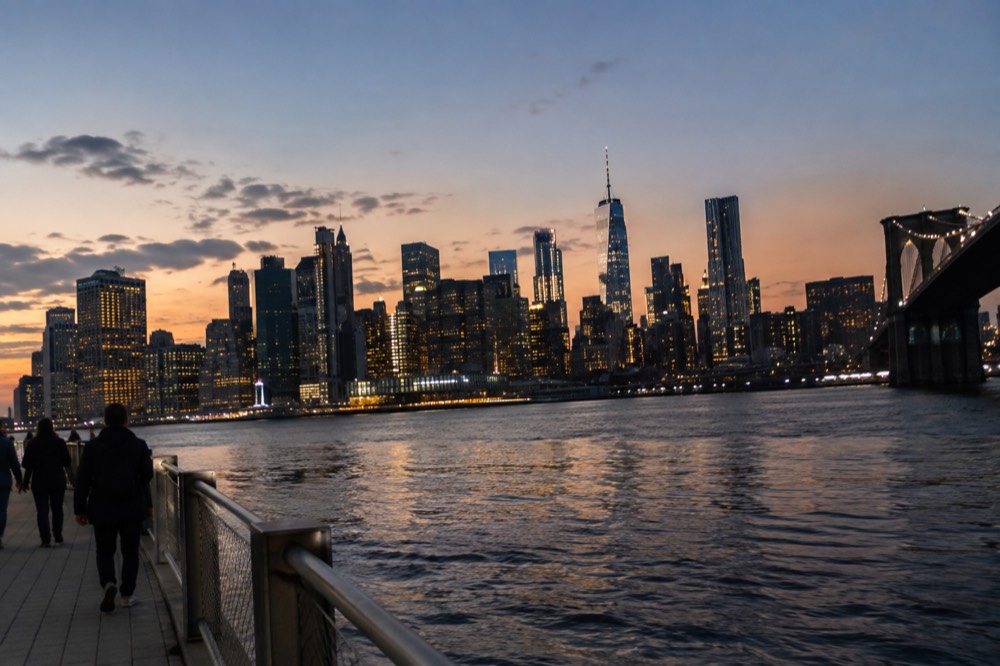
Start with the Brooklyn Bridge, because it is free and it delivers twice. Shooting from the pedestrian promenade gives you the cables and the towers; shooting from the Brooklyn-side waterfront gives you the bridge with the skyline behind it. The classic frame is the Washington Street view in DUMBO, where the Manhattan Bridge frames the Empire State Building perfectly between its arches. It is a five-minute walk from the bridge's Brooklyn exit, and it costs nothing.
Central Park works the other way round: most visitors shoot the park from inside the park, but the strongest frames often come from its edges, where the trees meet the towers. Bethesda Terrace and Bow Bridge are the interior classics, and both are covered in our Central Park guide. The best views in NYC are a related hunt, but photo spots are a narrower brief: it is not just about seeing the skyline, it is about composing it.
The Flatiron Building is the classic triangular trick shot, best framed from the pedestrian island at the junction of Fifth Avenue, Broadway and 23rd Street. SoHo's cast-iron blocks, especially Greene Street, give you the other Manhattan texture: 19th-century facades, cobblestones and fire escapes. Greenwich Village adds the crooked streets that break Manhattan's grid, which is why film crews have used them for decades.
Which NYC Observation Decks Give the Best Photos?
Top of the Rock gives the best overall skyline photo because it is the only major deck that puts the Empire State Building itself in the frame, with Central Park behind it. SUMMIT One Vanderbilt is the most photogenic deck interior, with mirrored rooms that have become the most shared observation-deck images in the city. Edge offers a glass floor and a cantilevered angle, while One World Observatory frames Lower Manhattan and the harbor.
The honest comparison is about the view, not just the price, though the prices are worth knowing. Top of the Rock starts from $42 for adult admission, with CityPASS listing its box-office price at $71.86. SUMMIT One Vanderbilt starts from $44 for visitors 13 and up, plus a $3 online processing fee per order. Edge starts from $34-$45 depending on date, plus a $2 processing fee per ticket. One World Observatory starts from $39-$44. All of these are dynamic timed prices: the from figure is the floor, not the flat rate.
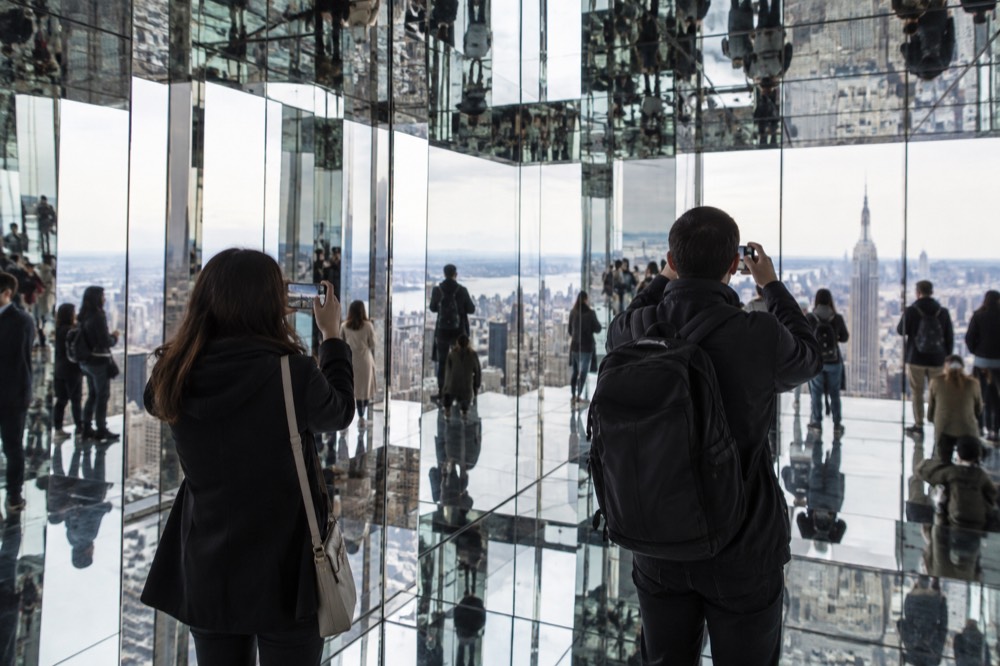
For photographers the deck choice comes down to what you want in the frame. Top of the Rock for the Empire State Building and Central Park. SUMMIT for the mirror rooms, which are the shot everyone now associates with New York decks, and for the angled glass ledges over Madison Avenue. Edge for the glass floor and the outdoor skywalk at Hudson Yards. One World for the harbor, the bridges and the downtown towers. The Empire State Building's own 86th floor deck, starting from $44 plus a $5 booking charge per transaction, is the only one that cannot photograph the Empire State Building, which is the whole point of it.
Timing matters more than deck choice. Sunset slots sell first at every deck in the city, and the golden hour over New Jersey puts warm light on the west-facing facades of Midtown. Book the slot when you buy the ticket, because the decks use timed entry and walk-up availability at sunset in summer is close to zero.
Where Can You Photograph the Statue of Liberty Without the Crowds?
The best Statue of Liberty photos without island crowds come from the water: the free Staten Island Ferry route, the express harbor cruises, and the Brooklyn waterfront at sunset. If you want to photograph the statue from Liberty Island itself, the official ferry is the only way to land, and the grounds ticket costs $26.00 for adults, with the crown reserve at $26.30.
The thirty-cent difference between the grounds ticket and the crown ticket is the most misunderstood fact about the statue. The barrier to the crown is not money, it is availability: crown tickets are name-bearing, limited to four per order, checked against photo ID, and reported to sell out months ahead. For photography purposes the grounds ticket is the practical choice anyway, because the best statue frames are taken from the island's lawns and from the water, not from inside the crown's narrow windows.
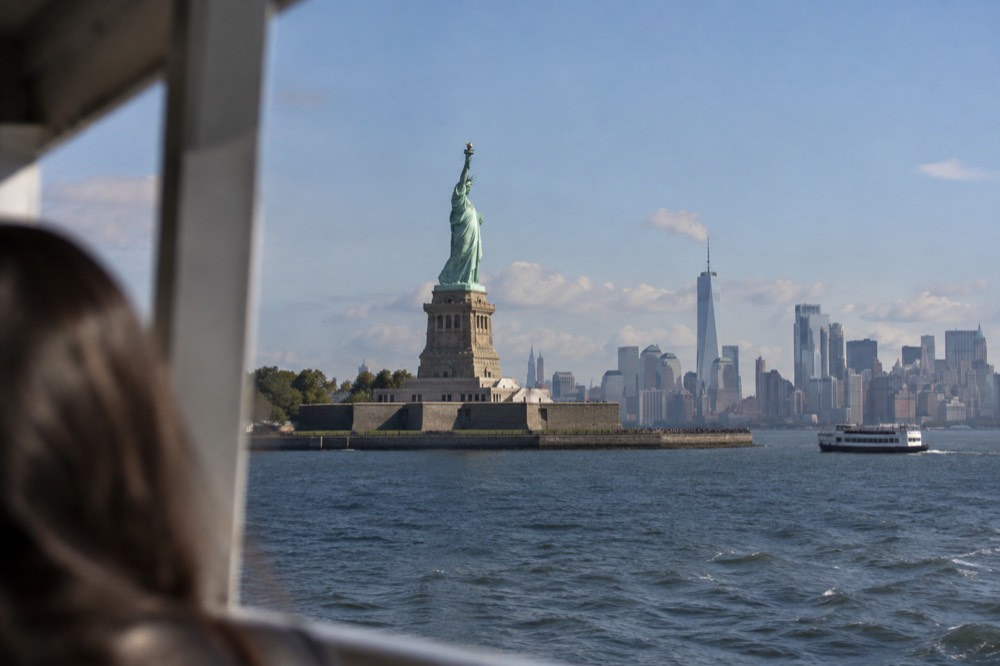
Statue City Cruises is the only ferry operator authorised by the National Park Service to dock at Liberty Island and Ellis Island, and numerous lookalike cruise operators sell boat trips that circle the islands without landing. Some charge more than the real ferry. If landing is the goal, book through the official channels; if the photo is the goal, a harbor cruise is the better buy, since the statue is best framed from the water with the skyline behind it.
The Brooklyn alternative is real and free: the waterfront from Red Hook to Brooklyn Heights gives you the statue, the harbor and Lower Manhattan in one sweep, with the sunset light behind the skyline in the evening. Battery Park in Manhattan is the close-up option, though the angle there is upward and flat in midday light.
What Are the Best Street-Level Photo Spots in Manhattan?
The best street-level photo spots in Manhattan are Washington Square Park's arch, SoHo's Greene Street cast-iron blocks, DUMBO's Washington Street view, the Flatiron Building from the pedestrian island, the High Line's elevated angles, and the brownstone stoops of the Upper West Side. None of these require a ticket, and most are at their best in the first two hours after sunrise.
Greenwich Village is the street photographer's borough-within-a-borough, because its streets predate the Manhattan grid and refuse to run straight. Washington Square Park gives you the arch with the Empire State Building peeking above Fifth Avenue's trees, and the park's chess players, buskers and dog run supply the human layer that most skyline shots lack. Our Greenwich Village guide covers the blocks worth wandering between frames.
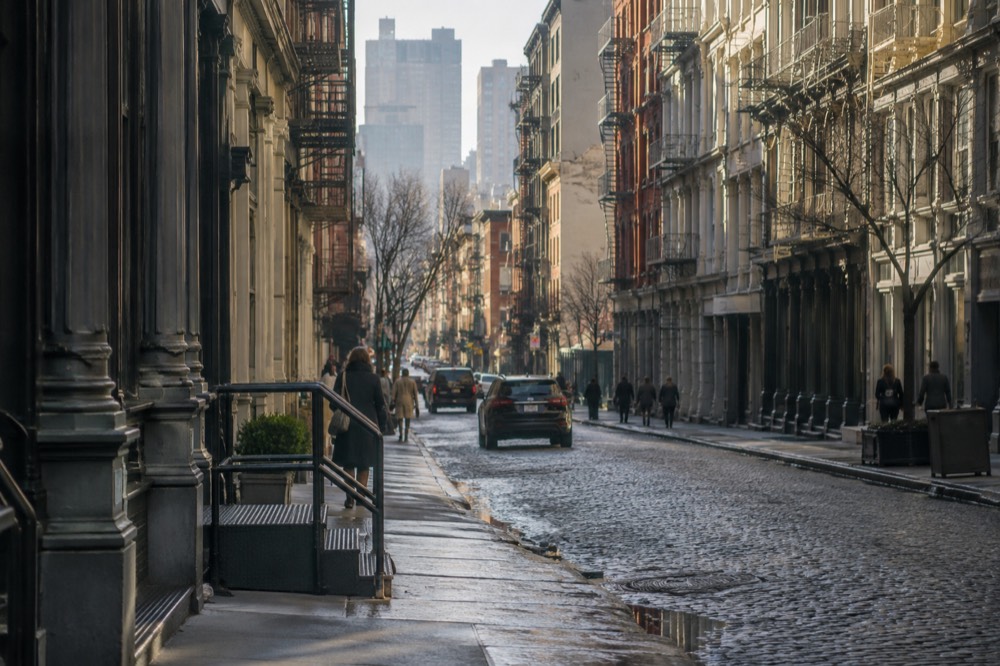
SoHo's Greene Street is the architecture shot: a run of 19th-century cast-iron facades that photograph best in raking morning light, when the shadows give the facades depth. Two blocks east, Little Italy's Mulberry Street and Chinatown's Canal Street give you the dense street-life frames, and both are walkable in one sweep. A food tour through Chinatown and Little Italy doubles as a route plan for exactly this terrain, and the guides know which corners photograph well and when.
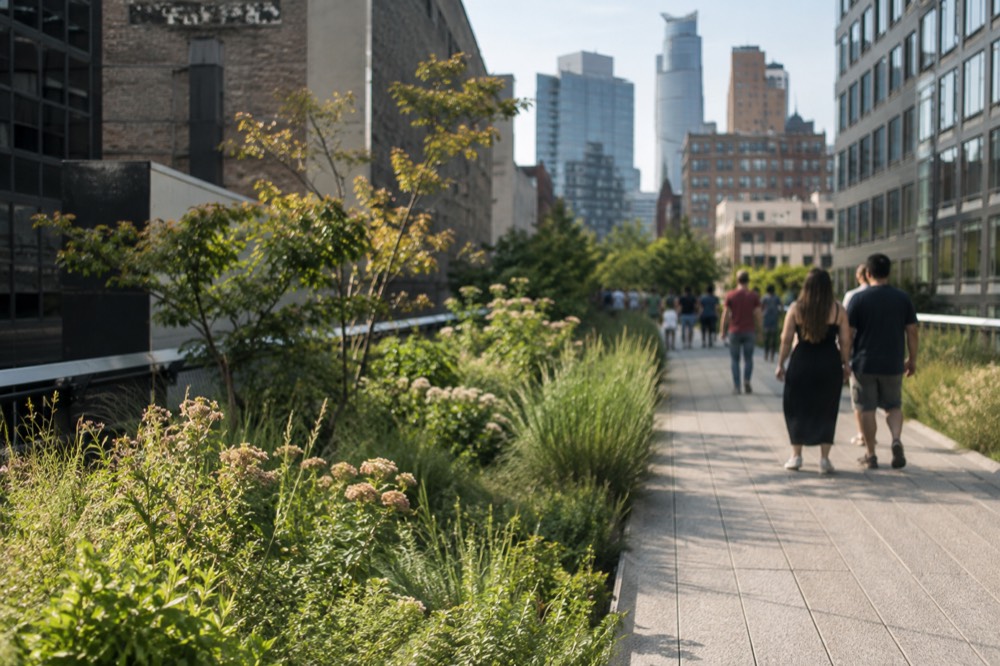
The High Line is the elevated exception: a free public park built on a disused rail viaduct, running from Gansevoort Street up to Hudson Yards. It gives you mid-level angles onto the streets below, framed plantings in the foreground, and the Standard Hotel straddling the path. It photographs best before 10am, before the walkway fills. The Whitney Museum sits at its southern end, and the museum's terraces add Hudson River views for the price of admission.
Where Are the Best NYC Photo Spots in Brooklyn?
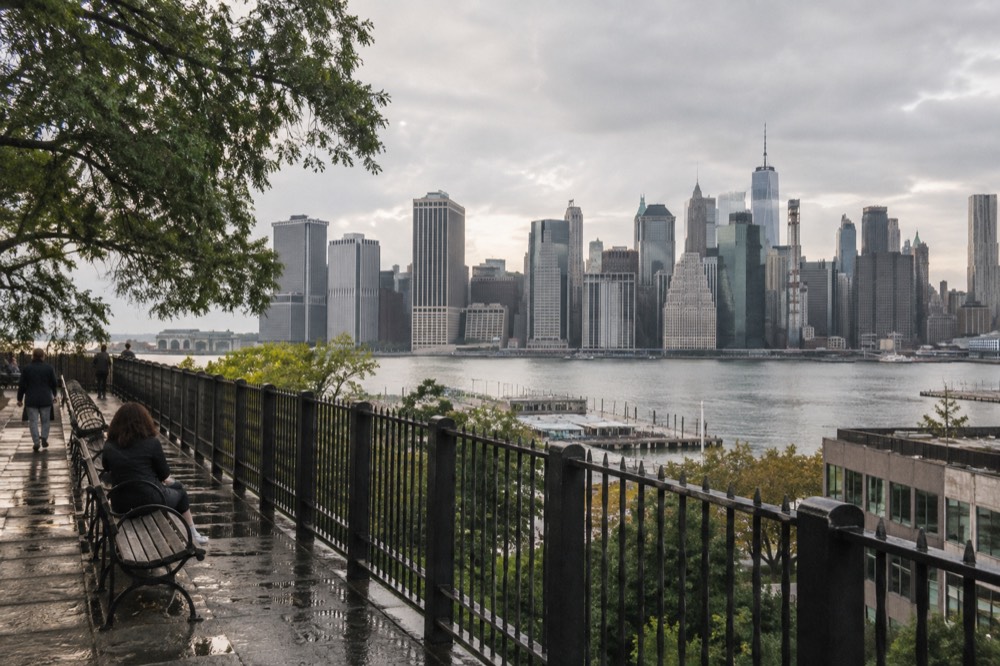
The best photo spots in Brooklyn are the Washington Street DUMBO view of the Manhattan Bridge, the Brooklyn Heights Promenade skyline panorama, the Brooklyn Bridge's pedestrian walkway shot from below, and Williamsburg's rooftops and waterfront at sunset. Brooklyn's advantage is simple geometry: the skyline is the subject, and Brooklyn is where you stand to shoot it.
DUMBO's Washington Street is the single most composed intersection in New York photography. The Manhattan Bridge's arch frames the Empire State Building, and the cobblestones give the foreground texture. Arrive before 8am in summer: by mid-morning the street has a queue of photographers and cars in the frame. Two minutes away, the Brooklyn Heights Promenade gives you the full Lower Manhattan panorama across the water, and it costs nothing.
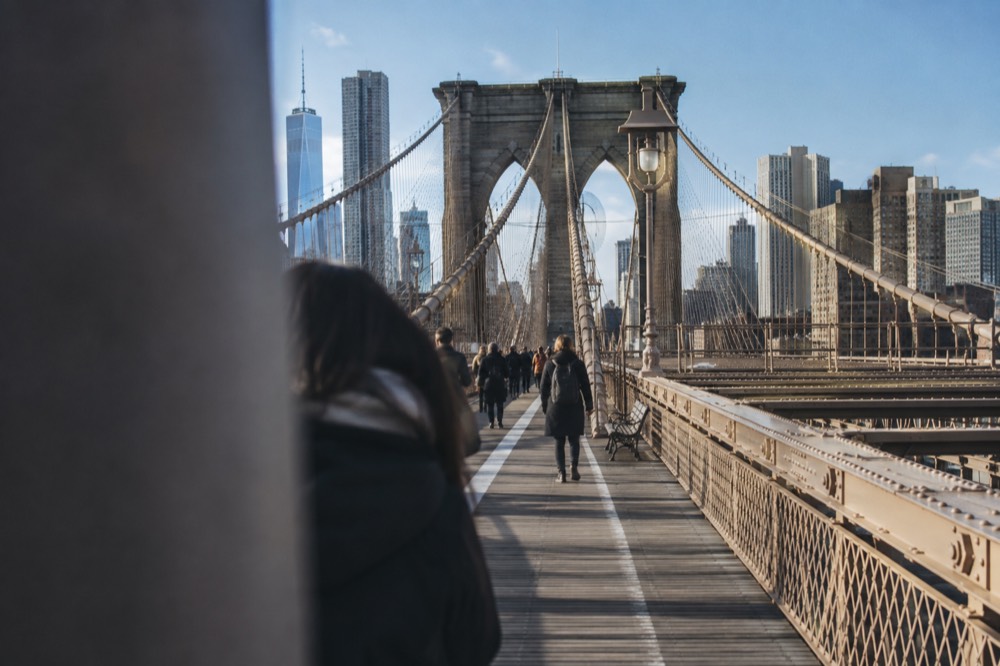
The Brooklyn Bridge itself is a two-way shot. From the Manhattan side you get the towers against the skyline; from the promenade you get the cables, the gothic arches and the stream of humanity crossing. Shoot it at dawn for empty walkways, or at blue hour when the tower lights come on. Our Brooklyn Bridge guide covers the access points, and the things to do in Brooklyn roundup places these spots in a full day's route.
Williamsburg adds the industrial layer: the Domino Park waterfront, the North 7th Street pier view of Midtown, and the neighborhood's murals and rooftops. Further south, Coney Island is a whole genre of its own, the boardwalk, the Parachute Jump and the neon, best shot in the hour before the lights come on.
When Is the Best Light for NYC Photos?
The best light for NYC photos is the first hour after sunrise and the last 90 minutes before sunset, with blue hour after sundown the strongest window for skyline and neon work. Midday is the weakest light for street and architecture shooting, though it suits elevated deck interiors like SUMMIT's mirror rooms, where hard light actually helps the reflections. Seasonally, February is both the snowiest and driest month, and July the wettest.
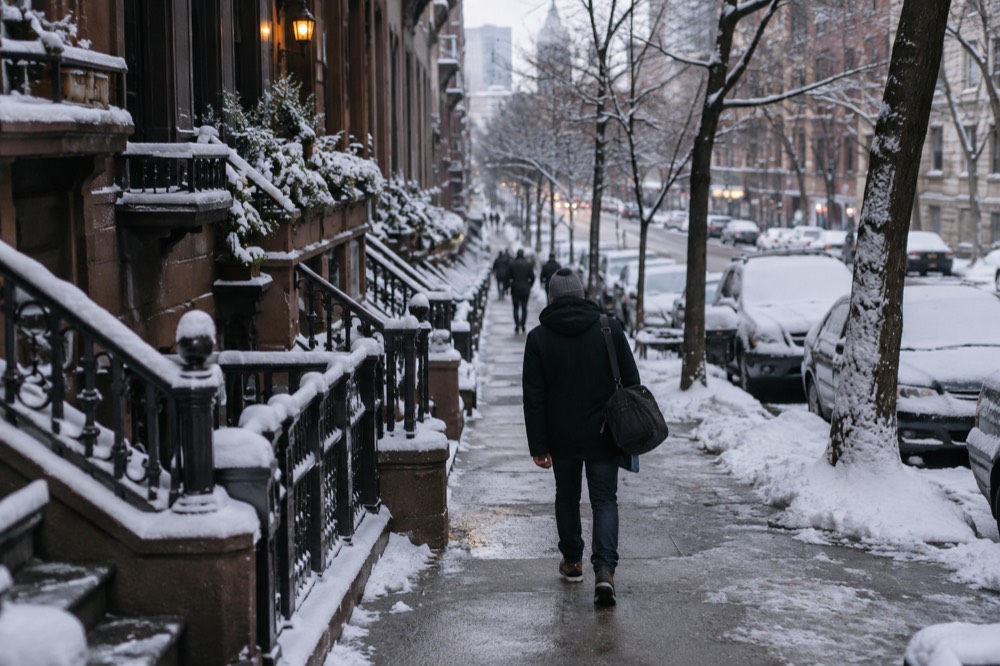
The climate data for Central Park, from the official NOAA 1991-2020 normals, upends the usual assumptions about when to shoot New York. July is the wettest month, averaging 4.60 inches of precipitation, more than August or June. February averages 10.1 inches of snow against January's 8.8, making it the snowiest month, and it is also the driest, at 3.19 inches of total precipitation. A photographer chasing a snow-dusted brownstone shot has a better statistical case for February than January.
| Month | Avg high °F | Avg low °F | Precipitation (in) | Snowfall (in) |
|---|---|---|---|---|
| January | 39.5 | 27.9 | 3.64 | 8.8 |
| February | 42.2 | 29.5 | 3.19 | 10.1 |
| April | 61.8 | 45.5 | 4.09 | 0.4 |
| July | 84.9 | 70.1 | 4.60 | 0.0 |
| October | 64.5 | 51.4 | 4.38 | 0.1 |
| December | 44.3 | 33.8 | 4.38 | 4.9 |
The practical reading: winter gives you the cleanest air and the longest low-angle light, summer gives you the latest sunsets and the thickest haze, and the shoulder months trade some golden-hour length for thinner crowds. There is no dry season in New York. The spread between the driest and wettest month is about 1.4 inches, so pack for rain in every month and plan indoor alternates, the decks, the museums, the market halls, without treating rain as an anomaly.
Do You Need Tickets or a Pass to Shoot the Best NYC Photo Spots?
You do not need tickets for most of the best NYC photo spots: the Brooklyn Bridge, DUMBO, Washington Square Park, SoHo and the High Line are all free. The observation decks all require paid timed entry, from $34-$45 at Edge up to the Empire State Building's $44 plus booking charge, and a New York CityPASS at $149 adult covers five attractions over nine days, which suits a photographer working through the deck-and-museum circuit.
The pass math is worth doing for a photo-focused trip, because the strongest paid subjects cluster in exactly the attractions the passes cover. CityPASS includes the Empire State Building, Top of the Rock and the Statue of Liberty ferry among its eleven options, and the adult pass costs $149 with nine consecutive days of validity. If your shot list includes three or more of the covered attractions, the arithmetic usually works; if you only want one deck, buy single tickets and skip the pass.
| Attraction | Adult box-office price | Photo value |
|---|---|---|
| Empire State Building (AM/PM deck experience) | $75.12 | The classic skyline, plus same-night re-entry for night shots |
| Top of the Rock | $71.86 | The only deck with the Empire State Building in frame |
| Edge at Hudson Yards | $62.06 | Glass floor and cantilevered outdoor skywalk |
| Statue of Liberty ferry (grounds) | $26.00 | The statue up close, from the island lawns |
| 9/11 Memorial & Museum | $36.00 | The pools at the plaza, free to photograph outside |
| Circle Line cruise | $55.00 | The skyline and statue from the water |
Box-office figures are CityPASS's own published prices and give an honest upper bound on what the walk-up rate runs. The 9/11 Memorial plaza itself is free and open daily, and photographing the reflecting pools from the plaza is both permitted and, in the right light, quietly powerful. The museum beneath is a separate paid visit, and it deserves to be treated as history rather than as a photo opportunity.
What Should You Pack for a Day of NYC Photography?
Pack light and walk-heavy: a single body with one wide lens and one standard lens covers 90% of NYC photo spots, plus comfortable shoes, a rain layer for every season, and a small tripod if night work is the goal. The subway is the transport, at $3.00 a ride with OMNY capping at $35 a week, so budget your energy for walking, not for parking or cabs.
The gear question gets over-thought. New York's photo spots reward range and speed over heavy glass: the DUMBO frame is a 35mm-to-50mm exercise, the deck interiors want wide angles, and the street work wants a discreet standard lens. A tripod is worth it for blue hour from the Brooklyn Heights Promenade, but note that some decks and parks restrict tripods, so check policies before hauling one. A polarising filter earns its place in summer, when the haze over the harbor thickens.
| Situation | What to carry | Why |
|---|---|---|
| Dawn street shoot, SoHo and Village | One body, 35mm or 50mm | Light kit, fast walking, low profile |
| Deck sunset slot, Top of the Rock or SUMMIT | Wide lens, lens cloth | Glass reflections and crowded rails |
| DUMBO and Brooklyn waterfront | Standard zoom, tripod for blue hour | The Washington Street frame and the skyline panorama |
| Winter shoot, February snow | Rain layer, spare battery | Snow is the statistical peak; cold kills batteries |
| Harbor cruise | Wide lens, windproof layer | Spray and wind on open decks |
Getting around is its own planning item. The fare system changed: the MTA stopped selling and refilling MetroCards on 1 January 2026, and the weekly value now comes from automatic OMNY fare capping at $35 over seven days, applied with no pass to buy. Tap the same card or device every time, because mixing a phone and a plastic card breaks the cap silently. Each traveller needs their own card or device, since group taps do not pool toward the cap.
If the deck-and-pass circuit is the spine of your shot list, these three picks cover the paid end of it: the pass that bundles the big subjects, the deck with the most photogenic interior in the city, and a guided route through the neighborhoods that photograph best at street level.
Common Questions About NYC Photo Spots
The questions photographers ask most are about access, cost and timing: whether the decks allow tripods, whether the classic street spots are free, which deck gives the single best skyline frame, and when the crowds thin out. The short answers are that tripods are restricted on most decks, the street spots are free, Top of the Rock gives the classic frame with the Empire State Building in it, and the first hour after sunrise is the quiet window at nearly every famous corner.
Where is the best place to photograph the Manhattan skyline?
The Brooklyn Heights Promenade for the free panorama, Top of the Rock for the elevated frame that includes the Empire State Building, and the DUMBO waterfront for the composed shot with the Brooklyn Bridge in the foreground. A harbor cruise adds the water-level angle that none of the land spots can give.
Which NYC observation deck is best for photos?
Top of the Rock for the skyline composition, because it is the only major deck that puts the Empire State Building in the frame with Central Park behind it. SUMMIT One Vanderbilt for the mirrored interior rooms, which have become the most shared deck images in the city. Edge for the glass floor and the cantilevered outdoor skywalk.
Are tripods allowed at NYC observation decks?
Most decks restrict tripods on crowded floors, and policies change, so check the deck's visitor page before packing one. A small clamp or a steady rest against the railing usually works at blue hour. The free spots, the Brooklyn Heights Promenade, the DUMBO waterfront, are where a tripod genuinely pays off.
Can you photograph the Statue of Liberty for free?
Yes, from the water on a sightseeing cruise, from Battery Park, or from the Brooklyn waterfront. Landing on Liberty Island requires the official ferry, and Statue City Cruises is the only operator authorised by the National Park Service to dock there. The grounds ticket costs $26.00 for adults.
What time of day are NYC photo spots least crowded?
The first hour after sunrise, at every famous location. Times Sq-42 St is the busiest subway complex in the system with 61,203,303 riders in 2025, so the square empties only in the early morning. DUMBO's Washington Street is best before 8am in summer, and the Brooklyn Bridge promenade is genuinely quiet at dawn.
Do I need a photography permit to shoot in NYC parks and streets?
Handheld personal photography in public spaces needs no permit. Permits apply to commercial productions with equipment, crews or set pieces, not to a visitor with a camera. Private property, some decks, museum interiors and the 9/11 Memorial plaza have their own rules, so check each location's policy before a planned shoot.
One last planning note: the strongest New York photography itineraries mix one paid deck, one free elevated walk and one street-level neighborhood per day, shot in the morning and evening windows with the middle of the day for museums and food. That rhythm is what this New York City Travel Guide is built around, and the full things-to-do-in-NYC roundup is the place to slot these photo spots into a complete trip.