NYC for First Timers: A Realistic First Trip Plan
Your first New York trip fails on logistics, not on the city. Here is a paced plan built around the time you actually have, the fares that exist in 2026, and the three or four things genuinely worth booking ahead.
Short answer
Give New York at least four full days, tap a credit card on the OMNY reader instead of hunting for a MetroCard that no longer exists, and book exactly three things in advance: Statue of Liberty ferry tickets, one observation deck at sunset, and a CityPASS if you plan to hit five big attractions.
NYC for First Timers: A Realistic First Trip Plan
The number that shapes a first New York trip is not a price. It is four: four days is the point at which the classic list stops feeling like a checklist sprint and starts feeling like a visit. In three days you can do the icons, but you will spend your evenings recovering instead of eating. In five or more you can add a borough, a museum day and a lazy morning, and that is when most people fall for the city.
This plan assumes four full days in Manhattan and Brooklyn, a subway-and-walking budget, and no interest in standing in a ticket line you could have avoided. Everything here reflects how the city actually works in 2026, which is different from what most guides still say: the MetroCard you were told to buy no longer exists, one of the big sightseeing passes went out of business in 2025, and the cheapest way into Manhattan from an airport is a free bus. Start with the money page if you want the full menu: everything worth doing across the five boroughs.
How Many Days Do First-Timers Actually Need in New York?
Four full days is the honest minimum for a first trip that includes the Statue of Liberty, one museum, one observation deck, a Broadway show and a Brooklyn walk. Three days forces you to cut two of those, and cutting them is what people regret on the flight home. Five days lets you slow down. A week lets you add a day trip without feeling rushed. Anything under three days is a taster, not a trip.
The mistake first-timers make is not too few days, it is too many anchors per day. The Statue of Liberty and Ellis Islands eat five hours door to door from Midtown. A serious museum visit eats three. A Broadway curtain is 8pm, which ends your evening. Stack two anchors in one day and you have already lost the afternoon.
A workable daily rhythm for a first trip looks like this:
| Time block | What it is good for | Why |
|---|---|---|
| 8-11am | Timed-entry anchors: statue ferry, popular museums | Lines and crowds are at their lowest; timed tickets cluster early |
| 11am-2pm | Walking neighborhoods, lunch | Museums empty toward lunch as tour groups arrive |
| 2-5pm | Second anchor or a slower sight: Grand Central, the High Line | Energy dips; pick things you can sit or stroll through |
| Evening | Broadway, a food tour, sunset from a deck | The city improves after dark; do not waste evenings on transit |
Plan one anchor before noon and one flexible thing after, then let the evening be the evening.
How Do You Get Around New York Without a MetroCard?
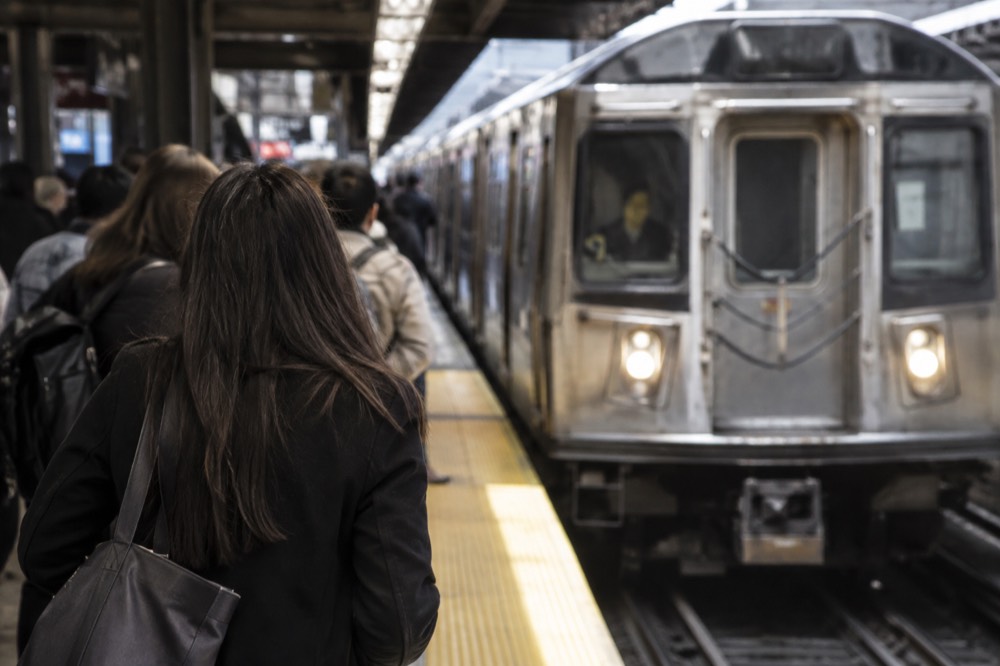
You do not buy a MetroCard, because since 1 January 2026 the MTA no longer sells or refills them at all. You tap a contactless credit card, debit card or phone at the OMNY reader, pay $3.00 a ride, and once you hit $35 in a seven-day rolling window every further subway and local bus ride that week is free, automatically.
There is no pass to buy and no decision to make, which makes this the simplest fare system New York has ever had.
The cap has rules worth knowing before you arrive. The seven days start with your first tap, not on a Monday. You must tap the same physical card or the same device every single time: mixing your phone with the plastic card in your pocket breaks the cap silently. And each traveler in a group needs their own card or device, because group taps do not pool.
For a four-day trip doing roughly four rides a day, you will land near the cap anyway, so simply tap and forget it. The other basics:
| Fare fact | Value |
|---|---|
| Single subway or local bus ride | $3.00 |
| OMNY weekly cap, subway plus local bus | $35, automatic |
| Free transfer | One within 2 hours, subway to bus, bus to subway, bus to bus |
| Children | Up to three under 44 inches ride free with a paying adult |
| Express bus | $7.25 |
Two practical notes. Uptown and downtown are the native directions, not north and south, and signage uses them. And the trains are letters and numbers: you take the 6 train or the A train, never "line 6." The full system primer lives at the NYC subway guide, and the tap-to-pay detail is explained fully in how OMNY works in New York.
Airport transfers, briefly: from LaGuardia the Q70 bus is free and the whole run to a Midtown subway station costs one $3.00 fare, the cheapest airport transfer in the city. From JFK, the AirTrain adds $8.75 on top of the subway fare, so $11.75 total. From Newark, the NJ Transit train plus AirTrain is $16.80 from Penn Station. Every detail, including a current weekday shuttle replacement at Newark, is in the airport transfer guides.
What Should You Book Before You Land?
Book three things in advance: Statue of Liberty ferry tickets, one observation deck slot at sunset, and a discount pass if you plan to hit five big attractions. Everything else, including museums, Broadway (via TKTS or a lottery) and food, can be arranged same-day or on arrival. The ferry is the non-negotiable, because timed slots on the first boats sell out and the first boats are the ones with short lines.
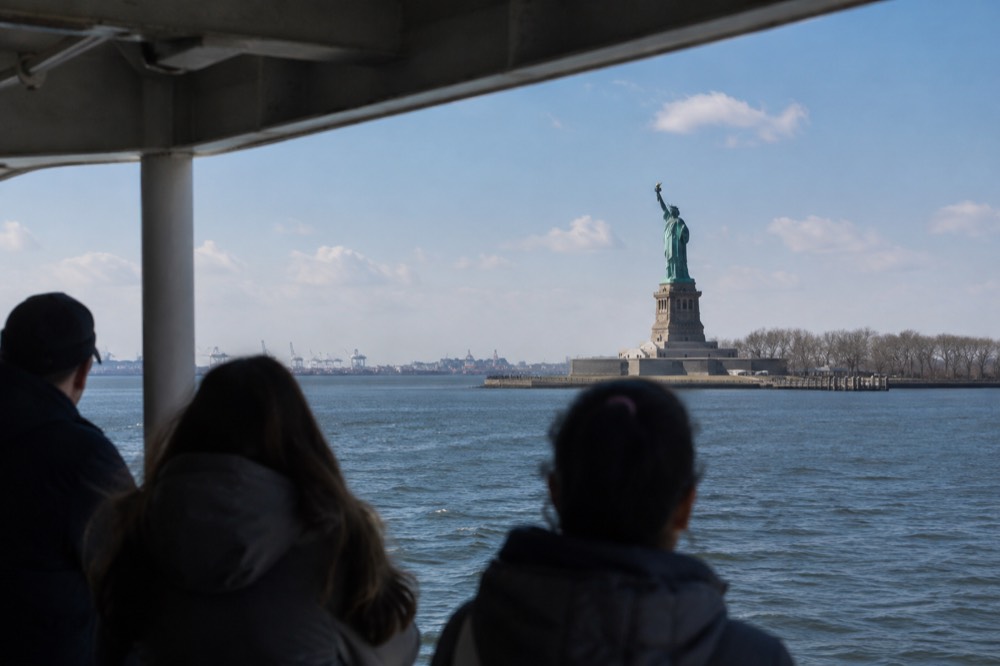
The Statue of Liberty point deserves precision, because it is where first-timers lose the most money. Statue City Cruises is the only ferry operator authorized by the National Park Service to land on Liberty Island and Ellis Island. Plenty of lookalike harbor cruises circle the islands and never land, some charging more than the real ferry. An adult grounds ticket covering both islands, both museums and the round-trip ferry is $26.00. The crown reservation, remarkably, costs only thirty cents more, $26.30, but it sells out months ahead and is capped at four per household, with photo ID checked at boarding.
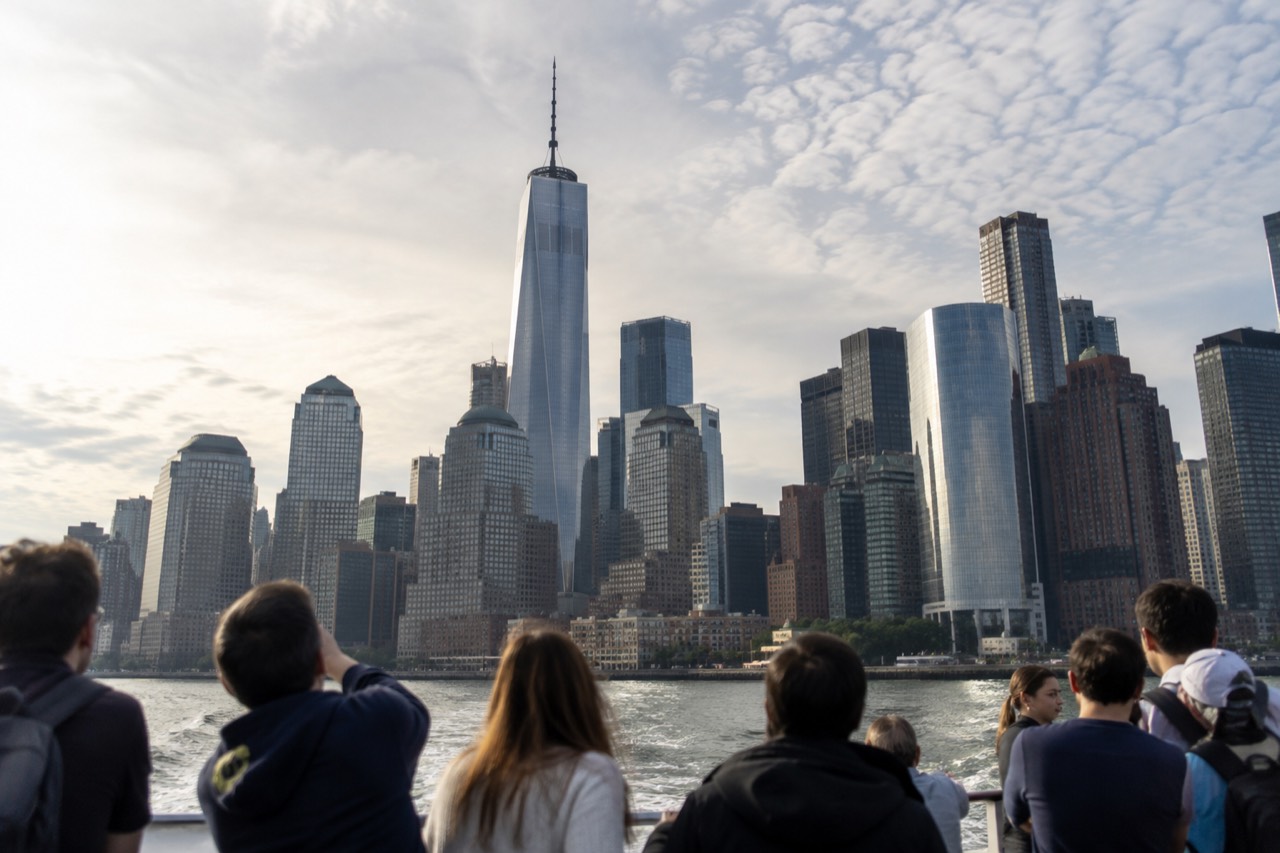
The deck decision matters less than people think, because three of the five decks are priced within a few dollars of each other, around $47.91 for Empire State, SUMMIT One Vanderbilt and Edge, while One World Observatory starts from $30.49. The comparison is really about the view: Top of the Rock is the only deck that puts the Empire State Building itself in the frame with Central Park behind it, while SUMMIT is the playful one with mirrored rooms, and One World belongs to a downtown day.
Broadway deserves a paragraph of honesty. If you are flexible on the show, the TKTS booth in Duffy Square sells same-day tickets at 20 to 50 percent off, plus an $8 fee, and digital lotteries commonly land seats in the $30-$50 range. If you need a specific show on a specific night, especially a weekend, book it ahead. The mechanics are laid out in how to get cheap Broadway tickets.
What Does a First Trip to New York Actually Cost?
The attractions column is the only one you can plan precisely, and it is smaller than most first-timers fear: an adult CityPASS is $149 against roughly $307 of box-office prices for the same five sights, or you can assemble a free-and-cheap week from the $26.00 statue ferry, the free 9/11 Memorial plaza and the $36 museum ticket. Transit is a known number, $35 at the weekly OMNY cap.
Food is the flexible variable, and it can swing wildly by choice of table.
The honest version of this budget is that New York's free tier is genuinely strong. The 9/11 Memorial plaza, the Staten Island Ferry, the High Line, Central Park, Brooklyn Bridge, Grand Central's main concourse and Times Square all cost nothing. The free column alone is a full excellent day. Add the paid anchors you actually care about, and skip the ones you do not: this is the whole discipline of a first-trip budget.
| Item | Price | Notes |
|---|---|---|
| Statue ferry, grounds of both islands | $26.00 adult | Both museums and audio tours included |
| 9/11 Memorial plaza | Free, no ticket | Open daily 08:00-20:00 |
| 9/11 Memorial & Museum | $36.00 adult | Free Monday tickets released 7am ET online |
| Observation decks | from $30.49 (One World) to $47.91 | Dynamic timed pricing by date and slot |
| The Met | $30 adult | Pay-what-you-wish for NY State residents only, with proof |
| MoMA | $30 adult | Free Friday nights are NY State residents only |
| Transit, 4 days | $35 at the OMNY weekly cap | Automatic, no pass to buy |
| Broadway via TKTS | 20-50% off face value, plus $8 fee | Same-day and next-day matinees |
Two city-specific saving levers most first-timers miss. Free Friday nights at MoMA are for New York State residents only, so plan around them rather than for them. The 9/11 Memorial Museum releases free Monday tickets on its website at 7am ET, first come first served, and those go fast but they are open to everyone. The full pricing breakdown, including hotel guidance, is in what a New York trip costs and where to stay in New York.
A Four-Day NYC First-Timer Itinerary That Actually Works
Day one: Lower Manhattan, the statue ferry and Brooklyn Bridge at dusk. Day two: Central Park, a Museum Mile museum, and Broadway at night. Day three: Midtown icons on foot, Grand Central, a sunset deck slot, and dinner in the Village. Day four: Brooklyn, the High Line and Chelsea Market, ending downtown. The order matters less than the rule behind it: one anchor per half-day, museums in the morning, views at golden hour, never two neighborhoods per day.
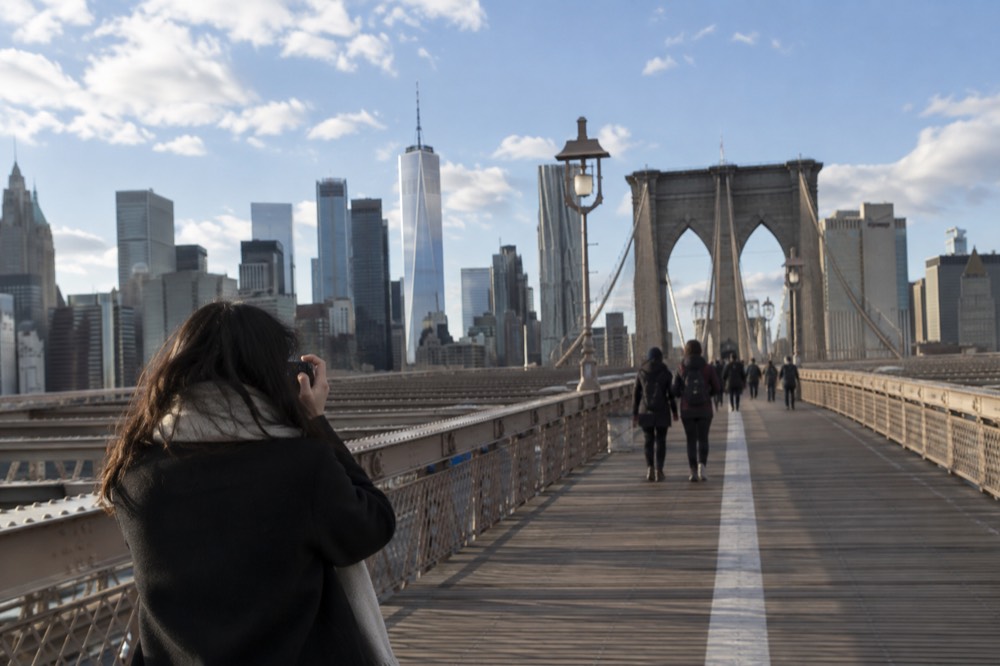
Day 1, Lower Manhattan and the harbor. Take the first ferry of the day from Battery Park. The grounds ticket covers Liberty Island, the Statue of Liberty Museum, Ellis Island and its National Museum of Immigration, and the audio tours on both. Give it four to five hours. Walk north through the Financial District past Federal Hall and Wall Street, spend quiet time at the 9/11 Memorial plaza, which is free and needs no ticket, then cross the Brooklyn Bridge on foot in the late afternoon light and end in Dumbo for the Washington Street view and dinner.

Day 2, the park and the museum. Morning in Central Park while it is quiet: Bethesda Terrace, the Mall, Bow Bridge, then east to Museum Mile. If the Met is your pick, know the rules before you go: admission is $30 for adults, $22 seniors, $17 students, free for children 12 and under, and pay-what-you-wish applies only to New York State residents and NY, NJ and CT students, with proof. One ticket also covers The Met Cloisters the same day, which almost no guide mentions. The museum currently has significant gallery closures, so check its closures page for the wings you care about. Evening: Broadway.
Day 3, Midtown on foot. Start at Grand Central before it gets dense: the celestial ceiling, the whispering gallery. Walk up Fifth Avenue past the NYPL and Bryant Park to Rockefeller Center, then Times Square in daylight, when it is merely bright rather than overwhelming. Book your observation deck for the hour before sunset so you get daylight, golden hour and the lights in one visit. Dinner downtown in Greenwich Village afterward.
Day 4, Brooklyn and the West Side. Morning in Williamsburg or Brooklyn Heights with the promenade skyline view, back over the Manhattan Bridge or by subway to the Lower East Side and Chinatown for lunch. Afternoon on the High Line walking south, ending at Chelsea Market, or reverse it and let the market be lunch. If you have a fifth day, that is the day-trip day: Washington DC, the Hudson Valley or the Hamptons all run organized coaches out of Manhattan.
What Should First-Timers Skip?
Skip the Hop-On-Hop-Off bus if the subway intimidates you, because the subway is faster, cheaper and the actual New York experience. Skip Ground Zero comparison shopping: the memorial plaza is free, the museum is a solemn, worthwhile visit, and neither belongs on an entertainment list. Skip trying to see two boroughs in one afternoon, skip Times Square after the first walk through it, and skip any "Statue of Liberty cruise" that does not land on the island.
Each of those deserves a sentence of reasoning. The bus seems like training wheels but Manhattan traffic makes it slow, and a first trip is the best time to learn that the subway is simply not hard: one map, tap in, tap out. Times Square is worth one pass, at night, and then it is done; your evenings are worth more elsewhere. The two-neighborhoods-per-afternoon rule exists because New York rewards depth: two hours actually sitting in Washington Square Park beats racing through four parks.
The food version of the skip list: do not eat inside the major attractions, do not queue two hours for one hyped slice, and do not book a celebrity restaurant for night one when jet lag will flatten you. Save the big dinner for mid-trip, when your body clock has settled.
When Is the Best Time for a First Trip?
May, June, September and October are the best months for a first visit, with comfortable temperatures and the longest usable days. July and August are the wettest months of the year in Central Park, contrary to expectation, and also the hottest. Winter is the cheapest and most atmospheric season, and February is both the snowiest and the driest month, so pack for slush but expect dramatic light and short lines.
That July figure surprises people, but it comes straight from the official NOAA 1991-2020 climate normals for Central Park: July averages 4.60 inches of precipitation, ahead of August and June. And February averages 10.1 inches of snow against January's 8.8, while also being the driest month overall. The practical read: summer rain comes in short heavy bursts, so it barely ruins plans, but winter snow is real and the city keeps running through it.
| Season | Expect | First-timer verdict |
|---|---|---|
| Spring (Apr-Jun) | Mild, green, crowds building | Best overall balance |
| Summer (Jul-Aug) | Hot, humid, wettest months | Fine if you pace mornings and use AC museums |
| Fall (Sep-Oct) | Best weather, peak crowds in October | Best views and light, book everything |
| Winter (Nov-Mar) | Cold, cheapest, festive in December | Fewest lines, magical if dressed properly |
The full monthly breakdown, including the holiday-season crunch, is at the best time to visit New York.
Common Questions First-Time Visitors Ask About NYC
The questions below are the ones first-timers actually ask, and the short answers are: yes, New York is safe by big-city standards with normal precautions; yes, tap water is excellent; no, you do not need cash; four days is the right first trip; and the subway is the answer to almost every getting-around question. Each answer expands below with the specific figures and rules that matter.
Is New York safe for first-time visitors?
Yes, with normal city precautions. Violent crime against visitors is rare, and the tourist cores of Manhattan are heavily policed and pedestrianized. The real first-timer risks are pickpocketing in dense crowds, phone-snatching on subway platforms, and traffic: look both ways even on one-way streets because bikes and e-scooters use them. Keep your phone in a pocket rather than a back pocket, and stand back from the platform edge. Fare evasion has also fallen, from 12.7% to 10.2% between 2024 and 2025, one small signal among many that the system is stabilizing.
How many days do first-timers need in New York City?
Four full days is the working minimum to cover the statue ferry, one major museum, one observation deck, a Broadway show and a Brooklyn walk without sprinting. Three works if you cut two of those anchors. Five lets you slow down, and a week lets you add a day trip.
Do I need to buy a subway pass before arriving?
No, and you cannot buy the old one. MetroCard sales ended on 1 January 2026. You tap a contactless card or phone on the OMNY reader at $3.00 a ride, and the $35 weekly cap applies automatically once you hit it. Nothing to purchase, nothing to activate.
Is New York tap water safe to drink?
Yes. New York's tap water comes from protected upstate reservoirs and is widely regarded as among the best municipal water in the country. Ask for tap water at restaurants and carry a bottle; it is free everywhere.
Should first-timers buy a sightseeing pass?
If your list includes five of the big attractions the CityPASS covers, including the Empire State Building, Top of the Rock and the statue ferry, the adult pass at $149 against roughly $307 of box-office prices usually wins. If your list is loose or short, skip the pass and pay as you go. One caution: The Sightseeing Pass, which older guides still list, ceased trading in 2025, so do not buy one.
What is the one thing first-timers most often get wrong?
Underestimating distances and overestimating what fits in a day. Midtown to the Statue of Liberty ferry is a 40-minute subway ride plus security screening. Two attractions across the island from each other can cost you an hour of transit. The fix is the anchor rule: one anchor per half-day, and neighborhoods grouped by geography, not by fame.
The last word of practical advice belongs to pacing. A first New York trip succeeds when you leave one thing undone and do not care, because the thing you did instead, an unplanned hour in a park, a second slice, a wrong turn into a good block, turned out better. Build the skeleton with the anchors, then let the city fill in the rest. For everything beyond this plan, the editors' full dispatches are collected through New York City Travel Guide, starting with the master list at things to do across all five boroughs.