Is It Better to Stay in Midtown Manhattan or Times Square in New York?
A direct, sourced answer to whether it is better to stay in Midtown Manhattan or Times Square in New York, comparing price, noise, transport and walkability.
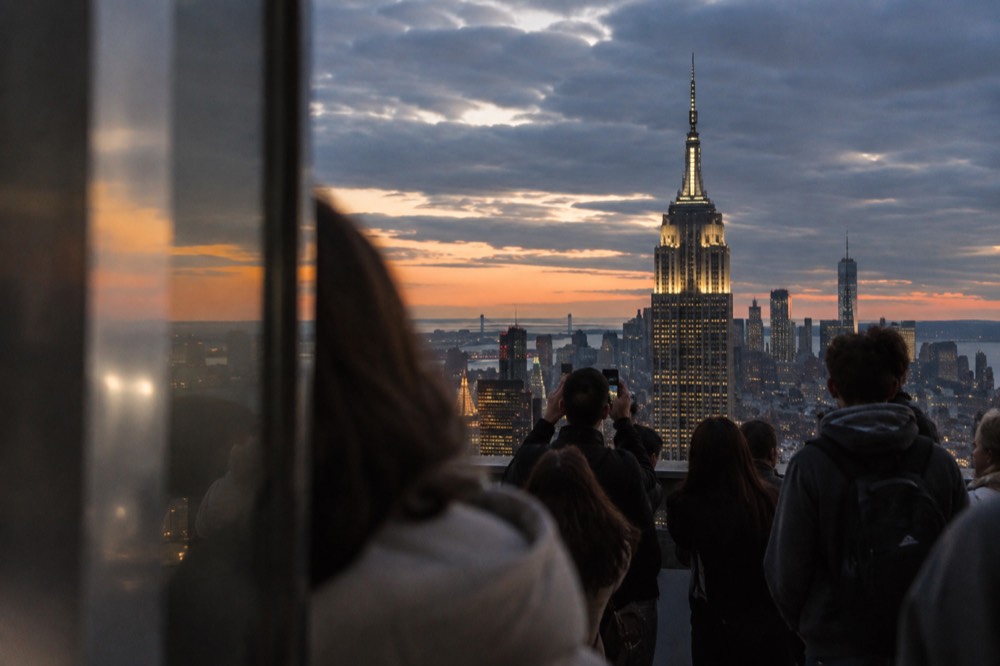
Times Sq-42 St is the busiest subway station complex in New York, and it is not close: 61,203,303 riders in 2025 against 35,764,931 at Grand Central-42 St, 71% more. That single number explains both the appeal and the problem of sleeping in Times Square. Everything in New York converges on those blocks, and so does everyone. The question "is it better to stay in Midtown Manhattan or Times Square?" is really a question about how much convergence you want outside your hotel window at 2am, because Times Square is not a separate neighborhood. It is a roughly ten block zone inside Midtown, bounded roughly by 42nd Street to 47th Street between 6th and 8th Avenues, and everything the two names promise sits within a fifteen minute walk of the other.
Is It Better to Stay in Midtown Manhattan or Times Square?
For most visitors, Midtown away from the Times Square core is the better place to sleep: quieter rooms, a wider range of hotel prices, and the same subway access, since every hotel within a fifteen minute walk of the billboards shares the same stations. Times Square itself suits travelers whose trip is built around Broadway and late nights, or families who accept noise for spectacle. The two options are not rivals; one contains the other.
The geography matters more than most booking sites make clear. "Times Square" as a hotel search term covers the blocks immediately around the pedestrian plazas at 45th Street and Broadway, the brightest, loudest corner of the United States. "Midtown" covers everything from around 34th Street up to 59th Street, from the Hudson riverfront at Hudson Yards to the East River at the United Nations. A hotel marketed as "Midtown" can be a four minute walk from Times Square or a thirty minute walk from it, so the address matters more than the label.
What the two zones genuinely share is transit. Times Sq-42 St is the busiest station in the system because it is the transfer point for the 1, 2, 3, 7, A, C, E, N, Q, R, W and the Shuttle to Grand Central. Hotels a few blocks east or south use Grand Central, Bryant Park or 34th Street-Herald Square, hubs that reach most of the same lines with one extra transfer. Sleeping ten minutes away from the billboards costs you almost nothing in connectivity and saves you a great deal in sleep.
The honest framing, then, is not "which neighborhood" but "how close to the lights." This site's own where to stay in New York guide breaks down the whole city by borough and budget; this page settles the narrower question that dominates most first-time itineraries.
What Are You Actually Trading Between the Two?
You are trading spectacle for sleep, and convenience for price. Times Square hotels put the theaters, the TKTS booth and the billboards under your window, at the cost of street noise that does not stop, higher average rates and heavy crowds at your door. Midtown hotels a ten to fifteen minute walk away offer quieter side streets, more varied pricing and better access to Central Park, Bryant Park and Grand Central, while keeping the theaters walkable.
Noise is the factor that decides the question for most people, and it is not a small factor. The Times Square plazas run at full volume late into the night, and the area around them never fully empties. Midtown's side streets, by contrast, thin out after the office crowd leaves. A room facing an interior courtyard or a cross street in the West 50s is a different acoustic world from a room on 45th Street.
Price moves in the same direction. This site does not quote nightly hotel rates, because they change by date and demand, but the pattern is stable: the blocks immediately around the plazas carry a premium for the address, and equivalent rooms ten minutes east or south list for less. The premium buys proximity, not quality. Some of the best-value hotels in the city sit in the Midtown East and Murray Hill blocks around Grand Central.
What Midtown gives up is atmosphere after dark. Walk out of a Times Square hotel at 11pm and the city is at full volume. Walk out of a Midtown East hotel at the same hour and you may need to walk a few blocks to find dinner, though the Theater District's late options are still reachable on foot or one subway stop.
| Factor | Stay in Times Square core | Stay in Midtown outside the core |
|---|---|---|
| Sleep quality | Billboards and crowds run late; ask for a high floor or interior room | Side streets quiet down after the office exodus |
| Hotel pricing | Premium for the address | Wider range, better value ten minutes away |
| Broadway access | Theaters within a five minute walk | Ten to fifteen minute walk or one subway stop |
| Subway access | Times Sq-42 St, the busiest station in the system | Grand Central, Herald Square, Bryant Park, 5th Ave-59 St |
| Evening dining | Busy, tourist-heavy, open very late | More local options, some close earlier |
| Daytime sightseeing | Billboards, theaters, Madame Tussauds | Central Park, MoMA, Grand Central, Bryant Park, Fifth Avenue shopping |
| Crowds at your door | Constant, heaviest around 45th and Broadway | Normal Midtown foot traffic |
If you are still weighing the two zones before committing to a hotel, a guided introduction to the corridor is a cheap way to test both ends of it on foot before you sign a booking.
The comparison above is really about evenings, and evenings are when the Times Square core earns its premium. Every other hour of the day, the quieter Midtown blocks do the same job with less friction, which is why the rest of this page leans that way for most travelers.
Who Should Book the Times Square Blocks?
Travelers who should sleep in Times Square are those whose trip is organized around Broadway and late nights: someone with tickets to three shows in four days, a family that wants the spectacle as part of the experience, or a visitor who wants postcard New York outside the lobby and will accept the noise. The premium you pay is for eliminating the walk, not for a better room.
The strongest case is the theater-heavy itinerary. Broadway theaters sit between 41st and 45th Streets around 7th Avenue, and the TKTS booth in Duffy Square at 47th Street sells same-day tickets at up to 50% off face value, with an $8 per ticket service fee, for same-day performances plus next-day matinees. If your plan is to queue at the booth, see a show, eat afterward and repeat, a hotel in the core removes every transfer. The booth's only other location is at Lincoln Center, 61 W 62nd Street, which is not a convenient daily trip from most of Midtown.
Families with younger children often land on the same answer for a different reason: the spectacle is the attraction. Kids who have never seen the billboards can stand under them every evening without a plan, and the pedestrian plazas are closed to traffic, which makes the blocks easier to manage with a stroller than a typical Manhattan avenue.
The weakness is the room itself. Ask any hotel in the core for a high floor facing away from Broadway, and if the answer is that every room faces the lights, factor in the noise. Earplugs are not a joke recommendation here. The area's restaurants also skew toward high-volume, mid-priced, tourist-flow establishments, and the food within two blocks of the plazas is rarely the food anyone remembers from a New York trip.
Who Should Book Midtown Outside the Core?
Travelers who should sleep in Midtown away from the plazas are the ones who value sleep, want a broader choice of rooms and prices, and plan days that spread beyond the Theater District: museum mornings, Central Park walks, Grand Central departures for day trips. Midtown East around Grand Central and Murray Hill puts you on the same subway spine with far quieter nights. The trade is a ten to fifteen minute walk to a show.
Midtown is not one place, and the sub-districts behave differently. Midtown East, the blocks around Grand Central and Murray Hill, is the quietest sleep in the corridor: office territory by day, calm by night, with the 4, 5, 6, 7 and S at Grand Central and the E and M at the Lexington Avenue station. Herald Square and the Garment District, south and west of the plazas, put you at the Macy's end of 34th Street with the B, D, F, M, N, Q, R and W at Herald Square, and the walk to the theaters is under fifteen minutes. The far West Side around Hudson Yards and the Javits Center is quieter still, and pairs with the High Line, though the subway options thin out there.
The sightseeing math favors Midtown for most itineraries. MoMA sits in Midtown, a short walk from Rockefeller Center. Central Park starts at 59th. Grand Central, the NYPL's main branch and Bryant Park cluster around 42nd Street. The observation decks spread across the corridor: SUMMIT One Vanderbilt beside Grand Central, Top of the Rock at Rockefeller Center, the Empire State Building at 34th Street. A visitor sleeping in Midtown East or Herald Square walks to all of these; a visitor in the Times Square core walks to the theaters.
Day trips tilt the same way. Trains to Boston, Philadelphia and Washington depart from Moynihan Train Hall at Penn Station, at the western edge of Midtown, and the Metro-North and LIRR platforms at Grand Central cover the Hudson Valley and Long Island. The things to do in NYC page maps how these anchor points sit relative to each other.
One honest note on the free-walk options around this corridor: the GuruWalk platform carries a handful of free, tip-based New York walks, and six of the ten belong to a single operator, CityShuffles. The Times Square and Grand Central walk listed above is one of them. It is a real and well-reviewed way to learn the corridor, but do not expect a wide market of competing free-walk operators here.
What Does Getting Around Look Like from Each?
Both zones share the same fare system and the same fare, $3.00 per subway or local bus ride, with OMNY capping you automatically at $35 across a rolling seven-day period. There is no 7-day unlimited pass to buy any more: the MTA stopped selling and refilling MetroCards on 1 January 2026. From either base, the subway reaches Lower Manhattan in about fifteen minutes and Brooklyn in about thirty.
The MetroCard retirement is the single most out-of-date fact in competing New York guides, and it changes what you do at the airport. You do not buy anything. You tap a contactless card or phone at the turnstile, and the system counts your rides. Hit $35 in a rolling seven-day window, started by your first tap, and every further subway and local bus ride that period is free. The one rule that matters: tap the same physical card or device every time. Mixing your phone and the plastic card in your pocket breaks the cap silently, and each traveler in a group needs their own card or device. The full index of guides sits on New York City Travel Guide.
From Times Square itself, the station complex is the system's busiest because it is its biggest interchange. From Midtown East, Grand Central serves the 4, 5, 6, 7 and Shuttle, and the Lexington Avenue station adds the E and M. From Herald Square, the B, D, F, M, N, Q, R and W cover most destinations with one transfer. None of these positions is meaningfully worse than the others for a visitor; all of them reach the whole city.
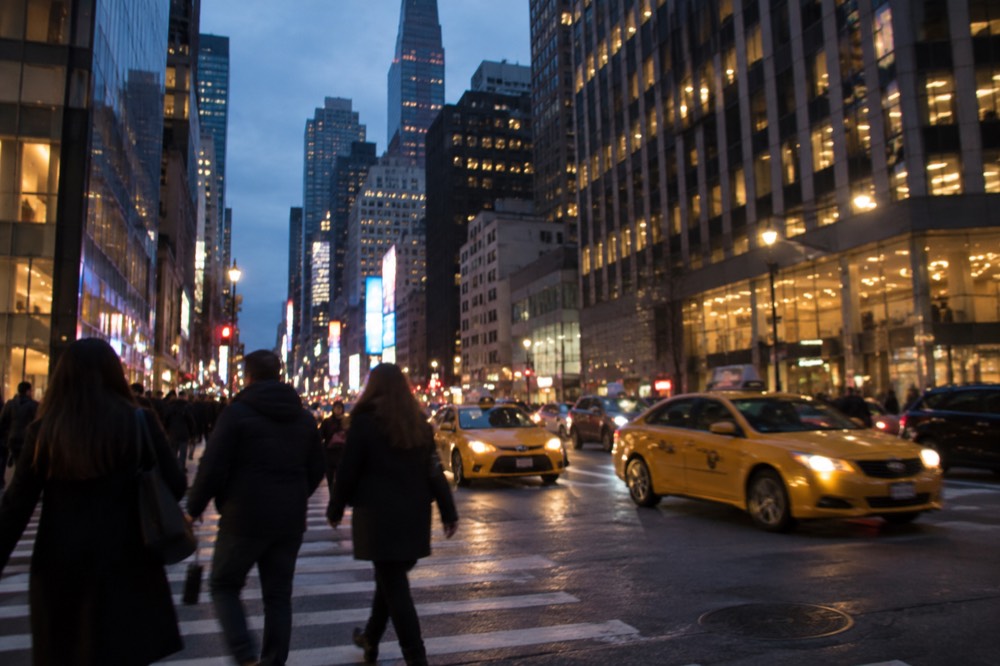
| Journey | From Times Square core | From Midtown East (Grand Central) |
|---|---|---|
| To a Broadway theater | 2-5 minute walk | 10-15 minute walk, or one stop on the 7 to Times Sq |
| To the 9/11 Memorial, Lower Manhattan | A, C, E or 1 to Chambers St area, ~20 min | 4 or 5 express to Bowling Green area, ~15 min |
| To Central Park south entrance | N, Q, R to 5th Ave-59 St, ~10 min | Walk, ~10 minutes up Madison or 5th Avenue |
| To MoMA | Walk about 10 minutes | Walk about 10 minutes |
| To Brooklyn Heights | 2 or 3 to Borough Hall, ~25 min | 4 or 5 to Borough Hall with a transfer, ~30 min |
| To the airports | E or A plus AirTrain to JFK ($11.75 total); LIRR from Grand Central or Penn | LIRR from Grand Central to JFK via Jamaica, or the 7 to the E |
The fare is identical from either base, so transport does not decide the question. Walk time to your evening plans does, and that is the one column where the Times Square core wins.
Can You Have Both? The Halfway Blocks
Yes, and for many visitors the halfway blocks are the best answer of all. The area between 6th and 8th Avenues in the West 40s and 50s, and the blocks around Bryant Park and Rockefeller Center, sit five to ten minutes from the plazas while escaping the worst of the noise and the crowd flow. A side-street hotel in the West 40s gives you a walkable theater district and rooms facing actual streets rather than billboards.
Bryant Park is the quiet heart of this middle zone: six acres behind the NYPL's main branch, with the B, D, F, M, 7 and the 42nd Street Shuttle at 5th Avenue-Bryant Park station. Hotels around it put you eight minutes from the TKTS booth and two minutes from a lawn. Rockefeller Center, a few blocks north, adds Top of the Rock, Radio City and seasonal events like the Christmas tree, all covered in the Times Square guide and its neighbors on this site.
The West 40s between 6th and 8th Avenues are the theater district's back lot: restaurant rows on 9th Avenue, quieter hotels, and a ten minute walk to everything. If a booking site labels a hotel "Theater District" rather than "Times Square," that is usually what it means, and it is often the sweet spot.
For a first visit built around the classic sights, a pass can also change the calculus on where you sleep, because it removes the pressure to cluster near any one attraction. The CityPASS model, five attractions chosen from a list that includes the Empire State Building, Top of the Rock, the Statue of Liberty ferry and the major museums, valid over nine consecutive days, works from any base in the corridor. Check the current lineup and pricing on the operator's live listing.
What Do the Numbers Say About the Two Zones?
The verified data favors neither base for weather or safety, but it reshapes two assumptions. July, not a winter month, is New York's wettest month, averaging 4.60 inches of precipitation in Central Park against February's 3.19, and February out-snows January, 10.1 inches to 8.8. And Times Sq-42 St, the station visitors are warned about, is simply the busiest in the system by a wide margin, which is a fact about transfers, not danger.
Neither zone has a crime story that should decide your booking, and blanket statements about neighborhoods are not honest reporting. Both are among the most policed, most crowded, most camera-covered blocks in the United States. The practical safety difference between sleeping at 45th and Broadway and sleeping at 45th and Lexington is effectively zero; the differences that matter are noise, price and walk time.
The weather point matters for one specific decision: the "walk home from the theater" argument for the Times Square core is strongest in February, the snowiest month, and weakest in July, when a summer downpour can soak a ten minute walk. July averages 4.60 inches of rain, the wettest month of the year, ahead of August at 4.56 and June at 4.54. February, by contrast, is both the snowiest month and the driest by total precipitation. If you are visiting in July, budget for cabs in the evening; if you are visiting in February, the case for sleeping near the theaters strengthens, because a slushy fifteen minute walk after a show is a real cost.
The ridership point matters for how you plan mornings. Times Sq-42 St carried 61,203,303 riders in 2025, Grand Central-42 St 35,764,931. Penn Station's complexes, counted separately, do not even make the top five individually. What this means in practice: the Times Square station is busy at all hours, and the platforms get genuinely packed at peak. Midtown East's stations are calmer, and the 4 and 5 express runs from Grand Central to Lower Manhattan are among the fastest trips in the system.
Common Questions About Staying in Midtown Manhattan or Times Square
The short answers: Midtown is the broader district and Times Square sits inside it; most visitors sleep better outside the core; the two share the same subway system and fare; and neither has a meaningful safety edge over the other. The details below cover the questions that come up most often when booking a hotel in the corridor.
Is Times Square part of Midtown Manhattan?
Yes. Times Square is a roughly ten block zone inside Midtown, centered on the pedestrian plazas at 45th Street and Broadway, between about 42nd and 47th Streets. "Midtown" runs from around 34th Street to 59th Street, river to river. A hotel listed as Midtown can be four minutes or thirty minutes from the plazas, so check the address, not the label.
Is Times Square too noisy to sleep in?
For many visitors, yes. The plazas stay active very late, and the surrounding blocks never fully empty. If you book there, request a high floor and a room facing away from Broadway, and bring earplugs as a backup. Interior-facing rooms in the core's larger hotels are noticeably quieter than street-facing ones.
Is it safe to stay in Times Square or Midtown?
Both are among the most crowded and most heavily policed areas in the United States, and neither has a practical safety advantage over the other. The differences that should drive your choice are noise, price and walk time, not crime. As anywhere in the city, normal urban caution applies late at night.
Is it cheaper to stay in Midtown than Times Square?
Usually, yes, for comparable rooms. The blocks around the plazas carry a premium for the address. Equivalent hotels ten to fifteen minutes away, especially in Midtown East around Grand Central and Murray Hill, tend to list lower. This site does not quote nightly rates because they change constantly, but the pattern is stable across seasons.
Can you walk from Midtown hotels to Broadway shows?
From most of Midtown, yes. The theaters cluster between 41st and 45th Streets around 7th Avenue. From Grand Central or Bryant Park the walk is ten to fifteen minutes; from Herald Square it is similar; from Hudson Yards it is closer to twenty-five, and the 7 train from there is the easier option.
Do I need a transport pass if I stay in either area?
No. Since 1 January 2026 the MTA no longer sells or refills MetroCards, and there is no 7-day unlimited pass to buy. You tap a contactless card or phone, pay $3.00 per ride, and the system caps you automatically at $35 across a rolling seven-day period. Tap the same card or device every time or the cap breaks.
The Verdict for a First Visit
Book Midtown, not the Times Square core, unless Broadway is the spine of your trip. A hotel in Midtown East near Grand Central, around Bryant Park, or on a side street in the West 40s keeps every theater, museum and observation deck within a short walk or one subway stop, at lower average rates and with rooms you can actually sleep in. Book the core itself only when the spectacle is the point.
The one scenario where the core clearly wins: a two or three night theater break, arriving by train, seeing two shows, leaving. There, the elimination of every transfer is worth the noise premium. The one scenario where it clearly loses: a family with young children on a normal sleep schedule, for whom the billboards outside the window are a nightly problem rather than a feature.
For everyone in between, the halfway blocks are the answer most visitors settle into and do not regret: close enough to walk to the lights in the evening, far enough that the lights do not walk home with you. Choose the address on the map, not the label in the search results, and check the walking time to Grand Central or Times Sq-42 St before you book, because those two stations are the corridor's real anchors.