Is New York a Good Place to Travel with Kids?
A direct, sourced answer on whether New York is a good place to travel with kids, covering attractions, transit, costs and what families should skip.
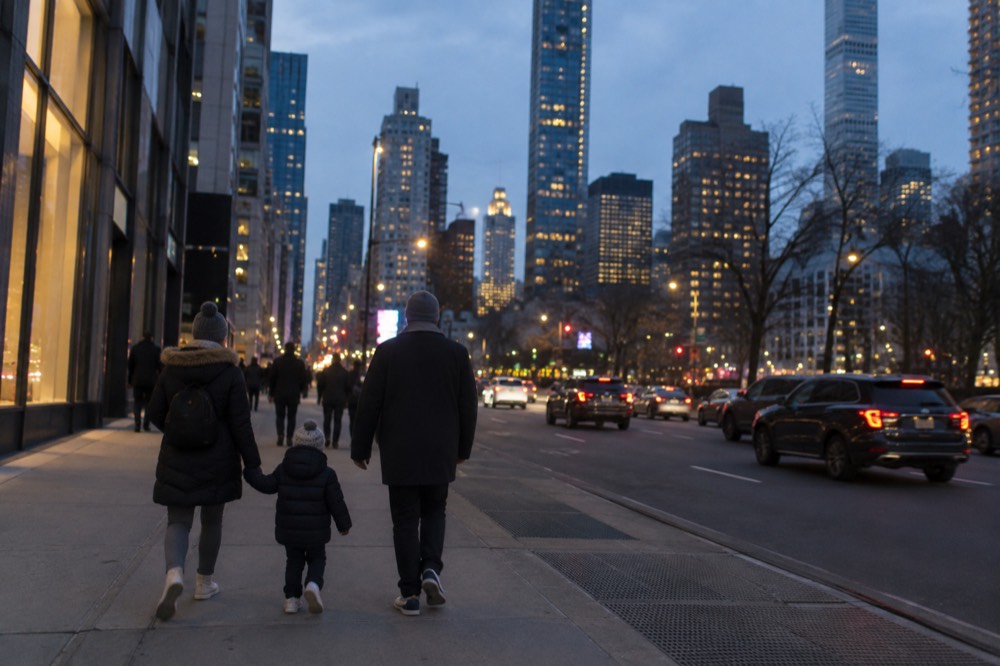
New York is one of the most walkable big cities on earth, its subway runs every few minutes, and its marquee attractions are largely indoors, which makes it a better family destination than its reputation suggests. It is also expensive, loud and tiring in a way that flattens children by mid-afternoon if the itinerary is badly built. The difference between a trip that works and one that melts down is almost entirely planning: which attractions, which hours, which neighborhood you sleep in.
This page answers the question directly, then gets into the parts families actually need: what children genuinely enjoy, what the transit rules are, what a realistic budget looks like and what to skip. Every price here is drawn from verified research, mostly from official sources, and where a figure is not confirmed this page says so rather than guessing.
Is New York a Good Place to Travel with Kids?
Yes, New York is a good place to travel with kids, and better than most visitors expect. The subway is fast and children under 44 inches ride free, the major museums and observation decks are designed around timed entry so queues are manageable, and the classic attractions, the Statue of Liberty ferry, Central Park, the decks and the ferry rides, are exactly the things children remember. The costs are real, but the city's free tier is unusually generous.
The honest version of the answer has two parts. The first is that the things people worry about, safety, transit, food, are easier than the folklore claims. The second is that the things people underestimate, walking distance, ticket prices, crowd timing, are what actually break family trips.
Start with the walking. Midtown blocks are long, and a plan that puts the American Museum of Natural History in the morning and the Statue of Liberty in the afternoon will exhaust a seven-year-old before dinner. Families who cluster each day around one area do far better than families who treat the city as a checklist. Our 3 days in NYC itinerary is built exactly that way, and the same logic applies with children, just with fewer stops per day.
Food is the other worry that dissolves on arrival. New York is possibly the easiest city in America to feed a picky child in: slice pizza, bagels, delis and food halls are everywhere, and a slice-and-a-drink lunch costs a few dollars. The cheap eats in NYC guide covers the budget end properly.
The city's own orientation hub, the New York City Travel Guide homepage, links every neighborhood and transport page on this site if you want to go deeper after the answer.
Which New York Attractions Genuinely Work for Children?
The attractions that reliably land with kids are the Statue of Liberty ferry, the American Museum of Natural History, SUMMIT One Vanderbilt, Central Park, the Intrepid and a harbor cruise, in roughly that order of reliability. Children remember boats, dinosaurs, animals and anything with a view or a mirror room, and New York has all four in quantity. The classic art museums work too, but in short doses rather than full days.
The ferry to Liberty and Ellis Islands is the single most dependable family outing in the city. It is a boat ride, which children already like, and the official Statue City Cruises ticket covers both islands, both museums and the audio tours. Adult admission is $26.00, children 4-12 pay $17.00, and under-4s ride free. One warning that matters: only the official ferry lands on the islands. Numerous sightseeing cruises circle the statue and never dock, and some charge more than the real ferry. Check the operator before you pay.
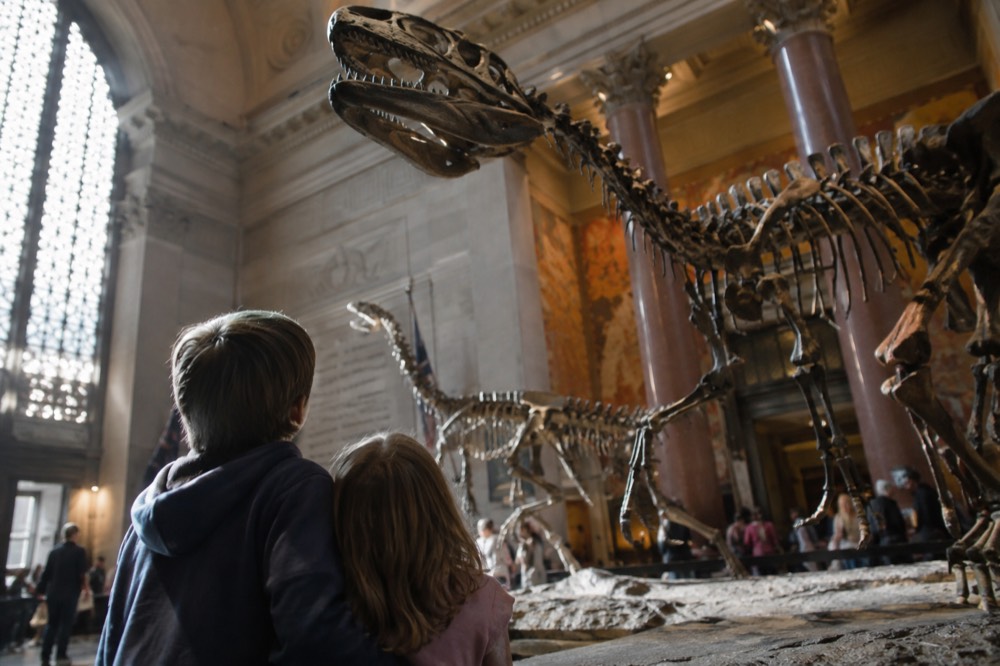
The American Museum of Natural History is the other anchor. Dinosaur halls, the great blue whale, the planetarium: a child can spend an entire day there and ask to come back. General admission is pay-what-you-wish for New York State residents, and everyone else pays a fixed price; the add-ons like the planetarium show cost extra, so decide before you buy whether you want them.
SUMMIT One Vanderbilt is the observation deck that suits children best, because it is playful rather than solemn. The mirrored rooms and glass ledges are an experience rather than a viewpoint, and youth tickets 6-12 start from $38 against $44 for ages 13 and up. It sits next to Grand Central, so it pairs naturally with a train-station lunch.
A few practical notes on the rest of the shortlist. The Intrepid, an aircraft carrier parked on the Hudson with a space shuttle on deck and a submarine you can walk through, is machine-heavy in a way children love. The Whitney Museum is free for anyone 25 and under, every day. The 9/11 Memorial plaza is free and open to all, and families should treat it as a place for a quiet, explained visit rather than an attraction to rush through.
Central Park needs no ticket and no planning beyond a rough route: Bethesda Terrace, the Zoo, the carousel and the lawns do a day on their own. The Central Park guide maps the sensible walking loops.
How Much Does a Family Trip to New York Cost?
Attraction spending is the line families can actually control, and the arithmetic is straightforward: the classic heavy hitters run from $26.00 for the official Statue of Liberty ferry to $75.12 for the Empire State Building's full AM/PM experience per adult, so a family doing five of them separately spends several hundred dollars on tickets alone. A New York CityPASS bundles five attractions at $149 per adult and $129 per child, valid nine consecutive days.
Transit is close to negligible by comparison.
The attraction math is where families leak money without noticing. Here is what the classic circuit costs at box office, using the prices CityPASS itself publishes for its savings calculations:
| Attraction | Adult | Child notes |
|---|---|---|
| Statue of Liberty grounds and Ellis Island (official ferry) | $26.00 | Ages 4-12 $17.00, under 4 free |
| Empire State Building Observation Deck (AM/PM Experience) | $75.12 | Timed entry |
| Top of the Rock Observation Deck | $71.86 | Timed entry |
| American Museum of Natural History | $43.00 | Add-ons extra |
| 9/11 Memorial & Museum | $36.00 | Ages 7-12 $24.00, 6 and under free |
| Intrepid Museum | $38.00 | Ages 5-12 $28.00, 4 and under free |
| Edge Observation Deck | $62.06 | Timed entry |
| Circle Line sightseeing cruise | $55.00 | One scheduled cruise |
The CityPASS logic is simple: if your family will do five of the heavy hitters, the bundle wins. CityPASS's own published claim is that the adult pass saves $158.04 against buying those attractions separately. If your children are small and you plan two attractions a day with a park in between, buy individually and lean on the free tier, which is genuinely deep. The 9/11 Memorial & Museum releases free admission tickets every Monday at 07:00 ET, first come first served. The Whitney is free for anyone 25 and under. MoMA runs free Friday evenings for New York State residents only, so visitors should not count on it.
The pass question is worth a moment of honest thought before you buy, because the answer is not automatic. A family with two adults and two children over six pays $556 for four CityPASSes, and that only pays off if all five attractions actually happen. A day lost to rain, a child who falls asleep at 3pm, a museum that closes early, any of these turn the fifth ticket into a donation. Families who travel slowly should buy tickets one at a time instead, and use the money saved on food.
Lodging is the biggest line and the least fixed, so this page will not quote nightly rates: they move with dates and demand. What is safe to say is where to stay, which the next section covers. Flights, likewise, are date-specific and behind bot walls, and any guide that prints a flat number for either is making it up.
Is the Subway Practical with Kids?
Yes, and it is usually better than taxis or rideshares for a family. The subway runs every few minutes on the main lines, a ride is $3.00, up to three children under 44 inches tall travel free with a fare-paying adult, and the $35 weekly OMNY cap means an adult who taps the same card or phone all week never pays more than that for subway and local buses.
Strollers ride the trains fine; the hard part is the stations.
The fare system changed recently and most guides have not caught up. There is no 7-day unlimited MetroCard any more: the MTA stopped selling and refilling MetroCards on 1 January 2026. The weekly value now comes from OMNY, the tap-to-pay system, which caps automatically at $35 across a rolling seven-day window. You tap the same contactless card or phone at every turnstile, and once you hit the cap the rest of the week is free. The catch is that each family member needs their own card or device; a parent tapping twice does not build anyone's cap.
The real friction with children is not the trains, it is the stairs. Many stations lack elevators, so a stroller means carrying it up and down flights. Two honest workarounds: use a light foldable stroller, or check the MTA's accessibility information for elevator-equipped stations on your route. The NYC subway guide and the OMNY explainer cover the system in full detail, including the free-transfer rules between subway and bus.
Timing matters more than route. Weekday trains are crowded at rush hours, 8-9:30am and 5-6:30pm, so plan sightseeing to start mid-morning. The MTA's own ridership data shows weekend ridership has recovered further than weekday, so expect full trains on Saturdays too. Full details on fares and transfers are on the MTA fares page.
One more transit note that saves families real money: the airport runs. The cheapest airport transfer in the city is LaGuardia's, because the Q70 LaGuardia Link bus is free and you pay only the $3.00 subway fare. JFK, the airport people assume is the well-connected one, costs $11.75 end to end because the AirTrain adds $8.75 on top of the subway fare. If your hotel is in Midtown and you land at LaGuardia with children and luggage, the bus-and-subway option is genuinely competitive with a car service, and faster at rush hour. The JFK to Manhattan and LaGuardia to Manhattan pages break down every option.
Where Should a Family Stay in New York?
Midtown is the default answer for families because it puts you within one subway ride of nearly everything, but it is loud and thin on evening atmosphere. The better family picks are the Upper West Side, near the Natural History museum and Central Park, and Midtown East around Grand Central, which is quieter at night and still central. Brooklyn Heights and Park Slope suit longer stays and families who want a neighborhood feel.
The trade-off is simple. Midtown minimizes transit time and maximizes noise; the residential neighborhoods reverse that. With small children, the Upper West Side is hard to beat: the museum is a walk, the park is a walk, and the 1, 2 and 3 trains run you to Midtown in minutes. The where to stay in NYC guide breaks down every area by budget and travel style, including the family-specific verdicts.
One practical rule whatever you choose: stay within a short walk of a subway station with more than one line. A hotel that needs a 15-minute walk to a single-line station will cost you an hour a day, and that hour comes out of your children's patience, not yours.
Brooklyn deserves more consideration than most families give it. Brooklyn Heights sits one stop from Lower Manhattan and gives you the promenade skyline view for free, every evening, on the walk back from dinner. Park Slope is deeper in, but it is one of the most family-shaped neighborhoods in the entire city, with brownstone streets, Prospect Park and an easygoing restaurant scene. The trade is a slightly longer commute to Midtown attractions, roughly twenty minutes on the 2 or 3 trains, in exchange for quieter nights and lower room rates.
What Should Families with Kids Skip in New York?
Skip hop-on-hop-off buses with small children, back-to-back observation decks, walking tours longer than two hours, and any day that stacks more than two ticketed attractions. Children do not experience a city as a checklist, and the failure mode of a New York family trip is a schedule built for adults with a child attached. One anchor attraction per day, plus a park and food, is the sustainable rhythm.
The specific cuts worth making:
| Tempting but weak for kids | Why it fails | Better swap |
|---|---|---|
| Hop-on-hop-off bus | Traffic means 40 minutes between stops; kids see gridlock | Circle Line express cruise, 50 minutes, from $24 |
| Two observation decks in one day | Queues and elevators eat hours; the second view is the same | One deck, at sunset, then dinner |
| All-day art museum visits | Attention collapses after 90 minutes | Natural History Museum, or the Met in short doses |
| Times Square as a destination | 20 minutes of looking up is enough | Walk through at dusk en route to a show |
| Fifth Avenue shopping with kids | Crowds, no payoff for children | Chelsea Market stalls, or a food tour |
Food tours deserve a mention as the opposite of a skip: the Chinatown and Little Italy tasting walks are built around six stops that add up to a real meal, and children eat their way through them happily. The NYC food tours guide compares the routes.
The other thing to skip is fear. New York's tourist areas are heavily policed and heavily walked, and the honest safety answer is that the risks families should actually manage are traffic, crowd pickpocketing in Times Square and tired-child meltdowns, not violent crime. The is NYC safe page gives the sourced version.
Common Questions About Visiting New York with Kids
Families ask the same handful of practical questions, and the short answers are: yes, the city works for children from about age four upward; the subway is free under 44 inches; five days is the sweet-spot trip length; a CityPASS pays off if you will genuinely visit five major attractions; and the best months are late spring and early autumn, when the walking weather is kind. Each question below gets the fuller answer.
Is New York a good place to travel with kids?
Yes. The subway is frequent and children under 44 inches ride free, the major attractions are indoor and timed-entry, and the free tier, Central Park, the Staten Island Ferry, the 9/11 Memorial plaza, free Mondays at the 9/11 Museum and free-under-25 admission at the Whitney, is unusually deep. The costs are high, so the trip rewards families who choose five or six anchors rather than attempting everything.
What age is best for a first New York trip with children?
Around four to eight is the sweet spot. Under four, the stroller-versus-stairs problem on the subway dominates every day. From about four, children can handle the walking, enjoy the boat rides and museums, and remember the trip. Teenagers are the easiest group of all, since the city's food, comedy, sports and Broadway layers open up to them.
Do kids pay on the New York subway?
Up to three children under 44 inches tall ride free with a fare-paying adult on the subway and local buses. Taller children pay the $3.00 adult fare and tap their own card or device. The $35 weekly OMNY cap applies per person, so each family member needs their own contactless card or phone to earn their own free rides.
How many days does a family need in New York?
Four to five full days is the practical minimum for the classic circuit, and five is the sweet spot: ferry and Lower Manhattan, Central Park and the Natural History museum, one observation deck, one show or food tour, and a buffer day. Fewer days work if you cut the checklist and accept missing things. The 5 days in NYC itinerary on this site shows the pacing.
Is the New York CityPASS worth it for a family?
It depends entirely on your plan. At $149 adult and $129 child for five attractions over nine days, it beats separate box-office buying by roughly half if you visit all five. If your children are small and you plan two attractions a day with parks between, individual tickets plus the free tier usually cost less. Match the pass to the itinerary, never the reverse.
When is the best time of year to visit New York with children?
May, June, September and October. The official Central Park climate normals show July is actually the wettest month of the year at 4.60 inches of precipitation, despite summer's dry reputation, and winter trips mean February, which averages more snow than January. Late spring and early autumn give warm walkable days without either extreme, and outdoor attractions like Coney Island and Governors Island are open.
The closing advice is the one that matters most: build the trip around one anchor a day, keep the afternoons soft, and let the city's free layer, the parks, the ferries, the pizza slices, do the heavy lifting. Families who plan that way almost always answer this question the same way. Yes, and sooner than expected.